

(image : dainikbhasker)
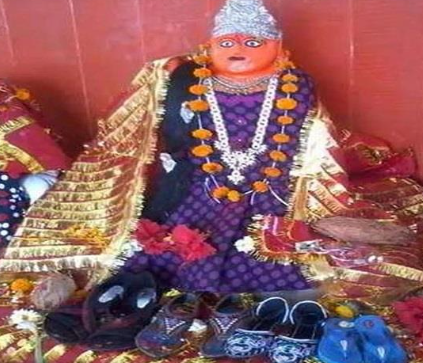
In the heart of Madhya Pradesh, nestled in the unassuming town of Byawara, stands a temple unlike any other. At first glance, the Thane Wali Mata temple looks like many rural shrines across India—colorful flags fluttering in the breeze, incense swirling through the air, and lines of barefoot devotees. But step closer, and you’ll see offerings that defy every conventional idea of worship: liquor bottles, baby cradles, and brand-new slippers. This is not a place of quiet, meditative prayer. It’s a place of raw, radical faith—loud, unapologetic, and deeply rooted in the hopes of thousands.
Slippers at the Goddess’s Feet
In most temples across India, the first thing a devotee does is remove their shoes in a gesture of humility. But at Thane Wali Mata, slippers aren’t taken off—they’re offered. According to local legend, the goddess once appeared in a dream, declaring that no girl should have to walk barefoot. Since then, devotees have brought pairs of slippers and sandals to the temple—not to wear, but to give. These offerings are later distributed to underprivileged girls across the region, turning a personal act of worship into a broader gesture of social justice. Here, devotion doesn’t mean denial. It means giving what you can so others may walk more comfortably, more confidently, and more equally.
Liquor as Prasad
The temple’s most controversial ritual is perhaps its most telling. Bottles of liquor—whisky, rum, and even country-made brews—are placed at the goddess’s feet as prasad. The practice raises eyebrows among outsiders, but locals see it differently. They believe that this fiery offering pleases the goddess, who is said to embody both nurturing energy and fierce power. To them, the liquor symbolizes passion, intensity, and fearlessness—traits the goddess herself embodies. It’s not about indulgence; it’s about invoking strength through devotion.
Cradles of Hope
While liquor and slippers may draw attention, it’s the tiny wooden cradles that carry the heaviest emotional weight. Couples struggling with infertility travel from across the state to offer these cradles, each one representing a prayer for a child. Many return months or years later, carrying infants wrapped in soft cloth and belief. They credit their miracles to the goddess’s grace, turning the temple into a sanctuary of second chances and new beginnings. Vendors outside the temple sell these cradles—not as souvenirs, but as symbols of longing, faith, and hope. In every one lies a quiet story of resilience.
A Sister Shrine for Healing
The power of Thane Wali Mata doesn’t end in Byawara. In Neemuch, a sister shrine under the same spiritual lineage has gained a reputation for healing. Families bring loved ones suffering from neurological disorders—epilepsy, paralysis, even speech loss—in search of divine intervention. Stories of healing and recovery circulate widely, passed down in whispers and testimonies. Science may struggle to explain these transformations, but for the faithful, the results speak for themselves.
A Marketplace of Miracles
Outside the temple, vendors sell not trinkets but tools of transformation: slippers for the goddess, liquor bottles wrapped in marigold garlands, and miniature cradles painted in bright hues. The air is heavy with the scent of incense, the sound of drums, and the hum of mantras rising with the dusk. As night falls, the energy intensifies. Cradles are tied to temple gates. Liquor bottles clink as they’re carefully arranged near the deity. Children walk in, wearing their first pair of shoes—symbolizing steps blessed by the goddess herself.
Where Faith Walks Its Own Path
In Thane Wali Mata’s temple, faith is not silent. It’s not restricted by dogma, rituals, or rules. It shouts, sings, offers, and dares. It wears shoes. It pours a drink. It hopes for a child. It asks for healing. This is not just a temple—it’s a living narrative of how devotion evolves, adapts, and finds new meaning in old symbols. In Byawara, belief doesn’t conform. It transforms