

PC:(THE Better India)
In the heart of Tripura’s Sepahijala district lies Daspara, a small village that has earned the distinction of being India’s first self-sustaining bio-village under the state government’s transformative Bio Village 2.0 initiative. Launched in 2018, this ambitious program initially aimed to promote organic farming but has since evolved into a comprehensive model for sustainable rural development. By integrating climate-smart technologies and green practices, Daspara has become a global exemplar of eco-friendly living and economic empowerment.
The Evolution of Bio Village 2.0
The Bio Village 2.0 initiative, introduced by the Tripura government, began with a focus on organic farming but has grown to encompass a wide range of sustainable practices. These include the adoption of improved livestock breeds, solar-powered tools, energy-efficient appliances, and biogas plants. The initiative equips communities with the tools and knowledge to combat climate change while fostering economic resilience. In Daspara, where 75% of the population relies on agriculture and fishery, these interventions have transformed lives and landscapes.
Green Technologies for a Greener Future
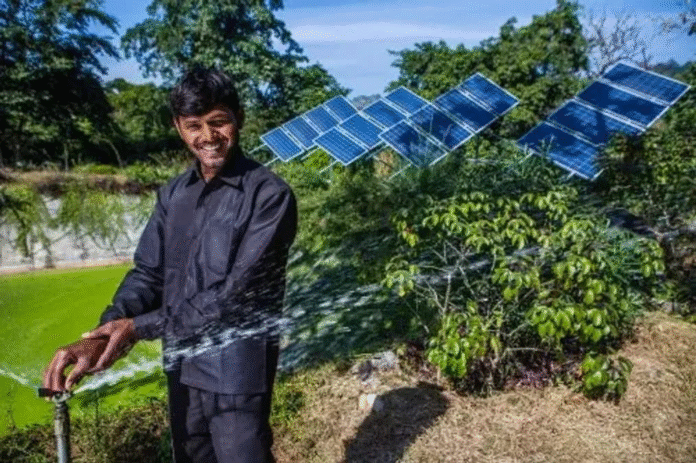
Daspara’s residents have embraced a suite of eco-friendly technologies that have revolutionized their agricultural and domestic practices. Solar-powered pumps irrigate fields, while biogas systems provide a clean alternative for cooking, significantly reducing the village’s carbon footprint. The shift from chemical fertilizers to organic alternatives has improved soil health and boosted crop yields, lowering production costs and environmental impact. Additionally, energy-efficient appliances have reduced electricity consumption, making Daspara a model of sustainable energy use.
Economic Empowerment Through Sustainability
The Bio Village 2.0 initiative has not only enhanced environmental sustainability but also brought significant economic benefits to Daspara’s households. By adopting sustainable farming practices, families have increased their productivity, earning an additional ₹5,000 to ₹15,000 per month. The initiative has also introduced new income streams through skills like mushroom cultivation, beekeeping, and bio-composting. These efforts have diversified livelihoods, improved food security, and empowered the community’s most vulnerable members, particularly farmers and artisans.
Global Recognition and Future Aspirations
Daspara’s remarkable transformation has garnered international acclaim. The Climate Group, a London-based NGO, recognized the village’s eco-friendly technologies as one of the world’s top ten best practices for sustainable development. This accolade has positioned Daspara as a global model for climate change mitigation and rural poverty alleviation. Inspired by this success, the Tripura government has established 10 bio-villages so far and plans to expand the initiative to 100 villages, ensuring long-term sustainability and scalability.
A Blueprint for Sustainable Rural Development
Daspara’s journey from a traditional agrarian village to a self-sustaining bio-village is a testament to the power of innovative, climate-smart solutions. By blending green technologies with economic empowerment, the Bio Village 2.0 initiative has not only transformed lives but also set a precedent for sustainable rural development across India and beyond. As Tripura continues to expand this model, Daspara remains a shining example of how sustainability and prosperity can go hand in hand.