

PC:(Radio pitara agriculture)
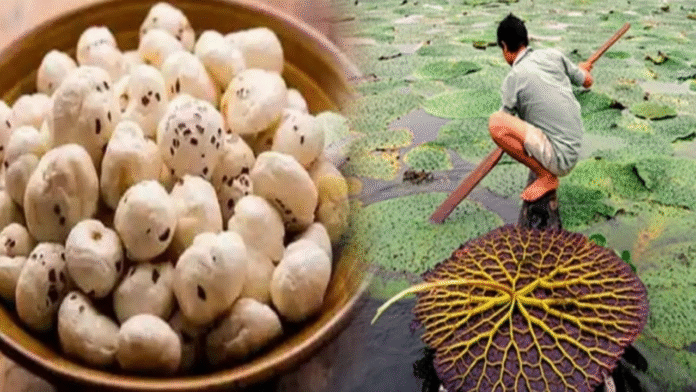
Makhana, also known as foxnut or gorgon nut, has earned its place as India’s prized superfood, gracing the shelves of metropolitan supermarkets in glossy packets. Cultivated predominantly in the Mithilanchal and Seemanchal regions of Bihar, this nutrient-rich seed is celebrated globally for its health benefits. Yet, behind its journey from muddy ponds to popping units and retail shelves lies a tale of relentless labor, poverty, and resilience of the Mallah community, which produces nearly 85% of India’s makhana harvest. While the world calls it a superfood, for the Mallah community, it remains a bittersweet harvest, often referred to as “Kala Pathar” (black stone) before it transforms into the “Kala Sona” (black gold) of the market.
The Labor Behind the Superfood
Makhana cultivation is no easy feat. Grown in waterlogged fields or ponds with water depths of up to one foot, the process demands backbreaking effort. Men from the Mallah community dive into muddy waters for hours, risking injuries, scars, and rashes to collect the seeds. These harsh conditions and meager earnings—often just a fraction of makhana’s retail price—reflect the hidden costs borne by the laborers. Despite their pivotal role, small producers and laborers struggle to secure fair prices, access to credit, or adequate support, leaving them trapped in a cycle of poverty.
The Cultivation Process: A Blend of Tradition and Toil
The journey of makhana begins in nurseries, where plants are carefully nurtured before being transplanted into water-filled fields or ponds. This unique farming method allows farmers to cultivate makhana alongside paddy and other crops in the same field, maximizing land use. The process is labor-intensive, requiring meticulous care from sowing to harvesting. Yet, the rewards can be significant. A farmer from the region shared that one acre of land can yield up to ₹1 lakh in income, making makhana a potentially lucrative crop for those who can navigate its challenges.
Economic Impact and Growing Demand
Over the past decade, the area under makhana cultivation in Bihar has doubled, leading to a significant increase in productivity. The crop has not only become a vital source of income for the Mallah community but also a symbol of cultural identity in Mithilanchal, where it is affectionately called “Makhana.” With support from the agricultural department and organizations like COMFED (Sudha), makhana has found its way to international markets, including the United States, boosting its economic value and global recognition.
Challenges and the Path Forward
Despite its economic potential, the Mallah community faces systemic challenges. The lack of fair pricing, limited access to credit, and inadequate infrastructure hinder small producers from fully capitalizing on makhana’s growing demand. For makhana to truly become “Kala Sona” for those who cultivate it, comprehensive support systems—such as fair trade practices, financial assistance, and modern processing facilities—are essential.
A Cultural and Economic Lifeline
Makhana is more than just a superfood; it is a lifeline for the Mallah community and a cultural cornerstone of Mithilanchal. Its journey from the muddy ponds of Bihar to global markets is a testament to the resilience and hard work of those who cultivate it. However, for the Mallah community to break free from poverty and reap the true benefits of this “black gold,” systemic changes are needed to ensure fair compensation and sustainable growth. Only then can the story of makhana become one of triumph for all involved.