

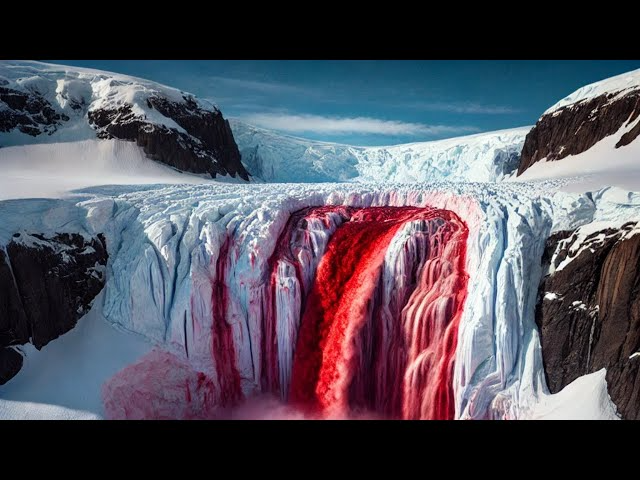
Nestled in the icy expanse of Antarctica, Blood Falls is a geological wonder that defies expectations with its vivid, blood-red cascade pouring from the Taylor Glacier. This eerie phenomenon, far from being a scene from a horror movie, is a natural marvel driven by ancient water, iron oxidation, and extreme chemistry. Its striking appearance and the secrets it holds about life in extreme conditions make it one of Earth’s most intriguing and scientifically significant sites.
The Science Behind the Crimson Cascade
Ancient Water Trapped for Millennia : Beneath the Taylor Glacier lies a subglacial lake, sealed off from the outside world for over a million years. This ancient reservoir, rich in iron, is the source of Blood Falls’ distinctive flow. As the water escapes the glacier, it encounters the air, triggering a remarkable transformation.
Iron Oxidation: The Red Hue : The iron-rich water, upon meeting oxygen, undergoes oxidation—a process akin to rusting metal. This reaction forms iron oxide, painting the water a deep, blood-red color that starkly contrasts with the surrounding white ice. The result is a visual spectacle that seems almost otherworldly.
Hypersaline Chemistry Defies Freezing : Despite Antarctica’s frigid temperatures, Blood Falls never freezes. The water’s high salt content, or hypersalinity, lowers its freezing point, allowing it to flow continuously. This unique chemistry not only sustains the waterfall but also creates an environment unlike any other on Earth.
A Window into Extreme Life
Thriving in isolation: Blood Falls is more than a visual marvel; it’s a testament to life’s resilience. The subglacial lake harbors microbial communities that thrive without light or oxygen, surviving in one of the planet’s most extreme environments. These tiny organisms offer a glimpse into how life might persist in similarly harsh conditions elsewhere in the universe.
Clues to Extraterrestrial Life: The discovery of microbes in Blood Falls has profound implications for astrobiology. By studying these organisms, scientists gain insights into the potential for life on other planets, such as Mars, where similar iron-rich, saline environments may exist. Blood Falls serves as a natural laboratory for understanding life’s adaptability.
Why Blood Falls Fascinates Scientists
Blood Falls stands out as a geological and biological treasure due to its unique
characteristics:
Unusual Coloration: The iron oxide creates a striking red hue, unlike any typical waterfall.
Ancient Origins: The water originates from a lake untouched for over a million years.
Microbial Ecosystem: Life thrives in conditions that seem inhospitable, pushing the boundaries of biology.
Planetary Insights: Its study informs our understanding of Earth’s ancient climate and potential extraterrestrial habitats.
Hypersaline Chemistry: The high salinity prevents freezing, sustaining the flow in subzero temperatures.
A Geological Wonder with Global Significance
Blood Falls is not just a curiosity; it’s a scientific goldmine. Researchers continue to explore its mysteries to better understand Earth’s ancient environments, microbial evolution, and the chemical processes shaping our planet. Its implications extend beyond Earth, offering clues about the possibility of life in extreme extraterrestrial environments.From its blood-red waters to its thriving microbial life, Blood Falls is a reminder of nature’s ability to create breathtaking and alien-like landscapes. It stands as a symbol of Earth’s hidden wonders, inviting scientists and explorers to unravel the mysteries locked within its crimson flow. Whether you’re captivated by glacial geology, extreme microbiology, or the search for life beyond our planet, Blood Falls remains a testament to the enduring surprises of the natural world.