

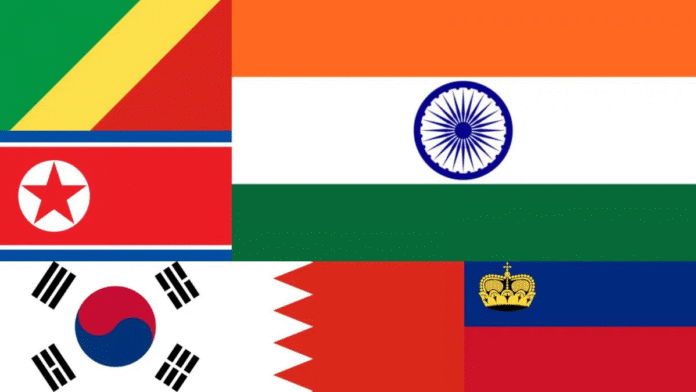
India will celebrate its 79th Independence Day on Friday, with Prime Minister Narendra Modi set to unfurl the national flag at the Red Fort in New Delhi. This will be PM Modi’s 12th consecutive Independence Day address and his second since beginning his third consecutive term in office.
India gained independence from British colonial rule on August 15, 1947, after more than two centuries of foreign domination. The freedom struggle was marked by the sacrifices of countless revolutionaries, including Mahatma Gandhi, Bhagat Singh, Chandrashekhar Azad, Netaji Subhas Chandra Bose, Sukhdev, and Rajguru, among others.
Interestingly, India shares its Independence Day date with several other nations:
- Korea (North and South): Both countries celebrate Gwangbokjeol or Liberation Day on August 15, marking the end of Japanese occupation in 1945 after 35 years.
- Bahrain: Declared independence from Britain on August 15, 1971, following a UN survey confirming the will of its people. However, the country officially celebrates National Day on December 16, commemorating the ascension of late Emir Isa bin Salman Al Khalifa.
- Republic of the Congo: Gained independence from France on August 15, 1960, as part of the dissolution of French Equatorial Africa.
- Liechtenstein: August 15 is celebrated as National Day, combining the Feast of the Assumption of Mary with the birthday of Prince Franz Josef II. The tradition began in 1940, with festivities held near the royal castle in Vaduz.
The Independence Day celebrations in India will also feature cultural programmes, parades, and tributes to the nation’s freedom fighters, reflecting both the pride and responsibility that come with sovereignty.