

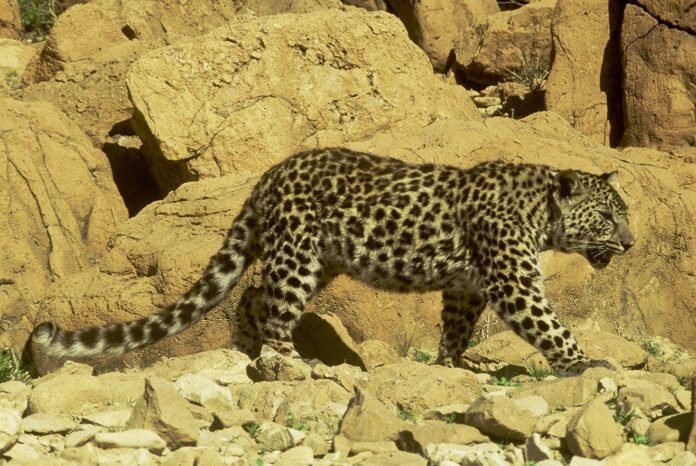
The Arabian leopard, a critically endangered subspecies, has made a remarkable return to the Nejd plateau in Dhofar, Oman. This resurgence was highlighted in a study published on World Arabian Leopard Day, February 10, 2025. The species, once teetering on the brink of extinction due to habitat loss, poaching, and human conflict, now has a glimmer of hope for its survival.
About the Arabian Leopard
The Arabian leopard (Panthera pardus nimr) is native to the Arabian Peninsula and was once widespread across the region. However, it now occupies only a small fraction of its former range, with an estimated population of just 100-120 individuals, primarily in Dhofar.
- Distinct Features: Smaller than other leopard subspecies, the Arabian leopard has unique markings that distinguish it from its counterparts.
- Diet and Hunting: These solitary hunters primarily prey on small animals such as gazelles and hares, playing a crucial role in maintaining ecosystem balance.
Threats to Survival
The Arabian leopard faces numerous threats that jeopardize its existence:
- Urbanization: Rapid urban expansion leads to habitat fragmentation, leaving limited space for the leopards to thrive.
- Farming and Overgrazing: Agricultural activities reduce natural prey availability and disrupt ecosystems.
- Poaching and Illegal Wildlife Trade: The demand for leopard fur and bones fuels illegal hunting, posing a significant risk to the species.
- Human-Leopard Conflict: As human settlements expand, encounters with leopards increase, often resulting in fatal consequences for the animals.
Conservation Efforts
Efforts to protect the Arabian leopard involve a combination of strategies aimed at ensuring its survival:
- Habitat Protection: Preserving and expanding natural habitats is critical for the leopards’ long-term viability.
- Restoration of Prey Populations: Conservationists are working to replenish dwindling prey species, ensuring the leopards have a sustainable food source.
- Education and Awareness: Public engagement initiatives help reduce human-leopard conflicts and promote coexistence.
- Legal Protection: Strengthening and enforcing wildlife laws is essential to combat poaching and illegal trade.
- Captive Breeding Programs: Specialized breeding efforts aim to boost population numbers and reintroduce leopards into the wild.
- Collaborative Initiatives: Governments, NGOs, and local communities must work together to create effective conservation policies.
Future Outlook
The return of the Arabian leopard to Dhofar signals a positive step toward its conservation. Ongoing initiatives, coupled with global support, provide hope for the species’ recovery. Local community involvement and stringent law enforcement will be instrumental in ensuring a future where the Arabian leopard thrives in its natural habitat.