

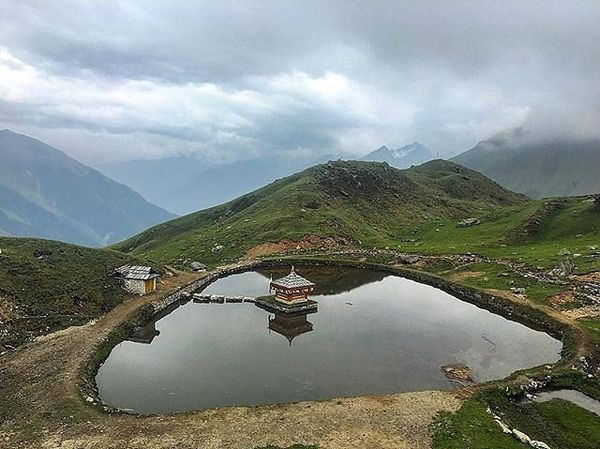
Nestled in the serene Rora Valley of Kinnaur, Himachal Pradesh, at an awe-inspiring elevation of approximately 3,895 m (12,778 ft) above sea level, Yulla Kanda is renowned as the highest Lord Krishna temple in the world. This modest yet spiritually powerful temple is beautifully situated on a small island within a pristine high-altitude lake – a setting both mystical and majestic .
A Trek of Spirit & Splendor
- Trailhead & Distance: The 12 km trek begins at Yulla Khas (or “Yulla village”), passing through oak, pine, and deodar forests, alpine meadows, and rugged Himalayan terrain.
- Approach & Acclimatization: Starting from Reckong Peo, trekkers ascend through an immersive nature path. Base camps by villagers offer rest, meals, and essential aid—especially during the colder months.
- Ideal Season: Best visited between May and October, as winter snows block the route .
Legends & Lore
- Pandava Origins: According to local mythology, the Pandavas created the sacred lake during their exile and erected the temple shrine in its midst.
- The Magic Cap: Tradition holds that placing a Kinnauri cap inverted in the lake and letting it float to the opposite bank signals a year of peace and prosperity. If it sinks—it may herald stormier times.
Architecture & Spiritual Echoes
- Design: Reflecting simple Himalayan stone-and-wood architecture, the temple celebrates regional craftsmanship, with ornate carvings framing a humble, devotion-filled sanctuary .
- Rituals & Devotion: Daily pujas and aartis are administered by local priests and visiting devotees. Special ceremonies such as abhishekam on Janmashtami deepen the spiritual experience.
- Festival of Janmashtami: During Krishna’s birth celebration, Yulla Kanda transforms into a viva of chanting, folk song, communal feasts, and cultural exchange, powered by local hospitality.
Nature, Culture & Conservation
- Alpine Majesty: En route, trekkers encounter Himalayan monal, musk deer, bharal, and an astonishing diversity of alpine flora and medicinal herbs.
- Preserving the Landscape: Guided by local communities and organizations, sustainable practices – like reusable water bottles, waste management, and limited campfires—help safeguard this fragile mountain ecosystem .
Essential Tips for Pilgrims & Trekkers
- Warm Clothing: Even summers can get chilly; carry layered clothing and sturdy footwear.
- Guides & Support: Local guides offer solid logistics and immersive experiences.
- Acclimatization Time: Rest at Yulla Khas or Urni village before ascending to avoid altitude illness.
- Respect Traditions: Dress conservatively, follow local customs, avoid non-veg/alcohol, and keep the temple grounds clean.
Why Yulla Kanda Matters
Yulla Kanda offers more than just altitude and landscapesit – invites inner elevation. The symmetry of a high-altitude lake, a humble temple, and the spiritual pulse of Krishna amid Himalayan peaks fosters a transformative encounter with nature, culture, and the divine.
Whether you’re a devoted pilgrim, avid trekker, or a seeker of tranquility, Yulla Kanda beckons with:
- Epic Himalayan vistas & alpine wilderness
- A unique, heartfelt spiritual retreat at 3,895 m
- Community-powered trekking and cultural immersion
- Timeless legends – Pandavas, Krishna, the Floating Cap ritual
- A living example of eco-conscious mountain pilgrimage
A Journey Beyond Altitude: The Essence of Yulla Kanda
Reaching the summit of this Himalayan plateau is much more than standing beside the world’s highest Krishna temple—it’s about discovering the silent dialogue between nature, legend, and the soul. As the icy lake mirrors the towering peaks and the temple bell resonates through alpine stillness, visitors sense a sacred convergence: the ancient wisdom of the Pandavas, the eternal presence of Krishna, and the pure serenity of untouched wilderness.
Yulla Kanda doesn’t just elevate the body – it uplifts the spirit. Each step on the winding trail, each prayer murmured by the lakeside, infuses trekkers with a profound peacefulness and humility. Whether you arrive as a devout pilgrim, an adventurous traveler, or a seeker of quiet reflection, Yulla Kanda offers something timeless: a moment of inner stillness amid Himalayan grandeur.
In the end, it’s not the altitude that defines the pilgrimage – but the heartfelt transformation that takes root in its rarefied air, echoing long after you’ve descended.