

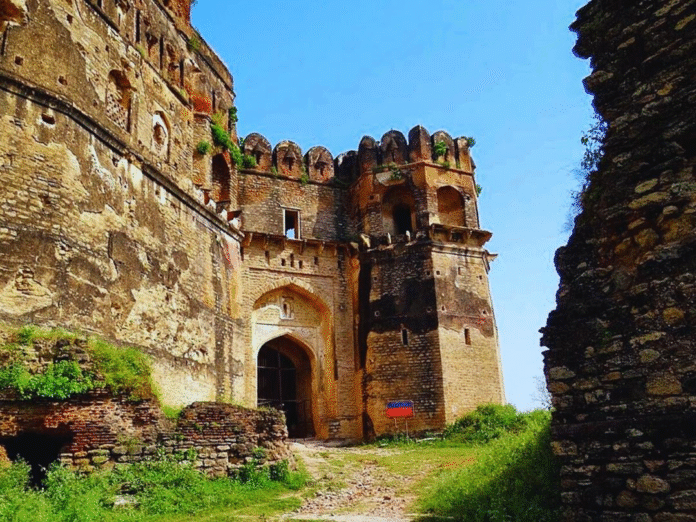
At the center of Ater Fort’s lore lies the infamous Khooni Darwaza (Bloody Gate), a red sandstone entrance that has whispered chilling tales for over 400 years. According to local legends and historical traditions of the Bhadauria rulers, this gate earned its gruesome name through a secretive ritual tied to espionage and royal secrecy.
On certain auspicious nights-particularly Kartik Amavasya (Diwali’s new moon night)-the gate was said to “bleed,” with drops of blood mysteriously trickling from above. In reality, the kings ordered a sheep’s head to be placed atop the gate, allowing its blood to drip into a bowl positioned below. Spies (guptchars) arriving with critical intelligence on enemies or state affairs were required to anoint themselves with this blood as a tilak before entering to meet the king. This macabre custom served dual purposes: it ensured loyalty through a shared, hidden rite and prevented outsiders or enemies from infiltrating secret meetings. Common folk were deliberately kept in the dark about the “flowing blood,” preserving the aura of mystery and fear that protected the kingdom’s intelligence network.
This ritual transformed the Lal Darwaza (Red Gate) into the dreaded Khooni Darwaza, a symbol of the fort’s shadowy world of intrigue amid the turbulent Rajput-Mughal era.
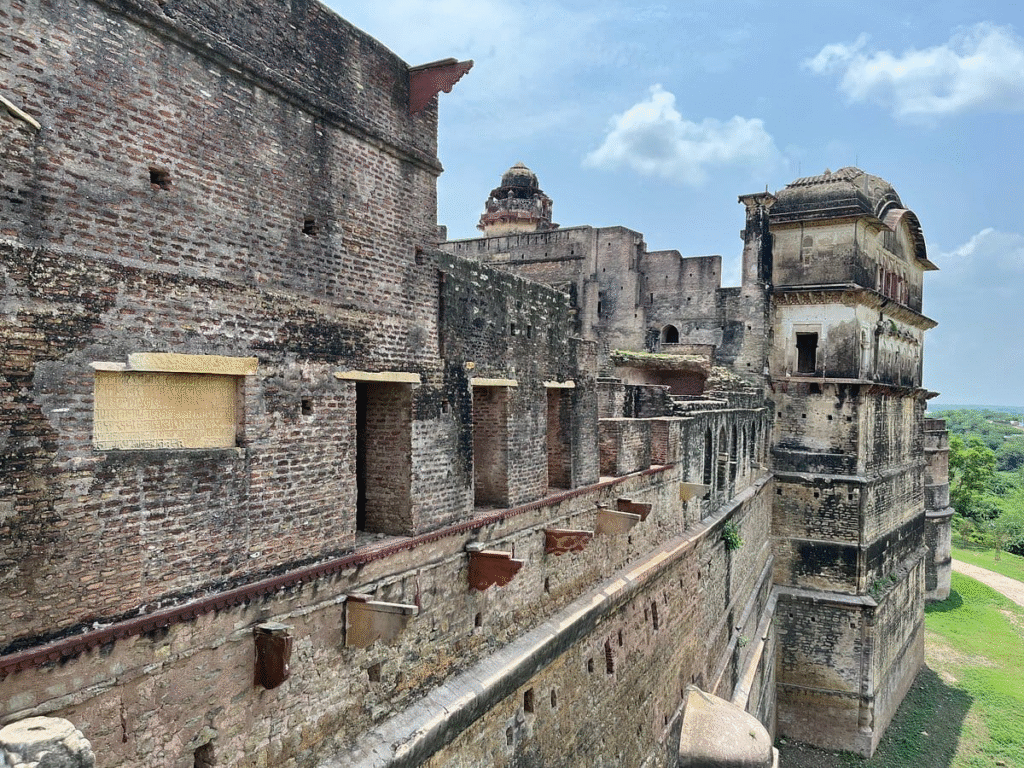
Prime Location
Ater Fort is tucked away in the small town of Ater, in Bhind district, northern Madhya Pradesh, India. It sits strategically amidst the deep, winding ravines carved by the mighty Chambal River, about 35 km west of Bhind city (roughly 30-35 km via road). This hidden gem lies close to the Madhya Pradesh-Uttar Pradesh border, offering panoramic views of the surrounding badlands and river valleys that once provided natural defense.
Architectural Marvel: A Fusion of Rajput Grandeur and Mughal Elegance
Constructed using local stone, bricks, mud, and lime, Ater Fort exemplifies Bundeli style with strong Rajput roots and subtle Mughal touches. Its key features include:
Towering defensive walls and regularly spaced bastions for robust protection.
The iconic Khooni Darwaza and Hathiapor (elephant entrance).
The impressive seven-storey Barah Khamba Mahal tower, offering panoramic views of the Chambal ravines (though now unsafe to climb).
Palaces like Badan Singh ka Mahal, Raja ka Bangla, and Rani ka Bangla, along with Diwan-e-Aam, Diwan-e-Khas, courtyards, and beautiful arches, murals, and carvings.
The fort’s design reflects a perfect balance of defense and aesthetics, making it a unique example of 17th-century military architecture in the Chambal region.
Ancient Roots: A Link to the Mahabharata Era?
Beyond its documented history, Ater Fort carries deeper mythological significance. Originally called Devagiri, the site is believed by locals and some historical accounts to be the same Devagiri hill referenced in the Mahabharata. This ancient connection ties the fort to the epic age of the Yadavas and Chedis, adding layers of timeless allure to its story.
Nearby Attractions: Exploring the Rich Heritage of Bhind and Chambal
A visit to Ater Fort pairs perfectly with other gems in the region:
Vankhandeshwar Temple (Bhind) – A historic Shiva temple built by Prithviraj Chauhan in 1175 AD.
Bateshwar Temple Complex (Morena) – Over 200 ancient Shiva and Vishnu temples.
Mitavali & Padawali – The famous Chausath Yogini Temple and ancient ruins.
National Chambal Sanctuary – Enjoy boating on the Chambal River and wildlife spotting.
Gohad Fort – Another historic stronghold in Bhind district.
Renuka Mata Temple (Jamdhara) – Revered as the birthplace of Parashurama.
Best Time to Visit
The ideal window to explore Ater Fort and its surroundings is October to March, when the weather is pleasant, avoiding the extreme summer heat and monsoon challenges of the ravines.
Ater Fort isn’t just ruins-it’s a portal to a world of royal secrets, blood-soaked rituals, and enduring Rajput pride. If you’re drawn to offbeat history and atmospheric adventures, this hidden jewel of Madhya Pradesh awaits your discovery!