

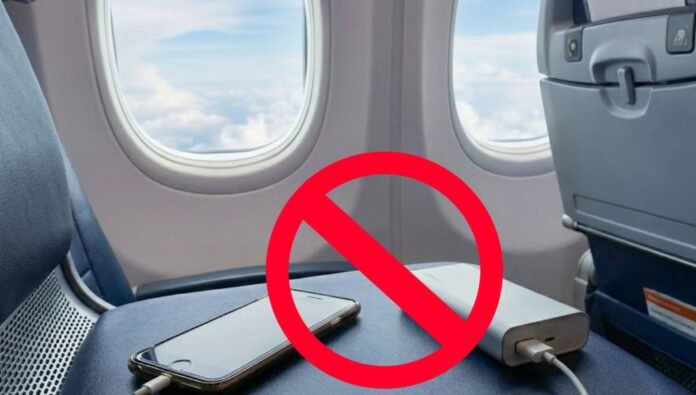
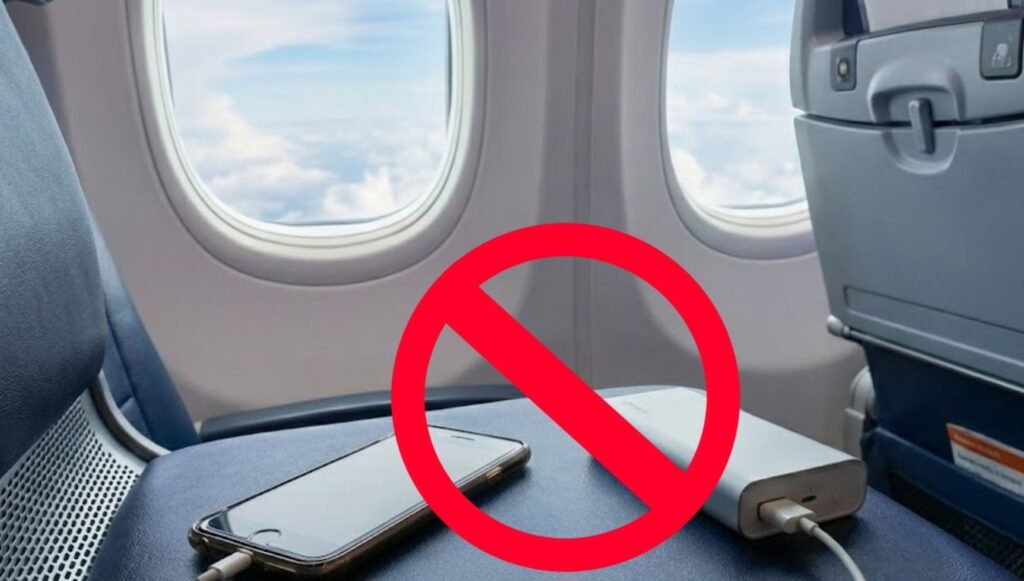
Passengers carrying power banks may soon need to rethink their travel essentials as new aviation safety rules restrict the use of power banks on flights. The updated guidelines, issued in the interest of passenger safety, focus on the growing concern around lithium-ion batteries and their potential fire risks at high altitudes.
Why power banks are under scrutiny
Power banks operate on lithium-ion batteries, which are known to overheat, short-circuit or catch fire if damaged or poorly manufactured. Over the years, several in-flight incidents across the world involving smoking or burning power banks have raised red flags for aviation regulators. With aircraft cabins being confined spaces, even a minor battery malfunction can pose serious safety threats.
What the new rules say.
Under the revised aviation safety norms, passengers are no longer allowed to use power banks during flights. While carrying power banks in hand baggage may still be permitted under specific capacity limits, their usage for charging phones, tablets or other devices onboard has been restricted. Power banks continue to remain strictly prohibited in checked-in luggage.Capacity limits passengers should knowAviation authorities have reiterated that only power banks within prescribed watt-hour limits are allowed in cabin baggage. Typically, power banks up to 100 Wh are permitted without special approval, while those between 100 Wh and 160 Wh may require airline permission. Devices exceeding this limit are not allowed on board under any circumstances.
What travellers should do before flying
Passengers are advised to check airline-specific guidelines before heading to the airport, as rules may vary slightly between carriers. Charging devices fully before travel, using in-seat charging ports where available, and carrying manufacturer-certified power banks can help avoid inconvenience at security checks.
Why safety comes first
The move reflects a broader push by aviation regulators to minimise onboard fire hazards. Lithium battery fires are difficult to extinguish and can spread rapidly, making prevention critical. By restricting power bank usage mid-air, authorities aim to reduce risks without significantly disrupting passenger convenience.
What this means for frequent flyers
For frequent travellers, the change signals a shift towards stricter enforcement rather than a complete ban. Power banks remain useful for airport use and layovers, but once onboard, passengers will need to rely on aircraft power outlets or conserve battery usage.As air travel continues to grow, safety regulations are evolving alongside technology. The latest rules serve as a reminder that even everyday gadgets must meet strict standards when thousands of feet above the ground.