

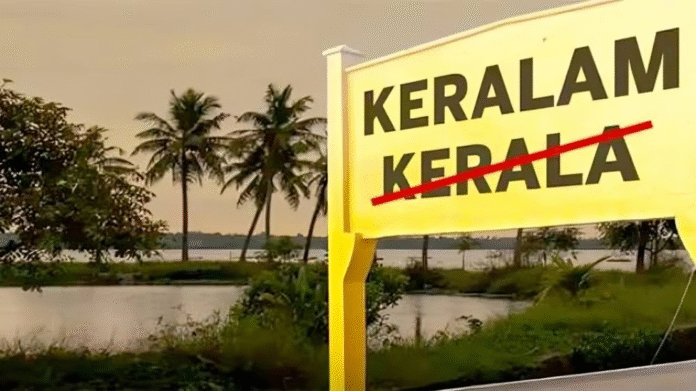
The Union Cabinet on Tuesday (February 24, 2026) approved the renaming of the State of “Kerala” to “Keralam”, Union Minister Ashwini Vaishnaw announced. On June 24, 2024, the Kerala Assembly passed a unanimous proposal urging the Union government to rename the State as “Keralam”.
Earlier, there were reports coming in that the state of Kerala may soon be officially renamed “Keralam”, with the state Cabinet expected to approve a name change bill on Tuesday—just months ahead of the Kerala Assembly Elections 2026. The move reflects a push for cultural identity while also carrying significant political implications.
Kerala to Rename as ‘Keralam’ Before Assembly Elections 2026
The Kerala Legislative Assembly had already passed a resolution urging the Union government to rename the state “Keralam.” The resolution, introduced by Chief Minister Pinarayi Vijayan, was passed unanimously, signalling broad political consensus at the state level.
Lawmakers argued that “Keralam” is the authentic Malayalam name, while “Kerala” is the anglicised version retained in the Constitution since state reorganisation in 1956. The Assembly requested the Centre to amend the First Schedule of the Constitution and related official documents to reflect the name change.
A similar proposal had been raised earlier but was reintroduced after technical feedback from the Union Ministry of Home Affairs.
What Does the Kerala Name Change Bill Mean?
Now the bill will be forwarded to the Union Government and Parliament. Under Article 3 of the Indian Constitution, the power to change a state’s name lies with Parliament, following a recommendation from the President.
The name change would require:
- Approval by both Lok Sabha and Rajya Sabha
- A constitutional amendment
- Presidential assent
Once completed, “Keralam” would replace “Kerala” in the Constitution, government records, legal documents, signage, and administrative references.
Supporters say the move aligns the state’s official identity with its linguistic and cultural heritage, while critics warn of logistical and financial challenges in updating records, signage, and official materials.
Political Timing Ahead of Kerala Assembly Elections 2026
The timing of the proposal—just before the 2026 Assembly polls—has added a political dimension to the debate. Analysts believe the ruling Left Democratic Front (LDF) is aiming to tap into regional pride and linguistic identity to mobilise voters.
Opposition parties argue that symbolic name changes should not overshadow pressing governance, economic, and development issues facing the state.
Historical Context: State Name Changes in India
Kerala’s proposal follows a pattern seen in other Indian states.
- Uttaranchal was renamed Uttarakhand in 2007
- Orissa became Odisha in 2011
These changes were implemented through Parliamentary approval to better reflect local language and cultural identity.
What Happens Next?
When the Cabinet clears the bill, it will move to the Union Ministry of Home Affairs, then to Parliament for approval. The process could take months, and the name “Keralam” will not become official until the constitutional amendment is enacted and signed by the President.
Kerala Assembly Elections 2026: Key Political Context
Kerala is preparing for Assembly elections in 2026, with the current 140-member Assembly’s term ending in May 2026. Polling is expected in March–April 2026, though the Election Commission has not announced official dates.
Kerala currently has over 2.69 crore registered voters, with women forming a majority, along with third-gender voters and persons with disabilities, indicating high democratic participation.
Political parties are already in campaign mode:
- The BJP is seeking to expand its presence, with Prime Minister Narendra Modi scheduled to visit Kochi on March 6 to release the NDA manifesto.
- The LDF and UDF are finalising candidate lists and grassroots strategies to retain or regain dominance in the state.
Analysts predict a highly competitive election, with cultural identity, governance, and economic issues shaping voter sentiment.
Final Outlook
While today’s Cabinet decision could mark a historic step toward renaming Kerala as “Keralam,” the final call rests with Parliament and the President. Whether the move becomes a cultural milestone or a political talking point will depend on how voters and lawmakers respond in the months leading up to the 2026 polls.