

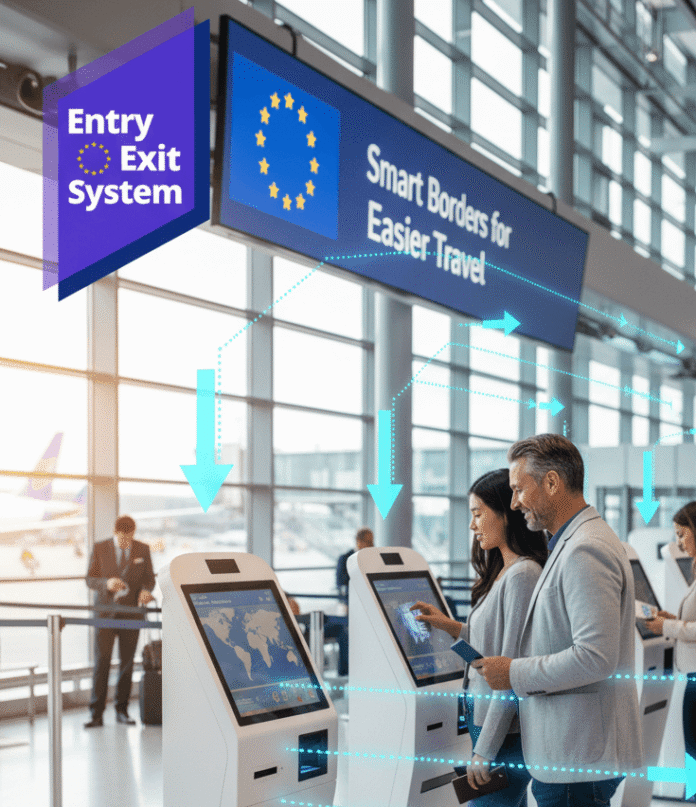
A new era of travel has begun in Europe. The European Union (EU) has officially launched its biometric Entry/Exit System (EES), replacing the old passport stamping method with a smart digital system. From now on, every non-EU traveller — including British citizens — will be registered electronically when crossing Schengen borders.
The system is being rolled out in stages across all Schengen Area countries and is expected to be fully operational by April 10, 2026.
What Is the Entry/Exit System (EES)?
Think of the EES as Europe’s digital border diary. It records every traveller’s entry and exit with a combination of biometric data — fingerprints and facial recognition — linked directly to their passport.
The goal? To make travel faster, safer, and smarter while helping the EU combat illegal migration, identity fraud, and overstays.
How It Works
On your first visit to the Schengen zone after the rollout, you’ll scan your passport, register fingerprints, and take a quick facial scan.
- Children under 12 only need a photo.
- On future trips, a facial scan alone will verify your identity.
- No extra fee is required for registration.
The system automatically checks how long you’ve stayed — ensuring you don’t exceed the 90 days in 180 rule for non-EU visitors.
Where You’ll Encounter It
EES checks will happen at airports, seaports, train stations, and road crossings across the Schengen zone.
For UK travellers, the new system begins at Port of Dover, Eurotunnel in Folkestone, and Eurostar at London St Pancras, where French border officials will handle the process. Once you’re registered on departure, you won’t need to repeat it on arrival.
Will It Slow Down Travel?
Officials expect only minor delays as the new system phases in. However, longer queues could occur during early months and peak travel seasons like Easter or summer 2026. The EU has given border officers the power to pause checks temporarily if lines grow too long.
Freight and coach traffic have already begun trials, with car passengers and Eurostar travellers joining next. The UK government has advised travellers to allow extra time during the transition period.
What’s Next – ETIAS Travel Authorisation
The EES is just the beginning. By late 2026, the EU plans to introduce ETIAS — a digital travel authorisation system similar to the U.S. ESTA.
Non-EU visitors will need to apply online, provide travel details, and pay a €20 fee. The authorisation will last three years or until your passport expires.
Meanwhile, the UK has already launched its Electronic Travel Authorisation (ETA) for European travellers visiting Britain since April 2025.
The Bottom Line
The EU’s new biometric Entry/Exit System marks a major leap in how borders are managed — bringing technology, transparency, and tighter security to European travel. It may take some getting used to, but once fully implemented, it promises smoother journeys and a smarter border experience for millions of travellers.