

Nestled amidst the lush greenery of the Satpura Range in Pachmarhi, Madhya Pradesh, the Chauragarh Temple stands as a timeless testament to devotion, history, and the indomitable spirit of pilgrims. Perched atop the Chauragarh Peak, the third-highest in the region at 1,326 meters, this revered shrine dedicated to Lord Shiva is more than a temple it is a confluence of nature, culture, and spirituality that has drawn devotees and adventurers for centuries. The journey to the temple, a grueling climb of over 1,300 steps through dense forests and rugged terrain, is as much a test of faith as it is a communion with the breathtaking beauty of Pachmarhi, often called the “Queen of Satpura.” This is the story of Chauragarh Temple, woven with its historical roots, mythological significance, and enduring legacy.
The Historical Foundations
The history of Chauragarh Temple is deeply intertwined with the rich tapestry of Pachmarhi’s past. The region, part of the Hoshangabad district, was once under the rule of the Gond Dynasty, a powerful tribal kingdom that flourished in central India. The temple is believed to have been established during the reign of King Sangram Shah, a prominent Gond ruler in the 16th century. Sangram Shah, known for his patronage of art and architecture, is credited with constructing the Chauragarh Fort near the temple, remnants of which still whisper tales of a bygone era. The fort and the temple together served as a strategic and spiritual stronghold, commanding panoramic views of the Satpura Range.
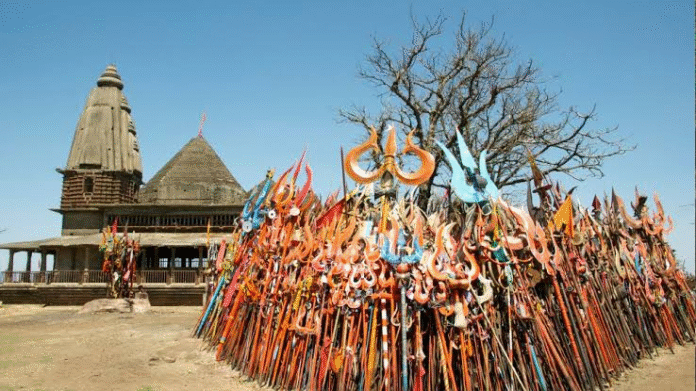
The temple’s architecture reflects the simplicity and elegance of Gond-style construction, with a small sanctum sanctorum housing an ancient Shivalinga, said to have been installed by Sangram Shah himself. The surrounding courtyard, adorned with thousands of trishuls (tridents) offered by devotees, is a unique feature that sets Chauragarh apart. These tridents, ranging from small inch-long offerings to massive structures weighing up to two quintals, symbolize the fulfillment of vows and the unwavering faith of pilgrims.
Pachmarhi’s prominence grew during the British colonial period in the 19th century when it was developed as a hill station and summer capital of the Central Provinces. The British, enchanted by the region’s cool climate and scenic beauty, popularized Pachmarhi as a retreat, inadvertently bringing attention to its spiritual landmarks like Chauragarh. The temple’s remote location and challenging ascent made it a magnet for both pilgrims seeking divine blessings and adventurers craving the thrill of the trek.
The Mythological Significance
The spiritual aura of Chauragarh Temple is amplified by a compelling myth that ties it to Lord Shiva and the demon Bhasmasur. According to legend, Bhasmasur, a devoted follower of Shiva, performed intense penance to please the deity. Pleased with his devotion, Shiva appeared before him and offered a boon. Bhasmasur, driven by ambition, first sought immortality, which Shiva denied. Undeterred, he asked for a peculiar power: the ability to reduce anyone to ashes by touching their head. Shiva, bound by his promise, granted the boon, unaware that Bhasmasur intended to use it against him to become the supreme destroyer.
Realizing the danger, Shiva fled, with Bhasmasur in pursuit. The chase led Shiva to the rugged peaks of Chauragarh, where he sought refuge using his divine attributes his snake, trident, and matted locks to conceal himself. Desperate, Shiva called upon Lord Vishnu for aid. Vishnu, ever the strategist, transformed into a beautiful maiden, Mohini, and lured Bhasmasur into a dance. During the performance, Mohini tricked Bhasmasur into mimicking her movements, leading him to touch his own head. In an instant, the demon was reduced to ashes, and Shiva was saved. The Chauragarh Temple, it is believed, marks the spot where Shiva took shelter, making it a sacred site imbued with divine energy.
This myth has cemented Chauragarh’s status as a powerful spiritual center, particularly during Mahashivratri, when devotees flock to the temple to honor Shiva’s triumph and seek his blessings. The tradition of offering trishuls, a symbol of Shiva’s weapon, is said to have originated from this tale, as pilgrims express gratitude for fulfilled wishes or pray for divine protection.
The Pilgrimage: A Journey of Faith
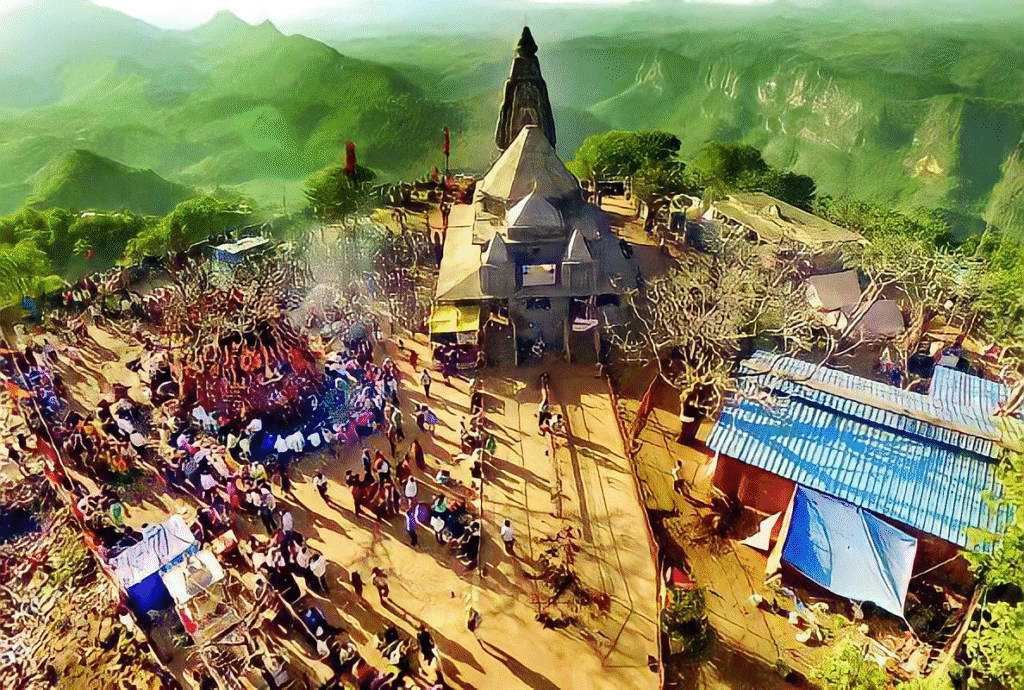
The journey to Chauragarh Temple is not for the faint-hearted. From the base at Mahadev, approximately 5 km from Pachmarhi town, pilgrims must undertake a 3.5-km trek that includes ascending 1,156 to 1,365 steps (accounts vary) carved into the hillside. The path winds through dense forests of the Satpura National Park, where the air is thick with the scent of oak, pine, and medicinal herbs. The trail is flanked by verdant valleys, cascading streams, and the distant roar of waterfalls, offering a visual feast that soothes the soul even as the body tires.
For devotees, the climb is a sacred ritual. Many carry heavy trishuls on their shoulders, some weighing several quintals, as offerings to Lord Shiva. This practice, particularly prominent during Mahashivratri and Nagpanchmi, transforms the trek into a profound act of devotion. The sight of thousands of trishuls stacked in the temple courtyard, glinting in the sunlight, is awe-inspiring, a testament to the collective faith of countless pilgrims over centuries. During these festivals, the temple comes alive with chants of “Bam Bam Bhole” and the rhythmic clanging of bells, creating an atmosphere charged with devotion.
The trek is not without challenges. The steep ascent, coupled with the lack of signage or artificial lighting, demands physical stamina and mental resolve. Local guides are often recommended, especially for first-time visitors, to navigate the rugged terrain. Monkeys, abundant in the area, pose a playful yet persistent threat, known to snatch food or water bottles from unsuspecting trekkers. Pilgrims are advised to carry ample water, wear comfortable shoes, and start early between 8 AM and noon to complete the 5-6 hour round trip safely.

Cultural and Natural Significance
Chauragarh Temple is more than a religious site; it is a cultural and ecological gem. The temple’s location within the Pachmarhi Biosphere Reserve, a UNESCO-designated area since 2009, underscores its environmental significance. The surrounding forests teem with rare flora, including mango, jamun, and medicinal plants, and are home to diverse wildlife within the Satpura Tiger Reserve. The temple’s commitment to sustainable tourism, supported by the Madhya Pradesh Tourism Development Corporation, ensures that its natural heritage is preserved for future generations.
Culturally, Chauragarh is a vibrant hub during festivals. Mahashivratri, in particular, sees a grand mela (fair) that rivals those at Ujjain’s Mahakal and Omkareshwar temples. Pilgrims from across India converge here, carrying trishuls and coconuts, participating in rituals that date back centuries. The temple’s Dharmashala offers respite for weary travelers, fostering a sense of community among devotees.
The temple also holds a special place in the hearts of trekkers and nature enthusiasts. The panoramic views from Chauragarh Peak, especially at sunrise, are legendary. On clear days, the vista stretches for tens of kilometers, encompassing rolling hills, deep valleys, and the distant lights of towns like Itarsi. The trek, with its mix of wilderness, tribal encounters, and cave-like paths, is an adventure that leaves an indelible mark on every visitor.
The Legacy of Chauragarh
Today, Chauragarh Temple continues to thrive as a beacon of faith and a symbol of Pachmarhi’s enduring allure. Its historical roots, tied to the Gond Dynasty and enriched by British-era recognition, lend it a unique place in India’s cultural landscape. The mythological tale of Shiva and Bhasmasur infuses the temple with spiritual potency, while the arduous trek and stunning natural surroundings make it a destination for both the devout and the adventurous.
For those planning a visit, the best time is from October to June, when the weather is pleasant, and the forests are at their lush best. Pachmarhi is accessible by road from Pipariya (47 km), the nearest railway station, or by air via Bhopal’s Raja Bhoj Airport (230 km). Local jeeps and buses ferry visitors to the base of the trek, and accommodations, including Madhya Pradesh Tourism hotels, offer comfortable stays in heritage bungalow-style settings.
To visit Chauragarh is to embark on a journey that transcends the physical. It is a pilgrimage through history, myth, and nature, where every step up the 1,300 stairs brings you closer to the divine and the sublime beauty of Pachmarhi. As you stand before the Shivalinga, surrounded by a sea of trishuls and the whispers of ancient tales, you realize that Chauragarh is not just a temple it is a sacred summit that touches the heart and soul, leaving memories that linger long after the descent.
So, if you find yourself in Pachmarhi, heed the call of Chauragarh. Climb the steps, offer a prayer, and let the magic of this sacred peak weave its spell on you.