

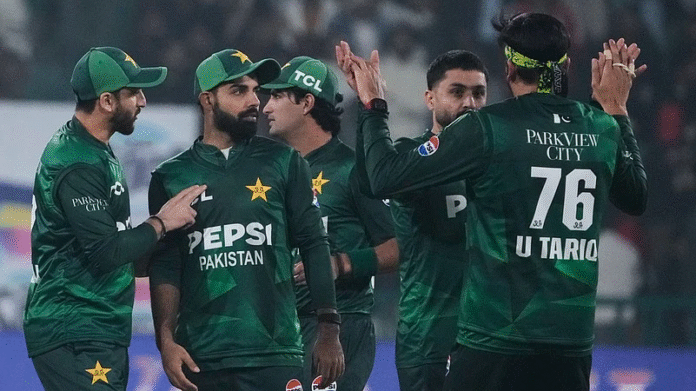
Pakistan’s decision to boycott its group-stage match against India in the upcoming T20 World Cup could have serious sporting, financial, and administrative consequences. On Sunday, the Pakistani government confirmed that the national team would participate in the tournament but would not play against India. Following the announcement, the International Cricket Council (ICC) asked the Pakistan Cricket Board (PCB) to reconsider its stance.
Risk of Group-Stage Elimination
Under ICC playing conditions, a boycott can severely impact Pakistan’s net run rate. As per Clause 16.10.7, a team refusing to play is deemed to have scored zero runs in 20 overs, while the opponent’s overs are not counted. This could leave Pakistan with a significantly negative run rate, making qualification difficult even if it wins its remaining matches.
Group A includes India, Pakistan, the USA, Namibia, and the Netherlands. With only the top teams advancing, Pakistan’s margin for error is extremely small. Any defeat, combined with a damaged run rate, could result in early elimination. The USA and the Netherlands have previously caused major upsets in ICC events, adding to the challenge.
Possibility of ICC Action or Ban
The ICC has formally asked the PCB to explain its decision. If Pakistan fails to provide a satisfactory justification, the ICC could consider disciplinary action, including a possible ban from the tournament. In past World Cups, multiple teams have faced sanctions for boycotting matches.
Threat to PSL and Knockout Matches
Security concerns may not be accepted as a valid reason, as Pakistan is scheduled to play all its matches in Sri Lanka, not India. ICC sources indicate that if the PCB cites political solidarity as the reason, it may face consequences, including denial of a No Objection Certificate (NOC) for the Pakistan Super League (PSL).
Uncertainty also surrounds a potential India–Pakistan clash in the knockout stage. The PCB has not clarified whether Pakistan would play India if the teams meet later in the tournament. The ICC is expected to seek a clear response, with strict action likely if ambiguity continues.
Hosting Rights at Risk
Pakistan hosted the Champions Trophy in 2025, its first ICC event in nearly three decades. The current controversy may impact Pakistan’s chances of securing future ICC hosting rights. The India–Pakistan fixture is a major revenue generator, and its absence could lead to financial losses for the ICC, potentially affecting Pakistan’s revenue share as well.
Player Reaction
Pakistan captain Salman Ali Agha said the team would respect the government’s decision. “We want to play in the World Cup and will follow the government’s directive. Our focus is on giving our best in the tournament,” he said.