

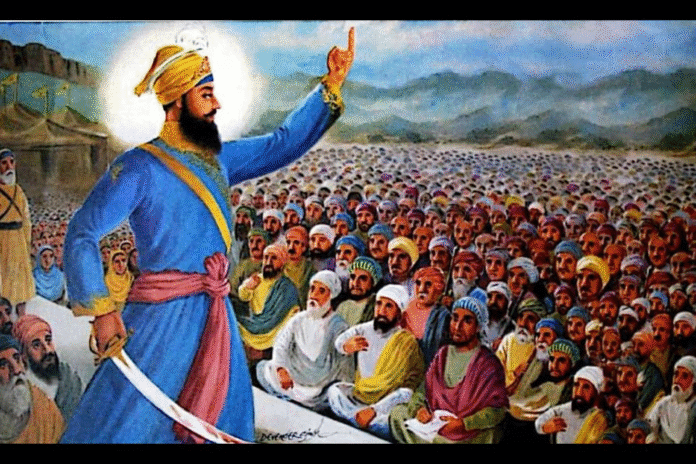
The Khalsa, the casteless Sikh order founded by Guru Gobind Singh, traces its origins to a defining moment in history that is often linked to March 30, 1699, in historical accounts using the Gregorian calendar.
What Happened on March 30, 1699?
On this day, which coincided with Baisakhi, Guru Gobind Singh gathered thousands of Sikhs at Anandpur Sahib. In a dramatic and transformative event, he called upon devotees to prove their faith by offering their lives.
Five men stepped forward—later known as the Panj Pyare (Five Beloved Ones). They were initiated into a new spiritual order through the sacred Amrit Sanskar ceremony. This marked the birth of the Khalsa, a unified community bound by discipline, equality, and devotion.
Why the Date Varies
While some records align the founding with March 30, 1699, the event is traditionally commemorated on Baisakhi (April 13 or 14) every year. The variation arises due to differences between the Gregorian calendar and the traditional solar Punjabi calendar.
Why the Khalsa Matters
The creation of the Khalsa was a turning point in Sikh history:
- It eliminated caste distinctions, promoting equality
- It established a distinct Sikh identity
- It combined spiritual strength with the duty to fight injustice
Guru Gobind Singh also introduced:
- The surnames Singh (for men) and Kaur (for women)
- The Five Ks, symbols of faith and discipline
- A code of conduct centered on courage, morality, and service
A Legacy That Endures
Today, the Khalsa continues to represent the core ideals of Sikhism—fearlessness, unity, and faith. While its birth is celebrated annually on Baisakhi, the historical association with March 30, 1699 highlights the enduring legacy of that transformative day.