

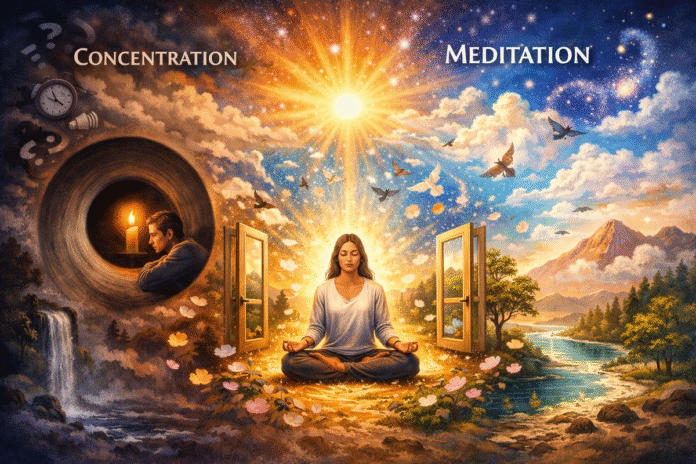
December 22 is observed globally as International Meditation Day, a moment in the calendar that invites people to slow down in a fast moving world. Recognised by the United Nations, the day highlights meditation as a powerful tool for mental clarity, emotional balance and inner wellbeing. At a time when stress, anxiety and digital overload define everyday life, meditation is no longer seen as a spiritual luxury but as a practical life skill.
Rooted in ancient traditions and now backed by modern science, meditation continues to shape how people heal, grow and reconnect with themselves.
Meditation as a timeless practice across civilizations
Meditation is not a modern trend. Its roots stretch back thousands of years to ancient Indian, Buddhist, Taoist and yogic traditions. In Indian philosophy, meditation was seen as a path to self realisation and inner awakening. Texts like the Vedas, Upanishads and Bhagavad Gita speak of dhyana as a way to quiet the mind and understand one’s true nature.
Across cultures, meditation was practised by monks, sages and seekers not to escape life, but to understand it better. Over time, this ancient wisdom crossed borders and evolved into multiple forms that are now practised worldwide.
Why meditation is considered a form of therapy
In today’s context, meditation is widely recognised as a mind body therapy. It is used alongside clinical treatments for stress, depression, anxiety and trauma. Unlike medication, meditation trains the mind to observe thoughts rather than react to them, creating emotional resilience over time.
Therapies such as mindfulness based stress reduction and meditation guided cognitive therapy are now integrated into healthcare systems globally. Meditation works by calming the nervous system, lowering cortisol levels and improving emotional regulation.
The science backed benefits of meditation
Regular meditation has been linked to improved focus, better sleep and reduced stress. Studies show that consistent practice can lower blood pressure, strengthen immunity and enhance brain function. It also improves self awareness, helping individuals respond thoughtfully instead of reacting impulsively.
On an emotional level, meditation cultivates patience, empathy and inner stability. People who meditate often report feeling more grounded, optimistic and emotionally balanced even during difficult situations.
Simple meditation tips for beginners
For those starting out, meditation does not require long hours or complex techniques. Even five to ten minutes a day can make a difference. Beginners should start by sitting comfortably, closing their eyes and focusing on their breath. Thoughts will come and go, and that is normal. The practice lies in gently bringing attention back to the breath without judgement.
Consistency matters more than duration. Meditating at the same time each day helps build a habit. Beginners can also explore guided meditations to stay focused and relaxed.
Different forms of meditation and what they offer
Meditation comes in many forms, each offering unique benefits. Mindfulness meditation focuses on present moment awareness. Mantra meditation uses sound or repetition to anchor attention. Loving kindness meditation nurtures compassion towards oneself and others. Movement based practices like yoga meditation combine physical flow with mental stillness.
Choosing the right form depends on personal comfort and intention. There is no one size fits all approach.
The mythological and spiritual significance of meditation
In mythology, meditation is often depicted as a gateway to higher wisdom. Hindu deities, Buddhist monks and ancient sages are portrayed in deep meditation, symbolising mastery over the mind. Meditation was believed to align the individual with cosmic energy and universal truth.
These spiritual narratives reinforced meditation as a sacred practice that connects the human mind with something larger than itself, giving it both philosophical and emotional depth.
Why International Meditation Day matters today
International Meditation Day serves as a reminder that inner peace is not a destination but a daily practice. In a world driven by speed and productivity, meditation offers stillness without withdrawal and awareness without judgment.
By acknowledging this day, the world recognises that mental wellbeing is as essential as physical health. Meditation stands as a simple yet profound reminder that sometimes, the most powerful progress begins by slowing down.