

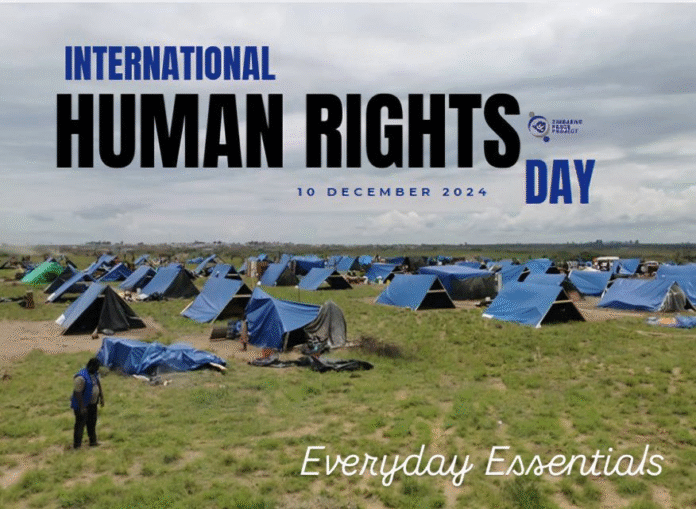
Human Rights Day, observed annually on 10 December, marks a global commitment to protecting the fundamental rights and freedoms of every individual. The day commemorates the adoption of the Universal Declaration of Human Rights (UDHR) by the United Nations in 1948 and serves as a reminder for governments and citizens alike to uphold equality, justice, and dignity for all.
Human Rights Day 2025 Theme
The theme for Human Rights Day 2025 is:
“Human Rights, Our Everyday Essentials.”
This theme underscores that human rights are not abstract principles but the foundation of everyday life—shaping access to safety, education, healthcare, livelihood, and freedom. It calls on individuals, communities, and nations to recognize and protect these rights consistently.
History of Human Rights Day
Human Rights Day has a significant historical legacy:
- 1948 – The Universal Declaration of Human Rights (UDHR) was adopted by the UN General Assembly.
- 1950 – The UN officially declared 10 December as Human Rights Day.
- Since then, the day has been observed globally through educational activities, awareness campaigns, cultural programs, and discussions focused on human rights issues.
The observance reinforces the global commitment to protecting individual freedoms and promoting equality, justice, and human dignity.
Universal Declaration of Human Rights (UDHR)
Adopted on 10 December 1948, the UDHR is a milestone document that outlines essential rights and freedoms guaranteed to every person, regardless of nationality, religion, gender, or background.
Key rights under the UDHR include:
- Right to equality and freedom from discrimination
- Right to life, liberty, and personal security
- Freedom of thought, expression, and religion
- Right to education, employment, and an adequate standard of living
- Right to participate in government and seek justice
The UDHR forms the foundation of international human rights law and has inspired over 70 human rights treaties.
Human Rights in India: Constitutional Provisions
India’s Constitution provides a robust framework to safeguard human rights and ensure equality, justice, and liberty for all. Key constitutional provisions include:
| Constitutional Provision | Description |
|---|---|
| Preamble | Declares India a Sovereign, Socialist, Secular, Democratic Republic and ensures Justice, Liberty, Equality, and Fraternity. |
| Fundamental Rights (Articles 12–35) | Guarantee equality before law, freedom of speech, protection against discrimination, and right to life and personal liberty. |
| Directive Principles of State Policy (Part IV, Arts. 38–51) | Lay down guidelines for promoting social and economic justice, equal pay, right to work, and decent standard of living. |
| Universal Adult Franchise (Arts. 325, 326) | Ensures the democratic right of all adult citizens to vote. |
| Safeguards for Minorities (Arts. 244, 244A) | Protect linguistic, religious, and tribal minority communities. |
Role of the National Human Rights Commission (NHRC)
The NHRC serves as India’s apex institution for protecting and promoting human rights.
Its key functions include:
- Investigating complaints of human rights violations by public authorities
- Monitoring prisons, juvenile homes, and other institutions
- Recommending legal and policy reforms to strengthen human rights protection
- Conducting awareness programs, workshops, and public campaigns
- Advising the government on national and international human rights issues
The NHRC plays a critical role in ensuring accountability and promoting rights-based governance.
Significance of Human Rights Awareness
1. Empowers Individuals
Awareness helps people safeguard themselves from injustice, discrimination, and exploitation.
2. Protects Vulnerable Groups
Improves protection for women, children, minorities, and marginalized communities.
3. Promotes Social Harmony
Understanding human rights fosters respect, reduces conflict, and strengthens peace.
4. Strengthens Democracy
Informed citizens can participate more actively in governance and demand accountability.
5. Encourages Responsible Citizenship
Promotes respect for the rights of others and nurtures an ethical society.
6. Supports Legal Protection
Helps individuals seek justice and access legal remedies when rights are violated.