

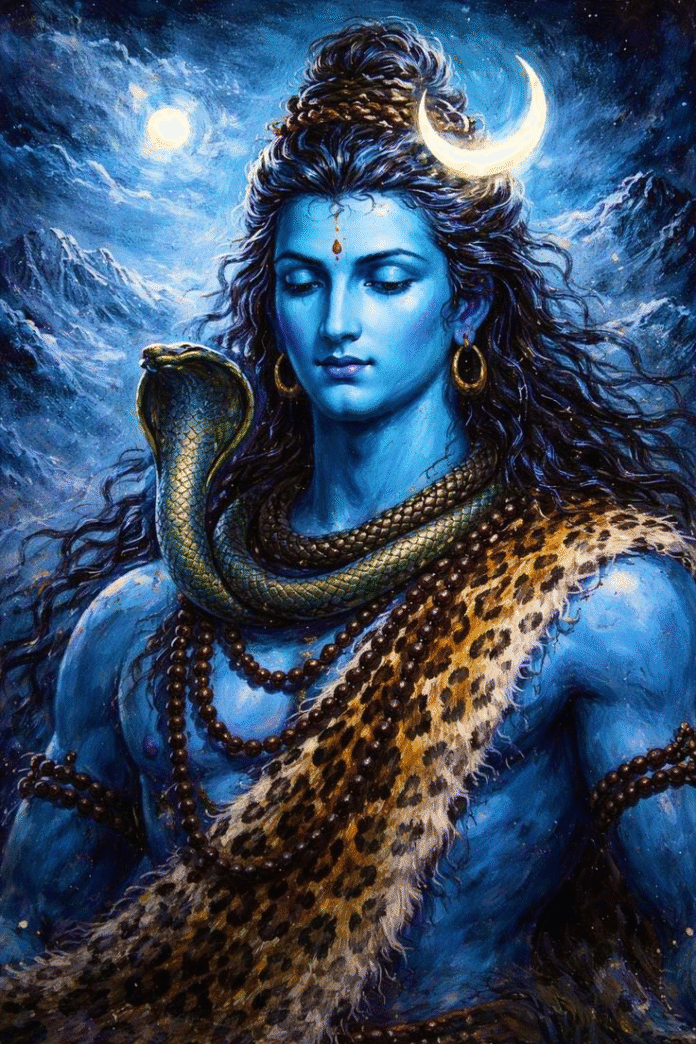
India’s spiritual landscape has always been intertwined with its economic rhythms, but perhaps no deity shapes this sacred-economic continuum as profoundly as Shiva. From Varanasi to Ujjain, from the icy heights of Kedarnath to the remote routes of Kailash–Mansarovar, Shiva’s pilgrimage circuits are not just sites of devotion—they are engines of local prosperity, cultural continuity, and creative expression.
A Spiritual Magnet That Moves Millions — and Markets
Shiva temples collectively draw hundreds of millions of pilgrims every year. The surging footfall in places like Kashi Vishwanath, Mahakaleshwar, Kedarnath, and dozens of Jyotirlingas triggers a cascading economic effect on hospitality and stays, transport networks, local crafts and cuisines and micro-businesses tied to rituals, offerings, logistics, and services.
Entire cities—Varanasi, Ujjain, Rameshwaram, Somnath—thrive on this cyclical pilgrimage economy, where faith directly supports livelihoods.
The Philosophy That Absorbs Venom, Not Spreads It
Shiva’s economic influence is matched only by the depth of his philosophy. He is the deity who drinks the world’s poison—the halahala churned from the cosmic ocean—to save creation. He absorbs negativity, instead of multiplying it.
In an age when outrage often travels faster than reasoning, Shiva offers a counter-culture. His message is disarmingly simple:
Strength is not in retaliating with venom—it is in holding it without letting it spill onto the world.
This idea has shaped generations of Indians, influencing social behavior, interpersonal ethics, and even political metaphors.
The Cosmic Dancer Who Moves Civilizations
Shiva’s dance—Nataraja—is not a performance; it is a philosophy. It speaks of creation, preservation, destruction, illusion and liberation. In that dynamic pose lies the universe’s pulse. This symbol has traveled from Chola temples to global museums, from classical stages to contemporary design. It inspires dancers, physicists, sculptors, architects, and innovators—each seeing in Shiva’s dance the blueprint of cosmic energy.
Shiva is not frozen in ancient stone; he is alive in contemporary culture.
His imagery—rudraksha, dreadlocks, ash, tiger skin, damru, trishul—has become an aesthetic embraced by youth across the world.
From pop culture to graphic tees, from meditation retreats to fusion music, Shiva’s cult blends spirituality with style. His presence is not merely religious—it is emotional, symbolic, and coolly counter-cultural.
Why He Is Called Bholenath — the Innocent Lord
Despite being the destroyer of illusions and the supreme ascetic, Shiva is affectionately called Bholenath, the innocent one.
Because he gives easily.
Forgives easily.
Loves fearlessly.
And stands by even those who come to him flawed and broken.
This openness makes his temples feel accessible:
No elaborate rituals required,
No intermediaries needed,
No conditions attached.
That emotional simplicity is one of the biggest drivers of Shiva devotion—and by extension, Shiva-centered temple economies.
The Bottom Line
Shiva is not just a deity—he is a cultural force whose philosophy, imagery, and spiritual gravity shape vast economic landscapes. His temples sustain cities, his symbols influence art and fashion, and his compassion molds the collective conscience.
In every pilgrim who walks toward a Jyotirlinga, in every artisan who carves his form, in every dancer who evokes Nataraja, and in every seeker who whispers “Har Har Mahadev,” the story continues—timeless, powerful, and profoundly human