

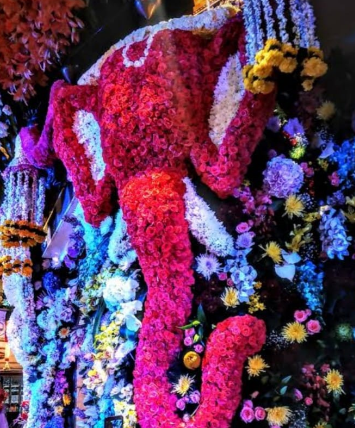
InnovationDuring the Ganeshotsav of 2024–2025, the Ichchapurti Ganesh Mandal in Koparkhairane, Navi Mumbai, captured hearts and accolades with its stunning eco-friendly Ganesh idol crafted entirely from flowers and paper pulp. Winning the Navi Mumbai Municipal Corporation’s Eco-Friendly and Plastic-Free Ganesh Festival Competition, the mandal’s innovative approach underscores a growing movement toward sustainable and environmentally conscious celebrations across India. Led by skilled sculptor Rajan Jhad, the mandal’s efforts highlight how tradition and environmental stewardship can harmoniously coexist.
A Floral Masterpiece for a Greener Festival
The Ichchapurti Ganesh idol, a breathtaking creation made from paper pulp and flowers, represents the mandal’s commitment to sustainability. The flowers used in the idol were thoughtfully collected from nirmalya (floral offerings) at prominent temples across Maharashtra, transforming sacred offerings into a symbol of environmental responsibility. This biodegradable idol, free from harmful chemicals, dissolves naturally without polluting water bodies, setting a powerful example for eco-conscious worship.Crafted by sculptor Rajan Jhad, the idol not only showcases artistic brilliance but also aligns with the mandal’s mission to reduce plastic use and promote conservation. The mandal’s victory in the Navi Mumbai Municipal Corporation’s competition for 2024–2025 reflects its dedication to fostering greener practices during Ganeshotsav, proving that devotion to Lord Ganesha can go hand in hand with protecting the planet.
Part of a Broader Eco-Friendly Movement
The Ichchapurti Ganesh Mandal’s efforts are part of a larger trend sweeping across India, where communities and mandals are embracing sustainable practices to combat the environmental impact of traditional Ganesh Chaturthi celebrations. Conventional plaster of Paris (PoP) idols and non-biodegradable decorations have long contributed to water pollution, but innovative alternatives are gaining traction
Seed Ganeshas: Idols made from clay and embedded with plant seeds allow devotees to immerse them in pots, where the seeds sprout into new plants, symbolizing renewal and growth.
Clay Idols: Many mandals and households are opting for Ganesha idols made from natural clay (shadu mati), which dissolves easily and is free from toxic chemicals.
Eco-Friendly Decorations: Decorations crafted from recycled and natural materials like cloth, paper, and wood are replacing harmful thermocol and plastic, reducing waste and environmental harm.
Artificial Immersion Sites: Cities like Navi Mumbai are setting up artificial immersion ponds to protect natural water bodies, such as lakes and seas, from pollution during visarjan.
These initiatives reflect a collective shift toward celebrating Ganeshotsav in ways that honor both cultural traditions and the environment.
A Legacy of Sustainability and Community Impact
The Ichchapurti Ganesh Mandal, established in 2002, has been a pioneer in promoting eco-friendly festivities for the past five years. Its 2024–2025 floral and paper pulp idol not only won accolades but also inspired communities to rethink their approach to festivals. By using biodegradable materials and repurposing temple offerings, the mandal demonstrates how small changes can have a significant impact on reducing pollution and plastic waste.The mandal’s efforts extend beyond the competition, aiming to raise awareness about environmental conservation. By showcasing sustainable practices, Ichchapurti Ganesh Mandal encourages devotees to adopt greener methods, ensuring that the joy of Ganeshotsav does not come at the cost of the environment.