

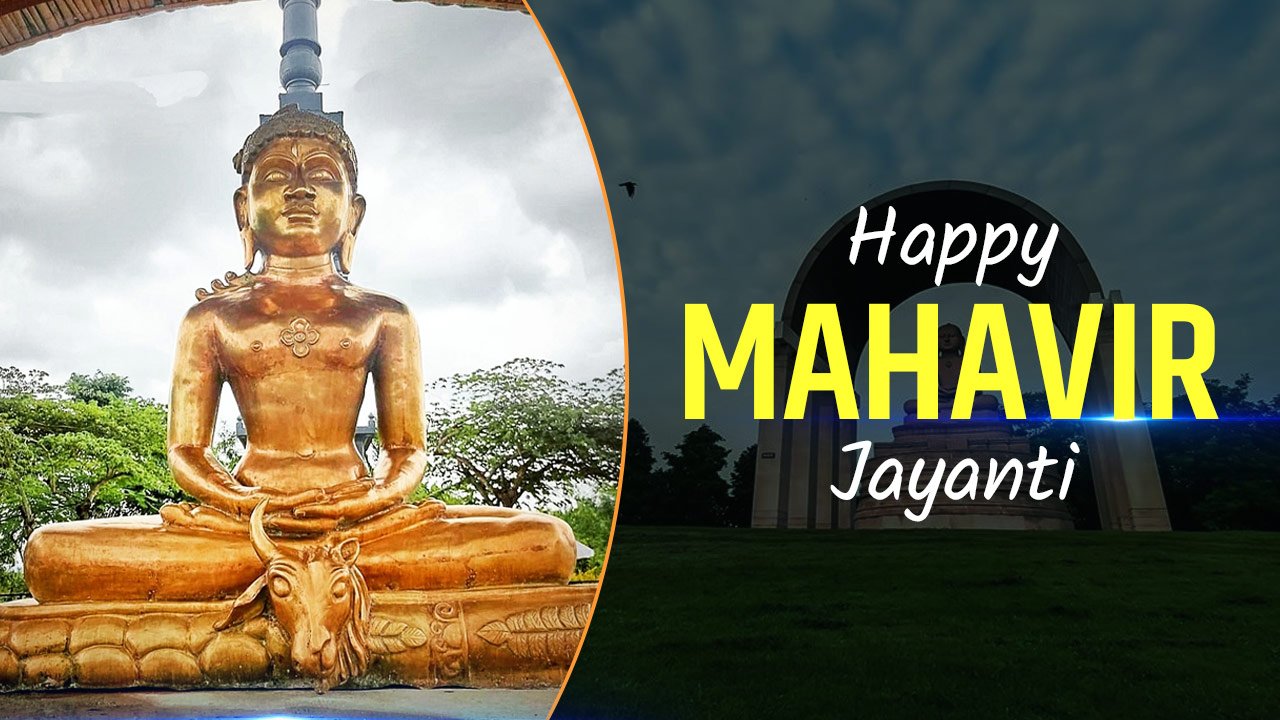
Mahavir Jayanti, one of the most important festivals for the Jain community, commemorates the birth of Lord Mahavir, the 24th and last Tirthankara of Jainism. This year, the festival will be observed on April 10, with the Trayodashi Tithi of Shukla Paksha in the Chaitra month beginning at 10:55 PM on April 9 and ending at 1:00 AM on April 11, according to Drik Panchang.
Lord Mahavir was born in 599 BCE in Kundagrama, a region in present-day Bihar, into the Ikshvaku dynasty. He grew up in a royal household, surrounded by wealth and comfort, yet chose a path of deep spiritual pursuit. At the age of 30, he renounced his worldly life in search of truth and enlightenment. After 12 years of intense meditation and ascetic practices, he attained Kevala Jnana, or absolute knowledge.
Following his enlightenment, Lord Mahavir dedicated his life to spreading the core principles of Jainism: Ahimsa (non-violence), Satya (truth), Asteya (non-stealing), Brahmacharya (celibacy), and Aparigraha (non-possession). These five ethical vows form the cornerstone of Jain philosophy and are central to the spiritual life of every follower.

The Significance of Mahavir Jayanti
Mahavir Jayanti is not only a celebration of Lord Mahavir’s birth but also a day for spiritual reflection. It holds deep significance for Jains as it encourages them to embody the values he taught. His message of compassion, discipline, and truthfulness continues to guide millions toward a life of ethical and mindful living.
On this auspicious day, devotees reaffirm their commitment to Lord Mahavir’s teachings by practicing non-violence, truth, and kindness in their daily lives. The festival serves as a powerful reminder to care for all living beings and live in harmony with nature.
Celebrations Across the World
Mahavir Jayanti is celebrated with great devotion and enthusiasm by Jains around the world. Although customs may vary across regions, most communities organize a Rath Yatra, where an idol of Lord Mahavir is carried in a beautifully decorated chariot. This procession symbolizes the spread of his message to humanity.
Devotional songs and bhajans are sung in praise of Lord Mahavir, while the idol is ceremonially bathed in an Abhisheka, representing spiritual purification. Acts of charity and selfless service are also emphasized during the celebrations, reflecting Lord Mahavir’s emphasis on compassion and non-attachment.
Many devotees visit Jain temples to participate in prayer meetings, listen to spiritual discourses, and take part in community service. Religious leaders and scholars share sermons and stories from Lord Mahavir’s life, inspiring followers to walk the path of righteousness and inner peace.