

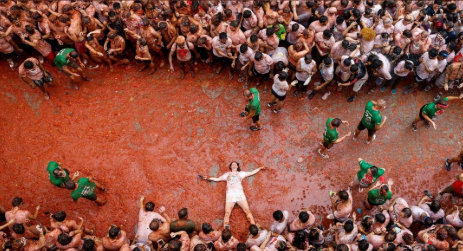
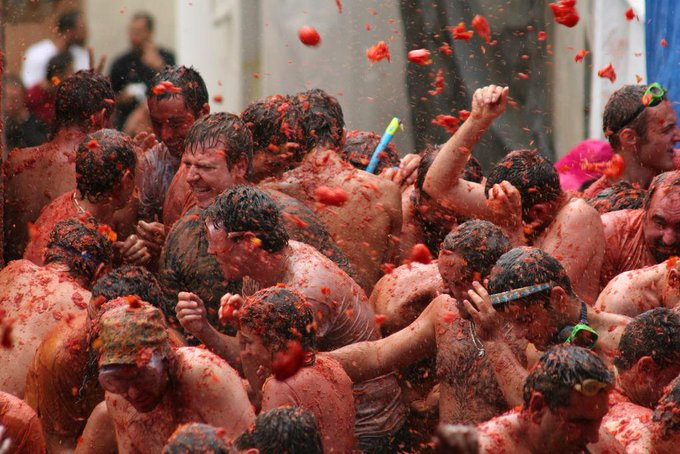
No flags. No politics. No winners. Just one hour of pure, pulpy chaos. On the last Wednesday of August, the sleepy Spanish town of Buñol transforms into a battlefield of laughter, where over 120 tons of tomatoes become weapons of joy. This isn’t a protest. It’s not a ritual. It’s La Tomatina — the world’s wildest food fight, where strangers become comrades in a tomato-soaked rebellion against boredom. Imagine thousands of people, drenched in red, slipping, sliding, and laughing as tomato juice rains from the sky. It’s messy. It’s mad. It’s magnificent. And it all started with a street scuffle that spiraled into a global celebration of fun, freedom, and fearless festivity.
This is not just a festival. It’s a splash of rebellion, a squeeze of unity, and a splat of pure human joy. Ready to dive into the madness? Let’s paint the town red. Literally.
The Origin Story: From Street Scuffle to Global Sensation
- 1945: During a local parade, a group of boys tried to join the festivities. A scuffle broke out, a vegetable cart toppled, and tomatoes became weapons of choice.
- 1950s: Dictator Franco banned the festival, calling it wasteful. Locals protested with mock “tomato funerals” — complete with coffins and funeral marches.
- 1980s: TV coverage turned La Tomatina into a national obsession.
- 2002: Officially declared a Fiesta of International Tourist Interest by Spain’s tourism board.
How the Madness Unfolds
The day kicks off with the Palo Jabón — a greasy pole climb for a ham. Then, trucks unload 120 tons of overripe tomatoes, and for one hour, it’s all-out pulp warfare. The only rules? Squash before you throw, wear goggles, and embrace the mess.
Why People Celebrate
La Tomatina isn’t about winning — it’s about letting go, laughing together, and turning chaos into connection. With visitors from over 50 countries, it’s a symbol of joy that transcends language and borders.