

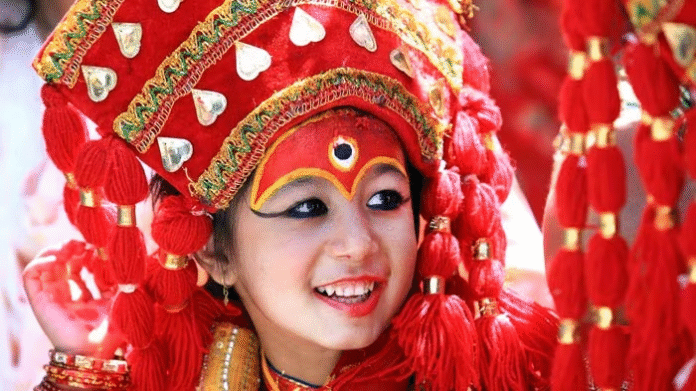
Indra Jatra, one of Nepal’s most iconic festivals, is an eight-day celebration held at Basantapur Durbar Square in Kathmandu. Dedicated to Lord Indra, the Hindu god of rain and king of heaven, the festival dates back to the 10th century when it was established by King Gunakamadeva to commemorate the founding of Kathmandu. Marking the end of the monsoon season, it seeks divine blessings for a bountiful harvest. Deeply rooted in the culture of the Newar community, Indra Jatra attracts thousands of devotees and tourists, who gather to witness its ancient rituals, colorful processions, and spiritual traditions.
The Kumari Jatra: Procession of the Living Goddess
At the heart of the celebration is the Kumari Jatra, a spectacular chariot procession of the Kumari, the revered living goddess worshipped by both Hindus and Buddhists. The Kumari, along with human representations of deities such as Ganesh and Bhairav in separate chariots, makes a rare public appearance that captivates onlookers. The event is often attended by Nepal’s highest dignitaries, including the Prime Minister and President, underscoring the festival’s immense cultural and spiritual importance.
Masked Dances and Sacred Symbols
Indra Jatra is renowned for its vibrant masked dances, especially the Lakhe and Pulukisi performances, where masked dancers portray Hindu deities and demons in dramatic displays to the beat of traditional drums. Another highlight is the erection of the Yosin (Indra’s flag pole) in Basantapur Square, marking the official start of the festival. The display of the giant Akash Bhairava mask further adds to the grandeur, embodying the divine energy that defines the celebration.
Honoring Ancestors and Strengthening Community
Beyond its divine tributes, the festival carries deep personal significance for families. Butter lamps are lit to honor deceased relatives, creating moments of remembrance that strengthen bonds within the community. This blend of spiritual devotion, ancestral homage, and cultural pageantry makes Indra Jatra both a sacred and communal experience for locals and visitors alike.
A Grand Finale
After eight days of prayers, processions, and performances, the festival concludes with the ceremonial lowering of the Yosin pole, signaling the end of the festivities. More than just a celebration of Lord Indra, Indra Jatra honors Kathmandu’s founding and showcases the enduring traditions of the Newar community—making it a must-see cultural spectacle in the heart of Nepal’s capital.