Home Blog Page 97

Shooting Begins for PM Modi Biopic ‘Maa Vande’; Unni Mukundan to Play the Prime Minister

0

Shooting has commenced for the biopic Maa Vande, based on the life of Prime Minister Narendra Modi. Popular Malayalam cinema actor Unni Mukundan will portray the role of the Prime Minister in the film. Mukundan was last seen in the film Marco.

The makers announced the start of filming on Saturday through their official X (formerly Twitter) handle. The post included a video offering glimpses of the traditional puja ceremony held ahead of the shoot.

The caption read, “Shooting for Maa Vande has begun. A new chapter is now beginning in telling the story of the man who shaped the destiny of the nation.”

The film was officially announced in September on the occasion of Prime Minister Modi’s birthday. Maa Vande is being produced by Veer Reddy M under the banner of Silver Cast Creations, while direction is helmed by filmmaker Kranti Kumar CH.

Notably, Unni Mukundan had met Prime Minister Narendra Modi in Kochi in 2023.

Who is Unni Mukundan?

Unni Mukundan is a well-known actor in the Malayalam film industry. He was born in Thrissur, Kerala, but spent a significant part of his early life in Gujarat, completing his schooling in Ahmedabad.

He made his acting debut with the Tamil film Seedan in 2011. After initially playing supporting roles, he rose to prominence with his first lead role in Mallu Singh (2012). He went on to feature in several successful films, including Vikramadithyan (2014), KL 10 Patthu (2015), Style (2016), Oru Murai Vanthu Parthaya (2016), Achayans (2017), Malikappuram (2022), and Marco (2024).

Unni Mukundan has also worked in other languages, appearing in the Telugu blockbuster Janatha Garage (2016) and the Tamil film Garudan (2024).

In recognition of his work, he won the National Film Award in 2021 for his performance in Meppadiyan.

Elon Musk Wealth Surpasses Combined GDP of Pakistan, Sri Lanka, and Nepal

0

The world’s richest person, Elon Musk, now has a net worth exceeding the combined GDP of Pakistan, Sri Lanka, and Nepal. In just four days, Musk’s wealth surged by $150 billion (₹13.46 lakh crore), briefly crossing $750 billion (₹67.18 lakh crore). The combined GDP of the three countries is estimated at around $555 billion.

Musk is the first individual in history to reach such a staggering level of personal wealth. Earlier, on December 16, his net worth stood at $600 billion (₹54 lakh crore). This dramatic rise followed a key ruling by the Delaware Supreme Court, which significantly enhanced Musk’s Tesla compensation package.

According to the Forbes Billionaires Index, Musk’s current net worth is estimated at $649 billion. This amount is equivalent to the combined wealth of India’s top 40 richest individuals. Remarkably, Musk’s fortune also exceeds the combined wealth of the world’s next richest tech billionaires—Larry Page ($252.6 billion), Larry Ellison ($242.7 billion), and Jeff Bezos ($239.4 billion).

Three Major Reasons Behind Musk’s Wealth Surge

1. Restoration of Tesla’s $56 Billion Pay Package
In 2018, Tesla awarded Musk a $56 billion stock-option compensation package. A lower court cancelled it in 2024, but in December 2025, the Delaware Supreme Court reinstated the package. Due to Tesla’s rising valuation, the package is now worth an estimated $139 billion. This decision triggered the single largest jump in Musk’s wealth, pushing it beyond $700 billion for the first time.

2. SpaceX Valuation Touches $800 Billion
According to Reuters, an internal share sale recently valued SpaceX at $800 billion. Musk owns about 42% of the company. If SpaceX eventually lists on US stock exchanges at this valuation, Musk’s stake alone could be worth more than $336 billion.

3. Tesla Share Price Rise and New $1 Trillion Pay Package
Tesla’s rising share price, combined with shareholder approval of Musk’s new $1 trillion pay package in November 2025, further boosted his wealth. More than $340 billion was added to Musk’s net worth in 2025 alone. Musk holds around a 12% stake in Tesla, meaning any increase in share price directly raises his personal wealth.

Elon Musk’s Net Worth Increased 75 Times in 10 Years

YearNet Worth
2016$10.70 billion (₹94,800 crore)
2017$13.90 billion (₹1.23 lakh crore)
2018$19.90 billion (₹1.76 lakh crore)
2019$22.30 billion (₹1.97 lakh crore)
2020$24.60 billion (₹2.18 lakh crore)
2021$151.00 billion (₹13.38 lakh crore)
2022$219.00 billion (₹19.41 lakh crore)
2023$180.00 billion (₹15.96 lakh crore)
2024$195.00 billion (₹17.29 lakh crore)
2025$500.00 billion (₹43.99 lakh crore)
2025 (Dec)$750.00 billion (₹67 lakh crore)

Source: Forbes, December 2025

Role of Tesla and xAI

Tesla:
Apart from SpaceX, Tesla remains a major contributor to Musk’s fortune. In 2025, Tesla shares have climbed 13%. On Monday, shares rose nearly 4% after Musk announced that Tesla was testing robotaxis without a safety monitor in the front passenger seat. Musk’s Tesla stake is currently valued at approximately $197 billion.

xAI:
Musk’s artificial intelligence startup, xAI, is reportedly in advanced talks to raise $15 billion in new funding at a valuation of $230 billion, further adding to his growing wealth portfolio.

From a Teenage Game Developer to Global Tycoon

Elon Musk began his entrepreneurial journey at a young age. He learned computer programming at 10 and created a video game called Blastar at just 12 years old, selling it to a local magazine for $500—his first business success.

In 1995, Musk co-founded web software company Zip2, which was acquired by Compaq in 1999 for $307 million. Musk earned $22 million from his 7% stake. He went on to found PayPal in 1999, which was acquired by eBay in 2002 for $1.5 billion, earning Musk $180 million.

Soon after, Musk founded SpaceX with the ambition of making humanity a multi-planetary species by establishing a colony on Mars—a vision that continues to shape his business empire today.

Year-End 2025 Property Sale Tax Tips You Must Know to Save Capital Gains Tax

0

If you sold a property in 2025, you might be facing a significant capital gains tax bill or you may have smart options available to reduce or even eliminate that liability. The tax rules for property sale profits have changed recently, and understanding how to optimise your tax position before the financial year closes can make a substantial difference to your finances. 

How long term capital gains tax works after selling property

When you sell a property held for more than 24 months, it is treated as a long term capital asset in India. Long term capital gains (LTCG) on such assets are subject to tax at a lower rate. Under the current regime, LTCG tax is charged at 12.5 percent without indexation, which replaced the older system where gains were taxed at 20 percent with inflation indexation. That means your gains are calculated on the raw difference between the sale price and the purchase cost, making exemptions and deductions even more important to reduce tax. 

How comparing two computation methods can help

Under the amended tax rules, taxpayers must calculate long term capital gains in two ways: one at a 12.5 percent rate on unadjusted gains and another at a higher rate after adjusting for indexation benefits. You are required to pay tax on the lower of the two figures. This can reduce your tax burden substantially if indexation works in your favour, as seen in real scenarios where the second method yields a much lower taxable gain. 

Section 54 exemption for buying a new home

One of the most powerful tax savings options is provided under Section 54 of the Income Tax Act. If you sell a residential property and use the long term capital gains to buy or construct another residential property, you can claim full exemption on the capital gains. The new home must be purchased within one year before or two years after the sale, or it must be constructed within three years. This rule remains one of the most popular ways for sellers to avoid paying any tax on profits, provided all conditions are met. 

Section 54F or non residential assets

If the capital gains arise from selling an asset other than a house such as land, commercial property, gold, or other capital assets you can still claim exemption under Section 54F by investing the net sale proceeds (not just the gains) into a residential house. The same timelines apply for purchase or construction. This option helps investors diversifying into real estate to save tax when selling non-residential assets. 

Section 54EC for bonds to save tax without reinvesting in property

If you do not plan to buy or build a new house, Section 54EC offers a way to defer or avoid capital gains tax by investing the gains in specified government-approved bonds, such as those issued by the National Highways Authority of India or the Rural Electrification Corporation. These bonds must be purchased within six months of the sale, and they usually come with a five-year lock-in period. While the returns tend to be modest, this method locks in a tax break on the capital gains. 

Use of capital gains account scheme when reinvestment is delayed

Sometimes you may not be ready to buy a new property immediately after selling one, or you may be waiting for a suitable opportunity. In such cases, the Capital Gains Account Scheme (CGAS) lets you park your gains in a designated bank account, effectively preserving your eligibility for exemptions under Section 54 and Section 54F. However, be cautious: depositing without a clear reinvestment plan can increase tax if the funds are withdrawn without fulfilling exemption conditions. 

Why joint ownership and expense deductions can reduce tax

If a property was jointly owned with family members, splitting the capital gains among co-owners can utilise each person’s basic exemption limit, thereby lowering the total tax. In addition, deducting legitimate selling expenses such as brokerage fees, legal charges and advertising costs can reduce your taxable gain. These smaller steps can add up to meaningful tax savings, particularly when combined with other exemption strategies. 

Timing your sale and advance tax planning

Where timing allows, carefully planning the sale date can improve your cash flow and tax outcome. Selling before the end of a fiscal year triggers advance tax liability that often needs to be settled quickly. Postponing a sale into the next fiscal year, when possible, can allow you to spread advance tax payments over instalments and optimise your planning. 

Why professional advice matters before filing ITR

Property tax planning can be complex, especially when exemptions, bonds, reinvestment deadlines and capital gains computations intersect. Consulting a qualified chartered accountant or tax advisor before filing your income tax return is crucial to ensure you have claimed all eligible exemptions and complied with conditions. This can help you avoid penalties or missed opportunities that result in unnecessary tax. 

Why UPSC Ethics Syllabus Revamp Matters for Gen Z Aspirants and Civil Services Preparation

0

The Union Public Service Commission (UPSC) has updated its ethics component within the Civil Services examination framework, spotlighting contemporary relevance, real-world application and value-based governance. Often seen as one of the most challenging papers, the ethics paper now calls for a deeper understanding of how moral values, integrity and professional conduct influence public administration, policy decisions and leadership in complex societal contexts. The revision reflects changing expectations from future civil servants and emphasises ethical reasoning as an essential skill rather than just another theoretical subject. 

Ethics as the heart of civil services values and governance

The UPSC ethics syllabus, formally known as Ethics, Integrity and Aptitude, occupies a central place in the Civil Services exam. It tests not just what candidates know but how they think, judge and respond to real life dilemmas. Instead of rote memorisation, the paper looks for clarity in reasoning, coherence in ethical arguments and sensitivity towards social realities. It evaluates aspirants on values like truth, compassion, accountability, impartiality and respect for diversity, all of which are fundamental to the civil services ethos. 

Understanding human values as the foundation of decision making

At the core of the updated syllabus is the idea of human values the basic principles that guide behaviour and shape ethical choices. This includes self-reflection, empathy, respect for others and commitment to fairness. The syllabus encourages aspirants to connect these values with everyday decisions that public servants must make, especially when balancing competing interests, social expectations and legal boundaries. By placing human values at the centre, UPSC nudges future administrators to internalise integrity rather than merely learn definitions. 

Role of governance and public service in the ethics framework

The syllabus extends beyond individual values to how they integrate with governance systems. Candidates must understand concepts like accountability mechanisms, transparency, citizen centricity and responsiveness in public institutions. This shift recognises that ethical civil services are not just about personal virtue but how those virtues translate into policies that respect rights, uphold justice and deliver equitable outcomes. Governance, in this context, is framed as a lived practice, not abstract theory.

Ethical dilemmas and case studies as tools for real world learning

One of the distinctive features of the ethics paper is the use of case studies and situational questions. These scenarios mirror real life challenges where values may conflict or where there are no straightforward answers. Aspirants are expected to analyse, prioritise and propose balanced responses that reflect ethical sensitivity, legal awareness and practical viability. This method bridges the gap between examination preparation and real administrative responsibilities that officers will face on the ground. 

Why Gen Z aspirants should take special note of this shift

For Gen Z students preparing for the UPSC, this update serves as both a challenge and an opportunity. Unlike topics that rely heavily on memorisation, ethics rewards deeper thinking, personal reflection and a nuanced grasp of societal dynamics. Younger aspirants who are already engaged with issues of social justice, climate action, transparency and digital governance can relate these real world concerns directly into their answers, making their preparation more contemporary and relevant.

How ethics shapes the modern image of civil services

Today’s civil servant is expected to be a problem solver, mediator and public steward rather than a distant bureaucrat. The emphasis on ethics aligns with evolving public expectations where citizens demand integrity, fairness and empathy from administrators. By foregrounding these values within the examination itself, UPSC reinforces that civil services are not just about power or prestige but about responsible leadership that fosters trust and social harmony. 

Preparing ethically for life beyond the exam

Success in the ethics paper is not limited to marks alone. The process of learning ethics itself enriches personal worldview, decision making and interpersonal conduct. Aspirants who internalise principles like accountability, humility and service often find that these qualities better prepare them for leadership roles in public life, civil organisations and even the private sector. In this sense, ethics education becomes a lifelong asset, not just an exam requirement.

Why the revised ethics syllabus reflects India’s future needs

As India navigates rapid social change, technological disruption and complex governance challenges, the expectation from civil servants has evolved. The updated ethics syllabus positions future officers to think not just in terms of rules and procedures but in terms of moral imagination, equity and sustainable impact. In a world that demands both competence and conscience, this shift by UPSC signals a progressive redefinition of what it means to serve the nation. 

Legoland Deutschland to Open World’s First LEGO Harry Potter Land and Themed Hotel. Watch Pics…

0

A ground-breaking new attraction is coming to Germany that will excite fans of the wizarding world like never before. Merlin Entertainments and Warner Bros. Discovery Global Experiences have announced plans to build the world’s first LEGO Harry Potter land and the first ever Harry Potter themed guest accommodation at LEGOLAND Deutschland Resort in Günzburg, Bavaria. This innovative project will bring the magical world of Hogwarts and its surroundings to life in dazzling LEGO brick form, offering a distinct experience that blends fantasy, creativity and family entertainment like no other. 

LEGOLAND Deutschland Harry Potter land

The new land is being developed as part of a strategic partnership between Merlin Entertainments, the company behind LEGOLAND parks, and Warner Bros. Discovery Global Experiences, the rights holder for the Harry Potter franchise. For the first time in the world, visitors will be able to explore a fully themed Harry Potter environment built with LEGO bricks, merging two iconic brands in a single immersive landscape. The themed land is expected to feature familiar magical settings and characters interpreted through the vibrant and playful lens of LEGO. 

Legoland Deutschland to Open World’s First LEGO Harry Potter Land and Themed Hotel. Watch Pics...

LEGOLAND Deutschland themed Harry Potter hotel

Alongside the themed land, the resort will include the world’s first Harry Potter themed hotel accommodation. Designed to extend the magic beyond the day’s attractions, this unique lodging will allow guests to stay in rooms inspired by the wizarding universe, creating a fully immersive experience from morning through night. While full design details are yet to be revealed, the combination of land and themed hotel marks a significant expansion of LEGOLAND Deutschland’s offerings and sets a new benchmark for themed hospitality. 

Legoland Deutschland to Open World’s First LEGO Harry Potter Land and Themed Hotel. Watch Pics...

What makes this development unique

What distinguishes this project from other Harry Potter attractions around the world is its integration with LEGO. Although theme parks like Universal’s Wizarding World of Harry Potter in Florida, Japan and other locations have long offered rides and environments inspired by the books and films, none has combined that storytelling with LEGO’s creative world in a dedicated, large-scale land and guest accommodation. LEGOLAND’s approach aims to appeal to both LEGO enthusiasts and lovers of Rowling’s wizarding world, creating a fresh look at familiar magic. 

Legoland Deutschland to Open World’s First LEGO Harry Potter Land and Themed Hotel. Watch Pics...

Impact on tourism and family travel

The announcement of the LEGO Harry Potter land and hotel is expected to have a wider impact on tourism in Bavaria and Europe’s family travel market. LEGOLAND Deutschland already attracts visitors from across Europe, and the addition of a globally unique attraction will likely draw even more international guests, contributing to the local economy and reinforcing Germany’s position as a major destination for themed entertainment. The project is also expected to appeal to multi-generational travellers, offering experiences that combine storytelling, play, innovation and cultural imagination. 

Plans and expected timeline

Details about the specific attractions, rides, shows and hotel features remain limited as the project is still in early development. The themed land and hotel are expected to be completed over the next few years, with announcements from LEGOLAND Deutschland and partners anticipated as planning progresses. When finished, this new Harry Potter destination will sit alongside other global wizarding attractions and offer visitors a distinctly creative way to experience the magic. 

Why the world is watching this opening

The announcement has sparked excitement among fans, families and travel enthusiasts worldwide. By fusing the globally beloved Harry Potter universe with LEGO’s playful and imaginative aesthetic, the project promises something truly distinctive. It reflects broader trends in themed entertainment where iconic media franchises are transformed into interactive, real-world experiences that engage visitors on multiple sensory levels. 

Christmas Trees: From Strasbourg to Dortmund, Know Most Iconic Names Across the World

0

Every December, Christmas trees become the visual heart of celebrations across the world. Set in historic squares, modern city centres and festive markets, these trees are not just decorations but cultural landmarks that draw millions of visitors. From Europe’s oldest holiday traditions to modern spectacles, these iconic Christmas trees represent the spirit of the festive season in their cities.

Strasbourg Christmas tree

Strasbourg’s Christmas tree is considered one of the oldest and most traditional in Europe. Located at the city’s main square, it forms the centre of the famous Christmas market that has existed for centuries. The tree reflects the region’s deep connection to Christmas customs, drawing visitors who come to experience Alsatian traditions, festive food and historic surroundings during the winter season.

Dortmund Christmas tree

Dortmund is home to one of the tallest Christmas trees in the world. Constructed using hundreds of individual fir trees, the structure dominates the city’s main square every December. The tree is surrounded by one of Germany’s largest Christmas markets, making it a major attraction for both locals and tourists looking to experience the festive atmosphere.

Tallinn Christmas tree

Tallinn’s Christmas tree stands in the heart of the city’s medieval old town. With cobbled streets and historic buildings as its backdrop, the tree adds to the city’s winter charm. It plays an important role in local celebrations and has become a symbol of Tallinn’s long standing Christmas traditions that date back several centuries.

Vienna Christmas tree

Vienna’s Christmas tree is set against the city’s grand architectural landmarks. The tree complements the festive markets that appear across the city during December. Known for its elegant decorations, it reflects Vienna’s blend of classical culture and seasonal celebration, attracting visitors who enjoy music, food and winter festivities.

Prague Christmas tree

Prague’s Christmas tree is placed in one of the city’s busiest squares and becomes a focal point during the holiday season. Surrounded by traditional stalls and performances, it adds warmth to the cold winter evenings. The tree enhances Prague’s festive atmosphere and remains an important part of the city’s December celebrations.

New York Christmas tree

The Christmas tree at Rockefeller Centre in New York is among the most recognised in the world. Its annual lighting ceremony marks the beginning of the holiday season in the city. The tree attracts large crowds and global attention, turning it into a symbol of Christmas celebrations in the United States.

Why iconic Christmas trees matter

These Christmas trees go beyond decoration. They bring people together, support local traditions and create shared moments of celebration. Each tree reflects the character of its city while reminding people across the world of the joy, warmth and unity associated with the festive season.

Guwahati Airport becomes India’s first nature themed airport, redefining how travellers experience the North East

0

Guwahati has added another first to its growing list of milestones. Lokpriya Gopinath Bordoloi International Airport has officially emerged as India’s first nature themed airport, designed to reflect the rich biodiversity, landscapes and cultural soul of the northeast. The transformation is not just cosmetic but deeply rooted in showcasing Assam’s natural identity to every traveller who passes through its gates.

This new approach positions the airport as more than a transit point. It becomes a visual and sensory introduction to the region itself.

An airport inspired by forests rivers and wildlife

The nature theme draws heavily from Assam’s lush greenery, river systems and iconic wildlife. From interiors that reflect forest textures to artwork inspired by local flora and fauna, the airport mirrors the ecological richness of the Brahmaputra valley. Elements inspired by rainforests, wetlands and grasslands create a calm, immersive atmosphere that immediately sets it apart from conventional airport designs.

The idea is to ensure that visitors feel connected to the region even before they step outside the terminal.

Guwahati Airport becomes India’s first nature themed airport, redefining how travellers experience the North East

Celebrating Assam’s identity through design

The revamped airport integrates local culture with natural aesthetics. Murals, installations and design elements highlight Assam’s traditional art forms while staying aligned with the broader nature theme. The use of earthy colours, organic shapes and sustainable materials reflects a conscious effort to blend modern infrastructure with regional identity.

This design philosophy ensures that the airport tells a story of the land, its people and its environment in a subtle yet impactful way.

Guwahati Airport becomes India’s first nature themed airport, redefining how travellers experience the North East

A gateway that promotes sustainability awareness

Beyond visual appeal, the nature themed concept also signals a shift towards sustainability awareness. By foregrounding nature, the airport encourages conversations around conservation and environmental responsibility. It aligns with global trends where airports are increasingly being designed as green, community focused spaces rather than purely commercial hubs.

This move also strengthens Assam’s image as a state deeply connected to nature and ecological balance.

Guwahati Airport becomes India’s first nature themed airport, redefining how travellers experience the North East

Why this matters for tourism and the northeast

As the primary gateway to the northeast, Guwahati airport plays a crucial role in shaping first impressions. A nature themed airport enhances the tourism narrative by positioning the region as unique, serene and culturally rich. For international and domestic travellers alike, it sets the tone for exploring destinations such as Kaziranga, Majuli, Meghalaya and Arunachal Pradesh.

The initiative also reinforces the northeast’s growing prominence in India’s tourism and infrastructure landscape.

Setting a new benchmark for Indian airports

With this transformation, Guwahati airport sets a precedent for how infrastructure can reflect local identity rather than adopting uniform global designs. It shows that airports can be functional while still being expressive, rooted and meaningful.

India’s first nature themed airport is not just about aesthetics. It is about storytelling, sustainability and pride in regional heritage, all coming together at one of the country’s most important gateways to the east.

BlueBird Satellite Launch Set for December 24

0

India’s heavy-lift launch vehicle LVM-3 is set to place a major US commercial satellite into orbit on December 24, marking another milestone in the country’s expanding role in global space commerce. The mission will be executed by Newspace India Limited under a commercial agreement, highlighting India’s growing credibility as a launch service provider for high-mass foreign satellites.

Launch Schedule and Mission Profile

India Space Research Orgnisation has confirmed that the LVM3-M6 mission will lift off at 8.54 am from the second launch pad at Satish Dhawan Space Centre. The mission was initially planned for mid-December but was rescheduled to December 24 following internal readiness assessments. The launch will place the BlueBird Block-2 satellite, also referred to as BlueBird-6, into low Earth orbit.

Role of NSIL and LVM-3 Vehicle

NewSpace India Limited is responsible for executing the launch under a commercial contract. While the PSLV has historically been India’s workhorse for foreign satellite launches, the LVM-3 has emerged as a platform for heavier payloads. Its commercial debut in 2022 demonstrated India’s capability to launch satellites weighing well over five tonnes, expanding its addressable market in the global launch sector.

BlueBird Satellite Capabilities

Developed by AST SpaceMobile, the BlueBird Block-2 satellite weighs around 6,500 kg and forms part of a planned constellation designed to deliver direct-to-smartphone cellular broadband globally. The satellite features nearly 2,400 square feet of phased-array antennas, making it the largest commercial array deployed in low Earth orbit. Each satellite supports high processing bandwidth and is designed to deliver high-speed connectivity without specialised ground hardware.

What to Note ?

  • LVM-3 is India’s heavy-lift launch vehicle capable of carrying over 8 tonnes to low Earth orbit.
  • NSIL is the commercial arm of ISRO handling foreign launch contracts.
  • Low Earth orbit typically ranges from 160 km to 2,000 km above Earth.
  • Phased-array antennas allow electronic beam steering without moving parts.

Strategic Significance for India’s Space Programme

The mission underscores India’s transition from a launch-dependent nation to a trusted provider for advanced international satellites. Launching a high-value US commercial satellite using LVM-3 reinforces India’s position in the competitive global space economy and signals growing confidence in its heavy-lift launch capabilities.

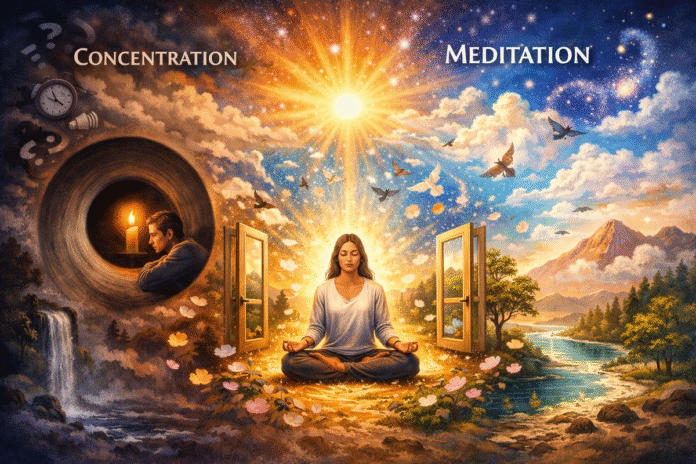
International Meditation Day 2025: Why December 22 is a Reminder to Pause, Breathe and Reset the Mind…

0

December 22 is observed globally as International Meditation Day, a moment in the calendar that invites people to slow down in a fast moving world. Recognised by the United Nations, the day highlights meditation as a powerful tool for mental clarity, emotional balance and inner wellbeing. At a time when stress, anxiety and digital overload define everyday life, meditation is no longer seen as a spiritual luxury but as a practical life skill.

Rooted in ancient traditions and now backed by modern science, meditation continues to shape how people heal, grow and reconnect with themselves.

Meditation as a timeless practice across civilizations

Meditation is not a modern trend. Its roots stretch back thousands of years to ancient Indian, Buddhist, Taoist and yogic traditions. In Indian philosophy, meditation was seen as a path to self realisation and inner awakening. Texts like the Vedas, Upanishads and Bhagavad Gita speak of dhyana as a way to quiet the mind and understand one’s true nature.

Across cultures, meditation was practised by monks, sages and seekers not to escape life, but to understand it better. Over time, this ancient wisdom crossed borders and evolved into multiple forms that are now practised worldwide.

Why meditation is considered a form of therapy

In today’s context, meditation is widely recognised as a mind body therapy. It is used alongside clinical treatments for stress, depression, anxiety and trauma. Unlike medication, meditation trains the mind to observe thoughts rather than react to them, creating emotional resilience over time.

Therapies such as mindfulness based stress reduction and meditation guided cognitive therapy are now integrated into healthcare systems globally. Meditation works by calming the nervous system, lowering cortisol levels and improving emotional regulation.

The science backed benefits of meditation

Regular meditation has been linked to improved focus, better sleep and reduced stress. Studies show that consistent practice can lower blood pressure, strengthen immunity and enhance brain function. It also improves self awareness, helping individuals respond thoughtfully instead of reacting impulsively.

On an emotional level, meditation cultivates patience, empathy and inner stability. People who meditate often report feeling more grounded, optimistic and emotionally balanced even during difficult situations.

Simple meditation tips for beginners

For those starting out, meditation does not require long hours or complex techniques. Even five to ten minutes a day can make a difference. Beginners should start by sitting comfortably, closing their eyes and focusing on their breath. Thoughts will come and go, and that is normal. The practice lies in gently bringing attention back to the breath without judgement.

Consistency matters more than duration. Meditating at the same time each day helps build a habit. Beginners can also explore guided meditations to stay focused and relaxed.

Different forms of meditation and what they offer

Meditation comes in many forms, each offering unique benefits. Mindfulness meditation focuses on present moment awareness. Mantra meditation uses sound or repetition to anchor attention. Loving kindness meditation nurtures compassion towards oneself and others. Movement based practices like yoga meditation combine physical flow with mental stillness.

Choosing the right form depends on personal comfort and intention. There is no one size fits all approach.

The mythological and spiritual significance of meditation

In mythology, meditation is often depicted as a gateway to higher wisdom. Hindu deities, Buddhist monks and ancient sages are portrayed in deep meditation, symbolising mastery over the mind. Meditation was believed to align the individual with cosmic energy and universal truth.

These spiritual narratives reinforced meditation as a sacred practice that connects the human mind with something larger than itself, giving it both philosophical and emotional depth.

Why International Meditation Day matters today

International Meditation Day serves as a reminder that inner peace is not a destination but a daily practice. In a world driven by speed and productivity, meditation offers stillness without withdrawal and awareness without judgment.

By acknowledging this day, the world recognises that mental wellbeing is as essential as physical health. Meditation stands as a simple yet profound reminder that sometimes, the most powerful progress begins by slowing down.

Srinivasa Ramanujan Birth Anniversary: Why December 22 is Celebrated as National Mathematics Day in India

0

Every year on December 22, India remembers one of its greatest intellectual minds Srinivasa Ramanujan. Born in 1887, Ramanujan transformed the world of mathematics despite having no formal training, limited resources and a life cut tragically short. His birthday is celebrated as National Mathematics Day to honour not just his genius, but the spirit of curiosity, perseverance and pure intellect that continues to inspire students, scientists and mathematicians across the globe.

From a modest background in Tamil Nadu to global recognition, Ramanujan’s life remains one of the most extraordinary stories in scientific history.

A childhood shaped by numbers not privilege

Srinivasa Ramanujan was born on December 22, 1887, in Erode, Tamil Nadu, and raised in the town of Kumbakonam. Coming from a financially struggling Brahmin family, his childhood was marked by poverty rather than privilege. From a very young age, Ramanujan showed an unusual fascination with numbers. By the age of 12, he had mastered advanced trigonometry on his own and began developing original mathematical ideas without access to formal textbooks or guidance.

Despite his brilliance, Ramanujan struggled in traditional academics. He failed college exams not because he lacked intelligence, but because he focused obsessively on mathematics while ignoring other subjects. This cost him scholarships and degrees, pushing him deeper into financial hardship.

A self taught genius who rewrote mathematical thinking

What set Ramanujan apart was not just intelligence but originality. He did not learn mathematics through structured methods. Instead, he discovered formulas intuitively and recorded thousands of results in notebooks, many without proofs. His work covered number theory, infinite series, continued fractions and mathematical analysis.

Some of his most famous contributions include the Ramanujan prime, Ramanujan theta function, mock theta functions and ground-breaking work on partition theory. Even today, mathematicians continue to discover new meanings and applications hidden within his formulas, decades after his death.

His Intuition was so advanced that many of his results were verified by Western mathematicians years later, proving that his insights were not guesses but deep mathematical truths.

The letter that changed the course of his life

In 1913, living in extreme poverty, Ramanujan wrote a letter to British mathematician G H Hardy at Cambridge University. The letter contained over 100 theorems, identities and equations. Hardy immediately recognised that the work could not belong to an ordinary mind.

This letter led to Ramanujan being invited to Cambridge in 1914, where he collaborated with Hardy and other mathematicians. Despite cultural shock, health issues and racial prejudice, Ramanujan produced some of his most influential work during this period and was elected a Fellow of the Royal Society in 1918, one of the highest scientific honours.

A short life marked by extraordinary impact

Ramanujan’s health deteriorated rapidly due to poor living conditions, stress and illness. He returned to India in 1919 and passed away in 1920 at the age of just 32. In his short lifetime, he left behind nearly 4000 mathematical results, many of which were far ahead of their time.

What makes his story even more remarkable is that much of his work continues to influence modern mathematics, physics, cryptography, computer science and even string theory.

Why December 22 is National Mathematics Day

In 2012, the Government of India declared December 22 as National Mathematics Day to honour Ramanujan’s legacy and promote mathematical thinking among young minds. The day aims to encourage innovation, logical reasoning and appreciation for mathematics as a creative and powerful discipline rather than a subject to fear.

Schools, colleges and institutions across India mark the day through lectures, competitions and discussions inspired by Ramanujan’s life and work.

How Ramanujan is remembered across the world today

Today, Ramanujan is regarded as one of the greatest mathematicians in history. His notebooks are still studied by researchers worldwide, with new discoveries emerging from his unpublished work even in the 21st century. Prestigious awards, research centres and academic chairs are named after him in India and abroad.

His life has also inspired books, documentaries and films, including The Man Who Knew Infinity, which brought his story to a global audience and highlighted the human struggle behind extraordinary genius.

Why Ramanujan matters in today’s world

In an era driven by technology and data, Ramanujan’s work forms the foundation for several modern advancements. Concepts derived from his theories are used in computer algorithms, encryption systems, artificial intelligence research and theoretical physics.

More importantly, Ramanujan represents the idea that talent can emerge from anywhere. His journey proves that curiosity, imagination and persistence can overcome limited resources and rigid systems.

What the world remembers Ramanujan for

Srinivasa Ramanujan is remembered not just for his formulas, but for redefining what human intellect can achieve against all odds. He showed that mathematics is not just calculation, but creativity and intuition combined. His legacy continues to remind the world that brilliance does not always come from classrooms, but sometimes from quiet minds daring to think differently.

As India celebrates National Mathematics Day on December 22, Ramanujan’s life stands as a timeless reminder that true genius leaves behind ideas that outlive time itself.