Home Blog Page 95

Top Temple Wedding Destinations in India: Know How Sacred Vows Are Exchanged Under Ancient Skies

0

In an age of grand ballrooms and curated décor, many couples are choosing to return to something far more timeless a wedding rooted in faith, ritual, and spiritual depth. Across India, temple weddings offer an intimate alternative where sacred chants replace sound systems and centuries-old traditions shape every moment. These spaces are not just venues but living symbols of devotion, making the union feel purposeful and profoundly blessed.

Triyuginarayan temple in Uttarakhand

Nestled in the serene Garhwal Himalayas, Triyuginarayan Temple holds immense mythological importance as it is believed to be the eternal wedding site of Lord Shiva and Goddess Parvati. The sacred fire here is said to have burned since their divine union, lending unmatched spiritual weight to wedding ceremonies. Surrounded by mountains and silence, the temple offers couples a deeply symbolic and tranquil beginning.

Guruvayur temple in Kerala

One of the most revered Krishna temples in the country, Guruvayur Temple is synonymous with traditional South Indian weddings. Known for its strict rituals and disciplined ceremonies, weddings here are intimate, dignified, and deeply rooted in custom. The temple’s spiritual aura and centuries-old practices make it a popular choice for couples seeking simplicity and sanctity.

Meenakshi Amman temple in Madurai

A masterpiece of Dravidian architecture, Meenakshi Amman Temple blends vibrant cultural heritage with spiritual grandeur. Weddings here are steeped in symbolism, inspired by the divine marriage of Goddess Meenakshi and Lord Sundareswarar. The temple’s towering gopurams and sacred spaces lend a majestic yet devotional setting to matrimonial rituals.

Golden temple in Amritsar

For Sikh couples, the Golden Temple represents humility, equality, and devotion. Anand Karaj ceremonies held here are serene and spiritually immersive, focusing on commitment rather than spectacle. The calm of the Sarovar and the rhythmic recitation of Gurbani create a deeply moving atmosphere for couples and families alike.

Sri Ranganathaswamy temple in Srirangam

As the world’s largest functioning temple complex, Sri Ranganathaswamy Temple offers a rare blend of scale and sanctity. Vaishnavite wedding rituals performed here are elaborate yet deeply spiritual, drawing from ancient traditions that have endured for centuries.

Trayambakeshwar temple in Rishikesh

Surrounded by spiritual calm and sacred geography, Trayambakeshwar Temple is ideal for couples drawn to Shaivite traditions. The temple’s quiet energy and proximity to the Ganges make weddings here feel meditative, purposeful, and profoundly meaningful.

Because some beginnings are meant to start with blessings, not grandeur.

Yakutia in Russia Plunges to −56°C Becoming Earth’s Coldest Inhabited Place

0

A brutal cold snap has once again thrust Russia’s Yakutia region into global headlines, with temperatures dropping to −56°C, the lowest on the planet right now. This extreme chill, recorded in the remote northeastern Siberian area, highlights the harsh reality of life where winter conditions are not just severe but an enduring part of daily existence. Yakutia’s frozen landscapes and resilient communities offer a striking contrast to milder climates elsewhere, bringing into focus both the challenges and the remarkable adaptability of people living at the edge of survival.

Extreme cold grips Yakutia

Yakutia, officially the Republic of Sakha within Russia, regularly experiences some of the coldest temperatures recorded outside Antarctica. During this recent spell, mercury plunged to around −56°C, a level that severely tests both humans and infrastructure in the region. While such temperatures may sound unprecedented, Yakutia’s climate often dips even lower in places like the village of Oymyakon, the coldest permanently inhabited locality on Earth, where historic lows have reached nearly −68°C.

Life in the coldest inhabited region

Despite the severe sub-arctic climate, tens of thousands of residents continue their routines with remarkable resilience. In the city of Yakutsk, one of the largest settlements in the region, daily life carries on in sub-zero conditions, with locals wrapped in multiple layers and city streets dotted with bundled pedestrians. According to weather experts, temperatures this low are not unusual in winter and shape everything from travel habits to outdoor work schedules.

Adaptation and survival strategies

Living in such extreme cold requires adaptation. Buildings in Yakutsk are constructed on permafrost, and residents rely on central heating, heavy winter gear and specific behavioural techniques to cope with the harsh conditions. In rural areas such as Oymyakon, where only a few hundred people live, long-standing traditions and community cooperation help people endure the bitter cold.

Global context of cold extremes

While Yakutia’s −56°C is remarkable, it is not the coldest temperature ever recorded on Earth. Antarctica’s interior has recorded far lower temperatures, reaching close to −98°C in certain locations. However, Yakutia remains one of the coldest places on the planet where people live year-round, highlighting the extreme diversity of Earth’s climate.

What this means for residents

At these temperatures, everyday tasks become extraordinary feats, from walking to school to maintaining power and heating systems at home. Local authorities and residents are accustomed to managing such conditions, yet each cold wave reinforces the resilience required to survive where winter dominates life for most of the year.

December 30 1922: When USSR Was Formed

0

December 30, 1922 is one date penned in the history as the Union of Soviet Socialist Republics (USSR) was formally established. It initially included Russia, Ukraine, Belarus, and the Transcaucasian Federation (later split into Armenia, Azerbaijan, and Georgia).

December 30 1922: When USSR Was Formed

How the USSR Was Formed: An Analytical 10-Point Explanation

  1. Collapse of the Russian Empire (1917)
    The formation of the USSR was rooted in the collapse of the Russian Empire following the February and October Revolutions of 1917. Widespread poverty, war fatigue from World War I, economic collapse, and political repression under Tsar Nicholas II created conditions ripe for revolutionary change.
  2. Rise of the Bolsheviks Under Lenin
    The Bolshevik Party, led by Vladimir Lenin, capitalised on mass discontent with slogans such as “Peace, Land, and Bread.” In October 1917, the Bolsheviks overthrew the Provisional Government, marking the first successful seizure of state power by a Marxist party.
  3. Ideological Foundation: Marxism–Leninism
    The USSR was built on Marxist socialist ideology, adapted by Lenin. The core belief was that capitalism would inevitably collapse and be replaced by a socialist state where means of production were collectively owned and class exploitation eliminated.
  4. The Role of Soviets (Councils)
    Power was exercised through soviets—workers’ and soldiers’ councils—claiming to represent grassroots democracy. In practice, however, real authority increasingly shifted to the Communist Party, sidelining plural political participation.
  5. Russian Civil War (1918–1921)
    After the revolution, Bolsheviks fought a brutal civil war against anti-communist forces (the Whites), foreign interventions, and internal rebellions. Victory in the civil war consolidated Bolshevik control over the former imperial territories.
  6. Need for a Federal Structure
    The former Russian Empire was ethnically and geographically diverse. To manage nationalism and regional aspirations, Lenin proposed a union of socialist republics, rather than a centralized Russian state, to present communism as voluntary and internationalist.
  7. Formal Establishment of the USSR (1922)
    On December 30, 1922, the Union of Soviet Socialist Republics (USSR) was formally established. It initially included Russia, Ukraine, Belarus, and the Transcaucasian Federation (later split into Armenia, Azerbaijan, and Georgia).
  8. Single-Party Communist Rule
    Although structured as a federation, the USSR functioned as a one-party state. The Communist Party controlled all branches of government, with the Politburo and later the General Secretary emerging as the real centers of power.
  9. Economic Centralization and State Ownership
    Industry, banking, transport, and natural resources were nationalised, while agriculture was reorganised into collective and state farms. The state replaced the market as the primary economic decision-maker.
  10. From Revolutionary State to Superpower
    Over time, the USSR expanded to 15 republics and emerged as a global superpower. However, the gap between communist theory and authoritarian practice widened. Economic inefficiencies, political repression, and national tensions ultimately led to the collapse of the Soviet Union in 1991.

Conclusion

The USSR was formed as a revolutionary response to imperial collapse and social inequality, grounded in Marxist ideology and shaped by war, centralised power, and political pragmatism. While it began as an experiment in socialist governance, its evolution into a highly centralised and militarised state highlighted the tension between ideology and implementation.

India to Become Third Largest Economy by 2030

0

India has emerged as the world’s fourth-largest economy with a GDP of $4.18 trillion, overtaking Japan. Official projections now indicate that India is on track to surpass Germany within the next three years, reaching an estimated GDP of $7.3 trillion by 2030. This milestone reflects sustained economic momentum despite global trade and policy uncertainties.

Strong GDP Growth In FY 2025–26

India’s real GDP grew by 8.2 per cent in the second quarter of FY 2025–26, marking a six-quarter high. This follows growth of 7.8 per cent in the previous quarter and 7.4 per cent in Q4 of FY 2024–25. Real gross value added (GVA) also expanded by 8.1 per cent, driven largely by industrial output and services sector expansion, highlighting the economy’s resilience.

Domestic Demand As Key Growth Driver

Robust private consumption has remained central to India’s growth story. High-frequency indicators suggest sustained activity, with declining unemployment, improving export performance, and strong credit flows to the commercial sector. Urban consumption has strengthened further, supported by stable financial conditions and benign inflation, which has stayed below the lower tolerance threshold.

Policy Support And Reform Momentum

Growth has been reinforced by income tax and GST rationalisation, softer crude oil prices, and front-loaded government capital expenditure. Supportive monetary and financial conditions have also played a critical role. The Reserve Bank of India has revised its GDP growth forecast for FY 2025–26 upward to 7.3 per cent from 6.8 per cent, citing strong macroeconomic fundamentals.

Imporatnt Facts

  • India became the world’s fourth-largest economy in nominal GDP terms in 2025.
  • Real GDP growth reached a six-quarter high of 8.2% in Q2 FY 2025–26.
  • The RBI revised FY 2025–26 growth forecast upward to 7.3%.
  • India aims to achieve high middle-income status by 2047.

Outlook Towards A ‘Goldilocks’ Phase

Looking ahead, favourable agricultural prospects, strong corporate and bank balance sheets, and ongoing reforms are expected to sustain growth. Services exports remain robust, while progress in trade and investment negotiations offers additional upside. The current macroeconomic environment has been described as a rare “goldilocks period” of high growth combined with low inflation, positioning India among the fastest-growing major economies globally.

No Train Ticket Booking Without Aadhaar From 8 AM to 12 PM Starting Today

0

From today, IRCTC users whose accounts are not linked with Aadhaar will not be able to book train tickets between 8 AM and 12 PM on the first day of reservation opening. Train ticket reservations open 60 days before the date of journey. This rule has been introduced in phases by the Railways to ensure fair access to tickets and to curb fraudulent bookings.

Phased Implementation of the Rule

  • From December 29:
    Non-Aadhaar-linked users cannot book tickets between 8 AM and 12 PM
  • From January 5:
    Booking restriction for non-linked users from 8 AM to 4 PM
  • From January 12:
    Booking will be restricted from 8 AM to 12 midnight
    (Only Aadhaar-linked users can book tickets during this period)

The restriction applies only on the first day of reservation booking.

Why Was This Rule Introduced?

To prevent ticket touting, misuse of fake accounts, and fraudulent software. The move aims to give genuine passengers a better chance of securing confirmed tickets on the opening day. Agents will not be able to block seats during the crucial initial hours.

How Will Aadhaar Work During Ticket Booking?

  • Your IRCTC account must be linked with Aadhaar
  • An OTP will be sent to your Aadhaar-linked mobile number
  • The ticket will be confirmed only after OTP verification

Can Tickets Be Booked Without Aadhaar?

Yes, but only after the restricted time window ends.
Currently, there is no alternative option for booking during the restricted hours without Aadhaar linking.

What Changes Apply to Station Counter Bookings?

  • OTP verification is mandatory at ticket counters as well
  • The mobile number must be linked with Aadhaar
  • If booking for another passenger, their Aadhaar and OTP will also be required

How to Link Aadhaar With IRCTC?

  1. Log in to the IRCTC website or mobile app
  2. Go to ‘My Profile’
  3. Select ‘Aadhaar KYC’
  4. Enter and verify Aadhaar details using OTP

Key Objective

The Railways aims to ensure fair access, transparency, and equal opportunity for passengers while reducing misuse of the ticketing system on high-demand routes.

AI World Can’t Programme Emotional Connection; Human Element of Journalism Remains Irreplaceable…

0

“AI will steal our jobs. AI will destroy our future.” I’ve been hearing these warnings since the day everyone around me learned how to use chatbots. For a long time, they sounded no different from other doomsday predictions—“Robots will rule the world!”—dramatic, exaggerated, and easy to ignore. That changed when I entered IIMC, New Delhi.

At India’s premier institute of journalism, fear suddenly felt real. Among the youth training to become storytellers of society, there was a quiet anxiety about the future. Not merely because the media industry already offers scarce opportunities and modest pay—though that certainly adds to the stress—but because artificial intelligence is now capable of performing tasks that once demanded years of human skill and intellectual discipline.

From writing articles and generating content to designing websites, creating animations, conducting research, and even presenting news, AI does it all—quickly and efficiently. The list of its capabilities is so long that naming them might exhaust the word limit of this very article. Ironically, even this piece could have been written by AI.

So the question arises, why recruit journalists at all? Especially when media houses have already given us a reality check by introducing AI news anchors in the name of cost-cutting. In such a scenario, why should we continue refining our skills? What motivates us to keep going when our competitor appears to be an unbeatable technology?

The answer lies in a shift of perspective.

AI is not our competitor; it is our super-smart assistant. It functions entirely on human commands. And if everything depends on commands, then the real competition is still among humans; those who know how to ask better questions, give sharper prompts, and think more creatively. AI, in that sense, is a power tool. And like any tool, it rewards the one who knows how to use it best.

Recognising this, IIMC organised two AI workshops to familiarise us with different AI platforms and their specialisations. More importantly, we were taught how to interact with them effectively. The goal was simple: to make AI less intimidating and more accessible for Gen Z journalists because fear often stems from the unknown.

Instead of lamenting the changing landscape of the media industry, it is wiser to accept a fundamental truth: change is inevitable. Adaptation is no longer optional; it is essential. Darwin’s theory of “survival of the fittest” holds true even today—those who adapt survive, and those who resist risk being left behind.

That said, it would be impractical and dangerous to depend entirely on technology in journalism. AI generates content by analysing existing information available online. If media relies solely on such tools, communication could fall into a vicious loop: journalists use AI to produce content, and AI, in turn, feeds on the same human-generated material already circulating on the internet.

More importantly, journalism is not just about information; it is about connection. Media exists to communicate with humans and influence human minds. No matter how refined an AI anchor’s voice or expressions become, emotional connection cannot be programmed. An AI cannot walk through crowded streets, listen to grief, anger, or hope, or sit across from someone whose story needs to be told.

In the end, technology may evolve, but the human element of journalism remains irreplaceable. AI can assist, enhance, and accelerate—but it cannot feel, empathise, or truly witness. And that is where journalists still matter.

(This article has been written by Isha Sharma, pursuing a PG Diploma in Journalism at the Indian Institute of Mass Communication (IIMC), New Delhi)

5 Easy Ways to Improve Your Warehouse Logistics Today

0

If you’ve ever waited too long for a package or heard customers ask, “Where’s my order?”, you already understand why smooth warehouse logistics matter. Small inefficiencies can turn into delays, errors, and unhappy buyers. A growing e-commerce brand, a busy retailer, or even a small setup trying to stay organized can benefit from simple logistics upgrades.

These upgrades strengthen your warehouse logistics and make your supply chain faster, lighter, and more reliable. You don’t need big budgets or complex systems to see results. A few smart tweaks can create an instant improvement. In this blog, learn about the actions that can transform your warehouse logistics, making your supply chain faster, lighter, and more dependable.

5 Warehouse Logistics Tips Every Business Should Know

Here are five warehouse logistics tips every business should know to streamline operations, reduce errors, and keep customers happy:

  1. Improve Inventory Visibility With Real-time Tracking

Accurate inventory visibility is one of the biggest pain points for both businesses and consumers. When stock levels aren’t updated in real time, orders get delayed, overselling happens, and customer trust takes a hit. By integrating digital tools that sync across your online store, fulfillment centers, and backend systems, you gain a clearer picture of your logistics performance.

Barcode scanners, RFID tags, or cloud-based dashboards can help you track movement instantly. Better visibility reduces human error and allows you to plan replenishment more effectively, avoiding the cost of storing unnecessary buffer inventory.

  1. Optimize Your Picking and Packing Workflow

One of the easiest ways to improve logistics is to refine how items are picked and packed. Poor workflow layouts can add minutes to each order, which adds up to hours of lost productivity daily. Consider zoning products by popularity, grouping items frequently bought together, or introducing batch picking to reduce travel time within the warehouse.

On the packing side, using standardized materials and organized stations helps workers complete tasks faster and reduces packaging mistakes. This leads to faster order fulfillment, fewer returns, and a more reliable customer experience: something every business, from online sellers to large retailers, can benefit from.

  1. Use Data to Forecast Demand More Accurately

Warehouse logistics don’t improve by guesswork. Using data from previous sales cycles, seasonal patterns, and high-demand periods can help you predict what inventory you’ll need and when you’ll need it. Accurate forecasting prevents both overstocking and stockouts, two challenges that drain profits from businesses of every size.

Tools like demand-planning software or even simple analytics dashboards can help you manage product flow better. When your inventory moves efficiently, your storage costs shrink, orders get processed quickly, and customers stay happy. At the end of the day, smarter logistics equal smoother operations and fewer surprises.

  1. Streamline Your Sorting and Dispatch Operations

Sorting and dispatch are often underestimated, but they play a huge role in warehouse logistics performance. When orders aren’t sorted properly by location, delivery type, or priority, dispatch becomes chaotic. This directly affects delivery timelines, especially for last-mile services.

A structured sorting system ensures packages move quickly from packing to loading without bottlenecks. Using labeling software, color-coded bins can give your logistics a meaningful boost. For businesses shipping high volumes, even a small improvement here can shave hours off daily operations, resulting in faster deliveries and more satisfied customers.

  1. Consider Third-party Logistics (3PL) for End-to-end Support

If your operations are growing faster than your internal resources can handle, partnering with a 3PL provider can instantly elevate your logistics. Third-party logistics companies manage everything from storage and picking to packing, sorting, dispatch, delivery, and even returns. This gives brands, large or small, the freedom to focus on marketing, growth, and customer relationships.

With a reliable 3PL partner, you gain expertise, better cost control, and scalability. It’s one of the most effective ways to upgrade your warehouse logistics without expanding your own infrastructure. For many businesses, outsourcing is the key to long-term efficiency.

Take Control of Your Warehouse Logistics

Strengthening your warehouse logistics doesn’t require a major overhaul; it just takes thoughtful improvements that create smoother, faster, and more reliable movement of goods. No matter if you’re a homegrown e-commerce brand, a mid-sized business, or a large retailer, these practical steps can help you boost productivity.

They also reduce operational stress and create a smoother experience for your customers.  And if managing storage, picking, packing, sorting, dispatch, and returns feels overwhelming, partnering with seasoned experts can make the difference. Brands like DTDC offer end-to-end 3PL support so you can focus on expanding your business while they handle the heavy lifting. Take the next step and upgrade your logistics today.

814th Annual Urs Mubarak of Hazrat Khwaja Gharib Nawaz Concludes Successfully at Ajmer Sharif

0

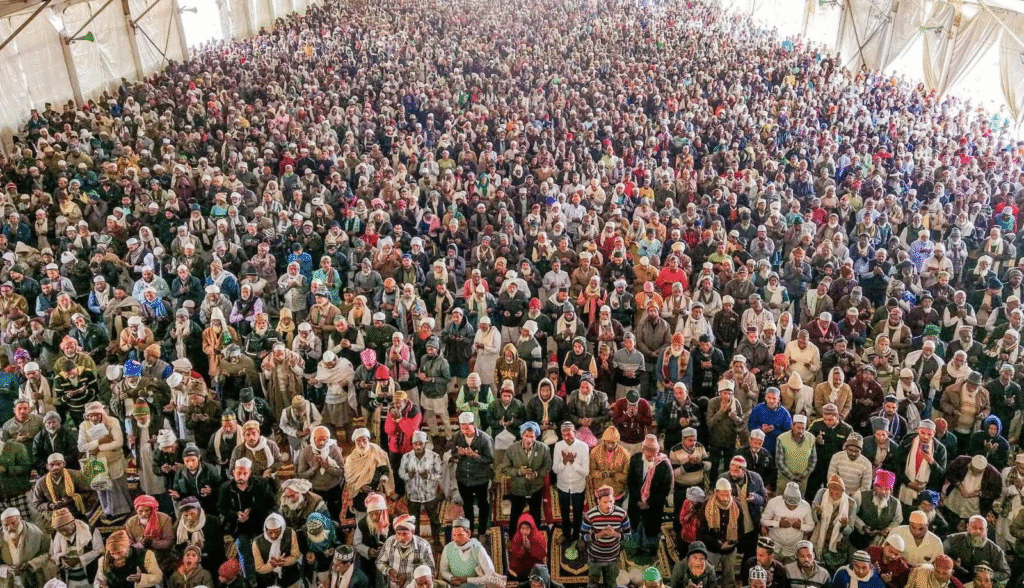
The 814th Annual Urs Mubarak of Hazrat Khwaja Moinuddin Chishty concluded peacefully and successfully at Ajmer Sharif, with the participation of over one million devotees from India and across the world, who gathered in devotion, prayer, and humility.

Speaking on the occasion, Haji Syed Salman Chishty, Gaddi Nashin of Dargah Ajmer Sharif, said:

“We are deeply grateful to the Almighty that the 814th Urs concluded successfully with more than one million seekers gathering at Ajmer Sharif in an atmosphere of peace, love, and devotion that transcended faith, language, nationality, and culture.”

He emphasised that the Urs was not merely a ritual observance, but a living prayer for humanity at a critical moment in world history.

814th Annual Urs Mubarak of Hazrat Khwaja Gharib Nawaz Concludes Successfully at Ajmer Sharif

“For over eight centuries, Ajmer Sharif has remained a spiritual refuge where wounded hearts find solace, divided souls find unity, and humanity reconnects with its shared moral compass,” Chishty said.

Recalling the core teaching of Khawaja Gharib Nawaz, he added:

“The message of Hazrat Khwaja Sahib—‘Love towards all, malice towards none’—is not confined to one community. It is a universal ethic for a world yearning for healing. True spirituality unites; it never divides.”

Prayers for Global Peace and Humanity

Reflecting on global developments in 2025, Haji Syed Salman Chishty said the year had witnessed deeply painful incidents of terror, violence, and rising polarisation, threatening human fraternity and social harmony.

“Every innocent life lost—regardless of faith or nationality—is not a statistic; it is a sacred trust violated. Pain does not belong to one community alone. The suffering of one is the suffering of all humanity,” he said.

814th Annual Urs Mubarak of Hazrat Khwaja Gharib Nawaz Concludes Successfully at Ajmer Sharif

From the spiritual centre of Ajmer Sharif, he offered special prayers:

“We pray for the safety, dignity, and freedom of the Hindu community in Bangladesh, for all minorities and vulnerable communities worldwide, and for families shattered by terror and injustice.”

Message to India and the World

Addressing the people of India and the global community, the Gaddi Nashin said:

“India’s soul has always been anchored in pluralism, coexistence, and spiritual democracy. Ajmer Sharif stands as living proof that diversity is not a weakness—it is our greatest strength.”

He cautioned against the misuse of faith:

“Faith should heal hearts, not harden them. Religion must protect life, not politicise it. True devotion is measured by compassion in action.”

A Call for Hope in 2026

Looking ahead, Haji Syed Salman Chishty called for a renewed global commitment to peace:

“As humanity steps into 2026, we pray that it becomes a Year of Hope—where peace is rooted in justice, dialogue replaces division, education defeats extremism, and service triumphs over selfishness.”

He underlined the shared responsibility of faith institutions and media:

“Words shape minds and narratives shape nations. Faith institutions and media must amplify truth, not fear, and uphold human dignity beyond headlines.”

Concluding his message from the sacred threshold of Ajmer Sharif, he said:

“May hearts soften where hatred has hardened. May dialogue replace discord. May justice walk hand in hand with mercy. May humanity rediscover its shared soul.”

Urs Mubarak to all.

Adani Group to Invest ₹1.8 Lakh Crore in Defence Sector; Focus on AI-Powered Drones and Missiles by 2026

0

The Adani Group has announced plans to invest ₹1.8 lakh crore in India’s defence manufacturing sector over the next year, with a strong focus on AI-powered drones, autonomous systems, and advanced guided weapons designed for future warfare.

According to a PTI report, military hardware developed by the group has already been deployed in key operations, including Operation Sindoor in 2025.

Focus Areas of Investment

The investment will be routed through Adani Defence and Aerospace, which plans to strengthen capabilities in:

  • Unmanned and autonomous systems across air, land, and sea
  • AI-enabled multi-domain operations
  • Advanced sensors and electronics
  • Precision-guided weapons and missile systems
  • Large-scale MRO (Maintenance, Repair, and Overhaul) and training infrastructure

Adani Systems Inducted Across All Three Services

Adani Defence has emerged as one of India’s largest integrated private-sector defence manufacturers, with several of its systems inducted into the Army, Navy, and Air Force.

  • Drones for Navy and Army: In 2025, Drishti-10 UAVs were inducted for long-range intelligence, surveillance, and reconnaissance (ISR) missions.
  • Counter-Drone Systems: Adani’s counter-drone solutions have successfully cleared trials conducted by all three services.
  • Guided Weapons: The Agnika loitering munitions have demonstrated effectiveness in electronic warfare scenarios.
  • MANPADS: The ARKA shoulder-fired missile system has been developed for tri-service deployment.

In February, Adani Defence and Aerospace, in collaboration with DRDO, also unveiled a vehicle-mounted counter-drone system.

What Are Autonomous Systems?

Autonomous systems are unmanned platforms operating with minimal human intervention, enabled by advanced sensors, secure networks, and intelligent software.

  • Air: Drones conduct reconnaissance, surveillance, communication, and precision support with extended endurance.
  • Sea: Uncrewed vessels carry out maritime surveillance, underwater warfare, and mine-clearing operations.
  • Land: Autonomous vehicles assist in reconnaissance, bomb disposal, and border security.

These systems enhance operational reach while significantly reducing risk to personnel.

Targeting 25% Share in Private Defence Market

By 2026, Adani Defence plans to:

  • Expand drone platforms across air, sea, and land
  • Strengthen precision-strike capabilities
  • Scale up AI-driven defence technologies
  • Establish additional service, maintenance, and training centres

The company aims to capture 25% of India’s private-sector defence market, aligning its expansion with the country’s long-term defence modernisation goals. Reports suggest the investment will also generate significant employment and strengthen India’s indigenous defence ecosystem.

Happy New Year 2026 Wishes, Quotes, Pictures, Posters & Messages (50+)

0

Happy New Year: As we step into 2026, it’s time to welcome new beginnings, fresh hopes, and endless possibilities. A new year brings renewed energy, positivity, and the promise of brighter days ahead. Celebrate this beautiful moment by sharing heartfelt wishes, inspiring quotes, and warm messages with your loved ones.

Happy New Year 2026 Wishes, Quotes & Messages (50+)

Happy New Year 2026 Quotes

  1. “Every new year brings new hope, new dreams, and new possibilities. Welcome 2026!”
  2. “A new year is a fresh page—write a beautiful story in 2026.”
  3. “Let 2026 be the year you grow, glow, and go after your dreams.”
  4. “Every ending leads to a new beginning. Welcome 2026!”
  5. “2026 is not just a new year—it’s a new chance to shine.”
  6. “Start 2026 with hope in your heart and faith in your journey.”
  7. “May your dreams take flight and your goals come true in 2026.”
  8. “A brighter future begins today—Happy New Year 2026!”
  9. “New year, new mindset, new possibilities—Happy 2026!”
  10. “Step into 2026 with courage, kindness, and confidence.”

Happy New Year 2026 Messages

  1. Wishing you a joyful, healthy, and successful New Year 2026 filled with happiness and peace.
  2. May this New Year bring you new opportunities and beautiful memories.
  3. Cheers to new beginnings and fresh starts—Happy New Year 2026!
  4. May 2026 turn your dreams into reality and your efforts into success.
  5. Sending warm wishes for love, laughter, and prosperity in the year ahead.
  6. May the New Year bless you with strength, positivity, and endless hope.
  7. Wishing you peace in your heart and joy in every moment of 2026.
  8. Let go of the past and welcome a brighter, happier New Year.
  9. May 2026 bring good health, happiness, and success to you and your family.
  10. Start the New Year with gratitude and end it with achievements to be proud of.

Happy New Year 2026 Wishes (10)

  1. May the New Year bring you peace, happiness, and prosperity.
  2. Wishing you strength to overcome challenges and courage to chase your goals in 2026.
  3. May every day of the New Year bring new reasons to smile.
  4. Here’s to a year filled with growth, joy, and unforgettable memories.
  5. May your home be filled with happiness and your heart with gratitude in 2026.
  6. Wishing you endless opportunities and bright moments in the year ahead.
  7. May 2026 open doors to success, love, and personal growth.
  8. Sending heartfelt wishes for a joyful and prosperous New Year 2026.
  9. May each day of 2026 be filled with positivity and purpose.
  10. Happy New Year 2026! May it be your best year yet.

Happy New Year 2026 Images

Happy New Year 2026 Wishes, Quotes, Pictures, Posters & Messages (50+)