Home Blog Page 86

World Economic Forum 2026 Starts: Know Key Themes, Agenda and Its Significance For India

0

The “World Economic Forum” Annual Meeting 2026 begins today in Davos, Switzerland, bringing together more than 3,000 global leaders at a time of slowing growth, geopolitical strain, rapid technological change, and declining global trust. Held under the theme “A Spirit of Dialogue”, the five-day summit aims to revive cooperation between governments, businesses, and institutions amid mounting global uncertainty.

Key Themes on the Davos 2026 Agenda

Discussions at Davos this year are centred on economic resilience, artificial intelligence, energy transition, global risks, and geopolitics. Policymakers and corporate leaders are expected to debate how AI-led growth can be balanced with job creation, financial stability, and ethical governance. Climate finance, supply-chain resilience, and rebuilding trust in global institutions are also prominent on the agenda.

Why Davos Matters for India

For India, Davos remains a critical platform to project policy continuity, reform momentum, and openness to global capital. As the world’s fastest-growing major economy, India is positioning itself as a current engine of global growth rather than a future opportunity. The focus is on attracting long-term investment, integrating into global value chains, and strengthening partnerships in manufacturing, digital infrastructure, and clean energy.

India’s Political Leadership at Davos

India’s delegation includes four Union ministers — “Ashwini Vaishnaw”, “Shivraj Singh Chouhan”, “Pralhad Joshi”, and “K Rammohan Naidu” — highlighting priorities in infrastructure, energy, manufacturing, and digital transformation. Six chief ministers, including “Devendra Fadnavis” and “N Chandrababu Naidu”, are also present, showcasing state-level investment opportunities.

Imporatnt Facts

  • World Economic Forum Annual Meeting is held every year in Davos, Switzerland.
  • WEF 2026 theme is ‘A Spirit of Dialogue’.
  • Davos is a key platform for public-private global cooperation.
  • India uses Davos to attract foreign investment and promote reforms.

Corporate India and Strategic Messaging

India has sent one of its largest corporate delegations, with over 100 business leaders from banking, technology, manufacturing, startups, and renewable energy. Prominent participants include “Mukesh Ambani”, “N Chandrasekaran”, “Sunil Bharti Mittal”, and “Nandan Nilekani”. India’s message at Davos 2026 is focused on manufacturing scale-up, digital public infrastructure, AI leadership, clean energy transition, and attracting patient global capital.

4 Cervical Cancer Symptoms Women Often Ignore And Why They Shouldn’t

0
4 Cervical Cancer Symptoms Women Often Ignore And Why They Shouldn’t

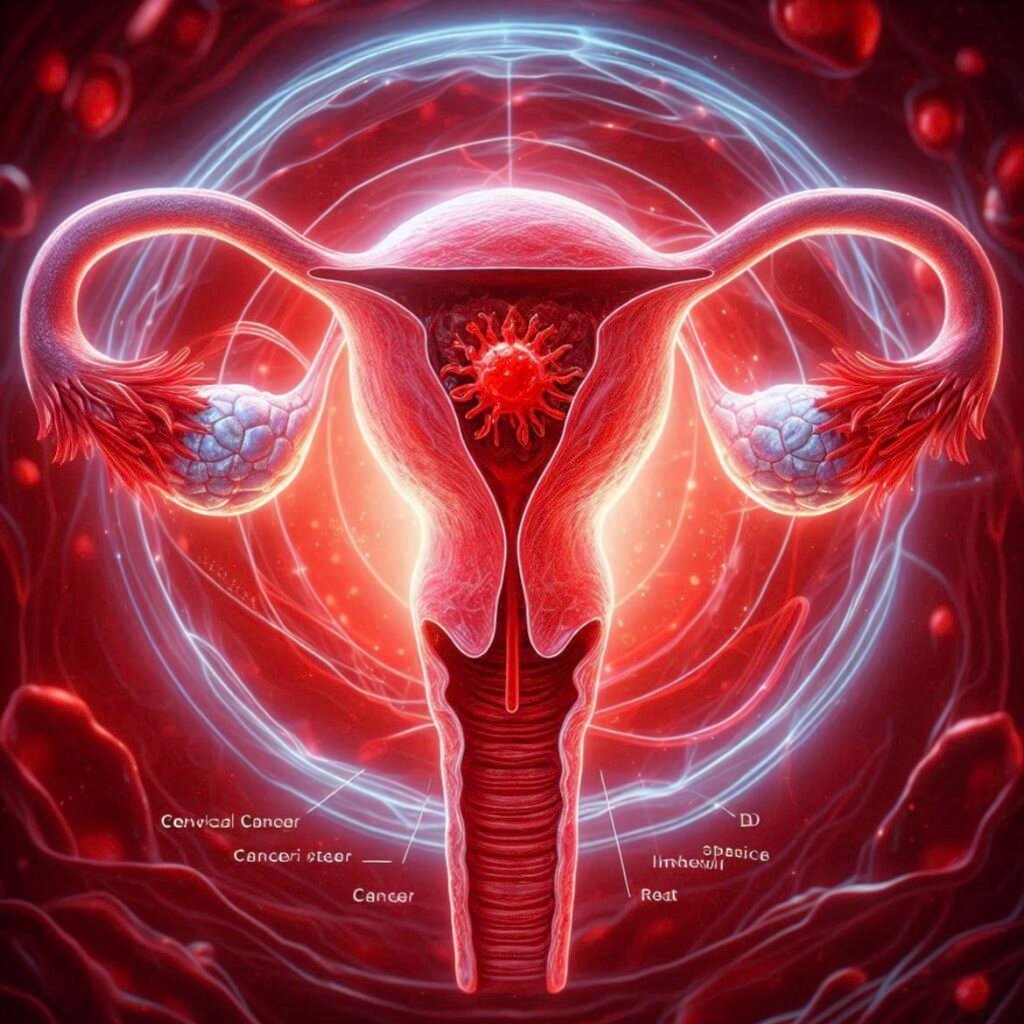
Cervical cancer is one of the most preventable cancers, yet many women overlook its early symptoms because they appear mild or “normal.” These signs often blend into everyday discomforts irregular periods, fatigue, infections making them easy to dismiss. But paying attention to these changes can lead to early detection, which drastically improves treatment outcomes.

Unusual vaginal bleeding that doesn’t follow your cycle

One of the earliest red flags is bleeding outside your period. This may include spotting after intercourse, bleeding between cycles, or post-menopausal bleeding. Many women blame stress, hormonal shifts, or contraceptives but persistent irregular bleeding shouldn’t be ignored. It can signal changes in cervical cells or early-stage growths that need medical evaluation.

Pelvic pain that feels different from cramps

Cervical cancer related pain is often mistaken for period cramps, but the nature of discomfort is different. Instead of short-term menstrual pain, this pelvic pain lingers and may radiate to the back or legs. Some women describe it as a constant heaviness or pressure in the pelvis. When pain becomes persistent or unrelated to your cycle, it’s a sign to consult a doctor.

Changes in vaginal discharge that seem unusual

Most women experience changes in discharge throughout the month, but certain changes are not normal. Foul smell, watery consistency, or a sudden increase in discharge can be early indicators of infection or abnormal cell growth. Because many women link this to hygiene or diet, it often gets ignored. Persistent or unusual discharge should always be medically assessed.

Pain or discomfort during intercourse

Another commonly dismissed symptom is pain during sex. Women often attribute this to dryness, stress, or hormonal imbalance. But if the discomfort becomes frequent, sharp, or accompanied by bleeding, it may indicate inflammation or abnormalities in the cervix. Ignoring this symptom delays early diagnosis.

Why you shouldn’t ignore these signs

Cervical cancer develops slowly and is extremely treatable when caught early. Regular Pap smears, HPV testing and timely check-ups play a crucial role in prevention. When symptoms appear, they are the body’s way of signalling that something is wrong. Listening to these signals and not brushing them off as “normal” can save lives.

Awareness and early action are key

Women’s health issues often go unnoticed because daily responsibilities make it easy to ignore discomfort. But these four symptoms are early warnings that deserve attention. Recognising them early, seeking timely medical advice and staying consistent with screenings can drastically reduce risk and improve outcomes.

High Heat vs Low Heat Cooking: Which Method Works Best in Your Kitchen?

0
High Heat vs Low Heat Cooking: Which Method Works Best in Your Kitchen?

The heat you choose shapes the dishIn every kitchen, the flame matters as much as the ingredients. High heat and low heat both transform food differently, affecting flavour, texture and colour. Understanding when to use each technique can completely change the outcome of a dish.

High heat brings drama, speed and bold flavour

High heat is fast and intense. It creates that instant sizzle when meat touches a pan. This quick burst of heat causes browning and caramelisation, adding rich flavour and a crisp exterior.It’s ideal for searing, grilling, sautéing and stir-frying. Vegetables like bell peppers, mushrooms and broccoli also taste better with slight charring.But high heat requires attention leave it for a few extra seconds and the food can burn instead of brown.

Low heat builds depth, balance and tenderness

Low heat is slow and gentle. It is used when food needs time to soften or absorb flavours fully.Soups, dals, curries and stews develop richer taste when cooked slowly because spices release their aroma gradually.It’s also perfect for delicate items like eggs, fish and sauces, which can easily curdle or overcook on a strong flame.

Different foods need different heat styles

No single heat level works for everything. A steak needs a hot pan to create a crust, but biryani needs long, slow cooking so the flavours settle into each grain.Stir-fried noodles demand high flame, while beans and lentils require hours of gentle heating. Even everyday tasks like melting butter, tempering spices or reheating food change depending on the flame level. Low heat preserves texture, while high heat adds crispness.

Mastering heat makes you a better cook

Both techniques are essential. High heat gives food colour and crunch, low heat brings softness and depth.When you learn to switch between them confidently, you create meals that are flavourful, consistent and perfectly balanced.In the end, knowing how to control the flame is the real secret behind great cooking.

NSS Unit of Poornima College of Engineering Organises 7-Day Special Camp Activities at Badi, Nimbaheda

0

The National Service Scheme (NSS) Unit of Poornima College of Engineering successfully reached village Badi, Nimbaheda on 17 January as part of its 7-Day Special Camp. Prior to arriving at the village, the NSS volunteers visited Chittorgarh Fort to gain insights into India’s rich cultural and historical heritage.

On arrival at Badi, Nimbaheda, the NSS unit was warmly welcomed by Kailash Chandra Kumawat ji, Treasurer, Chamatkari Shri Shanidev Mandir Trust, Badi, Nimbaheda. The volunteers were graciously hosted by the trust and were served a traditional Rajasthani dinner of Dal-Baati-Churma, reflecting the region’s vibrant culture and hospitality.

The following morning, the Shani Dev Mandir Trust Committee felicitated Dr. Kuldeep Sharma, Programme Officer, NSS Unit, Poornima College of Engineering, along with all NSS volunteers and Ms. Neema Shukla, in appreciation of their dedication and service.

Subsequently, a tree plantation drive was organised by the NSS unit in the Shani Dev Mandir premises, promoting environmental awareness and sustainability. The volunteers also conducted door-to-door awareness campaigns, educating villagers about various government welfare policies aimed at rural development and social upliftment. In addition, a cleanliness drive was carried out in the nearby Badi Dam area, reinforcing the message of cleanliness and public hygiene.

NSS Unit of Poornima College of Engineering Organises 7-Day Special Camp Activities at Badi, Nimbaheda

Concluding the programme, Dr. Kuldeep Sharma proposed a heartfelt vote of thanks to the villagers and the Shani Mandir Trust for their support and cooperation. He emphasized that humanity guided by selflessness stands above all and motivated the NSS volunteers to imbibe and practice these moral values in their lives.

The camp successfully fulfilled the NSS motto “Not Me, But You”, fostering social responsibility, cultural understanding, and community engagement among the student volunteers.

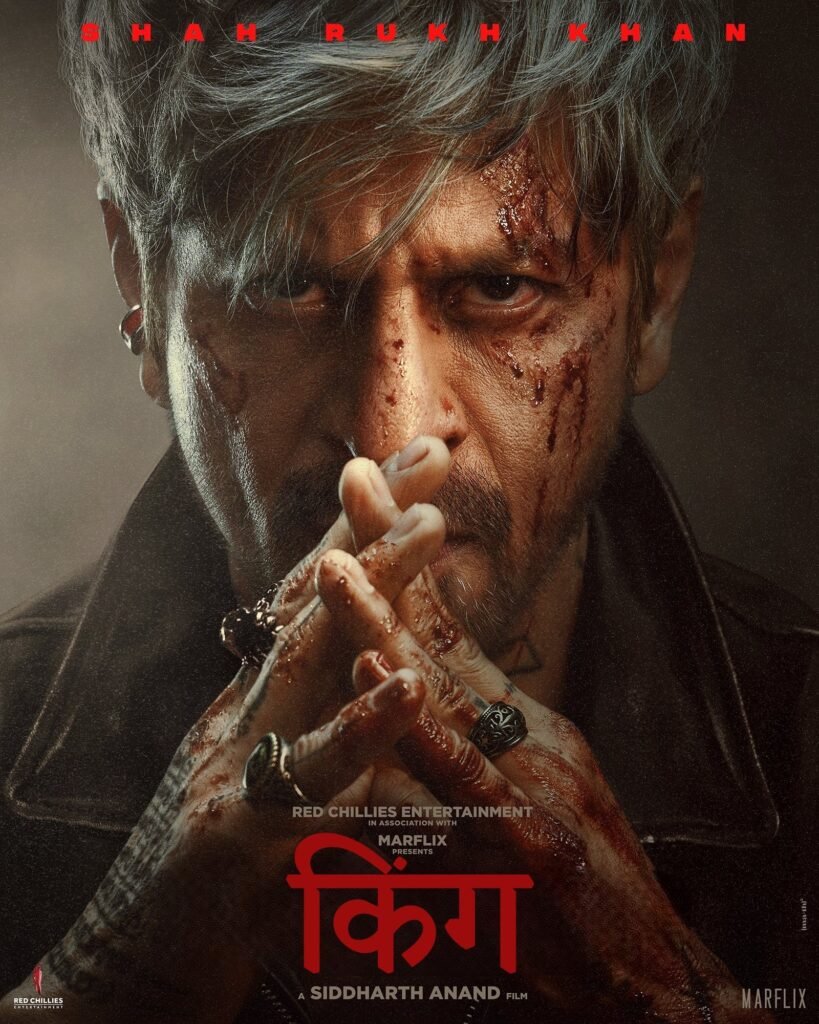
Shah Rukh Khan, Deepika Padukone & Abhishek Bachchan’s King Eyeing Christmas 2026 Release: What We Know So Far

0
Shah Rukh Khan, Deepika Padukone & Abhishek Bachchan’s King Eyeing Christmas 2026 Release: What We Know So Far

Bollywood’s next big festive tentpole is already creating buzz even before an official release announcement. King, the eagerly awaited action-drama starring Shah Rukh Khan, Deepika Padukone and Abhishek Bachchan, is reportedly being eyed for a Christmas 2026 theatrical release, with an official confirmation expected soon from the makers. The news has reignited excitement among fans and industry watchers, setting the stage for one of next year’s biggest box-office

Festive release that promises spectacle

Christmas releases have long been a prized date in Bollywood, often associated with blockbuster outings, mass enthusiasm and extended holiday weekend earnings. For Shah Rukh Khan who has already delivered iconic festive hits like Dilwale Dulhania Le Jayenge, Happy New Year and Pathaan, Christmas 2026 presents another opportunity to captivate audiences across India and around the world. According to insiders, the makers are closing in on a Dec 25, 2026 release, a slot that has traditionally delivered some of the industry’s biggest commercial successes.

Power cast amps anticipation

King brings together three of Hindi cinema’s most bankable stars. Shah Rukh Khan, often described as the “King of Bollywood,” is reuniting with Deepika Padukone, one of his most celebrated co-stars after successful collaborations in films like Chennai Express and Om Shanti Om. Abhishek Bachchan adds further star power to the mix, making King one of the most talked-about films in recent times. While plot details remain tightly under wraps, the presence of this powerhouse cast has already sparked fan theories and high expectations for a blend of action, drama and emotional depth.

Shah Rukh Khan, Deepika Padukone & Abhishek Bachchan’s King Eyeing Christmas 2026 Release: What We Know So Far

What to expect from a high-profile collaboration

Reports suggest that the film will be a large-scale, commercial entertainer designed for both domestic and global audiences. With marquee talent involved both in front of and behind the camera, King is expected to feature compelling action sequences, high production values and a soundtrack that lives up to Bollywood’s festive traditions. The Christmas release timing also signals confidence from the studio a window often used to maximise audience turnout during the holiday season.

Countdown to official announcement

While the December 25 release date is yet to be formally confirmed, trade sources indicate that an official announcement could arrive in the coming months, possibly accompanied by a teaser or first look poster. Fans across social media platforms are already trending hashtags and speculating about storylines, making King one of the most anticipated Bollywood films for 2026.If the preparations and buzz are any indication, King could well end the year on a blockbuster note blending star power, festive timing and cinematic spectacle into one of the year’s most memorable releases.

Border 2 Advance Booking Buzz: Sunny Deol’s War Drama Hitting Big Early And Beating Sikandar In Pre-Sales

0
Border 2 Advance Booking Buzz: Sunny Deol’s War Drama Hitting Big Early And Beating Sikandar In Pre-Sales

The first major box office story of 2026 is unfolding well before a single ticket buyer has walked into a cinema. Advance bookings for Border 2, the much-anticipated war action sequel starring Sunny Deol are already showing strong momentum, indicating a powerful opening when the film releases nationwide on January 23, 2026.

Early ticket sales exceed expectations

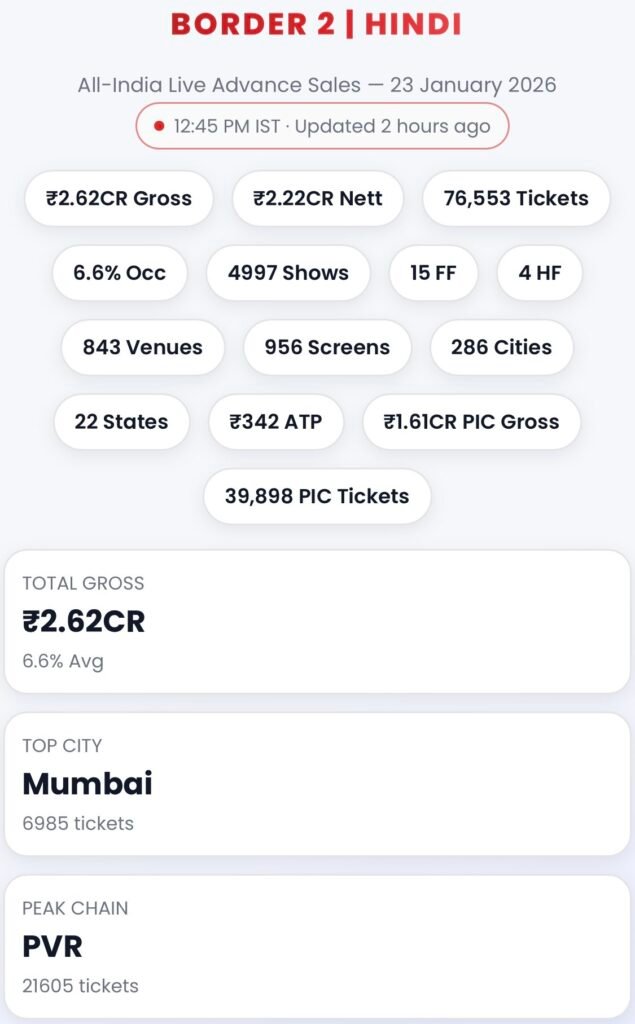
Border 2 began its advance booking phase with limited ticket availability, yet even in this restricted window the film sold more pre-sale tickets than Salman Khan’s Sikandar did in a similar early period. On ticketing platform BookMyShow, Border 2 sold approximately 8,280 tickets during the limited pre-sale about 48 % more than Sikandar’s 5,720 tickets over the same time frame.

Border 2 Advance Booking Buzz: Sunny Deol’s War Drama Hitting Big Early And Beating Sikandar In Pre-Sales

This early interest suggests that Border 2 is drawing audiences not just because of its star power but also due to its nostalgic connection to the original Border (1997), which remains one of Indian cinema’s most beloved patriotic war films.promising signs for opening weekIndustry trackers note that some ticket counters, including national chains such as PVR INOX and Cinepolis, have already sold close to 10,000 seats for opening day shows, signalling strong enthusiasm across the board.

Meanwhile, around 40 % of cinemas nationwide have started full advance bookings, and smaller but steady sales are already taking place at major theatre chains outcomes that point toward a significant opening weekend for the film.

What’s driving audience excitement

A combination of factors appears to be driving the buzz. Border 2 reunites Sunny Deol, Varun Dhawan, Diljit Dosanjh and Ahan Shetty in a high-budget war saga helmed by director Anurag Singh. The franchise’s patriotic theme has traditionally resonated strongly with Indian audiences, and the recently released trailer praised by filmmakers like Karan Johar for being dramatic, patriotic and emotional has added to the anticipation.

Fans and insiders are also closely watching whether Border 2 can challenge the booking records set by some of 2025’s biggest films, especially War 2, which logged more than 800,000 advance ticket sales on BookMyShow last year.

Border 2 Advance Booking Buzz: Sunny Deol’s War Drama Hitting Big Early And Beating Sikandar In Pre-Sales

What this means for 2026’s box office

If the early trends continue as bookings scale nationwide, Border 2 could emerge as one of the first major hits of 2026 and perhaps reset expectations for patriotic war films at the box office. With its combination of veteran leadership and current stars, the sequel is poised to turn strong early buzz into a memorable theatrical run for fans and industry alike.

Indian Actor Breaks World Record With 45 Roles In One Film And It’s Not Kamal Haasan, Amitabh Bachchan Or Govinda

0
Indian Actor Breaks World Record With 45 Roles In One Film And It’s Not Kamal Haasan, Amitabh Bachchan Or Govinda

In a remarkable achievement that has flown under the radar for years, a Malayalam actor and comedian has set a Guinness World Record for portraying the highest number of distinct characters – 45 in a single film, outshining even iconic multi-role performances by major Indian stars.

The record-setting performance that stunned cinema lovers

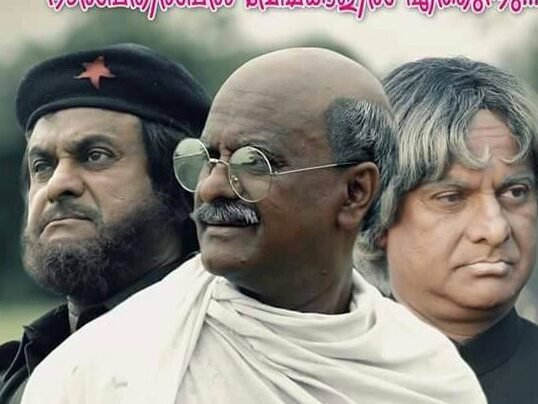
While Indian cinema has seen legendary actors like Kamal Haasan, Govinda and Amitabh Bachchan take on multiple roles in individual films, none of those performances have surpassed this extraordinary milestone. The world record belongs to Johnson George, a versatile actor from the Malayalam film industry, who portrayed 45 different characters in the movie Aaranu Njan.

The film, a 2018 release directed by P.R. Unnikrishnan, featured Johnson in a variety of roles that demanded rapid physical transformations and emotional depth. He slipped into personas ranging from spiritual figures to historical icons, including portrayals of Mahatma Gandhi, Jesus Christ, Leonardo da Vinci, and other distinct characters. These varied roles each with its own look, voice, and body language required meticulous preparation, highlighting not just range but stamina and commitment.

Why this achievement matters in film history

Multi-role performances have long fascinated audiences and critics alike, with actors testing the limits of their craft by taking on dual roles or triple roles within the same narrative. Kamal Haasan’s Dasavathaaram is often cited for its ten roles, while Govinda and Amitabh Bachchan have delivered memorable performances in films featuring multiple character portrayals. Yet Johnson George’s record remains unmatched in Indian cinema to date.

This accomplishment is significant not just for the sheer number of characters, but for the creative breadth and versatility it represents. Playing 45 roles in one film isn’t just a numerical feat, it reflects the ability to convincingly distinguish each character through nuanced expressions, timing, and physical transformation. It also brings global attention to regional cinema, demonstrating that creative boundaries are not limited to mainstream industries like Bollywood or Kollywood.

What this means for India’s film landscape

Johnson George’s world record highlights the richness of Indian cinema beyond the conventional spotlight. While big stars often dominate headlines, regional films continue to push artistic and narrative innovation. Records like this remind audiences that compelling performances and cinematic achievements can emerge from any corner of the industry.

As cinema continues to evolve, and as actors explore more ambitious roles and experimental storytelling, milestones such as this one will likely inspire a new generation of performers to challenge conventions and redefine what’s possible on screen.

Maharana Pratap Punyatithi 2026: WhatsApp Status, Images and Quotes to Remember the King Who Never Bowed

0

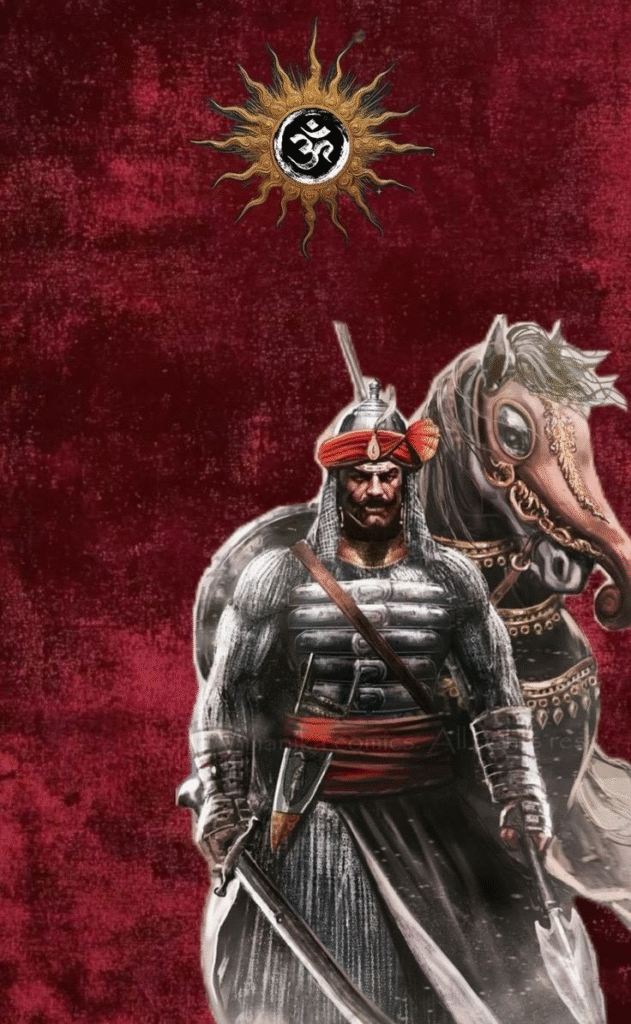
Maharana Pratap’s punyatithi makes a special significance in every Indian’s mind as it is a date to be remembered and an event that is marked in calendars. Each year, on January 19th, the death anniversary of Maharana Pratap is a reminder, in its own quiet manner, of what courage is. Maharana Pratap had lived his life with his head held high, prioritising comfort less than honour, and choosing to resist rather than succumb. He was a man of principle in an era of empires.

This is a day of reflection, not of noise. It comes as a pause to remember a king who refused to bow, even when the odds and history pushed hard the other way. The EBNW Story brings Maharana Pratap’s punyatithi statuses, images and posts are important on the occasion.

Maharana Pratap punyatithi date

Maharana Pratap’s punyatithi is observed on 19 January, marking the day in 1597 when the legendary Mewar ruler passed away. Across Rajasthan and beyond, the day is commemorated through tributes, remembrance messages, and reflections on his ideals of independence and courage.

Maharana Pratap images

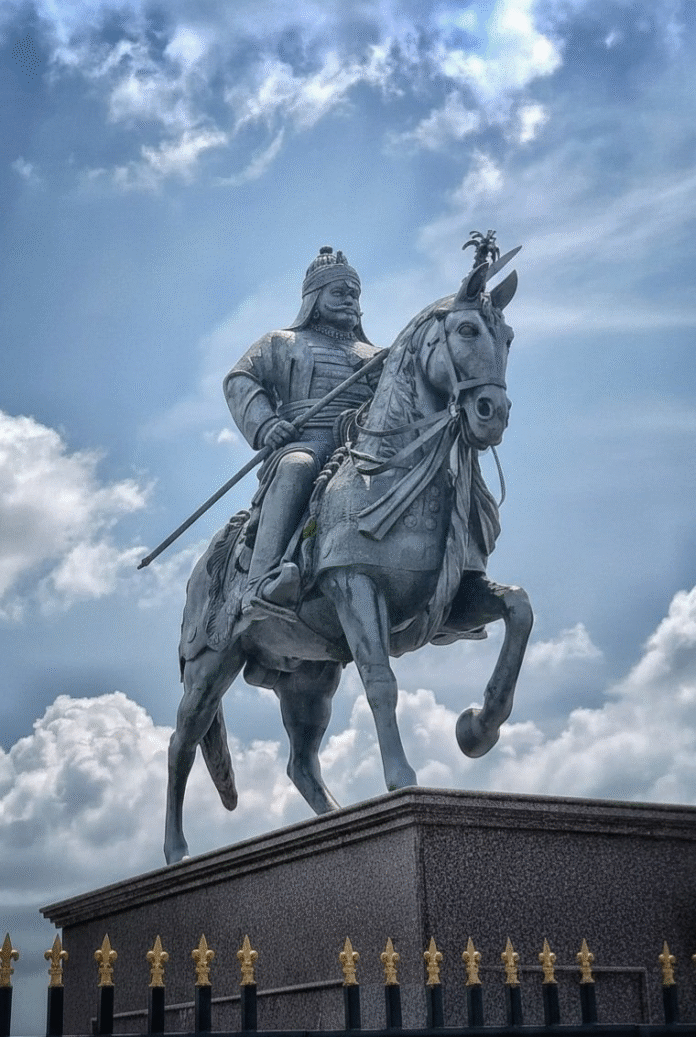
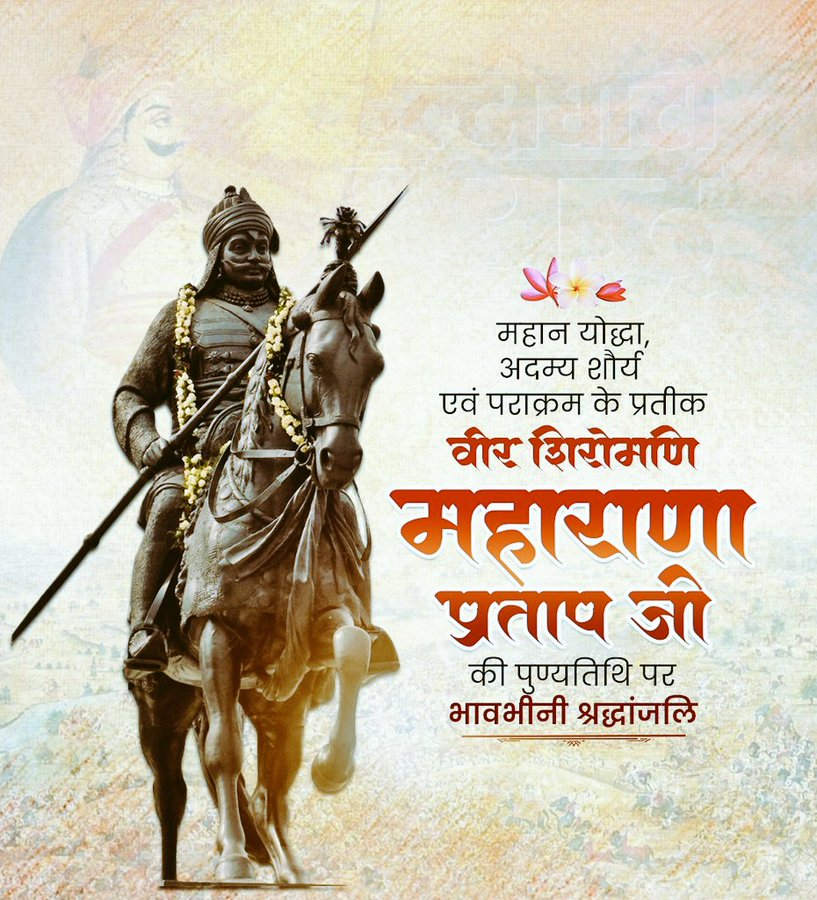
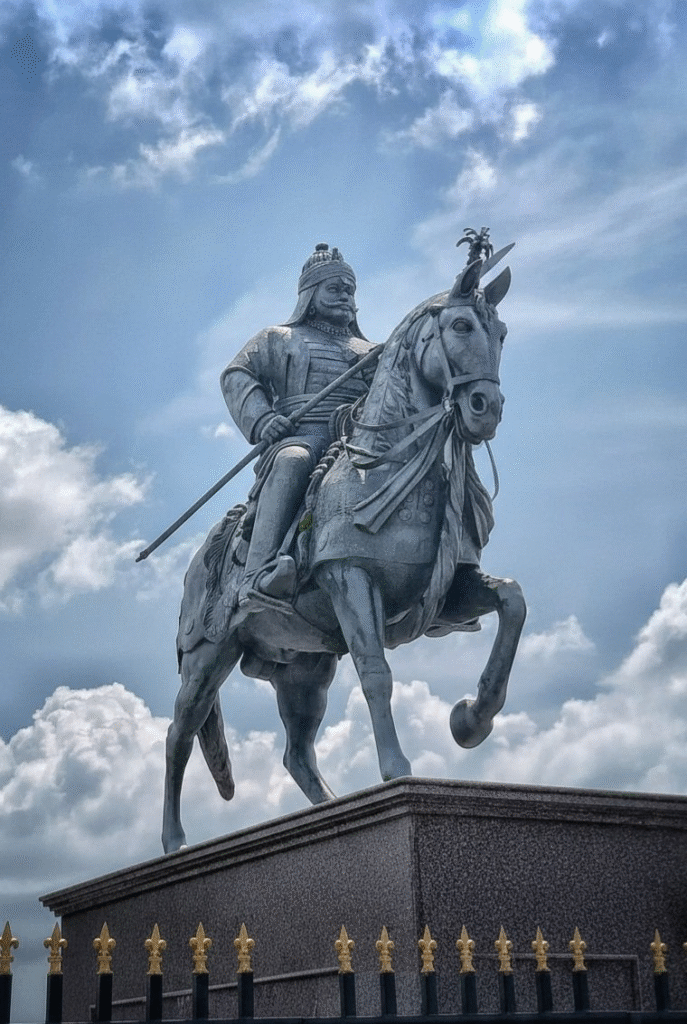
Statues, portraits, and battlefield depictions of Maharana Pratap often show him on his loyal horse Chetak, not as a conqueror dripping in luxury, but as a warrior defined by resolve. These images endure because they reflect character over crown, values over victory.

Maharana Pratap Punyatithi 2026: WhatsApp Status, Images and Quotes to Remember the King Who Never Bowed

Maharana Pratap Punyatithi 2026: WhatsApp Status, Images and Quotes to Remember the King Who Never Bowed

Maharana Pratap quotes

  • “Maharana Pratap was not just a warrior; he was an idea, of freedom without compromise.”
  • “History remembers Maharana Pratap not for victories alone, but for values he refused to surrender.”
  • “Where others chose survival through submission, Maharana Pratap chose honour through struggle.”
  • “Maharana Pratap proved that true royalty lies in character, not crowns.”
  • “He lost kingdoms but never lost his spine; that is why Maharana Pratap still stands tall in history.”
  • “Maharana Pratap’s resistance turned defeat into a legacy of courage.”
  • “Empires feared Maharana Pratap not for his armies, but for his unbreakable will.”
  • “Maharana Pratap lived poor by choice, rich in self-respect.”
  • “To remember Maharana Pratap is to remember that freedom is worth every sacrifice.”
  • “Maharana Pratap remains eternal because he chose dignity when compromise was easier.”

On the day of Maharana Pratap’s death anniversary, let’s celebrate the legacy he left behind!

Maharana Pratap status

Second Global Buddhist Summit: Know Place, Date, Theme and Other Details…

0

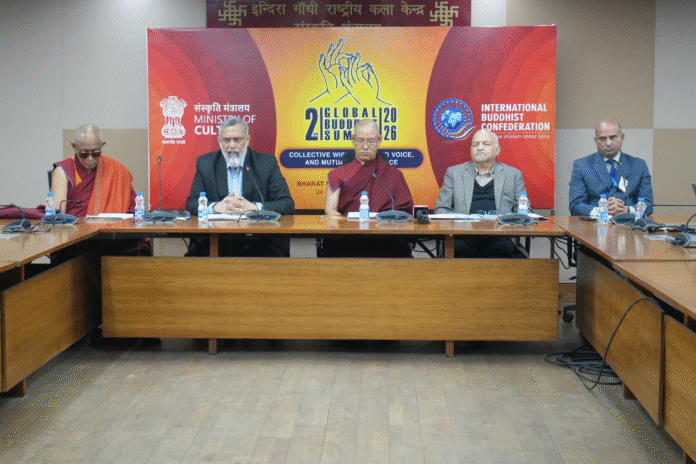
The International Buddhist Confederation, in collaboration with the Ministry of Culture, will organise the second edition of the Global Buddhist Summit on January 24 and 25, 2026. The event will take place at Bharat Mandapam in New Delhi and is expected to serve as a major international forum for dialogue on Buddhist perspectives addressing contemporary global challenges.

Theme and Contemporary Relevance

The 2nd Global Buddhist Summit will be organised under the theme “Collective Wisdom, United Voice, and Mutual Coexistence”. At a time marked by rapid social, political, and environmental transformations, the summit aims to highlight the relevance of Buddha Dhamma in responding to conflict, alienation, and uncertainty. The principles of compassion, harmony, and wisdom will be examined as guiding values for peaceful coexistence and shared prosperity.

Platform for Global Buddhist Dialogue

Aligned with the motto of the IBC, “Collective Wisdom, United Voice”, the summit is envisioned as a global platform for unity and dialogue. Building on the success of the inaugural edition held in 2023, the event will bring together Buddhist leaders and thinkers to articulate a collective voice rooted in ethical reflection and mutual respect. The summit seeks to strengthen international engagement through spiritual and philosophical exchange.

High-Level Participation and Inauguration

The summit is likely to be inaugurated by Prime Minister Narendra Modi as the Chief Guest, as was the case during the first edition. Around 200 delegates, including Supreme Patriarchs, heads of national Buddhist Sanghas, eminent monks, scholars, and senior dignitaries from across the world, are expected to participate. The overall audience is projected to exceed 800 participants.

Facts for Exams

  • International Buddhist Confederation organises the Global Buddhist Summit.
  • The 2nd GBS will be held on January 24–25, 2026.
  • The venue is Bharat Mandapam, New Delhi.
  • The summit theme focuses on collective wisdom and coexistence.

Buddhist Responses to Global Challenges

The 2nd Global Buddhist Summit will facilitate discussions among state leaders, Sangha members, Dhamma practitioners, and scholars on Buddhist responses to modern challenges. Deliberations will explore how the values of Buddha Dhamma can inspire ethical leadership, social harmony, and sustainable living amid technological change, consumerism, and environmental degradation. The summit aims to reaffirm Buddhism’s enduring relevance in shaping a more compassionate and balanced global order.

Alcohol: Why Its is Centre of Celeberation and Concern?

0

As India ushered in 2026, alcohol once again sat at the centre of celebration — and concern. An estimated 12 to 15 million cases were consumed nationwide, while cities like Mumbai had to nearly double police deployment to achieve a 37 per cent drop in drunk-driving incidents. The contrast captures a long-standing policy dilemma: alcohol is simultaneously a major source of state revenue and a significant driver of social harm. Managing this contradiction lies at the heart of one of India’s most fraught governance challenges.

Why alcohol demands state intervention

From a public policy perspective, alcohol consumption is a textbook case of negative externalities. While individuals decide how much to drink, the costs — road accidents, public disorder, domestic violence, lost productivity and pressure on public health systems — are borne by society at large. Market prices do not reflect these social costs, leading to over-consumption if left unregulated.

This market failure justifies state intervention. But the form of intervention matters. Alcohol is not comparable to narcotics that warrant blanket prohibition. In most societies, moderate consumption is a matter of personal choice. The policy objective, therefore, is not elimination, but informed and responsible consumption — achieved without over-stretching limited state capacity for enforcement.

The two levers states actually control

Indian states regulate alcohol through two broad instruments: non-price regulation and taxation.

Non-price regulation governs the context of consumption — minimum legal drinking age, outlet density, and locational norms keeping liquor shops away from schools, colleges and religious institutions. These rules matter, especially for protecting vulnerable populations, but their effectiveness depends heavily on enforcement capacity.

The heavier policy burden, however, falls on taxation. Excise duty is the principal economic tool available to states to internalise alcohol’s social costs.

Why excise duty has become fiscally indispensable

Under India’s Constitution, alcohol taxation is firmly a state subject. Since the introduction of GST in 2017 sharply reduced states’ independent tax handles, excise on alcohol has become a fiscal lifeline.

Today, excise duty accounts for anywhere between negligible levels in prohibition states to as much as 30–35 per cent of own tax revenue in places like Puducherry. Many large states now derive 15–25 per cent of their own tax revenue from alcohol. In economic terms, excise collections range from near zero in prohibition states to around 1.5–2 per cent of GSDP in high-dependence states such as Chhattisgarh and Telangana, with most states clustered between 0.5 and 1.2 per cent.

This represents a sharp structural shift over the last decade — and it lies at the root of the policy conflict.

The core contradiction: Public health versus fiscal pressure

States face a built-in tension. On the one hand, they are expected to reduce the social harms associated with alcohol. On the other, budgetary pressures push them to maximise excise revenue. The result is often a punitive, complex regulatory regime that neither meaningfully reduces harm nor creates a rational consumption environment.