Home Blog Page 85

Fierce AI Competition in 2026: How the Global Tech Race Is Shaping the Future

0

Artificial intelligence is no longer a distant promise – it is the engine driving today’s biggest technological shifts. In present times, AI competition has become fierce, fast-paced, and global, with companies racing not just to build smarter systems, but to shape how economies, workplaces, and everyday life will function in the years ahead. What we are witnessing is not a single contest, but a multi-front race involving innovation, speed, trust, scale, and real-world impact.

Why the AI Race Has Intensified

The rapid progress of large language models, generative AI, autonomous systems, and AI-powered tools has dramatically lowered the barrier between experimentation and mass adoption. Startups can now challenge tech giants, while established companies are under constant pressure to reinvent themselves.

Cloud computing, open-source models, and massive investments have accelerated development cycles. As a result, product launches that once took years now happen in months. In this environment, standing still is not an option – companies must either innovate continuously or risk being left behind.

Beyond Technology: A Battle of Ecosystems

Today’s AI competition goes far beyond algorithms. It is about who builds the strongest ecosystem – integrating AI into operating systems, enterprise software, education, healthcare, finance, and consumer products. Companies are competing to become the default AI platform that people and businesses rely on daily.

At the same time, nations are investing heavily in AI as a strategic asset. Governments view leadership in artificial intelligence as essential to economic growth, national security, and global influence. This has turned AI into both a commercial and geopolitical contest.

Speed vs Responsibility

One of the defining tensions in the current AI race is the balance between speed and responsibility. While competition pushes companies to release faster and more powerful tools, public scrutiny is increasing around issues like data privacy, bias, misinformation, job displacement, and energy use.

In present times, success in AI is no longer measured only by technical superiority. Trust, transparency, and usefulness are becoming just as important. Companies that fail to align innovation with social value risk backlash from users, regulators, and governments.

Opportunities Created by Fierce Competition

Despite the intensity, fierce AI competition has clear benefits:

  • Faster innovation: Competition accelerates breakthroughs and lowers costs.
  • Wider access: More players mean AI tools are becoming accessible to small businesses, creators, and individuals.
  • Diverse solutions: Different approaches lead to specialization across industries and use cases.
  • Economic transformation: AI is creating new roles, skills, and productivity gains across sectors.

For users, this means better tools, smarter services, and more choices than ever before.

What the Future Looks Like

As AI competition continues to intensify, the focus is likely to shift from who builds the most powerful model to who delivers the most meaningful impact. The next phase of the AI race will reward companies that solve real problems, integrate seamlessly into human workflows, and earn long-term trust.

Rather than a winner-takes-all outcome, the future of AI may belong to those who collaborate, adapt quickly, and use competition as a catalyst for progress rather than conflict.

Conclusion

Fierce AI competition in present times reflects a pivotal moment in technological history. The race is reshaping industries, redefining leadership, and influencing how society interacts with machines. While the pace is intense and the stakes are high, this competition is also driving innovation that has the potential to improve lives on a global scale.

In the end, the true winners of the AI race will not just be companies or countries – but the people who benefit from technology that is powerful, responsible, and genuinely useful.


Netaji’s Valour and Vision: A Legacy That Inspires India

0

The Day of Valour is a national event celebrated in India to commemorate the birth anniversary of the prominent Indian freedom fighter Netaji Subhas Chandra Bose. It is observed every year on 23 January to honour his extraordinary courage, leadership, and unwavering commitment to India’s independence. This day reminds the nation of the bold initiatives and sacrifices that shaped the freedom struggle.

One of the most significant examples of Netaji’s valour was his role in initiating and leading the Azad Hind Fauj, also known as the Indian National Army (INA). At a time when India was under British colonial rule, Netaji believed that freedom could not be achieved without strong, organized action. With this vision, he reorganized the Azad Hind Fauj by uniting Indian soldiers and civilians living abroad, especially in Southeast Asia. His leadership transformed the army into a disciplined force driven by patriotism and the dream of a free India.

Netaji’s initiative in forming the Provisional Government of Azad Hind further demonstrated his fearless approach. By establishing a government-in-exile, he asserted India’s right to self-rule on the global stage. His ability to inspire soldiers, including the formation of the Rani of Jhansi Regiment, one of the first all-women military units in Asia, reflected his progressive thinking and belief in equality and collective strength.

Subhas Chandra Bose’s courage was matched by his powerful words, which continue to inspire generations. His famous quote, “Give me blood, and I shall give you freedom,” reflects his call for total dedication and sacrifice. Another well-known quote, “Freedom is not given, it is taken,” highlights his belief in action and determination. Through these words, Netaji encouraged Indians to rise above fear and take responsibility for their nation’s destiny.

In conclusion, the Day of Valour is not only a celebration of Netaji Subhas Chandra Bose’s birth but also a tribute to his bold initiatives, especially the formation of the Azad Hind Fauj. His life, leadership, and inspiring quotes remind us that courage, unity, and action are essential for national progress. Remembering Netaji on this day strengthens the spirit of patriotism and keeps alive the values for which he dedicated his life.

Basant Panchami 2026: Wishes, Messages And Greetings To Share On Saraswati Puja

0

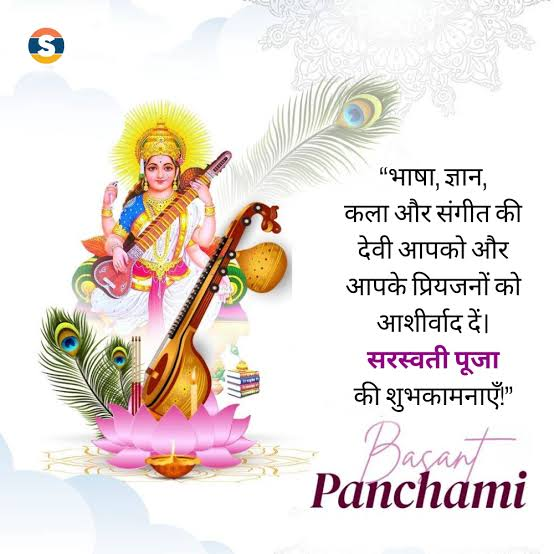
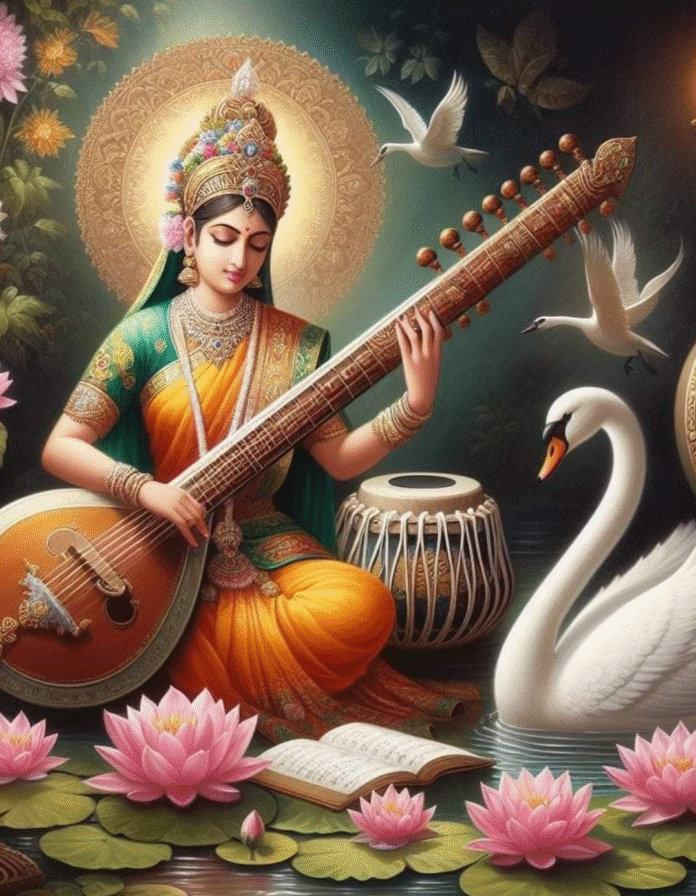
Basant Panchami 2026: Basant Panchami, also known as Vasant Panchami or Shri Panchami, is one of the most vibrant festivals in India. The auspicious day is celebrated on the first day of spring, which is the fifth day of the Hindu month of Magha. This year, Basant Panchami will be celebrated on January 23, marking the arrival of spring. Central to the observance of Basant Panchami is the worship of Saraswati, the goddess of knowledge, music, arts, and wisdom.

It’s a day to seek blessings for knowledge, wisdom, and creative expression. Students, artists, and musicians worship Goddess Saraswati to excel in their fields. Schools, colleges, and temples organise special prayers and cultural programs, while students seek divine blessings for academic success.

Basant Panchami 2026: Wishes, Messages And Greetings To Share On Saraswati Puja

Wearing yellow attire and preparing traditional sweets like Kesari Halwa and Boondi Ladoo are integral parts of the celebrations. In North India, kite flying is a popular tradition, while in Bengal, Odisha, and Assam, Saraswati Puja is observed with great devotion.

On Saraswati Puja, share wishes, messages on Facebook, and mantras, stotras, and vandana with your friends and family members.

Basant Panchami 2026 Wishes and Messages

Basant Panchami 2026: Wishes, Messages And Greetings To Share On Saraswati Puja

-May Goddess Saraswati’s divine blessings give you success in life. Happy Basant Panchami!

-Warm wishes to you and your family on Saraswati Puja. Let there be light, love and peace. Happy Basant Panchami!

-May the festival of Basant Panchami bring prosperity, joy, and a fresh start to your life. Wishing you a blessed Saraswati Puja!

-Let the yellow hues of Basant Panchami brighten your life with knowledge and wisdom. Happy Saraswati Puja!

-At the end of the dark road of evil, may there be the soothing amber glow of knowledge and Maa Saraswati’s blessings. Happy Basant Panchami.

-Pray that Goddess Saraswati showers you with wealth of knowledge. Happy Basant Panchami!

Basant Panchami 2026: Wishes, Messages And Greetings To Share On Saraswati Puja

-With the blessings of Maa Saraswati, may you succeed in eliminating darkness from your life. Happy Basant Panchami!

-Spring is in air and fresh blossoms everywhere. Sending you my warm wishes on Basant Panchami!

-Wishing you clarity of mind, purity of soul, and success in every endeavour this Basant Panchami.

-Let learning become your lifelong strength. Happy Basant Panchami!

-May Maa Saraswati, the goddess of knowledge, language, music and arts bless you and your family. Happy Basant Panchami!

-On this Basant Panchami, may Maa saraswati banish the evils of ignorance. Happy Basant Panchami!

Happy Basant Panchami: Saraswati mantra

Basant Panchami 2026: Wishes, Messages And Greetings To Share On Saraswati Puja

Shuklam Brahmavichara Sara, Parmamadyam Jagadvyapineem
Veena Pustaka Dharineema Bhayadam Jadyandhakarapaham
Haste Sphatikamalikam Vidadhateem Padmasane Samsthitam
Vande Tam Parmeshvareem Bhagwateem Buddhipradam Sharadam

Saraswati Puja 2026 Date: History, Importance, and Significance of Basant Panchami

0

Saraswati Puja 2026 Date: With the festival almost here, here’s all you need to know about Basant Panchami 2026

Basant Panchami (Saraswati Puja) 2026 Date in India: Saraswati Puja, also known as “Vasant Panchami”, is celebrated in honour of the Hindu goddess Saraswati, as her birth anniversary. The festival also marks the arrival of spring and is commemorated differently across the country. It is marked by kite flying in North India, while in states like Bihar, West Bengal, Odisha, and Assam, Saraswati Puja is observed.

Basant means ‘spring’, and Panchami is the fifth day of the Hindu month of Magha (corresponding to January-February in the Gregorian calendar), on which the festival is held.

Saraswati Puja 2026: Date and Timings

In 2026, Vasant Panchami will be observed on January 23 and the Panchami Tithi begins at 2:28 AM on the same day and continues until 1:46 AM on 24 January.

The ideal time for performing Saraswati Puja, also known as the Vasant Panchami Muhurat, is from 7:13 AM to 12:33 PM, spanning a duration of 5 hours and 20 minutes, as per Drik Panchang.

Additionally, the midday moment, or Vasant Panchami Madhyahna Moment, is set for 12:33 PM.

Saraswati Puja 2026: History, Significance, and Celebrations

Among the many stories linked to Saraswati Puja, the most well known is that of poet Kalidasa.

According to the tale, Kalidasa was initially considered simple-minded and was deceived into marrying a princess who showed him no respect. Distressed by this, he contemplated ending his life.

However, before he could do so, Goddess Saraswati appeared to him and instructed him to bathe in a river.

Upon emerging from the water, he was transformed into a wise and learnt individual.

This story highlights why Goddess Saraswati is honoured as the deity of knowledge, wisdom, arts, music, and learning.

Budget 2026 Puts Spotlight On Tax Relief For Married Couples Through Joint Taxation

0

As the Union Budget 2026 draws closer, discussions around personal income tax reforms have intensified, with tax relief for married couples emerging as a key topic. One proposal under discussion is the introduction of joint taxation, a system that would allow spouses to file a combined income tax return instead of being taxed entirely as individuals. While India currently follows individual taxation, the idea is being examined as a way to recognise household-based financial planning.

What joint taxation means in simple terms

Joint taxation allows married couples to pool their incomes and calculate tax liability on the combined amount. Instead of filing two separate returns, spouses can opt for a single filing. This system already exists in several countries and is often structured to support families with unequal income distribution between partners.

Why joint taxation is being discussed ahead of Budget 2026

Rising living expenses, EMIs, healthcare costs and education fees have increased the financial burden on families. Supporters of joint taxation believe the system could provide meaningful relief to single-income households or families where one spouse earns significantly less. Policymakers are also exploring measures that could encourage savings and boost household consumption, making this proposal timely.

How joint taxation could affect your taxes

If implemented, joint taxation could reduce tax liability for couples with a large income gap. The higher-earning spouse may benefit from income averaging, potentially bringing the household into a lower tax slab. However, couples where both spouses earn similar salaries may see limited or no tax advantage, depending on slab rates and exemptions.

Concerns and challenges linked to the proposal

Despite its benefits, joint taxation raises concerns. Experts warn it could discourage workforce participation among secondary earners, particularly women, if tax incentives reduce the benefit of individual earnings. There are also practical challenges related to changes in marital status, divorce or separation. Maintaining fairness for single taxpayers is another key issue.

What experts recommend

Tax experts suggest that joint taxation, if introduced, should be optional rather than mandatory. Giving couples the choice between individual and joint filing would ensure flexibility and avoid unintended consequences. Clear rules on deductions and exemptions would also be essential.

At present, joint taxation remains a proposal, but its inclusion in Budget 2026 discussions indicates a possible shift toward family-focused tax reforms.

Moon Hotel Reservations Open As Space Tourism Takes A Giant Leap Forward

0
Moon Hotel Reservations Open As Space Tourism Takes A Giant Leap Forward

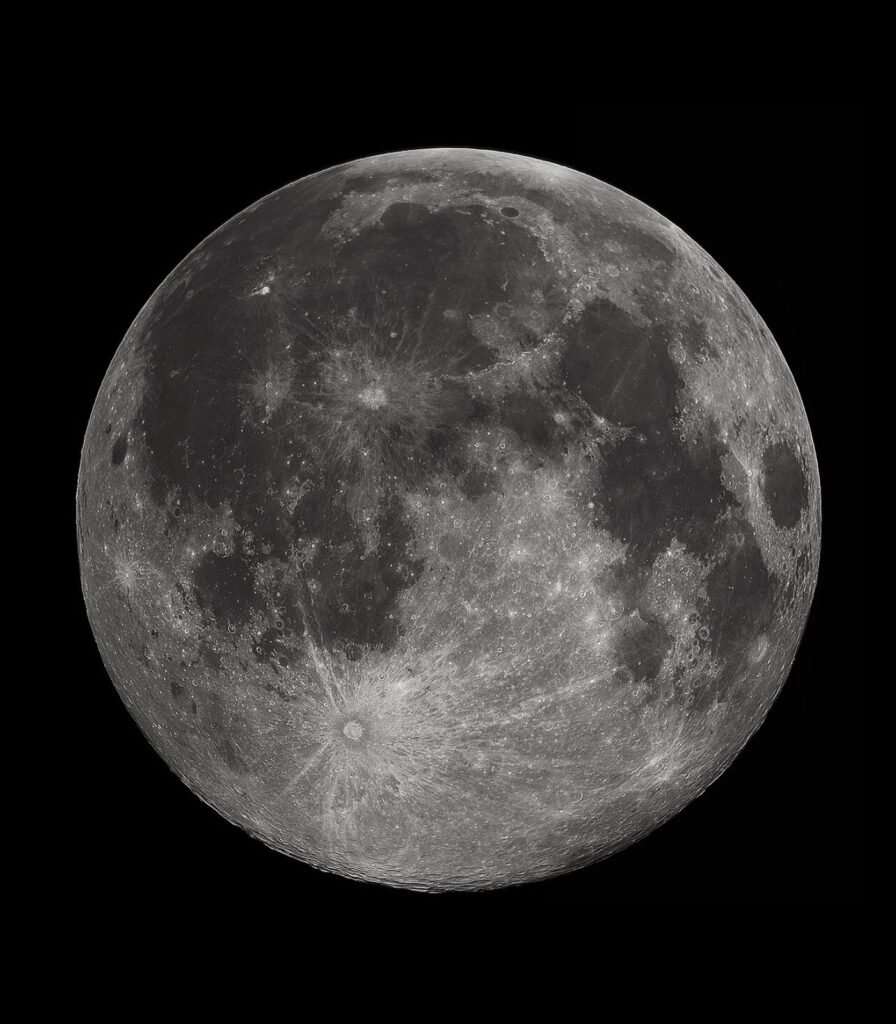
What once belonged to science fiction is now inching closer to reality. Reservations have officially opened for the world’s first luxury hotel on the Moon, with the price for a single stay reportedly set at around Rs 9 crore. A complete lunar travel experience, including transport and training, is expected to cost travellers over Rs 90 crore, marking a bold new chapter in the rapidly evolving space tourism industry.

A luxury stay beyond Earth

The proposed Moon hotel is designed to offer an ultra-premium experience for a select group of travellers willing to venture far beyond Earth. Guests are expected to stay in specially designed modules equipped with panoramic views of the lunar surface, low-gravity recreational zones and advanced life-support systems. The experience is being positioned as exclusive and once in a lifetime, targeting high-net-worth individuals seeking the ultimate frontier adventure.

What the lunar journey includes

While the hotel stay alone is priced at Rs 9 crore, the total cost of the trip is significantly higher due to the complexity of space travel. The full package includes astronaut-style training, medical screening, spaceflight preparation, Earth-to-orbit travel and lunar transfer. The entire journey is expected to span several weeks, including time spent adjusting to microgravity and lunar conditions.

Moon Hotel Reservations Open As Space Tourism Takes A Giant Leap Forward

Who is behind the project

The initiative is being driven by private space companies working alongside aerospace engineers and space agencies to commercialise deep-space travel. The Moon hotel concept builds on recent advancements in reusable rockets, orbital tourism and long-duration space habitats. Organisers believe that early bookings will help fund further research and infrastructure needed to make lunar stays safer and more accessible in the future.

Why this matters for space tourism

Opening reservations for a Moon hotel signals how quickly space tourism is moving from Earth’s orbit to deeper space destinations. Until recently, commercial space travel was limited to short orbital flights. This project suggests that extended off-world stays could become part of the tourism landscape within the next decade, redefining travel as humanity knows it.

Moon Hotel Reservations Open As Space Tourism Takes A Giant Leap Forward
A dream reserved for a few for now

Despite the excitement, the experience remains far beyond the reach of most people due to its staggering cost and physical demands. However, industry experts believe prices may gradually decline as technology matures, much like commercial air travel once did. As reservations begin, the Moon hotel stands as a powerful symbol of human ambition, blurring the line between imagination and reality, and reminding the world that the next luxury destination may not be on Earth at all.

Sunita Williams Retires From Nasa Bringing Down The Curtain On A 27 Year Space Legacy

0

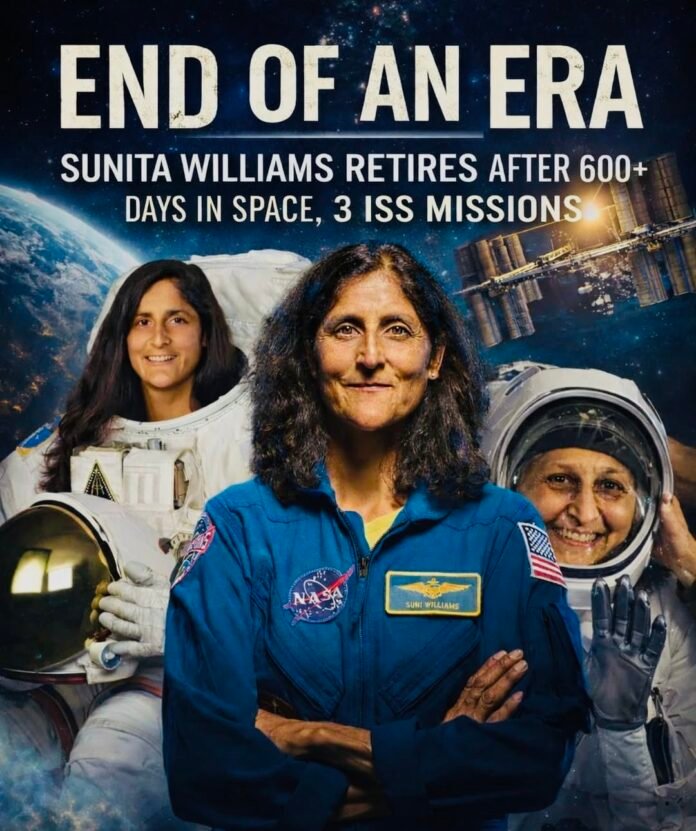
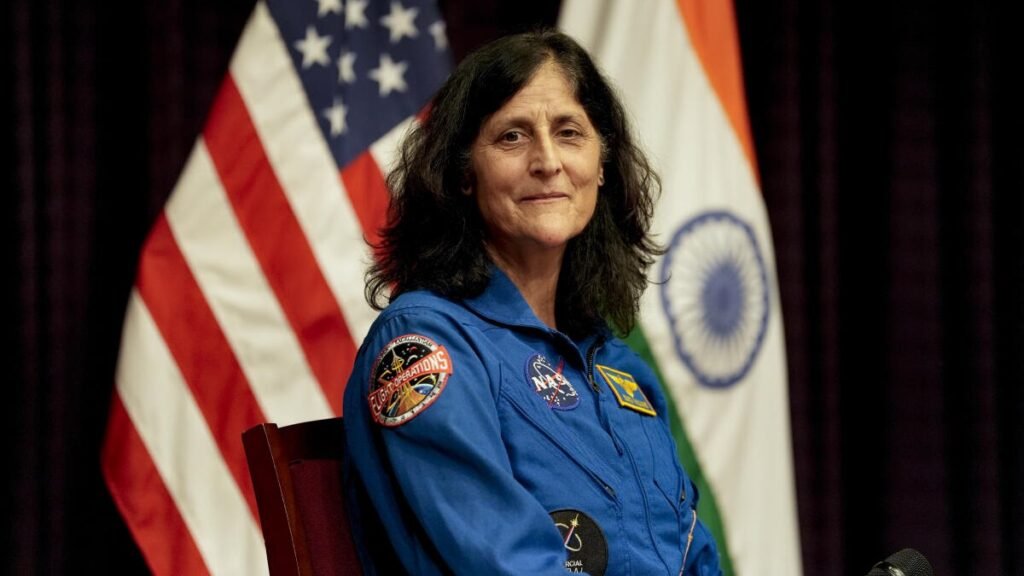
One of the most recognisable faces of modern space exploration has stepped away from active duty. Sunita Williams has officially retired from NASA after a remarkable 27 year career that saw her spend more than 600 days in space across three missions to the International Space Station. Her journey stands as one of endurance, leadership and quiet excellence, marking the end of an era in human spaceflight.

A life shaped by space and scientific curiosity

Sunita Williams first travelled beyond Earth in 2006 and quickly established herself as an astronaut capable of handling the physical and mental demands of long duration missions. Living aboard the International Space Station for months at a time, she played a key role in conducting scientific experiments, maintaining station systems and supporting international research aimed at understanding how the human body and technology function in microgravity. Her cumulative time in orbit places her among a rare group of astronauts who truly lived in space.

Commanding the world’s most complex laboratory

Beyond missions, Williams made history as a commander of the International Space Station, overseeing crew operations in an environment that demands precision, trust and teamwork. The role required constant coordination with space agencies across the world, along with responsibility for crew safety and mission success. Her leadership style, calm and hands on, earned her admiration from colleagues and mission controllers alike.

Sunita Williams Retires From Nasa Bringing Down The Curtain On A 27 Year Space Legacy

Testing human limits beyond the station

Spacewalks became a defining part of Williams’ career. Working outside the station in the vacuum of space, she carried out complex repairs and installations that required extreme focus and physical strength. At one stage, she held the record for the highest total spacewalk time by a woman, reinforcing her reputation as one of NASA’s most reliable astronauts.

Why she chose to step away

After nearly three decades of intense training, prolonged isolation from Earth and repeated exposure to the physical toll of spaceflight, Williams decided it was time to retire. Her decision reflects an understanding of the limits of the human body and a desire to step back while still at the peak of her legacy.

Sunita Williams Retires From Nasa Bringing Down The Curtain On A 27 Year Space Legacy
An inspiration that goes beyond missions

Born to an Indian father and American mother, Sunita Williams became a global symbol of possibility. Her achievements inspired young people, especially women, to look toward careers in science and exploration. Even in retirement, her legacy will continue to shape how humanity reaches for the stars.

Simran Bala Makes History As First Woman To Lead All Male CRPF Contingent On Republic Day

0

India’s 77th Republic Day parade will witness a historic moment as Assistant Commandant Simran Bala from Jammu and Kashmir becomes the first woman officer to lead an all-male contingent of the Central Reserve Police Force at Kartavya Path in New Delhi. Her role marks a significant milestone for women in India’s paramilitary forces and reflects the changing face of leadership in uniformed services.

Breaking barriers on the national stage

While women officers have earlier commanded mixed contingents, this is the first time a woman will lead a fully male CRPF unit at the Republic Day parade. Simran Bala will command over 140 male personnel, showcasing discipline, confidence and command at one of the country’s most prestigious ceremonial events. Her selection is being seen as a move based purely on merit, leadership ability and performance during intense parade rehearsals.

Roots in a border region shaped her journey

Simran Bala hails from Nowshera in Rajouri district of Jammu and Kashmir, a region that has long witnessed security challenges and cross-border tensions. Growing up in a border area exposed her to the sacrifices made by security forces, inspiring her to pursue a career in national service. Her background has played a crucial role in shaping her determination and sense of responsibility.

Academic excellence and entry into CRPF

She graduated in political science from the Government College for Women in Jammu and went on to clear the UPSC Central Armed Police Forces examination in her first attempt in 2023, securing an All India Rank of 82. She was the only woman from Jammu and Kashmir to qualify that year. After completing rigorous training at the CRPF Academy in Gurugram, she was commissioned in April 2025.

Simran Bala Makes History As First Woman To Lead All Male CRPF Contingent On Republic Day
Field experience and leadership recognition

Simran Bala’s first posting was with a Bastariya battalion in Chhattisgarh, where she gained exposure to anti-Naxal operations. Her discipline, command over drills and ability to lead from the front earned her recognition from senior officers, leading to her selection for the Republic Day parade.

An inspiration beyond the parade

Her leadership on Kartavya Path is expected to inspire young women across the country to consider careers in the armed and paramilitary forces. Simran Bala’s journey stands as a powerful reminder that courage, leadership and service know no gender boundaries.

Greenland as a Strategic Prize: From the Thule Nuclear Crash to Trump’s Open Claims

0

On January 21, 1968, a United States Air Force bomber carrying four thermonuclear weapons crashed onto the frozen ice near Thule Air Base in Greenland. What followed — radioactive contamination, secret diplomacy, and the silencing of Indigenous voices — was not an aberration. It was a revelation. More than half a century later, as former U.S. President Donald Trump speaks openly about acquiring Greenland that crash reads less like a Cold War accident and more like an early chapter in a long story of strategic control overriding sovereignty and consent.

The 1968 Thule crash and the nuclear secret

The aircraft involved was a B-52 bomber of the United States Air Force, flying a routine Strategic Air Command mission under Operation Chrome Dome — continuous airborne nuclear patrols designed to deter the Soviet Union. A fire in the heating system forced the crew to abandon the aircraft, which slammed into the ice near Thule Air Base.

The nuclear warheads did not detonate, but their conventional explosives did, scattering plutonium-contaminated debris across more than five miles of ice. Declassified documents show that U.S. recovery teams worked in near-total darkness, sub-zero temperatures, and violent Arctic storms. Over 10,000 cubic metres of radioactive ice and snow were eventually scraped up and shipped to Savannah River, South Carolina. One critical fissile component — the ‘spark plug’ of a thermonuclear weapon — was never recovered, despite underwater searches in North Star Bay.

The crash also exposed a diplomatic lie. Denmark had publicly declared itself nuclear-free in peacetime, yet had quietly tolerated U.S. nuclear deployments over and around Greenland since 1957. Secretary of State Dean Rusk was forced into damage control, negotiating wording that would reconcile Denmark’ public policy with its tacit acquiescence. Danish officials privately acknowledged that the agreement was “less than binding”, while U.S. negotiators insisted that American strategic needs would prevail.

Greenland before Thule: Relocation and colonial control

The Thule incident cannot be separated from Greenland’s longer colonial experience. Danish rule, stretching from the eighteenth century into the late twentieth, systematically subordinated Indigenous Inuit life to external priorities. In 1953, to clear space for the U.S. air base, the Inuit community of Thule was forcibly relocated to Qaanaaq. Over 130 villagers lost access to ancestral hunting grounds, disrupting food systems, kinship networks, and cultural continuity.

Awards and honors lists

There was no massacre, but the consequences were enduring. A foreign administration dictated settlement patterns, livelihoods, and futures. The crash site itself lay near lands that had only recently been taken from the community — underscoring how military strategy literally displaced Indigenous survival.

Reproductive control and bodily coercion

Control extended beyond land. In the 1960s and 1970s, Danish authorities implemented a systematic programme of reproductive intervention among Greenlandic women and girls. Thousands were fitted with intrauterine devices or subjected to hormonal contraception without informed consent. Some were as young as twelve.

Estimates suggest that around 4,500 women and girls — nearly half of Greenland’s fertile female population at the time — were affected. Many suffered chronic pain, infections, infertility, and lasting psychological trauma. The programme was justified as population management, but functioned as coercive social engineering. Denmark and the Government of Greenland have since apologised and initiated compensation schemes, yet testimonies speak of decades of silence, stigma, and unresolved harm.

Why Greenland mattered to Washington

For the United States, Greenland was never peripheral. The 1951 U.S.–Denmark Defence Agreement granted Washington sweeping operational freedom. NSA archives reveal that U.S. planners viewed Greenland as indispensable for early-warning radar, nuclear deterrence, and North Atlantic power projection. In 1957, the Joint Chiefs of Staff even proposed purchasing or leasing Greenland for 99 years — an idea shelved only because it risked offending Denmark diplomatically.

In practice, U.S. behaviour already assumed strategic entitlement. Nuclear-armed flights passed daily over Greenland, weapons were stored near Inuit settlements, and decisions were made with minimal disclosure. After the Thule crash, the priority was containment of contamination and political fallout — not consultation with local communities whose subsistence hunting was directly threatened.

Trump’s blunt articulation of an old logic

What distinguishes the present moment is not ambition, but candour. Donald Trump has said openly that Greenland is essential to U.S. national security and that “anything less than” American control is unacceptable. He has dismissed Greenlandic leaders asserting autonomy and framed NATO’s strength as dependent on Greenland being “in the hands of the United States”.

This is not a departure from history; it is its explicit continuation. Where Cold War strategists operated through secrecy and euphemism, Trump speaks in the language of real estate and protectionism — a belief that control, not partnership, ensures security.

Resistance, limits, and power imbalance

Danish and Greenlandic officials have resisted. Copenhagen speaks of a “fundamental disagreement”. Nuuk reiterates autonomy and adherence to existing agreements. Yet resistance is structurally constrained. Geography, alliance politics, and U.S. military reach create asymmetries that history suggests are hard to overcome.

European allies have limited leverage when NATO and Arctic security are invoked. Greenlandic voices were marginal in 1953, in 1957, and in 1968 — and remain vulnerable today. The pattern is consistent: strategic imperatives trump local agency.

A continuity of exploitation

From forced relocation to reproductive coercion, from nuclear contamination to contemporary geopolitical bargaining, Greenland has repeatedly been treated as a space to be managed rather than a people with rights. The 1968 Thule crash was not merely an accident; it was a moment when hidden power relations surfaced.

Trump’s statements suggest that what was once implicit is now explicit. The historical record offers little comfort that global strategy will yield to Indigenous consent. As the proverb goes, the powerful watch the prize, the vulnerable watch what lies immediately before them.

For Greenland, history suggests that external ambition does not arrive suddenly. It accumulates — and then declares itself inevitable

Two Years Since 22 January 2024, How the Ram Mandir Reshaped Ayodhya and India’s Spiritual Journey

0

January marks two years since the consecration of the Ram Mandir in Ayodhya – an event that many Indians remember not merely as the inauguration of a temple, but as the culmination of a long civilisational journey. In these two years, the Ram Mandir has come to occupy a unique place in India’s spiritual, cultural, and social imagination. Its impact has gone beyond architecture and ritual, shaping personal faith, collective identity, and the religious rhythm of Ayodhya and the nation at large.

A Temple Beyond Stone and Structure

For millions of Indians, the Ram Mandir symbolizes more than a place of worship. It represents the revival of an idea deeply embedded in the Indian ethos – Maryada Purushottam Ram as a moral compass, a symbol of duty, compassion, and righteousness. Over the last two years, the temple has become a focal point for spiritual reflection. Devotees visiting Ayodhya often describe their journey not as tourism, but as tirtha yatra – a conscious inward movement alongside the outward pilgrimage.

The act of darshan at the Ram Mandir has instilled a renewed engagement with spirituality, especially among younger generations who previously related to faith in more abstract or inherited ways. Bhajans, Ramayana readings, and discussions on Ram’s life and values have found new resonance in homes, schools, and digital spaces. Faith, for many, has become less about ritual obligation and more about personal connection.

Ayodhya’s Transformation: Sacredness Meets Daily Life

In the last two years, Ayodhya itself has undergone a visible and subtle transformation. Religiously, the city has re-emerged as a living sacred space rather than a site remembered mainly through history and dispute. Daily aartis, festivals, and seasonal rituals now set the tempo of city life. Temples, ashrams, and ghats have witnessed increased participation, not only from visiting pilgrims but also from local residents who feel a renewed custodianship of their spiritual heritage.

This revival has also brought greater interlinking of faith with service. Langars, charitable kitchens, free medical camps, and volunteer-driven pilgrim assistance have become more common. Seva has emerged as a central expression of devotion, reflecting Ram’s ideals of service to society.

At the same time, Ayodhya has adapted to modern realities. Infrastructure development, better connectivity, and organized pilgrimage management have changed how religious spaces function in the contemporary era. The sacred and the civic now coexist more visibly, shaping Ayodhya into a city where devotion and daily life flow together.

A Broader Religious Shift Across India

The influence of the Ram Mandir has not remained confined to Ayodhya. Across India, the past two years have seen a noticeable shift in how religion is expressed in public and private life. There has been a renewed confidence in openly practicing and discussing faith, particularly Hindu traditions, without apology or hesitation. Festivals linked to Ram – such as Ram Navami and Diwali – have gained increased participation, with a stronger emphasis on their spiritual meanings rather than only their celebratory aspects.

There is also a growing interest in scriptural literacy. The Ramayana, in its many regional versions, is being reread, retold, and reinterpreted through podcasts, study circles, and cultural programs. This engagement reflects a desire to understand tradition intellectually as well as devotionally.

Importantly, for many Indians, this period has encouraged a synthesis rather than a separation – faith alongside modern aspirations, spirituality alongside scientific and professional pursuits. The temple has, in this sense, become a cultural anchor in a rapidly changing society.

Spiritual Unity, Personal Meaning

One of the most striking developments over the past two years has been the personal nature of the spiritual journeys inspired by the Ram Mandir. While the temple stands as a collective symbol, individuals interpret its meaning in deeply personal ways – some finding solace, others inspiration, and many a renewed sense of ethical grounding.

For the Indian diaspora as well, the Ram Mandir has acted as a bridge to cultural roots. Temples abroad, community gatherings, and virtual darshans have allowed those far from Ayodhya to feel connected to a shared spiritual moment back home.

Looking Ahead

As the Ram Mandir completes two years, its significance continues to evolve. The initial moment of celebration has matured into sustained engagement – quiet prayer replacing spectacle, routine devotion replacing historic anticipation. The true legacy of the temple may lie not only in its grandeur, but in how it has encouraged introspection, service, and a renewed dialogue with India’s spiritual traditions.

In a country as diverse and complex as India, the Ram Mandir’s journey over the last two years underscores a simple truth: when faith is rooted in values and lived with humility, it has the power to unite the past with the present, and belief with everyday life.