Home Blog Page 848

Alwar has it all: Jungles, palaces, ‘Fairy Queen’ & Akbar, Aurangzeb swords too!

0

Alwar, one of the oldest Rajasthani kingdoms, has its roots going back to 1500 B.C. A city soaking in history, gives a sense of quietude as you stroll through the ancient palace soaking in the charms of its colourful bazaars. The museum here houses the swords of Mughal emperors Akbar and Aurangzeb too.

Alwar also makes the final destination for the Fairy Queen- a retro locomotive said to be the oldest in the world and constructed in 1855! The journey begins in New Delhi and comes to a halt in the City of Rajputs.

Here’s the only list you need for places to visit in Alwar, its secrets tucked away from the maddening crowd.

Bala Qila Alwar

Bala Qila Alwar

Towering 300m above the city, Bala Qila’s is a massive bastion which predates the rise of the Mughals and its impressive ramparts run for a good 5kms. Mughal emperors, Akbar and Babur spent time here. While Emperor Jahangir spent his three years of exile at Salim Mahal situated within the walls of this fort. While the name ‘Bala’ means young, the fort is ancient, being constructed in the 1500s.

How to reach here: 

You can either hire a rickshaw for a longer 7km ride or you could make the steep climb yourself and save time. 

Bala Qila was constructed on the foundations of a 10th century battlement and the structure is steeped in history. 

There are six entrances and once you’re within its walls, the marble columns and exquisite latticed balconies are a joy to behold.

Timings: 10 A.M. – 5 P.M.

Entry fee: Entry is free. All you need to do is get permission from the police superintendent’s office in the City Palace complex. This is pretty easy to manage.

City Palace Alwar
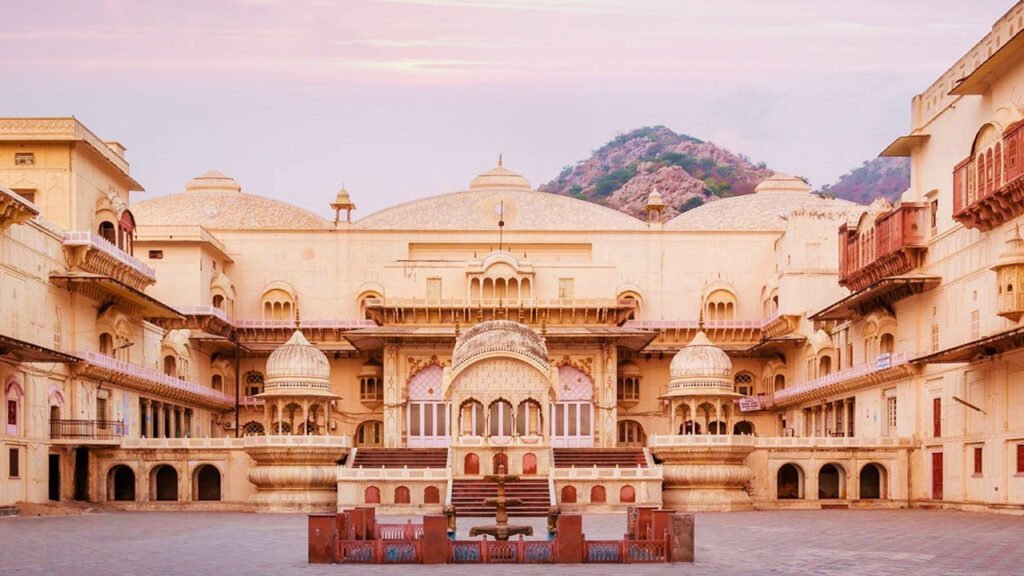
City Palace Alwar

Wanna see the geometric whirlwind of pavilions and ghats? Visit Vinay Vilas Mahal, or the City Palace, which sits on the bottom of Bala Qila. 

Constructed in 1793, the City Palace has 15 large towers and 51 smaller towers that give this structure an air of regality. The marble pavilions, intricate murals, lotus flower bases and airy courtyard make this a must visit destination in Alwar. The palace now houses the offices of the District Collectorate, making it one of the most beautiful government offices in the country.

With the Rajput-Mughal architecture, this palace also has Sagar Kund, the artificial lake. The City Palace is one of the most historically important places to visit in Alwar.

Timings:

10 A.M. – 5 P.M. (closed on Mondays)

Entry Fee:

INR 5 for Indians; INR 50 for Foreigners

Sariska National Park
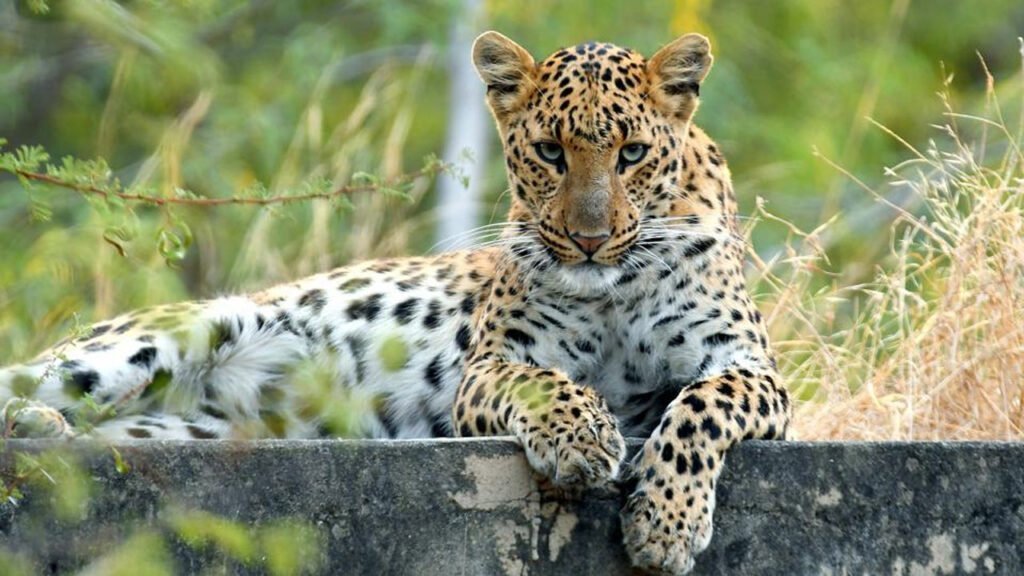
Sariska National Park

Situated across 866 sq km, this National Park  has everything from jungle safaris to ancient temples. It is home to a variety of wild animals in the midst of stunning scenery. Located within the soft folds of the Aravalli Hills, a jungle safari will help you spot the rare Indian Eagle-Owl, peacock, sambhar, nilgai, jackal, wild boars, monkey, leopard and the majestic tiger.

As of August 2018, Saris Tiger Reserve is home to four tigers, eight tigresses and two cubs. It is the first tiger reserve in the world to have successfully completed a tiger relocation scheme. 

Timings:

6 A.M. – 3 P.M. (1st October – 30th June)

Entry Fee:

INR 105 for Indians; INR 570 for Foreigners.

City Palace Museum
City Palace Museum

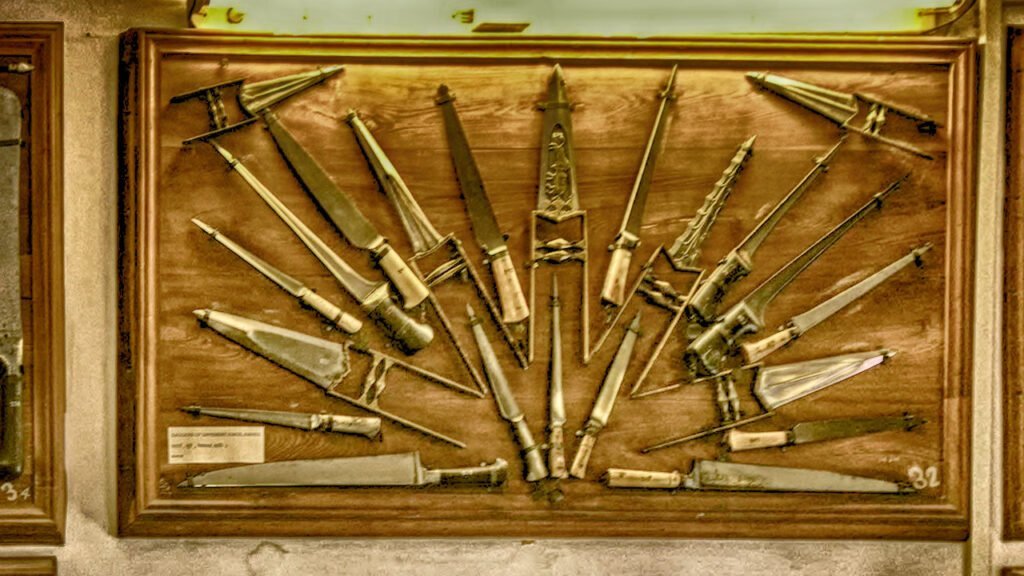
Within the sprawling gates of the City Palace , there is a government-run museum that contains relics such as royal ivory slippers, glorious weaponry, royal attire,   erotic miniatures, a 11th century Vishnu sculpture and widescreen paintings of royal processions.

The museum is on the top floor of the City Palace and you can reach it by taking the ramp from the main courtyard. The City Palace Museum accommodates ancient coins, manuscripts, inscriptions and stone sculptures. Swords belonging to Emperor Aurangzeb and Akbar are also on display here.

Timings: Tuesday – Sunday; 9:45 A.M. – 5:15 P.M.

Entry Fee: INR 50 for Indians; INR 100 for Foreigners

Read more on: https://ebnw.net/travel/fairy-queen-train-rajasthan-worlds-oldest-working-steam-engine-built-in-1855/
Nahargarh Fort: Relish the experiential retreat offering thrill, adventure & excitement in Jaipur

0

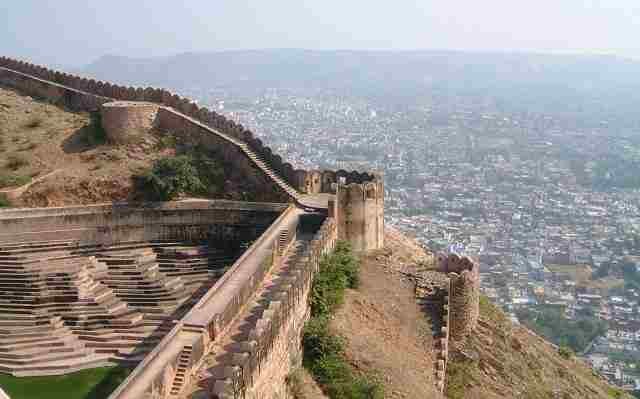
Nahargarh Fort situated on the Aravalli hills offers you an experiential retreat as you drive off city life to reach to this architectural wonder.

Overlooking a beautiful lake, Nahargarh Fort offers a visual treat by capturing the entire city from a hill top. In fact, the sunset from the fort terrace is a sight which you should never miss for anything else when here.

A food court and a restaurant at the top of the fort further offers an excellent view. In fact, this is one fort which offers adventure, thrill, excitement, horror stories and much more to the avid traveller:

History of Nahargarh Fort

Nahargarh in literal form means ‘abode of tigers’. 

As per the legends, this fort was named as Nahargarh after the spirt of a Rathore, Nahar Singh started haunting the site during the construction of the fort . Strange phenomenons were occurring in those times as the daily construction work was destroyed in the night by some unseen forces.

Local people confirm that the fort was first named Sudarshangarh, however,  it was later named as Nahargarh after the spirit of Nahar Singh Bhomia, a prince, who was haunting the place and destroyed the construction. As believed, a temple was constructed  in the fort premises to appease the spirit. 

Significance of Nahargarh Fort

Nahargarh Fort is home to Jaipur’s first wax museum called as Sheesh Mahal (the palace of mirrors). The sheesh mahal, designed to honor the Mughal and Rajput architecture, showcases a massive 25 million glass pieces, carved with intricate designs and gold polishing.

The wax museum encompasses many well-known personalities including the likes of Amitabh Bachchan. The museum also has detailed backdrops and well-designed sets along with the life like replica of many national heroes.

Sheesh Mahal in other parts of Rajasthan does not have a glass floor and hence this makes it a unique place to visit.

Further Nahargarh fort along with Amer Fort and Jaigarh Fort formed the defence to the then capital when Amer stood tall as the capital of the Rajput. The city was bustling with activity and markets in the 1600s.

How to Reach Nahargarh Fort

Located 6 KM outside the city of Jaipur, the drive to the fort from the city centre is more than just picturesque. With nature’s bounty spread around and peacocks dancing by the roadside, an uphill drive through the forest will leave you in awe of its beauty

Meanwhile, the best way to reach the destination is to hire a cab. Even autos can take you to the fort entrance. There are shuttles also available from the foot of the hill.

Nahargarh Fort Entry and Timings

Nahargarh fort remains open from 10 00 AM in the morning to 5 30 PM in the evening. The entry fee for overseas tourists is INR 200 and students are INR 25.

The wax museum and Sheesh Mahal are situated near the entrance of fort. The entrance fee for each is INR 350.

Best Time to Visit the Nahargarh Fort

Best time to visit the Nahargarh Fort is during winter as the weather remains pleasant through out the day. The fort forms a perfect location to spend an entire day. You can couple it with the two forts nearby, Amer and Jaigharh.

It is advisable to first visit Nahargarh fort. You can spend the morning there and have lunch there. There after you can move to Jaigarh which is only a KM from Nahargarh.

Most Significant Aspect of Nahargarh Fort

The abode of tigers has an amazing view. Earlier it was a lonely place with magnificent structures and a few places to eat. But now the fort is bustling with noise due to the recent opening of the glass palace and wax museum.

All about Nahargarh Fort

  • Famous for : Monument Fort / Fortress History & Culture
  • Fee : INR 200 for Foreign Tourists and INR 50 for Indians
  • Visiting Time : All days 10:00 AM – 5:30 PM
  • Visit Duration : Around 2 – 3 hour

Budget 2021-22: Know how it’s different in 5 ways !

0

Finance Minister Nirmala Sitharam presented the budget 2021-22 on February 1 announcing slew of reform measures. Here are the 5 ways how the Budget 2021-22 is different from the other budget sessions:

  • For the first time in India, the finance minister replaced her signature ‘bahi khata’, and opted to carry the the documents in a tablet which was wrapped in a red-coloured cover with national emblem
  • For the first time in India, the finance minister replaced her signature ‘bahi khata’, and opted to carry the the documents in a tablet which was wrapped in a red-coloured cover with national emblem
  • For the first time in India, the finance minister replaced her signature ‘bahi khata’, and opted to carry the the documents in a tablet which was wrapped in a red-coloured cover with national emblem
  • For the first time in India, the finance minister replaced her signature ‘bahi khata’, and opted to carry the the documents in a tablet which was wrapped in a red-coloured cover with national emblem
  • For the first time in India, the finance minister replaced her signature ‘bahi khata’, and opted to carry the the documents in a tablet which was wrapped in a red-coloured cover with national emblem

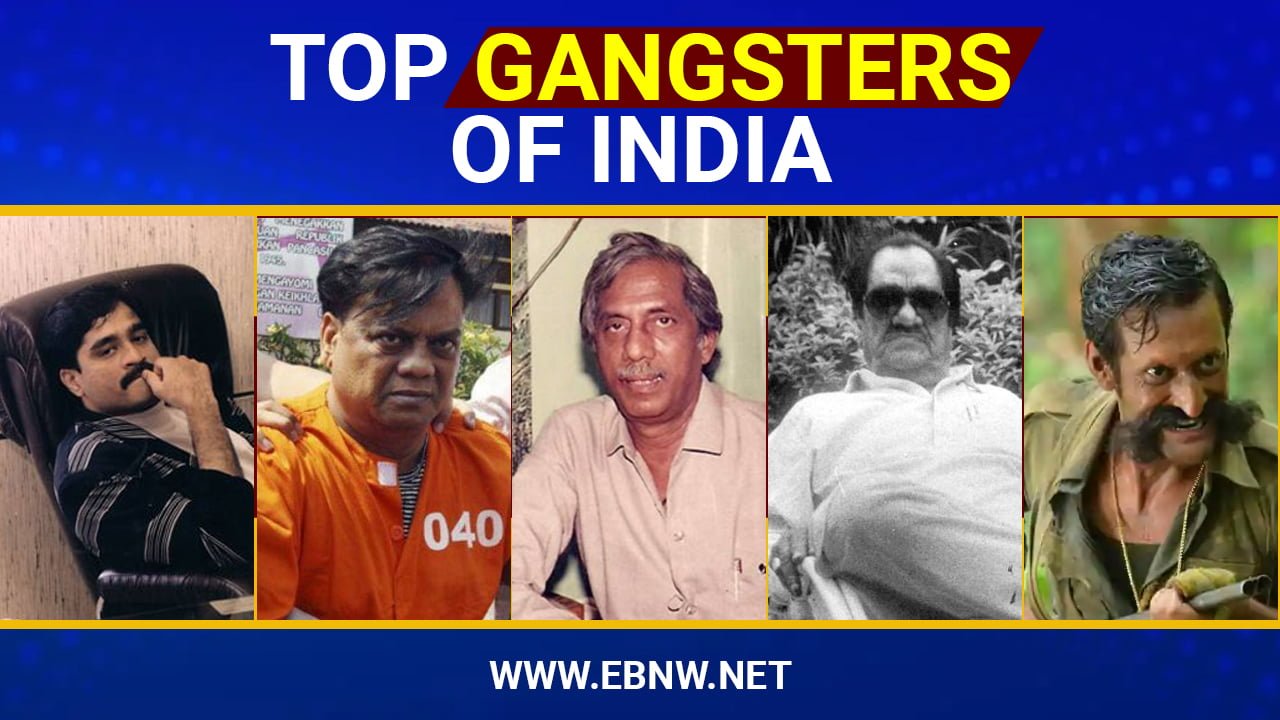
Top 5 Gangsters of India

0

As Rajasthan police on Thursday caught the most wanted gangster Papla Gurjar who had created a havoc in states namely Rajasthan and Haryana, we take a sneak peak into the top 5 gangsters of India which created a reign of terror across India:

Dawood Ibrahim: Dawood was born in Mumbai in the year 1955 to a police constable in Mumbai’s Dongri. After forming a clan of relatives and friends from his locale, he started getting engaged in smuggling, robbery, fraud and other petty crimes during his teens. At this time, he locked horns with the infamous Haji Mastan. By the late 1970’s, he was into extortion, money laundering, gold smuggling, illegal arms trade and drug trafficking and floated the dreaded D-Company, a mega crime syndicate. 

He was named by the CBI as among the main perpetrators of the 1993 serial blasts, after which he, reportedly, fled to Pakistan.  

Chotta Rajan: He was born in Mumbai as Rajendra Sadashiv Nikalje and then he started his criminal career as a ticket scalper and thief. Later he joined mobster, Rajan Mahadev Nair’s (Bada Rajan) gang. 

Chotta Rajan took over Nair’s gang after the death of his mentor in 1983, and made up a strong partnership with Dawood Ibrahim, as the two terrorised Mumbai. 

In 1993, Chotta Rajan separated from Ibrahim, and formed his own gang, which was more into widescale drug trafficking, extortion, murder and smuggling. 

Many people believe that Ibrahim attempted to assassinate Chotta Rajan many times, but ultimately, the Indonesian law enforcement authorities, in collaboration with the Australian police, nabbed him in Bali. Rajan is serving a lifer at Tihar Jail in Delhi. 

Haji Mastan: Also referred to as Mumbai’s ‘Robin Hood’ for the charity work he undertook at Dharavi, Haji Mastan was born in 1926 to a Muslim family in Panaikulam, Tamil Nadu, Mastan. He reportedly, migrated to Bombay at the age of eight, and here he developed an underworld empire and ruled the roost for two decades between 1960 and 1980, with two aides Karim Lala and Varadarajan Mulaidar. He along with his gang was engaged in largescale black marketing of cinema tickets, bootlegging, and extortion.

He died at the age of 68 in 1994 of cardiac arrest at Mumbai’s Breach Candy Hospital.

Karim Lala: He was born as Abdul Sher Khan, in Afghanistan in 1911, however, later his family shifted to Bombay. Here, along with two gangsters, Haji Mastan and Varadarajan Mulaidar, he began his criminal career as part of a Pathan gang that worked as recovery brokers helping Gujarati and Marwari businessmen and money lenders. His criminal activities included illegal gambling, illegal sale of liquor, forced eviction, extortion and contract killings. 

Lala handed over his empire to his nephew Samad Khan and went into retirement before eventually dying of a heart attack in February, 2002, at 90. 

Veerappan: Veerappan, born in Mysore in 1952, was a smuggler, poacher and bandit who was wanted for the murders of over a 120 people as well as for the deaths of more than 2,000 elephants dwelling in the forests of Kerala, Tamil Nadu and Karnataka, and the smuggling and illicit sale of tons of sandalwood and ivory. 

He is also known for kidnapping government officers, politicians, and even celebrities for ransom, 
He was killed in 2004 in an encounter at Tamil Nadu’s Dharmapuri district under Operation Cocoon.

Rajasthan-Cop School Aapni Pathshala speak story of transformation for street kids

0

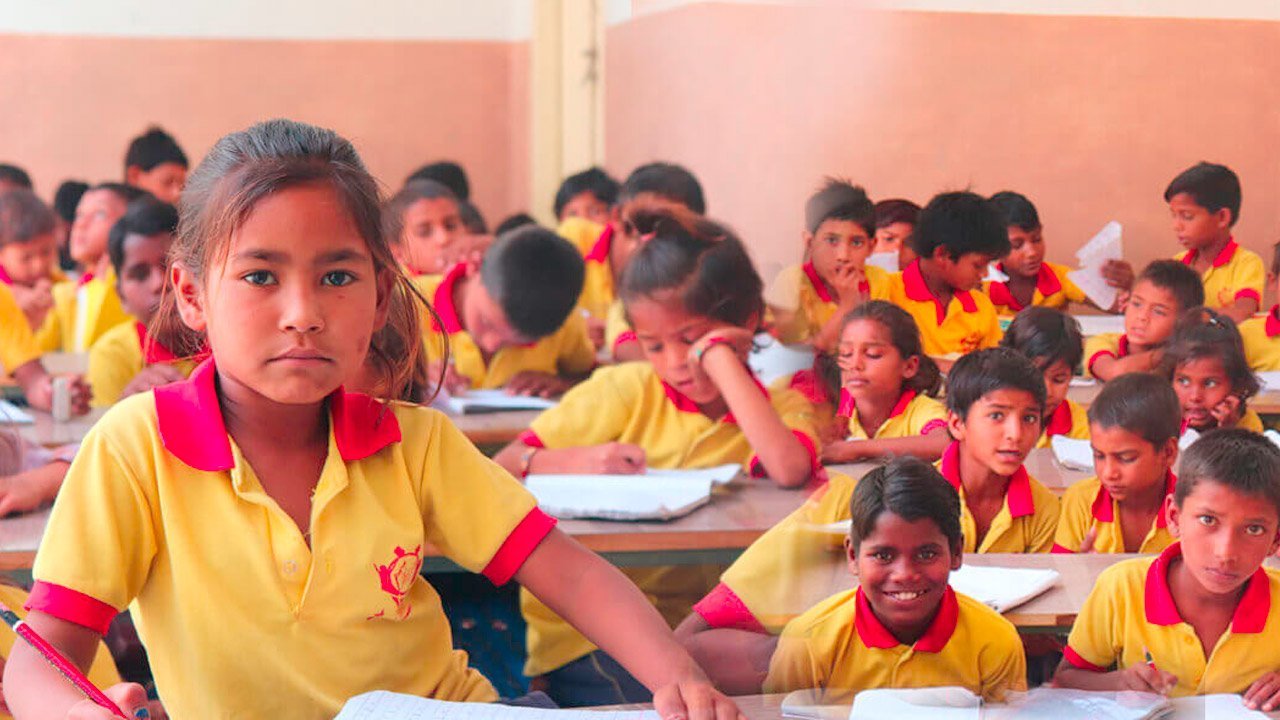
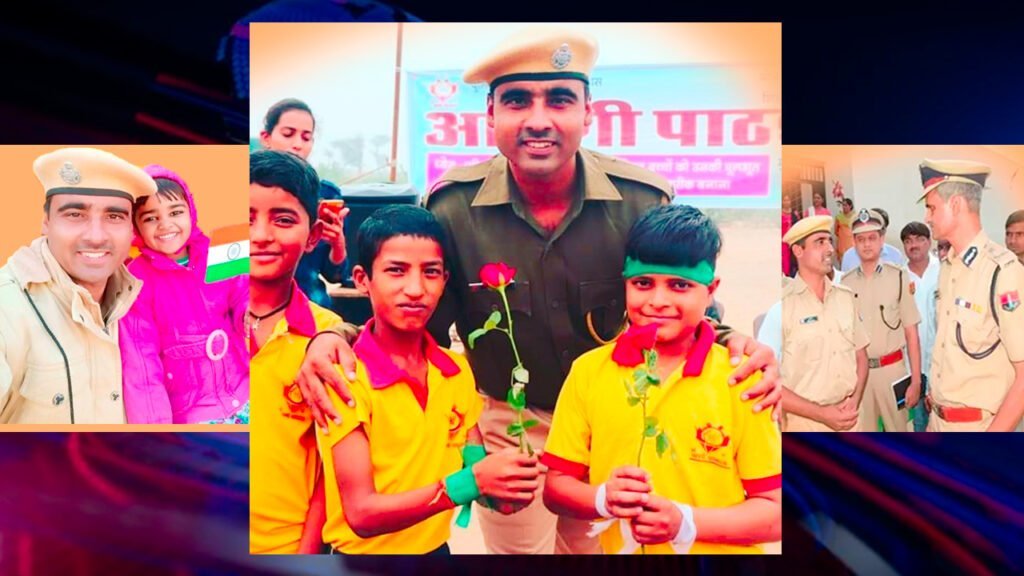
Aapni Pathshala in Churu district of Rajasthan has transformed the fortunes of 500 street kids who once begged on streets but now are aiming to become Army officers and cops

Aapni Pathshala

Constable Dharamveer Jakhar, a committed cop in Rajasthan, serves as a school teacher for street kids too who once were engaged in begging and rag picking. Watch out the live video who this man is taking efforts to install solar light in hutments of these kids so that they can study in night:

Jakhar, works an hour daily to teach these kids and also give them prizes to ensure they attend their regular classes lured by the gifts they get. Now these kids aspire to become Army officials and top cops.

The school, he runs, is called as Aapni pathshala where around 500 kids are aiming to join Army and police services.

Top 5 places to visit in Bharatpur whose origin is traced to Ramayana era!

0

Bharatpur in Rajasthan is home to one of the world’s best-known bird watching destinations, Keoladeo Ghana National Park (KNP).

Do you know that the origin of the name Bharatpur is traced to Bharat, younger brother of Lord Ram. Laxman, the other brother, has also been given the most prestigious position in this once royal kingdom as that of the family deity of the ruling family of Bharatpur. His name also appears in the state seals and coat-of-arms.
The history of Bharatpur in fact dates back to 5th century BC, when the Matsya kingdom flourished here. The Matsyas were allies of the Pandavas in the Mahabharata war.


In the early 18th century, Maharaja Suraj Mal captured the fort of Bharatpur by vanquishing Khemkaran, the rival chieftain and laid the foundation for Bharatpur. Today, the city is proud to be known as home to one of the world’s best-known bird watching destinations, Keoladeo Ghana National Park (KNP). Let’s study about the five top places to be visited in this city:

Bharatpur Palace and Museum

Top 5 places to visit in Bharatpur whose origin is traced to Ramayana era!

Wanna see antiques, sculptures, local art and craft wares? Visit the Bharatpur Palace. Located within its premises is Kamra Khas, a museum containing a vast number of antiques, over 581 stone sculptures, 861 local art and craft wares and ancient scriptures that depict the art and culture typical of Bharatpur. The palace is a fine fusion of Mughal and Rajput architecture.


Ganga Mandir: Situated in the heart of the city, it is one amongst the most beautiful temples of Rajasthan which has magnificent deity of Ganga Maharaj made of pristine white marble. Maharaja Balwant Singh started constructing this temple in the mid-19th century.

Keoladeo Ghana National Park: This makes the world’s most fascinating and spectacular bird reserves as it is considered as one of the richest bird areas in the world today. Every year, thousands of migratory waterfowl birds such as green sandpiper and cranes visit the park during winter. You will be surprised to know that this park  was created in mid 18th century as a small reservoir located 5 kilometres to the southeast of Bharatpur. The construction of the Ajan Bund (dam) and the subsequent flooding of this natural depression led to one of the world’s most fascinating and spectacular bird reserves.

Laxman Mandir: Dedicated to Laxman, brother of Lord Rama, this temple is famous for its typical Rajasthani style of architecture and beautiful pink stonework.

Lohagarh Fort: Lohagarh Fort stands by its names as it has withstood many attacks by the British, however was ultimately captured by Arthur Wellesley. The fort is surrounded by a moat which used to be filled with water to keep enemies out. Interesting monuments inside the fort are Kothi Khas, Mahal Khas, Moti Mahal and Kishori Mahal. Raja Suraj Mal built Jawahar Bhurj and Fateh Bhurj to commemorate victories over the Mughals and the British.

Monkey Temple in Jaipur Rajasthan

0

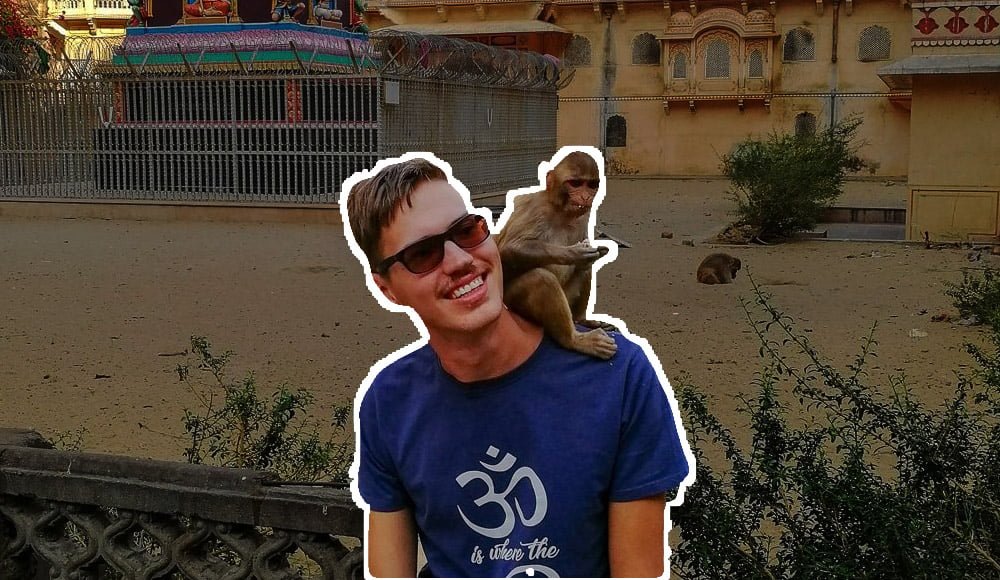
Galtaji, also called as monkey temple, is situated in Jaipur and is lured by all kinds of tourists be it religious tourists, spiritual travellers, history buffs, travel enthusiasts, as well as people who love to observe pristine places and surroundings blessed by nature’s fauna and flora!

Why it is called as Monkey Temple

Galtaji is called the Monkey Temple because of the vast majority of macaque monkeys found here. Even Net Geo shot a documentary series in 2008 about the monkeys in the Galtaji named “Monkey thieves”. Soon after the series, the Galta ji temple became famous as the Monkey Temple of Jaipur.

History of Galtaji temple

Galtaji is a pre-historic Hindu pilgrimage site built by Diwan Rao kriparam during the eighteenth century. Kriparam was the courtier of Sawai Jai Singh 2nd of Jaipur.

Legends say that saint Galav Rishi spent his life in search of truth and did ‘Tapasya’ here in Galtaji for many years. The God, pleased with his penance, appeared before him and blessed his place of worship with abundant water.

This  exists today as Galta Kund which is a holy water tank and the water here never dries. Taking bath in this holy galta kund is considered as sacred.
 A temple was built here to honour the saint Galav Rishi and it was named as Galtaji.

The temple also finds mentioning in Ram Charit Manas.

Bihar CM Nitish Kumar’s date with birds makes him India’s 1st CM heralding unique conservation – Harsh Vardhan

0

Bihar CM Nitish Kumar sports birds too! Ever heard of an Indian Chief Minister sporting birds, that too migratory species? 

Bihar’s Chief Minister Nitish Kumar has attained a unique feat: observing how bird banding is done, holding Blyth’s Reed Warbler in his hand and finally releasing it in the air (see photo here). It took place on 16 January 2021 at the State’s 1st Bird Fair held at Nagi Lake in Jamuai district. 

An overflowing crowd of rural and urban character surrounded this feat to an extent that many press photographers could not satisfy their cameras’ hunger. 

CM Nitish Kumar in Bihar First Birds Festival

A brimful Nitish appeared inquisitive. He had bag full of details received when he spent good time at the stall of Bombay Natural History Society (BNHS), a 135-year-old organization specializing in avian studies. Nita Shah explained to him about migration pattern and the species banded by her team so far. 

The banding  is to decipher where birds finally reach. She pinned a BNHS badge over his chest. To this, the soft spoken Nitish extended his heartful thanks with folded hands. Prabhat Kumar Gupta as Chief Wildlife Warden, S. Sudhakar, as DFO, Bhagalpur, Satyajeet Kumar as DFO, Jamui, and Bharat Chintapalli as DFO for the Fair, were on their toes to let the event flow like the Ganges.    

Dt. S. Balachandran, who has banded more than 2-lakh birds in India, Dr. Vibhu Prakash, Head of India’s Vulture Breeding Project at Pinjore, Haryana, and others from BNHS besides Bihar’s Chief Wildlife Warden, Prabhat Kumar Gupta, were around Nitish to let him search more on birds, as can be observed in a group photo published here.

Nita Shah manages such banding sites all over India as BNHS scientist.   

Nitish flew in a helicopter at the Bird Fair and spent hours, observing conservation gaining ground. He addressed a gathering of rural folk artists amidst bird experts from all over the country, to thank the organisers for this event and hoped it would add a new prestige to Bihar. 

Blyth’s Reed Warbler (Acrocephalus dumetorum), the bird he released, breeds in Eastern Europe and is a winter visitor to India.  It hops from trees to bushes and calls a high-pitched and loud “tek…tek…tek.” 

Bihar CM Nitish Kumar’s date with birds makes him India’s 1st CM heralding unique conservation - Harsh Vardhan
Bihar Chief Minister, Nitish Kumar with forest officials and BNHS scientists, the lady on his right is Nita Shah, BNHS Dy. Director for bird migration project and avian studies.

The BNHS is running a ringing camp at Bhagalpur also to trap birds and release them. Strange paradox is that India has all eggs kept in the BNHS basket for bird banding. It lacks financial and other support to carry it out throughout the country. What other states are doing? The officials are unconcerned about it. 

In US, Britain, France, Germany, Japan, Russia, China and even in a tiny country like Mongolia, school students and private individuals are encouraged to do bird banding, using metal rings to apply them over feet of birds. This writer happened to be a guest of Bihar to attend this Fair and appreciates the organizers for having done a much needed event. 

We  happen to be the first in organizing Bird Fairs in India. The 24th    Indian Birding Fair is due in February at Man Sagar lake in Jaipur, being devoted to Butterfly Conservation. Welcome to join hands …(www.birdfair.org). 

PS: The feature image caption should read as:

Bihar Chief Minister, Nitish Kumar releasing a ringed Blyth’s Reed Warbler at its 1st Bird Fair on 16 January 21. Helping him with this migratory bird is Dr. S. Balachandran, BNHS Dy. Director for bird banding

Padma Shri Awards 2021: Full List Of Recipients

0
NameFieldState/Country
Shri Gulfam AhmedArtUttar Pradesh
Ms. P. AnithaSportsTamil Nadu
Shri Rama Swamy AnnavarapuArtAndhra Pradesh
Shri Subbu ArumugamArtTamil Nadu
Shri Prakasarao AsavadiLiterature and EducationAndhra Pradesh
Ms. Bhuri BaiArtMadhya Pradesh
Shri Radhe Shyam BarleArtChhattisgarh
Shri Dharma Narayan BarmaLiterature and EducationWest Bengal
Ms. Lakhimi BaruahSocial WorkAssam
Shri Biren Kumar BasakArtWest Bengal
Ms. Rajni BectorTrade and IndustryPunjab
Shri Peter BrookArtUnited Kingdom
Ms. Sangkhumi BualchhuakSocial WorkMizoram
Shri Gopiram Bargayn BurabhakatArtAssam
Ms. Bijoya ChakravartyPublic AffairsAssam
Shri Sujit ChattopadhyayLiterature and EducationWest Bengal
Shri Jagdish Chaudhary (Posthumous)Social WorkUttar Pradesh
Shri Tsultrim ChonjorSocial WorkLadakh
Ms. Mouma DasSportsWest Bengal
Shri Srikant DatarLiterature and EducationUnited States of America
Shri Narayan DebnathArtWest Bengal
Ms. Chutni DeviSocial WorkJharkhand
Ms. Dulari DeviArtBihar
Ms. Radhe DeviArtManipur
Ms. Shanti DeviSocial WorkOdisha
Shri Wayan DibiaArtIndonesia
Shri Dadudan GadhaviLiterature & EducationGujarat
Shri Parshuram Atmaram GangavaneArtMaharashtra
Shri Jai Bhagwan GoyalLiterature and EducationHaryana
Shri Jagadish Chandra HalderLiterature and EducationWest Bengal
Shri Mangal Singh HazowaryLiterature and EducationAssam
Ms. Anshu JamsenpaSportsArunachal Pradesh
Ms. Purnamasi JaniArtOdisha
Matha B. Manjamma JogatiArtKarnataka
Shri Damodaran KaithapramArtKerala
Shri Namdeo C KambleLiterature and EducationMaharashtra
Shri Maheshbhai & Shri Nareshbhai Kanodia (Duo) *(Posthumous)ArtGujarat
Shri Rajat Kumar KarLiterature and EducationOdisha
Shri Rangasami Lakshminarayana KashyapLiterature and EducationKarnataka
Ms. Prakash KaurSocial WorkPunjab
Shri Nicholas KazanasLiterature and EducationGreece
Shri K KesavasamyArtPuducherry
Shri Ghulam Rasool KhanArtJammu and Kashmir
Shri Lakha KhanArtRajasthan
Ms. Sanjida KhatunArtBangladesh
Shri Vinayak Vishnu KhedekarArtGoa
Ms. Niru KumarSocial WorkDelhi
Ms. LajwantiArtPunjab
Shri Rattan LalScience and EngineeringUnited States of America
Shri Ali ManikfanOthers-Grassroots InnovationLakshadweep
Shri Ramachandra ManjhiArtBihar
Shri Dulal MankiArtAssam
Shri Nanadro B MarakOthers- AgricultureMeghalaya
Shri Rewben MashangvaArtManipur
Shri Chandrakant MehtaLiterature and EducationGujarat
Dr. Rattan Lal MittalMedicinePunjab
Shri Madhavan NambiarSportsKerala
Shri Shyam Sundar PaliwalSocial WorkRajasthan
Dr. Chandrakant Sambhaji PandavMedicineDelhi
Dr. J N Pande(Posthumous)MedicineDelhi
Shri Solomon PappaiahLiterature and Education- JournalismTamil Nadu
Ms. PappammalOthers- AgricultureTamil Nadu
Dr. Krishna Mohan PathiMedicineOdisha
Ms. Jaswantiben Jamnadas PopatTrade and IndustryMaharashtra
Shri Girish PrabhuneSocial WorkMaharashtra
Shri Nanda PrustyLiterature and EducationOdisha
Shri K K Ramachandra PulavarArtKerala
Shri Balan PutheriLiterature and EducationKerala
Ms. Birubala RabhaSocial WorkAssam
Shri Kanaka RajuArtTelangana
Ms. Bombay Jayashri RamnathArtTamil Nadu
Shri Satyaram ReangArtTripura
Dr. Dhananjay DiwakarSagdeoMedicineKerala
Shri Ashok Kumar SahuMedicineUttar Pradesh
Dr. Bhupendra Kumar Singh SanjayMedicineUttarakhand
Ms. Sindhutai SapkalSocial WorkMaharashtra
Shri Chaman Lal Sapru(Posthumous)Literature and EducationJammu and Kashmir
Shri Roman SarmahLiterature and Education- JournalismAssam
Shri Imran ShahLiterature and EducationAssam
Shri Prem Chand SharmaOthers- AgricultureUttarakhand
Shri Arjun Singh ShekhawatLiterature and EducationRajasthan
Shri Ram Yatna ShuklaLiterature and EducationUttar Pradesh
Shri Jitender Singh ShuntySocial WorkDelhi
Shri Kartar Paras Ram SinghArtHimachal Pradesh
Shri Kartar SinghArtPunjab
Dr. Dilip Kumar SinghMedicineBihar
Shri Chandra Shekhar SinghOthers-AgricultureUttar Pradesh
Ms. Sudha Hari Narayan SinghSportsUttar Pradesh
Shri Virender SinghSportsHaryana
Ms. Mridula Sinha(Posthumous)Literature and EducationBihar
Shri K C Sivasankar(Posthumous)ArtTamil Nadu
Guru Maa Kamali SorenSocial WorkWest Bengal
Shri Marachi SubburamanSocial WorkTamil Nadu
Shri P Subramanian(Posthumous)Trade and IndustryTamil Nadu
Ms. Nidumolu SumathiArtAndhra Pradesh
Shri Kapil TiwariLiterature and EducationMadhya Pradesh
Father Vallés(Posthumous)Literature and EducationSpain
Dr. Thiruvengadam Veeraraghavan(Posthumous)MedicineTamil Nadu
Shri Sridhar VembuTrade and IndustryTamil Nadu
Shri K Y VenkateshSportsKarnataka
Ms. Usha YadavLiterature and EducationUttar Pradesh
Col Quazi Sajjad Ali ZahirPublic AffairsBangladesh

Padma Bhushan Awards 2021: Full List Of Recipients

0
Name FieldState/Country
Ms. Krishnan Nair Shantakumari ChithraArtKerala
Shri Tarun Gogoi(Posthumous)Public AffairsAssam
Shri Chandrashekhar KambaraLiterature and EducationKarnataka
Ms. Sumitra MahajanPublic AffairsMadhya Pradesh
Shri Nripendra MisraCivil ServiceUttar Pradesh
Shri Ram Vilas Paswan(Posthumous)Public AffairsBihar
Shri Keshubhai Patel(Posthumous)Public AffairsGujarat
Shri Kalbe Sadiq(Posthumous)Others-SpiritualismUttar Pradesh
Shri Rajnikant Devidas ShroffTrade and IndustryMaharashtra
Shri Tarlochan SinghPublic AffairsHaryana