Home Blog Page 847

Phad paintings of Rajasthan: Narrating the Godly tales

0

Phad painting of Rajasthan is a 700 year old legacy. Depicting a kind of scroll painting, it narrates the elaborate religious stories of local deities and Gods.

Passed down over generations within a single family, it finds its origin in Shahpura near Bhilwara in Rajasthan,

Many centuries back, these traditional paintings, created as travelling or mobile temples, were carried by priest-singers of the Rabari tribe, called Bhopas and Bhopis. They sang and performed stories of their local deities including Devnarayanji (a reincarnation of Vishnu) and Pabuji (a local hero). The Phad painting were unrolled, or unfolded after sunset, and they performed in front of village members till the night. This is perhaps why the paintings are called ‘Phad’, which means ‘fold’ in the local dialect.
Thewa art infusing Gold with Glass originated in Rajasthan’s Pratapgarh

0

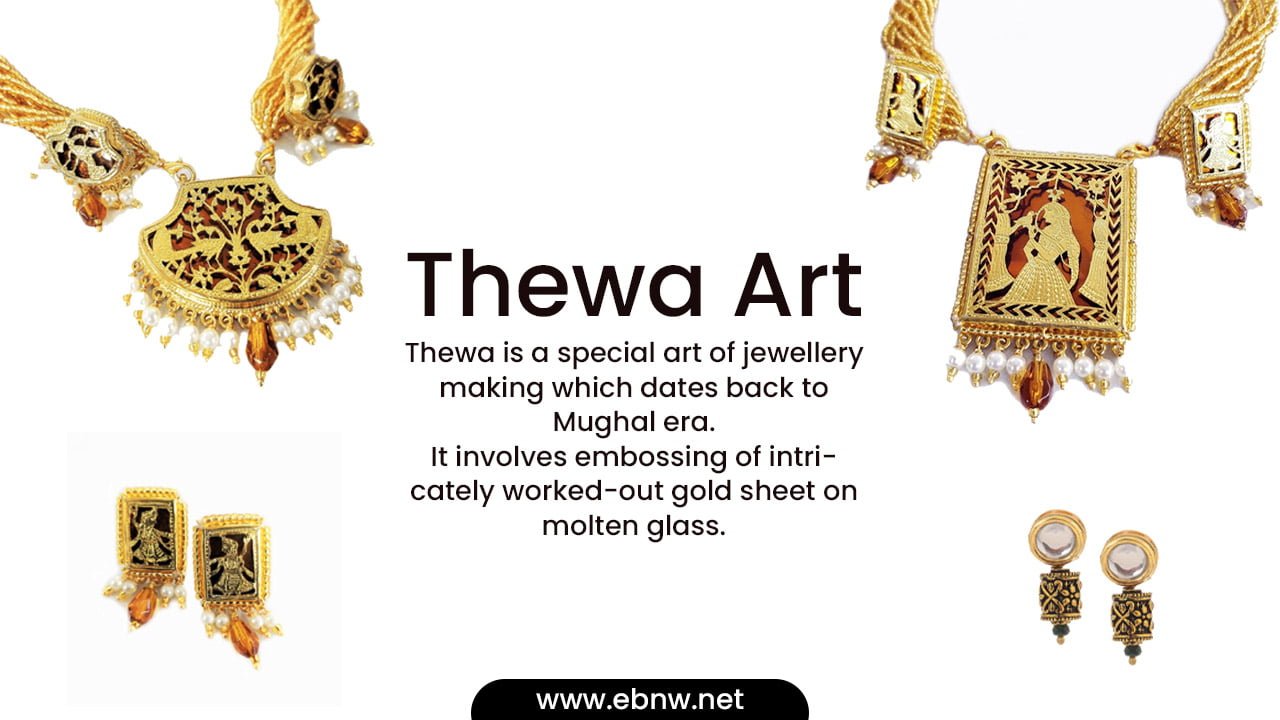
Thewa is a special art of jewellery making which dates back to Mughal era. It involves embossing of intricately worked-out gold sheet on molten glass.

This traditional art of fusing 23K Gold with multicoloured glass originated in Pratapgarh district of Rajasthan. The glass is treated with a special process to bring out glittering effects, which in turn highlights the intricate gold work. The whole Thewa piece is hand crafted which takes around a month’s time by skilled artisans. 

Thewa uses motifs on jewellery, showcasing the culture, heritage and tales of romance and valour of Rajasthan . 

Origin:

The origin of Thewa art goes back to 1707 when a craftsman named Nathu ji Soni from Pratapgarh invented the process to create this art, considered as one of the most expensive art forms. His skills were passed on to the next generation of his family who call themselves “Raj-Sonis”. Many craftsmen from this family have been honoured with esteemed awards including UNESCO, National and State Government awards.

In 2011, the Raj-Sonis of Rajasthan made their way into the Limca Book of Records; this is the only family with nine national awards. In 2015, Mahesh Raj Soni was bestowed with Padma Shree for his excellent Thewa handicraft.

Pichwai Paintings originated in Rajasthan’s Nathdwara 400 years back!

0

Pichwai paintings of Rajasthan originated in Nathdwara in Udaipur district around 400-year-old. Being vibrant, attractive, intricate and visually stunning, these paintings depict the tales from Lord Krishna’s life. 

The characteristic features of Pichwai paintings are large eyes, a broad nose and a heavy body, similar to the features on the idol of Shrinathji, a divine form of Lord Krishna. These paintings showcase various legends surrounding Lord Krishna. 

These intricate paintings take anywhere between two weeks and a few months, depending on the size of the canvas and detailing of the work.

Pichwai Paintings

Meenakari-Know how Jaipur became the hub of this artistry 500 years ago

0

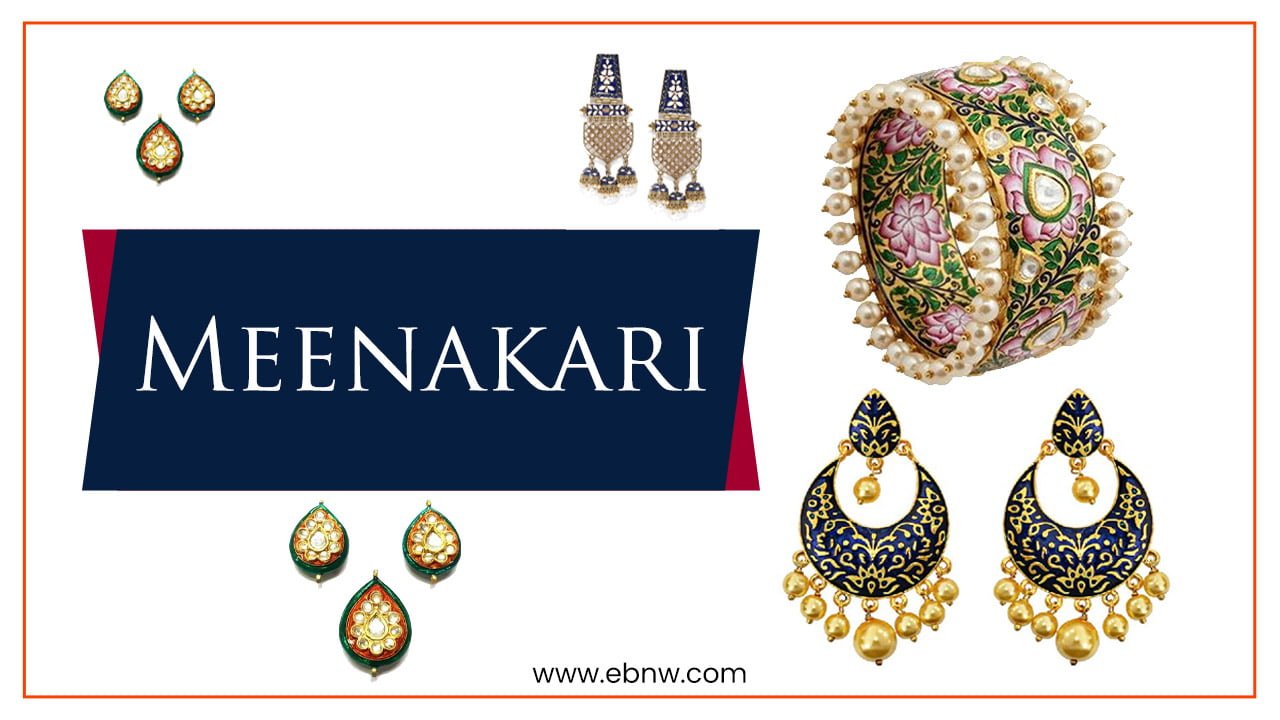
Meenakari, one of the most complex crafts, was introduced in Rajasthan by Raja Mansingh of Amer at the turn of the 16th century. He brought in artisans adept in the Meenakari art from Lahore and established them in Jaipur.

Jaipur hence became the hub of meenakari art with the influx of highly skilled craftsman from Lahore. In next few years, the talent of the craftsmen made the place a specialized centre of meenakari designing.

Basically, Meenakari is an art of painting or embellishing on various types of metals with vibrant colours made in dramatic motifs of birds, flowers and leaves.

It was initially a Persian craft but it soon flourished and was used to create mesmerising designs on the back of traditional Polki jewellery. Soon, it became a design of its own, and was called as reversible jewellery.

The complex craft, today, also passes through the same phase as it was 500-years ago starting with the designer (naquash), who goes to the goldsmith (sonar). He then goes to kalamkar who engraves the design and then the enamelist (meenakar) applies the colour. This artefact then goes to the polisher (ghotnawala), then to the stone-setter (jadia), and finally it is passed on to the stringer (patua) for the final touches.

Meenakari, not just restricting itself to jewellery, now includes décor products like jewellery boxes, idols, dining sets, trays, cupboards, bowls, sculptures, key chains and more. Initially, done only on gold, it is now also done on silver and copper now.

Basant Panchami 2021: Date, Saraswati puja time, history and Spring celebration

0

Basant Panchami 2021: Let’s know about the date, history and significance and celebration of the Spring festival in India. Also, we bring out what time is the shubh muhurat for performing Saraswati puja

Basant Panchami is an auspicious festival of the Hindus, celebrated with great pomp and show across India on the fifth day of the Hindu month of Magha, Shukla Paksha. It is also called Sri Panchami in the South and is dedicated to Saraswati, the wife of Brahma who is considered as the Goddess of knowledge, music, learning and arts by Hindus.

Basant Panchami 2021

Worshippers have a strong belief that the world would be shrouded in ignorance without Saraswati as she is the one who represents enlightenment. Hence, Saraswati is worshipped on Basant Panchami.

Yellow or basanti, as per legends, are Saraswati’s favourite colour and all celebrations include a shade of yellow on this day.

 Vasant Panchami is further believed to be the most auspicious day to get married.

Date and Puja Time:

This year, Vasant Panchami is being observed on February 16, 2021. The Panchami Tithi starts at 3.36 am on February 16 and will continue till 5.46 am on February 17. While the entire day is considered auspicious, the right time for doing the puja is in afternoon.

Sanwaliya Seth Temple in Rajasthan: Devotees offer opium to God

0

This temple is Sanwaliya Seth Temple, situated about 65 km from Neemuch in western Madhya Pradesh. The world famous Sanwaliya Seth, also known as Krishna Dham, is located in Mandafia of Dungla tehsil of Chittorgarh district of Rajasthan.

In fact, even smugglers engaged in trading opium consider Sanwariya Seth as their God and offer opium before sending their consignments to their client. They also visit the temple and also send a part of the earnings to God.

Many devotees from the country and the world visit this temple.

The smugglers extract a share of Sanwaliya Seth from the profits of their business. Every month, when the box is opened on Amavasya, then along with the amount of it, opium is also found. As opium is called black gold, Samwaliya Seth is also called the God of Black Gold.

On the new moon day of every month, the donation box of the temple opens in which crores of rupees are received which have been offered to God from smugglers and devotees.

Birla Temple in Jaipur: Know how and why it is different!

0

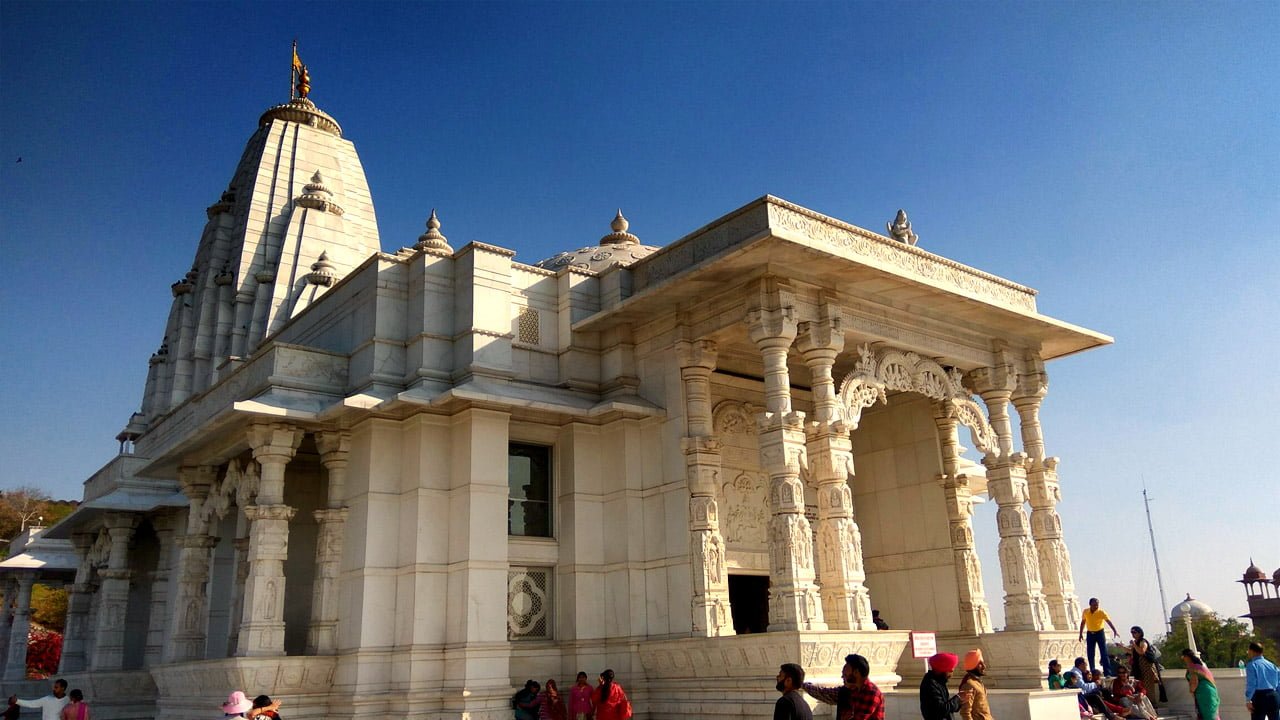
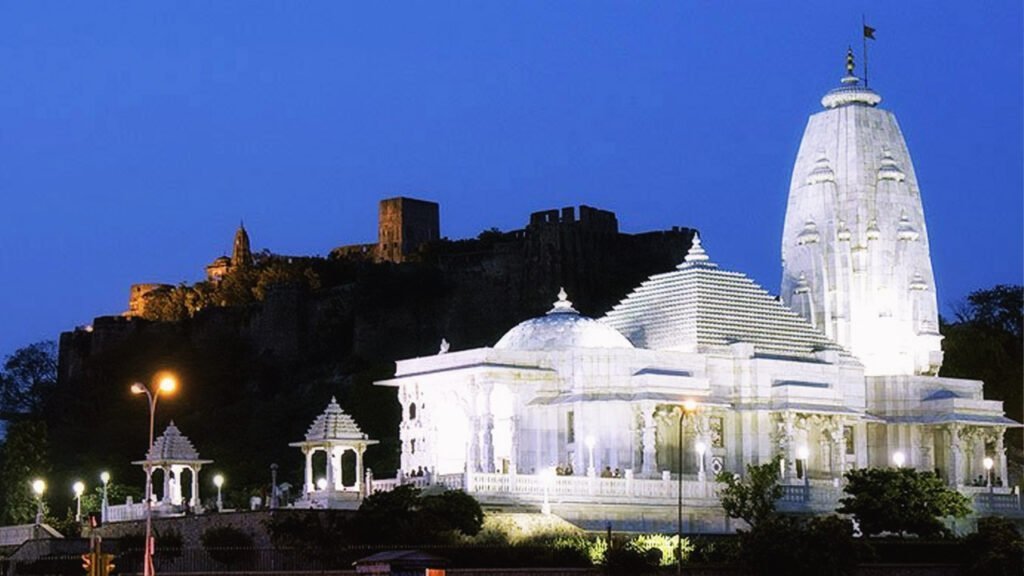
Laxmi Narayan Mandir, known as Birla Temple, located at the base of Moti Dungri Temple, Jaipur is different as it shelters the pictures of legendary personalities, such as Zarathustra, Jesus Christ, Gautam Buddha, Confucius, and Socrates.

Made of sparkling white marble, it is a popular pilgrimage site among the Hindu devotees.

The specialty of this temple is that it consists of a total of three domes, where each one represents a different perspective of religion.

Birla Temple in Jaipur

The temple has exquisite carvings and drawings all around its body and its walls are adorned with mythological quotes and holy charms from the Hindu holy book of Geeta.

Many mythological events and happenings are also carved on the shrine’s interior walls while lush green gardens surround the temple on its sides, giving a truly dreamy touch to it.

The most important part of Birla Mandir is the beautiful monolithic figurine of Lakshmi Narayan. The temple also houses an idol of Shri Ganesha, which is equally stunning. The sculptures of various other Gods and Goddesses, strike a religious charm in the air inside the temple.

Birla Mandir is also home to a beautiful museum and stores and exhibits all the ancestral assets of the respected Birla family.

Bharatpur: Maharaja Surajmal heroic tales are inspiration for all!

0

Maharaja Surajmal from Bharatpur was born on February 13 , 1707 on the day when the Mughal king Aurangzeb died. 

Surajmal’s father Raja Badansingh raised him and the credit of laying foundation of princely state of Bharatpur goes to Surajmal. This princely state of Bharatpu is presently known as Bharatpur city which is situated in Rajasthan. 

The Bharatpur princely state was established in the year 1733.

Surajmal in fact, was the man who built the impregnable Lohagad fort in Bharatpur, which did not allow enemies to enter inside even after being attacked 13 times. The walls of this fort were so strong that even the thick shells of the cannon could not cross them. 

It is the only fort in the country, which has always been impregnable. 

Maharaja Surajmal is the only Jat king among Rajput royals who is counted among heroes of the nation, the one who dreamed of creating an independent Hindu state. He never bowed before the Mughals and fought them together with Marathas. 

Janmashtami special: Govind Devji Temple Jaipur has its name in Guinness Book of World Records

0

Govind Devji Temple, situated in the City Palace complex, is dedicated to Lord Krishna and Radha. The idols of the deities are reportedly brought from Vrindavan by Raja Sawai Jai Singh II, the founder of Jaipur. 

Legend says that Govind Dev Ji appeared in the dreams of Raja Sawai Jai Singh and asked him to bring his idol from Vrindavan to Jaipur. The king followed the wish of God. After his death, however, the construction was overtaken by Raja Man Singh in 1890.

Govind Devji Temple Jaipur

The temple has also registered its name in the Guinness Book of World Records for having the widest single span RCC flat roof. Basically, there are no pillars in between, obstructing the view of the devotees.

The idol in the temple faces the window of what was the king’s bedroom in the Jaipur palace. 

The idol of Govind Ji is taken out during the day for occasions like the arti and bhogs. The temple is particularly crowded during the festival of Janmashtami (birthday of Lord Krishna).