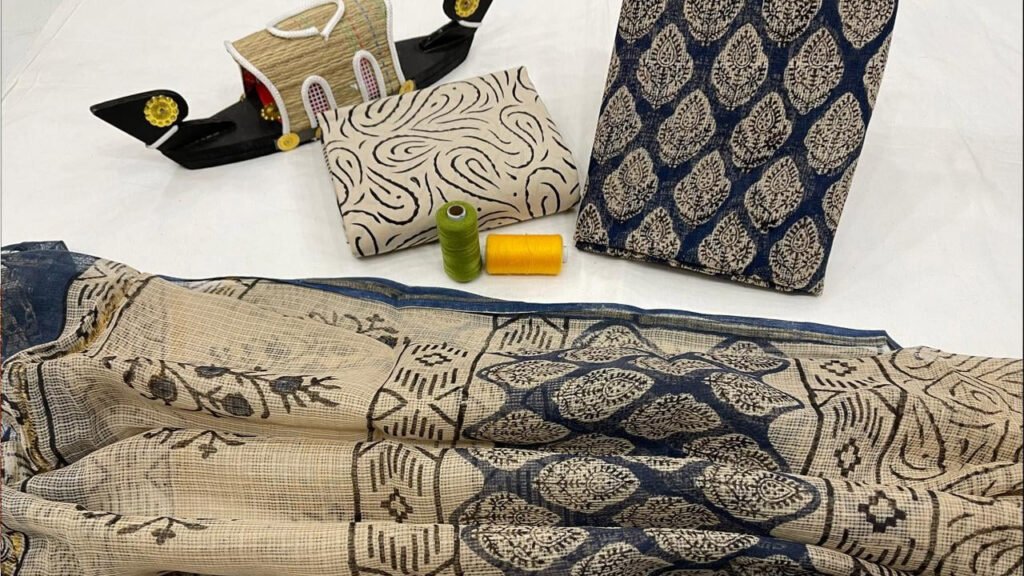
Kota Doria! Have you ever heard this name? Do you know the story behind its origin? Are you aware of how it came to Rajasthan after shifting its base from Mysore? Yes, it seems most of these facts are unknown to most of the people despite the fact that many of them must have grown up seeing their mother draping these beautiful square and checkered pattern sarees. In fact, you must have also opted to buy this stuff as the material of Kota Doria is quite light and comfortable to wear and it also gives a rich and ethic feel in its look.
But are you all aware how this unique weaving technique reached Kota?
There is an interesting tale behind the Kota Doria weaving technique reaching Rajasthan and am confident not all must be aware of its interesting tale.
Kota Doria weaving technique came from Mysore to Kota.
Flipping through the history pages, it comes to fore that the Mughal general brought these weavers to Kota from Mysore who later on settled in this city to give it a new identity. Kota Doria originated in Mysore where weavers practising this craft were called as ‘Masurias’. During Shahjahan’s rule, between 17th and 18th century, these weavers were brought to Kota by Rao Kishore Singh, a general in the Mughal Army. The two states’ union invested the ‘Kota-Masuria’ sarees, which became extremely popular and paved the way for the Kota Doria cloth, which went on to become one of the most fashionable fabrics in India.
A very different aspect to this design includes applying onion juice and rice paste mixture during weaving which makes the final product quite durable.
The erstwhile royals of the estates in Rajasthan favored this fabric for its effortless grace and style. Eventually, over the next few years, the fashionistas started picking up with texture for their designer dresses and Kota Doria became the fabric of female’s choice!
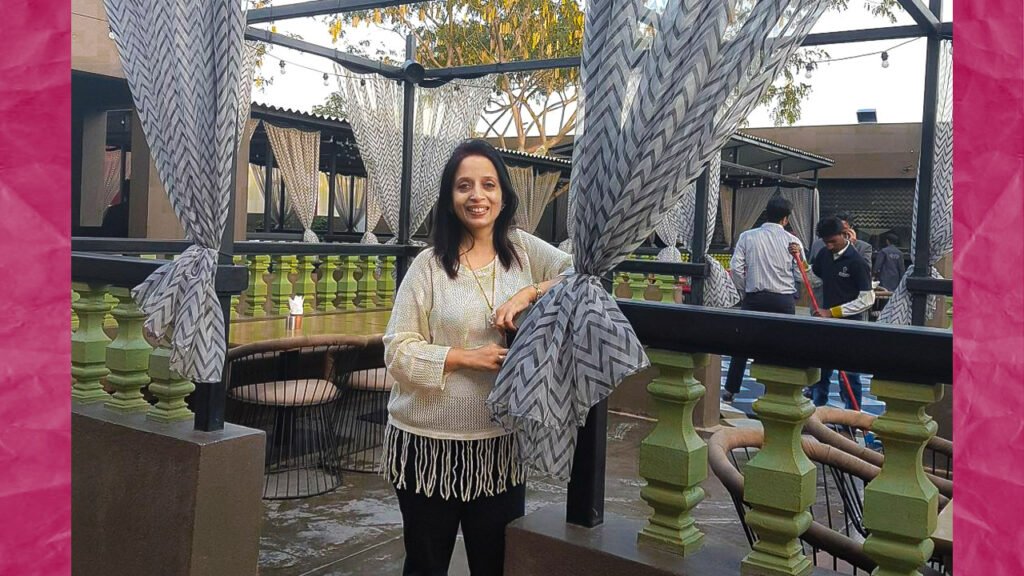
Wanna learn the tips which can train your subconscious mind for attaining success? Try implementing the following mantras as given by Meeta Mathur who is an entrepreneur- exporter since last 13 years. Besides assisting her buyers to procure seamlessly best products from India and South Asia, she is also a highly motivated corporate trainer, leveraging educational theories and methodologies to design, develop and deliver successful training programmes and activities.
According to her, a successful person is someone who does something right in each transaction.
Meeta says, “One of the biggest habits of successful men and women is always stretching themselves or pushing themselves out of their comfort zones. They are very aware how quickly the comfort zone, in any area, becomes a rut. They know that complacency is the great enemy of creativity and future possibilities.” She believes that training your subconscious mind is important for success as “Your subconscious mind can influence you or affect your behaviour even though you are not aware of it. All your habits of thinking and acting are stored in your subconscious mind. It has memorized all your comfort zones and it works to keep you in them. Your subconscious mind causes you to feel emotionally and physically uncomfortable whenever you attempt to do anything new or different.” So if you are thinking how can you train your sub-conscious mind, here comes her answers… 1. Be willing to see the change The first step in creating massive change in your life is not actually believing that it’s possible but to be willing to see if it is possible
2. Give yourself permission to be successful. Instead of regurgitating the same old narrative of believing you’ll be happy once you lose 10 kgs, start repeating that “I allow my life to be good.”
3. Don’t allow other people’s fears to cast shadows of doubt. The way people respond to news of your success will tell you how they are really doing in their lives. So don’t allow their fears to cash shadows of doubt on you.
4. Surround yourself with positive reinforcement. Change your morning alarm on your phone to read the message: “CONGRATULATIONS!!!” Make sure that the items that you see and touch most often bring you positivity and hopefulness. Keep an inspirational note on a post-it next to your computer.
5. Speak your success as a present fact, not a future plan. Instead of saying: “I hope to do that one day,” say, “I am strategizing how to do that now.” Instead of thinking: “I will be happy when I am in a different place in my life,” think, “I am completely capable of being happy right here and right now, nothing is holding me back.”
6. Create a vision space. Being able to imagine what it is you want out of your life is absolutely essential for creating it, because if you don’t know where you’re going, you won’t know which way to turn first. Once you have a crystal clear image in your mind for what it is you want and how it is you want to live, you are then capable of beginning to enact and create it. If you are still hazy or torn between what you want, you will be rendered incapable of taking real, meaningful action toward anything.
7. Identify your resistance. When your subconscious minds hold you back from pursuing something that you love, it is because you are holding a conflicting belief about it. To identify your resistance, question yourself. Ask yourself why you feel better when you procrastinate, or why getting what you really want could actually put you in a place that makes you feel more vulnerable than ever. Find a way to meet those needs before you proceed.
8. Have a master plan for your life. Set goals in every sphere of your life – Academic, professional, physical, relationships ……… Identify your core values and motivations. Ask yourself what is the ultimate goal of what you want to accomplish while you are alive; imagine the kind of legacy you want to leave. Once you have your Big Picture values identified, you can make decisions for the long-term that align with your true self.
9. Start asking for what you want, even if you know you’ll be denied. If someone asks you to do a consulting project, ask for the amount of money you truly want to earn for it. If your goal is to get a promotion in your organization, sit down with your higher up and make your intentions known. Reach out to brands you want to work with. Start asking for what you want, even if you have no reason to believe that anyone will actually give you any of those things. Eventually, they will. 10. Release your attachment to the “how.” Be open to potential and possibility, even if it’s something you never imagined before.
11. Surround yourself with allies. Start spending time with people who are ambitious, supportive and creative. If you’re hanging out every weekend with people who are likewise as unhappy with their lives, you aren’t going to receive an abundance of support if you try to break free and do your own thing.
12. Fill your “dead air” time with affirmation and motivation. When you’re on your commute each morning, listen to a motivational speech or podcast. While you’re doing the dishes or driving, tune into a talk show that relates to the type of business you’re trying to do. Infuse your life with as much affirmation and motivation as possible. You may need to hear the lessons more than once, but they will seep into your brain over time, and eventually, you will find yourself acting on wisdom received from those who are where you want to be.
A desert with clay and sand! Doesn’t it sound appealing? I know most of you must be visualising the beauty of the place listening to the narration and must be wandering where this place is located on planet earth.
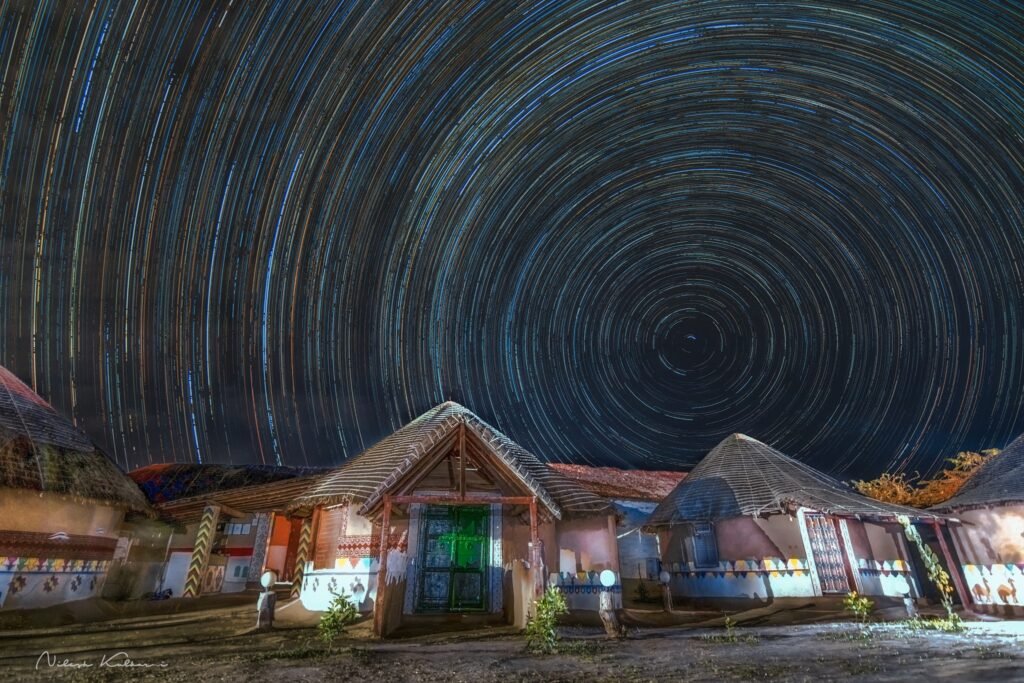
So let me tell you that this kind of desert with clay and sand is found. Bespeaking the handmade story of art, craft and sustainability, this place is called as Hodka village coming in Kutchh district of Gujarat, situated 65 km from Bhuj This beautiful place boasts of a being a mix destination of both, the desert of clay and sand, which makes it different, distinguished and unique. The village has a diverse eco-system, with the wetlands providing home to over 100 species of birds during the winter months. The Hodka community operates a rural resort here called Shaam-e-Sarhad.
Designed in local style, and exquisitely decorated with mirror work, textiles and other local crafts, the Shaam-e-Sarhad Village Resort is the perfect gateway to a genuine travel experience in India.
The area surrounding the village is full of natural beauty and it’s an ideal location to discover the captivating lands of Kutch. You can enjoy star-gazing, guided walks, bird watching excursions, camel safaris, embroidery, workshops and traditional dining here! The different appealing sites in its vicinity are as following:
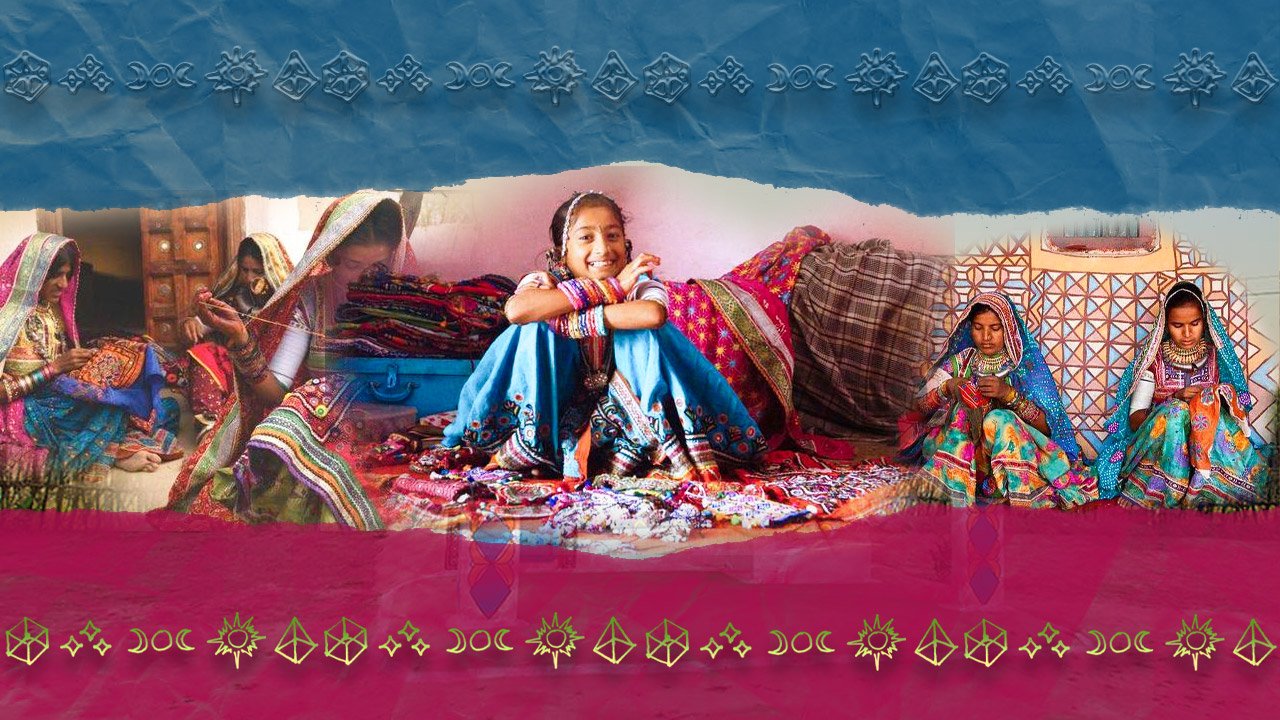
Hodka Artists Village: This place gives an opportunity to explore the typical village houses, meet different artisan families and admire the finest embroidery styles and leather crafts. The well-decorated and painted traditional houses are fascinating and helps in learning more about the village life and its customs. Even the fine embroideries such as Pakko, Neran, Kambhiro, Applique work, etc are worth admiring. The works could be purchased directly from artisans here. This place also houses a Virda or well here which sheds light on the ancient process of water harvesting in the Banni dry-lands, which are a flat and dry extension of land similar to Rann of Kutch.
Have you been dreaming to tie the nuptial knot like a royal; Do you want to have a fairy-tale wedding in palatial palace, around majestic forts, surrounded by lakes?
Well, if your answer is yes for all these questions, then Udaipur has everything you are looking for.Over the years, this place has emerged as one amongst the best wedding destinations with serene surroundings. The lovely lakes and pretty palaces existing through the city’s expanse is admired by Indians and foreigners alike and therefore they throng in big numbers to this pristine city to tie the knotty knots.
Udaipur is considered one amongst the best wedding destinations in the world as it boasts of the best majestic palace buildings. These palaces offer Udaipur a sort of charisma that only few cities can rival. The weddings in Udaipur can be defined more like an extraordinary fairy-tale. Offering one of the finest settings for a marriage ceremony, there are some beautiful palaces which have emerged as world-famous wedding destination.
These palatial palaces can make the best wedding venues. They boast of the ambiance and the aesthetic beauty which is one of its kind and unmatched easily making it one of the most popular destinations of wedding for Indians as well as foreigners.
This city also offers a choice of very beautiful historical Haveli-converted Hotels which could be used for stay as well as the Wedding festivities. There are several specialty and theme restaurants which are available to host the private parties.
Now, when the wedding bells shall be ringing soon all around, don’t you think exchanging wedding vows in these heavenly places can take you on moon by giving lifelong memories? So check out Udaipur palaces and see if this destination appeals you the most to get hitched so that you can get set go for the D-Day!
Do you you the Manganiyars community in Western Rajasthan comprise Muslim court musicians whose music is mesmerising, complex, engaging and secular which appeals, lures and touches soul of the listeners with its in-depth rhythms.
Flowing smooth, their music bypasses all sets of laws to become a legacy in its own domain.
These manganiyars once had their royal patrons which seem to have lost their presence now from the erstwhile pages of history. However, the music of this community has become eternal, spreading its melodies across the globe, transcending all borders.
The history chapters reveal that the Manganiyars used to perform in houses of their patrons in different functions such as marriages, death and birth ceremonies. In return of their performances, they used to ask for alms in return. Many of them still continue this tradition. This community is divided into two parts, one whose patrons are Hindus and the other who have Muslim patrons. While the Hindu patrons belonged to Bhati and Rathore clans of Rajputs, the Muslim patrons were Sindhi Muslims.
The Manganiyar community reflects the perfect communal bonhomie for generations. Although they are Sunni Muslims by birth, their lifestyle and dressing fashion reflect the very Hindu or the Ganga-Jamuna culture. You can find many Shankar Khans and Krishna Khans in this village.
Their last many generations have been linked to both Muslim and Hindu families for their livelihood and have been following the tradition of singing and composing music for their jajmaans (patrons).
Their specialty comprises describing about their jajmaans’ illustrious history which remains full of honour and pride. They also hold expertise in describing about jajmaan’s Genealogy with the support of other artists and this art is known as ‘Shubhraj’.
Such is the ability of these artists that they recite all the names of the last few generations of the jajmaans within the space of a single breath. It’s not just names but also the description of their achievements which they can narrate in seconds. And it was in exchange of the expertise that they were rewarded handsomely in the form of grain, wheat, goat, camel, sheep, horse or cash.
Manganiyaars and Langa musicians are known across the world for their mesmerising musical notes. In fact, the reference of the Manganiyars, the renowned community known for giving a soothing musical notes, is incomplete without the mention of the Langas community which can be defined as the musical cousins of the Manganiyars. The word Langa means ‘song giver’. This group comprises poets, singers, and musicians from Barmer. This community had their forte in Sufi singing and hence their patrons unlike the Manganiyars were Muslims. They are versatile players of the Sindhi Sarangi and the Algoza (double flute),and perform at events such as births, and weddings, exclusively for their patrons (Yajman).
While the Manganiyar performers traditionally invoke the Hindu God Krishna and seek his blessings before beginning their recital, the Langas sing sufi songs. The Manganiyars once were musicians of the Rajput courts, and accompanied their chiefs to war and provided them with entertainment before and after the battles and in the event of his death. However, Langas have been expert in playing “The ‘Sindhi Sarangi’. This instrument is made up of four main wires, with has more than twenty vibrating sympathetic strings which help to create its distinctive haunting tones. Their patrons, unlike the Manganiyars, are Muslims.
Surprised! Isn’t it? Yes, you must be, but then it is a reality.
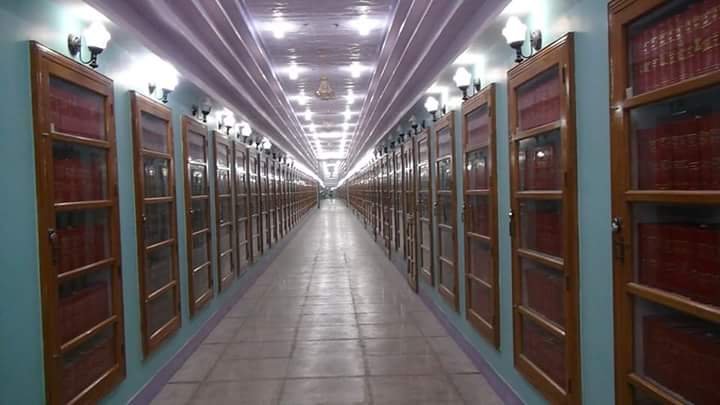
A giant library situated under the heaps of sand in Rajasthan’s small village Bhadariya in Jaisalmer district is a treasure trove of knowledge having around 9 lakh books preserved in 562 glass shelves within its premises.
Bhadhariya library in Rajasthan (Picture Credits- https://twitter.com)
Situated at the depth of 16-feet under the earth, this library can accommodate 4,000 readers at one stretch.
The book collection in this library ranges from science to astrology, astronomy to epics, history to geography, dictionaries and many more subjects.
The huge collection of books is being loved by scholars and learners who visit this bibliotheca each year from all across the world.
No one knows the real year when the construction of library started here but the collection of books in this library started around 1998, says the local villagers.
A temple is situated at the top of this library which is equally famous for its strong divine powers.
Villagers say that this temple was constructed by Jagdamba Seva Committee, under Bhadariya Maharaj. At a time when the construction was on, Bhadariya Maharaj felt to invest a decent amount in building a temple of knowledge which was this library. While he stayed in a room for many years, the library construction continued in full swing. Till then, he read almost all these books which are available in this library, villagers say further.
While some of the books were collected from different parts of the world, the others came in as a gift to him.
At a time when books are being read with one click, this library buried deep under sand looks like a distant tale away from the real world, but the world is real and so is this library!
There is a museum situated in a castle in Rajasthan which has 89 volumes of handwritten diaries by the Thakur of an estate which are the longest ever series of diaries been written in the world.
This man with mission was Amar Singh, the Thakur of Kanota who also served as the Commander of the erstwhile Jaipur State Force.
He wrote diaries for 44 years between 1898 and 1942 except for one day when he had fallen from his horse.
He chronicled his life memoirs each day for 44 years except one day when he met with an accident after falling from a horse and made a world record for writing longest diaries ever.
These diaries, preserved at Kanota museum, 15 kilometre from Jaipur on Agra highway, are something pleasant to look at in the internet era when handwritten diaries seem to be a thing of distant past.
In fact, this museum looks very different from the museums of royals who generally showcase arms and ammunition on its walls to speak of their bravery tales. However, this museum looks like a temple of knowledge accommodating a vast collection of books dating back to the 19th century.
This museum also has a library which after starting as a study room grew into a personal library as and when the collection of books started expanding, with the ever growing reading habit of Amar Singh.
The diaries accommodate the waterman-penned entries comprising the 89 volumes of Amar Singh’s writing, which come along with detailed observations on affairs related to diverse issues including social, political, military and family. These diaries also give an insight into the lavish lives of the princely states during the British Raj.
She stands tall with her exemplary work in the field of handcrafted artistry; she is known for scripting successful stories she has created with her brand- AnanTaya. She has earned laurels for creating sustainable livelihood for thousands of artisans in Rajasthan, a desert state which has made a mark on world map with the exquisite handmade artistry. Now, she is busy taking the handcrafted legacy to new heights under her dynamic leadership.
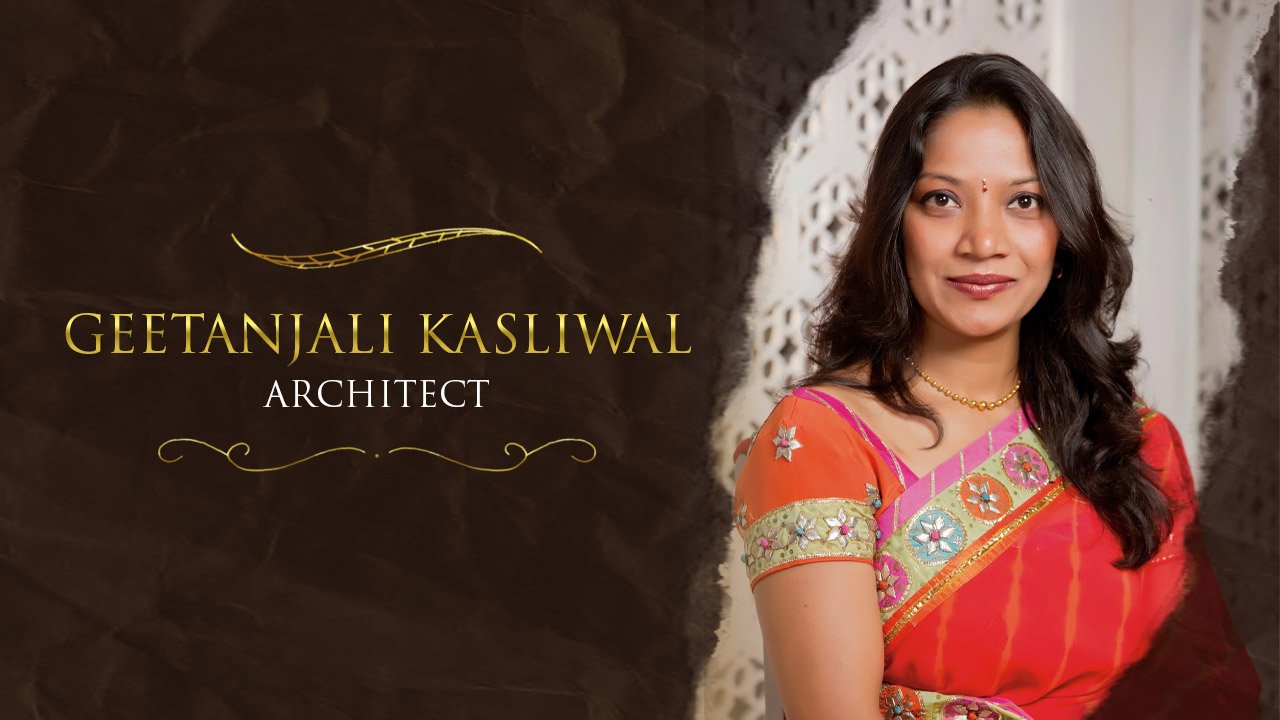
She is none other than Geetanjali Kasliwal whose name stands synonymous to handmade stories.
Her contemporary store Anantaya situated in the heart of the city bespeaks many tales emanating from rustic India where many hands work together to create a design tale.
Being an institution of global repute, Geetanjali stands committed to development of novel ideas using local crafts that have been evolved over centuries.
Her handcrafted products have also won the World Craft Council – Award of Excellence.
Around 4000 artisans and their communities have been given sustainable livelihood behind the label.
Geentanjali strongly believes that crafts can be a part of our everyday life and says, “AnanTaya’s products showcase a unique convergence of India’s past and present which are been activated by the efforts of awarded designers collaborating with skilled artisans.”
She is quite happy to have won several UNESCO awards and certificates, the latest amongst which are Tara Dhokra and Vankar Namda Loi Handcrafted Rug.
According to her, “Tara Dhokra basically is the lost-wax cast brass technique of the Chhattisgarh tribals which dates back to 5000 years. It has been used to create the Tara Dhokra Range. Channeling this ancient craft, inter-linkable stars of various patterns have been created for surfaces. Place the incredibly well-crafted tiles and hardware together, to create a variety of visual compositions for your spaces. Diverse uses include wall decoration, screens, trivets and table tops in a ‘never ending’ set of possibilities for your own patterns from the galaxy!”
Vankar Namda Loi Handcrafted Rug, the other product to win the award, combines two ancient textile techniques to create a contemporary gem, she informs adding, “The word Vankar Namda has been derived by Vankar (Weaver) and Namda (Felt) which makes it mean “the Weaver’s Felt”.
Traditional weavers of Kutch, Gujarat, create a wool shawl in black and white. The Shawl is taken to the Felt Makers of Tonk, Rajasthan, who ‘felt’ the shawl on to their base cloth. A community collaboration fuelled by the vision of a designer has made something special for the home. The resulting combination is like a Magic Carpet with the shawl floating on the felt base, she says with her eyes shining as if to say that wait, there shall be more marvels coming soon.
Nishant Jain, serving as director of Rajasthan Tourism, is the 13th rank IAS topper from Hindi medium.
Despite being born in Meerut in Uttar Pradesh and coming from a middle class family, he decided to become a government officer while studying in his 9th grade after realising that there is a need for change in the system. He was very inspired by the then district collector of Meerut and had decided that he would set into this field.
His grandfather was a junior court officer while his father was grade X pass out and mother had an arts degree.
Nishant studied with determination and pursued M. Phil in Hindi Literature from the esteemed Delhi.
His UPSC marksheet is quite impressive as he secured AIR 13 rank.
Event
Marks
Mains examination
851
Personal Interview
150
Total Marks
1001
He cracked his IAS exam at the age of 28 proving that age is never an issue for the exam, as your willpower and hard work will decide your result.
His current posting is in Rajasthan as director, Rajasthan Tourism.
Nishant Jain is also an avid writer and has written a couple of books, one of the latest books that he has written is Ruk Jaana Nahin.
He has also written a book on essays for UPSC exam in Hindi medium to help students in getting better marks.
Success Story Of IAS Topper Nishant Jain, Now as Director of Rajasthan Tourism