Home Blog Page 83

Budget 2026 Puts Spotlight On Tax Relief For Married Couples Through Joint Taxation

0

As the Union Budget 2026 draws closer, discussions around personal income tax reforms have intensified, with tax relief for married couples emerging as a key topic. One proposal under discussion is the introduction of joint taxation, a system that would allow spouses to file a combined income tax return instead of being taxed entirely as individuals. While India currently follows individual taxation, the idea is being examined as a way to recognise household-based financial planning.

What joint taxation means in simple terms

Joint taxation allows married couples to pool their incomes and calculate tax liability on the combined amount. Instead of filing two separate returns, spouses can opt for a single filing. This system already exists in several countries and is often structured to support families with unequal income distribution between partners.

Why joint taxation is being discussed ahead of Budget 2026

Rising living expenses, EMIs, healthcare costs and education fees have increased the financial burden on families. Supporters of joint taxation believe the system could provide meaningful relief to single-income households or families where one spouse earns significantly less. Policymakers are also exploring measures that could encourage savings and boost household consumption, making this proposal timely.

How joint taxation could affect your taxes

If implemented, joint taxation could reduce tax liability for couples with a large income gap. The higher-earning spouse may benefit from income averaging, potentially bringing the household into a lower tax slab. However, couples where both spouses earn similar salaries may see limited or no tax advantage, depending on slab rates and exemptions.

Concerns and challenges linked to the proposal

Despite its benefits, joint taxation raises concerns. Experts warn it could discourage workforce participation among secondary earners, particularly women, if tax incentives reduce the benefit of individual earnings. There are also practical challenges related to changes in marital status, divorce or separation. Maintaining fairness for single taxpayers is another key issue.

What experts recommend

Tax experts suggest that joint taxation, if introduced, should be optional rather than mandatory. Giving couples the choice between individual and joint filing would ensure flexibility and avoid unintended consequences. Clear rules on deductions and exemptions would also be essential.

At present, joint taxation remains a proposal, but its inclusion in Budget 2026 discussions indicates a possible shift toward family-focused tax reforms.

Moon Hotel Reservations Open As Space Tourism Takes A Giant Leap Forward

0
Moon Hotel Reservations Open As Space Tourism Takes A Giant Leap Forward

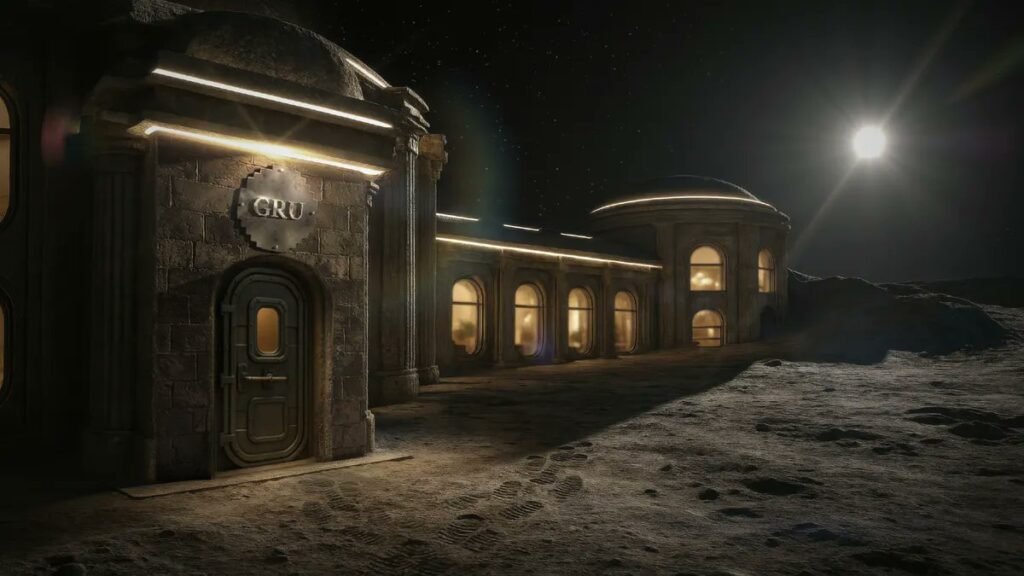
What once belonged to science fiction is now inching closer to reality. Reservations have officially opened for the world’s first luxury hotel on the Moon, with the price for a single stay reportedly set at around Rs 9 crore. A complete lunar travel experience, including transport and training, is expected to cost travellers over Rs 90 crore, marking a bold new chapter in the rapidly evolving space tourism industry.

A luxury stay beyond Earth

The proposed Moon hotel is designed to offer an ultra-premium experience for a select group of travellers willing to venture far beyond Earth. Guests are expected to stay in specially designed modules equipped with panoramic views of the lunar surface, low-gravity recreational zones and advanced life-support systems. The experience is being positioned as exclusive and once in a lifetime, targeting high-net-worth individuals seeking the ultimate frontier adventure.

What the lunar journey includes

While the hotel stay alone is priced at Rs 9 crore, the total cost of the trip is significantly higher due to the complexity of space travel. The full package includes astronaut-style training, medical screening, spaceflight preparation, Earth-to-orbit travel and lunar transfer. The entire journey is expected to span several weeks, including time spent adjusting to microgravity and lunar conditions.

Moon Hotel Reservations Open As Space Tourism Takes A Giant Leap Forward

Who is behind the project

The initiative is being driven by private space companies working alongside aerospace engineers and space agencies to commercialise deep-space travel. The Moon hotel concept builds on recent advancements in reusable rockets, orbital tourism and long-duration space habitats. Organisers believe that early bookings will help fund further research and infrastructure needed to make lunar stays safer and more accessible in the future.

Why this matters for space tourism

Opening reservations for a Moon hotel signals how quickly space tourism is moving from Earth’s orbit to deeper space destinations. Until recently, commercial space travel was limited to short orbital flights. This project suggests that extended off-world stays could become part of the tourism landscape within the next decade, redefining travel as humanity knows it.

Moon Hotel Reservations Open As Space Tourism Takes A Giant Leap Forward
A dream reserved for a few for now

Despite the excitement, the experience remains far beyond the reach of most people due to its staggering cost and physical demands. However, industry experts believe prices may gradually decline as technology matures, much like commercial air travel once did. As reservations begin, the Moon hotel stands as a powerful symbol of human ambition, blurring the line between imagination and reality, and reminding the world that the next luxury destination may not be on Earth at all.

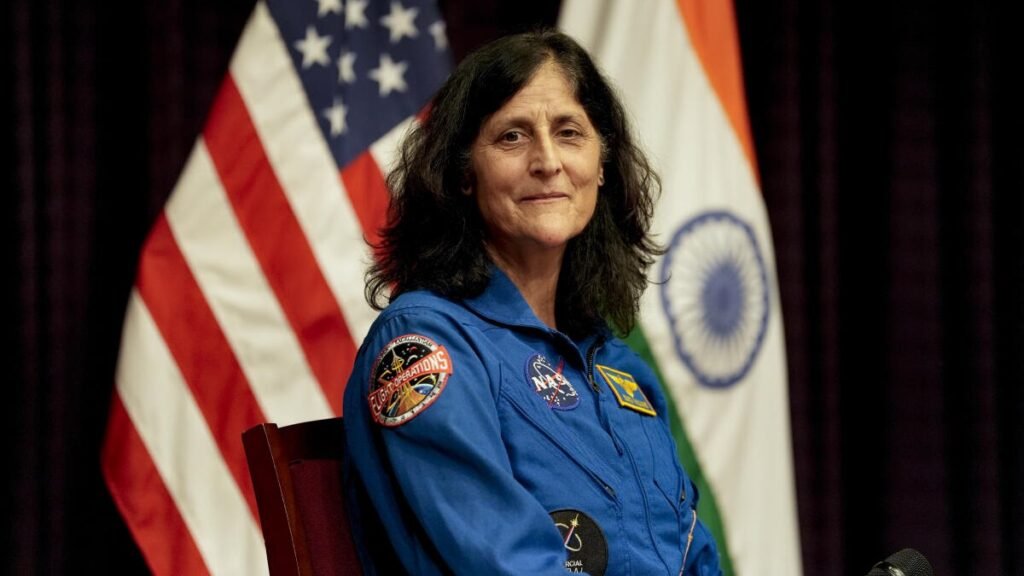
Sunita Williams Retires From Nasa Bringing Down The Curtain On A 27 Year Space Legacy

0

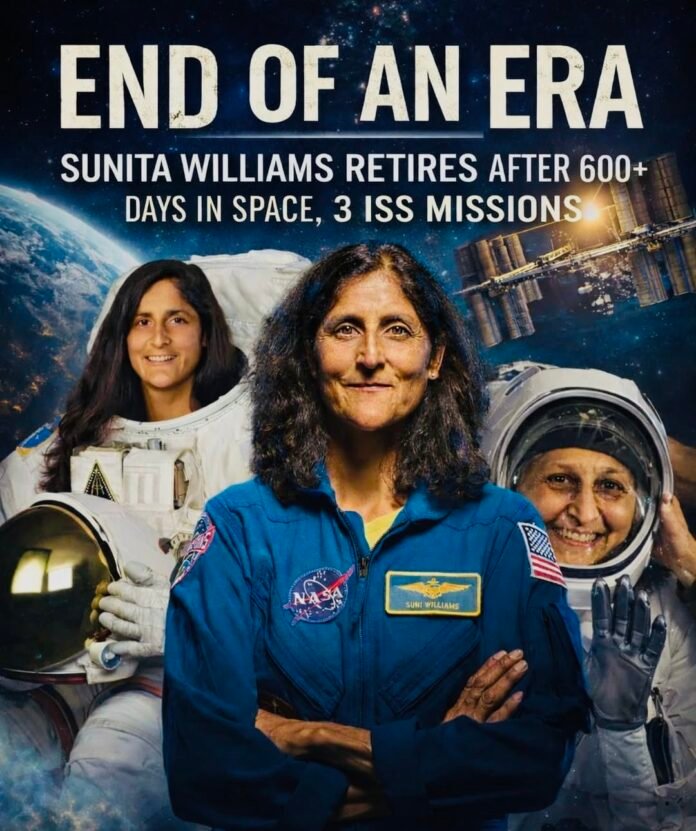
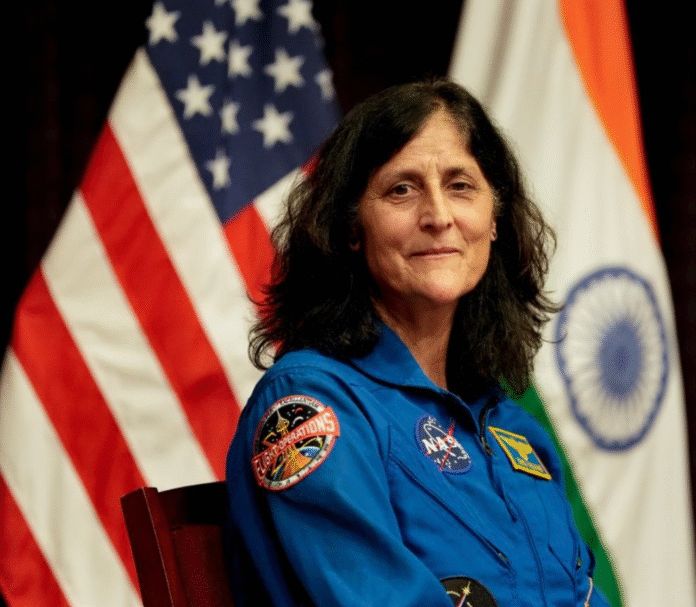
One of the most recognisable faces of modern space exploration has stepped away from active duty. Sunita Williams has officially retired from NASA after a remarkable 27 year career that saw her spend more than 600 days in space across three missions to the International Space Station. Her journey stands as one of endurance, leadership and quiet excellence, marking the end of an era in human spaceflight.

A life shaped by space and scientific curiosity

Sunita Williams first travelled beyond Earth in 2006 and quickly established herself as an astronaut capable of handling the physical and mental demands of long duration missions. Living aboard the International Space Station for months at a time, she played a key role in conducting scientific experiments, maintaining station systems and supporting international research aimed at understanding how the human body and technology function in microgravity. Her cumulative time in orbit places her among a rare group of astronauts who truly lived in space.

Commanding the world’s most complex laboratory

Beyond missions, Williams made history as a commander of the International Space Station, overseeing crew operations in an environment that demands precision, trust and teamwork. The role required constant coordination with space agencies across the world, along with responsibility for crew safety and mission success. Her leadership style, calm and hands on, earned her admiration from colleagues and mission controllers alike.

Sunita Williams Retires From Nasa Bringing Down The Curtain On A 27 Year Space Legacy

Testing human limits beyond the station

Spacewalks became a defining part of Williams’ career. Working outside the station in the vacuum of space, she carried out complex repairs and installations that required extreme focus and physical strength. At one stage, she held the record for the highest total spacewalk time by a woman, reinforcing her reputation as one of NASA’s most reliable astronauts.

Why she chose to step away

After nearly three decades of intense training, prolonged isolation from Earth and repeated exposure to the physical toll of spaceflight, Williams decided it was time to retire. Her decision reflects an understanding of the limits of the human body and a desire to step back while still at the peak of her legacy.

Sunita Williams Retires From Nasa Bringing Down The Curtain On A 27 Year Space Legacy
An inspiration that goes beyond missions

Born to an Indian father and American mother, Sunita Williams became a global symbol of possibility. Her achievements inspired young people, especially women, to look toward careers in science and exploration. Even in retirement, her legacy will continue to shape how humanity reaches for the stars.

Simran Bala Makes History As First Woman To Lead All Male CRPF Contingent On Republic Day

0

India’s 77th Republic Day parade will witness a historic moment as Assistant Commandant Simran Bala from Jammu and Kashmir becomes the first woman officer to lead an all-male contingent of the Central Reserve Police Force at Kartavya Path in New Delhi. Her role marks a significant milestone for women in India’s paramilitary forces and reflects the changing face of leadership in uniformed services.

Breaking barriers on the national stage

While women officers have earlier commanded mixed contingents, this is the first time a woman will lead a fully male CRPF unit at the Republic Day parade. Simran Bala will command over 140 male personnel, showcasing discipline, confidence and command at one of the country’s most prestigious ceremonial events. Her selection is being seen as a move based purely on merit, leadership ability and performance during intense parade rehearsals.

Roots in a border region shaped her journey

Simran Bala hails from Nowshera in Rajouri district of Jammu and Kashmir, a region that has long witnessed security challenges and cross-border tensions. Growing up in a border area exposed her to the sacrifices made by security forces, inspiring her to pursue a career in national service. Her background has played a crucial role in shaping her determination and sense of responsibility.

Academic excellence and entry into CRPF

She graduated in political science from the Government College for Women in Jammu and went on to clear the UPSC Central Armed Police Forces examination in her first attempt in 2023, securing an All India Rank of 82. She was the only woman from Jammu and Kashmir to qualify that year. After completing rigorous training at the CRPF Academy in Gurugram, she was commissioned in April 2025.

Simran Bala Makes History As First Woman To Lead All Male CRPF Contingent On Republic Day
Field experience and leadership recognition

Simran Bala’s first posting was with a Bastariya battalion in Chhattisgarh, where she gained exposure to anti-Naxal operations. Her discipline, command over drills and ability to lead from the front earned her recognition from senior officers, leading to her selection for the Republic Day parade.

An inspiration beyond the parade

Her leadership on Kartavya Path is expected to inspire young women across the country to consider careers in the armed and paramilitary forces. Simran Bala’s journey stands as a powerful reminder that courage, leadership and service know no gender boundaries.

Greenland as a Strategic Prize: From the Thule Nuclear Crash to Trump’s Open Claims

0

On January 21, 1968, a United States Air Force bomber carrying four thermonuclear weapons crashed onto the frozen ice near Thule Air Base in Greenland. What followed — radioactive contamination, secret diplomacy, and the silencing of Indigenous voices — was not an aberration. It was a revelation. More than half a century later, as former U.S. President Donald Trump speaks openly about acquiring Greenland that crash reads less like a Cold War accident and more like an early chapter in a long story of strategic control overriding sovereignty and consent.

The 1968 Thule crash and the nuclear secret

The aircraft involved was a B-52 bomber of the United States Air Force, flying a routine Strategic Air Command mission under Operation Chrome Dome — continuous airborne nuclear patrols designed to deter the Soviet Union. A fire in the heating system forced the crew to abandon the aircraft, which slammed into the ice near Thule Air Base.

The nuclear warheads did not detonate, but their conventional explosives did, scattering plutonium-contaminated debris across more than five miles of ice. Declassified documents show that U.S. recovery teams worked in near-total darkness, sub-zero temperatures, and violent Arctic storms. Over 10,000 cubic metres of radioactive ice and snow were eventually scraped up and shipped to Savannah River, South Carolina. One critical fissile component — the ‘spark plug’ of a thermonuclear weapon — was never recovered, despite underwater searches in North Star Bay.

The crash also exposed a diplomatic lie. Denmark had publicly declared itself nuclear-free in peacetime, yet had quietly tolerated U.S. nuclear deployments over and around Greenland since 1957. Secretary of State Dean Rusk was forced into damage control, negotiating wording that would reconcile Denmark’ public policy with its tacit acquiescence. Danish officials privately acknowledged that the agreement was “less than binding”, while U.S. negotiators insisted that American strategic needs would prevail.

Greenland before Thule: Relocation and colonial control

The Thule incident cannot be separated from Greenland’s longer colonial experience. Danish rule, stretching from the eighteenth century into the late twentieth, systematically subordinated Indigenous Inuit life to external priorities. In 1953, to clear space for the U.S. air base, the Inuit community of Thule was forcibly relocated to Qaanaaq. Over 130 villagers lost access to ancestral hunting grounds, disrupting food systems, kinship networks, and cultural continuity.

Awards and honors lists

There was no massacre, but the consequences were enduring. A foreign administration dictated settlement patterns, livelihoods, and futures. The crash site itself lay near lands that had only recently been taken from the community — underscoring how military strategy literally displaced Indigenous survival.

Reproductive control and bodily coercion

Control extended beyond land. In the 1960s and 1970s, Danish authorities implemented a systematic programme of reproductive intervention among Greenlandic women and girls. Thousands were fitted with intrauterine devices or subjected to hormonal contraception without informed consent. Some were as young as twelve.

Estimates suggest that around 4,500 women and girls — nearly half of Greenland’s fertile female population at the time — were affected. Many suffered chronic pain, infections, infertility, and lasting psychological trauma. The programme was justified as population management, but functioned as coercive social engineering. Denmark and the Government of Greenland have since apologised and initiated compensation schemes, yet testimonies speak of decades of silence, stigma, and unresolved harm.

Why Greenland mattered to Washington

For the United States, Greenland was never peripheral. The 1951 U.S.–Denmark Defence Agreement granted Washington sweeping operational freedom. NSA archives reveal that U.S. planners viewed Greenland as indispensable for early-warning radar, nuclear deterrence, and North Atlantic power projection. In 1957, the Joint Chiefs of Staff even proposed purchasing or leasing Greenland for 99 years — an idea shelved only because it risked offending Denmark diplomatically.

In practice, U.S. behaviour already assumed strategic entitlement. Nuclear-armed flights passed daily over Greenland, weapons were stored near Inuit settlements, and decisions were made with minimal disclosure. After the Thule crash, the priority was containment of contamination and political fallout — not consultation with local communities whose subsistence hunting was directly threatened.

Trump’s blunt articulation of an old logic

What distinguishes the present moment is not ambition, but candour. Donald Trump has said openly that Greenland is essential to U.S. national security and that “anything less than” American control is unacceptable. He has dismissed Greenlandic leaders asserting autonomy and framed NATO’s strength as dependent on Greenland being “in the hands of the United States”.

This is not a departure from history; it is its explicit continuation. Where Cold War strategists operated through secrecy and euphemism, Trump speaks in the language of real estate and protectionism — a belief that control, not partnership, ensures security.

Resistance, limits, and power imbalance

Danish and Greenlandic officials have resisted. Copenhagen speaks of a “fundamental disagreement”. Nuuk reiterates autonomy and adherence to existing agreements. Yet resistance is structurally constrained. Geography, alliance politics, and U.S. military reach create asymmetries that history suggests are hard to overcome.

European allies have limited leverage when NATO and Arctic security are invoked. Greenlandic voices were marginal in 1953, in 1957, and in 1968 — and remain vulnerable today. The pattern is consistent: strategic imperatives trump local agency.

A continuity of exploitation

From forced relocation to reproductive coercion, from nuclear contamination to contemporary geopolitical bargaining, Greenland has repeatedly been treated as a space to be managed rather than a people with rights. The 1968 Thule crash was not merely an accident; it was a moment when hidden power relations surfaced.

Trump’s statements suggest that what was once implicit is now explicit. The historical record offers little comfort that global strategy will yield to Indigenous consent. As the proverb goes, the powerful watch the prize, the vulnerable watch what lies immediately before them.

For Greenland, history suggests that external ambition does not arrive suddenly. It accumulates — and then declares itself inevitable


Two Years Since 22 January 2024, How the Ram Mandir Reshaped Ayodhya and India’s Spiritual Journey

0

January marks two years since the consecration of the Ram Mandir in Ayodhya – an event that many Indians remember not merely as the inauguration of a temple, but as the culmination of a long civilisational journey. In these two years, the Ram Mandir has come to occupy a unique place in India’s spiritual, cultural, and social imagination. Its impact has gone beyond architecture and ritual, shaping personal faith, collective identity, and the religious rhythm of Ayodhya and the nation at large.

A Temple Beyond Stone and Structure

For millions of Indians, the Ram Mandir symbolizes more than a place of worship. It represents the revival of an idea deeply embedded in the Indian ethos – Maryada Purushottam Ram as a moral compass, a symbol of duty, compassion, and righteousness. Over the last two years, the temple has become a focal point for spiritual reflection. Devotees visiting Ayodhya often describe their journey not as tourism, but as tirtha yatra – a conscious inward movement alongside the outward pilgrimage.

The act of darshan at the Ram Mandir has instilled a renewed engagement with spirituality, especially among younger generations who previously related to faith in more abstract or inherited ways. Bhajans, Ramayana readings, and discussions on Ram’s life and values have found new resonance in homes, schools, and digital spaces. Faith, for many, has become less about ritual obligation and more about personal connection.

Ayodhya’s Transformation: Sacredness Meets Daily Life

In the last two years, Ayodhya itself has undergone a visible and subtle transformation. Religiously, the city has re-emerged as a living sacred space rather than a site remembered mainly through history and dispute. Daily aartis, festivals, and seasonal rituals now set the tempo of city life. Temples, ashrams, and ghats have witnessed increased participation, not only from visiting pilgrims but also from local residents who feel a renewed custodianship of their spiritual heritage.

This revival has also brought greater interlinking of faith with service. Langars, charitable kitchens, free medical camps, and volunteer-driven pilgrim assistance have become more common. Seva has emerged as a central expression of devotion, reflecting Ram’s ideals of service to society.

At the same time, Ayodhya has adapted to modern realities. Infrastructure development, better connectivity, and organized pilgrimage management have changed how religious spaces function in the contemporary era. The sacred and the civic now coexist more visibly, shaping Ayodhya into a city where devotion and daily life flow together.

A Broader Religious Shift Across India

The influence of the Ram Mandir has not remained confined to Ayodhya. Across India, the past two years have seen a noticeable shift in how religion is expressed in public and private life. There has been a renewed confidence in openly practicing and discussing faith, particularly Hindu traditions, without apology or hesitation. Festivals linked to Ram – such as Ram Navami and Diwali – have gained increased participation, with a stronger emphasis on their spiritual meanings rather than only their celebratory aspects.

There is also a growing interest in scriptural literacy. The Ramayana, in its many regional versions, is being reread, retold, and reinterpreted through podcasts, study circles, and cultural programs. This engagement reflects a desire to understand tradition intellectually as well as devotionally.

Importantly, for many Indians, this period has encouraged a synthesis rather than a separation – faith alongside modern aspirations, spirituality alongside scientific and professional pursuits. The temple has, in this sense, become a cultural anchor in a rapidly changing society.

Spiritual Unity, Personal Meaning

One of the most striking developments over the past two years has been the personal nature of the spiritual journeys inspired by the Ram Mandir. While the temple stands as a collective symbol, individuals interpret its meaning in deeply personal ways – some finding solace, others inspiration, and many a renewed sense of ethical grounding.

For the Indian diaspora as well, the Ram Mandir has acted as a bridge to cultural roots. Temples abroad, community gatherings, and virtual darshans have allowed those far from Ayodhya to feel connected to a shared spiritual moment back home.

Looking Ahead

As the Ram Mandir completes two years, its significance continues to evolve. The initial moment of celebration has matured into sustained engagement – quiet prayer replacing spectacle, routine devotion replacing historic anticipation. The true legacy of the temple may lie not only in its grandeur, but in how it has encouraged introspection, service, and a renewed dialogue with India’s spiritual traditions.

In a country as diverse and complex as India, the Ram Mandir’s journey over the last two years underscores a simple truth: when faith is rooted in values and lived with humility, it has the power to unite the past with the present, and belief with everyday life.

Sunita Williams Retires After Historic Career in NASA, Know Her Deep India Connection…

0

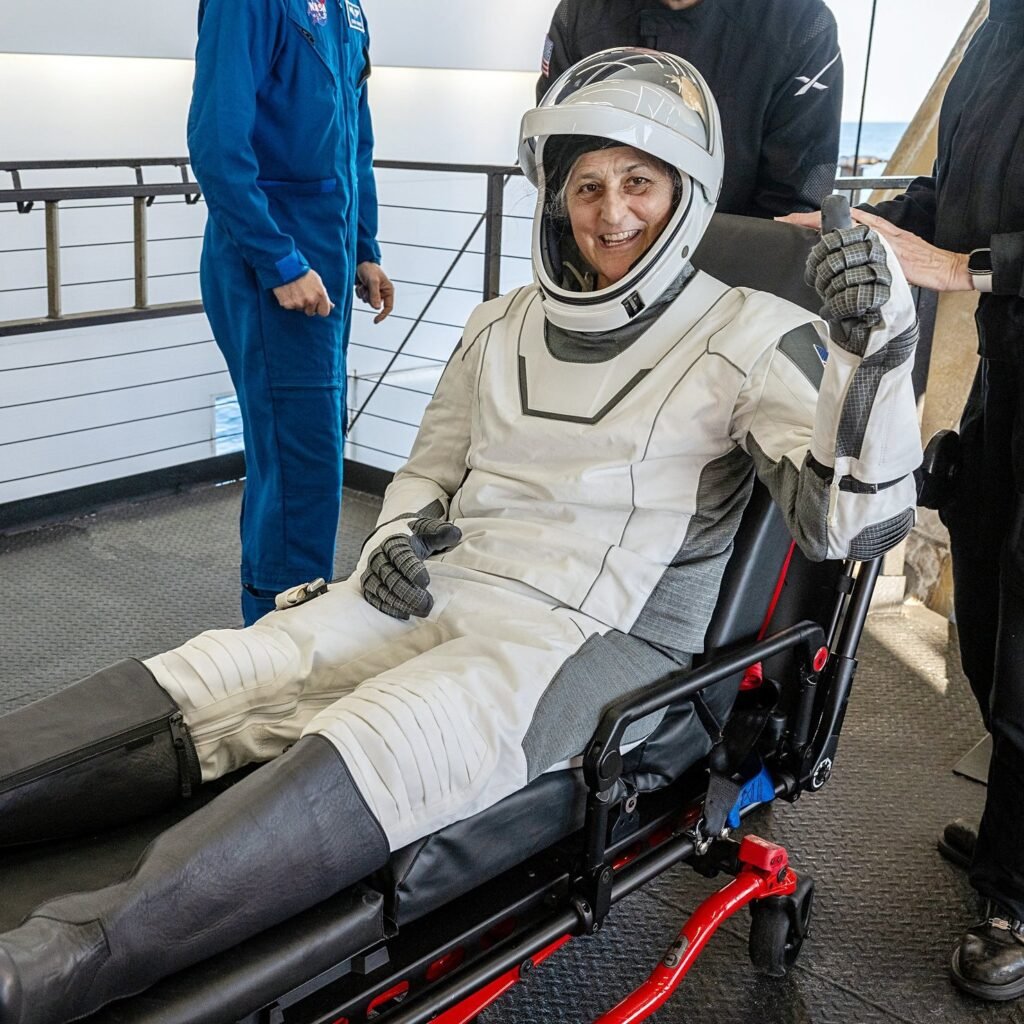
Sunita Williams: One of the bravest names in the world of space exploration, NASA veteran astronaut Sunita Williams, has retired after an extraordinary 27-year career. NASA officially announced her retirement on January 21, 2026, effective from December 27, 2025. Having spent 608 days in space and completed nine spacewalks, Sunita Williams stands among the most accomplished and resilient women astronauts in history.

A Heroic Return Against All Odds

Sunita Williams was in global headlines recently after technical problems with her spacecraft delayed her return to Earth, raising serious concerns worldwide. Despite being stranded aboard the International Space Station (ISS) for months, she displayed remarkable courage, patience, and mental strength. Her safe return was nothing short of a miracle and reaffirmed her status as a true space legend.

Carrying Indian Culture Into Space

Although Sunita Williams was born in Ohio, USA, her bond with India has always remained strong. Her father, Dr. Deepak Pandya, hailed from Jhulasana village in Gujarat. Sunita never distanced herself from her roots and openly embraced her Indian heritage.

On every space mission, she carried symbols of Indian culture, including the Bhagavad Gita, an idol of Lord Ganesha, and even Indian food like samosas, making India’s cultural presence felt beyond Earth.

India’s “Daughter of the Soil”

Sunita Williams visited India several times and spent time in her ancestral village. For millions of Indians, she is not just an astronaut but a “daughter of the nation” whose achievements have inspired generations, especially young girls dreaming of careers in science and space.

Record-Breaking Achievements

  • 608 days spent in space
  • 9 spacewalks, among the highest by any woman astronaut
  • Former U.S. Navy Captain and test pilot
  • Successfully led and participated in multiple high-risk space missions

Why Her Retirement Matters

Sunita Williams’ retirement marks the end of an era at NASA. Beyond her scientific contributions, she proved that determination and resilience can overcome even the harshest challenges. After retirement, she plans to mentor future astronauts and engage in social and educational initiatives.

A New Chapter Begins

While her NASA career has concluded, Sunita Williams’ legacy will continue to inspire the world. She remains a symbol of pride for India and the global scientific community. Her journey proves that with strong willpower, even the sky is not the limit.

US Scientists Aim to Detect First Graviton, Revive Debate on Quantum Gravity

0

US scientists have made a bold claim: they are attempting to build the world’s first experiment specifically designed to detect a single graviton — the hypothetical quantum particle believed to carry gravity. The project, which has secured $1.3 million in funding, has sparked excitement as well as deep scepticism within the physics community, reviving a decades-old debate over whether gravitons can ever be observed — and whether their detection would finally prove that gravity is quantum in nature.

What Is the Proposed Experiment?

The experiment is being developed by researchers at the Stevens Institute of Technology in collaboration with Yale University. Their approach involves an ultra-sensitive detector built around a cylindrical resonator filled with superfluid helium — a rare state of matter that behaves as a single quantum system when cooled to near absolute zero.

The detector would be cooled to its quantum ground state, eliminating thermal noise. In this ultra-quiet environment, scientists hope to “listen” for an extremely faint disturbance. If a powerful gravitational wave — such as one produced by merging black holes — passes through the detector, theory suggests it could deposit a single quantum of energy into the helium. This energy would appear as a tiny mechanical vibration, known as a phonon, which could be detected using precision lasers.

Project co-leader Igor Pikovski has clarified that the three-year project is unlikely to detect a single graviton immediately. Instead, the goal is to demonstrate a working prototype that future experiments could refine.

Why Does the Graviton Matter?

In modern physics, forces are carried by particles: photons for electromagnetism, and other particles for the strong and weak nuclear forces. Gravity, however, is described by Albert Einstein’s theory of general relativity as the curvature of spacetime — not as a particle-based force.

Physicists have long suspected that gravity, too, has a quantum carrier: the graviton. Confirming its existence would help bridge the gap between general relativity, which governs stars and galaxies, and quantum mechanics, which governs atoms and subatomic particles. Detecting a graviton would represent a crucial step toward a long-sought unified “theory of everything.”

Gravitational waves — first detected in 2015 by observatories such as LIGO — are often described as ripples in spacetime. Scientists believe these waves may consist of enormous numbers of gravitons acting together, but no experiment has ever isolated even one.

Why Has Detecting a Graviton Been Considered Impossible?

The primary challenge is gravity’s extreme weakness. Compared to electromagnetism, gravity is about 10³⁶ times weaker. A simple fridge magnet can overpower the Earth’s gravitational pull on a paperclip — a commonly cited illustration of gravity’s relative weakness.

In a widely cited 2006 analysis, physicists Tony Rothman and Stephen Boughn concluded that a detector capable of reliably detecting a single graviton would need to be impossibly massive — roughly the mass of Jupiter — and placed near an intense source such as a neutron star. Even then, it might detect only one graviton every ten years.

Moreover, shielding such a massive detector from background particles like neutrinos would require so much material that the detector itself would collapse into a black hole. Their conclusion was stark: a graviton detector large enough to work cannot physically exist.

How Does the New Proposal Challenge This View?

The Stevens–Yale team argues that previous calculations assume gravitons must be detected by directly absorbing them — similar to a particle striking a detector. Instead, the new proposal relies on resonance, comparable to how an opera singer can shatter a wine glass by matching its natural frequency.

By exploiting quantum resonance effects rather than brute-force absorption, the researchers believe it may be possible — at least in principle — to sense the faintest quantum signature of gravity without requiring an impossibly massive detector.

Whether the experiment succeeds remains uncertain, but its ambition has already reignited one of physics’ most fundamental debates: is gravity truly quantum, and can humanity ever prove it?

5 Key Facts About the Indian Army’s Bhairav Special Forces Battalions

0

The Bhairav Special Forces Battalions mark a major step in the Indian Army’s ongoing modernization, reflecting a shift toward technology-driven, agile warfare. Raised in 2025, these units are designed to bridge the gap between conventional infantry and elite Para Special Forces, with a strong focus on drones, rapid deployment, and hybrid warfare.

Here are five key facts about the Bhairav battalions:

1. Raised as part of Army modernization
The Bhairav battalions were established in 2025 following a strategic review by Army Headquarters, drawing lessons from global conflicts such as Ukraine and the Middle East. Around 15 battalions have already been raised, with plans to expand to 25 units in total. Of these, five are fully operational, while others are in various stages of formation.

2. Lean, integrated combat units
Each Bhairav battalion consists of approximately 250 personnel and is commanded by an officer of colonel rank. Unlike regular infantry, these are integrated units with soldiers drawn from multiple arms, including air defence, artillery, and signals, enabling independent and flexible operations.

3. Focus on drones and hybrid warfare
Drone-centric warfare is at the core of the Bhairav concept. Personnel are trained in intelligence, surveillance and reconnaissance (ISR), precision targeting, and disruption missions using unmanned systems. The Army has trained over one lakh drone operators, many of whom are part of these battalions, to counter emerging hybrid threats along sensitive borders.

4. Strategic deployment along key borders
Bhairav battalions are being deployed in high-threat zones along the borders with China and Pakistan. Under Northern Command, units are stationed with formations in Leh, Srinagar, and Nagrota, while others cover desert and hill sectors in the west and east. The aim is to provide rapid-response, cross-border and deep reconnaissance capabilities.

5. Indigenous push and future role
Equipped with modern weapons, including close-quarter battle carbines, drones, and anti-tank systems, the Bhairav battalions symbolize India’s push toward technological self-reliance in defence. While not replacing Para Special Forces, they allow elite units to focus on high-value strategic missions. Their debut at the 2026 Army Day Parade in Jaipur is expected to formally introduce them to the public.

Overall, the Bhairav Special Forces Battalions represent a new, adaptive force structure—combining manpower, technology, and local terrain expertise—to meet the challenges of modern and future warfare.

Who Is ‘Google Golden Baba’? Silver Crown on His Head, Golden Laddu Gopal in His Hands Draw Attention at Magh Mela

0

At the Prayagraj Magh Mela 2026, one saint has emerged as a major attraction among devotees and visitors alike—popularly known as ‘Google Golden Baba’. Dressed in gold and silver ornaments worth nearly ₹5 crore, Swami Shri Manoj Anand Maharaj from Kanpur has become a talking point across the mela grounds.

Gold and silver from head to toe


Clad in opulence, the Baba is often seen wearing a massive silver crown, a heavy gold conch around his neck, and bangles and rings worth crores on his hands. He also carries a pure gold Laddu Gopal and uses silver utensils for eating and drinking. According to him, this is not an act of showmanship but a reflection of his Kshatriya lineage, where gold symbolizes courage, strength, and prosperity.

Why the name ‘Google Golden Baba’?


Explaining his unique title, the Baba says people began calling him ‘Google Golden Baba’ because a simple Google search brings up his name instantly. He claims to have been wearing gold ornaments for the past 20 years and attending the Magh Mela regularly for the last eight years. Staying in Sector-2, his camp attracts large crowds, with devotees lining up to catch a glimpse and take selfies.

A vow linked to Yogi Adityanath


A devoted admirer of Uttar Pradesh Chief Minister Yogi Adityanath, the Baba has taken a strict vow to remain barefoot until Yogi Adityanath becomes the Prime Minister of India. He earlier wore silver sandals worth ₹5 lakh, but has since given them up as part of his pledge. His silver crown even bears an image of Yogi Adityanath, which he says represents his unwavering faith and commitment.