The tragic plane crash involving Maharashtra Deputy Chief Minister Ajit Pawar has drawn nationwide attention to the life of Captain Shambhavi Pathak, a young and accomplished pilot whose career ended abruptly. The Learjet 45 aircraft crashed near Baramati airport during a landing attempt, killing all five people on board. Pathak was serving as the first officer on the flight.
Who was Captain Shambhavi Pathak
Captain Shambhavi Pathak came from a defence background and was raised in an atmosphere of discipline and service. She studied at Air Force Bal Bharati School in New Delhi, an institution known for shaping children of armed forces personnel. Teachers and peers remember her as confident, focused and determined, with a clear sense of purpose from a young age.
Education and aviation training journey of Shambhavi
After completing her schooling, Pathak pursued higher education with a firm goal of entering the aviation sector. She earned a Bachelor of Science degree in Aeronautics, Aviation and Aerospace Science and Technology from the University of Mumbai. To strengthen her practical flying skills, she trained at the New Zealand International Commercial Pilot Academy, where she gained hands-on experience with advanced aircraft systems. She also qualified as a flight instructor, reflecting her technical expertise and commitment.
Professional career as a commercial pilot
Captain Pathak was associated with VSR Ventures Private Limited, which operates business jet services. She was part of the cockpit crew of the Learjet 45 that was flying from Mumbai to Baramati. The aircraft reportedly attempted to land twice before crashing near the runway and catching fire. Aviation authorities have initiated an investigation to determine the cause of the crash.
Tributes and reactions after the tragedy
The news of her death has left her family, friends and former teachers devastated. People from her Delhi neighbourhood described her as warm, disciplined and deeply passionate about flying. Many recalled how aviation was not just her profession but her lifelong dream.
A promising life cut short
At a young age, Captain Shambhavi Pathak had already established herself in a highly demanding profession. Her journey from an Air Force school classroom to the cockpit of a business jet symbolised ambition, discipline and courage. As the country mourns the loss, she is being remembered for the heights she achieved and the legacy she leaves behind.
Shaheed Diwas 2026 is observed on 30 January to honour Mahatma Gandhi and India’s martyrs. Know its history, significance, ceremonies and Raj Ghat tributes.
Shaheed Diwas 2026, also known nationally as Martyrs’ Day or Sarvodaya Diwas, is observed on 30 January to honour the supreme sacrifice of India’s martyrs, especially Mahatma Gandhi. This day commemorates the assassination of Gandhi in 1948 and serves as a reminder of the cost of freedom and the values of truth, non violence and national unity. Across India, citizens remember martyrs who laid down their lives for the nation’s independence, integrity and democratic ideals.
Shaheed Diwas 2026 Background
Shaheed Diwas is observed on 30 January due to Mahatma Gandhi’s assassination in 1948. The background of this day has been highlighted below:
The Government of India declared 30 January as Martyrs’ Day to honour Mahatma Gandhi’s martyrdom and acknowledge countless freedom fighters who sacrificed their lives for India’s independence and unity during colonial rule.
The observance began after 1948, when Gandhi’s assassination shocked the nation.
The day is also called Sarvodaya Day, reflecting Gandhi’s vision of upliftment of all sections of society, social justice and moral governance rooted in truth and non violence.
Shaheed Diwas institutionalised remembrance through state ceremonies, educational programs and public participation, ensuring intergenerational awareness of sacrifices behind India’s freedom and constitutional order.
While centred on Gandhi, the day honours all recognised martyrs, reinforcing the idea that freedom was achieved through collective sacrifice across regions, communities and ideologies.
Shaheed Diwas 2026 Observation
Shaheed Diwas 2026 is observed nationwide on 30 January through official ceremonies, silence, prayers and public tributes honouring India’s martyrs.
Two Minute Silence: At 11:00 AM, a two minute silence is observed across India, encouraging citizens to pause, reflect and pay collective respect to martyrs who sacrificed their lives for the nation. National Ceremonies: The President, Vice President, Prime Minister, Defence Minister, Chief of Defence Staff and three Service Chiefs participate in official ceremonies, reflecting unified civil-military respect. Bugle and Last Post: Armed forces personnel sound the Last Post using bugles, a traditional military honour signifying final respect to fallen soldiers and national martyrs. Inter Services Tribute: The inter services contingent reverses arms during ceremonies, a symbolic military gesture representing mourning, humility and deep respect for supreme sacrifice. All Religion Prayers: Multi faith prayer meetings are organised to reflect India’s pluralistic ethos and Gandhi’s belief in communal harmony and spiritual unity. Educational Participation: Schools and institutions conduct assemblies, speeches, patriotic songs and poetry to instill historical awareness and civic values among students. Community Service: Many organisations undertake cleanliness drives and social service activities inspired by Gandhian ideals of selfless service and national responsibility.
Mahatma Gandhi
Mahatma Gandhi was born on 2 October 1869 in Gujarat. He led India’s freedom struggle through non violence, civil disobedience and moral resistance. His principles of Ahimsa and Satyagraha shaped movements like the Salt March, Non Cooperation and Quit India. His teachings influenced global leaders such as Martin Luther King Jr. and Nelson Mandela.
Mahatma Gandhi Death
Mahatma Gandhi was assassinated on 30 January 1948 in New Delhi, while walking to a prayer meeting.
He was shot by Nathuram Vinayak Godse at Birla House, now known as Gandhi Smriti, marking a tragic moment in independent India’s early history. Nathuram Godse, born in 1910 in Pune, was associated with Hindu nationalist organisations and opposed Gandhi’s views on partition and communal reconciliation. Godse was tried, convicted and executed in 1949, reaffirming the rule of law and constitutional justice in independent India. Gandhi’s death triggered nationwide mourning, reinforcing commitment to peace, unity and democratic governance despite deep emotional loss. International leaders and institutions paid tribute, recognising Gandhi as a universal symbol of peace and non violent resistance.
Shaheed Diwas 2026 Samadhi
Shaheed Diwas ceremonies are centred at Raj Ghat, Mahatma Gandhi’s samadhi, located on the banks of the Yamuna River in Delhi.
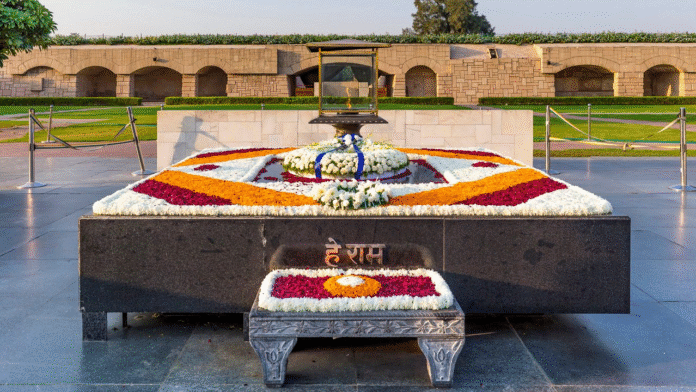
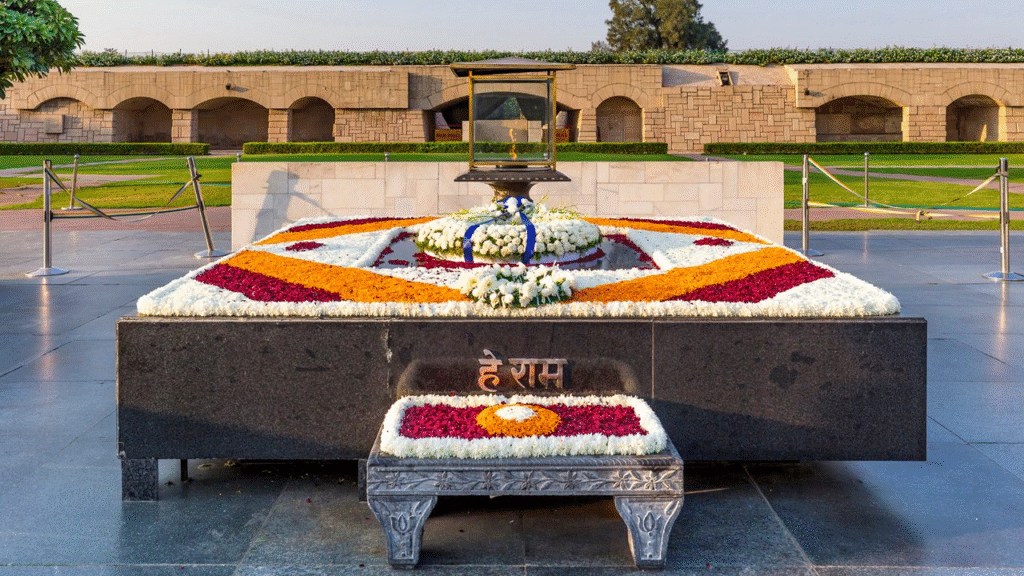
Raj Ghat is the cremation site of Mahatma Gandhi, featuring a simple black marble platform inscribed with his last words, “Hey Ram.” It is situated along the Yamuna River, Raj Ghat reflects simplicity, serenity and ecological harmony, mirroring Gandhi’s austere lifestyle and ethical philosophy.
National leaders lay wreaths decorated with multi colour flowers, symbolising respect, gratitude and remembrance of Gandhi’s supreme sacrifice. Interfaith prayers held at Raj Ghat emphasise peace, tolerance and unity, aligning with Gandhi’s lifelong advocacy for communal harmony. Citizens from across India visit Raj Ghat on Shaheed Diwas to offer floral tributes, observe silence and reflect on Gandhian values….
What separates an average project manager from one who handles complexity with calm confidence? PMP® Training builds the structured thinking needed to manage uncertainty and resources with clarity. Yet, knowledge alone is not enough in real projects. Regular practice with PMP® Exam Questions helps professionals apply these concepts in practical situations. In 2026, organisations value PMP-certified managers who combine understanding with adaptable skills. These abilities guide teams and keep projects moving smoothly.
In this blog, the essential skills every PMP professional should develop are discussed clearly.
Table of Contents
Essential Skills Every PMP® Certified Project Manager Needs in 2026
Conclusion
Essential Skills Every PMP® Certified Project Manager Needs in 2026
Below are the key skills that define effective project leadership in modern project environments:
Proactive Risk Identification Skills
A competent PMP practitioner doesn’t wait for issues to arise. To identify vulnerabilities early, they examine schedules, dependencies, and resources. This enables action to be taken before problems become delays. Instead of being an emergency response, risk management becomes a daily routine. Early awareness maintains a peaceful, controlled project environment while establishing stability. Teams are able to work with confidence rather than uncertainty thanks to this consistent control.
Practical Project Planning Skills
Plans are only effective when they are practical and simple to implement. PMP-certified managers organise tasks logically and divide work into manageable segments. Everyone is aware of their function thanks to the meticulous assignment of responsibilities. This guarantees that the plan directs activities and maintains the organisation and purpose of daily labour. Teams are able to concentrate on execution without questioning priorities as a result.
Clear and Structured Communication Skills
When instructions are unclear, projects take longer to complete. Professionals in PMP speak with purpose and clarity. They listen to team input and communicate updates in plain language. This lessens misunderstanding and keeps everyone in agreement. People are encouraged to voice concerns early on, before they become issues, when there is open communication. The team develops a culture of trust as a result of this transparency.
Confident Decision-Making Skills
Projects frequently encounter unforeseen circumstances. PMPs maintain composure and thoroughly weigh their options. Instead of making snap decisions, they rely on methodical thought processes. Their choices help teams maintain confidence in the face of uncertainty and safeguard the project’s outcome even under duress. This composed strategy keeps fear from impeding advancement.
Stakeholder Management Skills
Expectations from various stakeholders are frequently varied. Managers with PMP certification handle these distinctions patiently and lucidly. Throughout the project, they inform stakeholders and set reasonable expectations. This promotes cooperation and increases trust. Project progress is facilitated by strong relationships with stakeholders.
Change Control and Adaptability Skills
In contemporary projects, change is inevitable. PMP experts manage change in a methodical manner. Before accepting it, they evaluate its impact on scope, time, and resources. This maintains the project’s flexibility without sacrificing its direction or structure. Controlled flexibility guarantees that advancement proceeds without misunderstanding.
Time Cost and Quality Balancing Skills
While concentrating solely on quality can result in higher costs, concentrating solely on speed can result in lower quality. PMP specialists are aware of the connections between these components. They strike a balance to provide results that live up to expectations without needless compromise. This equilibrium safeguards project resources and avoids rework.
Team Leadership and Motivation Skills
Leadership is about support and direction. Managers with PMP certification inspire their team and give clear instructions. Working under organised leadership gives people a sense of confidence. Morale, teamwork, and general productivity all increase as a result. Better project outcomes are a natural byproduct of motivated teams.
Data Driven Monitoring and Reporting Skills
Accurate data is essential to modern initiatives. Reports and progress tracking are used by PMP experts to inform choices. Instead of making assumptions, they base their decisions on facts. This increases trust in the project’s direction and draws attention to problem areas. Precise insights support consistent project performance.
Lifecycle Discipline and Process Control Skills
PMP professionals adhere to a defined process from start to finish. Every step of the process is documented and reviewed by them. This discipline guarantees that nothing crucial is overlooked and that project results are consistent and dependable. Long-term project success is supported by consistent process control.
Conclusion
Project management in 2026 demands more than knowledge of processes. It requires practical skills that guide teams through uncertainty with confidence. These abilities make PMP professionals reliable in complex environments. For those looking to strengthen these skills through structured learning, The Knowledge Academy offers practical support that turns knowledge into confident project leadership.
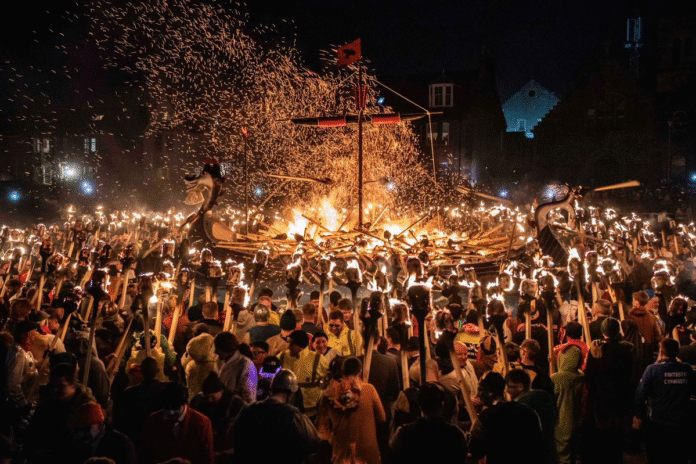
Firelight flickered across the winter sky as thousands gathered in Lerwick for Up Helly Aa, the world-famous fire festival that transforms Scotland’s Shetland Islands into a living tribute to Viking heritage. At the heart of the spectacle, members of the Jarl Squad marched through the town carrying blazing torches before setting a towering replica Viking longship alight in a dramatic ceremonial finale.
Up Helly Aa marks the official end of the Christmas season in Shetland and stands as a powerful symbol of the islands’ Norse roots, which stretch back nearly 500 years. Although its modern form dates to 1881, the festival draws heavily on Viking imagery, mythology, and ritual, celebrating the legacy left by Scandinavian settlers who once ruled the islands.
This year’s procession featured more than 1,000 costumed participants, known as Jarls, dressed in elaborate Viking-inspired armor and helmets. Singing traditional songs and chants, they hauled the longship through Lerwick’s streets, illuminating the night with a river of fire as spectators lined the route.
A historic milestone marked the 2024 celebrations, as women were officially permitted to join the Jarl Squad for the first time. The change signaled a significant cultural shift in what had long been a male-only tradition, reflecting a broader evolution in how heritage and inclusivity coexist in modern Shetland society.
After the longship was set ablaze, flames engulfed the vessel in a striking display of heat and light, drawing cheers from the crowd. The burning of the ship symbolizes both the passing of winter and the respectful farewell to the Viking past, before festivities continue long into the night with music, dancing, and community gatherings.
Today, Up Helly Aa is widely regarded as Europe’s largest fire festival—an unforgettable fusion of history, spectacle, and communal pride that continues to captivate locals and visitors alike.
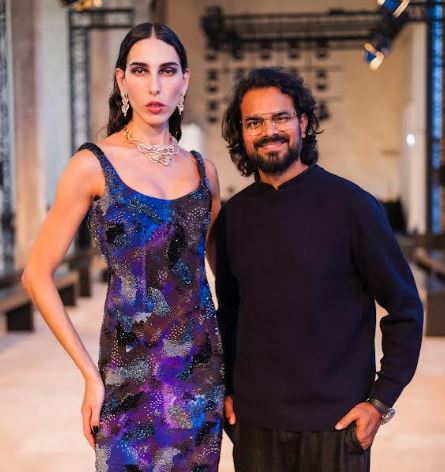
India’s largest jewellery brand from the House of Tata further cemented its global standing with its fourth showcase at Paris Couture Week 2026, marking a defining milestone in its international luxury journey. Reinforcing its position as a design-led, globally aspirational jewellery maison, Tanishq continued its celebrated collaboration with internationally acclaimed couturier Rahul Mishra, unveiling an exceptional high-jewellery presentation centred exclusively on its evocative Desert Diamonds collection.
Returning to the world’s most prestigious fashion platform, Tanishq spotlighted diamonds born of ancient desert landscapes—stones that carry the hues, history, and spirit of the land from which they emerge. Formed deep within the earth over millennia, Desert diamonds are prized for their individuality and rare natural colour spectrum, ranging from warm whites and honey tones to whiskey and sunset browns. These connoisseur diamonds reflect quiet power, refined self-expression, and the enduring beauty of nature shaped by time.
Building on its presence at Paris Couture Week since 2023, Tanishq’s Desert Diamonds collection placed the origin of natural diamonds firmly at the centre of the narrative. Each stone’s subtle tonal variation and depth of character mirrors wild desert terrains, creating a palette that is both rare and unmistakable.
The jewellery was showcased alongside Rahul Mishra’s Spring 2026 couture collection, Alchemy, which draws inspiration from the cosmic and elemental origins of life. Rooted in the interplay of ether, air, fire, water, and earth, Alchemy reflects transformation, balance, and continuity—values that resonate deeply with the patient formation of natural diamonds over billions of years. Through texture, movement, and scale, Mishra’s couture translated unseen elemental forces into a poetic visual language, creating a seamless dialogue between fashion and high jewellery.
Tanishq’s Desert Diamonds were crafted into bold, sculptural silhouettes that celebrate both strength and subtlety, echoing the desert’s timeless landscapes. Following a successful launch in the USA, the brand has now introduced these exceptionally rare diamonds to India, offering connoisseurs an opportunity to experience natural diamonds of extraordinary provenance and elegance. Each creation, conceived as wearable art, reflects hundreds of artisanal man-hours, intricate craftsmanship, and uncompromising attention to detail—standing as a testament to Indian artistry on a global stage.
The Desert Diamonds collection has been crafted in collaboration with De Beers Group, the world’s leading diamond company, bringing a fresh perspective to natural diamonds through innovation, authenticity, and design excellence.
With its fourth appearance at Paris Couture Week, Tanishq continues to strengthen its presence among the world’s leading luxury maisons, confidently showcasing Indian high jewellery on one of fashion’s most influential international platforms.
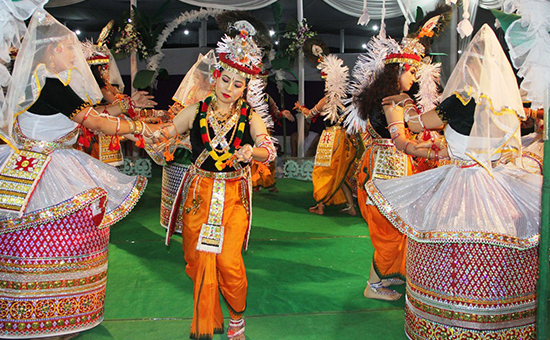
Jagoi Raas, the distinctive form of Manipuri Raas Lila, has once again drawn attention for its rare blend of devotion, discipline, and cultural continuity. A classical dance-drama rooted in the Radha-Krishna tradition, Jagoi Raas stands apart for preserving deep links with Manipur’s indigenous folk rituals and martial heritage, even as it evolves on contemporary stages. More than a performance, it remains a living expression of spiritual love and Manipuri identity.
Among India’s eight classical dance forms, Manipuri Raas Lila stands apart—not for spectacle or virtuosity alone, but for its quiet spiritual power. Rooted in devotion and community memory, this dance form is less a performance and more a living prayer, where movement becomes meditation and rhythm becomes remembrance.
Manipuri Raas Lila is a dance-drama that enacts the divine love of Radha and Krishna, drawing inspiration from the Vaishnavite Bhakti tradition that took deep root in Manipur in the 18th century. Yet, unlike other classical forms that evolved largely within courtly or temple frameworks, Raas Lila—also known as Jagoi Raas—has never severed its ties with indigenous traditions. Its aesthetic and spirit remain deeply intertwined with Lai Haraoba, the ancient folk ritual celebrating local deities and the creation of the universe.
This fusion of the classical and the indigenous gives Manipuri Raas Lila its distinctive character. Performed as a collective ensemble, the dance follows strict conventions of costume, movement, and spatial design. The iconic cylindrical skirts of the female dancers, the translucent veils, and the soft footwork create an illusion of floating grace. Every gesture is restrained, every movement inward-looking, reflecting the Manipuri worldview where devotion is expressed through subtlety rather than spectacle.
While the dance draws heavily on Abhinaya as described in the Natya Sastra, its vocabulary is uniquely enriched by Manipur’s ethnic martial arts culture. The rounded torso movements, controlled spins, and poised stances echo the discipline of traditional martial practices, lending the dance a quiet strength beneath its lyrical softness. This synthesis of grace and vigour mirrors the cultural fabric of Manipur itself—resilient, layered, and deeply rooted.
Over time, Manipuri Raas Lila has undergone a significant transformation. What began as a sacred ritual within temple spaces gradually found its way onto secular and commercial proscenium stages. This transition did more than widen its audience; it redefined the dance as a marker of cultural identity. Even outside its ritual setting, Raas Lila continues to carry the spiritual and philosophical ethos of Manipur, preserving its uniqueness amid changing times.
Today, Manipuri Raas Lila stands as a testament to how tradition can evolve without losing its soul—a dance form that continues to speak, softly yet profoundly, of love, devotion, and belonging.
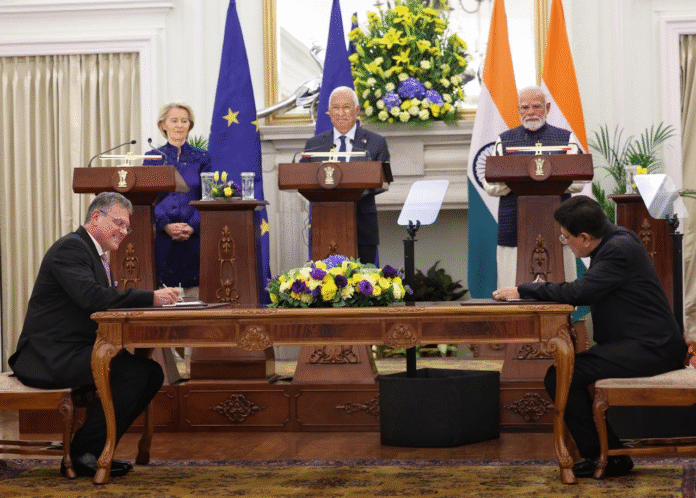
India-EU FTA deal has been signed while strengthening economic and political ties at a time of rising geopolitical tensions and global economic challenges. The EBNW Story brings in key facts:
* The largest trade agreement that both the EU and India have ever concluded.
* A market of two billion people and close to a quarter of global GDP.
* Cutting over 90% of tariffs: expected to double annual EU exports to India.
* Upholding European standards and promoting sustainable trade.
Key facts about India
4th largest economy in the world.
The EU’s 9th largest trading partner.
Annual GDP: €3.4 trillion.
Population: 1.45 billion people.
EU exports: €75 billion – goods: €48.8bn, services €26bn (2024)
EU investment stocks: €140.1 billion (2023)
EU jobs supported by EU exports to India: 800,000
Top 10 European exports to India (2024 – billion euro)
Key benefits for EU exporters
Saving up to €4 billion per year in duties on European products.
Tariffs on 96.6% of EU goods exports will be eliminated or reduced.
Competitive advantage for EU exporters, with the biggest trade opening India has given to any trade partner.
Privileged access to Indian services market in key sectors, e.g. financial services and maritime transport.
Simplification of customs procedures to make exports quicker and easier.
Protection of EU intellectual property, such as trademarks.
A dedicated chapter for small EU businesses.
Product
2024 exports (EUR)
Current tariffs
Future Tariffs
Staging
Machinery and electrical equipment
€16.3 billion
Up to 44%
0% for almost all products
Up to 10 years (mostly 5-7)
Aircraft and spacecraft
€6.4 billion
Up to 11%
0% for almost all products
Up to 10 years (mostly 5)
Optical, medical and surgical equipment
€3.4 billion
Up to 27,5%
0% for 90% of the products
Up to 10 years (mostly EIF, 5 or 7)
Plastics
€2.2 billion
Up to 16,5%
0% for almost all products
Up to 10 years (mostly 7)
Pearls, precious stones and metals
€2.1 billion
Up to 22,5%
0% for 20% of the products and tariff reduction for another 36% of the products
Up to 10 years (mostly 5)
Chemicals
€3.2 billion
Up to 22%
0% for almost all products
Up to 10 years (mostly EIF)
Motor vehicles
€1.6 billion
110%
10% (quota of 250k)
Iron and steel
€1.5 billon
Up to 22%
0% for almost all products
Up to 10 years (mostly EIF, 5 or 7)
Pharmaceuticals
€1.1 billion
11%
0% for almost all products
Up to 10 years (mostly 5 or 7)
Ambitious services commitments
* Binding of current level of liberalisation for services sectors exceeding India’s commitments with any other trading partner, including the UK and Australia
* Binding of dredging and maritime cable-laying services for the first time, satisfying key economic interests of the EU
* Enhanced transparency through obligations on senior management and boards of directors and local presence
Intellectual property protected
The agreement provides a high level of protection and enforcement of IP rights, including with respect to copyright, trademarks, designs, protection of trade secrets and undisclosed information, and plant varieties. It foresees that each Party will have measures, procedures and remedies to ensure the enforcement of intellectual property rights.
The QS World University Rankings Europe 2026 have been released, offering a comprehensive snapshot of Europe’s leading higher education institutions. Compiled by Quacquarelli Symonds (QS), the rankings are designed to guide students planning to pursue higher studies across the continent. This year’s list reflects notable shifts at the top, underlining Europe’s competitive and evolving academic landscape.
Oxford Reclaims Top Position
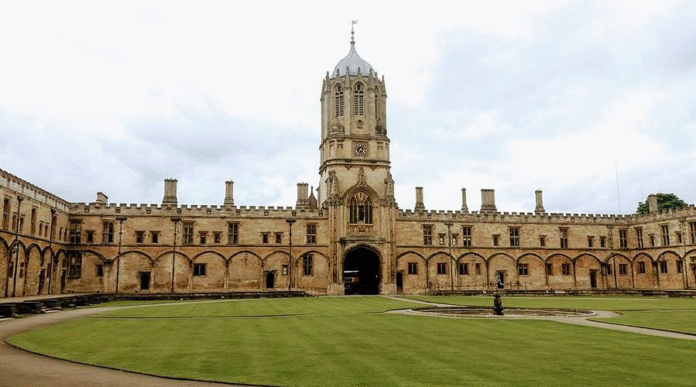
The University of Oxford has secured the first position in the QS Europe Rankings 2026, rising from third place last year. The achievement reinforces Oxford’s strength in research output, academic reputation, and global engagement. ETH Zurich followed closely at second place, maintaining its status as continental Europe’s highest-ranked institution, known for excellence in science, technology, and innovation.
Strong Showing by UK Universities
Universities from the United Kingdom continue to dominate the upper tiers of the rankings. Imperial College London and University College London (UCL) jointly occupy the third position, reflecting consistent performance in employability and international outlook. The University of Cambridge ranks fifth, while the University of Edinburgh and King’s College London secure sixth and seventh positions respectively, highlighting the UK’s continued academic influence in Europe.
Continental Europe in the Top Ten
Beyond the UK, several continental European institutions feature prominently. PSL University, Paris ranks eighth, showcasing France’s growing global academic presence. The University of Manchester stands at ninth place, while École Polytechnique completes the top ten, underlining the strength of elite engineering and research-focused institutions in Europe.
Important Facts
QS World University Rankings Europe are published annually by Quacquarelli Symonds.
The 2026 rankings assess universities across Europe only, separate from global QS rankings.
Key indicators include research and discovery, learning experience, employability, and global engagement.
The University of Oxford topped the Europe rankings for 2026 after ranking third in 2025.
Methodology and Student Relevance
QS evaluates universities using a balanced set of indicators, including academic reputation, employer reputation, research impact, internationalisation, and learning environment. The Europe-specific rankings aim to provide clearer regional insights, helping students compare institutions within similar academic and socio-economic contexts. For aspirants planning to study abroad, the QS Europe Rankings 2026 serve as a practical reference point for informed academic decision-making.
Maharashtra has created history by becoming the first state in India to launch dedicated menopause clinics within the public healthcare system. This pioneering initiative addresses the long-neglected physical and mental health needs of women during menopause and marks a major step toward women-centric preventive healthcare.
Top 5 Key Facts
First-of-its-Kind Initiative Maharashtra is the first Indian state to establish exclusive menopause clinics in government hospitals and urban health facilities, setting a national precedent in women’s healthcare.
Comprehensive Care at One Place The clinics provide integrated services under one roof, including medical consultations, mental health counselling, lifestyle guidance, and free essential medicines—reducing the need for multiple referrals.
Focus on Critical Health Screenings Women attending the clinics undergo screening for hormonal imbalance, bone density (osteoporosis), cardiovascular health, and other menopause-related conditions.
Official Launch and Leadership The programme was launched on January 14, 2026, coinciding with Makar Sankranti, under the guidance of Minister of State for Health Meghna Bordikar, who emphasized that menopause is a natural life transition requiring dignity and care—not stigma.
Model for Other States The initiative has received a positive response from women across the state and is expected to become a replicable model for other states to strengthen India’s public health framework for mid-life women.
Why It Matters
Menopause, though a natural biological phase, is often accompanied by anxiety, depression, sleep disorders, and long-term health risks. By formally integrating menopause care into public health services, Maharashtra has taken a landmark step toward inclusive, preventive, and gender-sensitive healthcare.
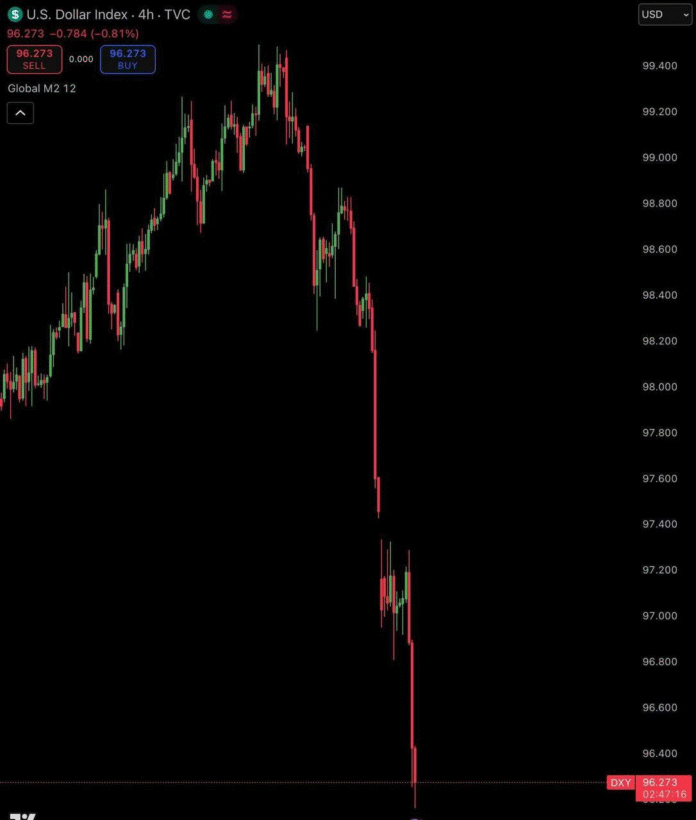
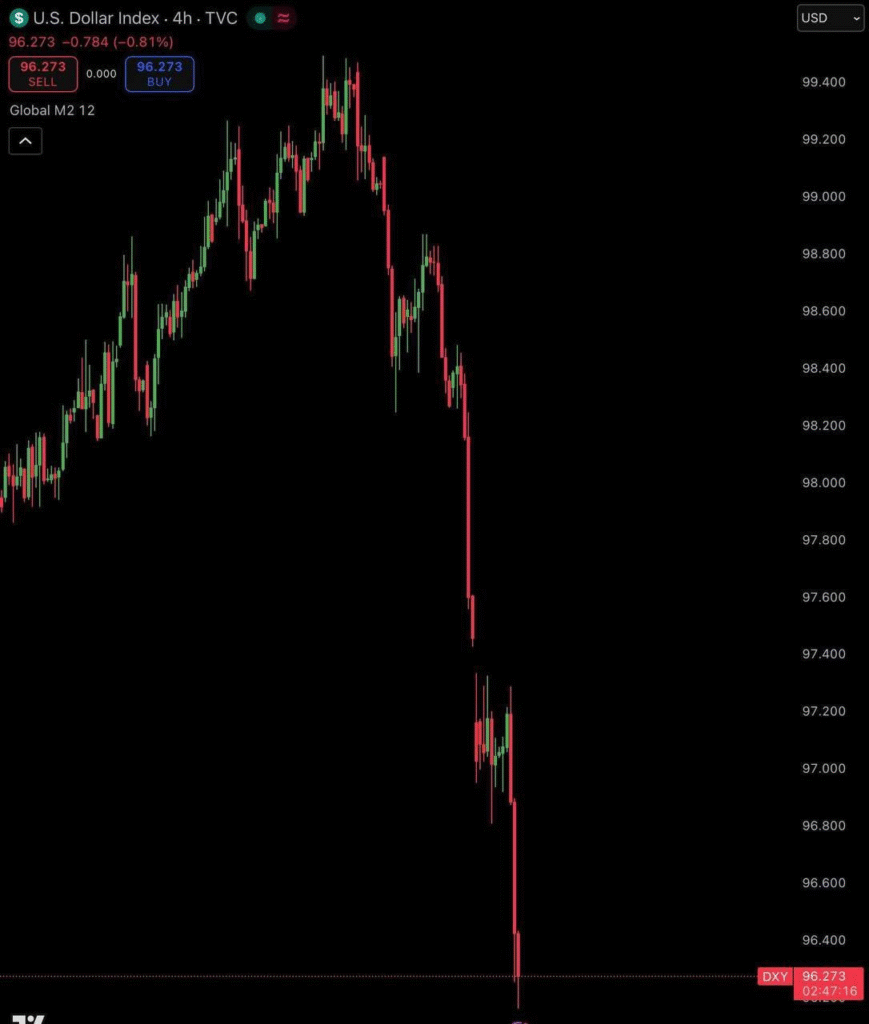
The U.S. dollar fell to a four-year low on Tuesday after remarks by President Donald Trump were interpreted by markets as tacit approval of a weaker currency. The decline reflects growing investor unease over rising trade tensions, political uncertainty, and concerns about the independence of U.S. monetary policy.
Trump remarks trigger fresh selling
The dollar extended recent losses after Trump described the currency’s value as “great” when asked whether it had fallen too much. The comments, made ahead of an economic speech in Iowa, were widely seen as signaling tolerance for further depreciation. Currency traders responded by accelerating dollar selling, pushing the U.S. Dollar Index down 1.4 percent to 95.77, its lowest level since February 2022.
Trade tensions and political risks weigh
Analysts said the dollar’s weakness stems from a combination of aggressive trade rhetoric and domestic political uncertainty. Trump has accused South Korea of failing to honor its trade commitments and announced plans to raise tariffs to 25 percent on South Korean imports, including automobiles, lumber, and pharmaceuticals. He has also threatened to impose a 100 percent tariff on Canadian goods if Ottawa proceeds with a trade agreement with China.
Meanwhile, partisan disputes in Washington over funding for the Department of Homeland Security have revived fears of another U.S. government shutdown, further denting investor confidence.
Federal Reserve independence under scrutiny
Concerns over the Federal Reserve’s autonomy have added to pressure on the dollar. Trump has repeatedly urged the central bank to cut interest rates and is expected to react negatively if policymakers keep rates unchanged at their ongoing meeting. Markets are also watching closely for any announcement regarding a successor to Federal Reserve Chair Jerome Powell, which could increase volatility if viewed as politically motivated.
Yen strengthens; dollar weakness broad-based
In global currency markets, attention has shifted to the Japanese yen, which strengthened sharply amid speculation of coordinated U.S.–Japan intervention. The yen traded near 152 per dollar after reports that the New York Federal Reserve checked dollar-yen rates with market participants.
The euro climbed above $1.20 for the first time since mid-2021, while sterling rose to its strongest level since September 2021, underscoring the broad-based nature of the dollar’s decline.