Home Blog Page 79

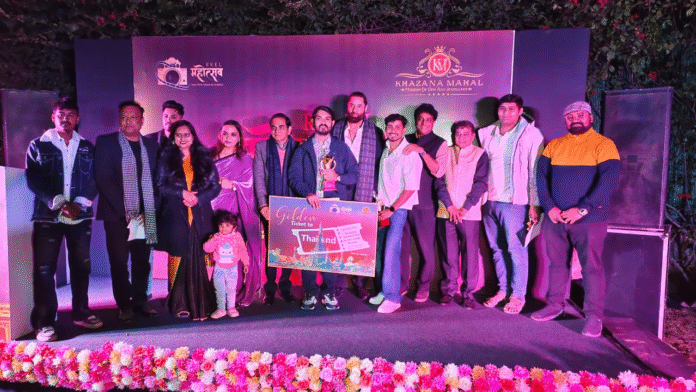
Khazana Mahal Shines Through Influencers’ Lenses; Himanshu Nathawat Bags Thailand Trip

0

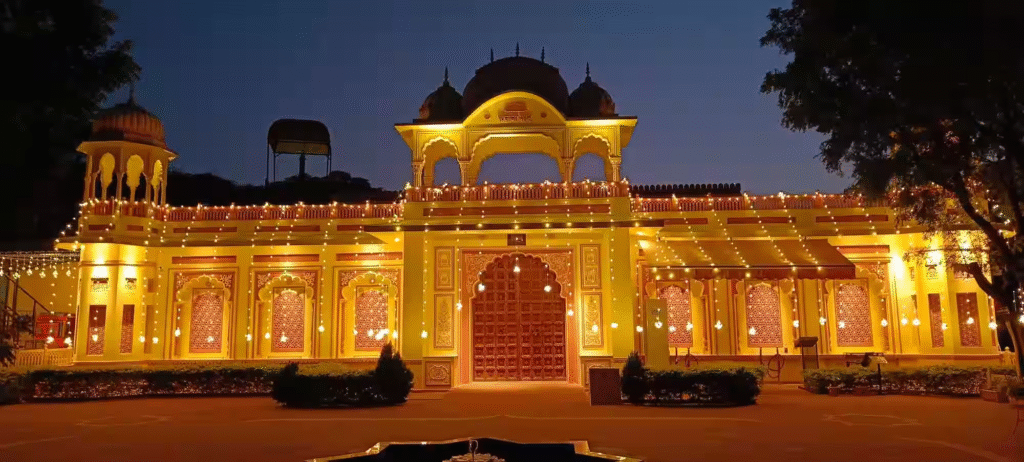
The award ceremony of Reel Festival 2025–26 was successfully held at Khazana Mahal, Jaipur, on Friday, celebrating creativity in digital storytelling and social media content. More than 175 digital creators and influencers from across the country participated in the festival, making it one of the most vibrant creator-driven events of the year.

The festival aimed to provide a platform for young creators to showcase their talent while promoting Rajasthan’s culture, heritage, and tourism through short-form video reels. Participants created reels at the Khazana Mahal premises between December 20 and January 5 under the theme “Reel Toh Banti Hai”.

Founder Director of Khazana Mahal, Anup Srivastava, said the Reel Festival is more than just a competition. “It is a powerful platform for emerging digital creators and is helping take Rajasthan’s rich cultural heritage to audiences across the country and the world,” he said.

Khazana Mahal Shines Through Influencers’ Lenses; Himanshu Nathawat Bags Thailand Trip

Creators from states including Delhi, Uttar Pradesh, Maharashtra, Rajasthan, Gujarat, Madhya Pradesh, Haryana, Karnataka, Odisha, and Jharkhand took part, giving the festival a strong national presence. Their reels showcased the grandeur of Khazana Mahal, along with Rajasthan’s traditions, folk art, and tourist destinations, drawing wide appreciation on social media.

The award ceremony was attended by noted film distributor Raj Bansal and actor Shaji Chaudhary, known for his role as Maqbool in the web series Mirzapur. The jury panel featured prominent Bollywood personalities including Anukalp Goswami (writer-director of The Kapil Sharma Show), Atul Srivastava (Stree), Vishwajeet Pradhan (Aarya), and Shaji Chaudhary. Winners were selected based on creativity, presentation, and audience engagement.

A total of seven creators were honored in various categories. Himanshu Nathawat won the Best Reel Award, earning a sponsored trip to Thailand. Vikas Magadh and Azeem Khan secured the second and third positions respectively. The Critics’ Reel Award was presented to TRB Boys, Renu Soni, and Bhuparam, while Ashish Rai received the Director’s Choice Award. All participants were awarded certificates.

SEBI Clears NSE IPO After a Decade: 10 Key Facts You Need to Know

0

The Securities and Exchange Board of India (SEBI) has finally granted its long-pending No-Objection Certificate (NOC) to the National Stock Exchange (NSE) for its initial public offering (IPO), ending a wait of nearly a decade. Here are 10 important facts explaining what this approval means and why it matters:

  1. SEBI Clears NSE IPO After 10 Years
    SEBI on Friday approved NSE’s IPO proposal, paving the way for India’s largest stock exchange to get listed on the BSE after almost 10 years of delay.
  2. NSE Welcomes the Approval
    NSE Chairperson Srinivas Injeti said the approval marks a new phase of value creation and reinforces NSE’s role as a key pillar of the Indian economy and capital markets.
  3. Settlement Worth Over ₹2,000 Crore
    The NOC was granted after NSE agreed to settle a long-pending case with SEBI for an amount exceeding ₹2,000 crore, subject to final approvals. With 12% interest, the final payout could be higher.
  4. DRHP Likely in 3–4 Months
    Sources said NSE is expected to file its Draft Red Herring Prospectus (DRHP) within the next three to four months.
  5. Listing Expected in 8–9 Months
    If timelines remain on track, NSE’s much-awaited listing could take place in about 8 to 9 months.
  6. HPAC Clearance Not Awaited
    SEBI issued the NOC without waiting for approval from its High-Powered Advisory Committee (HPAC). The case will now be placed before HPAC and later reviewed by two whole-time SEBI members.
  7. Supreme Court Case to Be Withdrawn
    Following internal approvals, SEBI will move to withdraw the pending regulatory case from the Supreme Court, formally closing the matter.
  8. IPO Plans Date Back to 2016
    NSE first filed its IPO prospectus in 2016. SEBI had granted in-principle approval that year, subject to regulatory compliance. NSE’s board and shareholders had also approved the listing.
  9. Setback Due to Co-Location Case
    In 2019, SEBI barred NSE from accessing the securities market for six months due to the co-location controversy. While penalties were later modified, the restriction delayed the IPO.
  10. Co-Location Case Settled in 2024
    The major roadblock was cleared in October 2024, when NSE settled the co-location case by paying ₹643 crore, clearing the path for IPO approval.

Bottom Line:
SEBI’s green signal brings NSE closer to the stock market after years of regulatory hurdles. Once listed, it will mark a historic milestone for India’s capital markets and could be one of the most closely watched IPOs in recent times.

Ladakh: Know Why it Turned into Rare Red Aura

0

The night sky over Hanle in Ladakh turned an eerie blood-red in mid-January, stunning observers and flooding social media with images likened to the Northern Lights. Yet scientists stress that the spectacle was not merely a visual rarity. It was a warning sign of intense solar activity with real implications for Earth’s technological systems.

What Caused the Red Glow Over Hanle

The phenomenon occurred on the nights of January 19 and 20 after the Sun unleashed an X-class solar flare on January 18, the most powerful category of solar eruptions. This flare triggered a fast-moving Coronal Mass Ejection, a cloud of charged plasma and magnetic fields travelling at nearly 1,700 km per second. Within about 25 hours, it struck Earth’s magnetosphere, generating a G4-level geomagnetic storm classified as “severe”.

Why Ladakh Saw a Rare Red Aurora

When charged solar particles collide with Earth’s magnetic shield, they excite atmospheric gases and produce auroras. In polar regions, these usually appear green. Hanle, however, lies far south of typical auroral zones. Observers there saw the upper fringes of the auroral display, which glow red due to excited oxygen atoms at altitudes above 300 kilometres. Such displays are extremely rare over the Indian subcontinent.

Solar Maximum and Rising Space Weather Risks

Scientists from ISRO have cautioned that more such events are likely as the Sun approaches solar maximum, the most active phase of its roughly 11-year cycle. The January 2026 event was also classified as an S4-level solar radiation storm, indicating a dangerous surge of high-energy protons. Data from India’s Aditya-L1 mission showed that Earth’s magnetosphere was compressed unusually close to the planet, briefly exposing even geostationary satellites to harsh solar winds.

Important Facts

  • X-class solar flares are the most intense category of solar eruptions.
  • G4 geomagnetic storms are labelled “severe” on space weather scales.
  • Red auroras occur at higher altitudes than green auroras.
  • Solar maximum is the most active phase of the Sun’s 11-year cycle.

Why Solar Storms Matter for India

Strong geomagnetic storms can disrupt power grids by inducing electric currents that damage transformers and trigger blackouts. They can also heat the upper atmosphere, increasing drag on satellites and degrading GPS, communication, banking, and navigation systems. During the January storm, astronauts aboard the International Space Station were advised to remain in shielded areas due to elevated radiation. India’s early-warning capabilities, led by the Aditya-L1 spacecraft positioned 1.5 million kilometres from Earth, provide critical lead time to protect satellites and infrastructure, turning a dramatic red sky into a lesson in planetary vulnerability.

Dubai to Get Gold Street; To Be Called As Dubai Gold District

0

Dubai is set to unveil a street paved in gold as part of an ambitious new Gold District, a purpose-built hub for the emirate’s jewellery and precious metals industry. The project is aimed at strengthening Dubai’s position as a global centre for gold trading while also emerging as a major tourist and retail attraction.

The Gold District will feature specialised infrastructure designed to cater to jewellers, traders, and luxury shoppers. One of its standout attractions will be a street “constructed” of gold, according to property developer Ithra Dubai, which is spearheading the development. While specific design and construction details have not yet been disclosed, authorities have confirmed that more information will be released in phases.

The Dubai Media Office said the project reflects the emirate’s long-standing association with gold and precious metals, an industry that has played a vital role in Dubai’s economic growth for decades.

Commenting on the initiative, Ahmed Al Khaja, CEO of the Dubai Festivals and Retail Establishment under the Dubai Department of Economy and Tourism, said gold is deeply embedded in Dubai’s identity. “Gold is woven into the cultural and commercial fabric of Dubai, symbolising our heritage, prosperity, and enduring spirit of enterprise,” he said.

He added that the upcoming Gold District will not only honour this legacy but also reinterpret it for the future. “Through this landmark destination, we celebrate Dubai’s historic connection with gold while reimagining it for a new era driven by creativity and sustainability,” Al Khaja said.

Once completed, the Gold District is expected to become a signature destination, blending luxury retail, cultural heritage, and innovative design, further reinforcing Dubai’s reputation as a global hub for commerce, tourism, and iconic urban experiences.

The district will be home to more than 1,000 retailers of gold, jewellery, perfumery and cosmetics, plus six new hotels, says Time Out Dubai.

It is situated next to the Gold Souk, one of Dubai’s oldest traditional markets, which sells glittering jewellery and ornaments.

In 2024–25, the country exported approximately £38.8bn worth of gold to countries such as Switzerland, the UK and India.

Issam Galadari, CEO of Ithra Dubai, said: “With the launch of Dubai Gold District, we are advancing a significant new chapter in the city’s gold and jewellery landscape.

Testing Enterprise Applications: Critical Aspects for Success

0

Enterprise applications, which handle everything from financial transactions to customer connections, are the foundation of contemporary corporate operations. Specialized methods that are far different from typical software validation are needed to test these complicated systems. The stakes are high; indeed, failures can destroy whole companies, millions of dollars, and consumer confidence. Extensive testing enterprise applications ensures that such important programs are available to thousands of users without compromising the integrity of data and performance under real world conditions.

  1. Managing Complex Integration Points

Enterprise apps are seldom isolated in reality, but they are integrated with multiple databases, external services and other systems simultaneously. The movement of data between each of these integration points should be tested to ensure that it is correct, and that it is neither lost nor corrupted. Teams look at how systems recover from network disruptions, and manage connection failures gracefully, as well as interact throughout regular operations. Coordinated testing environments that precisely replicate production architecture are necessary due to this complexity. Verifying these links helps avoid expensive failures in which a fault in one system spreads to the entire company technology ecosystem.

  1. Handling Diverse User Roles and Permissions

Employees in large businesses have a wide range of duties, each of which calls for certain system access and capabilities. The testing should ensure that all types of users perceive the appropriate information, perform the appropriate actions as well as experience the appropriate restrictions when trying to do something that is not authorized. This involves the creation of comprehensive test cases that involve managers, executives, front-line employees and external partners. Sensitive information is safeguarded but functionality is still available to authorized users thanks to security testing. Comprehensive role-based testing guarantees adherence to legal rules controlling data access and stops security breaches.

  1. Performance Under Enterprise-Scale Loads

Enterprise apps must be capable of supporting hundreds or thousands of parallel users without becoming irresponsible or ineffective. To determine the performance limits, load testing gradually adds more users as it tries to recreate the real usage patterns. Teams examine how systems respond to seasonal demand surges, month-end processing, and peak business hours. Before they affect real users, testing identifies bottlenecks in database queries, network bandwidth, or application server capacity. This proactive strategy finds optimization opportunities that sustain acceptable performance levels and guarantees sufficient infrastructure provisioning.

  1. Data Migration and Accuracy Verification

Large volumes of historical data must frequently be transferred from legacy systems to new platforms in order to implement corporate applications. Testing confirms that migration procedures maintain completeness, accuracy, and record relationships. Teams confirm that referential integrity is maintained, client histories are fully transferred, and financial balances reconcile accurately. Millions of records are successfully moved thanks to sample verification and automated validation processes. Errors found during testing avert disastrous data problems that could jeopardize user trust and post-deployment business operations.

  1. Business Continuity and Disaster Recovery

In order to sustain corporate operations, enterprise applications must be resilient against cyberattacks, and natural catastrophes, along with malfunctions of hardware. Testing looks at recovery protocols, failover systems, and backup systems in crisis scenarios. Teams confirm that recovery time goals are met, redundant systems turn on automatically, and data replication works properly. By ensuring that vital business operations continue in an emergency, this testing safeguards income streams and client connections. Vulnerabilities are found through routine disaster recovery testing before actual disasters arise.

Conclusion

Comprehensive approaches that address integration complexity, security needs, performance scalability, data correctness, and business continuity are necessary for testing enterprise applications. To guarantee dependability when supporting crucial business operations, these vital systems need to be rigorously validated across several dimensions. 

Opkey gains a competitive edge with speed, accuracy and stability for testing enterprise applications. It gives you the strategic advantage you need with end-to-end enterprise application coverage, AI-powered self-healing, and no-code automation. Testing can start earlier and scale thanks to automation of manual test cases, auto-documentation of business processes, and out-of-the-box CI/CD integrations.


Republic Day Parade 2026 Winners: Indian Navy Wins Best Marching Contingent Award, Maharashtra Tops Tableau Competition

0

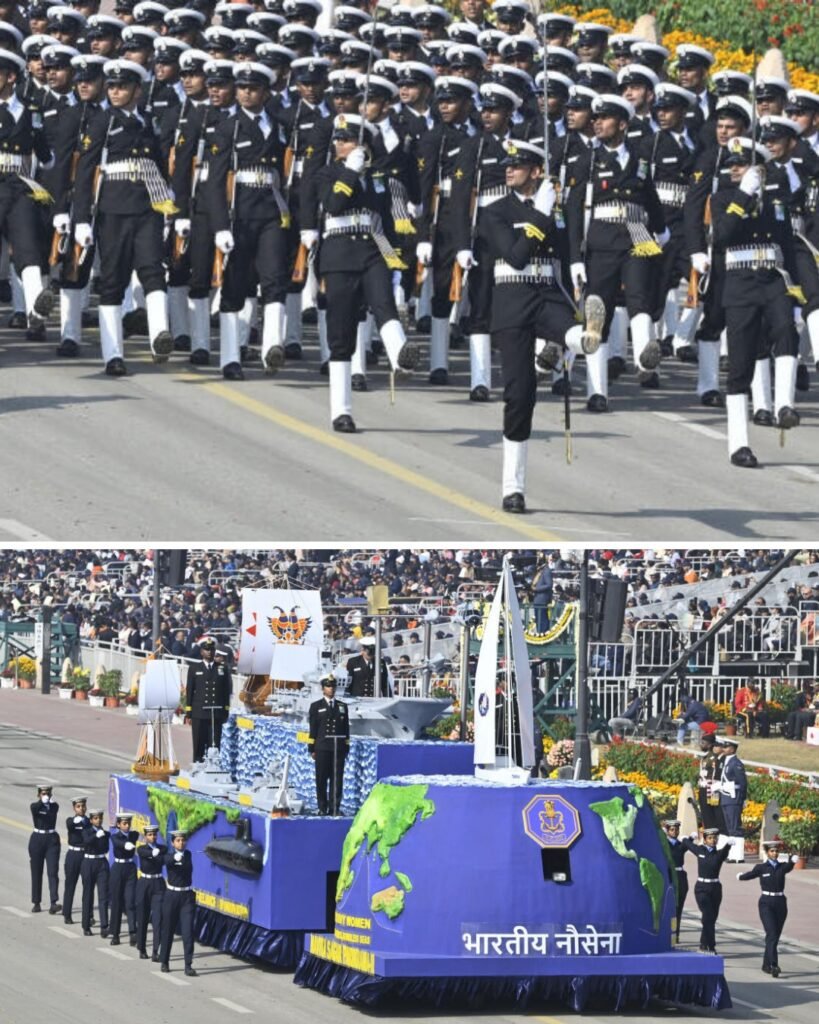
India’s 77th Republic Day Parade celebrations on Kartavya Path concluded not only with powerful displays of military strength and cultural diversity but also with recognition of outstanding performances across marching contingents and state tableaux. The Indian Navy was adjudged the Best Marching Contingent among the three armed services, while Maharashtra clinched the top honour in the tableau category for its vibrant cultural showcase.

Indian Navy excels in discipline and precision

In a display of synchronised drills and uniform precision, the Indian Navy’s marching contingent stood out among the Army, Air Force and other services. The 144-member team marched in flawless formation on Kartavya Path, projecting unity, strength and maritime professionalism earning them one of the most coveted honours of the parade awards. In addition, the Delhi Police contingent was recognised as the best among the Central Armed Police Forces (CAPFs) and auxiliary units.

Republic Day Parade 2026 Winners: Indian Navy Wins Best Marching Contingent Award, Maharashtra Tops Tableau Competition

Maharashtra’s Ganeshotsav tableau captures judges’ attention

In the States and Union Territories tableau category, Maharashtra emerged victorious for its presentation titled “Ganeshotsav: A Symbol of Aatmanirbharta”. The float beautifully blended cultural tradition with the theme of self-reliance, showing women dancers in traditional attire performing Lezim alongside depictions of Ganeshotsav festivities. Jammu and Kashmir took second place for its tableau celebrating handicrafts and folk dances, while Kerala secured third with a display highlighting the Water Metro and digital literacy achievements.

Republic Day Parade 2026 Winners: Indian Navy Wins Best Marching Contingent Award, Maharashtra Tops Tableau Competition

Ministry of Culture wins best central ministry tableau

Among central ministries and departments, the Ministry of Culture won the best tableau award for its presentation titled “Vande Mataram: The Soul-Cry of a Nation”, tracing the song’s journey from Bankim Chandra Chatterjee’s composition through historical and generational interpretations. Special prizes went to the Central Public Works Department and a dance group performance commemorating 150 years of Vande Mataram.

Republic Day Parade 2026 Winners: Indian Navy Wins Best Marching Contingent Award, Maharashtra Tops Tableau Competition
Popular choice recognitions reflect public sentiment

In the Popular Choice category, based on online voting via the MyGov portal, the Assam Regiment was selected as the favourite among the three services, while the CRPF topped the CAPF category. Gujarat’s tableau, themed “Mantra of Swadeshi – Self-Reliance – Freedom: Vande Mataram,” won the popular choice award among states, followed by Uttar Pradesh and Rajasthan.

Awards ceremony and national pride

Officials said the formal award presentation will take place on January 30 at the Rashtriya Rangshala Camp. These honours recognise excellence, creativity and discipline showcased during the parade reinforcing Republic Day’s spirit of unity, heritage and national strength.

Why Gen Z is choosing ‘hardballing’ in dating and saying goodbye to break-up anxiety

0

Dating culture is undergoing a visible shift, and Gen Z is at the centre of it. Tired of confusing situationships, mixed signals and emotionally exhausting break-ups, young daters are increasingly adopting a new approach known as hardballing. The trend focuses on honesty, clarity and stating expectations early and it is quickly becoming Gen Z’s way of reclaiming emotional peace in modern relationships.

What is hardballing in modern dating

Hardballing is a dating style where people are upfront about what they want right from the beginning. Instead of letting relationships drift or relying on vague signals, individuals clearly communicate whether they are looking for something serious, casual or long-term. The idea is simple: if intentions do not align, it is better to know early than invest months in uncertainty.

Why Gen Z prefers clarity over guessing games

For Gen Z, traditional dating patterns often feel emotionally draining. Growing up in a digital world shaped by dating apps, social media and constant comparison, many young people experienced anxiety due to unclear relationship dynamics. Hardballing appeals to them because it eliminates ambiguity and reduces the emotional toll of unanswered questions, ghosting or sudden break-ups.

Mental health plays a major role in this shift.

Gen Z is more vocal about emotional boundaries and prioritising well-being. Clear conversations about intentions help them feel more secure and reduce overthinking, which has long been associated with modern dating stress.

How hardballing reduces break-up anxiety

One of the biggest advantages of hardballing is that it sets expectations early. When both people know what they are signing up for, disappointment is less likely. Even if a relationship ends, it feels less personal and more like a mutual decision based on compatibility rather than rejection. This approach allows Gen Z daters to detach their self-worth from relationship outcomes.

Is hardballing too direct for everyone

While honesty is the core of hardballing, experts note that delivery matters. Being upfront does not mean being rigid or transactional. When done respectfully, it encourages healthier connections. However, extreme bluntness can sometimes feel overwhelming, especially in the early stages of getting to know someone.

A new dating mindset for a new generation

Hardballing reflects Gen Z’s desire for authentic, intentional relationships. By choosing clarity over confusion, young daters are rewriting dating norms and moving away from anxiety-driven romance. In a world of fast connections and fleeting attention, Gen Z’s hardballing approach is proving that honesty might just be the most attractive quality of all.

Mahatma Gandhi Death Anniversary 2026: Why Mahatma Gandhi Is Called ‘Bapu’

0

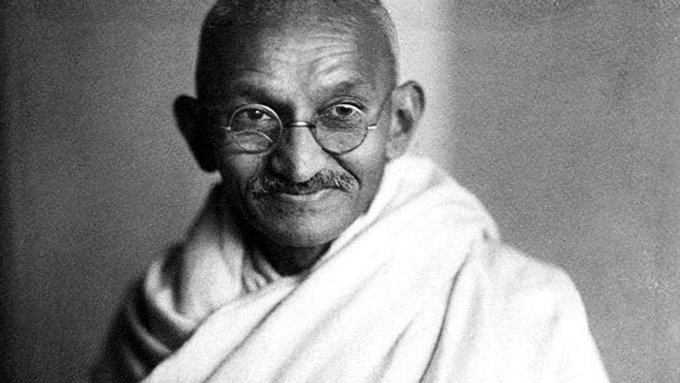
Mahatma Gandhi Death Anniversary 2026: There are some names in Indian history that are not confined to textbooks but live on in the hearts of the people. Mahatma Gandhi is one such name. His thoughts, ideals, and way of life continue to inspire people not only in India but across the world. While he is officially known as the Father of the Nation, millions fondly remember him as ‘Bapu’—a name that reflects deep affection and respect. Even people outside India often refer to him by this endearing title.

Mahatma Gandhi was not merely a leader recorded in history; he was a Bapu rooted in the collective conscience of society, guiding people to distinguish between right and wrong. His death anniversary reminds us that a nation is built not only on political freedom but also on moral values. At a time when violence, intolerance, and conflict are increasing, Gandhiji’s ideals appear more relevant than ever. He taught the world that resistance can be peaceful and protest can be dignified.

Mahatma Gandhi was born on October 2, 1869, and was assassinated on January 30, 1948, after India gained independence. His death anniversary is an occasion to reflect on his life, philosophy, and the reasons he came to be known as Bapu and the Father of the Nation.

When Is Mahatma Gandhi’s Death Anniversary Observed?

Mahatma Gandhi’s death anniversary is observed every year on January 30. He was shot dead on this day in 1948 at Birla Bhawan (now Gandhi Smriti) in New Delhi during an evening prayer meeting by Nathuram Godse. The day is observed as Martyrs’ Day in India, and a two-minute silence is observed nationwide to pay tribute to him.

Why Was Mahatma Gandhi Called ‘Bapu’?

The word Bapu means father. Gandhiji earned this title because of his deep emotional connection with the people.

The Leader of the Masses
Gandhiji was not a ruler driven by power but a guide who led the common people with compassion, discipline, and moral authority.

A Simple Life, Profound Ideals
His simple attire—just a dhoti, a walking stick, and round spectacles—symbolised humility and honesty, making people feel a personal bond with him.

Champion of Truth and Nonviolence
He led India’s freedom struggle through satya (truth) and ahimsa (nonviolence), teaching that true strength lies in character, not weapons.

Care for Every Section of Society
Gandhiji worked tirelessly for the poor, Dalits, women, and workers. His inclusive concern made people see him as the head of a large national family.

Why Is He Called the Father of the Nation?

Netaji Subhash Chandra Bose was the first to address Mahatma Gandhi as the Father of the Nation. The titles Bapu and Father of the Nation carry similar meanings, reflecting his role as the guiding force of India’s freedom movement and moral foundation.

What Is Special About His Death Anniversary?

  • The President, Prime Minister, and other leaders pay homage at Raj Ghat
  • Educational institutions hold discussions on Gandhian values
  • Messages of truth, nonviolence, and peace are promoted
  • A two-minute silence is observed across the country in his memory

Mahatma Gandhi’s life and ideals continue to remind us that real leadership is rooted in values, compassion, and moral courage.

India-EU Trade Deal: Complete List Of Foods And Beverages That Will Get Cheaper In India

0

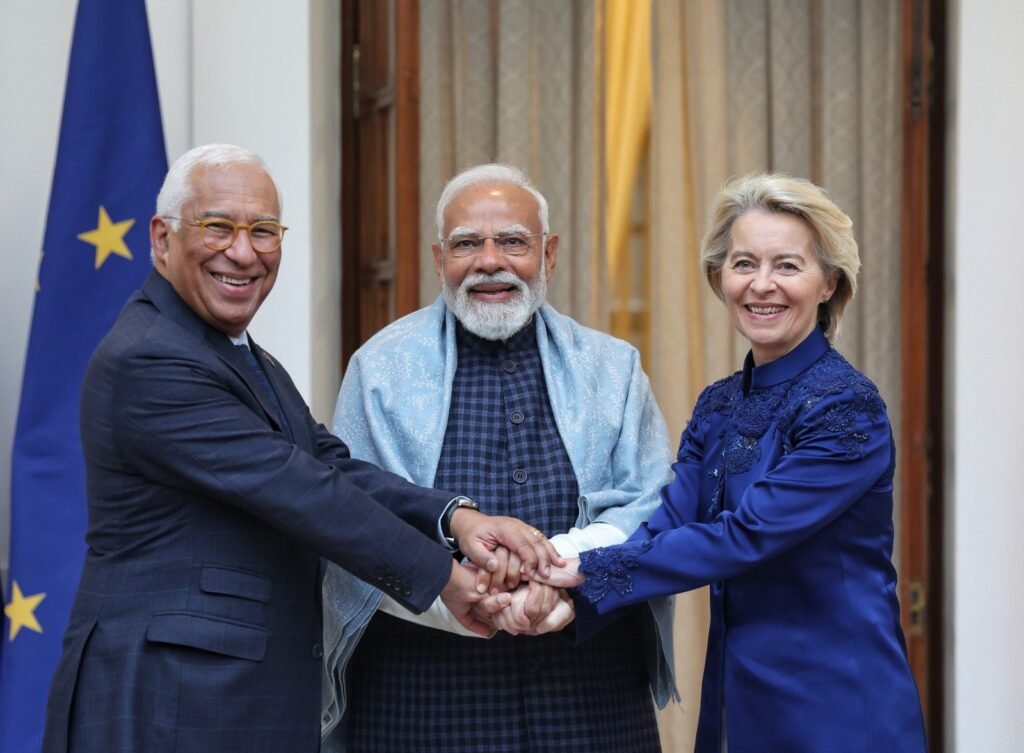
India and the European Union (EU) have finally signed a long-awaited Free Trade Agreement (FTA) after almost 18 years of negotiations a pact being called the “mother of all deals” that is set to reshape trade in goods, services and tariffs between the two blocs. One of the most visible benefits for Indian consumers will be lower prices on a wide range of imported foods and beverages from Europe, as heavy duties on many items are significantly cut or eliminated.

Olive oil and vegetable oils, zero tariffs soon

One of the biggest tariff wins for consumers comes in the form of olive oil, margarine and other European vegetable oils, which traditionally attracted import duties of up to 45%. Under the trade deal, these tariffs will be phased out and eventually reduced to 0 percent, making premium oils considerably more affordable for Indian households and restaurants.

Processed foods: pasta, chocolate, biscuits get cheaper

A large category of processed food items will also see duty elimination. This includes pasta, breads, pastries, biscuits, chocolate, pastries and even pet food. These products currently carry tariffs as high as 50 percent, but will become tariff-free under the new FTA, paving the way for cheaper European staples on Indian supermarket shelves.

Fruit juices and non-alcoholic beverages: duty-free access

Under the agreement, fruit juices and select non-alcoholic beverages, which faced tariffs of up to 55 percent, will now enter India without import duty. This means bottled European juices and premium soft drinks will face lower retail prices once the deal is implemented and fully in effect.

Fresh fruits and meat products: notable reductions

The FTA also brings price relief on select fresh fruits such as kiwis and pears, with tariffs dropping from 33 percent to 10 percent within quota limits. Meanwhile, processed meat products like sausages will see tariffs halve from 110 percent to 50 percent, and sheep meat will become duty-free, offering cheaper options in these segments too.

Alcoholic beverages: wine, beer, spirits become more affordable

Alcohol imports from the EU will benefit significantly as well. Import duties on European wines previously as high as 150 percent will be slashed, eventually going as low as around 20 percent for premium bottles and about 30 percent for mid-range options. Beer tariffs will be cut from 110 percent to 50 percent, and spirits (such as whisky or gin) will fall from around 150 percent to about 40 percent, making popular European brands cheaper for Indian drinkers.

Broader consumer impact and choice expansion

These tariff cuts are expected to benefit not just individual shoppers but also restaurants, hotels and speciality food businesses that source premium European ingredients. Over time, this could increase variety, availability and value across the Indian food and beverage market while making products previously seen as niche more accessible.

India-EU Trade Deal: Complete List Of Foods And Beverages That Will Get Cheaper In India

The India-EU Trade Deal is now awaiting procedural ratification and, if all goes according to plan, many of these tariff cuts will start taking effect by 2027, bringing European foods and drinks to Indian consumers at relatively lower prices compared with the past.

Which Country Owns All The Giant Pandas In The World And What Is Panda Diplomacy?

0
Which Country Owns All The Giant Pandas In The World And What Is Panda Diplomacy?

Giant pandas are adored around the world for their gentle appearance and rarity but very few people know that almost every panda outside China is technically owned by the Chinese government and that the presence of these animals in foreign zoos is not simply an act of goodwill, but a strategic diplomatic practice known as panda diplomacy. This unique practice ties wildlife conservation to international relations, soft power and national prestige.

China controls giant panda ownership globally

China is home to the only natural habitats of giant pandas, which live mainly in the mountainous forests of Sichuan, Shaanxi and Gansu provinces. Because of their uniqueness and cultural significance, the Chinese government retains ownership of nearly all giant pandas in the world. When pandas are seen in zoos abroad, they are usually there under long-term loan agreements, not permanent ownership.

How panda diplomacy works

Modern panda diplomacy dates back to the mid-20th century. In earlier decades, pandas were occasionally given as gifts to friendly nations. However, starting in 1984, China shifted its policy: instead of gifting pandas, it began leasing them on renewable contracts, typically around 10 years in duration. Zoos and institutions hosting foreign pandas pay significant fees sometimes around $1 million per year per panda pair and agree to specific terms set by Chinese authorities. Under these agreements, any cubs born abroad are considered the property of China and must be returned within a few years to contribute to conservation and breeding programs at Chinese research bases. This rule ensures that China maintains control over the species’ global lineage and reinforces the symbolic ownership of pandas.

Symbolism behind pandas as diplomatic tools

Pandas are more than just animals they are symbolic ambassadors of peace, friendship and cooperation. China has strategically loaned pandas to nations with which it seeks stronger ties or to celebrate diplomatic milestones. The arrival of pandas at a foreign zoo often corresponds with important state visits, strengthened bilateral deals or cultural exchanges.

Recent developments reflect changing geopolitics

For example, Japan recently returned its last pair of giant pandas to China after more than 50 years of hosting them, a move that has been linked to shifting diplomatic ties between Tokyo and Beijing. These developments illustrate how panda diplomacy continues to evolve with global politics.

Why China’s panda strategy matters

China’s control over giant panda ownership and movement combines soft power, conservation and international strategy in a way few other wildlife programs do. For other countries, hosting pandas is more than a tourist attraction; it is a symbol of friendship and diplomatic engagement with Beijing, anchored by agreements that underline China’s unique ownership rights over this beloved species.