Home Blog Page 756

Jaipur Literature Festival 2022: The glories of Rajasthan in focus at the 15th edition

0

Jaipur Literature Festival 2022: The 15th edition of the iconic Jaipur Literature Festival is all set to take place from 5th to 14th March 2022, at Hotel Clarks Amber, Jaipur. The rich programme will feature 15 Indian languages. This year, the Festival will bring in specific sessions concentrated on Rajasthani heritage and culture. Teamwork Arts, the producer of the iconic Festival, hosted an exclusive press conference recently highlighting the significance of the city and Rajasthan in creating the festival.

Rajasthan Tourism Minister of Rajasthan, Vishvendra Singh said, “I am delighted that the Jaipur Literature Festival is returning on-ground in the Pink City. I believe that the Festival truly provides an exceptional platform for both Indian and global authors and thought leaders to engage and strengthen Our literary heritage and culture. I look forward to warmly welcoming all Authors, Speakers, Artists, Musicians and Visitors to Jaipur and the State of Rajasthan for the Festival in March 2022.”

Sanjoy K Roy, Managing Director at Teamwork Arts, said, ” We are delighted to be back on-ground with the Jaipur Literature Festival weaving its magic again. This year’s programme celebrates the diversity of literature and offers a wide range of topics including on the Ukraine Russia conflict, climate change, new world order, art of fiction, poetic imagination, travel, science, history etc.”

Apurv Kumar, Managing Director, Clarks Group of Hotels said, “We are indeed privileged that the 15th edition of the Jaipur Literature Festival is being held at Hotel Clarks Amer from 5 to 10 March. It is quite well known that CLARKS has always been associated with this mega literary event. We used to host the evening music stages. This time both the literary sessions as well the Jaipur Music Stage in the evening will be held here. It is only appropriate to point out that this festival is one of the biggest events in the State and to my mind, it is a great tourism event. A large number of visitors not only from pan-India but from other countries come to this iconic festival.”

The prestigious Festival will showcase a variety of sessions exhibiting numerous dialects of Rajasthan-centric literature. At one session, poet and distinguished litterateur, Chandra Prakash Deval will discuss languages, literature, poetry, and music of the desert state with writer and poet Anukrti Upadhyay. The rich oral, linguistic and literary traditions of Rajasthan find their voice in a variety of dialects, although Rajasthani still awaits official recognition in the schedule of Indian languages.

Rajasthan has long been a dynamic cultural centre and home to prestigious art forms. At a session on Treasures at the Jaipur Court, author Vandana Bhandari and historian Giles Tillotson will be in conversation with historian Rima Hooja to discuss the magnificent treasures commissioned and collected over centuries by the Jaipur court. In this book, over 40 scholars from around India and the world, have hand-picked and written about objects that make this collection spectacular.

In history, we have encountered Chetak, the most famous horse of Mewar and Maharana Pratap’s chosen comrade. A panel discussion will be held with historians Yashaswini Chandra and Rima Hooja for an illuminating conversation about the powerful warrior king Maharana Pratap and his legendary horse Chetak. Together they will explore the legend of the resilient pair and their part in shaping India.


Operation Vayushakti to be organised in Pokaran in Jaisalmer district of Rajasthan

0

Operation Vayushakti, Indian Air Force’s biggest war exercise, will be held on March 7 in Chandhan, Pokaran (Jaisalmer). 

Prime Minister Narendra Modi is also coming to Pokaran to be a part of the Operation Vayushakti, which is held once in three years. Indian Air Force pilots have been preparing for Operation Vayushakti for the last one month. The country’s most advanced fighter jet Rafale will also show its firepower for the first time in Operation Vayushakti.

In Operation Vayushakti, 109 fighters, including Rafale, Sukhoi, Mirage, Jaguar and MiG-29 will fly and attack the imaginary targets of the enemy in Chandhan. Apart from this, 24 Apaches, Chinooks, Light Combat Helicopters, seven transport aircraft, four remote control aircraft will also be part of this Operation Vayushakti. At the same time, the capability of Akash and Spider missile will also be seen on this occasion.

For a month, the brave hearts of the Air Force have been preparing for this exercise. Fighter jets taking off from Jodhpur, Phalodi, Jaisalmer, Uttarlai, Nal, Bathinda, Agra, Hindon and Ambala airbases are targeting the ground at the Chandhan firing range near Pokaran. Pilots are updated on their target map. After taking off, they hit their target. Their target can be seen directly on the screen in the control room.

World Wildlife Day 2022: Know date, history, theme, significance

0

World Wildlife Day, observed on March 3 every year, is celebrated to observe beautiful varieties of wild fauna. The day reminds us of the urgency to step up the fight against wildlife crimes. 

World Wildlife Day: How it is started 

In December 2013, the United Nations General Assembly decided to declare March 3 as World Wildlife Day – the day of signature of the Convention on International Trade in Endangered Species of Wild Fauna and Flora (CITES) in 1973. It is also celebrated to raise awareness of the multitude of benefits of flora and fauna conservation provides to people.

World Wildlife Day 2022 Theme

‘Recovering key species for ecosystem restoration’ is the theme given by UN General Assembly for the celebration of World Wildlife Day 2022.  This theme is basically chosen for the conservation of most endangered species of flora and fauna. 

According to International Union for Conservation of Nature’s Red List of threatened Species, over 8,400 species are endangered, and around 30,000 species are considered to be endangered.

Why celebration of Wildlife is necessary

Earth has rich diversity of plant and animals. The variety is uncountable. This rich diversity makes our life possible on the planet. We depend on all the elements of the biosphere for all our basic needs like air to breathe, water to drink, food to eat and energy and materials use to make the things we need to live our lives. But we are cutting down too many trees, clearing too much ground and building so many roads that we are destroying the natural habitats of millions of species and putting the world’s biodiversity at risk. 

Hence the main aim to celebrate World Wildlife Day is to raise awareness among people towards these facts as each and every species is equally important.

Mahashivratri 2022: Know about 12 shivlingas and their significance…

0
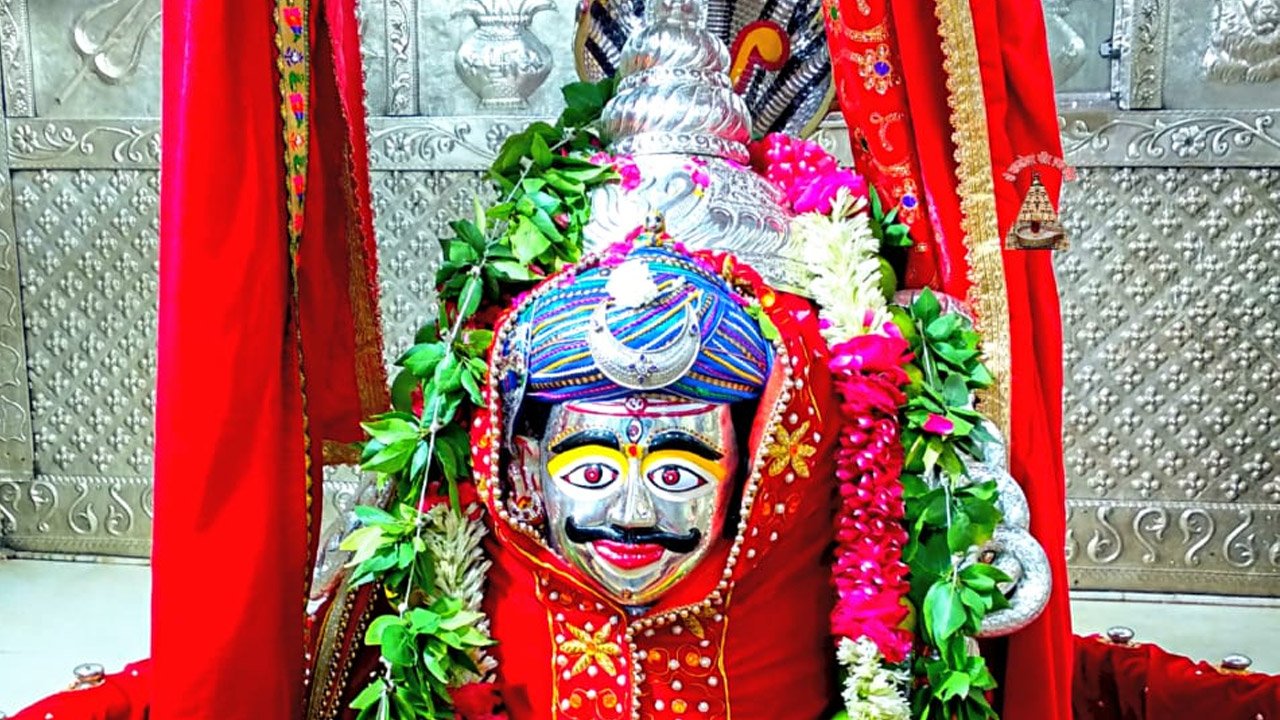
Mahakaleshwar Temple, Ujjain

Mahashivratri 2022 is being celebrated on March 1 across India with zeal and fervour. So let’s know about 12 jyotirlingas situated in India and their sacred significance.

The Natraj, the Mahakaal, the destroyer, the ‘Tridev’ and lord Shiva… These are the names which Lord Shiva are known with and on the auspicious occasion of ‘Mahashivratri’, here’s look at the 12 Jyotirlinagas spread across India. 

Somnath, Gujarat 

Somnath Temple, located in Veraval, is considered as one of the most famous and revered Shiva shrines in the world as it is believed to be the first among the twelve jyotirlinga. The Shivalinga in the Somnath temple is believed to have been safely hiding within its hollowness the famous Syamantak Mani, the Philosopher’s stone, which is associated with Lord Krishna. As per legends, it was a magical stone, which was capable of producing gold. It is also believed that this stone had alchemic and radioactive properties and had the ability to create a magnetic field around itself that helped it remain floating above ground. The temple finds its reference in the most ancient texts of Hindus like Shreemad Bhagavat, Skandpuran, Shivpuran and Rig-Veda which signifies the importance of this temple as one of the most popular pilgrimage sites in India.

Nageshwar, Gujarat 

This temple is located on the route between Dwarka city and Beyt Dwarka Island on the coast of Saurashtra in Gujarat .

According to the Shiva Purana, Nageshvara Jyotirlinga is in ‘the Darukavana, which is an ancient name of a forest in India. The Indian mythology further suggests that Lord Krishna used to perform rudrabhishekam.

This temple is considered as symbol of protection from all types of venom and poison.

Bhimashankar, Maharashtra 

Amongst the five jyotirlinga shrines in Maharashtra, Bhimashankar Temple is located in Pune which is also the source of River Bhima in the Bhimashankar hills in Khed Taluka. It is built in the Nagara style of architecture and this temple dates back to the 18th century. While a legend says that it is believed that the ancient shrine was erected over a Swayambhu Linga or a Self Emanated Shiva Linga, the other legend says that the jyotirlinga is believed to be constructed by Bheema, the son of Kumbhakarna. 

Trimbakeshwar, Nashik

Trimbakeshwar Shiva Temple located in the city of Nashik. Lying at the foothills of Brahmagiri Mountain, it is considered to be a unique jyotirlinga as the linga has three faces symbolizing Lord Brahma, Lord Vishnu and Lord Shiva.

 According to Shiva Purana, Lord Shiva decided to reside as Trimbakeshwar on request of the Godavari and Gautam Rishi. The Jyotirlinga is covered by a crown, which is placed over the golden mask of the three gods.

Grishneshwar, Aurangabad 

Grishneshwar Jyotirlinga or Ghrneshwar Jyotirlinga or Dhushmeshwar temple finds mentioning in the Shiva Purana. Located in Aurangabad, Maharashtra, this temple is touted to be the last or twelfth Jyotirlinga (linga of light), Ghrneshwar means the ‘lord of compassion’. Built of red rock and composed of a five-tier shikhara, it is also the smallest Jyotirlinga temple of Lord Shiva in India.

Vaidyanath, Jharkhand 

Baidyanath Temple or Baba Baidyanath Dham or simply Baba Dham is located in Deoghar, Jharkhand. It got its name Vaidhya meaning ‘doctor’ from the fact that Lord Shiva once cured a demon king, Ravana as he was the greatest Shiva worshipper. Millions of pilgrims visit to attend Shraavana mela here in this temple, and the Maha Shivratri is also the famous festival celebrated here.

Mahakaleshwar, Ujjain

Shri Mahakaleshwar Jyotirlinga is situated in the ancient city of Ujjain in Madhya Pradesh where the idol of Mahakaleshwar is known to be dakshinamurti, which means it is facing the south. One of the 12 Jyotirlingas in India, the lingam at the Mahakala is believed to be swayambhu (born of itself) which comes with currents of power shakti) from within itself. On occasion of Maha Shivratri, the Lord Shiva devotees worship whole through the night in the temple. It is believed, Shiva, the deity of time, has its blessing on the city of Ujjain.

Omkareshwar, Chandler

Lord of Om sound – Omkareshwar is another jyotirlinga of Central India. Situated in an island called Mandhata in the Narmada River in Madhya Pradesh, this temple has immense mythological significance too. 

The name “Omkareshwar” is based on island’s shape, which appears to be like Om. There are two main Lord Shiva temples – first is Omkareshwar which literally means “Lord of Omkaara or the Lord of the Om Sound” and the other is, Amareshwar which stands for “Immortal lord” or “lord of the Immortals or Devas”. This is the second jyotirlinga shrine in the state of Madhya Pradesh, first being Mahakaleshwar in Ujjain.

Kashi vishwanath, UP

Kashi Vishwanath Temple is dedicated to Lord Shiva and the Jyotirlinga shrine is located in Varanasi, Uttar Pradesh. The temple standing on the banks of holy River Ganga. Vishvanatha means the ruler of The Universe. The ghats here are packed with Shiva devotees from all around the world on the occasion of Maha Shivaratri festival. As per Hindu mythology, Lord Shiva married Goddess Parvati on Mahashivratri, a day celebrated with joy and fervour. Called the holiest of Shiva temples,

Kedarnath, Uttarakhand 

Kedarnath is counted amongst 4 pious dhams of India. Due to cold weather, this temple remains close for 6 months. This Jyotirling temple is the most difficult to visit by Lord Mahadev bhakts as it is located at the height of 3,583 m from Rishikesh, Uttarakhand. It is accessible only for six months a year. One of the 275 Paadal Petra Sthalams, it was built by the Pandavas and revived by Adi Sankaracharya.

Rameshwaram, Tamil Nadu

Rameshwaram Jyotirlinga is believed to be worshipped by Lord Rama. Popular as ‘Varanasi of the south’, Rameshwaram Jyotirlinga is also one of the most visited holy places in India. 

The Rameswaram Jyotirlinga temple is one of the most highly worshipped and sacred pilgrimage sites in India. As per the Hindu mythology, the jyotirlingam was made by Lord Rama himself to make amends of killing Ravana, a Brahmin in the battlefield. Rama asked Hanuman to bring a lingam from Kailash, but as it was getting late, he worshipped the lingam made of sand by Sita. This Lingam worshipped by Lord Rama is known as Ramanathar. Ramanathaswamy Temple is situated at the Rameswaram Island in Tamil Nadu.

Mallikarjun, Andra Pradesh 

Sri Mallikarjuna Jyotirlinga Temple, located at Srisailam in Andhra Pradesh, goes by the name Mallikarjuna which is the deity of worship while Maha Shivaratri is the most important festival celebrated at Srisailam Mallikarjuna Swamy temple. As per the mythological story, Shiva and Parvati stayed in Shrishailam to remain close to his son Kartikey who had decided to stay alone on Mount Kravunja. Mallikarjuna Jyotirlinga is one of the 275 Paadal Petra Sthalams which are amongst the greatest Lord Shiva temples in Asia.

Afeem ke khet: This beautiful crop has interesting story of cultivation and medicinal use. Read here

0

Opium is grown in the winter season in the desert state. In fact, cultivation can be done only in Chittorgarh and Pratapgarh districts in Rajasthan. The government gives license for its cultivation. White flowers look very beautiful on opium plants.

After the doda is cooked, it is cut and the milk coming out of it is collected and this milk makes opium. A very good smell comes from around the opium fields.

Afeem ke khet: This beautiful crop has interesting story of cultivation and medicinal use. Read here

Opium poppy or papaver somniferum, a medicinal herb, produces alkaloids such as morphine and codeine, and is best known as a pain reliever in  terms of modern medicine. It is used for a range of treatments including the post-operative pain management and palliative care for terminal cancer patients to treating accident-related trauma and chronic pain syndromes.

However, large consignments of opium that includes its bulbous flowers, stems and raisins—all of these are used in making narcotics like charas and heroin.

In India, opium cultivation is prohibited under Section 8 of the NDPS Act, 1985, except under a licence issued by the Central Bureau of Narcotics (CBN) under Rule 8 of the NDPS Rules, 1985.

Maha Shivratri 2022: Know date, significance, legends and rituals

0

Maha Shivratri 2022 in India: Maha Shivratri called as “The Great Night of Shiva” celebrates the convergence of the forces of Shiva and Shakti. The Shiv-Shakti duo is considered to be the epitome of love, power, and togetherness.

The festival is celebrated in the Indian month of Phalgun and is one of the most grandly celebrated days. 

Shivratri date and muhurt

This year, the auspicious festivities on Shivratri will begin at 3:16 am on March 1 and will end at 1:00 am on March 2.

Shivratri legends

As per beliefs,  there is a Shivratri every luni-solar month of the Hindu calendar however the Maha Shivratri happens once every year, when the winter draws to a close paving way for spring and summer, in the months of February/March.

Stories behind Shivratri celebration

Different legends throughout history describe the significance of Maha Shivratri. One of them says that on this night, Lord Shiva performed the Tandav – a heavenly dance of creation, preservation and destruction. 

Other legend says that Shiva – the lord of destruction married Parvati – the goddess of fertility, love, and beauty, who is also known as Shakti (power) on this day.

Another story says that this night, Lord Shiva drank the cosmic poison, churned by the Gods and demons from the ocean of milk. 

Shiva locked the poison in his throat for eternity, turning his neck blue. Shivratri, thus celebrates Shiva’s benevolence.

Shivratri celebration

On Shivratri, devotees spend the day in prayer, meditation and observing strict full-day fasts. Some celebrate in the morning while others organise ‘jagrans’ at night.

Devotees worship the ‘Shivling’ – the iconic representation of Shiva and offer Rudra-Abhishek. They can be seen bathing the Shivling with water or milk or curd.

Chants of ‘Om Namah Shivaya’ and ‘Har Har Mahadev’ echo in several temples across India. Unmarried women fast on Maha Shivratri as it is

believed they will get a husband like Lord Shiva.

In the city of Ujjain, where the Mahakaleshwar Temple (one of the 12 Jyotirlingams) is located, witnesses large processions with people thronging the streets to catch a glimpse of the revered idol of Lord Shiva

Operation Ganga: Govt of India’s effort to bring back stranded Indian citizens from Ukraine

0

Operation Ganga has been launched by Government of India to evacuate Indian citizens stranded in Ukraine. 

“This evacuation process is being done at government cost,” said Foreign Secretary Harsh V Shringla. 

India has identified land evacuation options from Hungary, Poland, Slovakia and Romania since the airspace in Ukraine was closed.

“Specific border crossing points have been identified and the MEA had deployed teams to assist in the evacuation process,” Shringla added.

The EBNW Story carries the key points from Shringla’s address:

– Our Embassy in Kyiv as well as our Ministry issued a number of advisories prior to the situation developing. 4000 of our nationals left before the conflict, pursuant to these advisories. We estimated that about 15,000 citizens have been left in Ukraine.

– Border crossing to Hungary and Romania is functioning, but, the exit point to Poland has become clogged due to lakhs of foreign nationals trying to escape from that point. Those who are near the borders of Hungary and Romania are guided towards their border points in phases.

– So far under operation Ganga, thousand of our citizens have been flown out of Romania and Hungary and another thousand have been evacuated from Ukraine through land routes. Flights have been organised for them as well.

The list of flights for operation Ganga for evacuation of Indians from Ukraine via neighboring  is here:

Operation Ganga has been launched by Government of India to evacuate Indian citizens stranded in Ukraine. 

“This evacuation process is being done at government cost,” said Foreign Secretary Harsh V Shringla. 

India has identified land evacuation options from Hungary, Poland, Slovakia and Romania since the airspace in Ukraine was closed.

“Specific border crossing points have been identified and the MEA had deployed teams to assist in the evacuation process,” Shringla added.

EBNW Story carries the key points from Shringla’s address:

– Our Embassy in Kyiv as well as our Ministry issued a number of advisories prior to the situation developing. 4000 of our nationals left before the conflict, pursuant to these advisories. We estimated that about 15,000 citizens have been left in Ukraine.

– Border crossing to Hungary and Romania is functioning, but, the exit point to Poland has become clogged due to lakhs of foreign nationals trying to escape from that point. Those who are near the borders of Hungary and Romania are guided towards their border points in phases.

– So far under operation Ganga, thousand of our citizens have been flown out of Romania and Hungary and another thousand have been evacuated from Ukraine through land routes. Flights have been organised for them as well.

The list of flights for operation Ganga for evacuation of Indians from Ukraine via neighboring  is here:

India’s first e-waste eco-park coming up in New Delhi. Know its features & functions..

0

India’s first electronic-waste eco-friendly park will be set up in Delhi, to handle the increasing e-waste. The park shall accomplish the functions of dismantling, re-cycling, re-furbishing and re-manufacturing of the waste in a safe and scientific manner. The park will be built on 20 acres of land.

Waste Generation in Delhi

Delhi, currently, produces 2 lakh tonnes of e-waste each year. However, it is not being handled scientifically and safely but is recycled by informal recyclers which is leading to many life-threatening incidents such as fire breakouts, which in turn impacts the health of residents and waste handlers of Delhi.

Eco- Park features

  • The e-waste eco-park shall have authorised refurbishing market as a secondary product sale market for batteries, electronic goods, laptops, chargers, mobiles and PCs.
  • Across the 12 zones, collection centres will be set up, to channelise e-waste.
  • The e-waste eco-park will provide infrastructure, training and tools to operators from informal sector in a bid to groom them as formal recyclers.
  • This facility will comprise dismantling, refurbishing, segregation, plastic recycling, material wise storage, and testing, and precious metal extraction facilities, from Printed Circuit Boards (PCBs) through high-end technologies.
  • It will promise integrated and environmentally-safe disposal of e-waste, using innovative technologies. This will help in reduce the pollution and adverse impact on environment.

NATO: Know what it is, what it promises and who are its members

0

NATO: Many of us are hearing about NATO and NATO member countries during the ongoing Russia-Ukraine war, but not many know about this intergovernmental military alliance and who all are its members. So without wasting your time, EBNW Story features everything about NATO:

NATO’s stands for the North Atlantic Treaty Organisation which is also known as the North Atlantic Alliance. It is a military alliance created in 1949 by twelve countries including the United States, UK, France and Canada. However, now NATO is a group of 30 member countries that agree to work together to ensure the security of the Northern Atlantic area. NATO’s headquarter is located in Brussels, Belgium.

NATO’s aims at guaranting the freedom and security of its members through political and military means, according to the NATO website. NATO was formed largely to counter the threat from the Soviet Union post World War II as the USSR had created its own military alliance in 1955 to counter NATO, called the Warsaw pact. As Warsaw got disbanded with the collapse of the Soviet Union in 1990, several of the Warsaw pact countries became NATO members. 

NATO is a system of collective security under the system where an attack on one member state is considered as an attack on all and it calls for a collective response. This means it promises the collective security of all NATO member states.

Currently, NATO – the military organization has 30 members of which North Macedonia is the latest to join NATO in 2020. NATO member countries include two North American countries, 27 European countries and one Eurasian country. Here’s the list of NATO member countries:

1. Albania (2009)

2. Belgium (1949)

3. Bulgaria (2004)

4. Canada (1949)

5. Croatia (2009)

6. Czech Republic (1999)

7. Denmark (1949)

8. Estonia (2004)

9. France (1949)

10. Germany (1955)

11. Greece (1952)

12. Hungary (1999)

13. Iceland (1949)

14. Italy (1949)

15. Latvia (2004)

16. Lithuania (2004)

17. Luxembourg (1949)

18. Montenegro (2017)

19. Netherlands (1949)

20. North Macedonia (2020)

21. Norway (1949)

22. Poland (1999)

23. Portugal (1949)

24. Romania (2004)

25. Slovakia (2004)

26. Slovenia (2004)

27. Spain (1982)

28. Turkey (1952)

29. United Kingdom (1949)

30. United States (1949)

Who controls NATO?

NATO’s Command Structure falls under the authority of the Military Committee, NATO’s highest military authority composed of the Chiefs of Defence of all twenty-nine member countries. The NCS consists of two strategic commands: Allied Command Operations (ACO) and Allied Command Transformation (ACT).

Chernobyl Plant in Ukraine: Why Russia captured it?

0

In the ongoing war between Ukraine and Russia, the Russian army captured airfield near capital of Ukraine, Kyiv and took control of the Chernobyl nuclear plant.

Russia in fact attacked Ukraine, from three sides (Land, Sea, Air). 

Why is Russia capturing Chernobyl?

The Russian army deliberately captured the Chernobyl Nuclear Power Plant as Chernobyl is the shortest route to reach Kyiv through Belarus. However, it is not significant from a military point of view but is the fastest route from Belarus to Kyiv, just 20 kms from Belarus border. This nuclear plant is located 108 km north of the capital Kyiv.

According to International Atomic Energy Agency (IAEA), the nuclear power plants are operating securely. There has been no destruction of the residual waste and other facilities at the site.

World’s deadliest nuclear accident occurred at the nuclear plant in April 1986. Then, a nuclear reactor exploded and spread radioactive radiation across Europe. This plant is located in Pripyat, which is at a distance of 130 from Kyiv. The reactor has now been covered with a protective device in order to prevent radiation leakage. Entire plant has been disabled. After the Chernobyl accident, 18 million Soviet rubles were required to be spent to free environment from nuclear radiation. After explosion, effect of radiation spread up to 2600 sq. km. According to scientists, no human can live in this place for the next 24 thousand years. It acts as a storage centre for nuclear waste.