Home Blog Page 74

RCB’s Record-Breaking Chase: Smriti Mandhana Leads Royal Challengers Bengaluru to Second WPL Title in Thrilling Final!

0

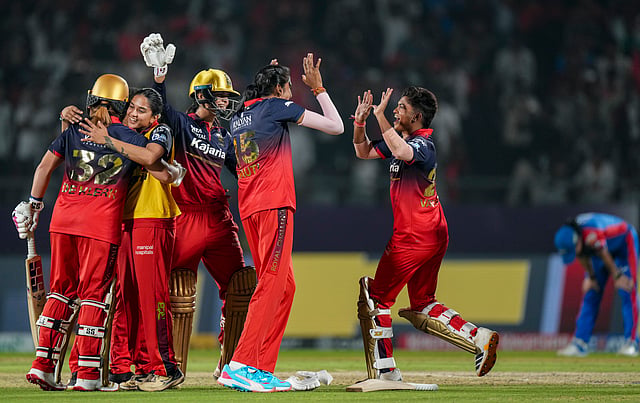
Royal Challengers Bengaluru (RCB), under the inspiring captaincy of Smriti Mandhana, scripted a historic victory in the Women’s Premier League (WPL) 2026 final. They defeated Delhi Capitals (DC) by 6 wickets at the BCA Stadium (Kotambi Stadium) in Vadodara on February 5, 2026, chasing down a massive 204-run target – the highest successful run-chase in WPL history.

Dramatic Finish in the Final Over

The match went down to the wire. Entering the last over, RCB needed 10 runs. Radha Yadav delivered under pressure, smashing back-to-back boundaries off the bowling to seal the victory with 2 balls to spare. RCB finished at 204/4 in 19.4 overs.

This triumph marked RCB’s second WPL title, placing them level with Mumbai Indians as the joint-most successful team in the league’s history.

Delhi’s Heartbreak Continues

For Delhi Capitals, it was yet another agonizing defeat in the final – their fourth consecutive runners-up finish across WPL seasons. Despite reaching the summit clash every year, the title continues to elude them.

Final Scorecard Summary
Delhi Capitals (DC): 203/4 (20 overs)
Jemimah Rodrigues: 57
Laura Wolvaardt: 44
Chinelle Henry: 35*
Royal Challengers Bengaluru (RCB): 204/4 (19.4 overs)
Smriti Mandhana: 87 (41 balls)
Georgia Voll: 79 (54 balls)
Radha Yadav: 12*
Result: Royal Challengers Bengaluru won by 6 wickets.

Awards and Accolades

Orange Cap (Leading Run-Scorer of the Tournament): Smriti Mandhana

Prize Money: Winners RCB received ₹6 crore, while runners-up DC got ₹3 crore.

Smriti Mandhana’s captaincy innings in the final, combined with her tournament dominance, cemented her as the standout performer. RCB’s victory was a fitting reward for their resilience and flair, delivering one of the most memorable chases in women’s T20 cricket!

RCB Wins WPL 2026: Smriti Mandhana Trends As Champion on Social Media. Watch Posts, Pics and Videis

0

Smriti Mandhana leads from front as RCB wins second WPL crown. Chasing a target of 203, RCB romped home by 6 wickets with 2 balls to spa

RCB Wins WPL 2026: Smriti Mandhana Trends As Champion on Social Media. Watch Posts, Pics and Videis

WPL 2026 Prize money: Know How Much Will The Winner and Runner-up Earn?

0

The stage was set for an epic showdown as Royal Challengers Bengaluru (RCB) lifted their 2nd title by beating Delhi Capitals by 6 wickets in the Women’s Premier League 2026 final at the BCA Stadium in Vadodara today. This final was the culmination of an intense league campaign and knockout stages, with both teams eyeing the coveted silverware and the significant prize money that comes with the victory, as awarded by the Board of Control for Cricket in India (BCCI). 

WPL 2026 Final Prize Money 

The BCCI has announced a hefty prize pool for the 2026 Women’s Premier League, with a total of INR 10 crore earmarked for distribution. The prize money has been divided across team and individual achievements, showcasing the financial growth of the league.

Breakdown of Prize Money 

The prize pool has been allocated across different categories, with the champions taking home the largest share. Below is the detailed breakdown of the prize money:


Prize CategoryAmount (INR)
WPL Champion (RCB)₹6 crore
WPL Runners-up (DC)₹3 crore
Player of the Tournament₹5 lakh
Orange Cap Winner₹5 lakh
Purple Cap Winner₹5 lakh
Player(s) with Most Sixes₹5 lakh
Player with Best Strike Rate₹5 lakh
Man of the Match in WPL Final₹2.5 lakh


The winner of the WPL 2026 Final, RCB will walk away with a massive INR 6 crore, making it the largest chunk of the prize pool. The runners-up Delhi Capitals will not leave empty-handed, receiving INR 3 crore for their valiant efforts throughout the season. 

The individual accolades also offer significant financial rewards. The Player of the Tournament and the Orange and Purple Cap winners will each be awarded INR 5 lakh, while players who hit the most sixes or have the best strike rate will also bag a similar amount.

Ronald Reagan Day: How a Small-Town Boy Became America’s “Great Communicator”

0

On February 6, 1911, Ronald Wilson Reagan—who later became the 40th President of the United States—was born in the small town of Tampico, Illinois. Reagan’s journey from a modest Midwestern upbringing to the White House remains one of the most compelling political stories in American history.

Known as the “Great Communicator,” Ronald Reagan reshaped American politics in the 1980s through his powerful oratory, conservative ideology, and optimistic vision for the nation. His leadership helped restore public confidence in the U.S. presidency after years of political turmoil following the Vietnam War, the Watergate scandal, and economic instability.

Early Life and Education

Despite growing up in a financially struggling family, Reagan later described his childhood as happy and value-driven. He attended Eureka College, where he played football and developed strong communication skills that would define his future career. Reagan graduated during the Great Depression, a time when job opportunities were scarce.

From Radio to Hollywood Stardom

Reagan began his professional life as a radio sports broadcaster in Iowa, covering football and baseball games. A chance trip to Los Angeles during the Chicago Cubs’ spring training opened the doors to Hollywood. In 1937, Warner Brothers signed him to a seven-year contract.

Over the next two decades, Reagan appeared in more than 50 films, with his most iconic role being football legend George Gipp in Knute Rockne – All American. The famous line “Win one for the Gipper” later became a defining slogan in his political career.

Rise as a Political Leader

Beyond acting, Reagan emerged as a key figure in Hollywood labor politics, serving six terms as president of the Screen Actors Guild. During the anti-Communist investigations of the late 1940s, he testified before the House Un-American Activities Committee.

In the 1950s, Reagan gained national recognition as host of General Electric Theater, traveling across the United States as a corporate spokesperson. Originally a Democrat, he formally joined the Republican Party in 1962, marking a turning point in his public life.

Entry Into Politics and Path to the White House

Reagan’s political breakthrough came in 1964 with a televised speech supporting Republican presidential candidate Barry Goldwater. Two years later, he was elected Governor of California, serving two terms.

After losing the 1976 Republican nomination to President Gerald Ford, Reagan staged a strong comeback. In 1980, he defeated Democratic incumbent Jimmy Carter, ushering in a new conservative era in American governance.

Presidency and Global Impact

At 69, Reagan became the oldest U.S. president at the time of inauguration. His leadership style, shaped by years in entertainment, helped him connect deeply with the public. Despite controversies such as the Iran-Contra affair, Reagan maintained high approval ratings and earned the nickname “The Teflon President.”

His foreign policy legacy includes a key role in the end of the Cold War, improved relations with the Soviet Union, and landmark arms reduction agreements. Domestically, his economic policies—popularly known as Reaganomics—continue to be debated by economists and historians.

Later Life and Legacy

Reagan left office in 1989, succeeded by his vice president George H.W. Bush. In 1994, he publicly announced that he had been diagnosed with Alzheimer’s disease, stepping away from public life.

Ronald Reagan died on June 5, 2004, at the age of 93. Today, on his birth anniversary, he is remembered as one of the most influential U.S. presidents—an actor-turned-leader whose communication skills and political vision left a lasting imprint on American history.


US Congress Approves Security Funds For Baltic States

0

The United States Congress has approved a $200 million security assistance package for the Baltic nations as Russian military activity intensifies along NATO’s eastern flank. The move signals continued American commitment to regional deterrence amid growing concerns over security in Eastern Europe and the Baltic Sea region.

Funding Under Defence Appropriations Act

The assistance was cleared as part of the Fiscal Year 2026 Defence Appropriations Act, which forms a component of the $838.7 billion US defence budget. The legislation ensures continued funding under the Baltic Security Initiative for EstoniaLatvia, and Lithuania. The bill was signed into law by US President Donald Trump on February 3, 2026, despite earlier internal proposals within the Pentagon to discontinue the programme.

Additional Military Financing For Estonia

Apart from the core allocation, an additional $10 million was approved for Estonia through the Foreign Military Financing programme. Tallinn has previously used such funding to procure US-made defence equipment, including HIMARS ammunition, Javelin anti-tank missiles, and large-calibre artillery shells. US lawmakers have described the funding as critical for reinforcing frontline allies against potential aggression.

Important Facts

  • The Baltic states are members of NATO and lie on its eastern flank.
  • The Baltic Security Initiative supports defence cooperation with Estonia, Latvia, and Lithuania.
  • Article 4 of the NATO Treaty allows consultations when a member feels threatened.
  • Foreign Military Financing enables allies to purchase US defence equipment.

Strategic Significance For NATO And Regional Security

Republican Congressman Don Bacon, co-chair of the House Baltic Caucus, said the funding strengthens deterrence for NATO allies and reflects bipartisan commitment to the alliance. Tensions in the region have risen following incidents such as Russian fighter jets entering Estonian airspace and increased hybrid activities attributed to Russia and Belarus. Baltic leaders have welcomed the US decision, calling it a strong political signal of transatlantic unity and continued support for regional security amid an evolving threat environment.

Bharat Taxi Launches Cooperative Cab Service In Delhi

0

India’s ride-hailing market is set for a significant shift with the launch of Bharat Taxi, a government-backed cooperative cab service, in New Delhi on February 5. Designed as an alternative to private aggregators, the initiative aims to empower drivers through collective ownership and fairer earnings, positioning itself as a challenger to established platforms such as Uber and Ola.

Government Support And Official Launch

The Bharat Taxi app will be formally launched by Union Minister of Cooperation Amit Shah. Describing the initiative as a milestone for driver welfare, the minister stated that the cooperative model enables drivers to pool resources, become owners, and earn with dignity. The launch reflects the government’s broader push to strengthen cooperative enterprises in new-age service sectors.

Cooperative Ownership Model Explained

Bharat Taxi operates on a cooperative framework, placing drivers at the centre of ownership, operations, and value creation. The service is being run by Sahakar Taxi Cooperative Limited, with support from professionals associated with successful cooperative models such as Amul. Each driver, referred to as a ‘Sarathi’, holds five shares in the cooperative, ensuring collective decision-making and shared benefits.

How Bharat Taxi Differs From Private Aggregators

Unlike private cab aggregators, Bharat Taxi does not deduct commission from each ride. Instead, drivers pay a fixed daily fee of ₹30 to access the app. This model seeks to address long-standing grievances of drivers regarding high commission rates and income instability. By eliminating per-ride commissions, the platform aims to improve driver earnings and financial security.

Important Facts

  • Bharat Taxi is India’s first cooperative-based taxi service.
  • It operates under a driver-owned cooperative model.
  • No per-ride commission is charged from drivers.
  • The initiative aligns with the Ministry of Cooperation’s objectives

The launch of Bharat Taxi is expected to benefit thousands of taxi drivers by offering ownership rights and predictable costs. For commuters, the service promises transparent pricing and a socially driven alternative in urban mobility. If scaled successfully, the cooperative cab model could introduce greater competition and reshape India’s app-based transport ecosystem.

Rouble Negi: Meet This Teacher Who won Global Teacher Prize for Teaching Via Murals

0

Indian teacher and social activist Rouble Nagi has won the prestigious Global Teacher Prize, earning international recognition for transforming education access among children living in urban slums. The award was presented in Dubai on February 5, honouring her efforts to bring structured learning to children who had never attended school and to support those at risk of dropping out.

Rouble Negi: Meet This Teacher Who won Global Teacher Prize for Teaching Via Murals

Innovative Learning Through Murals And Centres

Rouble Nagi has pioneered an unconventional yet impactful approach to education by setting up over 800 learning centres across India. Alongside these centres, she has painted educational murals in slum settlements, turning walls into classrooms. These murals cover literacy, mathematics, science, and history, making learning visually engaging and accessible to children from underserved communities.

Grassroots Teaching And Teacher Mentorship

Nagi travels extensively to work directly with children at these centres and mentors the teachers who manage daily instruction. She has recruited and trained more than 600 volunteer and paid educators. Her teaching model adapts to the realities of poverty, child labour, early marriage, and irregular attendance by offering flexible schedules, practical lessons using recycled materials, and skill-based learning relevant to family livelihoods.

Global Teacher Prize And Future Plans

Rouble Nagi is the 10th recipient of the Global Teacher Prize, which was launched in 2015 to recognise exceptional educators worldwide. The award carries a prize money of $1 million, which Nagi plans to use to establish an institute providing free vocational training for students, extending her impact beyond foundational education.

Important Facts

  • The Global Teacher Prize was launched in 2015.
  • The award carries a prize money of $1 million.
  • It recognises innovative teaching and social impact in education.
  • Past winners include educators from Kenya, Palestine, Canada, and Saudi Arabia.

Recognition Of Inclusive Education Efforts

Previous winners of the Global Teacher Prize include teachers working with marginalised and remote communities worldwide. Nagi’s selection highlights India’s grassroots education initiatives and reinforces the global importance of inclusive, community-based learning models that address social and economic barriers to education.

Dubai To Launch Underground Dubai Loop Transport

0

Dubai is set to become the second city in the world after Las Vegas to introduce the Dubai Loop, an underground high-speed transport system developed by The Boring Company. The project, announced at the World Government Summit, marks a major step in Dubai’s efforts to modernise urban mobility and reduce congestion in high-density corridors.

Project Announcement And Vision

The Dubai Loop was unveiled by the Roads and Transport Authority at the World Government Summit. RTA Director General Matar Al Tayer described the project as an iconic initiative designed to connect densely populated and high-traffic areas through one-directional underground tunnels, enabling faster and more efficient city travel.

Route, Cost And Implementation Phases

The full Dubai Loop network will span 22.2 kilometres and include 19 stations, with an estimated total cost of around $681 million. The first phase will connect the Dubai International Financial Centre and Dubai Mall, covering 6.4 kilometres with four stations. This phase is expected to cost about $163 million and is projected to be completed within one to two years.

Capacity And Speed Features

The initial phase of the Dubai Loop is expected to serve approximately 13,000 passengers per day. Once fully operational, the system’s total capacity is projected to reach up to 30,000 passengers daily. The electric vehicle-based system will offer point-to-point travel without intermediate stops and is designed to achieve speeds of up to 160 kilometres per hour.

Important Facts

  • Dubai Loop is an underground transport system based on tunnel technology.
  • The project is developed using technology from The Boring Company.
  • The full network will span 22.2 km with 19 stations.
  • Electric vehicles will operate at speeds up to 160 km/h.

Technology And Global Significance

The Dubai Loop is based on tunnelling technology developed by The Boring Company, founded by Elon Musk. Similar systems have already been deployed in Las Vegas. With this project, Dubai reinforces its position as a global leader in adopting futuristic, sustainable transport solutions aimed at easing urban congestion and improving travel efficiency.

Govt. Girls’ P.G. College Ratlam to Host Two-Day International Seminar on Indian Knowledge System in Globalization Context

0

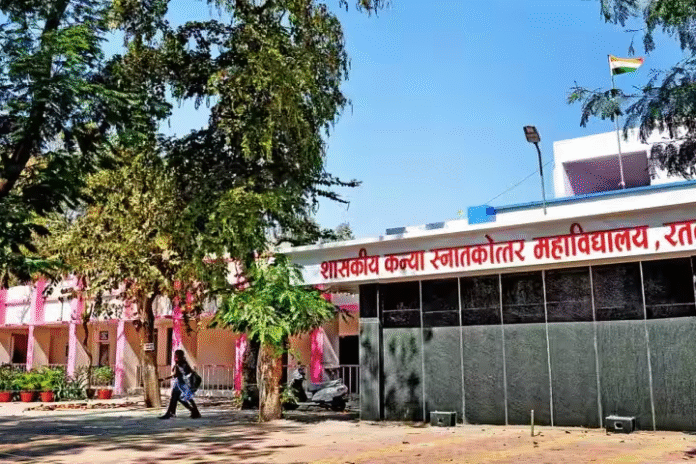
Govt. Girls’ P.G. College, Ratlam (M.P.) will host a Two-Day International Seminar on February 20–21, 2026, centred on the theme “The Role of Indian Knowledge System in the Context of Globalization.” The event aims to explore the relevance of India’s ancient wisdom, traditional practices, and value-based systems in addressing modern global challenges.

The seminar is being organized under the guidance of Dr. H. L. Anijwal, Additional Director, Ujjain Division; Dr. Y. K. Mishra, Principal PMCOE Ratlam; and Dr. Mangleshwari Joshi, Principal of the host institution. The organizing committee includes Convenor Dr. Manik Dange, Co-Convenor Dr. Tabassum Patel, Organising Secretary Dr. Suresh Chouhan, and Co-Organising Secretary Dr. V.S. Bamaniya.

Eminent Speakers from India & Abroad to Participate

A distinguished panel of national and international experts will address the participants. Key speakers include:

  • Dr. Sushma Yadav, Chairperson, UGC Steering Committee, Delhi
  • Dr. Chand Kiran Saluja, Scholar and Educator, Delhi
  • Dr. Reeta Sonawat, Former Dean, SNDT University, Mumbai
  • Dr. Kalpana Singh, Principal, PMCOE Govt. Madhav Science College, Ujjain
  • Dr. Pavan Mishra, Professor, Barkatullah University, Bhopal
  • Dr. Anshul Gupte, VP, PCI Pharma Services, USA
  • Dr. Meenal Buddhiraja, Stockholm University, Sweden
  • Dr. Pradeep K. Khare, Professor, Sarojini Naidu College, Bhopal
  • Dr. Pradnya Karandikar, Sports Officer, Vidisha
    Additionally, Collector Misha Singh and DRM Ratlam Ashwini Kumar will attend as chief guests.

Seminar Focus & Sub-Themes

The seminar will examine how the Indian Knowledge System (IKS) continues to shape contemporary thinking on ethics, sustainability, health, culture, and education. Key sub-themes include:

  • IKS & National Education Policy (NEP) 2020
  • Vasudhaiva Kutumbakam & globalization
  • IKS in Make in India and Atmanirbhar Bharat
  • Intellectual Property Rights
  • Technological development and environmental consciousness
  • Role of Yoga, Ayurveda, philosophy, literature, folk art, and modern dietary practices
  • Child-rearing traditions and cultural harmony

Participation & Research Paper Submission

Researchers, academicians, and students are invited to submit papers (2,500–3,000 words) by February 18. Selected papers will be published in a seminar proceeding book with ISSN. Each paper presenter will get 5 minutes for presentation, and all registered participants will receive certificates upon attending and submitting feedback. BROUCHER GDC

Registration links and a WhatsApp group link have been provided for participants, with fees set at Rs 600 for academicians and Rs 300 for students and research scholars. Payment can be made via the shared contact number.

About Ratlam & the Host Institution

Ratlam—a historic city known for its rich cultural heritage, famed Sev, gold craftsmanship, and traditional sarees—serves as a vibrant backdrop for this academic gathering. The host, Govt. Girls’ P.G. College Ratlam, established in 1971, is a NAAC A-Grade institution dedicated to women’s education, academic excellence, and nation-building

Bharat Rang Mahotsav 25th Edition: Know Dates, Location and Other Related Facts

0

The world’s largest international theatre festival, Bharat Rang Mahotsav, is set to hold its 25th edition at Rohtak from February 9 to 12, marking a major cultural milestone for Haryana. The festival will be hosted at the Dada Lakhmi Chand State University of Performing and Visual Arts, positioning Rohtak firmly on India’s national theatre map. Theatre groups from India and abroad will present acclaimed productions spanning diverse styles, languages, and performance traditions.

National And International Theatre On One Stage

Organised by the National School of Drama in collaboration with Dada Lakhmi Chand State University of Performing and Visual Arts, the festival will showcase nationally and internationally recognised plays. The Rohtak leg is part of a larger nationwide celebration of theatre, aimed at decentralising cultural access and bringing high-quality performances beyond metropolitan centres.

Four Days Of Curated Performances In Rohtak

According to Vice-Chancellor Amit Arya, the festival will open on February 9 with “Umeed – Manushya Zinda Hai” by Pragya Arts Theatre Group, Delhi. On February 10, Manch Rangmanch from Amritsar will stage “Sandal Baar”. February 11 will feature “Umar Ka Parwana” by the Department of Fine Arts, Central University of Punjab, Bathinda. The festival concludes on February 12 with “Colombo Hathe Thorana” by Apoorva Theatre Group from Sri Lanka, adding a strong international presence to the programme.

Pan-India Reach Of Bharat Rang Mahotsav

The 25th edition of Bharat Rang Mahotsav is being held across 41 locations in India, with simultaneous performances in cities such as Varanasi, Kolkata, Imphal, Ranchi, Patna, and Bengaluru. Rohtak’s DLCSUPVA is the sole venue representing Haryana. The festival as a whole runs from January 27 to February 20, spanning 25 days of continuous theatrical activity across the country.

Important Facts

  • Bharat Rang Mahotsav is organised annually by the National School of Drama.
  • The 25th edition features over 277 performances nationwide.
  • Plays are staged in 228 Indian and international languages.
  • The festival includes participation from theatre groups of nine countries.

Focus On Inclusivity And Cultural Diversity

Professor Suman Vaidya of the National School of Drama highlighted that the festival reflects India’s theatrical diversity, with performances by children, tribal communities, and artists from marginalised sections. The initiative underscores NSD’s commitment to inclusivity and the universalisation of theatre, reinforcing Bharat Rang Mahotsav’s standing as a global cultural platform.