Home Blog Page 641

CPL 2023: How to watch the Caribbean Premier League live in India

0

The Caribbean Premier League (CPL) 2023, one of the most popular T20 cricket leagues in the world, is set to begin on August 17, 2023. The tournament will feature six teams: Barbados Royals, Guyana Amazon Warriors, Jamaica Tallawahs, St Kitts and Nevis Patriots, St Lucia Kings, and Trinbago Knight Riders. The teams will play each other twice in a round-robin format, followed by the playoffs and the final. The final will be played on September 25, 2023.

The CPL 2023 promises to be a thrilling spectacle for cricket fans, as it will showcase some of the best players from the West Indies and around the world. Some of the star attractions include Chris Gayle, Kieron Pollard, Dwayne Bravo, Andre Russell, Nicholas Pooran, Shimron Hetmyer, Faf du Plessis, Ravi Bopara, Ambati Rayudu, and many more.

For Indian cricket fans who want to watch the CPL 2023 live, there are multiple options available. The CPL 2023 will be telecast live on Star Sports Network’s TV channels in India. Fans can tune in to Star Sports 1 and Star Sports 1 HD to catch all the action. The matches will start at different times depending on the day and venue. The timings are as follows:

  • 7:30 PM IST
  • 4:30 AM IST
  • 5:30 AM IST

Alternatively, fans can also watch the CPL 2023 live streaming online on the FanCode app and website in India. FanCode is the exclusive streaming partner of the CPL 2023 in India. Fans can either buy a pass for each match for ₹15 or a pass for the entire tournament for ₹99. FanCode will also provide live scores, highlights, fantasy tips, and expert analysis for the CPL 2023.

The CPL 2023 is expected to be a highly competitive and entertaining tournament, as the teams vie for the coveted trophy. Jamaica Tallawahs are the defending champions, having won their second title in 2019. Trinbago Knight Riders are the most successful team in the history of the CPL, having won four titles. Can they reclaim their glory or will there be a new champion this year? Watch the CPL 2023 live in India to find out.

Molela Terracotta: Where Timeless Artistry Meets Earthly Wonders 

0

Simran Saini reports on Molela Terracotta..

Step into the enchanting realm of Molela, a small village nestled amidst the rugged terrain of Rajasthan, India. While its size may be modest, the artistic heritage it cradles is nothing short of magnificent. Molela is a place where the earth comes alive in the hands of skilled artisans, giving birth to intricate and awe-inspiring terracotta creations that tell tales of tradition, craftsmanship, and an unbreakable bond with the land. 

A Glimpse into the Origins Unearthing the Beauty of Molela Terracotta The story of Molela’s terracotta art dates back centuries, tracing its roots to the Bhil tribe – the indigenous people of the region. As generations passed, the art form evolved, weaving itself intricately into the cultural tapestry of Molela. What began as a humble expression of daily life, soon blossomed into a thriving art form, capturing the imagination of connoisseurs and enthusiasts alike. From Clay to Canvas The Craftsmanship Behind Molela Terracotta At the heart of Molela’s terracotta artistry lies clay – a simple yet profoundly versatile material. Skilled artisans mold and shape the clay with deft hands, transforming it into an array of exquisite forms. The process is a delicate dance between tradition and innovation, where age-old techniques meet modern sensibilities. Once the terracotta masterpiece takes form, it’s time for the artists to unleash their creativity. Elaborate designs, intricate patterns, and motifs inspired by nature and mythology adorn each piece, creating a mesmerizing blend of rustic charm and artistic finesse. The artisans’ brushes seem to breathe life into the clay, turning it into a canvas of stories waiting to be told. 

A Symphony of Art and Nature The Themes of Molela Terracotta Molela terracotta doesn’t merely capture the eye; it speaks to the soul. The motifs that grace these creations are a tribute to the village’s close relationship with the land. You’ll find intricate depictions of animals, birds, and flora, each intricacy reflecting the deep connection between the artisans and their surroundings. However, it’s the portrayal of Hindu mythology that truly sets Molela terracotta apart. As you wander through the village’s bylanes, you’ll encounter stunning terracotta panels that depict scenes from ancient epics like the Ramayana and Mahabharata. The tales come alive in vibrant hues, a reminder of the artists’ ability to breathe life into the clay and immortalize stories that have been passed down through generations. Preserving Tradition in a Changing World The Legacy of Molela Terracotta In a world where traditions sometimes give way to modernity, Molela’s terracotta art stands strong as a beacon of resilience. The artisans of Molela have managed to strike a harmonious chord between preserving their heritage and embracing contemporary influences. While the traditional motifs and techniques remain sacrosanct, newer generations of artists infuse their own interpretations, ensuring that the art form remains relevant and captivating. 

Bringing Molela Terracotta to the World A Global Connection Thanks to the advent of technology and the ever-expanding reach of e-commerce, Molela terracotta is no longer confined to the village’s boundaries. Enthusiasts from around the world can now bring a piece of Molela’s artistic heritage into their homes. From intricately designed wall panels to elegant pottery, each piece tells a story that transcends borders and connects cultures. A Journey Through Time and Clay Molela terracotta is more than just an art form; it’s a testament to the indomitable spirit of creativity and the profound bond between humans and the earth. With each stroke of the brush, each delicate indentation, Molela’s artisans breathe life into clay, infusing it with the essence of their village, their traditions, and their stories. As you gaze upon a Molela terracotta creation, you’re not merely observing art – you’re witnessing the magic of a time-honored craft that has stood the test of time. So, the next time you hold a piece of Molela terracotta in your hands, remember that you’re holding a piece of history, a piece of culture, and a piece of a village that continues to shape its destiny one stroke at a time.

Bikaneri Bhujia: The Crispy Delight That Defines Rajasthan’s Culinary Grandeur

0

Simran Saini reports on the Bikaneri Bhujia..

When it comes to iconic Indian snacks, few can match the delectable allure of Bikaneri Bhujia. Originating from the vibrant city of Bikaner in the royal state of Rajasthan, Bikaneri Bhujia has taken the culinary world by storm with its irresistible crunch, flavorful spices, and a legacy that spans generations. Join us on a flavorful journey as we explore the rich history, unique preparation, and the mouthwatering essence of this crispy delight that has become a symbol of Rajasthan’s culinary grandeur. 

1877, Bikaner state monarch Maharaja Shri Dungar Singh commissioned a novel savory item to treat guests at his palace – and the royal chefs came up with bhajia. Little did Singh know that what emerged from his kitchen would become an edible Indian national treasure. Little did he know that his humble innovation would go on to become a beloved snack enjoyed across the country. The Art of Craftsmanship: Crafting the Perfect Bhujia Bikaneri Bhujia is not just a snack; it’s a masterpiece meticulously crafted by skilled artisans. The process begins with the selection of the finest quality gram flour (besan) which forms the base of this savory delight. A harmonious blend of spices including ajwain (carom seeds), black pepper, and asafoetida is mixed into the besan, infusing it with a symphony of flavors. The magic truly happens when the spiced besan dough is skillfully pressed through a contraption called a “sev maker” into hot oil. As the dough hits the oil, it transforms into delicate, golden strands that sizzle and dance in the bubbling cauldron. The artisans’ expertise lies in achieving the perfect balance – ensuring the bhujia is neither too thin nor too thick, striking that fine line between crispy and brittle. 

A Melange of Flavors: What Makes Bikaneri Bhujia Special Bikaneri Bhujia isn’t just about crunch; it’s a medley of flavors that dance on your palate. The earthy notes of gram flour intermingle with the warmth of spices, creating a symphony of taste that’s both familiar and excitingly new. The gentle heat of black pepper is complemented by the distinctive tang of asafoetida, while ajwain lends a subtle, aromatic touch. Each bite is a journey through Rajasthan’s culinary heritage, a testament to the centuries-old tradition of spice blending that defines the region’s cuisine. Beyond Snacking: Bikaneri Bhujia’s Versatility While Bikaneri Bhujia is undeniably delightful as a standalone snack, its versatility knows no bounds. In Rajasthan, it’s a star ingredient in a variety of dishes. From sprinkling it over chaats to incorporating it into savory mixes, the bhujia lends its unique texture and flavor to elevate dishes to new heights. It’s not uncommon to find Bikaneri Bhujia as a garnish for dals (lentil soups) or even as a crunchy topping for fusion creations like the Bhujia Pizza! 

Preserving Tradition: The Bhujia Legacy As the culinary world evolves with new trends and tastes, Bikaneri Bhujia stands as a resilient testament to the enduring power of tradition. The artisanal process of creating Bhujia has been passed down through generations, preserving the authenticity of the snack. Even as modern production techniques have emerged, many families in Bikaner continue to uphold the traditional methods, ensuring that each bite of Bhujia is a bite of history. Bringing Bikaneri Bhujia to Your Plate In an era where convenience often takes precedence, Bikaneri Bhujia continues to carve its niche as a beloved snack that bridges the gap between tradition and modernity. With the rise of online marketplaces, this crispy delight is now just a few clicks away from gracing your taste buds. Whether you’re savoring it as a midnight snack or sharing its flavorful magic with friends and family, Bikaneri Bhujia is a culinary journey that promises satisfaction with every bite. 

Bikaneri Bhujia isn’t merely a snack; it’s an ode to Rajasthan’s culinary heritage, a testament to the art of craftsmanship, and a bite-sized piece of history that continues to captivate taste buds. So, the next time you reach for a handful of Bikaneri Bhujia, remember that you’re not just indulging in a snack – you’re savoring a legacy that’s been lovingly passed down through generations, one crispy strand at a time.

Pokhran Pottery: Crafting Tradition Amidst Golden Sands

0

The arid expanse of Rajasthan, India’s desert state, has witnessed countless tales of upheaval and change. Within its sun-kissed soil, a vibrant tapestry of stories unfolds, recounting the legacy of rich artistic traditions that have flourished for generations.

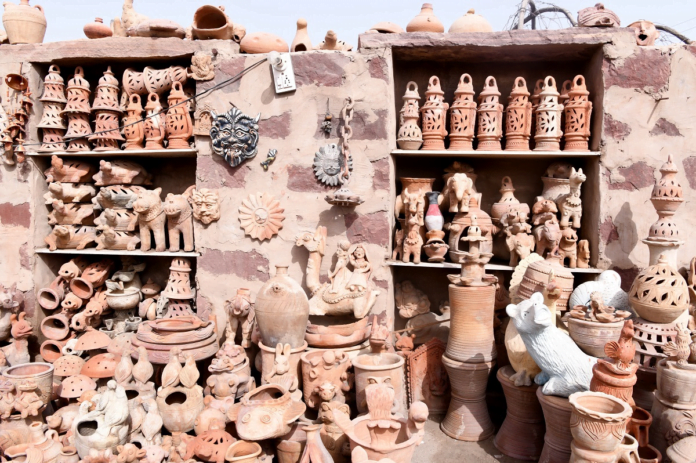
While the name “Pokhran” might immediately evoke thoughts of cutting-edge defense and technological prowess due to the 1998 nuclear tests, this village, nestled outside the city of Jaisalmer, harbors a secret of a different kind – a legacy of traditional Indian crafts. Pokhran Pottery, with its distinct charm, stands as a testament to the region’s artistic heritage. The local clay, with its unique pinkish hue, sets it apart from the standard deep red clay typically associated with pottery, imparting an ethereal, delicate quality to the pottery.

Central to the allure of Pokhran pottery is its remarkable strength. The process of crafting this pottery is a meticulous and intricate one. The clay undergoes multiple refining stages to achieve the perfect texture. Pokhran’s skilled potters also engineer their own furnaces tailored to the unique characteristics of the pinkish clay. The products are then sun-dried naturally, allowing them to mature under the desert sun.

A defining feature of Pokhran pottery is the intricate incision work, expertly executed using everyday tools like blades, gears, combs, metal pins, and wooden sticks. This meticulous carving technique lends the pottery an air of sophistication and refinement. The genius of these traditional craftsmen shines through in their resourcefulness, as they ingeniously employ whatever materials are at their disposal, often merging incise work with cutwork for stunning results.

Adapting to evolving market demands, Pokhran potters cater to contemporary urban sensibilities by producing an array of pottery products. Beyond the traditional pots and handis, they craft an assortment of kitchen utilities including surahis, mortar and pestles, casseroles, dry fruit holders, and jars.

The artisans also create decorative pieces like diyas, urli bowls, magic lamps, and Buddha faces. Many of their creations are multi-functional, serving both practical and ornamental purposes. An endearing hallmark of Pokhran pottery is the incorporation of intricate bird and animal figures into their forms, infusing their creations with a touch of nature’s elegance.

At Prosperity, we proudly present a meticulously handcrafted collection of Pokhran pottery. Embrace an organic lifestyle by integrating these terracotta treasures into your daily routine. Each piece encapsulates emotions within its clay, and when you choose Pokhran pottery, you not only support local artists but also bring a slice of their lives and ancestral heritage into your home. These artifacts symbolize a connection to history, an homage to the past that resonates in every corner of your living space.

Exploring the Beauty and Tradition of Sojat Mehandi

0

Simran Saini reports on Sojat Mehandi..

Henna, also known as mehandi, has been an integral part of cultural and traditional practices in various societies for centuries. Among the many styles and techniques of henna application, Sojat Mehandi stands out as a unique and exquisite form that has captured the hearts of both locals and enthusiasts worldwide. Originating from the town of Sojat in Rajasthan, India, this art form has a rich history and has become synonymous with celebrations, rituals, and personal adornment. In this article, we delve into the fascinating world of Sojat Mehandi, exploring its history, techniques, significance, and enduring charm. 

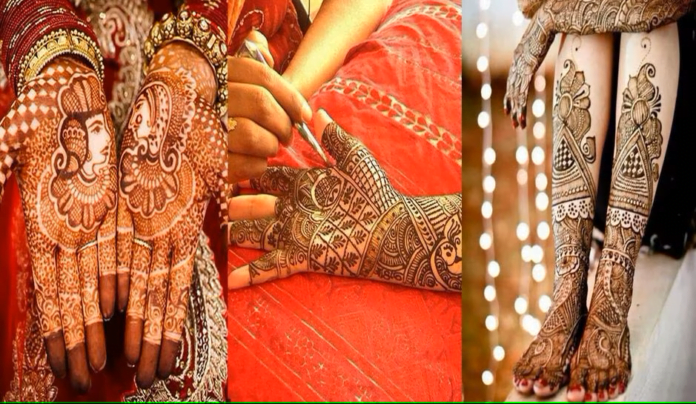
Sojat, a picturesque town nestled in the Pali district of Rajasthan, boasts a lineage steeped in henna artistry. The history of Sojat Mehandi can be traced back to centuries ago when the region emerged as a hub for henna cultivation. The town’s favorable climate and fertile soil made it the perfect location for growing the Lawsonia Inermis plant, from which henna dye is derived. The local artisans quickly realized the potential of this natural resource, giving rise to the distinctive style of Sojat Mehandi. What sets Sojat Mehndi apart from other henna art forms is its meticulous attention to detail and intricate designs. Sojat Mehandi is renowned for its fine lines, exquisite patterns, and elaborate motifs that are meticulously crafted using traditional tools such as mehandi cones or plastic bottles with fine nozzles. The application process involves the mixture of henna powder, water, and other natural ingredients to create a paste that leaves behind a rich, reddish-brown stain on the skin. 

Artisans in Sojat are skilled in crafting a wide range of designs, from traditional geometric patterns to intricate floral and peacock motifs. The designs often extend beyond the hands and feet to adorn the arms, legs, and even the back. These designs are not just beautiful; they also hold cultural and symbolic significance. Peacocks, for instance, are a common motif in Sojat Mehandi and symbolize beauty, grace, and spirituality. Sojat Mehandi is deeply intertwined with various cultural celebrations and rituals. Weddings, in particular, hold a special place for the application of Sojat Mehandi. It is customary for brides to have intricate mehandi designs applied to their hands and feet before their wedding day. The process of getting mehndi done often becomes a joyful and bonding experience for the bride and her female relatives and friends. Additionally, Sojat Mehandi is also applied during festivals, religious ceremonies, and other auspicious occasions, symbolizing good luck, prosperity, and protection from evil. In recent years, the allure of Sojat Mehandi has transcended geographical boundaries, captivating people from all corners of the world. With the rise of social media and the increased interest in cultural practices, Sojat Mehandi has gained international recognition and appreciation. 

Enthusiasts and artists have taken to platforms like Instagram and YouTube to showcase their Sojat Mehandi creations, further spreading its beauty and allure.Preserving Tradition in a Modern World While Sojat Mehandi continues to flourish and gain popularity, there are concerns about maintaining the authenticity and cultural significance of this art form. As the demand for mehandi increases, there is a risk of commercialization and the use of synthetic or chemically treated henna products that may harm the skin. It is imperative for artisans, consumers, and authorities to work together to ensure the preservation of traditional techniques and the use of natural, safe ingredients. 

Sojat Mehandi stands as a testament to the enduring power of cultural traditions in a rapidly changing world. Its intricate designs, rich history, and cultural significance make it a cherished art form that continues to captivate and inspire. As we celebrate the beauty of Sojat Mehandi, let us also strive to preserve its authenticity and safeguard the traditions that make it a timeless treasure.


Fulwari Ki Naal: Unveiling the Enchanting Charms of Udaipur 

0

Simran Saini reports on the Fulwari ki Naal of Udaipur..

Udaipur, often referred to as the “City of Lakes,” is a city that captures the heart and soul of every traveler who sets foot on its historic grounds. Among the myriad of attractions that make Udaipur a top tourist destination, the Fulwari Ki Naal stands out as a unique and captivating experience. This age-old architectural marvel not only serves as a testament to Udaipur’s rich heritage but also offers visitors a chance to step back in time and witness the city’s cultural and architectural brilliance. 

The Fulwari Ki Naal, also known as the ‘Fatehpur Kachwaha Water Channel,’ is a magnificent watercourse that dates back to the 17th century. It was commissioned by the renowned ruler of the Mewar Kingdom, Maharana Raj Singh I, and was designed to bring the vital resource of water from Lake Fatehsagar to the fertile lands of Udaipur. This ambitious irrigation system played a pivotal role in sustaining agriculture, providing drinking water, and supporting the city’s flourishing ecosystem. Architectural Marvel The Fulwari Ki Naal exemplifies the architectural ingenuity and engineering prowess of its time. The structure features an intricate system of channels, sluices, and aqueducts that skillfully navigate the natural contours of the land. The meticulous design allows water to flow seamlessly from the lake, gradually descending to reach the city and its farmlands. The precision with which the water flow was managed is a testament to the advanced engineering knowledge that existed during the era. 

Cultural and Aesthetic Delight Beyond its functional significance, the Fulwari Ki Naal offers a visual feast for those who appreciate artistic marvels. The structure is adorned with intricate carvings, reflecting the artistic sensibilities of the Mewar dynasty. The arches, pillars, and walkways are adorned with delicate patterns, showcasing the fusion of Mughal and Rajput architectural styles. A leisurely stroll along the naal offers a glimpse into the opulence of a bygone era and provides the perfect backdrop for capturing mesmerizing photographs. 

Preservation and Tourism Efforts have been undertaken to preserve and maintain the Fulwari Ki Naal, ensuring that future generations can marvel at its beauty and historical significance. The site has gained popularity among tourists seeking to explore Udaipur’s cultural heritage beyond the iconic palaces and lakes. Guided tours and informational boards provide visitors with insights into the naal’s history and its role in shaping Udaipur’s development. Fulwari Ki Naal stands as a living testament to the architectural brilliance, engineering expertise, and cultural heritage of Udaipur. It serves as a reminder of the city’s rich past and the innovative solutions its rulers devised to address the challenges of their time. As Udaipur continues to attract travelers from around the world, the Fulwari Ki Naal remains an enduring symbol of the city’s majestic charm and timeless allure. A visit to this remarkable site is a journey through history, culture, and aesthetics that will leave an indelible mark on every visitor’s memory.

Securing Legacy and Spirituality: The GI Tag’s Embrace of Pichwai Kala in Nathdwara

0

Nathdwara, a town steeped in holiness and artistic grandeur, has unveiled a canvas of divine narratives through the Pichwai Kala. With the recent bestowal of the esteemed Geographical Indication (GI) tag, this enchanting art form reaches new heights, immortalizing the tales of Shrinathji, an embodiment of Lord Krishna’s grace.

The Pichwai Kala of Nathdwara is a masterful display of devotion and artistic finesse. Each stroke of the brush weaves the story of Lord Krishna’s protection as he holds the Govardhan hill on his little finger, shielding his devotees. The art form’s intricate detailing, coupled with its vibrant hues, evokes a sense of awe and reverence, taking viewers on a journey through divine narratives.

What sets the Pichwai Kala apart is its delicate balance. The juxtaposition of intricate motifs, resplendent colors, and harmonious compositions creates a visual symphony that resonates with spirituality. The GI tag, a testament to the art form’s uniqueness, serves as a guardian of this treasure, ensuring its protection and preservation.

The recognition through the GI tag solidifies the Pichwai Kala of Nathdwara as a cultural gem of Rajasthan. Beyond its aesthetic allure, it encapsulates the devotion and cultural heritage of the region. This art form is not merely a canvas; it’s a gateway to the spiritual and artistic essence of Nathdwara.

In closing, the Pichwai Kala of Nathdwara is a window to the divine, a tapestry of colors that embodies the stories of devotion and protection. With the Geographical Indication tag adorning its legacy, this art form continues to shine as a beacon of Rajasthan’s cultural wealth, inviting us to immerse ourselves in the divine narratives it beautifully portrays.

Bikaner Usta Kala Craft – Camel Leather’s Golden Touch

0

Bikaner, a city where tradition meets innovation, is the birthplace of an exceptional craft known as Bikaner Usta Kala. This craft, also referred to as gold nakashi or gold manauti work, captures the essence of camel leather artistry. With the recent awarding of the Geographical Indication (GI) tag, this craft’s historical and artistic significance is officially recognized, further enhancing its value.

The Bikaner Usta Kala Craft is a testament to the creativity and skill of its artisans. The craft involves the meticulous processing of raw camel hide, transforming it into an ideal canvas for intricate motifs. These motifs, often utilizing gold or silver foil, find their place on a range of materials including wood, metal, marble, ivory, and, of course, leather. The result is a stunning array of items that exude sophistication and elegance.

The guardians of this craft are the talented artisans from the Dapgar group. With their refined expertise, they ensure that the legacy of Bikaner Usta Kala continues to shine brightly. The GI tag lends invaluable protection to this craft, preventing its imitation and preserving its unique techniques for generations to come.

The heart of Bikaner Usta Kala Craft lies not only in its visual appeal but also in its historical significance. This craft harks back to Bikaner’s legacy of innovation, showcasing the city’s ability to transform raw materials into objects of beauty. The GI tag adds another layer of prestige, solidifying Bikaner Usta Kala’s place in the realm of Rajasthan’s artistic heritage.

The Bikaner Usta Kala Craft stands as a tribute to Bikaner’s history, innovation, and artistic prowess. The Geographical Indication tag elevates this craft’s status, protecting its heritage and ensuring that its golden touch continues to enrich the world of art and craftsmanship. Through the hands of skilled artisans, the tradition lives on, glistening like the delicate gold and silver motifs that adorn its masterpieces.

Guardians of Authenticity: The GI Tag’s Gift to Jodhpur Bandhej Craft

0

Nestled in the heart of the vibrant city of Jodhpur, the Jodhpur Bandhej Craft stands as a testament to the rich cultural tapestry of Rajasthan. With its recent recognition through the esteemed Geographical Indication (GI) tag, this traditional art form takes its rightful place in the spotlight, showcasing the beauty of tie-and-dye techniques and intricate patterns.

The essence of the Jodhpur Bandhej Craft lies in its meticulous process of tying and dyeing fabrics to create captivating designs. Expert artisans skillfully manipulate cotton threads to bind the fabric, creating patterns that range from simple dots to intricate swirls. These tied sections resist the dye, resulting in a beautiful interplay of colors and white spaces that define the uniqueness of this art form.

One of the most remarkable aspects of the Jodhpur Bandhej Craft is its versatility. Fabrics of various textures, including cotton, silk, wool, and synthetics, can be transformed using this technique. The resulting pieces, such as sarees, dupattas, skirts, and scarves, are not just textiles; they are vibrant canvases that embody Rajasthan’s rich and diverse culture.

The Geographical Indication (GI) tag bestowed upon the Jodhpur Bandhej Craft adds a layer of significance and protection to this traditional art form. It serves as a recognition of the craft’s authenticity and distinctiveness, safeguarding it from imitation and ensuring its continuation for generations to come. This recognition also brings attention to the skilled artisans who have mastered this intricate technique and are dedicated to preserving its legacy.

As the Jodhpur Bandhej Craft gains broader recognition, it simultaneously contributes to the conservation of Rajasthan’s artistic heritage and the livelihoods of its practitioners. By embracing the GI tag, this craft takes its place among the revered hallmarks of the region’s cultural identity, embodying the spirit of Jodhpur’s architectural splendor and vibrant culture.

The Jodhpur Bandhej Craft is not just a craft; it is a celebration of colors, creativity, and tradition. Through the intricate patterns and vibrant hues, it weaves a story of Rajasthan’s artistic prowess and its artisans’ dedication. With the Geographical Indication tag as its guardian, this craft is poised to shine brighter than ever, casting its colorful magic far beyond the blue city’s walls.

 Bikaner Kashidakari Craft – A Stitch in Time

0

Bikaner, a city steeped in history and culture, is renowned for its vibrant textiles and intricate craftsmanship. The Bikaner Kashidakari Craft, recently bestowed with the prestigious Geographical Indication (GI) tag, stands as a testament to the city’s artistic excellence. This craft, characterized by its fine stitching and mesmerizing mirror-work, has gained widespread recognition for its exceptional beauty and cultural significance.

The Bikaner Kashidakari Craft involves a meticulous process that requires skilled hands and a keen eye for detail. Artisans use various fabrics such as cotton, silk, and velvet as their canvases, transforming them into exquisite pieces of art through delicate stitches and enthralling mirror embellishments. This art form’s distinctiveness lies not only in its intricate designs but also in its belief in the protective powers of mirrors against the “evil eye.”

What makes the Bikaner Kashidakari Craft even more special is its strong connection to wedding-related products, particularly gift items. These meticulously crafted pieces add a touch of elegance and tradition to special occasions, showcasing the cultural heritage of the region. The use of mirrors in this craft not only adds an aesthetic dimension but also symbolizes protection and positivity, making each creation a true work of art.

The legacy of the Bikaner Kashidakari Craft is in the capable hands of the Meghwal community in Bikaner and its surrounding areas. Through generations, this community has preserved and passed down the intricate techniques and designs that make this craft so unique. With the awarding of the GI tag, the significance of this craft has been elevated to a national and international level, ensuring its protection against imitation and misuse.

In celebrating the Bikaner Kashidakari Craft’s Geographical Indication (GI) tag, we honor not only the skilled artisans who bring these creations to life but also the cultural heritage and traditions that have shaped this craft over time. The GI tag serves as a seal of authenticity, ensuring that the craft continues to thrive while benefiting the local communities and the cultural identity of Bikaner. Through the delicate stitches and captivating mirror-work of the Bikaner Kashidakari Craft, we glimpse the rich tapestry of Rajasthan’s artistic heritage and the enduring legacy of its artisans.

The Bikaner Kashidakari Craft is not just an artistic endeavor; it’s a reflection of the city’s soul, woven into every thread and mirror that adorns these beautiful pieces. The GI tag stands as a symbol of its authenticity and value, safeguarding this craft for future generations and ensuring that its beauty continues to shine brightly across the world.