Home Blog Page 639

Knowing Famous Scientists of India

0

In the intricate tapestry of our everyday lives, science weaves a thread of wonder and innovation that often goes unnoticed. From the sleek gadgets that adorn our lives to the monumental achievements of space exploration, the marvels of modernity are a testament to the gifts of science and technology. Ponder for a moment the absence of these wonders – a world devoid of the technological symphony that enriches our existence. It is the genius of extraordinary minds that has paved the way for our comfort and progress. Here, we present the indelible contributions of 14 Indian scientists who have earned global recognition and left an indomitable mark on the canvas of human achievement.

1. CV Raman: Born in Tiruchirapalli on November 7, 1888, Chandrasekhara Venkata Raman stands as an emblem of scientific excellence. His pioneering work on the scattering of light earned him the Nobel Prize for Physics in 1930, marking him as the first Asian to achieve this distinction. Raman’s curiosity extended to the harmonics of musical instruments, unveiling the secrets of the tabla and the mridangam. His groundbreaking discovery of Raman scattering, where light transforms through transparent matter, continues to shape modern science. The legacy of this visionary, who shared his profound wisdom till his last breath on November 21, 1970, resonates through generations.

2. Homi J. Bhabha: Born on October 30, 1909, in Bombay, Homi Jehangir Bhabha assumed the mantle of a quantum pioneer. His advocacy for peaceful nuclear technology garnered global acclaim. Bhabha’s tenacity led him to champion India’s nuclear ambitions, persuading leaders like Jawaharlal Nehru to envision an atomic future rooted in prosperity and compassion. While Bhabha’s life was tragically cut short by the Air India Flight 101 crash in 1966, his principled stance against nuclear arms endures as a testament to his unwavering commitment to the betterment of humanity.

3. Visvesvaraya: A beacon of engineering prowess, Sir Mokshagundam Visvesvaraya’s brilliance illuminated India’s path to industrialization. Born on September 15, 1860, his legacy encompasses revolutionary inventions like automatic sluice gates and block irrigation systems, which continue to stand as marvels of engineering. His visionary outlook, captured by celebrating Engineer’s Day on September 15, resonates as an enduring call for progress and innovation.

4. Venkatraman Radhakrishnan: Emerging from the celestial tapestry, Venkatraman Radhakrishnan, born on May 18, 1929, delved into the mysteries of the cosmos. An astrophysicist of international acclaim, his theoretical insights illuminated the enigma of pulsars, interstellar clouds, and galaxies. Beyond the heavens, Radhakrishnan’s innovative spirit extended to the creation of ultralight aircraft and sailboats. His legacy endures as a radiant star in the firmament of scientific achievement.

5. Vikram Sarabhai: Often hailed as the Father of India’s space program, Vikram Sarabhai’s birth on August 12, 1919, marked a transformative chapter in India’s scientific journey. His visionary leadership propelled the establishment of the Indian Space Research Organization (ISRO), a cornerstone of India’s technological ascent. Sarabhai’s resolute commitment to applying advanced technologies to real-world challenges remains an inspiring call to action.

6. Har Gobind Khorana: Born on January 9, 1922, Har Gobind Khorana’s trailblazing insights into the genetic code earned him the Nobel Prize for Physiology or Medicine in 1968. His pioneering work on nucleic acids and synthetic genes laid the groundwork for biotechnology and gene therapy, fostering collaborations across borders through initiatives like the Khorana Program.

7. APJ Abdul Kalam: Avul Pakir Jainulabdeen Abdul Kalam, born on October 15, 1931, symbolizes the fusion of science and leadership. A luminary in aerospace engineering, Kalam’s role in India’s satellite endeavors and his presidency from 2002 to 2007 exemplify his commitment to a developed India powered by technology and innovation. His aspiration to interact with countless students continues to inspire, reflecting his unwavering dedication to nurturing the next generation.

8. Satyendra Nath Bose: The quantum realm found its maestro in Satyendra Nath Bose, born on January 1, 1894. His role in identifying bosons, particles named in his honor, reverberates through modern physics. Collaborations with luminaries like Albert Einstein left an indelible mark, illuminating the path to Bose-Einstein statistics.

9. Salim Ali: Born on November 12, 1896, Salim Moizuddin Abdul Ali soared as a pioneering ornithologist and naturalist. His meticulous bird surveys enriched ornithology, and his influence catalyzed support for the Bombay Natural History Society. Salim Ali’s legacy extends as a guardian of biodiversity, recognized through the Padma Vibhushan.

10. Birbal Sahni: The legacy of Birbal Sahni, born on November 14, 1891, transcends time through his paleobotanical insights. As an Indian paleobotanist and geologist, his studies of fossilized plants and historical flora unveiled a window into Earth’s past. Sahni’s induction as a Fellow of the Royal Society and his establishment of the Institute of Palaeobotany stand as testaments to his contributions.

As we traverse the corridors of scientific history, these visionary minds emerge as beacons of innovation, compassion, and progress. Their unwavering pursuit of knowledge has propelled India onto the global stage, leaving an indelible imprint on humanity’s journey toward enlightenment. Through their enduring legacy, we are reminded that the wonders of today and the promises of tomorrow are forever indebted to the brilliance of these remarkable scientists.

Navigating the World Wide Web

0

The World Wide Web, often referred to as the web or WWW, stands as a digital tapestry interwoven with boundless knowledge and connectivity. It is the realm where public websites and pages reside, accessible to users across the globe through the vast expanse of the internet. Linked by the intricate threads of hyperlinks, these pages unravel a wealth of information, presented in diverse formats such as text, images, audio, and video.

Understanding the World Wide Web

Distinguishing itself from the broader concept of the internet, the World Wide Web is a pivotal facet of this digital landscape. It encompasses an array of components that seamlessly pave the way for users to explore resources, documents, and web pages scattered across the online realm. Picture the WWW as an electronic tome, its pages scattered across servers spanning the world, waiting to be unveiled.

At the heart of this labyrinth of information lies the web pages, the fundamental building blocks of the WWW. These pages are intricately connected through hyperlinks, gateways that transport users from one point to another within the web’s intricate web of content. The essence of the World Wide Web is rooted in these interconnections, giving rise to a vast collection of interlinked documents.

Hypertext: A Gateway to Exploration

Central to the dynamic of the web is hypertext, a transformative concept enabling instant cross-referencing of information. This mechanism empowers seamless linking of content between different web pages and sites, forming the bedrock of online communication. Empowered by hypertext, the web seamlessly weaves content from one corner of the internet to another, driven by the Hypertext Transfer Protocol (HTTP) that standardizes data exchange between servers and clients.

Hypertext Markup Language (HTML) emerges as the artistic medium that brings these web pages to life. Utilizing a text-based structure, HTML weaves the fabric of web pages through elements and tags, conjuring a visual display through web browsers. Thus, as users venture into the World Wide Web, they engage with a symphony of HTML-coded narratives, each page an intricate composition of text, images, and multimedia.

Journey Through the Web

The voyage into the web commences with the user’s interaction with their browser, which serves as the gateway to this digital wonderland. Armed with a universal identifier, often a Uniform Resource Locator (URL) or Uniform Resource Identifier (URI), users embark on a quest for knowledge. As the browser communicates the user’s intent to the web server, a web page is summoned from its digital cocoon and presented to the user, unveiled within the confines of their browser.

Unveiling the Genesis: The Birth of the World Wide Web

The story of the World Wide Web traces back to the ingenuity of British physicist Tim Berners-Lee. Collaborating with fellow visionaries at CERN, the European Organization for Nuclear Research, Berners-Lee crafted a visionary concept in 1989. This concept was driven by a desire to amalgamate existing technologies and data networks into a cohesive platform for global communication and information dissemination.

The inception of the WWW heralded the advent of the first web server and browser, aptly named httpd and WWW respectively. It was in 1990 that Berners-Lee unveiled the first web server and browser at CERN, presenting his vision to the world. A watershed moment arrived in 1991, when Berners-Lee introduced the world’s first web page, christened http://info.cern.ch/hypertext/WWW/TheProject.html. A virtual gateway to his brainchild, this page remains operational, an enduring testament to the web’s nascent days.

A Tapestry of Evolution: From Mosaic to Web 3.0

The evolution of the World Wide Web mirrors the trajectory of human innovation. The release of a text-based web browser in 1992 laid the groundwork, but it was the user-friendly Mosaic browser of 1993 that truly catalyzed the WWW’s meteoric rise. With its point-and-click interface reminiscent of personal computers, Mosaic ignited a global fascination with the web.

This momentum continued with the emergence of the Netscape Navigator, which seized the throne of the dominant browser in 1994 until dethroned by Microsoft’s Internet Explorer in 1995. The browser landscape continued to shift with the advent of Mozilla Firefox in 2004 and Google Chrome in 2008. The subsequent years witnessed the evolution of web iterations, each expanding the boundaries of interaction and utility.

Peering into the Horizon: Web 3.0’s Promise

As the digital horizon stretches, the World Wide Web embarks on a new chapter with Web 3.0. This evolving realm promises heightened intelligence, connectivity, and openness, shaping a canvas yet to be fully painted. Unlike its predecessors, Web 3.0 envisions a landscape of complete decentralization, relinquishing control from platform owners and placing content creation in the hands of creators.

The World Wide Web, an intricate masterpiece of human ingenuity, stands as a testament to the power of connectivity and the boundless potential of a united global community. With each click and hyperlink, users traverse a realm where information dances, and knowledge blossoms like petals in a digital garden. As we step into the evolving corridors of the web, we embark on a perpetual journey of discovery, innovation, and transformation.

Celebrating the Essence of Handloom: A Swadeshi Movement Unfolds in Jaipur

0

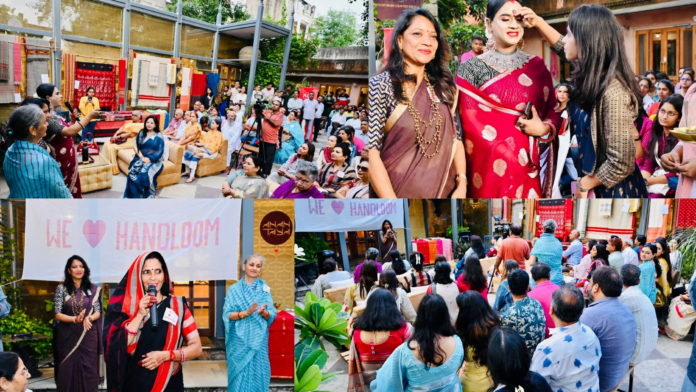
On the vibrant occasion of National Handloom Day, August 7th, 2023, the resplendent Anantaya Courtyard at Narayan Niwas in Jaipur was ablaze with the spirit of tradition, innovation, and unity. The event marked the debut of “We Love Handloom,” an exceptional initiative within the broader “We Love Handloom” series. This effort stands as a testament to the convergence of artisans, designers, industries, and institutions in a shared vision, a swadeshi movement that transcends time and celebrates the legacy of handloom craftsmanship.

The collaborative endeavor, spearheaded by CCWA, Khatu Designs, Anantya & AKFD, INTACH, Raghukul Trust, Rangotri ADIJ Association of Designers of Jaipur, and Shilpi Sansthan, Spandan Weavers Crafts, aims at the core goal of “Promoting Handlooms.” It’s a tribute to heritage and a commitment to preserving the craft that has woven India’s tapestry for centuries.

The event itself was an immersive experience that bridged generations, institutions, and perspectives. Esteemed office-bearers from diverse social, academic, and business spheres graced the event, engaging in open dialogues about the exquisite handloom garments they adorned. These discussions were guided by the wisdom of experts, who unravelled the intricacies of handloom techniques, connecting the past with the present and inspiring a vibrant future.

The vitality of the occasion extended beyond discussions, as over a hundred enthusiastic youths vowed to kindle a renewed passion for handloom within themselves and their communities. These young torchbearers embraced their role in preserving the rich tapestry of handcrafted artistry.

The heart of the event resonated with appreciation and recognition for the artisans, the hands behind the intricate beauty of handloom. Rajendra Verma, Sunita Verma, Ashish Jain, Durgashankar, and their fellow handloom artisans were felicitated with garments and certificates, a tangible embodiment of gratitude for their ceaseless dedication.

Diverse activities added color to the celebration, with a captivating Heritage and Handloom Quiz engaging and enlightening the attendees, fostering a deeper connection to the heritage and craft of handlooms. The quiz was a vessel for awareness, sailing the participants through the storied legacy of Indian handloom.

The gathering was graced by esteemed guests, including Mrs. Madhu Sharma, former State President Mahila Morcha BJP, as the chief guest, and Mr. Dhirendra and Kusam Madan, along with Pooja Sharma ‘Rekha’ from Mumbai, as special guests. The event witnessed a remarkable announcement from Mr. Dhirendra Madan of Mahima Group, unveiling plans for a Handicraft Village, a sanctum for the preservation and evolution of traditional crafts.

Mrs. Gitanjali and Mr. Ayush Kasliwal from Anantaya extended a warm welcome to all attendees, urging them to embrace indigenous clothing and join the Swadeshi Jagran movement. This call to action was sealed with an oath, uniting all present under the banner of tradition and self-reliance.

Meenakshi Singh of Khatu Designs cast a spell with her exclusive handloom collection, narrating stories woven into every thread. The significance of handlooms was further illuminated by Dr. Brij Ballabh from Shilpi Sansthan, painting a vivid picture of the present-day relevance of this age-old craft.

Kuldeep Panwar, an ambassador of ADIJ Jaipur, demystified the harmony between sustainability and handlooms, unveiling a world where the preservation of tradition goes hand in hand with a brighter future.

Vasumitra Shankar from CCWA infused the audience with vigor, championing the use of handlooms as a means to uphold intellectual property and advocate for the indomitable spirit of handcrafted artistry.

As the event concluded, the air was thick with inspiration, a shared commitment to upholding the legacy of handlooms, and a renewed dedication to the spirit of swadeshi. “We Love Handloom” was more than an event; it was a symphony of unity, a celebration of heritage, and a collective step towards a brighter, more sustainable future woven with the threads of tradition.

Vatican City: Exploring the World’s smallest Nation with a Big Legacy

0

It’s a concept that might baffle the mind – a country smaller than Central Park in New York City and a population that can be compared to a typical high-school classroom. But nestled within these astonishing parameters lies Vatican City, a truly unique entity that holds an unparalleled place on the global map.

A Kingdom within a City: Defining Vatican City

Nestled on the western bank of the Tiber River and enclosed by Italy’s embrace, Vatican City is a microcosm of sovereignty. Spanning a mere 0.2 square miles, this diminutive nation stands as the world’s smallest in terms of landmass. To put it into perspective, Vatican City is nearly 120 times smaller than Manhattan, New York’s iconic island.

A Papal Enclave: Where Spirituality Meets Sovereignty

The official seat of the pope of the Catholic Church since 1377, Vatican City’s journey to independent statehood was a result of centuries of intricate power dynamics. The Lateran Treaty of 1929 marked a pivotal moment, declaring Vatican City as a sovereign nation, a haven for the Catholic Church to thrive amidst the complexities of global politics.

From Power Struggles to Diplomacy: Vatican City’s Evolution

Years of power struggles between religious and political leaders paved the way for Vatican City’s unique existence. In a historic accord on February 11, 1929, Benito Mussolini and Pope Pius XI established the Lateran Pacts, granting the Catholic Church an independent haven in exchange for papal recognition of the Kingdom of Italy. Thus, the world’s smallest country emerged as a beacon of spirituality and diplomacy, where nearly 75 percent of its citizens are members of the clergy.

Pitcairn Islands: The Intriguing Population Comparison

While Vatican City may be the smallest country in terms of landmass, the title for the tiniest population belongs to the Pitcairn Islands. With a fluctuating population ranging from 40 to 60 inhabitants, this British territory in the Pacific Ocean holds a unique heritage. The descendants of Tahitians and the Bounty mutineers, who sought refuge on the uninhabited Pitcairn Island, offer a living testament to history’s twists and turns.

Secrets and Surprises: Unveiling Vatican City’s Intriguing Traits

As a traveler steps onto the hallowed grounds of Vatican City, they enter a world where history, tradition, and modernity converge. Beyond its compact size, Vatican City harbors captivating secrets that unfold at every corner.

An Enigmatic Past: Tracing Vatican City’s Evolution

Vatican City’s history is a tapestry woven with intrigue and transformation. What is now a tiny city-state was once a vast expanse, with the Papal States stretching across approximately 44,000 square kilometers. Yet, the ebb and flow of time saw this territory evolve, culminating in the emergence of the modern-day Vatican City.

Passport-Free Pilgrimages: A Quirk of Vatican City’s Protocol

While a trip to Vatican City is an extraordinary experience, don’t expect to get your passport stamped. The absence of passport stamps adds to the mystique of this small nation, yet pilgrims and visitors do receive a different kind of validation – a pilgrim’s stamp to commemorate their journey within the spiritual heart of the Catholic Church.

Citizenship: An Unconventional Path

In Vatican City, birth does not determine citizenship. Instead, citizenship is extended to those who hold positions within the Holy See or work within the Vatican. The city’s unique populace includes diplomats, cardinals, and those with roles crucial to the functioning of the Vatican.

Cheers to Tradition: Vatican City’s Wine Consumption

For a country with a population of around 1,000 inhabitants, Vatican City’s wine consumption is nothing short of remarkable. Each resident drinks approximately 74 liters of wine annually, an impressive 105 bottles per person. This tradition harks back to the city’s roots, where wine is an integral part of cultural and religious practices.

Currency and Commerce: The Vatican Euro

Vatican City’s ties to Italy extend to currency. In 2002, the city-state adopted the Euro as its official currency, and Vatican Euros hold the distinction of being legal tender not only within Vatican City but also across the entire eurozone. This unique currency highlights the harmonious relationship between Vatican City and the global economy.

Post Office Par Excellence: Vatican City’s Correspondence Hub

Vatican City boasts a thriving postal service that outshines its size. This bustling post office witnesses a higher volume of letters sent from its postcode than any other place on Earth. A testament to its efficiency, many Romans opt for the Vatican City post office, contributing to its reputation as one of the world’s best.

A Miniature Railway: Vatican City’s Shortest Network

The Vatican may be small, but it houses a railway system that is even smaller. With just two tracks spanning 300 meters, Vatican City’s railway is a charming reflection of its compact scale. While primarily used for transporting goods, this quaint rail network adds to the city’s unique charm.

The Ultimate Tourist Attraction: Unveiling Vatican City’s Appeal

Vatican City’s allure transcends its size, drawing in a stream of tourists who seek to witness its profound historical, religious, and cultural significance. With its splendid architecture, renowned museums, and iconic landmarks, including St. Peter’s Basilica, Vatican City stands as a testament to human creativity and devotion. The Vatican Museums alone welcome approximately five-and-a-half million visitors annually, a staggering testament to the city’s magnetic appeal.

As one embarks on a journey to the world’s smallest country, Vatican City’s significance unfolds in layers, revealing a rich tapestry of history, faith, and heritage. A pilgrimage to this diminutive nation is a pilgrimage into the soul of humanity’s profound relationship with spirituality and tradition.

Kunchikal Falls: Largest waterfall of India

0

Nestled near the border of Shimoga and Udupi in Karnataka, the awe-inspiring Kunchikal Falls emerges as a majestic spectacle carved by the River Varahi. From a breathtaking height of 455 meters, water cascades in an enchanting dance over rocky boulders, creating a sight that captivates the senses. Ranking as India’s highest waterfall and the 116th tallest in the world, Kunchikal Falls stands as a testament to nature’s unparalleled artistic prowess. The river’s journey from a higher altitude culminates in this captivating display, with the falls gracefully descending near the Hulikal Ghati Temple.

A Symphony of Power and Beauty:

Beyond its awe-inspiring visual impact, Kunchikal Falls plays a significant role in generating high-power electricity. Nestled beneath the falls lies a hydroelectric plant that harnesses the cascading waters, converting their energy into a vital source of power. The water, as it flows, is harnessed into the reservoir of the Mani dam, strategically reducing the flow while contributing to the region’s energy needs. This coexistence of natural beauty and functional utility adds another layer of intrigue to the falls.

Nature’s Enclave:

Kunchikal Falls is not merely a destination for those seeking visual delight but a sanctuary for nature enthusiasts and solitude seekers alike. Encircled by lush greenery, the falls exude an inviting charm, transporting visitors into a world untouched by urban chaos. The allure of the falls is magnified during the monsoon season, as raindrops gracefully descend to replenish the Varahi River, setting the stage for an unforgettable encounter with the grandeur of nature.

Rainy Season’s Splendor:

Visiting Kunchikal Falls during the rainy season, from July to September, is a truly mesmerizing experience. The cascade’s flow is at its peak during this time, allowing visitors to witness the unbridled force of nature as it shapes the landscape. The trajectory of the Varahi River becomes an impressive sight, as the falls become a testament to the river’s journey. Tributaries merge and cascade, forming a series of waterfalls that add to the falls’ enchanting aura.

A Delightful Detour:

Access to Kunchikal Falls is a journey in itself, bestowing travelers with a sense of adventure and discovery. The falls are situated near Masthikatte-Hulikal, offering convenient road access from major cities like Bangalore, Mysore, and Mangalore. Private buses ply the route from Bangalore, and upon reaching Hulikal, tourists can continue their journey using taxis or private vehicles. For those preferring rail travel, Udupi railway station is approximately 67 km from Agumbe and 97 km from Shimoga, offering a seamless route to the falls. Air travelers can opt for Mangalore Airport, which is approximately 142 km away and boasts excellent connectivity to major cities. From the airport, various transportation options, including taxis, buses, and trains, make reaching Kunchikal Falls an accessible endeavor.

Preserving the Elegance:

While the falls’ hydroelectric function and ecological significance are pivotal, efforts are made to maintain the pristine beauty of the surroundings. Special permissions are required to visit Kunchikal Falls due to the dam’s presence, ensuring that the serenity of the area remains undisturbed. The well-preserved environment provides a perfect setting for a peaceful picnic, allowing visitors to immerse themselves in nature’s grandeur.

Kunchikal Falls, with its towering grandeur and harmonious integration of power and beauty, stands as a testament to the magnificence that nature effortlessly creates. As the Varahi River flows gracefully over rocky structures, it reminds us of the intricate dance between land and water, shaping the landscapes we hold dear. A visit to Kunchikal Falls offers not just a visual spectacle, but a journey into the heart of nature’s timeless wonder.

Photo tiles: Now let the pics speak via wall decor

0

Photo tiles…! Have you heard this phrase? If not, give some times to your brain to think if it an release to this word. Yes, now you might have got an idea… Photo tiles refers to small square or rectangular tiles that have a photograph or image printed on their surface. These tiles are commonly used for decorative purposes, which allow you to display your favorite photos or artworks in a unique and creative way.Photo tiles can be made via materials such as ceramic, glass, acrylic, or even lightweight materials like foam or PVC.

Check Here: Wallpics

The process of creating photo tiles includes printing of the desired image onto the tile’s surface using advanced printing techniques. This can result in vibrant and high-resolution images that are durable and suitable for various environments.A popular use of photo tiles is to create personalized wall art or murals. Instead of traditional framed photographs, people can arrange these tiles in different configurations to form larger images or collages on their walls. This provides a modern and dynamic alternative to traditional photo frames and can add a stylish touch to your home decor.Another advantage of photo tiles is versatility. They can be easily rearranged, replaced, or updated whenever you want to change the look of your space. Some photo tiles even come with adhesive backing, allowing you to stick them to walls without the need for nails or hooks.Photo tiles can be ordered from various online retailers, photography studios, or print shops.

Happy Friendship Day 2023: Celebrate Your Friends with These Quotes and Captions

0

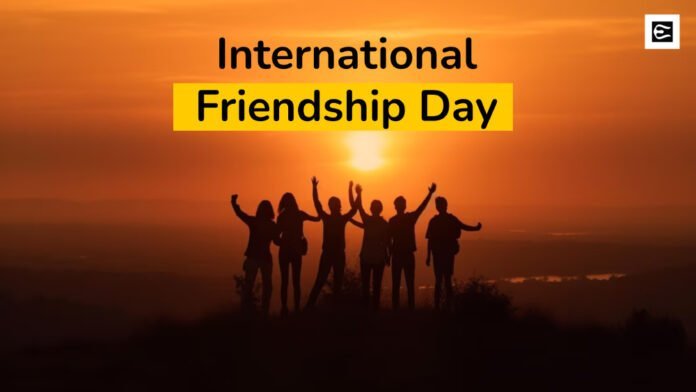
Friendship Day is a special occasion to celebrate the bond of friendship with your best buddies. It is observed on the first Sunday of August every year in India, and on July 30 in many other countries.And so, this year it is being celebrated on August 6, 2023. Friendship Day is a time to express your love, gratitude, and appreciation for your friends who have been there for you through thick and thin.

One of the best ways to celebrate Friendship Day is to share some heartfelt quotes and captions with your friends on social media. Whether you want to make them laugh, smile, or cry, there is a quote or caption for every mood and occasion. Here are some of the best Friendship Day quotes and captions that you can use to make your friends feel special.

Funny Friendship Day Quotes and Captions

  • A good friend is like a four-leaf clover: hard to find and lucky to have. – Irish Proverb
  • You don’t have to be crazy to be my friend. I’ll train you. – Unknown
  • Friends buy you food. Best friends eat your food. – Unknown
  • We are best friends. Always remember that if you fall, I will pick you up… after I finish laughing. – Unknown
  • You and I are more than friends. We’re like a really small gang. – Unknown
  • Friends are like bras: close to your heart and there for support. – Unknown
  • We’ll be friends forever because you already know too much. – Unknown
  • You are my best friend because I wouldn’t dare be this weird with anyone else. – Unknown
  • There is nothing better than a friend, unless it is a friend with chocolate. – Linda Grayson
  • A true friend is someone who thinks that you are a good egg even though he knows that you are slightly cracked. – Bernard Meltzer

Inspirational Friendship Day Quotes and Captions

  • The only way to have a friend is to be one. – Ralph Waldo Emerson
  • The most beautiful discovery true friends make is that they can grow separately without growing apart. – Elisabeth Foley
  • A real friend is one who walks in when the rest of the world walks out. – Walter Winchell
  • Friendship is the hardest thing in the world to explain. It’s not something you learn in school. But if you haven’t learned the meaning of friendship, you really haven’t learned anything. – Muhammad Ali
  • True friendship comes when the silence between two people is comfortable. – David Tyson
  • Don’t walk behind me; I may not lead. Don’t walk in front of me; I may not follow. Just walk beside me and be my friend. – Albert Camus
  • The only way to have a friend is to be one. – Ralph Waldo Emerson
  • A friend is someone who understands your past, believes in your future, and accepts you just the way you are. – Unknown
  • A single rose can be my garden… a single friend, my world. – Leo Buscaglia
  • Friends are the family you choose. – Jess C Scott

Emotional Friendship Day Quotes and Captions

  • A friend is someone who knows all about you and still loves you. – Elbert Hubbard
  • The best kind of friend is the one you could sit on a porch with, never saying a word, and walk away feeling like that was the best conversation you’ve had. – Unknown
  • A true friend reaches for your hand and touches your heart. – Heather Pryor
  • Some people arrive and make such a beautiful impact on your life, you can barely remember what life was like without them. – Anna Taylor
  • True friends are never apart, maybe in distance but never in heart. – Helen Keller
  • Friendship isn’t about who you’ve known the longest, it’s about who walked into your life, said “I’m here for you” and proved it. – Unknown
  • The most memorable people in life will be the friends who loved you when you weren’t very lovable. – Aidan Chambers
  • Friends are those rare people who ask how we are and then wait to hear the answer. – Ed Cunningham
  • Sometimes being a friend means mastering the art of timing. There is a time for silence. A time to let go and allow people to hurl themselves into their own destiny. And a time to prepare to pick up the pieces when it’s all over. – Gloria Naylor
  • The best mirror is an old friend. – George Herbert

I hope this draft helps you with your blog post on Happy Friendship Day 2023 quotes and captions.

If you need any further assistance, please let me know.

Happy Friendship Day! 😊

Jaisalmer Indian Craft Gin: A Taste of Royalty

0

If you are looking for a premium gin that captures the essence of India’s rich and diverse culture, then you might want to try Jaisalmer Indian Craft Gin. This gin is inspired by the golden city of Jaisalmer, a historic and majestic place in the heart of Rajasthan. Jaisalmer is known for its splendid architecture, vibrant colours, and valiant history. It was once a princely state that enjoyed a 15 gun salute and a royal lifestyle.

Jaisalmer Indian Craft Gin pays homage to this glorious heritage by using 11 botanicals that are sourced from different parts of India and the world. The gin is triple-distilled in a traditional copper pot still, and then infused with the botanicals to create a smooth and balanced flavour. The botanicals include:

  • Juniper berries from Tuscany, which give the gin its classic piney notes.
  • Coriander seeds from Jaisalmer itself, which add a citrusy and spicy touch.
  • Lemon peel from Rajasthan, which provides a zesty and refreshing brightness.
  • Sweet orange peel from Central India, which complements the citrus and floral tones of the gin.
  • Liquorice from India, which imparts a sweet and woody aroma.
  • Angelica root from Saxony, which delivers an earthy quality and a dry gin edge.
  • Cubeb pepper from Indonesia, which adds a floral hint and a peppery layer.
  • Caraway seeds from Estonia, which lend a spicy and slightly anise-like flavour.
  • Lemongrass from Western India, which offers a fresh and lemony taste with grapefruit undertones.
  • Darjeeling green tea from the Himalayas, which brings an exquisite and delicate taste.
  • Vetiver from North India, which gives a soothing effect with an earthy and sweet woody aroma.

The result is a gin that is complex and elegant, with a distinct Indian character. Jaisalmer Indian Craft Gin is perfect for enjoying on its own or mixing with your favourite tonic or cocktail. You can also try some of the signature serves that are suggested by the brand, such as:

  • The Golden Fort: A refreshing and aromatic drink made with Jaisalmer Indian Craft Gin, tonic water, orange peel, and mint leaves.
  • The Jaisalmer Negroni: A classic and sophisticated drink made with Jaisalmer Indian Craft Gin, Campari, sweet vermouth, and orange peel.
  • The Jaisalmer Peppertini: A spicy and invigorating drink made with Jaisalmer Indian Craft Gin, lime juice, simple syrup, black pepper, and basil leaves.

Jaisalmer Indian Craft Gin is more than just a drink; it is an experience that transports you to a land of colour, valour, and splendour. It is a tribute to the royal legacy of Jaisalmer and the spirit of India. If you want to learn more about this gin, you can visit their official website or follow them on social media. Cheers! 🥂

Fostering Innovation: Unleashing Young Minds with INSPIRE Awards – MANAK 2023-24

0

Imagine a world where young minds are nurtured, their innovative ideas taking flight, and creativity knows no bounds. The Innovation in Science Pursuit for Inspired Research (INSPIRE) scheme, a flagship initiative of the Department of Science & Technology (DST), Government of India, envisions just that. As we step into the realm of INSPIRE Awards – MANAK 2023-24, a doorway to ignite the sparks of innovation among the young generation beckons.

Empowering Minds, Igniting Innovations

The INSPIRE Awards – MANAK (Million Minds Augmenting National Aspirations and Knowledge), in collaboration with the National Innovation Foundation – India (NIF), an autonomous body of DST, is designed to nurture and celebrate innovation among students aged 10 to 15. Embracing those in classes 6 to 10, this initiative aims to unleash the potential of a million young minds, fostering a culture of creative thinking and pioneering solutions that harmonize science with societal needs.

Empowering Students with Opportunities

The heart of the INSPIRE Awards MANAK Scheme 2023-24 beats with the pulse of opportunity, extended to the vibrant minds of students from Classes 6 to 10. This flagship program, under the stewardship of the Department of Science and Technology, Ministry of Science and Technology (Government of India), isn’t just a competition; it’s a transformative journey, a call to think beyond boundaries.

A Symphony of Ideas: Eligibility and Benefits

Schools become the conduits of change as they nominate up to five of the best original ideas or innovations from their creative pool. The young innovators must be aged 10-15 and pursuing education in the dynamic spectrum of Class 6 to 10. A platform awaits to recognize and celebrate their brilliance with an award of INR 10,000, a testament to the power of ideas.

Embarking on the Journey: The Application Process

Embarking on this exhilarating journey is as simple as a few clicks. Schools serve as the launchpad for these young inventors, guiding them through the process with care. Here’s how it unfolds:

1. Registration: Schools register with the click of a button, unlocking the path to innovation.

2. Nomination: Five outstanding ideas or innovations are nominated, poised to change the world.

3. Selection Criteria: Originality, social impact, eco-friendliness, user-friendliness, and comparative advantage are the guiding stars.

4. National Recognition: The crème de la crème – the top 1,000 ideas – shine at the National Level Exhibition & Project Competition (NLEPC).

5. Shaping the Future: The brightest 60 innovations emerge as torchbearers, illuminating the path of future possibilities.

6. Productive Progress: NIF steps in to cultivate these ideas, nurturing them toward product and process development, seamlessly integrating them with other visionary schemes.

A Gateway to Innovation: The INSPIRE Awards – MANAK 2023-24

In this journey of innovation, dreams know no limits. With the INSPIRE Awards – MANAK 2023-24, they sow the seeds of creativity, watering them with knowledge and nurturing them to fruition. The future beckons, and these young minds stand poised to redefine what’s possible, one ingenious idea at a time.

India’s Best Dancer Season 3: All You Need to Know

0

India’s Best Dancer, the popular dance reality show on Sony Entertainment Television, is back with its third
season. The show, which showcases the journey of some of the best talent who compete to win the title with their
solo performances, promises to be the toughest dance reality show on Indian television. The makers have ensured
to make it challenging at every step for the contestants, who have to impress the judges and the audience with their
unique and innovative moves.
The third season of India’s Best Dancer will premiere from 8 April 2023 on Sony Entertainment Television and
will also be available on SonyLIV OTT platform. The show will be judged by Geeta Kapoor, Terence Lewis and
Sonali Bendre, who are known for their expertise and experience in the field of dance. The show will be hosted by
Jay Bhanushali, who is a popular actor and anchor.
The auditions for the third season of India’s Best Dancer began on 19 January 2023 and saw thousands of aspiring
dancers from across the country participate in the ground and online auditions. Out of these, only 13 contestants
have made it to the final stage of the competition, where they will be paired with choreographers who will mentor
them and help them showcase their best performances.

  • The contestants of India’s Best Dancer Season 3 are:
  • Aakash Sharma from Delhi
  • Anjali Singh from Mumbai
  • Arjun Kumar from Kolkata
  • Divya Sharma from Jaipur
  • Harshita Singh from Lucknow
  • Karan Patel from Ahmedabad
  • Manisha Yadav from Pune
  • Nisha Kumari from Patna
  • Pranav Rajput from Chandigarh
  • Ravi Kumar from Hyderabad
  • Sana Khan from Bangalore
  • Shreya Jain from Indore
  • Varun Sharma from Chennai

The winner of India’s Best Dancer Season 3 will receive a cash prize of Rs. 15 lakh and a trophy. The show will
also feature special guests and celebrities who will grace the stage and encourage the contestants. The show will
air every Saturday and Sunday at 8:00 PM only on Sony Entertainment Television.
India’s Best Dancer Season 3 is a dance extravaganza that will entertain and inspire the viewers with its amazing
talent and spectacular performances. Don’t miss the chance to witness the best dancers of India battle it out for the
ultimate glory. Tune in to India’s Best Dancer Season 3 from 8 April 2023 only on Sony Entertainment Television.