Home Blog Page 635

The Chandra Mahal’s Seven Floors: Stories of Opulence and Functionality

0
Pic: Ravindar Nagar

When one thinks of Jaipur, the vibrant capital of Rajasthan, images of bustling bazaars, majestic forts, and colorful traditions often come to mind. Indeed, Jaipur is a must-visit destination for travelers exploring the rich cultural tapestry of this region. However, beyond the well-trodden paths of the Pink City lies a hidden gem – the private rooms of the Jaipur City Palace. These sanctuaries of opulence and history, tucked away within the sprawling palace complex, are one of Rajasthan’s best-kept secrets.

The Enchanting Blend of Old and New

Jaipur, often referred to as the Pink City, is a city that seamlessly blends the old with the new. Here, you can witness camels ambling past modern motorbikes and see youngsters in jeans rubbing shoulders with turbaned elders. The city earned its nickname when its prominent buildings were painted pink to welcome the Prince of Wales and Queen Victoria in 1876, a tradition that continues to this day. At the heart of this vibrant city lies the Jaipur City Palace, which has been the residence of Jaipur’s rulers since the early 18th century.

The Splendor of Jaipur City Palace

The Jaipur City Palace is a masterpiece of architecture, fusing Rajput and Mughal styles. Its open courtyards and ornate design elements are a testament to the wealth and craftsmanship of the maharajas who once resided here. Today, much of the palace complex is accessible to the public, known as the Maharaja Sawai Man Singh II Museum or the City Palace Museum. However, what remains relatively unknown to most visitors are the private rooms nestled within the Chandra Mahal, also known as the ‘Moon Palace,’ where the erstwhile Maharaja still resides.

A Journey Through Royal Opulence

The Chandra Mahal, a seven-storeyed palace, is a treasure trove of history and beauty. Each floor has a unique name and function. The Sukh Niwas, or ‘Hall of Rest,’ serves as the fully-furnished royal dining room, while the Rang Mandir on the third floor dazzles with mirror work adorning its walls and ceiling. The Shobha Niwas on the fourth floor, aptly named the ‘Hall of Beauty,’ boasts walls lavishly embellished with mirrors, tiles, and gold leaf detailing. The Chhavi Niwas on the fifth floor, known as the ‘Hall of Images,’ was the Maharaja’s monsoon retreat.

Shri Niwas occupies the sixth floor, and the seventh floor is home to the Mukut Mandir or the ‘Crown Temple.’ At the pinnacle of the Chandra Mahal, the flag of the Jaipur royal family unfurls only when the Maharaja is in residence, a symbol of his presence.

Preserving the Mystique

While the City Palace Museum allows visitors to glimpse the grandeur of the past, photography is understandably restricted in the private rooms. The exquisite royal dining room, where the Maharaja hosted his guests, is one such place where cameras are off-limits. These restrictions serve to preserve the mystique and exclusivity of these hidden treasures.

Beyond the Private Rooms

In addition to the private rooms, the City Palace Museum houses other remarkable artifacts. Two giant silver urns in the Diwan-i-Khas are listed in the Guinness Book of World Records as the largest silver objects globally. Originally, they were used to transport sacred water from the river Ganges to London for Madho Singh II’s consumption during his stay there in 1901.

The Pritam Chowk – A Court of Seasons

As you explore the palace complex further, you’ll come across the Pritam Chowk, the ‘Court of the Beloved.’ This enchanting courtyard features four delicately painted doorways representing the four different seasons, a testament to the intricate craftsmanship and attention to detail that permeates the entire City Palace.

A Hidden Treasure Awaits

While Jaipur’s City Palace and its public areas are celebrated and well-visited, the private rooms within the Chandra Mahal remain a hidden treasure, waiting to be discovered. These rooms offer a rare glimpse into the opulent lifestyle of the erstwhile maharajas and provide a unique perspective on Rajasthan’s rich history. So, when you find yourself in the Pink City, don’t miss the opportunity to explore these secret chambers and embark on a journey through time and luxury.

Exploring the Grandeur of Chhavi Niwas: A Jewel in Jaipur’s City Palace

0

Jaipur, the capital of Rajasthan and the famed Pink City, stands as a living testament to the opulent legacy of India’s royalty. Among the architectural wonders that grace this city, the City Palace complex holds a prominent place. Within this complex, nestled on the fifth floor of the majestic Chandra Mahal, lies the Chhavi Niwas, also known as Chandra Niwas, an exquisite gem that offers a captivating glimpse into Jaipur’s royal history.

A Royal Abode:

Chandra Mahal, a masterpiece constructed by the visionary ruler Jai Singh II, is a majestic edifice that engulfs nearly one-seventh of the City Palace complex. It stands tall on the western side and is renowned as the most significant and imposing structure within the palace. At its heart, on the fifth floor, resides the Chhavi Niwas, currently serving as the residence of the Maharaja of Jaipur.

A Towering Citadel with Scenic Views:

One of the defining features of Chandra Mahal is its seven-storey citadel, which not only symbolizes power and grandeur but also offers unparalleled panoramic views of the enchanting Jaipur city. Each floor within this magnificent palace is steeped in history and exudes its unique charm and significance, contributing to the palace’s rich heritage.

Monsoon Revelry and Cultural Celebrations:

Chhavi Niwas has witnessed countless moments of royal history. Originally designed for queens to relish the monsoon season, it became a cherished venue where they would revel in dance and merriment. The palace’s Blue Room, adorned with elegance, served as a vibrant setting for the celebration of Janmashtami, adding another layer of cultural significance to this regal residence. The architecture of Chhavi Niwas ensures ample ventilation, making it a comfortable haven even during the monsoon downpours.

Aesthetic Allure in the Modern Age:

In recent times, Chhavi Niwas has gained a newfound fame, particularly on social media platforms, thanks to its mesmerizing and aesthetically pleasing interiors. Visitors are drawn to its timeless beauty and have made it a favored backdrop for photoshoots, capturing the palace’s charm and elegance in images that resonate across the digital world.

Warm Hospitality and Memorable Encounters:

Visitors to Chhavi Niwas are not just welcomed by its architectural marvels but also by the gracious and well-trained palace guards. These courteous guards go the extra mile to help visitors find the perfect angles for their photographs, enhancing the overall experience of guests. Their warm approach and willingness to engage in photography sessions create lasting memories for all who visit.

As you embark on a royal journey through Chhavi Niwas in Jaipur’s City Palace, you embark on a voyage through time, where history, culture, and modern allure converge. This is a place where the echoes of the past harmonize with the rhythms of the present, making it a must-visit destination for those seeking to immerse themselves in the splendor of Rajasthan’s regal heritage.

Nahargarh Biological Park: A Heaven for Wildlife Conservation near Jaipur

0

Nestled in the scenic surroundings near the majestic Nahargarh Fort, just outside the bustling city of Jaipur, lies the Nahargarh Biological Park, a true oasis for wildlife enthusiasts and nature lovers. This remarkable park, sprawling over an impressive 7.2 square kilometers within the Nahargarh Sanctuary, is a testament to India’s commitment to preserving its rich biodiversity. It boasts a diverse landscape, featuring granite and quartzite rocks, as well as areas covered by dry deciduous and tropical rainforests. However, what truly sets Nahargarh Biological Park apart is its unwavering dedication to providing a safe heaven for its resident wildlife, offering them a comfortable environment, nutritious food, and expert care.

The Natural Beauty of Nahargarh Biological Park

The Nahargarh Biological Park is not just a sanctuary for the diverse wildlife it houses but also for the natural beauty it encapsulates. The park’s location on the outskirts of Jaipur, near the Jaipur-Delhi highway, ensures that it remains an easily accessible destination for visitors seeking a break from the city’s hustle and bustle. The park’s striking geological features, including granite and quartzite rock formations, provide a picturesque backdrop for its inhabitants.

Moreover, the park’s diverse ecosystems, which encompass dry deciduous forests and tropical rainforests, offer an array of habitats for a wide range of flora and fauna. This variety of habitats makes Nahargarh Biological Park an essential ecological asset, as it mirrors the different ecosystems found across the Indian subcontinent.

Dedication to Wildlife Conservation

The primary mission of Nahargarh Biological Park is to serve as a sanctuary for wildlife conservation. The park is home to numerous species of animals, both indigenous and exotic, and it takes its responsibility for their welfare very seriously. The animals residing here are not merely captives but are treated as honored guests, receiving top-notch care and attention.

One of the most significant aspects of the park’s dedication to wildlife conservation is its commitment to providing a comfortable environment for its inhabitants. The enclosures are designed to mimic the animals’ natural habitats as closely as possible, ensuring that they can exhibit their natural behaviors and live in conditions that are conducive to their overall well-being.

Feeding and Care

Proper nutrition is paramount in ensuring the health and vitality of the animals at Nahargarh Biological Park. The park authorities work diligently to ensure that all animals receive a balanced diet that meets their specific dietary requirements. This commitment to nutrition not only keeps the animals healthy but also allows them to thrive.

Furthermore, the dedicated caretakers at the park are true animal lovers. They undergo rigorous training to understand the needs and behaviors of the animals under their care. This knowledge enables them to provide the best possible care, monitoring the animals’ health, and ensuring their emotional well-being.

Current Residents

As of the latest data from the Central Zoo Authority, Nahargarh Biological Park is home to 23 lions and 12 tigers, among other species. These magnificent big cats are the pride of the park and are living testaments to the success of the conservation efforts being undertaken here. Visitors to the park have the unique opportunity to observe these majestic creatures up close, while also learning about the importance of their conservation.

Nahargarh Biological Park stands as a shining example of India’s dedication to preserving its natural heritage and protecting its wildlife. The park’s commitment to providing a comfortable environment, nutritious food, and expert care for its animal residents is truly commendable. As visitors explore the breathtaking landscapes and observe the diverse wildlife, they come away with a greater understanding of the importance of conservation efforts and a deeper appreciation for the incredible creatures that share our planet. Nahargarh Biological Park is not just a park; it’s a sanctuary, a symbol of hope for the future of wildlife in India, and a testament to the beauty and power of nature.

The Mystical Tale Behind Lord Ganesha’s Unconventional Vahana: The Mouse

0

In the intricate tapestry of Hindu mythology, every aspect of the divine is laden with symbolism and profound significance. One such fascinating facet is the choice of vahana, the sacred vehicle or mount, associated with deities. When it comes to Lord Ganesha, the beloved elephant-headed god of wisdom and prosperity, his vahana is as unconventional as it is captivating—the humble mouse, known as ‘mushak’ or ‘mushika’ in Sanskrit. Let us embark on a journey through the captivating myths and legends that illuminate the enigmatic selection of the mouse as Lord Ganesha’s vahana.

The Tale of Gajamukhasura:

One of the most renowned stories that intertwine Ganesha’s vahana with his divine mission is the narrative of Gajamukhasura, a formidable demon. Gajamukhasura had been granted a boon that rendered him nearly invincible, making him immune to all weapons. In his role as the remover of obstacles and protector of devotees, Lord Ganesha took on this formidable adversary.

In the ensuing battle, Ganesha, armed with his divine wisdom, resorted to a profound act. He broke one of his own tusks and fashioned it into a potent lance. With this unique weapon, he pierced and vanquished Gajamukhasura. Astonished and humbled, the defeated demon sought forgiveness and mercy.

Ganesha, in a display of boundless compassion, not only spared Gajamukhasura but also transformed him into a small mouse. This act of benevolence and redemption resonates deeply with the essence of Ganesha’s character—his ability to subdue even the mightiest of foes and offer them a path to humility and spiritual growth.

The Tale from Ganesha Purana:

Another captivating narrative that sheds light on Ganesha’s choice of the mouse vahana can be found in the Ganesha Purana. This story unfolds during the Dwapara Yuga, the third age in Hindu cosmology. It features an immensely powerful and mischievous mouse sage known as Mushak Rishi. This sage disrupted the tranquil hermitage of the revered sage Parashara, wreaking havoc by destroying grain stores, tearing apart clothing, and defiling sacred scriptures.

Frustrated and perturbed by the mouse’s relentless antics, Sage Parashara sought the divine intervention of Lord Ganesha. Known for his wisdom and problem-solving abilities, Ganesha responded to the sage’s plea with grace. He employed his divine noose, known as ‘pasha,’ to capture the unruly mouse, setting in motion an extraordinary sequence of events.

Ganesha’s pursuit of the mischievous mouse led him to the netherworld, known as Patala Lok. There, he encountered Vasuki, the mighty serpent king who ruled that realm. In a profound act of magnanimity, Ganesha not only spared the mouse sage but also granted him the blessing of becoming his vahana. Thus, the once troublesome and irreverent mouse sage was transformed into Ganesha’s loyal and humble mount.

The Symbolism of Ganesha’s Vahana:

The symbolism inherent in Ganesha’s choice of the mouse as his vahana is deeply profound. It represents the virtues of humility, wisdom, and compassion. The mouse, often perceived as a small and inconspicuous creature, embodies the profound idea that even the most unassuming beings have a significant role to play in the divine scheme of existence. Ganesha’s selection of the mouse as his vahana serves as an enduring reminder that obstacles and challenges, whether they manifest as mighty demons or mischievous rodents, can be surmounted with the application of wisdom and the grace of the divine.

The captivating tales of Ganesha’s vahana, whether they revolve around the transformation of Gajamukhasura or the taming of the troublesome mouse sage, underscore the importance of humility, redemption, and the divine capacity to overcome adversities. Lord Ganesha, with his unique and unconventional vahana, continues to inspire devotees with the timeless message that even the most unexpected choices can harbor profound wisdom and carry profound meaning within the intricate tapestry of Hindu mythology and spirituality.

Sarees Distribution to Needy Women: Bought Joy on the Faces Everywhere

0

In a heartwarming display of compassion and generosity, a group of enthusiastic youth has embarked on a mission to make a difference in the lives of needy women through a saree collection and donation drive. This remarkable initiative, spearheaded by Darsh Chaudhary, Nandini Gupta, and Omisha Sharma, has left a trail of smiles on the faces of countless women in need.

Under the banner of “Mirha,” the project has successfully collected over ten thousand sarees from various sources, including generous donors from different areas. The essence of this campaign lies in giving these sarees a second life by dry cleaning and packaging them for distribution among women who lack access to this essential attire.

Darsh Choudhary, one of the driving forces behind the initiative, revealed that the project’s core idea is to repurpose sarees that have only been worn once or twice and are no longer needed. By doing so, they aim to bring happiness and dignity to those less fortunate in society. Omisha Sharma passionately called upon affluent women to support this noble cause, highlighting the immense impact even a small contribution can have on the lives of disadvantaged women.

A recent milestone in this heartwarming journey occurred on Tuesday when sarees and suits were distributed to approximately 50 women and 25 girls at the Naya Savera Center in Dhanka Basti, Mansarovar. The event was a heartening spectacle as the faces of the recipients lit up with joy and gratitude upon receiving these tokens of kindness.

During this heartwarming distribution event, the needy women present showered praise and blessings upon the three dedicated youth who have tirelessly worked to bring smiles to their faces. This initiative has been active for several months, with Darsh, Nandini, and Omisha coordinating the distribution of sarees to needy women across different areas of the city.

The “Kum’s Project” serves as an inspiring example of how youth-led initiatives can make a meaningful impact on the lives of those less fortunate. The initiative not only provides clothing but also restores hope and confidence in the hearts of women who may be facing challenging circumstances.

As the saree collection drive continues to gain momentum, it is hoped that more individuals and organizations will join hands with these young changemakers, spreading the joy and warmth of their noble cause to even more women in need throughout the community.

Aditya-L1 Mission: Unveiling the Mysteries of Our Solar Lifeline

0

The Sun, a cosmic furnace of energy and wonder, has captivated humanity’s imagination for eons. Its dazzling brilliance, life-sustaining warmth, and enigmatic secrets have beckoned scientists and stargazers alike. To venture into the heart of this cosmic marvel, the Indian Space Research Organisation (ISRO) has initiated the Aditya-L1 mission – a pioneering odyssey that promises to unlock profound insights into our nearest celestial neighbour.

Illuminating the Aditya-L1 Mission

Inspired by the Hindu Sun God, Aditya, the Aditya-L1 mission is India’s inaugural foray into solar exploration. This remarkable mission, embarked upon by ISRO, is poised to delve into the mysteries that shroud our celestial life-source, the Sun.

The Missions’ Stellar Objectives

The Aditya-L1 mission sets out with a lofty set of goals, each with the potential to revolutionize our comprehension of the Sun:

Peering into the Solar Corona:A primary objective of Aditya-L1 is to unravel the mysteries of the Sun’s corona, its outermost layer. This ethereal region is inexplicably hotter than the Sun’s surface, and understanding this temperature paradox is among the mission’s key pursuits. Aditya-L1 will observe and analyze the corona, shedding light on the intricate dynamics responsible for its extreme heat.

Parsing Solar Winds:Solar winds, those gusts of charged particles exhaled by the Sun, have far-reaching implications for Earth’s magnetic field and technological infrastructure. The mission will diligently measure these winds, thereby enhancing space weather forecasting and helpingus comprehend their consequences for our planet.

Probing the Magnetic Tapestry:The Sun’s magnetic field, akin to the threads of an interstellartapestry, shapes its behavior, giving rise to phenomena like sunspots and solar flares. Aditya-L1aims to gain deeper insights into the Sun’s magnetic field and its profound impact on solar activities.

Intercepting Solar Outbursts: Solar eruptions, such as solar flares and coronal mass ejections,possess the power to disrupt Earth’s communication and navigation systems. By closely monitoring these outbursts, Aditya-L1 will not only contribute to early warning systems but also advance our understanding of space weather prediction.

The Aditya-L1 spacecraft is equipped with an armada of cutting-edge instruments designed to achieve its scientific goals:

Visible Emission Line Coronagraph (VELC): VELC will capture the corona’s images in variousemission lines, deciphering its temperature and velocity variations.

Solar Ultraviolet Imaging Telescope (SUIT): SUIT will unravel the Sun’s mysteries in thenear-ultraviolet spectrum, offering invaluable insights into the dynamics of the solarchromosphere and the transition region.

Aditya Solar Wind Particle Experiment (ASPEX): ASPEX will meticulously measure theproperties of solar winds, casting light upon their origin and complex behavior.

Plasma Analyzer Package for Aditya (PAPA): PAPA will dissect the composition andfluctuations within the solar wind, providing essential data for a deeper understanding of ourSun’s inner workings.

Significance of the Aditya-L1 Mission

The Aditya-L1 mission stands as a testament to India’s ever-evolving prowess in space exploration. Its journey to study the Sun at an intimate level will enhance our understanding of fundamental solar processes, elevate space weather forecasting to new heights, and amplify our comprehension of the cosmos.

Beyond its scientific merits, the Aditya-L1 mission plays a pivotal role in protecting Earth’s technological infrastructure and advancing our dreams of exploring outer space. Accurate solar observations are essential for the safety of our satellite networks and future space missions.The Aditya-L1 mission signifies India’s bold leap into the forefront of solar exploration. As this cosmic odyssey unfolds, we edge closer to unveiling the captivating secrets of our Sun, the radiant heart of our solar system. With its ambitious objectives, state-of-the-art instrumentation,and potential contributions to space science and technology, Aditya-L1 promises to be a celestial revelation that will enrich our understanding of the Sun and its profound influence on our world.

Celebrate Janmashtami in Jaipur: A Spiritual Journey to Lord Krishna’s Temples

0

Janmashtami, the birthday of Lord Krishna, is a cherished festival celebrated with great enthusiasm by Hindus across the globe. This auspicious day marks the birth of Lord Krishna, an incarnation of Lord Vishnu, and is observed with various rituals and festivities. In Jaipur, the Pink City of India, Janmashtami is celebrated with unparalleled zeal, love, and devotion. Jaipurites come together to honor Lord Krishna by visiting some of the most revered temples dedicated to Him. Let’s take a journey through these sacred places and embrace the spirit of Janmashtami.

The Significance of Janmashtami

Janmashtami holds immense significance in the Hindu tradition, especially in the Vaishnavism tradition. It is believed that Lord Krishna was born in Mathura at midnight on the eighth day of the Bhadrapada month. The celebrations include dance and drama enactments of Krishna’s life, devotional singing during midnight, fasting, night vigils, and grand festivals on the following day. This festival is celebrated not only in Mathura and Vrindavan but also in various parts of India, including Jaipur.

Jaipur’s Devotion to Lord Krishna

Pink City, as Jaipur is fondly called, reverberates with devotion during Janmashtami. The city comes alive with vibrant decorations, melodious bhajans, and elaborate temple celebrations. Here is a list of the famous temples in Jaipur where you can immerse yourself in the festivities of Janmashtami:

1. Govind Dev Ji Temple

Govind Dev Ji Temple is one of the most visited temples in Jaipur, not just during Janmashtami but throughout the year. This temple is believed to be the most royal temple on earth after Vrindavan itself. It exudes a divine aura and offers solace to the souls of every visitor.

2. Akshardham Temple

Dedicated to Lord Krishna, Akshardham Temple in Vaishali Nagar, Jaipur, is a popular destination that showcases the rich culture, royal history, and unique heritage of Rajasthan. Its stunning idols, intricate carvings, and sculptures make it a must-visit place.

3. Gopinath Ji Ka Temple

Gopinath Ji Ka Temple, also known as Mandir Shri Gopinath Ji, is believed to have been blessed by Lord Krishna himself. It is situated in Purani Basti and continues to be a significant pilgrimage site for Krishna devotees.

4. Radha Madhav Ji Temple

Located in Kanak Vrindavan near Amber Fort, the Radha Madhav Ji Temple is often referred to as the old Govind Dev Ji Temple. It is believed that the idol of Lord Krishna resided here before being moved to the existing Govind Dev Ji Temple. Visiting this ancient temple is a beautiful way to express devotion to Lord Krishna.

5. ISKCON Temple

The ISKCON Temple in Jaipur is renowned for its devotion to Lord Krishna. The temple features a magnificent and sizable statue of Lord Krishna at its center. If you appreciate majestic architectural wonders, heritage sites, and a rich tradition of art and culture, a visit to ISKCON Temple in Jaipur is a must.

6. Charan Temple

Charan Temple is dedicated to the footprints of Lord Shree Krishna and his holy cows. It is believed that Lord Krishna visited this place during the Dwapar Yug while grazing his cows, leaving behind footprints as evidence. The temple is nestled amidst the lush greenery between Nahargarh Fort and Jaigarh Fort.

As Janmashtami approaches, the Pink City of Jaipur beckons you to celebrate Lord Krishna’s birthday with unbounded devotion and love. These temples, each with its unique charm and significance, offer a spiritual journey that is both enriching and fulfilling. So, plan your visit to these sacred places and immerse yourself in the joyous celebrations of Janmashtami while expressing your love and devotion for Lord Krishna.

Exploring the Universe at Udaipur Solar Observatory

0

The cosmos, a vast expanse of celestial bodies and mysteries, has captivated the human imagination for centuries. From the sun’s fiery radiance to the distant stars that twinkle in the night sky, understanding the universe has been a relentless pursuit of scientists worldwide. Amidst the enchanting city of Udaipur in Rajasthan, India, lies a unique gem that contributes significantly to our knowledge of the cosmos – the Udaipur Solar Observatory.

A Serene Oasis for Astronomical Exploration

Nestled in the heart of Lake Fateh Sagar, the Udaipur Solar Observatory boasts a location that most astronomers can only dream of. This tranquil island setting offers a remarkable advantage in the study of our nearest star, the sun. Here, away from the turbulence of the Earth’s surface, modern telescopes can capture crisp and precise images of the solar system.

The observatory benefits from Udaipur’s favorable climate, with a remarkable 250 days of sunshine annually. These optimal conditions amplify the quality and accuracy of the images obtained, making it a prime location for solar physics research.

A Glimpse into History

The Udaipur Solar Observatory had its beginnings in 1975 when it was constructed under the visionary leadership of Dr. Arvind Bhatnagar. The Vedshala Trust of Ahmedabad played a pivotal role in its establishment. Later, in 1981, the observatory came under the aegis of the Physical Research Laboratory in Ahmedabad, a government association tasked with advancing the Department of Space’s initiatives.

Reaching the Observatory

Udaipur is easily accessible, making a visit to the solar observatory convenient for tourists and researchers alike. Whether arriving by air, train, or public transport, reaching this astronomical haven is a breeze. The Maharana Pratap Airport is approximately 26.3 km away, while the Udaipur Railway Station is a mere 8.4 km from the observatory. Public buses, both deluxe and non-deluxe, frequently ply the route to Udaipur. However, since the observatory is situated in the middle of Lake Fateh Sagar, a private boat ride from the lake’s shores is necessary to reach this celestial outpost.

For those seeking the utmost convenience, a list of top car rental companies in Udaipur, thoughtfully curated by Udaipur Tourism, is available to ensure a seamless journey.

Exploring the Observatory

While the observatory itself is restricted to staff personnel, visitors can marvel at its architecture and glimpse the wonders of the universe from the outside. In exceptional cases, permission may be granted for a guided tour.

The Udaipur Solar Observatory welcomes enthusiasts during its operational hours from 10:00 AM to 6:00 PM, seven days a week.

Astronomical Marvels

For those intrigued by the cosmos, the Udaipur Solar Observatory offers a chance to witness some of the most advanced solar observation equipment in action. Here are a few of the remarkable telescopes you’ll encounter:

1. Razdow Telescope: Standing at 6 feet, this instrument is used for full disk H-alpha synoptic observations of space activities.

2. Scale Vector Magnetograph: Installed in-house in 2007, this tool tracks the sun to minimize polarimetry-induced seeing errors.

3. Coude’ Telescope: This 15 cm Zeiss telescope feeds the solar beam to the adaptive optics lab, enabling precise tracking of solar activities.

4. Global Oscillations Network Group (GONG) Telescope: One of only five worldwide, GONG Telescope continuously monitors the sun, providing digital velocity images at one-minute intervals, unraveling the mysteries of the solar interior and general astrophysics.

5. H-alpha Spar Telescope: With a 25 cm aperture and 12-foot solar spars, this instrument observes high-resolution chromospheric structures.

6. Multi-Application Solar Telescope (MAST): One of India’s largest telescopes, MAST conducts complex studies of solar activities and captures 3D images of the sun.

Nearby Attractions

Udaipur Solar Observatory is conveniently situated near several historical sites within a 10 km radius:

1. Saheliyon ki Bari: A breathtaking garden located 3.3 km away, perfect for nature enthusiasts.

2. Maharana Pratap Memorial: Just 3 km from the observatory, it features a colossal statue of Maharana Pratap on his loyal horse, Chetak.

3. Nehru Garden: Located 2.8 km away, it offers a serene environment for those seeking tranquility.

4. Bhartiya Lok Kala Mandal: Situated 4.5 km away, this cultural hub showcases Rajasthan’s folk talent.

5. Lal Bagh Restaurant: A famous eatery, 4.3 km from the observatory, serving authentic Rajasthani cuisine.

6. Pt. Jawaharlal Nehru Tribal Museum: Located 6.8 km from the Udaipur Solar Observatory, it celebrates Rajasthan’s tribal culture and traditions.

Fascinating Facts

As you explore the Udaipur Solar Observatory, keep these intriguing facts in mind:

– The observatory is considered one of the best in Asia for observing the sun’s movements.

– Its design was inspired by the Solar Observatory at Big Bear Lake in Southern California.

– Dr. Arvind Bhatnagar was instrumental in its creation in 1976.

The Udaipur Solar Observatory is a celestial oasis where science and nature converge. Its exceptional location, state-of-the-art equipment, and historical significance make it a must-visit destination for both astronomy enthusiasts and curious travelers exploring the wonders of the universe.

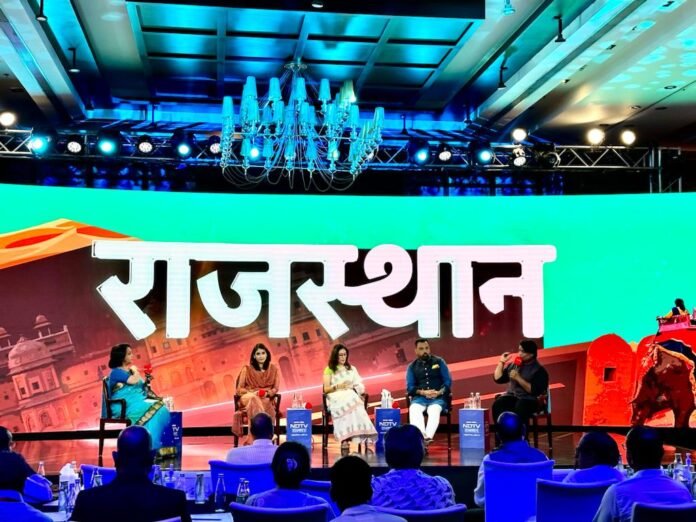
NDTV Rajasthan Grand Launch: Honoring Rajasthan’s Illustrious Icons

0

In a spellbinding spectacle during the sixth session of NDTV Rajasthan’s launch program, the stage played host to four distinguished personalities deeply rooted in the heart of Rajasthan. These eminent figures included Dr. Lakshyaraj Singh Ji Mewar of Udaipur, the renowned playback maestro Divy Kumar, the accomplished Olympian and shooting champion Shagun Chaudhary, and the inspirational Chhavi Rajawat, who etched her name in history as Rajasthan’s youngest Sarpanch. Their presence lent an exceptional aura to this momentous occasion, offering us an opportunity to delve into their profound insights. 

On September 5th, NDTV unveiled its regional news channel, NDTV Rajasthan, amidst grandeur and splendor, against the magnificent backdrop of Rajasthan, the Land of Kings. The event unfolded in the enchanting city of Jaipur and drew a distinguished audience that included the Chief Minister, Ashok Gehlot, the beloved Bollywood actor Ayushmann Khurrana, the eminent educationist and founder of Super 30, Anand Kumar, Dr. Bharat, who has played a pivotal role in advancing education across 50 villages in Rajasthan, along with several other illustrious figures representing diverse fields. 

During the sixth session of this remarkable launch program, the spotlight turned to these four eminent faces of Rajasthan, each bringing their unique experiences and perspectives to the forefront. The lineup featured Dr. Lakshyaraj Singh Ji Mewar, an embodiment of Udaipur’s regal heritage; the mellifluous playback singer Divy Kumar, whose voice resonates with Rajasthan’s rich musical traditions; the accomplished Olympian and national shooting champion Shagun Chaudhary, whose journey embodies the indomitable spirit of Rajasthan, and Chhavi Rajawat, the Sarpanch whose youth and unwavering dedication have set an extraordinary precedent in the state. 

As the conversations unfolded, Prince Lakshyaraj of Udaipur passionately emphasized the significance of taking pride in one’s identity. He underscored that while being born as a human is a matter of destiny, being born in Rajasthan is a precious blessing. He further called upon those who critique women’s education in Rajasthan to delve into history and discover the significance of Shambhu Pathshala, the pioneering school dedicated to educating girls initiated by Mevad, which continues to flourish to this day. 

“Excel in Your Work, Success Will Follow,” proclaimed Divy Kumar, echoing a resounding message of determination and ambition. Prince Lakshyaraj, casting his gaze into the future, declared that the 19th century belonged to England, the 20th century to America, and the 21st century belonged to India. He emphasized the imperative of thorough preparation to seize the opportunities of this century fully. 

Shagun Chaudhary and Divy Kumar also engaged in profound discussions on various women’s issues, with Divy Kumar expressing his pride in being a Rajasthani. He encouraged the youth, declaring, “Excel in your work, and success will naturally follow.”

The NDTV Rajasthan launch event transcended the mere introduction of a new channel; it was a heartfelt celebration of Rajasthan’s spirit, diversity, and boundless potential. Together, we eagerly anticipate bringing Rajasthan’s voices, narratives, and aspirations to the forefront, heralding a new era of regional journalism that pays homage to the enduring legacy of this captivating state.

Krishna Balram Temple: Lord’s Dress to bedazzle with sheen of Navaratnas

0

As the auspicious festival of Lord Krishna’s Janmashtami approaches, the Shri Krishna Balram Temple, nestled on Hare Krishna Marg in Jagatpura, is gearing up for a grand celebration on September 7th.

The festivities will commence with the morning Mangala Aarti and culminate at 12:00 pm, marking the divine birth of Shri Krishna. A significant ritual preceding this is the Maha Abhishek, where the Lord will be bathed with coconut water and Panchamrit from 108 urns.

This year, the Lord Krishna idol will don a dazzling attire adorned with pearls and diamonds. Amitasan Das, the Temple President, shared that Shri Krishna Janmashtami is the pinnacle of the temple’s annual celebrations. Months of meticulous preparations have gone into organizing this grand event. The special silk garments, imported from Vrindavan, will further enhance the beauty of the Lord’s attire, adorned with Navratnas and diamonds meticulously arranged by skilled jewelers from Jaipur.

Following the tradition of Tirupati, the Shri Krishna Balaram Temple in Jaipur will display the deity beautifully adorned on the occasion of Lord Krishna’s birth anniversary. Exquisite colorful flowers sourced from Delhi, Bangalore, and Kolkata will embellish the deity, adding to the joy of devotees who gather to sing and dance in celebration.

The grand Maha Abhishek will occur four times, starting early in the morning. The festivities will kick off with the Mangala Aarti and Abhishek in the main temple. Subsequently, the deity will be escorted to the Sudharma Hall of the new temple building in a splendid palanquin at 6:30 am. Devotees chanting the Hare Krishna Mahamantra and dancing in front of the palanquin will be a sight to behold. Two more consecrations will follow throughout the day, culminating with the Maha Abhishek at midnight when Lord Krishna is believed to have been born. This Maha Abhishek will include coconut water, divine water, herbs, Panchamrit, Panchagavya, and the use of 108 urns, further magnifying the significance of Sri Krishna’s birth anniversary.

To accommodate the thousands of devotees flocking to the temple, five separate areas have been designated for darshan. Devotees will have the opportunity to witness Lord Krishna adorned in a captivating Navaratna attire, experience the joy of seeing Him swing on three different swings, and partake in the Abhishek ceremony held in Sudharma Hall.

To ensure the seamless flow of darshan, both the police administration and temple authorities have made comprehensive arrangements. Approximately 1600 security personnel, including police officers, NCC cadets, and temple volunteers, will be on duty. Three police stations will oversee security, and 250 CCTV cameras and metal detectors will be installed to ensure a thorough security screening of all devotees entering the temple premises.

This Janmashtami promises to be a spectacular celebration of devotion and grandeur at the Shri Krishna Balram Temple, as devotees from near and far come together to honor Lord Krishna’s divine birth.