Home Blog Page 632

NDTV Rajasthan Grand Launch: Honoring Rajasthan’s Illustrious Icons

0

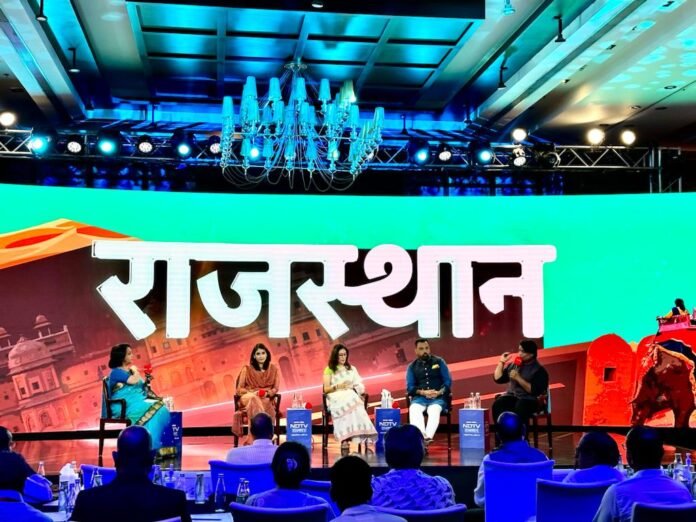
In a spellbinding spectacle during the sixth session of NDTV Rajasthan’s launch program, the stage played host to four distinguished personalities deeply rooted in the heart of Rajasthan. These eminent figures included Dr. Lakshyaraj Singh Ji Mewar of Udaipur, the renowned playback maestro Divy Kumar, the accomplished Olympian and shooting champion Shagun Chaudhary, and the inspirational Chhavi Rajawat, who etched her name in history as Rajasthan’s youngest Sarpanch. Their presence lent an exceptional aura to this momentous occasion, offering us an opportunity to delve into their profound insights. 

On September 5th, NDTV unveiled its regional news channel, NDTV Rajasthan, amidst grandeur and splendor, against the magnificent backdrop of Rajasthan, the Land of Kings. The event unfolded in the enchanting city of Jaipur and drew a distinguished audience that included the Chief Minister, Ashok Gehlot, the beloved Bollywood actor Ayushmann Khurrana, the eminent educationist and founder of Super 30, Anand Kumar, Dr. Bharat, who has played a pivotal role in advancing education across 50 villages in Rajasthan, along with several other illustrious figures representing diverse fields. 

During the sixth session of this remarkable launch program, the spotlight turned to these four eminent faces of Rajasthan, each bringing their unique experiences and perspectives to the forefront. The lineup featured Dr. Lakshyaraj Singh Ji Mewar, an embodiment of Udaipur’s regal heritage; the mellifluous playback singer Divy Kumar, whose voice resonates with Rajasthan’s rich musical traditions; the accomplished Olympian and national shooting champion Shagun Chaudhary, whose journey embodies the indomitable spirit of Rajasthan, and Chhavi Rajawat, the Sarpanch whose youth and unwavering dedication have set an extraordinary precedent in the state. 

As the conversations unfolded, Prince Lakshyaraj of Udaipur passionately emphasized the significance of taking pride in one’s identity. He underscored that while being born as a human is a matter of destiny, being born in Rajasthan is a precious blessing. He further called upon those who critique women’s education in Rajasthan to delve into history and discover the significance of Shambhu Pathshala, the pioneering school dedicated to educating girls initiated by Mevad, which continues to flourish to this day. 

“Excel in Your Work, Success Will Follow,” proclaimed Divy Kumar, echoing a resounding message of determination and ambition. Prince Lakshyaraj, casting his gaze into the future, declared that the 19th century belonged to England, the 20th century to America, and the 21st century belonged to India. He emphasized the imperative of thorough preparation to seize the opportunities of this century fully. 

Shagun Chaudhary and Divy Kumar also engaged in profound discussions on various women’s issues, with Divy Kumar expressing his pride in being a Rajasthani. He encouraged the youth, declaring, “Excel in your work, and success will naturally follow.”

The NDTV Rajasthan launch event transcended the mere introduction of a new channel; it was a heartfelt celebration of Rajasthan’s spirit, diversity, and boundless potential. Together, we eagerly anticipate bringing Rajasthan’s voices, narratives, and aspirations to the forefront, heralding a new era of regional journalism that pays homage to the enduring legacy of this captivating state.

Krishna Balram Temple: Lord’s Dress to bedazzle with sheen of Navaratnas

0

As the auspicious festival of Lord Krishna’s Janmashtami approaches, the Shri Krishna Balram Temple, nestled on Hare Krishna Marg in Jagatpura, is gearing up for a grand celebration on September 7th.

The festivities will commence with the morning Mangala Aarti and culminate at 12:00 pm, marking the divine birth of Shri Krishna. A significant ritual preceding this is the Maha Abhishek, where the Lord will be bathed with coconut water and Panchamrit from 108 urns.

This year, the Lord Krishna idol will don a dazzling attire adorned with pearls and diamonds. Amitasan Das, the Temple President, shared that Shri Krishna Janmashtami is the pinnacle of the temple’s annual celebrations. Months of meticulous preparations have gone into organizing this grand event. The special silk garments, imported from Vrindavan, will further enhance the beauty of the Lord’s attire, adorned with Navratnas and diamonds meticulously arranged by skilled jewelers from Jaipur.

Following the tradition of Tirupati, the Shri Krishna Balaram Temple in Jaipur will display the deity beautifully adorned on the occasion of Lord Krishna’s birth anniversary. Exquisite colorful flowers sourced from Delhi, Bangalore, and Kolkata will embellish the deity, adding to the joy of devotees who gather to sing and dance in celebration.

The grand Maha Abhishek will occur four times, starting early in the morning. The festivities will kick off with the Mangala Aarti and Abhishek in the main temple. Subsequently, the deity will be escorted to the Sudharma Hall of the new temple building in a splendid palanquin at 6:30 am. Devotees chanting the Hare Krishna Mahamantra and dancing in front of the palanquin will be a sight to behold. Two more consecrations will follow throughout the day, culminating with the Maha Abhishek at midnight when Lord Krishna is believed to have been born. This Maha Abhishek will include coconut water, divine water, herbs, Panchamrit, Panchagavya, and the use of 108 urns, further magnifying the significance of Sri Krishna’s birth anniversary.

To accommodate the thousands of devotees flocking to the temple, five separate areas have been designated for darshan. Devotees will have the opportunity to witness Lord Krishna adorned in a captivating Navaratna attire, experience the joy of seeing Him swing on three different swings, and partake in the Abhishek ceremony held in Sudharma Hall.

To ensure the seamless flow of darshan, both the police administration and temple authorities have made comprehensive arrangements. Approximately 1600 security personnel, including police officers, NCC cadets, and temple volunteers, will be on duty. Three police stations will oversee security, and 250 CCTV cameras and metal detectors will be installed to ensure a thorough security screening of all devotees entering the temple premises.

This Janmashtami promises to be a spectacular celebration of devotion and grandeur at the Shri Krishna Balram Temple, as devotees from near and far come together to honor Lord Krishna’s divine birth.

Illuminating Lives: The Princess Diya Kumari Foundation’s Transformative Journey of Hope

0

In a world often marred by adversity and inequality, the Princess Diya Kumari Foundation shines as a radiant beacon of hope, dedicated to bringing light into the lives of those in need. Founded by the visionary Princess Diya Kumari of Jaipur, Rajasthan, the Princess Diya Kumari Foundation Society (PDKF) is a non-government organization established in 2013. This philanthropic organization has embarked on an inspiring journey of transformation, empowering communities and uplifting countless individuals across India. This article explores the remarkable work of the Diya Kumari Foundation and its enduring impact on the lives of many. 

The Visionary Leader 

Princess Diya Kumari, a distinguished member of the royal family of Jaipur, embodies not only regal elegance but also an unwavering commitment to social change. Her vision revolves around creating a world where every individual has unrestricted access to basic necessities, education, and opportunities for personal growth. Fueled by this vision, she founded the Diya Kumari Foundation—an organization steadfastly dedicated to fostering a more equitable and compassionate society. 

The Diya Kumari Foundation has extended its benevolent reach into various domains, primarily focusing on Education: Recognizing that education is the cornerstone of personal and societal development, the foundation has initiated numerous educational programs. These initiatives include the establishment of schools in underserved communities and the provision of scholarships for underprivileged students. By facilitating access to quality education, the foundation empowers individuals to break free from the chains of poverty and construct brighter futures. Healthcare: The foundation acknowledges that access to healthcare is an essential human right, yet many in India struggle to access proper medical attention. To bridge this gap, the Diya Kumari Foundation operates medical camps, distributes essential medicines, and supports medical facilities in rural areas, ensuring that even the most vulnerable populations receive the care they urgently need. Additionally, the foundation conducts awareness campaigns on preventive healthcare practices, nurturing healthier communities. Women Empowerment: Empowering women is a central focus of the foundation, recognizing that their empowerment is pivotal for societal progress. It supports skill development programs and vocational training for women, providing them with the means to achieve financial independence. Initiatives like women’s self-help groups further instill entrepreneurship and leadership among women, thereby advancing the cause of gender equality. 

The Diya Kumari Foundation embraces holistic community development projects, including infrastructure enhancements in rural areas, clean water initiatives, and support for local artisans and craftspeople. These efforts not only elevate the quality of life within communities but also safeguard traditional crafts and cultural heritage. 

The Diya Kumari Foundation stands resolute as a testament to the transformative power of compassion and unwavering dedication. Princess Diya Kumari’s vision has evolved into tangible

change for countless individuals and communities across India. By addressing critical issues such as education, healthcare, women’s empowerment, and community development, the foundation has not only ignited hope but also nurtured resilience in the face of adversity. 

As the Princess Diya Kumari Foundation continues to illuminate the lives of those in need, it not only uplifts individuals but also contributes to the greater good of society as a whole. This remarkable organization serves as a beacon of possibility, demonstrating the profound impact that can be achieved when individuals with vision, resources, and an unwavering commitment to social justice unite to make a lasting and transformative difference.

Fefana, Hanumangarh: Where Tradition Meets Progress 

0

Nestled in the heart of Rajasthan’s Hanumangarh district, Fefana, affectionately known as Phephana, is a picturesque village that epitomizes the essence of rural India. With a rich tapestry of history, culture, and a vibrant community, Fefana stands as a testament to the enduring spirit of its people. 

A Geographical Tapestry 

Strategically positioned on the Nohar-Sirsa Road, Fefana sits approximately 21 kilometers to the northeast of Nohar, a prominent town in the region. This favorable location places it at the crossroads of activity, with close proximity to Nohar, Ellenabad, and Sirsa in Haryana, making it a bustling center for trade and interaction. 

A Melting Pot of Communities 

With a total population of 21000 Fefana proudly holds the title of the most populous village in Nohar. Within its borders, one can find a harmonious amalgamation of diverse communities. Jats, Rajputs, Kumhars, Brahmins, Meghwals, Nayaks, Ghanaks, Nais, Swamis, Chhimpas, Khati, Suthar, Luhar, Sunar, Bawari, Yogis, Charans, and many more coexist in a splendid tapestry of cultures and traditions. This diversity enriches the cultural fabric of Fefana, giving it a unique and harmonious character. 

Tracing the Sands of Time The history of Fefana is a fascinating narrative, marked by intriguing twists and turns. Founded by Kewala Ram Bijarnia in 1819, the village has witnessed periods of settlement and abandonment. It rose from the ashes during the reign of Maharaja Surat Singh in 

the same year, showcasing the resilience and unwavering determination of its people to preserve their heritage. 

The Symphony of Languages Within the boundaries of Fefana, one can hear a symphony of languages. While Hindi serves as the official language, the locals fluently converse in Bagdi, Punjabi, and Hriyanvi. This linguistic diversity echoes the village’s inclusive ethos, where individuals from various backgrounds live together in harmony. 

A Political Force Fefana plays a pivotal role in the political landscape of the region. It is a part of the Churu Lok Sabha constituency and the Nohar Vidhan Sabha constituency, demonstrating its significance in shaping the political discourse of Rajasthan. The residents actively engage in the democratic process, contributing to the larger political canvas. 

Gems in the Heartland 

Fefana is not merely a village; it is a repository of notable landmarks and establishments. It is home to schools that nurture young minds, stadiums that resonate with the cheers of sports enthusiasts, and bustling markets where the essence of local trade thrives. These landmarks are the lifeblood of Fefana, making it a dynamic and self-reliant community.

Fefana, or Phephana, transcends the label of a mere village; it is a microcosm of Rajasthan’s cultural heritage. Its history, diverse population, and strategic location make it a jewel in the Hanumangarh district. As Fefana continues to grow and evolve, it remains firmly rooted in its traditions, symbolizing rural India’s warmth, diversity, and enduring legacy. This village is not just a place on the map; it is a living, breathing testament to the spirit of Rajasthan.

India’s First Cow Hospital: A Lifeline for Cattle in Need

0

For over a decade, Gokuldham Gau Seva Mahatirth has been a beacon of hope for India’s bovine population. Established in 2013 by Sunil Nimana, this unique animal hospital, located on 3.5 acres of land beside the Haryana-Jhajjar highway, has provided critical medical care to more than 82,000 cows. What sets it apart is its unwavering commitment to offering round-the-clock free ambulance services to injured and abandoned cows.

Sunil Nimana, a former construction business owner, embarked on this remarkable journey to address the plight of injured and neglected cows that roam the streets, struggling to survive. Inspired by compassion, Nimana established Gokuldham Gau Seva Mahatirth with the sole purpose of offering aid to these gentle creatures.

The hospital’s impact is substantial, with thousands of cows receiving modern medical treatment from a dedicated team of veterinarians. In addition to medical care, destitute, orphaned, and mute cows find shelter and care within the hospital’s facilities.

However, Gokuldham Gau Seva Mahatirth relies on support to continue its vital work. They emphasize that support can come in various forms, including supplies, food, medicines, financial contributions, and volunteer time. Their mission is to provide a haven for cows and ensure they receive the care they deserve.

The Cow Hospital’s Milestones:

– Over 82,000 cows treated in 10 years.

– More than 8,000 cows currently reside in the hospital’s cowsheds.

– Daily intake of 50 to 60 cows for treatment.

– Commitment to preserving the cultural, religious, and environmental importance of cows.

Ongoing Efforts:

Despite its impressive track record, Gokuldham Gau Seva Mahatirth faces increasing expenses due to the rising number of animals in need. They rely on the support of generous individuals who share their dedication to protecting and caring for cows.

In a world where cows hold significant religious, cultural, economic, and environmental importance, Gokuldham Cow Hospital stands as a symbol of compassionate stewardship. Through your support, you can help ensure that no injured or ill cow is left untreated, furthering the hospital’s mission to expand its reach and continue saving lives across India. Join them in their noble cause, and be a companion to these gentle giants.

Indian-Origin Tharman Shanmugaratnam Elected 9th President of Singapore

0

In a historic victory, Tharman Shanmugaratnam, of Indian origin, has emerged as the 9th President of Singapore after a resounding win in the recent presidential election. The Election Commission made the announcement late on Friday night, marking a significant moment in Singapore’s political history. Shanmugaratnam’s triumph was particularly noteworthy as he defeated two opponents of Chinese origin, securing an impressive 70.4% of the votes cast on September 1st.

Singapore’s Election Department reported a high voter turnout, with 2.53 million out of 2.7 million eligible voters participating, amounting to a remarkable turnout of 93.4%. Tharman Shanmugaratnam’s substantial margin of victory was evident in the fact that he received twice as many votes as both of his opponents combined.

Reacting to his victory, Shanmugaratnam expressed his gratitude to the citizens of Singapore for their trust and support, emphasizing that their decision would not be in vain. He acknowledged the responsibility that came with the presidency and pledged to serve the nation with dedication and integrity.

Notable figures from across the globe extended their congratulations to the newly elected President. Indian Prime Minister Narendra Modi conveyed his best wishes to Shanmugaratnam and expressed his eagerness to strengthen the ties between India and Singapore during his tenure. Singapore’s Prime Minister Lee Hsien Loong also congratulated Tharman and expressed confidence in his ability to fulfill the presidential role successfully.

However, it’s worth noting that not everyone was pleased with the election results. One of the defeated candidates, Tan Kin Lian, voiced his discontent and called for a return to the old method of having Parliament elect the President. This election marked the first time in 11 years that Singaporeans had the opportunity to directly vote for their President, a ceremonial position akin to India’s presidency.

Tharman Shanmugaratnam, born on February 25, 1957, in Singapore, has a family history with roots tracing back to Tamil Nadu, India. His grandfather immigrated to Singapore, and his father, Prof. K. Shanmugaratnam, was a renowned medical scientist, often referred to as the father of pathology in Singapore.

Shanmugaratnam, an accomplished economist educated at Cambridge, is widely recognized as a policy influencer in Singapore. He is known for his outspokenness on global issues, advocating for humility among superpowers like China and the United States, emphasizing the importance of developing countries on the world stage.

In addition to his impressive career in politics, Tharman Shanmugaratnam is a family man. His wife, Jane Itogi, is of Chinese-Japanese descent, and they met during their time at Cambridge University. They have a daughter, Maya Vakil, and three sons, one of whom, Akash, is a co-founder of a prominent software tech company, Kryon Data. Another son, Krishna Economics, is actively involved in the field of economics, while Arjun is a student at the Singapore American School.

Tharman Shanmugaratnam’s election as the 9th President of Singapore also makes him the first Indian to hold this prestigious office. He joins the ranks of two previous Presidents of Indian origin, Deven Nair, and S. R. Nathan, who served from 1999 to 2011. Since 1991, the common people of Singapore have played a pivotal role in electing their President through the voting process, reflecting the country’s commitment to democracy.

This victory adds to the growing list of prominent individuals of Indian origin making significant contributions on the global stage. Across the world, leaders like Rishi Sunak in Britain and numerous Indian-origin politicians in various countries are making their mark in government and opposition roles. Canada, in particular, boasts a notable Indian presence, with 19 Members of Parliament, including three cabinet ministers, hailing from the Indian community. The influence of the Indian diaspora in international politics continues to grow, contributing to the global diversity of leadership.

Unveiling the Splendor of Rajasthan’s Ancient Forts: Sentinels of Time and Legacy

0

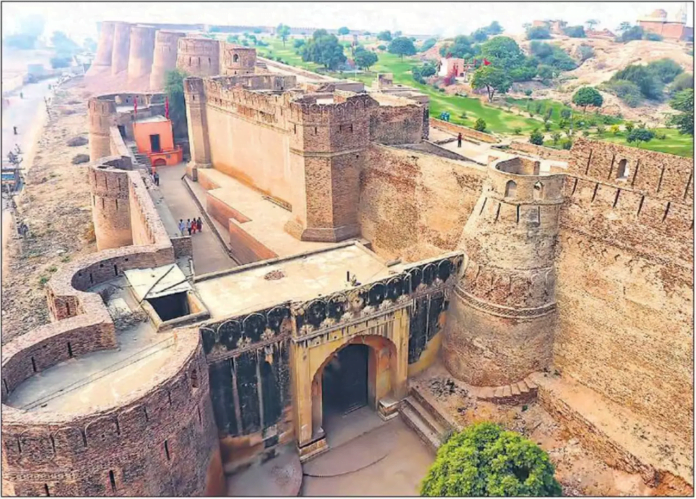
Rajasthan, a realm resplendent with tales of valor and grandeur, cradles within its heart a treasury of ancient forts, each an enduring testament to the journey of time. Among these awe-evoking structures, the Bhatner Fort emerges as an artifact of unparalleled antiquity, its origins stretching back a staggering 1800 years. This venerable stronghold not only showcases the architectural finesse of its era but also commands reverence as one of India’s most impregnable fortresses. 

Woven intricately into the rich tapestry of Rajasthan’s history, the towering walls of the Bhatner Fort resound with narratives of courage, tenacity, and the silent march of epochs. It stands as a sentinel from an era long past, a guardian of whispered secrets and stories that have melded seamlessly into the very stones that constitute its formidable ramparts. 

Mirroring the Bhatner Fort’s historical prominence, the Chittorgarh Fort emerges from the annals of time as another august guardian of Rajasthan’s past. Dating back to the 7th century, this majestic citadel has earned its place among the revered UNESCO World Heritage Sites. Its towering walls and majestic architecture chronicle an era where valor was etched into the very essence of its fortifications. The sun, casting its luminous glow upon Chittorgarh Fort, illuminates a saga that stretches across its vast expanse, with each stone echoing stories of conquest and unwavering bravery. 

Jaisalmer Fort, a gilded marvel shimmering like a mirage in the desert, is yet another bastion of history that Rajasthan presents with pride to the world. Conceived in 1156 AD by Rawal Jaisal, this fortress emerges like a phoenix from the dunes, a tribute to the visionary craftsmanship of its architects and the unyielding spirit of the generations that called it home. The golden elegance of Jaisalmer Fort stands as a living monument to the fusion of artistic brilliance and purpose, a steadfast beacon amid the ever-shifting sands of time. 

Rajasthan, a realm that has borne witness to the undulating currents of centuries, cradles a plethora of these ancient forts, each bearing a unique narrative. The sands of history have etched intricate patterns into the stone walls, and as visitors tread their passages, they become voyagers through time, retracing the footfalls of those who once roamed. From the resounding echoes of the Bhatner Fort’s creation to the UNESCO-adorned grandeur of Chittorgarh and the timeless allure of Jaisalmer, these forts encapsulate the very essence of Rajasthan’s storied heritage. 

Undoubtedly, Rajasthan’s ancient forts stand not merely as architectural wonders, but as custodians of heritage—remnants of valor, cultural richness, and architectural brilliance. Each fort weaves a vivid tableau of lives lived and battles fought within their protective confines. Unyielding against the currents of change, these forts serve as poignant reminders that history is not a distant murmur, but a pulsating and living entity. Their legacy is a bridge from the past to the present, ensuring that the stories they hold are immortalized against the sands of time.

Rajasthan’s Magnificent Hawa Mahal: A Crown of Architectural Marvels

0

Rajasthan, often referred to as the land of palaces and forts, boasts a rich heritage that is embodied in its awe-inspiring architectural wonders. Among these, the Hawa Mahal stands as a testament to the grandeur and history of this captivating region. This iconic palace, situated in the heart of Jaipur, tells a story of devotion, innovation, and timeless elegance.

A Royal Devotion to Lord Krishna

Built in 1799 by Rajput Sawai Pratap Singh, the Hawa Mahal is a masterpiece that exudes architectural brilliance. What sets it apart from the rest is not just its intricate design, but the unique shape it bears. The Hawa Mahal is fashioned like a crown, an homage to Sawai Pratap Singh’s deep devotion to Lord Krishna. This regal connection with Lord Krishna’s crown is a testament to the profound spirituality that infused the construction of this palace.

The Palace of Winds

The very name, “Hawa Mahal,” translates to the “Palace of Winds” or the “Wind Palace.” This name captures the essence of the palace’s purpose. With its 953 small windows, or Jharokas, strategically placed to catch the breeze, the Hawa Mahal served as a summer retreat for Rajput families during bygone eras. Its design ensured that cool, refreshing winds would constantly flow through its chambers, offering respite from the scorching Rajasthan heat.

A Heaven for Royal Women

The Hawa Mahal was more than just an architectural marvel; it was a sanctuary for the royal women of Rajasthan. Constructed as a separate complex within the city, it allowed these women to observe the daily life of the city without being visible to the public. It was a place where they could enjoy the vibrancy of Jaipur from behind the intricately designed latticed windows, maintaining their privacy while being part of the city’s pulse.

A Hive of Architectural Beauty

The facade of the Hawa Mahal resembles a bee hive, with its delicately designed windows creating an exquisite pattern. These windows allowed the royal women to watch the bustling city without exposing themselves to the public eye. This architectural ingenuity made Hawa Mahal not only a functional retreat but also a breathtaking work of art.

Unique Architectural Features

Hawa Mahal has several distinctive features that make it a must-visit landmark. Unlike most palaces and forts, it lacks a front entrance. Instead, visitors enter from the side of the City Palace, highlighting its seamless integration with the city’s layout. Moreover, Hawa Mahal’s five floors are not connected by stairs but by ramps, a unique architectural choice that adds to its mystique.

The Hawa Mandir Connection

The name “Hawa Mahal” is derived from its fifth floor, known as Hawa Mandir. This uppermost level offers panoramic views of Jaipur, making it a prominent attraction within the palace. The grandeur of Hawa Mahal in the cityscape is unmatched and a sight to behold.

A Landmark Worth Exploring

Hawa Mahal is a jewel in the crown of Rajasthan’s architectural wonders. Its fusion of Mughal and Rajasthani architectural styles, its unique design, and its rich history make it an irresistible destination for travelers and history enthusiasts alike.

An Architectural Marvel in Jaipur

The Hawa Mahal is not just a palace; it’s a testament to the artistry, devotion, and innovation of the people of Rajasthan. Its intricate design, rich history, and unique features make it a must-visit landmark in the Pink City of Jaipur. As you explore this regal palace, you’ll witness a fusion of Hindu Rajput and Islamic Mughal influences, from arches and stone inlay filigree work to fluted pillars and floral patterns.

A Five-Story Wonder

This five-story architectural marvel, built without solid foundations, leans at an angle of 87 degrees, giving it its distinctive appearance. The use of red and pink sandstone in its construction not only adds to its beauty but also gave Jaipur its nickname, the “Pink City.”

Windows to the World

Hawa Mahal’s most enchanting feature is its 953 windows, which adorn its lace-like walls. These windows, known as Jharokhas, were ingeniously designed to allow royal ladies to observe the daily life of the city below while remaining hidden from public view. The street-level view of Hawa Mahal is like a massive screened porch, showcasing the best of Rajput architecture in India.

A Unique Entry and Access

Unlike other palaces and forts, Hawa Mahal doesn’t have a traditional front entrance. Visitors must enter from the side of the City Palace, emphasizing its integral connection to the city. Additionally, the palace’s five floors are not connected by stairs; instead, ramps provide access to the upper levels.

A Jewel in Rajasthan’s Crown

Hawa Mahal is a treasure trove of history and architectural marvels. Its fusion of Rajput and Mughal styles, its unique design elements, and its rich historical significance make it a must-visit destination in Jaipur.

The Heritage of Hawa Mahal

Constructed in 1799 by Maharaja Sawai Pratap Singh, Hawa Mahal served as a secluded retreat for royal women to witness processions and street life. Its intricate design, featuring 953 windows and a distinctive honeycomb facade, makes it an architectural wonder. The fusion of Hindu Rajput and Islamic Mughal styles is evident in its arches, stone inlays, fluted pillars, and floral patterns.

Exploring the Palace

Hawa Mahal also houses a small museum that offers insight into its history. Visitors can admire miniature paintings and ceremonial relics that showcase Rajasthan’s royal heritage. From its vantage point, you can enjoy breathtaking views of Jantar Mantar, the City Palace, and the Sireh Deori Bazaar.

A Regal Stay Near Hawa Mahal

If you’re planning to visit Jaipur and explore the wonders of Hawa Mahal, consider booking a luxurious room at Hotel Clarks Amer. This opulent property offers club rooms and penthouse suites, ensuring a memorable stay in the Pink City.

Hawa Mahal is not just a palace; it’s a living testament to Rajasthan’s rich heritage, blending devotion, innovation, and architectural elegance into a magnificent crown jewel. Its history, unique features, and intricate design make it an unmissable destination in Jaipur, inviting visitors to step back in time and immerse themselves in the royal splendor of Rajasthan.

Dhanora village: First smart village of Rajasthan

0

Dhanora village, located in the Dholpur district of Rajasthan, underwent a remarkable transformation over the course of a decade, evolving from a neglected and underdeveloped area into a model smart village. A decade ago, Dhanora faced challenges such as inadequate infrastructure, poor sanitation, lack of proper housing, and limited access to basic amenities like clean water and electricity. However, through the efforts of the Eco Needs Foundation and collaboration with the local community and the Rajasthan government, Dhanora’s story took a positive turn.

The village’s journey towards becoming a smart village involved several key aspects:

1. Infrastructure Development: The foundation prioritized the improvement of roads, which were once in poor condition and hindered connectivity. Better roads facilitated access to the village and enabled subsequent development efforts. The construction of proper housing, community halls, recreational areas, and schools followed, transforming the physical landscape of the village.

2. Greenfield Initiatives:Efforts were made to enhance environmental sustainability. Waste management systems were established, including waste disposal and wastewater treatment plants. Tree plantation projects were undertaken, contributing to a greener environment and better air quality.

3. Technological Advancements: The implementation of e-Pan (electronic planning) brought technological connectivity to the village. Solar power was harnessed, providing uninterrupted electricity, and the village gained access to the internet. Schools were equipped with computers, and public libraries were established, promoting education and knowledge-sharing.

4. Sanitation and Hygiene: One of the primary goals was to eliminate open defecation. To achieve this, the foundation worked on constructing toilets in every household, with support from the community and local authorities. The village was declared open defecation-free (ODF) by the state government.

5. Community Engagement: Overcoming initial skepticism, the foundation engaged with the villagers through extensive meetings and open discussions. Community participation was essential for the success of various projects, from building toilets to constructing infrastructure.

6. Water Conservation: Water conservation structures, including percolation tanks and a canal system, were built to recharge groundwater and improve water availability for farming. This initiative significantly benefited local farmers, leading to improved agricultural practices.

7. Skill Development and Livelihood: Skill development centers were established to offer vocational training, enabling residents to enhance their livelihood opportunities. Educational programs and coaching centers were set up to prepare students for competitive examinations and government jobs.

8. Social Impact: The village’s transformation extended beyond infrastructure. The community adopted environmentally friendly practices, such as using cremation ashes as fertilizer and contributing to a fund for newborn girls. These practices promoted sustainability and social responsibility.

9. Funding and Support: The transformation was made possible through a combination of government funds, private donations, and contributions from the villagers themselves. Collaboration with organizations, government bodies, and individuals played a crucial role in funding various projects.

The success of Dhanora village’s transformation into a smart village has attracted attention from governments, corporations, and individuals alike. It has become a beacon of sustainable development and an inspiration for other villages across different states in India. The case of Dhanora underscores the potential of grassroots efforts, community engagement, and innovative approaches in bringing about positive change in rural areas and fostering self-sufficiency and sustainable living.

Chandramoleshwar Temple: A Timeless Odyssey of Architecture and Devotion

0

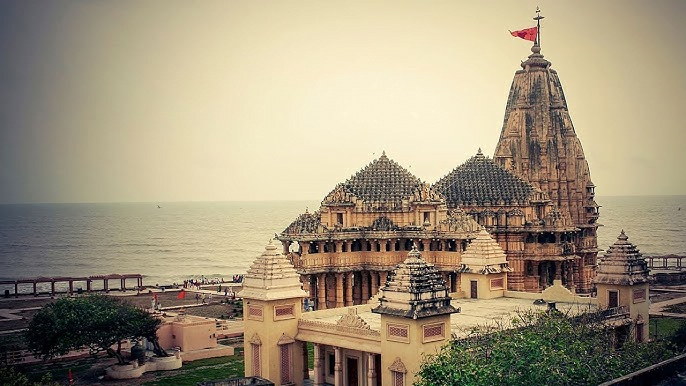
Step into the heart of history and spirituality as you journey to the Chandramoleshwar Temple at Jhalrapatan. This magnificent temple stands as a testament to the past, with its ancient roots embedded in the Pratihara period. What sets it apart, beyond its sheer age, is the remarkable inscription of the date it was built, a rarity that instantly captivates the curious minds of history enthusiasts.

Crafted in the year 746 Samvat, the Chandramoleshwar Temple is a living testament to the architectural marvels of its time. As you approach its entrance, you’re greeted by an artistic echo from the Gupta period, an intriguing juxtaposition that speaks volumes about the temple’s historical journey. It’s like walking through a time portal, where the echoes of different eras resonate in harmony.

Dedicated to Lord Shiva’s Ekamat Pashumat form, the temple’s unique focus earns it the respect and recognition it truly deserves. Bhochak, the skilled minister of King Durggan, brought this sacred edifice into existence, a legacy that continues to inspire awe. Standing tall amidst its surroundings, the temple proudly displays 24 pillars, each adorned with distinct artwork. These pillars are a canvas of artistry, bearing witness to North Gupta carpet art, Pratihara art, Parmar art, and many more. The stones speak of eras long gone, but their stories remain vivid.

Marvel at the rooftop, where two exquisite stone blocks command attention. These blocks, reminiscent of the architectural grandeur found at Ajanta and Ellora, offer a tangible link to the past, a tactile connection with history itself. The temple is not just a relic; it’s a living connection to the craftsmanship and aesthetic sensibilities of its creators.

Legend has it that the temple was bestowed the name Chandramoleshwar because it portrays Lord Shiva wearing the moon itself as an ornament. This celestial connection is imprinted in the temple’s very form, etching it into the annals of sacred history.

As you explore the Chandramoleshwar temple complex, the spiritual panorama unfolds before you. A Shivling takes center stage, an embodiment of divinity that has witnessed centuries of devotion. Alongside it stands the Devi Mandir, a 10th-century marvel adorned with idols depicting Shivtandava, fierce goddesses, and the divine embrace of Shiva and Vishnu. Nearby, another temple houses idols of Shivalinga, Brahma, Vishnu, and Mahesh, a congregation of gods that echo through time.

And let’s not forget the enchanting Chandrabhaga river that flows nearby, a silent witness to countless pilgrimages and sacred rituals. On the auspicious occasion of Mahashivaratri, thousands converge at this sacred abode, seeking blessings and solace.

Intricately woven with history, spirituality, and art, the Chandramoleshwar Temple stands as a sentinel of time, beckoning us to unravel its mysteries and bask in its divine aura. The temple isn’t just a structure; it’s a tapestry of human endeavor, devotion, and the timeless pursuit of the divine.