Home Blog Page 618

Kerala on High Alert as Zika Virus Detected in Karnataka

0

The southern state of Kerala is on high alert as the Karnataka health department raises concerns about the Zika virus’s potential spread. This alert comes after the detection of the Zika virus in a mosquito in Chikkaballapur district, Karnataka, setting off alarm bells in the region. The virus was found in a sample taken from Talakayalabetta village in Sidlaghatta Taluk. In this article, we will delve into the details of the Zika virus, its symptoms, health risks, and what people need to be aware of in the wake of this alert.

Understanding the Zika Virus

Zika virus is primarily transmitted by the Aedes mosquito, which is also responsible for the spread of other diseases like dengue and chikungunya. The virus is known to cause a range of symptoms in those infected. These symptoms typically include a rash, fever, conjunctivitis (red eyes), muscle and joint pain, malaise, and headaches that can last for two to seven days. However, it’s important to note that many people who contract the virus may not develop any noticeable symptoms, making it challenging to identify and control its spread.

The Health Risks of Zika Virus

While Zika virus infection may seem mild in many cases, it can lead to severe health problems. Pregnant women are particularly vulnerable, as infection during pregnancy can lead to miscarriage, stillbirth, and birth defects. According to the World Health Organization (WHO), Zika infection during pregnancy can cause infants to be born with microcephaly and other congenital malformations. Microcephaly is a condition in which a baby’s brain growth slows down or stops in the womb, leading to significant developmental issues.

In addition to the risks to pregnant women, Zika virus infection is associated with Guillain-Barré syndrome, a neurological disorder that can cause muscle weakness and paralysis. This further highlights the need for vigilance and preventive measures to mitigate the virus’s impact.

Environmental Factors and the Spread of Zika

One factor contributing to the spread of vector-borne diseases, like Zika, is the rapidly changing climate. As global temperatures continue to rise, regions that were once unsuitable for disease-carrying mosquitoes are becoming more hospitable to them. These mosquitoes can thrive in warmer and more humid conditions, leading to an increased risk of disease transmission. As a result, we are witnessing the expansion of diseases like Zika to new geographic areas.

Prevention and the Absence of a Vaccine

Currently, there is no vaccine or specific treatment for Zika virus infection. In light of this, prevention becomes the most critical strategy for controlling its spread. Preventive measures include reducing mosquito breeding sites, using mosquito repellents, wearing protective clothing, and taking precautions to avoid mosquito bites. This is especially crucial for pregnant women and individuals living in or traveling to areas where Zika is known to be circulating.

The detection of Zika virus in Karnataka’s Chikkaballapur district has put the neighboring state of Kerala on high alert. With the potential health risks associated with Zika, particularly for pregnant women, it is crucial to take preventive measures seriously. In the absence of a vaccine or specific treatment, staying informed and implementing mosquito control measures is the best defense against this emerging threat. As experts point to climate change as a contributing factor to the spread of vector-borne diseases, addressing these environmental challenges is equally important in the fight against Zika and other similar diseases.
The Election Commission of India: Safeguarding the Essence of Democracy

0

The Election Commission of India, as an autonomous constitutional authority, plays an indispensable role in overseeing the electoral processes throughout the nation. This permanent constitutional body is entrusted with the crucial task of conducting elections in India’s diverse states and union territories, spanning elections for the Lok Sabha, Rajya Sabha, State Legislative Assemblies, and the prestigious offices of the President and Vice President of India.

Rooted in the venerable pages of the Indian Constitution, the Election Commission operates as an independent entity, committed to preserving the integrity of the electoral landscape. At the heart of its mission is the duty to ensure that elections remain free, fair, and transparent, thereby upholding the democratic ideals that form the bedrock of the Indian nation.

Services Empowering Indian Voters

Leveraging modern technology and a user-friendly approach, the Election Commission of India provides a suite of essential services to Indian voters, primarily accessible through its official website and the Voters’ Services Portal. These services are tailored to facilitate citizens’ participation in the electoral process, offering convenience and accessibility:

1. New Registration for General Electors: Any individual aged 18 years or above, or soon to reach this milestone, can register through Form 64, ensuring their inclusion in the electoral roll.

2. New Registration for Overseas (NRI) Electors: Indian citizens who haven’t acquired citizenship in any other country can utilize Form 6A to register as overseas electors, enabling them to engage in the democratic process even from afar.

3. Objection for Proposed Inclusion/Deletion of Name in Existing Roll: Form 7 allows citizens to voice their concerns and request the removal of their names from the existing electoral roll.

4. Shifting of Residence/Correction of Entries in Existing Electoral Roll/Replacement of EPIC/Marking of PwD: Form 8 simplifies the process of updating, replacing, or adding marks for Persons with Disabilities (PwD) on the Electoral Photo Identity Card (EPIC).

5. Aadhaar Collection: Through Form 6B, individuals can apply for their Aadhaar card, a critical document for various government and financial transactions, in conjunction with their Electoral Photo Identity Card (EPIC).

In addition, the official websites of the Chief Electoral Officers of all states and union territories have evolved to provide local statistics, information, and up-to-date electoral rolls with user-friendly search functionality. This comprehensive approach bolsters the transparency of the electoral process.

The Election Commission of India serves as the vanguard of democratic principles, ensuring the sanctity of the electoral system. Its array of services empowers citizens to actively engage in the democratic process and exercise their right to vote, contributing to the vibrant democracy that India proudly upholds. The Election Commission stands as a testament to India’s unwavering commitment to democratic values and the pursuit of free and fair elections.

Flying Surveillance Team (FST) – Guardians of Democracy in India

0

In the vibrant tapestry of India’s democracy, ensuring free and fair elections is paramount. To safeguard the sanctity of the electoral process, the Election Commission of India has established specialized teams known as the Flying Surveillance Team (FST). These teams play a pivotal role in monitoring elections and preventing any irregularities, especially in sensitive areas where the risk of electoral malpractice is higher.

The Flying Surveillance Team (FST) is a dynamic force equipped with state-of-the-art surveillance tools. Their arsenal includes cameras, drones, and other advanced equipment, enabling them to conduct round-the-clock vigilance over the electoral proceedings. FST’s primary objective is to ensure that elections remain untainted by any form of manipulation or undue influence, such as the distribution of money, liquor, or other items intended to sway voters.

The Role of FST in Indian Elections:

  1. Monitoring Candidates and Supporters: FST diligently tracks the movements of political candidates and their supporters during the election period. This helps prevent any illegal activities or unethical practices that could compromise the integrity of the democratic process.
  2. Preventing Electoral Malpractice: The FST teams act as vigilant sentinels, identifying any suspicious activities and reporting them promptly to the appropriate authorities. This proactive approach has been instrumental in curbing electoral malpractice and ensuring that the democratic ethos remains unblemished.
  3. Boosting Voter Confidence: By providing a sense of security during elections, the presence of FSTs increases voter confidence in the electoral process. Citizens can exercise their right to vote without fear of intimidation or unfair practices.
  4. Transparent Electoral Process: FSTs contribute significantly to maintaining the transparency of elections. Their presence and surveillance capabilities deter individuals or groups from attempting to subvert the democratic principles upon which India’s electoral system is built.

The contribution of the Flying Surveillance Team (FST) cannot be overstated. They have played a pivotal role in preserving the integrity of India’s elections, ensuring that the democratic values are upheld. In doing so, they have helped strengthen the trust of the public in the electoral process, and that is invaluable in a thriving democracy.

The Flying Surveillance Team (FST) serves as the guardians of democracy during India’s elections. These dedicated teams, equipped with cutting-edge technology, monitor the movements of candidates, their supporters, and the general public to prevent any electoral malpractice. Their unwavering commitment to a free and fair electoral process helps secure the essence of India’s democracy.

World Cup 2023: Sachin Tendulkar’s statue inaugurated in Wankhede stadium

0

The Mumbai Cricket Association (MCA) inaugurated the statue of Sachin Tendulkar at the Wankhede Stadium on Wednesday, November 1. The ceremony took place at 5:00 pm. Sachin’s statue has been installed near the Sachin Tendulkar stand in the stadium. This statue is dedicated to 50 years of his life. Sachin celebrated his 50th birthday in April this year.

Apart from Sachin Tendulkar, BCCI Secretary Jay Shah, BCCI Vice President Rajeev Shukla, Maharashtra Chief Minister Eknath Shinde and NCP leader Sharad Pawar were also present at the unveiling ceremony.

After a successful career spanning two decades, Sachin played his 200th and final Test at the Wankhede Stadium in November 2013.

Talking about the coming up of the statue, Sachin Tendulkar had said in March this year, ‘I am very happy. It all started in 1988 at Wankhede. This is where I played my first Ranji match. Before I became a professional player, it was here that coach Achrekar sir reprimanded me and after that I became a serious cricketer. This is a very special place for me, I have very special memories associated with this place. It is a big thing for my statue to be built in Wankhede Stadium.

The final of the 2011 ODI World Cup was played at the Wankhede Stadium in Mumbai. Here India defeated Sri Lanka and won the World Cup after 28 years. India became the first host team to win the World Cup. Before this, no team had won the World Cup on its own soil. With this, Sachin Tendulkar’s dream of winning the World Cup was also fulfilled.

Thailand Opens Its Doors: Visa-Free Entry for Indian Tourists from November 10

0

In exciting news for globetrotters, Thailand is set to offer visa-free entry to Indian tourists, marking the second country, after Sri Lanka, to do so. Starting from November 10, 2023, until May 10, 2024, visitors from India and Taiwan can enjoy the delights of Thailand without the hassle of obtaining a visa. This strategic decision aims to entice more travelers as the tourism season approaches, as revealed by a Thai government official in a conversation with Reuters.

Under the new policy, Indian and Taiwanese tourists can bask in the beauty of Thailand for up to 30 days, enhancing their vacation experience. Chai Wacharonke, a Thai government spokesperson, has also disclosed that this endeavor is anticipated to attract an additional 1.4 million tourists, which could generate an extra 55 billion baht, roughly equivalent to $1.5 billion, in revenue for the country.

Thai Prime Minister Srettha Thavisin, when asked about this momentous move, explained, “We will provide visa-free entry to India and Taiwan because a lot of their people like to travel to Thailand.” This announcement signifies a departure from the previous 15-day visa-on-arrival requirement at immigration checkpoints, which necessitated applicants to present bank statements and proof of accommodation.

This is a significant step towards making Thailand a more accessible and appealing destination for tourists from India and Taiwan. Furthermore, it aims to bolster the country’s tourism sector, which was severely impacted by the global pandemic.

Earlier in September this year, Thailand took a similar initiative by waiving tourist visa requirements for Chinese nationals, aiming to reclaim its position as a top tourism destination. Before the pandemic, China was the largest contributor to Thailand’s tourism industry, with 11 million out of a record 39 million arrivals in 2019.

Sri Lanka, another neighboring nation, had recently announced visa-free entry for visitors from seven countries, including India and China, as part of a pilot project to revitalize its tourism industry until March 31, 2024. This signifies a positive shift in the region, signaling a commitment to boost tourism and economic growth.

As per government data, from January to October 29, there were 22 million visitors to Thailand, contributing revenue worth 927.5 billion baht or $25.67 billion. Of this, nearly one million Russian tourists have visited Thailand since the beginning of 2023. This year, Thailand is aspiring to welcome around 28 million tourist arrivals, with the hope that the travel sector can offset the impact of weak exports that have adversely affected the country’s economic growth.

Thailand’s tourism sector is a vital contributor to its overall GDP, accounting for almost 20 percent. However, it has faced significant challenges in recovering since the COVID-19 pandemic. This new move is expected to not only boost tourism but also breathe fresh life into the country’s economy.

According to tourism ministry data, approximately 1.2 million Indians visited Thailand from January to September 2023, making India the fourth-largest source of tourists after Malaysia, China, and South Korea. With visa-free access and a renewed sense of openness, Thailand is poised to regain its status as a coveted travel destination for Indian tourists, forging closer ties between the two nations through shared experiences and cultural exchanges.

Jaipur’s Miniature Artist Crafts Record-Breaking 1.4 cm Statue of Sardar Vallabhbhai Patel on Pencil Tip

0

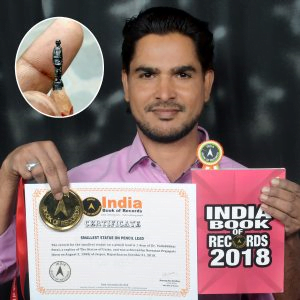
In a remarkable display of artistry and precision, Jaipur’s own miniature artist, Navratna Prajapati, has etched his name into the annals of creativity by crafting a 1.4 cm statue of Sardar Vallabhbhai Patel on the tip of a pencil. This extraordinary achievement was accomplished in just two days and is now claimed to be the smallest statue of the Iron Man of India.

Navratna Prajapati, born on August 2, 1985, has gained recognition for his incredible miniature creations. However, this recent endeavor, creating a minuscule rendition of the iconic Statue of Unity, was a unique challenge. The artist meticulously carved the statue, paying homage to the great leader Sardar Vallabhbhai Patel, whose own colossal statue was to be inaugurated in Gujarat on the same day.

The creation of this pint-sized masterpiece was not without its hurdles. Prajapati revealed that the tip of the pencil broke twice during the delicate process, underscoring the extraordinary precision and patience required for such a task. Nevertheless, he persevered, ensuring the tiny tribute was ready in time for Patel’s birthday.

Navratna Prajapati’s artistic journey has been marked by numerous notable achievements, each pushing the boundaries of what can be achieved on a miniature scale. In 2006, he famously crafted a tiny functioning lantern, capable of burning for 15 seconds, fueled by just three drops of kerosene. This feat alone showcased his incredible craftsmanship and innovation.

Furthermore, Prajapati has created intricate sculptures of historical figures like Maharana Pratap and Dr. Bhimrao Ambedkar, as well as the beloved deity, Lord Ganpati, all masterfully rendered on the tip of a pencil. These works are a testament to his unwavering dedication to his craft and his continuous quest to break new ground in the world of miniature art.

While the colossal Statue of Unity in Gujarat celebrates the legacy of Sardar Vallabhbhai Patel on a grand scale, Navratna Prajapati’s 1.4 cm masterpiece on a humble pencil tip pays its own unique tribute to the Iron Man of India. It serves as a reminder that art knows no bounds, and that the most extraordinary creations can emerge from the tiniest canvases. Navratna Prajapati’s dedication to his craft continues to inspire awe and admiration, proving that in the world of art, even the smallest works can make the biggest impact.

Cricket World Cup 2023: Foreign cricketers soak the surreal beauty of India… watch these videos 

0

Foreign cricketers are soaking the surreal beauty on Indian land and sharing their videos on social media while taking out time from their busy schedule of playing in the World Cup 2023 matches in India. 

The twitter handle Incredible India has shared the pristine pictures of these players which are garnering eyeballs from across the world. 

Watch out these videos: 

India sets example by taking up ecological responsibility via the National Green Corps Programme

0

In a world grappling with a myriad of pressing environmental concerns, India has set a commendable example by nurturing ecological responsibility in its younger generation through the National Green Corps (NGC) Programme. This visionary initiative, under the auspices of the Ministry of Environment and Forests of the Government of India, has been instrumental in promoting environmental education and action in schools throughout the country.

 A Visionary Undertaking

The NGC Programme represents a pioneering endeavour aimed at harnessing the energy and enthusiasm of India’s youth for the protection and preservation of the environment. It casts its wide net across an impressive 1,20,000 schools in India, establishing NGC School Eco Clubs as the bedrock of its mission. Comprising 30 to 50 NGC Students or NGC Cadets in each club, they collectively form the National Green Corps, embarking on a journey of learning and action in diverse realms of environmental conservation.

 A Tapestry of Environmental Activities

The NGC Programme encourages students to engage in a diverse range of activities, each meticulously tailored to address specific environmental issues. Biodiversity Conservation, Water Conservation, Energy Conservation, Waste Management, and Land Use Planning and Resource Management are the key focal points of these young environmental enthusiasts. By emphasizing these vital aspects, the NGC Programme empowers students to translate their knowledge into meaningful action within their communities.

Tailored Solutions and Grassroots Engagement

A standout feature of the NGC Programme is its unwavering focus on tackling local environmental issues. Acknowledging that the challenges faced can vary significantly from one region to another, NGC Eco Clubs adeptly customize their activities to address the specific needs of their locality. These budding environmental activists also play a pivotal role in raising awareness and rallying support for environmental causes. Their outreach activities serve as a beacon of hope, inspiring communities to take proactive measures to safeguard their natural surroundings.

A Green Imprint Across the Nation

The NGC Programme’s impact reverberates across Indian society, leaving an indelible mark on several states. From the lush landscapes of Karnataka to the vibrant culture of Tamil Nadu, and from the fertile fields of Punjab to the serene vistas of Assam, this initiative has successfully kindled the flames of environmental consciousness among the youth. The NGC Eco Clubs, spread across the 250 districts in India, receive valuable support through an annual grant of Rs 25,000, enabling them to conduct their activities effectively.

Precision at the State Level

The implementation of the NGC Programme is a well-orchestrated symphony conducted at the state level. Each Indian state appoints a dedicated State Nodal Officer who oversees the meticulous execution of the program. In some states, such as Telangana and Andhra Pradesh, special Directorates are established to underscore the program’s significance. In other states, various organizations passionate about environmental awareness and conservation play a pivotal role in its execution.

Celebrating Excellence

Recognizing the invaluable contributions of NGC Eco Clubs, select states, including Telangana, Andhra Pradesh, Sikkim, Delhi, and Himachal Pradesh, have integrated these schools into the Green Schools Programme conducted by the Environment Education Unit of the Centre for Science and Environment. Schools that distinguish themselves in environmental endeavours at the state level earn the opportunity to vie for National Awards organized by the Centre for Science and Environment in Delhi, thereby further motivating these young change-makers to strive for excellence.

The National Green Corps Programme transcends being a mere environmental initiative; it represents a clarion call to action. It’s a movement that nurtures the environmental stewards of tomorrow, emphasizing the importance of localized action, an array of impactful activities, and a coordinated, state-level approach. As the NGC Programme continues to flourish, it is paving the way for a greener, more sustainable India, ensuring a brighter environmental legacy for generations to come.

Change makers: Aditi Gupta’s Menstrupedia Breaking Taboos, Educating on Menstruation

0

In a society where the subject of menstruation has long been shrouded in silence, Aditi Gupta stands as a beacon of change. She is the driving force behind Menstrupedia, a remarkable initiative that is revolutionizing the way young girls in India learn about their own bodies, specifically their periods and other aspects of puberty. Through animated videos, workshops, and most notably, a series of comic books filled with charming and easy-to-understand illustrations, Menstrupedia is tearing down the walls of ignorance and shame surrounding menstruation.

Aditi’s journey is fueled by a pressing need. Statistics reveal a grim reality: over 23 million girls in India drop out of school every year due to a lack of menstrual hygiene management facilities. Additionally, a staggering 71% of girls in India reported having no knowledge of menstruation before experiencing their first period. This lack of information not only hinders their education but also perpetuates the damaging stigma associated with menstruation.

Despite India’s reputation as a progressive country, the reluctance to openly discuss female bodies and menstruation persists. Women continue to be subjected to societal prejudices that deem menstruation impure and sinful. Such regressive thinking has no place in a society that has otherwise made strides towards progress in various aspects.

Aditi Gupta has made it her mission to challenge these deeply ingrained beliefs. Her vision is clear: “I dream of a future where menstruation is not a curse, not a disease, but a welcoming change in a girl’s life.”

Aditi’s personal experiences with menstruation have shaped her determination to bring about change. She recalls, “When I got my first period, I was told to keep it a secret from others, even from my father or brothers.” The restrictions placed upon her were severe; she was considered impure and was forbidden from touching any religious symbols or even sitting on a sofa during her periods. “I religiously followed all these restrictive customs for 13 years,” she reflects.

Growing up in Garhwa, Jharkhand, the simple act of purchasing sanitary pads was stigmatized. Aditi resorted to using cloth as an alternative. The avalanche of restrictions placed upon women during their periods creates a sense of shame and guilt, preventing them from viewing menstruation as a normal bodily function. Such practices have silenced countless innocent voices.

It was a fateful meeting with Tuhin Paul, now her husband and co-founder of Menstrupedia, that set the wheels in motion for Aditi’s groundbreaking initiative. They were post-graduate students at the National Institute of Design and fell in love. Aditi was struck by Tuhin’s openness to discussing periods, and he would go online to learn more about menstruation to help her with her cramps. As he shared his findings, Aditi realized how little she herself knew about this essential aspect of a woman’s life.

This revelation prompted a year-long research endeavor to delve deeper into menstruation and the misconceptions surrounding it. Even among urban populations that were thought to be well-informed, a lack of accurate knowledge about menstruation prevailed. Aditi and Tuhin wanted to create something that would not only educate but also ignite curiosity and encourage girls to learn more.

Their answer was the Menstrupedia comic book, which used cartoon characters to enact real stories about menstruation in a fun and engaging way. This comic book marked the beginning of a new era.

The couple’s passion for this vital issue drove them to make a significant impact in the lives of young girls who lacked essential education and awareness about their own bodies. In 2012, they co-founded Menstrupedia, leaving their jobs in 2013 to dedicate all their time to creating the Menstrupedia Comic, which was published in 2014.

Aditi emphasizes the cultural sensitivity of their work: “While making the book, we took great care that none of the illustrations are objectionable in any way.” The comic book features three girls at different pubertal stages: Pinky, who has yet to get her periods; Jiya, who gets her periods during the story’s development; and Meera, who has already started menstruating. These characters are guided by Priya, who educates them in a wholesome and fulfilling way.

Testing of the book revealed a remarkable level of enthusiasm among girls to learn about periods on their own, and even boys displayed interest. The Menstrupedia comic was officially released in September 2014.

The impact of Menstrupedia has been nothing short of phenomenal. Over 25,000 schools and numerous NGOs, both in India and globally, use the Menstrupedia comic book as an educational medium to introduce countless people to menstruation. The book is available in 15 languages, including regional and foreign languages such as Hindi, Marathi, Tamil, Punjabi, and even Spanish. More than 15 schools in various parts of India have incorporated the comic into their curriculum, helping spread awareness about menstruation. It has reached over 1.7 million girls across India.

Aditi and Tuhin’s dedication to this cause earned them a spot on Shark Tank India, where Namita Thapar invested in their product. Aditi’s achievements are not only reflected in her recognition as one of Forbes India’s 30 under 30 achievers in 2014 but also in the transformative impact she has made in the lives of countless young girls who now feel safe and comfortable in their own bodies.

In a world where ignorance and shame surround menstruation, Aditi Gupta and Menstrupedia are leading the charge for change. Through education, understanding, and compassion, they are breaking down barriers and helping girls embrace the natural and beautiful process of menstruation.

Shikhar Dhawan and Ayesha Mukherjee Granted Divorce: The End of an 11-Year Marriage

0

The Family Court of Delhi has granted a divorce to renowned Indian cricketer Shikhar Dhawan and his wife Ayesha Mukherjee. The judgment, citing cruelty as the primary reason, brings an end to an 11-year-long marriage and follows an agreement between the parties that they had not been living as husband and wife since August 8, 2020. This decision, delivered by Family Court Judge Harish Kumar, sheds light on the complexities of matrimonial disputes and international legal considerations.

The court’s verdict was based on the undeniable fact that both parties had mutually consented to the divorce. Judge Kumar highlighted, “There is no dispute that both parties had agreed to take divorce by mutual consent and that their marriage is otherwise dead long ago and have not been living as husband and wife since August 8, 2020.” Moreover, he noted that the estranged wife’s decision not to contest the matter indicated her willingness for the court to grant the divorce, even at the risk of being held guilty of a matrimonial offense.

One of the critical factors that played a role in this case was the previous favorable orders obtained by Shikhar Dhawan’s estranged wife from the Federal Circuit and Family Court in Australia. These orders seemed to embolden her stance in not abiding by earlier court rulings. Consequently, the Delhi Family Court ruled in favor of Dhawan, declaring him entitled to a decree of divorce on the grounds of cruelty, as per Section 13(1)(a) of the Hindu Marriage Act.

The judgement effectively dissolves the marriage that was solemnized on December 30, 2012, in a Gurdwara on Nelson Mandela Marg, Vasant Kunj, New Delhi. This marks the end of a significant chapter in both parties’ lives and brings a sense of finality to their long-standing legal battle.

In addition to the divorce, Shikhar Dhawan sought permanent custody of his minor son, citing concerns for the child’s welfare due to the respondent’s actions. However, the custody issue proved to be complex due to previous court orders in Australia related to the child’s custody.

The court addressed this matter by acknowledging the child’s Australian citizenship and residence in Australia. It emphasized that the implementation of any order or judgment in a foreign territory depends on the willingness of the state machinery of that country to enforce it, either voluntarily or under international obligations. In light of these circumstances, the court directed the estranged wife to bring the child to India for visitation purposes during school vacations, including overnight stays with Shikhar Dhawan and his family members, subject to the child’s academic schedule. The court also allowed for unsupervised meetings between the child and Dhawan in Australia, provided that there is advance intimation.

One of the contentious aspects of this case was Shikhar Dhawan’s claim that he was coerced into transferring ownership of properties in Australia to his wife. In his plea, he alleged, “The petitioner bought three immovable properties in Australia from his own funds but was compelled by the respondent to make her the 99% owner in one property and joint owner in two properties.” He further asserted that his wife had taken a significant portion of the net sale proceeds from one property and the entire net sale proceeds of another, demanding the title of the third property to be transferred to her.

This divorce ruling signifies the conclusion of an 11-year marriage, bringing some resolution to a complex and emotionally charged legal battle. It underscores the importance of understanding the intricacies of international law when dealing with cross-border matrimonial disputes and custody matters, and serves as a reminder that the complexities of such cases often transcend national boundaries.