Home Blog Page 6

Fresh Lava Fountains Erupt From Hawaii’s Kilauea Volcano

0

Kilauea, one of the world’s most active volcanoes, produced new lava fountains as part of its ongoing eruptive phase, marking another intense episode within Hawaii Volcanoes National Park. The latest activity was captured through summit webcam livestreams that showed rapid escalation soon after the eruption began.

Intensifying Activity During Episode 38

The eruption episode, recorded as Episode 38, started at 8:45 am HST on December 6. Within minutes, lava fountains surged in height and intensity. A specialised camera placed in a restricted area was damaged after being buried by tephra during a strong burst around 9:55–9:57 am, according to the US Geological Survey.

Sustained Lava Fountains At The North Vent

Officials reported continuous lava fountains reaching heights of 50–100 feet. These sustained emissions came from the volcano’s north vent, with fountain heights increasing as the episode progressed. Such short-lived eruptive bursts are consistent with the intermittent pattern observed since the current phase began in December 2024.

Limited Impact Beyond Halemaʻumaʻu Crater

Authorities confirmed that the eruptive activity remains confined to the Halemaʻumaʻu crater. No disruptions to aviation are expected, as volcanic gas and ash are not forecast to affect local airports.

Facts

  • Kilauea’s current eruptive phase began on December 23, 2024.
  • Episode 38 featured lava fountains reaching 50–100 feet.
  • The eruption is confined to Halemaʻumaʻu crater within the national park.
  • Pele’s hair can travel over 10 miles during lava fountaining events.

Monitoring Volcanic Hazards And Gas Levels

Scientists are tracking elevated volcanic gas output and the possible spread of Pele’s hair, thin volcanic glass strands formed during fountaining. These sharp fragments may fall within one to two miles of the vent. Kilauea, active since 1983, continues to draw global attention for its frequent eruptions and dramatic lava displays.

India’s National Intelligence Grid (NATGRID): Know Its Significance, Work, Challenges and Feedback…

0

India’s National Intelligence Grid (NATGRID), designed to provide secure real-time access to multiple government and private datasets, is witnessing a significant rise in usage with around 45,000 requests being logged each month. The system, operational since last year, is increasingly turning into a key investigative tool for policing and intelligence agencies.

Expanding Access For Law Enforcement

Initially restricted to select central agencies, NATGRID access has now been extended to State-level officers holding the rank of Superintendent of Police. This broadened access follows directives issued during the recent DGP conference, where agencies were instructed to rely more extensively on the platform for investigations.

Integrated Database For Faster Intelligence

NATGRID aggregates datasets such as Aadhaar details, airline records, bank information, driving licences, and relevant social media activity. By centralising data, it aims to eliminate the need for agencies to coordinate with multiple departments, thus improving the speed and accuracy of intelligence gathering during critical operations.

Operational Challenges And User Feedback

Despite its growing use, some State police officials report delays while accessing the portal. Issues include slow login processes and longer-than-expected waits for retrieving information, contrary to its intended real-time capability. These concerns have been conveyed to authorities for system-level improvements.

Facts

  • NATGRID was conceptualised in 2009 after the 26/11 attacks.
  • The platform logs about 45,000 requests a month.
  • Access is available to SP-rank officers and several central agencies.
  • NATGRID is linked to the CCTNS database covering around 14,000 police stations.

Strengthening Cybersecurity And Data Integration

The platform received renewed momentum in 2019, enabling smoother coordination among national security bodies and extending benefits to State police. Its development aligns with the government’s broader focus on cybersecurity, especially after over 20 lakh cyber incidents were reported in 2024. By integrating with databases like CCTNS, NATGRID continues to evolve as a central pillar in India’s intelligence and investigation framework.

Leonardo DiCaprio Named TIME’s 2025 Entertainer of the Year

0

TIME magazine honors DiCaprio for his lasting impact, spotlighting his September release One Battle After Another, where he plays a paranoid ex-revolutionary with his daughter in a thrilling adaptation of Thomas Pynchon’s Vineland. The actor, with seven Oscar nominations and iconic turns from Titanic to The Wolf of Wall Street, graces the December 29 cover in a stark black-and-white portrait. While most celebrate his staying power with clips and memes from his hits, a few question his single major release this year or tie in critiques of his climate activism.

Leonardo DiCaprio’s acting career began with a role many still regard as astonishing: 1993’s This Boy’s Life. Adapted from Tobias Wolff’s memoir, the film introduced DiCaprio as Toby, a boy navigating the emotional bruises inflicted by a violent stepfather played by Robert De Niro. Even then, DiCaprio displayed a rare combination of swagger and vulnerability—the uneasy space between adolescence and adulthood captured with startling authenticity. Hollywood quickly took notice. Instead of choosing lucrative mainstream roles, including a major offer for Disney’s Hocus Pocus, he opted for the raw indie drama What’s Eating Gilbert Grape, playing a mentally disabled teenager with such precision that it changed the trajectory of his career.

DiCaprio has since built a path defined by sharp instincts and unexpected choices. Over more than three decades, he has collaborated with filmmakers who push boundaries, making him one of cinema’s most enduring and unpredictable stars. His appeal hasn’t faded—if anything, audiences remain as fascinated as ever, now watching him embody middle-aged characters wrestling with relevance, identity, and consequence.

His latest role as Bob Ferguson in Paul Thomas Anderson’s One Battle After Another exemplifies that evolution. Ferguson is a former revolutionary now living in retreat, a single father whose greatest battles have become personal rather than ideological. His attempts to protect his teenage daughter—played by breakout talent Chase Infiniti—give the film its emotional heartbeat. Beneath the humor and eccentricity, DiCaprio plays a man struggling with what it means to raise a child in a chaotic world. For Infiniti, acting opposite DiCaprio was unexpectedly humanizing. “He was kind, generous, and present,” she says. “He made me feel like I belonged.”

Although early box-office predictions doubted the film’s commercial potential, One Battle After Another has surpassed expectations, earning more than $200 million worldwide. More importantly, it has become a cultural conversation piece—bizarre, bold, and defiantly original in an era dominated by sequels and IP universes. Anderson credits DiCaprio’s grounded professionalism with shaping the tone on set: “There’s no fuss, no ego—just the work.”

Even now, DiCaprio remains selective with interviews and public appearances, believing visibility should follow purpose—not the other way around. After the overwhelming fame of Titanic, he learned to retreat strategically, choosing roles with longevity rather than immediate attention. This discipline shaped performances like Howard Hughes in The Aviator, Jay Gatsby, and Ernest Burkhart in Killers of the Flower Moon—characters carved from moral complexity, ambition, and fragility.

Outside acting, DiCaprio channels equal commitment toward environmental advocacy. From global initiatives to the nonprofit Re:wild—which supports Indigenous stewardship of ecosystems—he uses his influence to amplify scientific urgency and hope. He speaks often about climate change, the future of filmmaking, and even cautiously about AI’s role in creative expression: innovation is welcome, he believes, so long as humanity remains the source.

In person, DiCaprio is thoughtful and unexpectedly funny. He still remembers being starstruck by Diane Keaton and Meryl Streep. He still listens to old blues, Django Reinhardt, Stevie Wonder, and Al Green. And despite his stature, he’s uneasy defining himself as a movie star—he prefers the simplicity of being an actor.

As screens shrink and celebrity culture evolves, DiCaprio’s longevity feels increasingly rare. He has grown from the wide-eyed kid who begged for auditions into a performer capable of exploring modern masculinity, empathy, power, and failure with nuance. Through careers, eras, and technological shifts, his presence has remained constant—proof that some stars don’t burn out or fade. They grow deeper.

And for DiCaprio, now more than ever, the work speaks louder than the spotlight.

International Anti-Corruption Day 2025: Theme, Significance and Youth-Led Action

0

International Anti-Corruption Day, observed annually on December 9, highlights the global fight against corruption and promotes transparency and accountability across public and private institutions.

Background and Importance

International Anti-Corruption Day was established following the adoption of the United Nations Convention Against Corruption (UNCAC) in 2003. The observance serves as a reminder that corruption undermines democracy, deepens inequality, weakens public trust, and diverts resources from essential services such as education, healthcare and infrastructure.

With nearly 1.9 billion young people globally, the UN campaign stresses that anti-corruption efforts must actively involve youth as advocates, innovators and watchdogs.

Focus Areas of the 2025 Campaign

The campaign underscores:

  • Strong implementation of UNCAC as the global framework for preventing and punishing corruption
  • Transparency in governance, public procurement and budgeting
  • Protection for whistle-blowers, journalists and activists
  • Ethical business practices and compliance systems to ensure fair opportunities, especially for young workers

A key message this year is that corruption disproportionately affects the poorest and most vulnerable communities, making inclusive oversight essential.

Role of Technology and Innovation

Emerging technologies such as blockchain, artificial intelligence and secure digital reporting systems are being promoted as powerful tools to prevent and detect corruption. These innovations can help create tamper-proof records, track public funds and enable safe, anonymous reporting systems.

Young people, as digital natives, are being encouraged to develop apps, platforms, visual dashboards and open-data tools to make governance processes more transparent and accessible.

How Youth Can Lead Change

Youth participation is central to the 2025 theme. Young people can contribute by:

  • Learning about forms of corruption—bribery, nepotism, embezzlement and vote-buying
  • Refusing to normalize or participate in corrupt behaviour in daily life
  • Leading student integrity clubs, youth parliaments and community transparency forums
  • Using social media, blogs, street plays, films and campaigns to raise awareness
  • Volunteering with NGOs and monitoring local governance and development projects

By advocating for ethical conduct in schools, universities, workplaces and public life, young people help build a culture rooted in honesty, fairness and responsibility.

A Step Toward an Ethical Future

International Anti-Corruption Day 2025 reinforces that prevention must begin with education and participation. As future leaders, voters, entrepreneurs and policymakers, young people have the potential to build stronger institutions and shape a world where integrity is the norm—not the exception.

Praggnanandhaa Becomes First Indian to Qualify for Candidates 2026

0

Grandmaster R Praggnanandhaa has secured a landmark achievement by qualifying for the Candidates 2026 after winning the FIDE Circuit 2025. His breakthrough cements his position as India’s sole male representative at the world championship qualification stage, marking a historic moment for Indian chess.

Qualification Through Stellar Circuit Performance

Praggnanandhaa’s dominant year on the international circuit proved decisive. He clinched titles at the Wijk Aan Zee Masters, Superbet Chess Classic Romania, UzChess Cup Masters, and the London Chess Classic Open. Consistent form across major events helped him gather the highest circuit points, ensuring direct qualification.

Strong Results Across Global Tournaments

Apart from his title victories, he secured runner-up at the Stepan Avagyan Memorial and finished 12th at the Sinquefield Cup, competing against elite opposition. His run to the fourth round of the FIDE World Cup added further weight to his impressive season. These performances underline his growth as a world-class contender.

Confirmed Line-Up for Candidates 2026

Seven of the eight Candidates participants are now confirmed: Anish Giri, Fabiano Caruana, Matthias Bluebaum, Javokhir Sindarov, Wei Yi, Andrey Esipenko, and Praggnanandhaa. The final slot will be awarded to the player with the highest six-month average rating from August 2025 to January 2026, subject to the required minimum number of games.

Facts

  • Praggnanandhaa qualified by winning the FIDE Circuit 2025.
  • Candidates 2026 will take place in Cyprus from 28 March to 16 April 2026.
  • The final Candidates spot is based on a six-month average FIDE rating.
  • Three Indian players have qualified for the Women’s Candidates 2026.

India’s Rising Presence in World Chess

The Candidates 2026 will see Praggnanandhaa lead India’s charge on the men’s side, while Divya Deshmukh, Koneru Humpy, and R Vaishali compete in the Women’s Candidates. His qualification signals a new era for Indian chess, reflecting the nation’s expanding influence at the highest levels of competition

Adani to Build 40 MW AI Green Data Centre in Hyderabad

0

The Adani Group has announced a major digital infrastructure investment in Hyderabad with plans to establish a 40 MW AI green data centre. The project, unveiled at the Global Summit, aims to support India’s accelerating digital transformation while advancing sustainable technology development.

Key Investment for Digital Infrastructure

The upcoming facility, backed by an investment of ₹2,500 crore, will focus on artificial intelligence, cloud services, and high-performance computing. Positioned as a next-generation hub, it is expected to strengthen India’s capabilities in data management, analytics, and digital innovation. The project reflects rising national demand for AI-ready infrastructure.

Adani Group’s Expanding Presence in Telangana

The Group has already invested ₹10,000 crore across various sectors in the State. A prominent initiative includes a defence and aerospace park, which features India’s first unmanned aerial vehicle manufacturing facility. This unit produces long-endurance UAVs for both domestic defence requirements and international markets, enhancing the country’s strategic capabilities.

Infrastructure and Industrial Contributions

Adani’s infrastructure portfolio in Telangana includes over ₹4,000 crore invested in highway development. More than 100 kilometres of roads now connect key districts such as Mancherial, Suryapet, Kodad, and Khammam. Adani Cement has further supported the region’s construction sector with over ₹2,000 crore invested in advanced cement manufacturing facilities.

Facts

  • The data centre will have a 40 MW capacity with ₹2,500 crore investment.
  • Adani Group’s total investment in Telangana exceeds ₹10,000 crore.
  • India’s first UAV manufacturing facility is part of Adani’s defence park in Hyderabad.
  • Over 100 km of highways have been built through Adani’s road infrastructure projects.

Boost to Telangana’s Technology and Growth Vision

The new green data centre aligns with Hyderabad’s strategy to position itself as a premier digital and technological hub. By integrating sustainable operations with high-end computing, the facility is set to support enterprises, government services, and emerging AI ecosystems, reinforcing Telangana’s role in India’s digital future.

China Crosses $1 Trillion Trade Surplus For The First Time

0

China has achieved a historic milestone by crossing a $1 trillion trade surplus for the first time, marking a significant shift in global trade patterns as exports surged despite weakening economic ties with the United States.

According to official data, China’s cumulative trade surplus reached $1.08 trillion by November 2025, driven by strong demand from Latin America, Africa, Southeast Asia and Europe, even as exports to the U.S. plunged 28.6% amid ongoing geopolitical tensions. Overall exports grew 5.9% year-on-year, beating market expectations and recovering from October’s decline, supported by competitive pricing, supply chain rerouting and domestic deflation that made Chinese goods cheaper internationally.

However, China’s growing export dominance has triggered concern in Europe, with French President Emmanuel Macron warning that the European Union may impose tariffs if imbalances persist. Domestically, weak demand remains a concern—imports rose just 1.9%, pointing to sluggish consumer spending and pressure from the real estate slowdown.

Analysts say the temporary U.S.–China tariff truce may expire next year, creating uncertainty for global supply chains and potentially reshaping the future of international trade and manufacturing. As economic forecasts hint at softer global demand in 2026, China’s trade strategy and export-led growth model face increasing pressure from geopolitical risks, shifting markets and rising calls for trade protections.

‘Donald Trump Avenue’, ‘Google Street’ Coming Up In Hyderabad… Know Details…

0

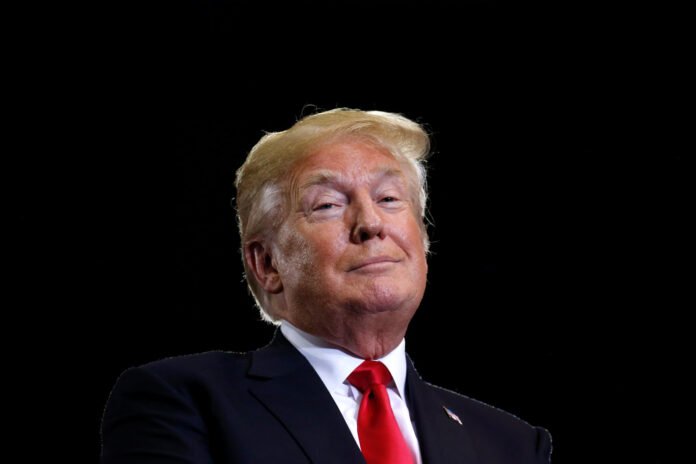
In a move that has sparked national and international attention, the Telangana government has announced that the road adjoining the United States Consulate General in Hyderabad will soon be renamed ‘Donald Trump Avenue’. The proposal marks an unconventional diplomatic gesture and aligns with the state government’s ongoing efforts to rebrand key public spaces after global leaders and major technology corporations.

‘Donald Trump Avenue’, ‘Google Street’ Coming Up In Hyderabad... Know Details...

Part of Global-Themed Renaming Drive

According to officials, the renaming proposal will be formally sent to the Union Ministry of External Affairs and the US Embassy for final clearance. The initiative was first hinted at during an international business summit, where the Chief Minister emphasized branding the city to reflect Hyderabad’s growing global stature.

This initiative forms part of a much wider topographical rebranding strategy, aimed at positioning Telangana — particularly Hyderabad — as a strategic international business and innovation hub.

Tech Giants Enter the Map

Along with the Donald Trump naming proposal, several other high-profile renamings have been confirmed:

  • A landmark stretch in Hyderabad’s Financial District will be designated ‘Google Street’, recognizing the tech giant’s large-scale investment and upcoming campus.
  • Major intersections and urban roadways are also set to be named ‘Wipro Junction’ and ‘Microsoft Road’, reflecting the prominence of India’s IT ecosystem and Hyderabad’s role in it.
  • A new radial road on the Regional Ring Road (RRR) project will be named in honor of late industrialist Ratan Tata, acknowledging his contributions to Indian industry and philanthropy.

Key Points

Key DetailInformation
Road Name ProposalUS Consulate Road → Donald Trump Avenue
Tech RecognitionGoogle Street, Wipro Junction, Microsoft Road planned
Other NamingRRR radial road to be named after Ratan Tata
ContextAnnouncement ahead of Telangana Rising Global Summit

Telangana Rising Global Summit Context

The announcements come ahead of the Telangana Rising Global Summit at Bharat Future City, where the state aims to showcase new investment opportunities, future-ready infrastructure, and international partnerships. The government describes the renaming plan as part of a broader strategic branding exercise to elevate Hyderabad’s global identity.

Bibha Chowdhuri: The Forgotten Genius Who Helped Shape Indian Physics

0

Bibha Chowdhuri stands as one of India’s most remarkable yet overlooked scientists. A pioneering physicist in the field of cosmic rays, she made foundational contributions to particle physics at a time when women in science were exceedingly rare. A new biography now brings her story to light, finally giving her the recognition history overlooked.

Early Life and Academic Journey

Born in 1913 in Kolkata, Chowdhuri grew up in an intellectually rich environment. She graduated with an MSc in Physics from Calcutta University in 1936—the only woman in her class.

Soon after, she joined the Bose Institute as a research assistant under physicist Debendra Mohan Bose. Together, they conducted groundbreaking research using photographic emulsion techniques to study cosmic rays. Their work led to three papers published in Nature—a rare accomplishment for an Indian scientist of the era.

Ahead of Her Time: The Uncredited Meson Discovery

Chowdhuri’s experiments detected evidence of mesons years before C.F. Powell’s Nobel Prize-winning research used similar methods. However, wartime shortages of high-quality photographic plates prevented their findings from being globally recognised. Powell later acknowledged that their contributions laid the foundation for the field.

Career Milestones: India’s First Woman Physicist in Top Institutions

After earning her PhD under Nobel laureate P.M.S. Blackett at the University of Manchester in 1945, Bibha returned to India.

Key milestones include:

  • 1949: Appointed by Homi J. Bhabha as the first woman researcher at TIFR.
  • Later contributed to the Kolar Gold Field experiments, India’s most ambitious high-energy physics project.
  • Continued research independently in Kolkata after institutional setbacks.

She worked and published actively well into her later years.

Legacy: Recognition Long Overdue

Despite her achievements, Bibha Chowdhuri never received a national award, fellowship, or the acknowledgment she deserved. Her absence from mainstream scientific narratives exposes longstanding gender bias in Indian STEM history.

A new biography by Rajinder Singh and Suprakash C. Roy now seeks to restore her rightful place as a pioneer of Indian physics.

Key Points

FactDetail
First woman scientist at TIFR1949
Early evidence of mesonsWith D.M. Bose, before Powell’s Nobel
PhD earned fromUniversity of Manchester (1945), under P.M.S. Blackett
Major research contributionKolar Gold Mine experiments

India Launches BharatGen AI Initiative to Build a Sovereign Indian Language Model

0

India has taken a major step toward establishing its own sovereign artificial intelligence ecosystem with the launch of the BharatGen Technology Foundation at IIT Bombay. The initiative aims to build a Large Language Model (LLM) tailored specifically to India’s multilingual, multicultural, and diverse communication landscape—including regional accents, writing scripts, and dialects across the country.

Establishment at IIT Bombay

The BharatGen AI foundation was formally registered on 7 November 2025 at the Powai campus. This marks a significant expansion of IIT Bombay’s role beyond research and academia, positioning it as a key contributor to national-scale technological development.

The envisioned BharatGen model is expected to understand and generate content in more than 22 Indian languages, covering both text and speech formats—making it one of the most inclusive AI language initiatives globally.

Government Support and Funding

The project has received strong central backing under the IndiaAI Mission. Funding includes:

  • ₹235 crore from the Department of Science and Technology (DST)
  • ₹1,058 crore from the Ministry of Electronics and Information Technology (MeitY)

This financial support aims to accelerate the program from research stage to deployment-ready national infrastructure.

Collaboration and Deployment Strategy

BharatGen is being developed in collaboration with leading IITs and IIITs across India. Its roadmap includes releasing lightweight, distilled AI versions so that:

  • Startups
  • Researchers
  • Enterprises

can build AI-powered applications without requiring expensive computing infrastructure.

Key Points

  • BharatGen Technology Foundation registered: 7 November 2025
  • Location: IIT Bombay, Powai campus
  • Funding: ₹235 crore (DST) + ₹1,058 crore (MeitY)
  • Target languages: 22+ Indian languages

India’s Vision for Sovereign AI

With BharatGen, India aims to develop an indigenous AI backbone that preserves linguistic identity while ensuring digital independence. The initiative positions India to create scalable AI tools aligned with cultural context—empowering innovation across government, education, health, industry, and digital services.