Home Blog Page 587

Best Places to eat Dal-Baati-Churma in Jaipur

0
Best Places to eat Dal-Baati-Churma in Jaipur

Start your culinary journey through the vibrant streets of Jaipur, Rajasthan, and indulge in the exquisite flavors of the iconic Dal Baati Churma. This traditional Rajasthani delicacy, featuring baked baati, spicy panchmel dal, and sweet crumbly churma, is a symphony of taste that reflects the rich cultural tapestry of the region. Here are some of the best places to savor this three-in-one delight in the Pink City:

Laxmi Mishthan Bhandar

Location: Near Johari Bazar, Old Walled City

As one of the city’s oldest sweet stores, Laxmi Mishthan Bhandar has been enchanting locals and visitors alike with its authentic dal baati churma for decades. Renowned for its unique assortment of dals, this charming eatery is a perfect pitstop for shoppers exploring the bustling bazaars. Don’t miss the opportunity to relish traditional Rajasthani cuisine amid the city’s historic charm.

Chokhi Dhani

Location: Near Tonk Road

Chokhi Dhani is not just a restaurant; it’s a cultural haven that celebrates Rajasthan’s rich heritage. While the museum showcases various facets of the state’s culture, the real highlight is the delectable dal baati churma. A visit to Chokhi Dhani promises an immersive experience, where the flavors of authentic Rajasthani cuisine are savored in a setting that transports you to the heart of Rajasthan’s traditions.

Rawat Mishthan Bhandar

Location: Sindhi Camp, Station Road

Renowned for its diverse array of kachoris, Rawat Mishthan Bhandar also takes pride in serving a savory dal baati churma plate that has garnered a loyal following. With options like plain and masala bati, coupled with churma flavors like besan and gulab, this eatery offers a unique thali experience. Indulge in a feast that includes papad, curry, and an array of delectable dals, making it a perfect finale to your Jaipur exploration.

Dal Bati Churma Restaurant

Location: Bani Park

Nestled in the Bani Park region, the aptly named Dal Bati Churma Restaurant is a popular haunt for both locals and tourists from New Delhi. Garnering praise for its exceptional Dal Bati Churma, this restaurant has earned stellar reviews. Immerse yourself in the flavors of Rajasthan and let the culinary expertise of Dal Bati Churma Restaurant leave a lasting impression on your taste buds.

When in Jaipur, don’t miss the opportunity to partake in the culinary symphony of Dal Baati Churma at these esteemed establishments, where tradition and taste come together in a delightful union.

Master Blaster’s Street Cricket

0

“Cricket legend #SachinTendulkar hits the streets of Gulmarg, playing cricket with locals during his Kashmir trip. A moment of unity and joy! #StreetCricket #Kashmir”

India to become the Third-Largest Economy by 2027

0
India's to become the Third-Largest Economy by 2027

Exciting news for India! Jefferies, a big investment advice company, says that India is on its way to becoming the third-largest economy in the world by 2027. The company is also confident that by 2030, India’s market value will be a whopping $10 trillion. This positive prediction is based on the changes and improvements India has been making in its economy over the last ten years.

India’s Growing Economy

According to Jefferies, India has been making important changes to its economic structure, setting the stage for even more growth. The report predicts that in the next four years, India’s Gross Domestic Product (GDP) will reach $5 trillion, making it the third-largest economy globally. This means it will surpass big countries like Japan and Germany, keeping its status as the fastest-growing major economy.

Stock Market Rise

Jefferies is not only optimistic about India’s overall economy but also about its stock market. They believe that India’s stock market will hit $10 trillion by 2030. Currently, India’s market value is at $4.3 trillion, ranking fifth globally. But with a renewed focus on capital spending and a strong pattern of earnings, Jefferies thinks India’s markets will keep growing attractively for the next 5-7 years.

Encouraging More Investors

The report also points out that many people in India are not yet investing in the stock market. Only 4.7 percent of household savings are in stocks. However, Jefferies thinks that more people will start investing because of advancements in technology. Thanks to digital progress, everyone, whether traditional or retail investors, now has equal access to the stock market. The popularity of Systematic Investment Plans (SIP) among regular folks also shows that more people are getting disciplined about investing.

Good Time for Foreign Companies

Jefferies suggests that now is a great time for big international companies to list themselves in India. They say that the strong growth in India, its market influence, and the history of making big profits will attract more and more foreign investments. The report highlights the recent example of Hyundai, a South Korean company, listing its Indian branch. If other global giants like Amazon, Samsung, Apple, Toyota follow suit, it could be a game-changer for India’s stock markets.

Long-Term Reforms Pay Off

The report acknowledges the Indian government’s efforts in making long-term changes. Since 2014, the government has introduced reforms to make doing business in India easier. Key reforms like the Goods and Services Tax (GST) in 2017 and the 2016 insolvency law have helped streamline things. The Real Estate Regulatory Act (RERA) in 2017 also played a role in sorting out issues in the property sector.

Final Thoughts

Report applauds India for its ability to maintain good relationships globally, despite rising tensions. India’s success in being part of the G7 and becoming a full member of BRICS reflects its strategic position in the world. The report points out the successful G-20 Summit held in Delhi as a testament to India’s diplomatic success. With all these positive indicators, India seems set for a bright economic future.

Iron-Craft of Madhya Pradesh, Dokra

0
Iron Craft of Madhya Pradesh

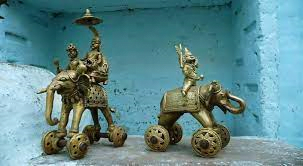
Iron-craft, also known as Dokra, stands as a testament to the rich cultural and artistic heritage of India. Dating back more than 4000 years, this metal casting art has evolved into a beautiful expression of tribal creativity and craftsmanship. Originating from the nomadic craftsmen who traveled from tribe to tribe, iron-craft has become synonymous with exquisitely shaped and decorated brassware products created through the lost wax process.

Historical Roots

The roots of iron-craft can be traced to the tribal communities of Madhya Pradesh, where craftsmen went from one tribe to another, crafting ceremonial and religious figures, as well as ornate kitchenware. The iron-craft tradition is a fascinating blend of genuine preservation and the passing down of ancestral knowledge. Today, these skilled artisans, known as karamkars, continue to practice this ancient craft, creating intricate and ethereal pieces.

Geographical Presence

Madhya Pradesh, Chhattisgarh, Orissa, West Bengal, and Andhra Pradesh stand as the primary strongholds of iron-craft in India. Each region contributes its unique flair to this tribal art form. While Madhya Pradesh is renowned for its imaginative wire metalwork, West Bengal boasts the famous Dokra metal craft, producing statues, jewelry, idols, and other decorative pieces using clay, wax, and metal.

Crafting Process

The heart of iron-craft lies in the lost wax technique, a meticulous process involving twelve stages of preparation. Craftsmen use threads made of beeswax to create intricate designs on a clay core, forming a replica of the desired product. The wax mold is then covered with a layer of clay, and the metal is melted to fill the mold. Once the metal cools, the clay is broken, revealing the finished metal object, which is then smoothened and polished to perfection.

Artistic Expression

Iron-craft is not merely a utilitarian art form; it is a celebration of tribal aesthetics and folk essence. The craftsmen create a wide array of figures, including birds, animals, and traditional Santhal jewels. Lamp holders, lamps, chains, vases, and stands are also part of the repertoire, showcasing the versatility of this ancient craft. The art’s rustic and antique finish, achieved through the lost wax process, adds a unique and appealing charm to each piece.

Regional Variations

While Madhya Pradesh serves as the cradle of iron-craft, West Bengal, Bihar, and Orissa have their distant cousins practicing similar crafts. The Ghawa or iron-craft kumar tribes in West Bengal are known for their traditional metalwork. In West Bengal, districts like Bankura, Purulia, Midnapore, and Burdwan are hubs where Dokra art flourishes, thanks to skilled artisans known as Dokra Kamars.

Iron-craft, with its deep historical roots and geographical diversity, continues to captivate art enthusiasts worldwide. Whether it’s the tribal areas of Madhya Pradesh or the districts of West Bengal, the lost wax process brings to life the intricate and enchanting folk motifs of this ancient craft. The legacy of iron-craft is a testament to the enduring creativity and cultural richness of India’s tribal communities.

Desert Festival of Jaisalmer is started from Today

0
Desert Festival 2024

The vibrant state of Rajasthan is set to captivate the hearts of locals and tourists alike with a trifecta of spectacular events in the last week of February. The Rajasthan Tourism Department is orchestrating a grand celebration featuring the Desert Festival in Jaisalmer, Vintage Car Rally and Exhibition in Jaipur, and the much-anticipated Rajasthan Tourism Polo Cup. The enthusiasm is palpable among both local residents and visitors, and the tourism department is leaving no stone unturned to ensure the success of these cultural extravaganzas.

Desert Festival in Jaisalmer: (22-24 February)

Embarking on the 22nd of February, the Desert Festival, also known as Maru Mahotsav, promises a mesmerizing experience. A collaboration between the tourism department and local district administration, this three-day extravaganza will unfold against the stunning backdrop of Rajasthan’s desert landscape. The festival will commence with an auspicious Aarti at Laxminath Temple in Jaisalmer city on the morning of 22 February, accompanied by a colorful Shobha Yatra featuring locals adorned in traditional attire.

Assistant Director Krishna Kumar shares that the festival will showcase a rich tapestry of cultural events, including camel races, polo matches, puppet shows, long mustache competitions, and turban tying contests. The highlight performances will feature renowned artists like Padmashree Anwar Khan, Pepe Khan, and the soulful bhajan singer Swati Mishra with her captivating rendition of “Mere Ram Aayenge.”

Vintage and Classic Car Exhibition and Drive – (24-25 February)

On the following Saturday and Friday (24-25 February), Jaipur will host a Vintage and Classic Car Exhibition, where the streets will come alive with the glorious nostalgia of bygone eras. On 24 February, regal cars from the time of kings and maharajas will parade through the Pink City, evoking memories of its majestic past. Departing from Jai Mahal Palace, the procession will traverse iconic routes like MI Road, Transport Nagar, and Delhi Road. The Tourism Department’s Deputy Director, Upendra Singh Shekhawat, emphasizes that the rally and exhibition aim to introduce the younger generation to the historical significance of these classic vehicles.

Rajasthan Tourism Polo Cup (26 February to 3 March)

The grand finale of this festival trilogy is the Rajasthan Tourism Polo Cup, scheduled from 26 February to 3 March. Representing the second season of this prestigious event, the tournament is a testament to the deep-rooted cultural significance of polo in Rajasthan. According to Deputy Director Upendra Singh Shekhawat, Jaipur polo has long been an integral part of the state’s cultural heritage. The Polo Cup serves as a beacon, promoting age-old traditions and boosting tourism. The tournament is expected to draw immense interest from tourists, both domestic and international, as it unfolds in the historic city of Jaipur. The Tourism Department is dedicated to elevating the stature of polo tourism and establishing new dimensions in this traditional sport, creating a landmark for the international tourism sector in the state.

Surya Mandir of Jaipur at Galta ji- History and Full Story

0
Surya Mandir

Jaipur, the Pink City, is a tapestry of ancient charm and vibrant modernity. Among its many jewels is the illustrious Sun Temple, locally known as Surya Mandir, nestled atop the Galta hills. This heritage temple, constructed in 1734 AD under the guidance of Maharaja Sawai Jai Singh II, is a testament to the city’s rich history and architectural prowess.

History and Architecture

Built by the minister Diwan Rao Kripa Ram, the Sun Temple reflects the grandeur of the bygone era. Its architectural style echoes the Kalki temple, standing proudly on a rising platform with stone masonry and lime construction. The massive gate, resembling one from a noble mansion, and the fortress-like walls add to its regal aura.

The city’s layout, rooted in the ancient Indian architectural science of Sthapatya Veda, strategically places the Sun Temple on the eastern side. Suraj Pol (Sun Gate) faces north, linking the East and West gates of the walled city. The temple is not just a religious site but also a pivotal piece of Jaipur’s historical puzzle.

Timings and Entry

The Sun Temple welcomes devotees and visitors alike with open arms, and the best part? No entry fee! Opening its doors from 5:00 am to 7:00 pm, the temple provides a serene escape from the city buzz. However, do note the closure between 12 noon to 4 pm daily.

For a glimpse into the temple’s hidden beauty, historians are working to unveil the features obscured by lime whitewash. Cameras are allowed inside, providing an opportunity to capture the timeless beauty of this historical gem.

Location and Transportation

Located at the Galta Gate, Jaipur, the Sun Temple is easily accessible. For those seeking a more adventurous route, a 1.5-kilometre uphill hike from Galta temple awaits. Alternatively, you can reach the temple via the Delhi Bypass route, either by bus, cab, taxi, vehicle, or a hired bike. The Sindhi Camp Bus Stand, Jaipur Junction Railway Station, and Jaipur International Airport are convenient points for transportation.

Best Time to Visit

The winter season, from October to March, unveils the temple’s beauty in all its glory. The mesmerizing sunset, surrounded by a grey-tinted winter sky, adds to the celestial charm.

Exploring the Surroundings

Beyond the spiritual experience, the Sun Temple offers more. Enjoy a peaceful cycle ride or explore natural paths for mountain biking and hiking. These trails lead to panoramic views of the city, making your visit not only spiritual but also adventurous.

Tips for Visitors

  • Watch out for the mischievous monkeys during your visit.
  • Take a moment to savor the majestic sunset; it’s an experience worth cherishing.

Contact Information

  • Phone: 099829 84267

Start a journey to Surya Mandir Jaipur, where history, spirituality, and natural beauty converge, offering a tranquil haven amidst the vibrant tapestry of Jaipur.

Boost to Education- PM Modi inaugurates 3 IITs, 3 IIMs, 20 KVs and 13 Navodaya Vidyalayas today

0
Prime Minister Modi's Historic Visit to Jammu & Kashmir Sparks New Era of Development

Apeksha Agarwal

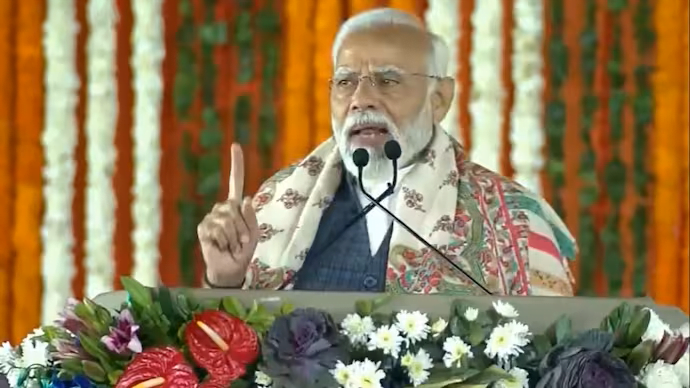
Prime Minister Narendra Modi made a significant visit to Jammu & Kashmir on Tuesday, February 20th, marking a pivotal moment in the region’s journey towards progress and prosperity. The visit was underscored by a series of groundbreaking announcements aimed at catalyzing comprehensive development across various sectors.

During his visit, Prime Minister Modi inaugurated a slew of development projects totaling a staggering Rs. 32,000 crore. These projects encompassed crucial areas such as education, healthcare, infrastructure, transportation, petroleum, and aviation, signifying a holistic approach towards uplifting the socio-economic landscape of Jammu & Kashmir.

Among the notable highlights of the inauguration ceremony was the unveiling of the first electric train, symbolizing a leap towards sustainable and modernized transportation infrastructure in the region. Additionally, the inauguration of the IIT Jammu complex heralds a new era of academic excellence and technological advancement, laying the foundation for nurturing future generations of innovators and leaders.

Vision behind the project

Addressing a captivated audience, Prime Minister Modi underscored the significance of Article 370 and reiterated the government’s commitment to harnessing the untapped potential of the region. Emphasizing BJP’s vision for the upcoming 2024 elections, he outlined a roadmap for inclusive development that encompasses every stratum of society.

Amidst the ceremony, Prime Minister Modi made a historic announcement by distributing approximately 1500 appointment letters to individuals selected for government jobs from Jammu and Kashmir. This gesture not only signifies the government’s dedication to providing employment opportunities but also empowers the local populace to contribute actively to the region’s development.

Prime Minister Modi’s address resonated deeply as he unveiled various transformative projects and schemes, including the ‘Viksit Bharat Viksit Jammu’ program, aimed at bolstering the region’s infrastructure and economic landscape. The highlight of the event was the announcement of the IIT complex, which elicited a wave of enthusiasm among the audience.

The proposed IIT complex is envisioned as a beacon of academic excellence, equipped with state-of-the-art facilities including 27 lecture halls, 52 labs, and 104 faculty offices. Accommodating 1,450 students with comprehensive hostel facilities, the complex is poised to emerge as a premier educational institution in the region.

In addition to the IIT complex, Prime Minister Modi unveiled plans for the establishment of IIMs in Jammu, Bodh Gaya, and Vishakhapatnam, further bolstering the region’s educational landscape. Moreover, the announcement of 20 new buildings for Kendriya Vidyalayas and 13 for Navodaya Vidyalayas underscores the government’s commitment to enhancing access to quality education.

The infrastructural development agenda also witnessed significant strides, with Prime Minister Modi laying the foundation stone for the first five Kendriya Vidyalaya campuses. Furthermore, the inauguration of AIIMS, spanning across 227 acres and constructed at a cost exceeding 1,660 crores, represents a monumental step towards addressing the region’s healthcare needs.

With 720 beds, a medical college, nursing college, and an AYUSH block, AIIMS is poised to revolutionize healthcare delivery in Jammu & Kashmir, catering to the diverse healthcare requirements of its populace.

Prime Minister Narendra Modi’s visionary initiatives have set Jammu & Kashmir on a transformative path towards becoming a beacon of educational excellence and a thriving business hub. As these projects take shape, they promise to unlock the region’s immense potential, fostering inclusive growth and prosperity for generations to come.

Anushka Sharma, Virat Kohli welcome baby boy Akaay— what does the name mean?

0
Akaay— what does the name mean?

In a heartwarming announcement that set social media abuzz, power couple Virat Kohli and Anushka Sharma shared the joyous news of the arrival of their second bundle of joy on Tuesday evening. The dynamic duo took to Instagram to reveal that their baby boy, named ‘Akaay,’ had made his debut on February 15, 2024.

Overflowing with joy, the celebrity pair expressed their happiness and love in a joint statement, declaring, “With abundant happiness and our hearts full of love, we are pleased to inform everyone that on 15th February, we welcomed our baby boy Akaay & Vamika’s little brother into this world! We seek your blessings and good wishes in this beautiful time in our lives. We request you to kindly respect our privacy at this time.”

As fans and well-wishers flooded social media with congratulatory messages, the question on everyone’s mind quickly became: What does the name ‘Akaay’ mean? The couple, known for their discretion, did not provide specific details about the name’s significance. However, the unique and distinctive moniker has sparked curiosity and discussions among fans eager to unravel its meaning.

While the exact meaning remains a mystery, one can’t help but wonder if ‘Akaay’ holds a special significance for the couple or if it reflects a combination of cultural influences. Regardless, the birth of Akaay adds another chapter to the fairy tale story of Virat Kohli and Anushka Sharma, leaving fans excited to witness the journey of the adorable siblings, Akaay and Vamika, unfold. As the couple embraces this new chapter of parenthood, social media continues to buzz with love and warm wishes for the growing family.

President Approves New Anti-Cheating Law for Public Exams

0

President Droupadi Murmu approved the Public Examinations (Prevention of Unfair Means) Bill, 2024 on Tuesday, signaling a commitment to combat cheating in government recruitment exams.

The Bill successfully passed both Houses of Parliament during the Budget session that concluded on February 10. It aims to curb the use of “unfair means” in public examinations, fostering greater transparency, fairness, and credibility. President Droupadi Murmu granted approval on Monday, and its implementation will be determined by the Central Government through notification in the Official Gazette.

Now an Act with the President’s approval, the legislation defines various offences related to public examinations.

Exams covered under the bill

The Act categorizes public examinations as those conducted by authorities designated by the central government, encompassing entities such as the Union Public Service Commission, Staff Selection Commission, Railway Recruitment Board, National Testing Agency, Institute of Banking Personnel Selection, and various central government departments along with their attached offices for recruitment.

Punishment

If it is determined that offences involving service providers occurred with the consent or connivance of any director, senior management, or individuals in charge of the service providers, such individuals will bear personal liability. They will face imprisonment ranging from three to ten years and a fine of Rs 1 crore.

The Act outlines steeper penalties for organized crimes, characterized as unlawful acts committed by individuals or groups to advance a common interest for wrongful gain in connection with public examinations. Those involved in organized crime will face imprisonment ranging from five to ten years, along with a minimum fine of Rs 1 crore.

In the event an institution is found guilty of committing an organized crime, its assets will be seized and forfeited, and a proportional examination cost will be recovered from it.

All offenses under the Act will be considered cognizable, non-bailable, and non-compoundable. No action will be deemed an offense if it is demonstrated that the accused had exercised due diligence. The investigation of offenses under the Act will be conducted by an officer not below the rank of Deputy Superintendent or Assistant Commissioner of Police. The central government reserves the right to transfer the investigation to any central investigating agency.

Top Places to Explore in Madhya Pradesh

0
Top Places To Visit In Madhya Pradesh At Least Once

Discover the timeless charm of central India, Madhya Pradesh, often referred to as the “Heart of India,” is a captivating state that seamlessly blends history, culture, and natural wonders. From ancient temples to serene lakes and vibrant markets, Madhya Pradesh offers a diverse range of experiences for every traveler. Here are some must-visit destinations that should be on your itinerary when exploring this rich and unexplored region.

Bhedaghat

Witness the enchanting Narmada River cascading through marble rocks at Bhedaghat, near Jabalpur. The Dhuandhar waterfall, locally known as the “smoke cascade,” is a breathtaking sight. You can experience the falls from a ropeway or a boat at Panchwati nouka vihaar. Don’t miss the Chausath Yogini temple nearby, adorned with intricate carvings, adding to the spiritual ambiance.

Morena Temples

Explore the hidden gems of Morena, near Gwalior, where the Bateshwar Group of Temples stands as a testament to ancient architectural brilliance. Dating back to the 8th-10th century, these sandstone temples dedicated to Shiva and Vishnu showcase explicit erotic sculptures and tales of Krishna. The restoration of these temples is a poignant story, with protection offered by the unlikely allies—the infamous dacoit gangs of the region.

Dhubela

Just 50km from Khajuraho, the Dhubela fort houses the state’s largest museum, offering a glimpse into the relics of the Bundela dynasty. The museum displays artifacts from the Gupta, Kalchuri, and Chandela periods, providing a comprehensive view of the region’s history. The fort’s surroundings, dotted with chhatris and palaces, add to the charm of this historical site.

Maihar

Ascend Trikuta Hill near Satna to reach the Maihar temple dedicated to Sharada Devi. The temple, accessed by 1063 steps, holds historical significance and offers panoramic views. Maihar is not just about history; it’s also home to the Maihar music gharana and Art Ichol, a unique residency program for artists and writers set against the backdrop of nature.

Vidisha

A visit to Vidisha, near Sanchi, reveals layers of history. Explore the Bijamandal, an unfinished temple from the 11th century, coexisting with a 14th-century mosque. Nearby attractions include a 7th-century stepwell, Satdhara monastic cluster, Udaygiri caves, and Khamba Baba, an ancient Garuda pillar. Gyaraspur, with its Maladevi Temple and Hindola Torana, adds to the historical tapestry.

Sirpur

Hailed by Hiuen Tsang, Sirpur, on the banks of the Mahanadi, was once a flourishing center of Hindu, Buddhist, and Jain heritage. Excavations have revealed Buddhist viharas, a 6th-century Ayurvedic spa, and the exquisite Laxman Temple. The Gandheshwar Temple, featuring diverse deities, and the Anandprabhu Kutir Vihara with a six-foot seated Buddha are captivating discoveries.

Journey to the Heart of India

Madhya Pradesh welcomes you with open arms, offering a tapestry of history, culture, and natural beauty. Whether you’re drawn to ancient temples, historical forts, or the tranquil embrace of nature, Madhya Pradesh promises an unforgettable experience. Accessible by air, rail, and road, this central Indian state invites you to explore its hidden treasures and create memories that will last a lifetime.