


Shanmugaiah and Kurunthamma, an elderly couple from Tenkasi in Tamil Nadu, displayed remarkable courage and presence of mind when they noticed a truck had fallen on a railway track near their house. They ran in the dark, carrying a torchlight, and managed to alert the locopilot of an approaching train by waving the light frantically. The train stopped just in time, avoiding a major accident that could have claimed many lives. The couple was praised by the railway authorities and the public for their heroic act.
25th Edition of Vintage and Classic Car Exhibition

This time in the 25th annual program of vintage and classic cars, along with Rajmata Gayatri Devi’s Mercedes, the first air-conditioned car of 1940 of Chief Minister Vasundhara Raje family was also displayed.
The 25th annual event of vintage and classic cars was organised at Jai Mahal Palace, Jaipur on 24th and 25th February. As part of this annual event of Vintage and Classic Car Exhibition and Drive, the journey of 120 cars over the years was displayed through a special collage.
The exhibition included around 120 cars from Jaipur, Delhi, Gurgaon, Chandigarh, Mumbai and parts of Rajasthan. The exhibition was free of cost to the public on February 24 from 10 am to 6 pm. Organised by Rajputana Automotive Sports Car Club, Jaipur, this event is one of the most successful and oldest vintage and classic car events in India. The main objective of this event is to promote tourism in Rajasthan.
An event like this in Rajasthan, considered one of the heritage-rich places in the world, speaks volumes about India’s rich automobile heritage. It also provides employment opportunities to those old mechanics whose skills have diminished due to changing technology and automation.
Rajputana Automotive Sports Car Club Founder President Dayanidhi Kasliwal said that, ‘we are grateful to the government for carrying forward this tradition of organising events of the best vintage and classic cars.’ Deputy Director of Tourism Department, Upendra Singh, said that through this event, tourism in Rajasthan will be promoted and India’s rich automobile heritage, vintage and classic cars will be conserved.
The show was inaugurated by Chief Minister Bhajan Lal Sharma and Police Commissioner Biju George Joseph at Taj Jai Mahal Palace on February 24 at 12 noon. This show was open for car lovers from 10:30 am to 6 pm. SB Jatti from Delhi and Shrivardhan Kanoria from Kolkata were the judges of the different cars. To decide on awards, cars were divided into 3 sections – Vintage, Classic and Modern Classic on the basis of originality, maintenance, rarity, provenance etc.
Some unique cars participating in the event
1913 Ford Model T (Owner: Meet Badhalia), 1923 Austin Chummy (Owner: Ghani Autos), 1931 Cadillac V16 (Owner: Ranjit Malik from Delhi), 1936 AC 16/17 Rumble (Owner: Madan Mohan from Delhi), 1934 Rolls Royce Royce (Owner: Ashish Jain from Delhi), 1958 Cadillac (Owner: Diljit Titus from Delhi), 1958 Chevrolet Impala (Owner: Harshpati Singhania), 1952 Packard Cavalier (Gautam Singhania), Imperial (Vivek Goenka)
On March 25, at 11.30 am, Health Minister Gajendra Singh Khinvsar and Ashok Rathod, Area Director, Taj Group of Hotels, Jaipur, flagged the vintage car drive from Taj Jai Mahal Palace. These cars travelled on the roads of Jaipur via Government Hostel, MI Road, Panch Batti, Statue Circle, Ambedkar Circle, Chaumun Circle and returned to Taj Jai Mahal Palace. There was an award distribution ceremony at 3 pm, in which Rajasthan Deputy Chief Minister Diya Kumari was invited.
After this event of vintage cars, the Jaipur Open Polo final match was held at Rajasthan Polo Ground. Here vintage and classic cars were parked in the designated parking at the Polo Ground itself.
Top 20 Places to visit in Rajasthan
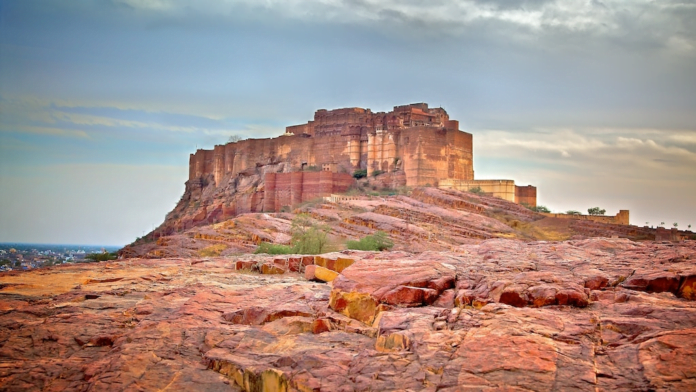
Rajasthan stands out as one of India’s prosperous states, attracting a substantial number of tourists due to its rich cultural heritage, historical significance, ancient forts, palaces, folk music, dance, and delectable cuisine, notably the famous Dal Batti Churma. This culinary delight involves baked bati immersed in ghee, Panchkula dal, mixed churma, and jaggery.
For an enchanting trip, Rajasthan offers a myriad of captivating destinations. Known as the ‘Land of Kings,’ this renowned desert state boasts the breathtaking Aravalli Range and exhilarating camel rides in the Thar Desert, making it an ideal destination for solo travelers or couples. Here, we present a curated list of 20 must-visit places in Rajasthan.
- Udaipur
- Best Time to Visit: October to March
- Tourist Attractions: Lake Pichola, Bagore Ki Haveli, Sajjangarh Palace, City Palace, Jagmandir, Saheliyon ki Bari, Sajjangarh Wildlife Sanctuary
- Activities: Sunset watching at Lake Pichola, boating at Fateh Sagar Lake, relaxing at Ambrai Ghat, visiting Karni Mata Temple
- How to Reach: Train – Udaipur City Railway Station and Rana Pratap Nagar Railway Station, Air – Maharana Pratap Airport, Road – Buses and cabs available from all states
- Ranthambore
- Best Time to Visit: October to April
- Tourist Attractions: Ranthambore Tiger Reserve, Bagore Ki Haveli, Sajjangarh Palace, City Palace, Jagmandir, Saheliyon ki Bari, Sajjangarh Wildlife Sanctuary
- Activities: Jeep safari, spotting tigers, bird watching, photography
- How to Reach: Train – Sawai Madhopur Junction, Air – Jaipur International Airport, Road – Taxi from Sawai Madhopur or Kota
- Pushkar
- Best Time to Visit: October to March
- Tourist Attractions: Brahma Temple, Pushkar Lake, Varaha Temple, Savitri Temple, Rangji Temple
- Activities: Camel ride, photography while boating at Pushkar Lake, enjoying Pushkar Mela, shopping for souvenirs
- How to Reach: Train – Pushkar Terminus, Air – Kishangarh (KQH) Airport, Road – Buses and taxis from all Rajasthan states
- Chittorgarh
- Best Time to Visit: October to March
- Tourist Attractions: Chittorgarh Fort, Padmini Palace, Gau Mukh Kund, Kalika Mata Temple, Rana Kumbha’s Palace
- Activities: Touring Sitamata Wildlife Sanctuary, exploring ancient forts and palaces, jeep jungle safari at Bassi Wildlife Sanctuary
- How to Reach: Train – Chittorgarh Railway Station, Air – Dabok Airport, Road – Buses and taxis from various parts of Rajasthan
- Nathdwara
- Best Time to Visit: September to February
- Tourist Attractions: Shrinathji Temple, Dwarkadheesh Temple, Charbhuja Temple, Eklingji Temple, Vishwas Swaroopam
- Activities: Visiting divine temples with family, buying delectable sweets and items
- How to Reach: Train – Nathdwara railway station, Air – Maharana Pratap Airport, Road – State-owned or Volvo buses from major cities
- Kumbhalgarh Fort
- Best Time to Visit: October to March
- Tourist Attractions: Kumbhalgarh Fort, Kumbhalgarh Wildlife Sanctuary, Neelkanth Mahadev Temple, Badal Mahal, Vedi Temple
- Activities: Exploring Kumbhalgarh Fort, watching Nilgais, Antelopes, and Chinkaras, visiting divine temples
- How to Reach: Train – Falna Railway Station, Air – Dabok Airport, Road – Buses and cabs from major Rajasthan cities
- Mandawa
- Best Time to Visit: October to March
- Tourist Attractions: Mandwa Fort, Hanuman Prasad Goenka Haveli, Murmuria Haveli, Gulab Rai Ladia Haveli, Harlalka Well, Open Air Art Gallery
- Activities: Visiting Mandawa Fort, exploring havelis, visiting Open Air Art Gallery, dining at rooftop restaurants, shopping from local stores
- How to Reach: Train – Jhunjhunu Railway Station, Air – Jaipur International Airport, Road – Well-connected by road with Jaipur, Jaisalmer, and Delhi
- Jaipur
- Best Time to Visit: October to March
- Tourist Attractions: Hawa Mahal, Amer Fort, Chokhi Dhani, City Palace, Jantar Mantar
- Activities: Kite flying during Jaipur Kite Festival, tasting local food, participating in Jaipur Lit Fest, elephant ride, exploring Nahargarh Fort
- How to Reach: Train – Jaipur Junction, Air – Jaipur International Airport, Road – Luxury and deluxe buses operated by RSRTC
- Jodhpur
- Best Time to Visit: October to February
- Tourist Attractions: Umaid Bhawan Palace, Mehrangarh Fort, Toorji Ka Jhalra, Jaswant Thada, Mandore Garden
- Activities: Camel safari, touring Bishnoi village, ziplining, shopping at Sardar Market, visiting Sardar Government Museum
- How to Reach: Train – Jodhpur Railway Station, Air – Jodhpur Airport, Road – Private and state-run buses
- Ajmer
- Best Time to Visit: October to March
- Tourist Attractions: Ajmer Sharif Dargah, Ana Sagar Lake, Ajmer Jain Temple, Foy Sagar Lake, Adhai Din ka Jhopara
- Activities: Sightseeing, visiting pilgrimage sites, hanging around at Durga Bagh Gardens, shopping at local markets
- How to Reach: Train – Ajmer Railway Station, Air – Jaipur International Airport, Road – RSRTC buses to Ajmer
- Mount Abu
- Best Time to Visit: October to March
- Tourist Attractions: Nakki Lake, Guru Shikhar, Toad Rock, Mount Abu Wildlife Sanctuary, Dilwara Temple, Mount Abu Sunset Point
- Activities: Cruising at Nakki Lake, visiting Achalgarh Village, climbing at Guru Shikhar, exploring Trevors Tank, experiencing peace at temples
- How to Reach: Train – Abu Road railway station, Air – Maharana Pratap Airport, Road – Public and private buses and cabs from all parts of Rajasthan
- Bundi
- Best Time to Visit: October to March
- Tourist Attractions: Moti Mahal, Taragarh Fort, Garh Palace, Badal Mahal, Chaurasi Khambon ki Chattri, Nawal Sagar Lake, Sukh Mahal
- Activities: Touring Phool Mahal, attending Bandi Utsav, visiting Bhoraji ka Kund
- How to Reach: Train – Kota Railway Station, Air – Jaipur International Airport, Road – Bus or taxi from all parts of Rajasthan
- Jaisalmer
- Best Time to Visit: October to March
- Tourist Attractions: Jaisalmer Fort, Gadisar Lake, Patwon Ki Haveli, Nathmal ki Haveli, Kuldhara Village, Desert National Park
- Activities: Camel Safari in Sam Sand Dunes, visiting Jaisalmer War Museum, quad biking, camping in the desert
- How to Reach: Train – Jaisalmer railway station, Air – Jodhpur Airport, Road – Private and state-run buses
- Bikaner
- Best Time to Visit: October to March
- Tourist Attractions: Junagarh Fort, Lalgarh Palace, Gajner Palace, Sursagar Lake, Karni Mata Temple
- Activities: Desert Safari, attending camel festival, visiting Prachina Museum, shopping at Kote Gate
- How to Reach: Train – Bikaner Junction and Lalgarh Railway Junction, Air – Jodhpur Airport, Road – State-run and private buses
- Alwar
- Best Time to Visit: October to March
- Tourist Attractions: Sariska National Park, Bala Quila Fort, Moti Dungri, Bhangarh Fort, Kesroli, Siliserh Lake palace
- Activities: Visiting Bala Quila Fort, dipping feet in the water at Garbhaji Falls, shopping at Churi Market, exploring Jai Pol
- How to Reach: Train – Alwar Junction, Air – Sanganer Airport, Road – State-run and private buses
- Bharatpur
- Best Time to Visit: October to March
- Tourist Attractions: Bharatpur National Park, Lohagarh Fort, Banke Bihari Temple, Bharatpur Palace and Museum, Keoladeo National Park, Ganga Mandir
- Activities: Shopping and eating at local stores, jungle safari, photography, bird-watching
- How to Reach: Train – Bharatpur Junction, Air – Indira Gandhi International Airport, Road – Car rental services and buses
- Sawai Madhopur
- Best Time to Visit: October to April
- Tourist Attractions: National Chambal Sanctuary, Sawai Man Sanctuary, Rameshwaram Ghat, Ranthambore National Park, Malik Talao
- Activities: Spotting tiger, photography, tasting local food, jungle safari, bird watching
- How to Reach: Train – Sawai Madhopur Railway Station, Air – Jaipur Airport, Road – Taxi or bus to Sawai Madhopur
- Kota
- Best Time to Visit: October to March
- Tourist Attractions: Seven Wonders Park, Kishore Sagar and Jagmandir Palace, Garadia Mahadev Temple, Kota Barrage, Chambal Gardens
- Activities: Spotting crocodiles, touring Kaithoon, buying local Kota sarees, visiting City Palace, Chambal River Safari
- How to Reach: Train – Kota Junction Railway Station, Air – Sanganer Airport, Road – Deluxe buses from all places in Rajasthan
- Osian
- Best Time to Visit: November to March
- Tourist Attractions: Sachiya Mata Temple, Surya Temple, Kali Temple, The Mahavira Temple, Harihara Temple
- Activities: Photography, visiting temples, sightseeing, shopping at local shops, dining at local restaurants
- How to Reach: Train – Osian Railway Station, Air – Jodhpur Airport, Road – State-run buses
- Neemrana
- Best Time to Visit: March to July
- Tourist Attractions: Neemrana Fort Palace, Baori, Sariska National Park, Naraul, Old Vrindavan Palace, Paradise Waterpark, Bala Quila, Moosi Maharani Ki Chhatri
- Activities: Ziplining, tasting local cuisine, shopping at local markets, village safari
- How to Reach: Train – Rewari Railway Station, Air – Delhi International Airport, Road – Located between Delhi-Jaipur Road, well-connected by transport
In conclusion, these top 20 places in Rajasthan offer a diverse range of experiences, from cultural exploration to wildlife adventures. Each city has its unique charm, providing an opportunity to delve into the rich history and vibrant traditions of this desert state. So, pack your bags and embark on a journey to discover the treasures of Rajasthan.
WPL 2024 Opening Ceremony: Bollywood Stars Seta Fire on Stage

The Women’s Premier League commenced at the M Chinnaswamy Stadium in Bengaluru, featuring the opening match between defending champions Mumbai Indians and Delhi Capitals. The inauguration ceremony, highlighted by a performance from veteran Bollywood actor Shahrukh Khan, set the stage.
Alongside him, Shahid Kapoor, Siddharth Malhotra, Kartik Aryan, and Varun Dhawan captivated the audience with their dance performances.
Kartik Aryan performed first in the opening ceremony. He supported the Gujarat Giants team. Kartik danced on the song of the film Bhool Bhulaiyaa 2 snd ‘Dil Chori’ from the film Sonu Ki Titu Ki Sweety.
Siddharth Malhotra supported Delhi Capitals. Siddharth performed on the song ‘Munda Kukkad Kamal Da’, ‘Raatan Lambiyan’ and ‘Kala Chashma’.
After Kartik and Siddharth, Tiger Shroff won the hearts of the audience. He supported Royal Challengers Bangalore (RCB). Tiger danced on the songs ‘Mere Naal Tu Visal Baja’, ‘Ghunghru Toot Gaye’ and ‘Jai-Jai Shivshankar’.
Varun Dhawan supported UP Warriors. He performed on the songs ‘Apna Bana Le’, ‘Tera Dhyan Kidhar Hai’ and ‘Besharmi Ki Height’ from the same film. Then he won everyone’s hearts by performing on the song ‘Muqabla’ from his famous film Street Dancer 3.Shahid Kapoor danced to the song ‘Shaam Shaandaar’ and ‘Nagada Baja’ from the film Shandaar and Jab We Met respectively.
Shahrukh Khan came last to perform. He danced on the famous songs ‘Jhoome Jo Pathan’ and ‘Ramaiya Vastavaiya’. Shahrukh called the captains of all the teams on the stage and then concluded the program.
Best Places to eat Dal-Baati-Churma in Jaipur

Start your culinary journey through the vibrant streets of Jaipur, Rajasthan, and indulge in the exquisite flavors of the iconic Dal Baati Churma. This traditional Rajasthani delicacy, featuring baked baati, spicy panchmel dal, and sweet crumbly churma, is a symphony of taste that reflects the rich cultural tapestry of the region. Here are some of the best places to savor this three-in-one delight in the Pink City:
Laxmi Mishthan Bhandar
Location: Near Johari Bazar, Old Walled City
As one of the city’s oldest sweet stores, Laxmi Mishthan Bhandar has been enchanting locals and visitors alike with its authentic dal baati churma for decades. Renowned for its unique assortment of dals, this charming eatery is a perfect pitstop for shoppers exploring the bustling bazaars. Don’t miss the opportunity to relish traditional Rajasthani cuisine amid the city’s historic charm.
Chokhi Dhani
Location: Near Tonk Road
Chokhi Dhani is not just a restaurant; it’s a cultural haven that celebrates Rajasthan’s rich heritage. While the museum showcases various facets of the state’s culture, the real highlight is the delectable dal baati churma. A visit to Chokhi Dhani promises an immersive experience, where the flavors of authentic Rajasthani cuisine are savored in a setting that transports you to the heart of Rajasthan’s traditions.
Rawat Mishthan Bhandar
Location: Sindhi Camp, Station Road
Renowned for its diverse array of kachoris, Rawat Mishthan Bhandar also takes pride in serving a savory dal baati churma plate that has garnered a loyal following. With options like plain and masala bati, coupled with churma flavors like besan and gulab, this eatery offers a unique thali experience. Indulge in a feast that includes papad, curry, and an array of delectable dals, making it a perfect finale to your Jaipur exploration.
Dal Bati Churma Restaurant
Location: Bani Park
Nestled in the Bani Park region, the aptly named Dal Bati Churma Restaurant is a popular haunt for both locals and tourists from New Delhi. Garnering praise for its exceptional Dal Bati Churma, this restaurant has earned stellar reviews. Immerse yourself in the flavors of Rajasthan and let the culinary expertise of Dal Bati Churma Restaurant leave a lasting impression on your taste buds.
When in Jaipur, don’t miss the opportunity to partake in the culinary symphony of Dal Baati Churma at these esteemed establishments, where tradition and taste come together in a delightful union.
Master Blaster’s Street Cricket

“Cricket legend #SachinTendulkar hits the streets of Gulmarg, playing cricket with locals during his Kashmir trip. A moment of unity and joy! #StreetCricket #Kashmir”
India to become the Third-Largest Economy by 2027

Exciting news for India! Jefferies, a big investment advice company, says that India is on its way to becoming the third-largest economy in the world by 2027. The company is also confident that by 2030, India’s market value will be a whopping $10 trillion. This positive prediction is based on the changes and improvements India has been making in its economy over the last ten years.
India’s Growing Economy
According to Jefferies, India has been making important changes to its economic structure, setting the stage for even more growth. The report predicts that in the next four years, India’s Gross Domestic Product (GDP) will reach $5 trillion, making it the third-largest economy globally. This means it will surpass big countries like Japan and Germany, keeping its status as the fastest-growing major economy.
Stock Market Rise
Jefferies is not only optimistic about India’s overall economy but also about its stock market. They believe that India’s stock market will hit $10 trillion by 2030. Currently, India’s market value is at $4.3 trillion, ranking fifth globally. But with a renewed focus on capital spending and a strong pattern of earnings, Jefferies thinks India’s markets will keep growing attractively for the next 5-7 years.
Encouraging More Investors
The report also points out that many people in India are not yet investing in the stock market. Only 4.7 percent of household savings are in stocks. However, Jefferies thinks that more people will start investing because of advancements in technology. Thanks to digital progress, everyone, whether traditional or retail investors, now has equal access to the stock market. The popularity of Systematic Investment Plans (SIP) among regular folks also shows that more people are getting disciplined about investing.
Good Time for Foreign Companies
Jefferies suggests that now is a great time for big international companies to list themselves in India. They say that the strong growth in India, its market influence, and the history of making big profits will attract more and more foreign investments. The report highlights the recent example of Hyundai, a South Korean company, listing its Indian branch. If other global giants like Amazon, Samsung, Apple, Toyota follow suit, it could be a game-changer for India’s stock markets.
Long-Term Reforms Pay Off
The report acknowledges the Indian government’s efforts in making long-term changes. Since 2014, the government has introduced reforms to make doing business in India easier. Key reforms like the Goods and Services Tax (GST) in 2017 and the 2016 insolvency law have helped streamline things. The Real Estate Regulatory Act (RERA) in 2017 also played a role in sorting out issues in the property sector.
Final Thoughts
Report applauds India for its ability to maintain good relationships globally, despite rising tensions. India’s success in being part of the G7 and becoming a full member of BRICS reflects its strategic position in the world. The report points out the successful G-20 Summit held in Delhi as a testament to India’s diplomatic success. With all these positive indicators, India seems set for a bright economic future.
Iron-Craft of Madhya Pradesh, Dokra
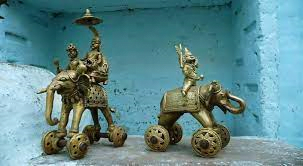
Iron-craft, also known as Dokra, stands as a testament to the rich cultural and artistic heritage of India. Dating back more than 4000 years, this metal casting art has evolved into a beautiful expression of tribal creativity and craftsmanship. Originating from the nomadic craftsmen who traveled from tribe to tribe, iron-craft has become synonymous with exquisitely shaped and decorated brassware products created through the lost wax process.
Historical Roots
The roots of iron-craft can be traced to the tribal communities of Madhya Pradesh, where craftsmen went from one tribe to another, crafting ceremonial and religious figures, as well as ornate kitchenware. The iron-craft tradition is a fascinating blend of genuine preservation and the passing down of ancestral knowledge. Today, these skilled artisans, known as karamkars, continue to practice this ancient craft, creating intricate and ethereal pieces.
Geographical Presence
Madhya Pradesh, Chhattisgarh, Orissa, West Bengal, and Andhra Pradesh stand as the primary strongholds of iron-craft in India. Each region contributes its unique flair to this tribal art form. While Madhya Pradesh is renowned for its imaginative wire metalwork, West Bengal boasts the famous Dokra metal craft, producing statues, jewelry, idols, and other decorative pieces using clay, wax, and metal.
Crafting Process
The heart of iron-craft lies in the lost wax technique, a meticulous process involving twelve stages of preparation. Craftsmen use threads made of beeswax to create intricate designs on a clay core, forming a replica of the desired product. The wax mold is then covered with a layer of clay, and the metal is melted to fill the mold. Once the metal cools, the clay is broken, revealing the finished metal object, which is then smoothened and polished to perfection.
Artistic Expression
Iron-craft is not merely a utilitarian art form; it is a celebration of tribal aesthetics and folk essence. The craftsmen create a wide array of figures, including birds, animals, and traditional Santhal jewels. Lamp holders, lamps, chains, vases, and stands are also part of the repertoire, showcasing the versatility of this ancient craft. The art’s rustic and antique finish, achieved through the lost wax process, adds a unique and appealing charm to each piece.
Regional Variations
While Madhya Pradesh serves as the cradle of iron-craft, West Bengal, Bihar, and Orissa have their distant cousins practicing similar crafts. The Ghawa or iron-craft kumar tribes in West Bengal are known for their traditional metalwork. In West Bengal, districts like Bankura, Purulia, Midnapore, and Burdwan are hubs where Dokra art flourishes, thanks to skilled artisans known as Dokra Kamars.
Iron-craft, with its deep historical roots and geographical diversity, continues to captivate art enthusiasts worldwide. Whether it’s the tribal areas of Madhya Pradesh or the districts of West Bengal, the lost wax process brings to life the intricate and enchanting folk motifs of this ancient craft. The legacy of iron-craft is a testament to the enduring creativity and cultural richness of India’s tribal communities.
Desert Festival of Jaisalmer is started from Today

The vibrant state of Rajasthan is set to captivate the hearts of locals and tourists alike with a trifecta of spectacular events in the last week of February. The Rajasthan Tourism Department is orchestrating a grand celebration featuring the Desert Festival in Jaisalmer, Vintage Car Rally and Exhibition in Jaipur, and the much-anticipated Rajasthan Tourism Polo Cup. The enthusiasm is palpable among both local residents and visitors, and the tourism department is leaving no stone unturned to ensure the success of these cultural extravaganzas.
Desert Festival in Jaisalmer: (22-24 February)
Embarking on the 22nd of February, the Desert Festival, also known as Maru Mahotsav, promises a mesmerizing experience. A collaboration between the tourism department and local district administration, this three-day extravaganza will unfold against the stunning backdrop of Rajasthan’s desert landscape. The festival will commence with an auspicious Aarti at Laxminath Temple in Jaisalmer city on the morning of 22 February, accompanied by a colorful Shobha Yatra featuring locals adorned in traditional attire.
Assistant Director Krishna Kumar shares that the festival will showcase a rich tapestry of cultural events, including camel races, polo matches, puppet shows, long mustache competitions, and turban tying contests. The highlight performances will feature renowned artists like Padmashree Anwar Khan, Pepe Khan, and the soulful bhajan singer Swati Mishra with her captivating rendition of “Mere Ram Aayenge.”
Vintage and Classic Car Exhibition and Drive – (24-25 February)
On the following Saturday and Friday (24-25 February), Jaipur will host a Vintage and Classic Car Exhibition, where the streets will come alive with the glorious nostalgia of bygone eras. On 24 February, regal cars from the time of kings and maharajas will parade through the Pink City, evoking memories of its majestic past. Departing from Jai Mahal Palace, the procession will traverse iconic routes like MI Road, Transport Nagar, and Delhi Road. The Tourism Department’s Deputy Director, Upendra Singh Shekhawat, emphasizes that the rally and exhibition aim to introduce the younger generation to the historical significance of these classic vehicles.
Rajasthan Tourism Polo Cup (26 February to 3 March)
The grand finale of this festival trilogy is the Rajasthan Tourism Polo Cup, scheduled from 26 February to 3 March. Representing the second season of this prestigious event, the tournament is a testament to the deep-rooted cultural significance of polo in Rajasthan. According to Deputy Director Upendra Singh Shekhawat, Jaipur polo has long been an integral part of the state’s cultural heritage. The Polo Cup serves as a beacon, promoting age-old traditions and boosting tourism. The tournament is expected to draw immense interest from tourists, both domestic and international, as it unfolds in the historic city of Jaipur. The Tourism Department is dedicated to elevating the stature of polo tourism and establishing new dimensions in this traditional sport, creating a landmark for the international tourism sector in the state.
Surya Mandir of Jaipur at Galta ji- History and Full Story

Jaipur, the Pink City, is a tapestry of ancient charm and vibrant modernity. Among its many jewels is the illustrious Sun Temple, locally known as Surya Mandir, nestled atop the Galta hills. This heritage temple, constructed in 1734 AD under the guidance of Maharaja Sawai Jai Singh II, is a testament to the city’s rich history and architectural prowess.
History and Architecture
Built by the minister Diwan Rao Kripa Ram, the Sun Temple reflects the grandeur of the bygone era. Its architectural style echoes the Kalki temple, standing proudly on a rising platform with stone masonry and lime construction. The massive gate, resembling one from a noble mansion, and the fortress-like walls add to its regal aura.
The city’s layout, rooted in the ancient Indian architectural science of Sthapatya Veda, strategically places the Sun Temple on the eastern side. Suraj Pol (Sun Gate) faces north, linking the East and West gates of the walled city. The temple is not just a religious site but also a pivotal piece of Jaipur’s historical puzzle.
Timings and Entry
The Sun Temple welcomes devotees and visitors alike with open arms, and the best part? No entry fee! Opening its doors from 5:00 am to 7:00 pm, the temple provides a serene escape from the city buzz. However, do note the closure between 12 noon to 4 pm daily.
For a glimpse into the temple’s hidden beauty, historians are working to unveil the features obscured by lime whitewash. Cameras are allowed inside, providing an opportunity to capture the timeless beauty of this historical gem.
Location and Transportation
Located at the Galta Gate, Jaipur, the Sun Temple is easily accessible. For those seeking a more adventurous route, a 1.5-kilometre uphill hike from Galta temple awaits. Alternatively, you can reach the temple via the Delhi Bypass route, either by bus, cab, taxi, vehicle, or a hired bike. The Sindhi Camp Bus Stand, Jaipur Junction Railway Station, and Jaipur International Airport are convenient points for transportation.
Best Time to Visit
The winter season, from October to March, unveils the temple’s beauty in all its glory. The mesmerizing sunset, surrounded by a grey-tinted winter sky, adds to the celestial charm.
Exploring the Surroundings
Beyond the spiritual experience, the Sun Temple offers more. Enjoy a peaceful cycle ride or explore natural paths for mountain biking and hiking. These trails lead to panoramic views of the city, making your visit not only spiritual but also adventurous.
Tips for Visitors
- Watch out for the mischievous monkeys during your visit.
- Take a moment to savor the majestic sunset; it’s an experience worth cherishing.
Contact Information
- Phone: 099829 84267
Start a journey to Surya Mandir Jaipur, where history, spirituality, and natural beauty converge, offering a tranquil haven amidst the vibrant tapestry of Jaipur.