Home Blog Page 57

Total Lunar Eclipse on March 3 To Be The Last Until New Year’s Eve 2028

0

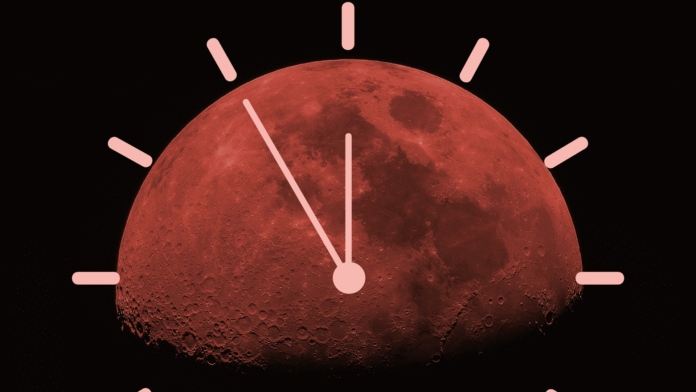
Enjoy the total lunar eclipse on March 3 because it will be the last for a long while.

Observers across East Asia, Australia, the Pacific and western North America will see March’s full moon — known as the “Worm Moon” — pass through Earth’s shadow, turning a reddish-copper color for 58 spell-binding minutes. However, once the moon emerges from Earth’s umbra — the deepest part of Earth’s shadow — there will be no further total lunar eclipses for almost three years. A lunar lull will commence and won’t end until a neatly-timed total lunar eclipse on New Year’s Eve 2028-2029. Here’s why — and why 2029 will be a year marking not just the end of a drought, but of three spectacular “blood moon” total lunar eclipses.

What time is the Blood Moon total lunar eclipse on March 3? Know Viewing Times by Region

0

A spectacular total lunar eclipse will light up the night sky on March 3, turning the moon a dramatic red for billions of people across North America, Australia and East Asia.

During this celestial event, the moon will pass completely into Earth’s dark umbral shadow, creating what is popularly known as a “blood moon.”

When does totality begin?

Totality — when the moon appears fully blood-red — will begin at 6:04 a.m. EST (1104 GMT) on March 3, 2026. The eclipse will reach its peak at 6:33 a.m. EST (1133 GMT), with totality lasting approximately 58 minutes before the moon gradually exits Earth’s shadow.

According to Time and Date, more than 40% of the world’s population — over three billion people — will be able to see at least part of the total phase. Notably, this will be the last total lunar eclipse visible anywhere on Earth until New Year’s Eve 2028–2029.

Key viewing times by region

Here are the major viewing windows across different time zones (all March 3, 2026, unless otherwise noted):

United States

  • Eastern Time: 6:04–7:02 a.m. EST (the moon sets during totality in this zone)
  • Central Time: 5:04–6:02 a.m. CST
  • Mountain Time: 4:04–5:02 a.m. MST
  • Pacific Time: 3:04–4:02 a.m. PST
  • Alaska: 2:04–3:02 a.m. AKST
  • Hawaii: 1:04–2:02 a.m. HST

Australia & New Zealand

  • New Zealand: 12:04–1:02 a.m. NZDT (March 4)
  • Sydney: 10:04–11:02 p.m. AEDT
  • Brisbane: 9:04–10:02 p.m. AEST
  • Adelaide: 9:34–10:32 p.m. ACDT
  • Darwin: 8:34–9:32 p.m.
  • Perth: 7:04–8:02 p.m.

Asia

  • Tokyo: 8:04–9:02 p.m. JST
  • Seoul: 8:04–9:02 p.m. KST
  • Beijing: 7:04–8:02 p.m. CST
  • Hong Kong: 7:04–8:02 p.m. HKT

What happens during the eclipse?

The eclipse begins at 3:44 a.m. EST (0844 GMT) when the moon enters Earth’s penumbral shadow, producing a subtle dimming. As it moves deeper into the umbra, a dark shadow gradually spreads across the lunar surface.

At maximum eclipse, sunlight filtering through Earth’s atmosphere casts a reddish-orange glow on the moon — the signature “blood moon” effect.

The entire eclipse event will last 5 hours and 39 minutes, from the first penumbral shading to the final exit from Earth’s shadow.

Skywatchers unable to view the event in person can follow online livestream coverage from major astronomy platforms.

Happy Holi 2026: Wishes, Messages, Quotes, Greetings and WhatsApp Status

0

Happy Holi 2026 Wishes, Quotes and WhatsApp Status: Holi, the festival of colours, joy and togetherness, is celebrated across India and by Indian communities around the world. In 2026, Holika Dahan will be observed on March 3, followed by Holi on March 4. The festival marks the arrival of spring and symbolises the triumph of good over evil. It is a time to spread love, laughter and positivity as friends and families come together to enjoy festive sweets, play with vibrant colours and create cherished memories.

Whether you are celebrating at home with family or away with friends, heartfelt wishes can add even more colour to the festivities.

Best Happy Holi 2026 Wishes

Happy Holi 2026: Wishes, Messages, Quotes, Greetings and WhatsApp Status
  • May your life be as colourful and joyful as the festival of Holi. Happy Holi 2026!
  • This Holi, let’s celebrate love, laughter and togetherness. Wishing you a fun-filled and safe festival.
  • Splash your life with happiness, colours and positivity. Have a vibrant Holi!
  • Sending you sweet wishes and colourful vibes on this beautiful festival. Happy Holi to you and your family.
  • Wishing you and your family a safe and colourful Holi.
  • May every colour bring new happiness into your life. Happy Holi!
  • Celebrate this Holi with a heart full of gratitude and joy.
  • May your dreams shine as bright as Holi colours.
  • Sending warm wishes for a joyful and vibrant Holi.
  • May this Holi mark the beginning of new happiness in your life.

Heartfelt Holi 2026 Messages

Happy Holi 2026: Wishes, Messages, Quotes, Greetings and WhatsApp Status
  • Holi is the time to celebrate love and togetherness. Enjoy the festival.
  • Let us forget our worries and celebrate happiness today.
  • May your heart be filled with peace and positivity this Holi.
  • Celebrate colours, celebrate life, celebrate Holi.
  • Wishing you smiles and happiness this festive season.
  • May your home be filled with laughter and warmth.
  • Let the spirit of Holi bring new beginnings.
  • Celebrate safely and spread happiness everywhere.
  • Holi reminds us to cherish the small joys of life.
  • Wishing you a colourful and joyful Holi celebration.

Inspiring Holi Quotes About Colours, Happiness and Spring

Happy Holi 2026: Wishes, Messages, Quotes, Greetings and WhatsApp Status
  • “Let your life lightly dance on the edges of Time like dew on the tip of a leaf.” — Rabindranath Tagore
  • “Colours are the smiles of nature.” — Leigh Hunt
  • “Spring adds new life and new beauty to all that is.” — Jessica Harrelson
  • “Colour is a power which directly influences the soul.” — Wassily Kandinsky
  • “Joy is the simplest form of gratitude.” — Karl Barth
  • “Nature always wears the colours of the spirit.” — Ralph Waldo Emerson
  • “With the coming of spring, I am calm again.” — Gustav Mahler
  • “The earth laughs in flowers.” — Ralph Waldo Emerson
  • “Happiness held is the seed; happiness shared is the flower.” — John Harrigan
  • “Where flowers bloom, so does hope.” — Lady Bird Johnson

Best WhatsApp Status for Happy Holi 2026

Happy Holi 2026: Wishes, Messages, Quotes, Greetings and WhatsApp Status
  • Let the colours speak happiness. Happy Holi!
  • Holi vibes only.
  • Stay colourful, stay happy.
  • Happiness looks good in colours.
  • Today is all about colours and smiles.
  • Colour your life with positivity.
  • Keep calm and play Holi.
  • Life is better with colours.
  • Celebrate love, celebrate Holi.
  • Colour outside the lines today.

Holi is not just about colours, but also about emotions, forgiveness and fresh beginnings. Whether through thoughtful messages, inspiring quotes or joyful celebrations, the true spirit of Holi lies in spreading happiness and strengthening bonds.

Happy Holi 2026! May your life always be filled with colour, joy and positivity.

US, Israel Strike Iran; Know Operation Lion’s Roar and Epic Fury…

0

The United States and Israel have launched coordinated strikes against Iran, targeting key political and military leadership. Among the reported targets were Supreme Leader Ayatollah Ali Khamenei and President Masoud Pezeshkian. The operation has sharply escalated tensions in West Asia and triggered retaliation from Tehran, raising questions over whether regime change is the ultimate objective.

Operation Lion’s Roar and Epic Fury

Israel termed its campaign “Operation Lion’s Roar”, while Washington called its involvement “Operation Epic Fury”. Strikes reportedly hit areas around the offices of Supreme Leader Ayatollah Ali Khamenei as well as military facilities in Kermanshah, Qum, Isfahan, Tabriz, Karaj and the naval base at Kenarak.

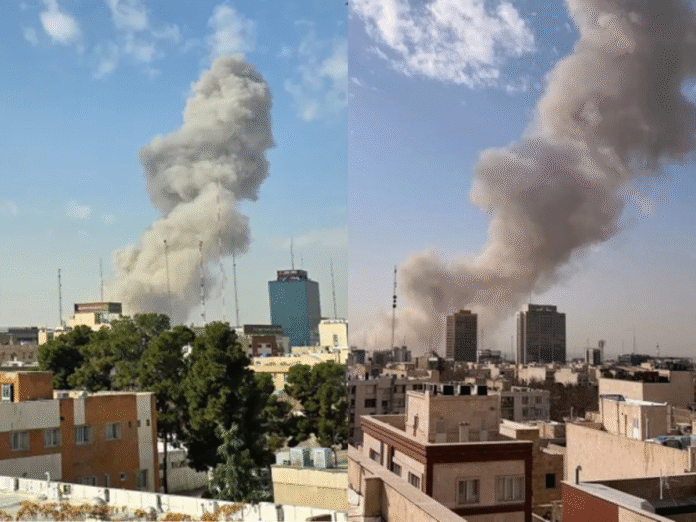
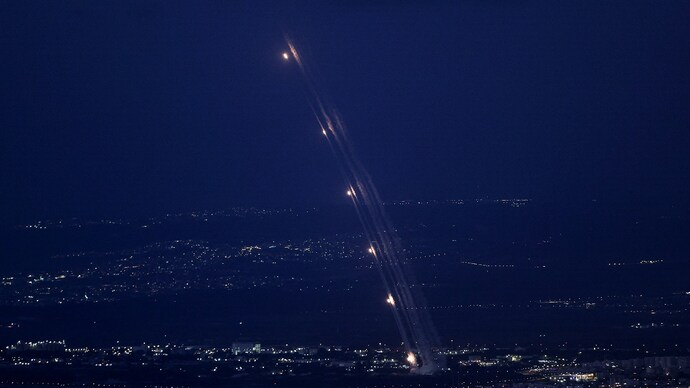
Iranian media reported explosions across multiple cities. While the whereabouts of Khamenei remain unclear, sources indicated that he had been moved to a secure location. Several senior commanders of Iran’s Revolutionary Guards were reportedly killed. In response, Iran launched missile barrages targeting Israel and US installations in the region.

Trump and Netanyahu Signal Political Goals

US President Donald Trump defended the operation as necessary to eliminate imminent threats and prevent Iran from obtaining a nuclear weapon. He accused Tehran of decades of hostility, support for militant groups and backing attacks against American and Israeli interests.

Israeli Prime Minister Benjamin Netanyahu echoed similar sentiments, stating that joint action would create conditions for the Iranian people to “take their destiny into their own hands”. Both leaders publicly urged Iranians to challenge their leadership, signalling that the objective may extend beyond military deterrence.

Why Khamenei Is Central

In power since 1989, Khamenei has shaped Iran’s strategic doctrine. He has overseen the expansion of uranium enrichment, defended Iran’s missile programme and maintained a confrontational stance towards Washington and Tel Aviv. His rhetoric frequently frames Israel as illegitimate and positions the United States as a hostile power.

For US and Israeli policymakers, removing Khamenei could disrupt the ideological and institutional backbone of the Islamic Republic. However, Iran’s political system is deeply entrenched, with clerical, military and security institutions intertwined.

Important Facts

  • Iran’s Supreme Leader holds ultimate authority over military, judiciary and state broadcasting.
  • The Islamic Revolutionary Guard Corps (IRGC) operates parallel to Iran’s regular armed forces.
  • Iran’s nuclear programme centres on uranium enrichment, monitored by the IAEA.
  • West Asia hosts several key US military bases, including in Bahrain and Qatar.

Risks and Regional Fallout

Analysts warn that regime change efforts could destabilise the Gulf region and disrupt energy markets. There is no certainty that leadership collapse would produce a democratic transition; instead, it could trigger internal conflict or power struggles within security institutions.

For Washington and Tel Aviv, the strategy represents a high-stakes gamble. Whether the strikes remain limited to military objectives or evolve into a broader political confrontation will shape the region’s trajectory in the coming weeks.

Micron’s Semi-Conductor Plant in Gujarat: Know Key Features And Major Facts…

0

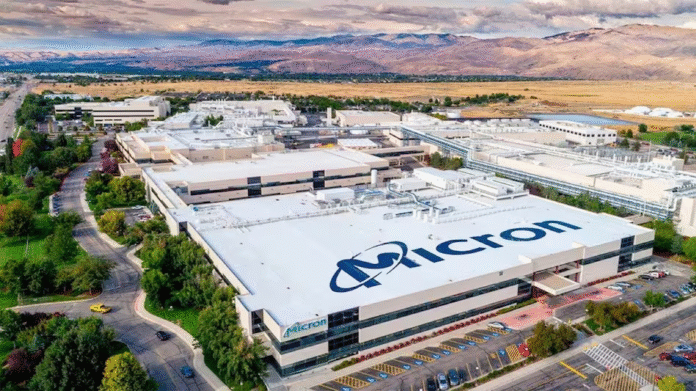
India marked a significant milestone in its semiconductor ambitions as Micron Technology commenced operations at its advanced memory ATMP facility in Sanand, Gujarat. The plant shipped its first finished DRAM module to Dell Technologies, signalling the country’s entry into high-end semiconductor assembly and testing.

Prime Minister Narendra Modi inaugurated the facility, which represents India’s first advanced memory Assembly, Testing, Marking and Packaging (ATMP) site.

Largest Raised-Floor Clean Room Globally

The Sanand unit houses a 500,000 square foot raised-floor clean room — the largest single semiconductor assembly clean room of its kind worldwide. Engineered specifically for Gujarat’s soil and climate conditions, the structure mitigates moisture-related risks.

The clean room is rated Class 1000, allowing no more than 1,000 particles per cubic metre. Air is circulated 120 times per hour, significantly higher than pharmaceutical standards. This ensures protection of delicate integrated circuits and gold bonding wires that are thinner than fractions of a human hair.

Advanced Memory Manufacturing Operations

The facility assembles and tests DRAM (Dynamic Random Access Memory) and NAND flash memory. DRAM serves as working memory for computers, smartphones and data centres, while NAND supports non-volatile storage in SSDs and other devices.

Operations follow a wafer-in to finished-product-out model. Wafers sourced from Micron’s global fabrication plants are thinned, diced into chips, assembled, tested and mounted onto modules before final quality checks and shipment.

The total planned investment across two phases stands at $2.7 billion. Production is expected to reach tens of millions of integrated circuits this year, scaling to nearly one billion units annually by 2027. While exports will form a large share, domestic demand will also be served.

Skilled Workforce and Technology Integration

The plant employs around 1,300 people, nearly half of whom are fresh engineering graduates from Gujarat and neighbouring states. Specialised semiconductor curricula were developed in collaboration with universities. Selected recruits underwent 3–6 months of hands-on training at Micron facilities in Malaysia and Singapore.

Automation systems, AI-driven factory intelligence and advanced yield engineering tools deployed at the site meet global benchmarks. Initial shipments include DRAM modules for Dell, with additional supplies planned for companies such as Asus and Qualcomm.

Important Facts

  • ATMP stands for Assembly, Testing, Marking and Packaging in semiconductor manufacturing.
  • DRAM is volatile memory used as primary working memory in computing devices.
  • NAND flash memory is non-volatile storage widely used in SSDs and smartphones.
  • Clean room classifications define permissible particle counts per cubic metre of air.

Boost to India’s Semiconductor Ecosystem

The Sanand facility strengthens India’s semiconductor value chain beyond design into advanced memory packaging and testing. It aligns with the national objective of building a resilient electronics manufacturing ecosystem and reducing import dependence in critical technologies.

Who Was Dalpat Singh of Jodhpur-Hero of Haifa Saluted by Israel

0

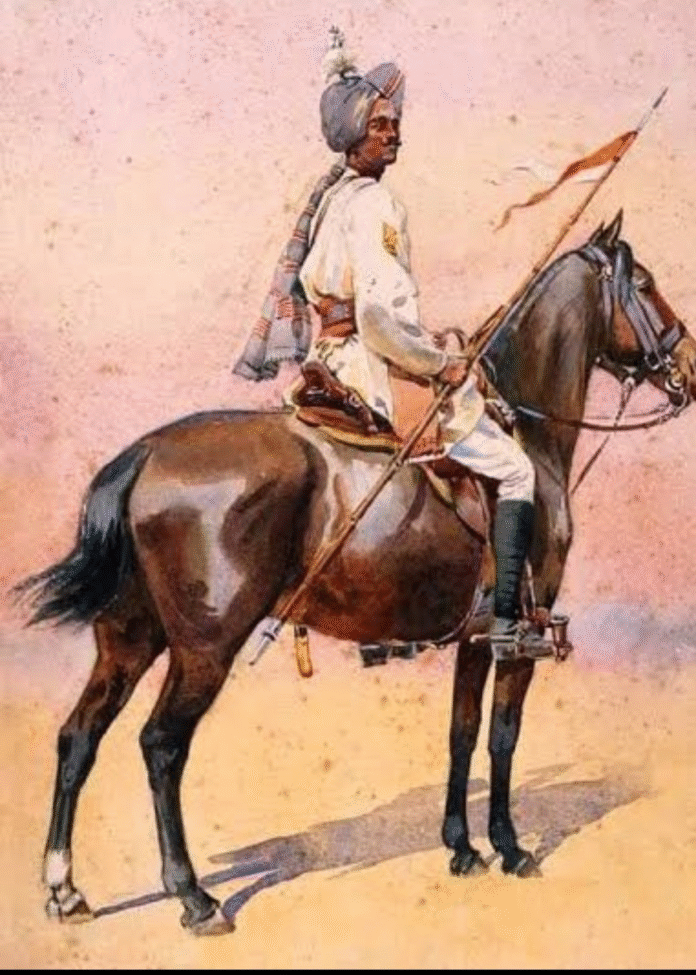
Major Dalpat Singh Deoli, a native of Pali district in Rajasthan, led the Jodhpur Lancers during World War I and became immortal for his extraordinary courage in the Battle of Haifa. On September 23, 1918, he played a decisive role in liberating the Israeli port city of Haifa from Ottoman Turkish forces. Even today, Israel remembers and salutes his sacrifice.

Referring to his bravery during a recent address in Ajmer, Prime Minister Narendra Modi said, “I had the opportunity to salute the bravery of Major Dalpat Singh in the Israeli Parliament.” He described the Rajasthan-born officer as a warrior who made a historic contribution to the liberation of Haifa.

A Braveheart from Deoli Village

Major Dalpat Singh was born on January 26, 1892, in Deoli village of Pali district. He belonged to the Ravan Rajput community. His father, Colonel Hari Singh, was an army officer and an accomplished polo player. Dalpat Singh pursued his higher education at Eastbourne College in England before joining the army at the age of 18. He was commissioned into the famed Jodhpur Lancers.

Before the Battle of Haifa, he had also participated in operations against German forces in France in 1914 during the early years of World War I.

The Battle of Haifa: Swords Against Cannons

The historic Battle of Haifa was fought on September 23, 1918. At the time, Haifa—then under Ottoman control—was strategically important for British forces. Acting under British command, Indian cavalry units, including the Jodhpur Lancers, were tasked with capturing the city.

Despite facing heavy artillery and machine-gun fire, Major Dalpat Singh led around 1,000 cavalrymen armed primarily with swords and spears. In a swift and daring charge, the Indian troops overpowered Turkish forces within hours. The battle is remembered as a rare instance in modern warfare where cavalry defeated well-entrenched artillery positions.

During the intense fighting, Major Dalpat Singh was struck by machine-gun bullets in the spine. Though critically wounded, he continued to lead his men until victory was secured. He succumbed to his injuries a few hours later.

For his exceptional bravery, he was posthumously awarded the Military Cross by the British government. Owing to his heroism, he came to be known as the “Hero of Haifa.”

Honoured in India and Israel

In Israel, the legacy of Major Dalpat Singh is deeply respected. September 23 is commemorated as “Haifa Day,” and his role in the city’s liberation is acknowledged in historical accounts. In India, his equestrian statue stands in front of Teen Murti Bhavan in New Delhi, and another statue was installed on Residency Road in Jodhpur in 2018.

The Battle of Haifa, in which Indian cavalry units from Jodhpur, Hyderabad, and Mysore participated, marked a significant chapter in World War I. It contributed to the eventual collapse of Ottoman control in the region and remains a symbol of extraordinary courage and sacrifice.

More than a century later, Major Dalpat Singh’s story continues to inspire pride in Rajasthan and across India, while also serving as a historic bridge of respect between India and Israel.


Iran decides to close Strait of Hormuz as tensions rise in Gulf: Report

0

Amid a sharp escalation in tensions in the Middle East following joint strikes by the United States and Israel on Iran, Tehran has reportedly decided to close the strategically vital Strait of Hormuz, one of the world’s most critical maritime chokepoints.

According to a media report, ships and vessels operating in the region received VHF transmissions from Iran’s Revolutionary Guards stating that “no ship is allowed to pass the Strait of Hormuz.” An official from the European Union’s naval mission Aspides confirmed the transmission. However, there has been no formal statement from Iranian authorities so far.

Strategic Importance of the Strait of Hormuz

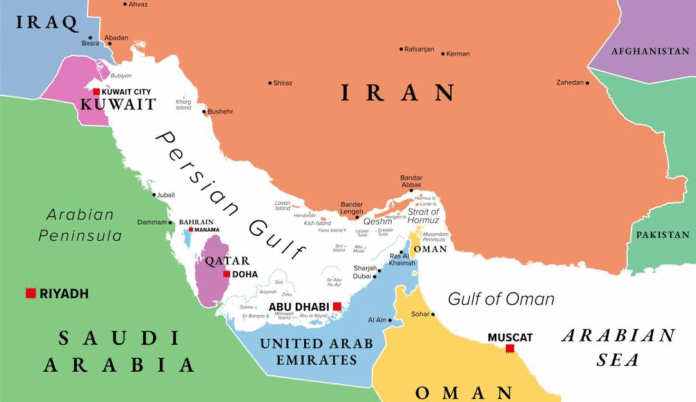
The Strait of Hormuz lies between Iran and the United Arab Emirates and Oman. Stretching approximately 100 miles (161 km) in length and narrowing to just 21 miles at its tightest point, it serves as a crucial gateway between the Persian Gulf and the Arabian Sea.

An estimated 20–30 percent of global crude oil supplies transit through this narrow corridor, making it one of the most important energy arteries in the world. Major oil-producing nations within the Organization of the Petroleum Exporting Countries (OPEC) — including Saudi Arabia, Iraq, the UAE, Kuwait, Kazakhstan, Algeria, and Oman — rely heavily on this route for exports. Any disruption could trigger severe economic consequences globally, potentially affecting oil prices, supply chains, and financial markets.

Escalation Following Strikes

The situation across the Middle East remains tense after the US-Israel joint strikes on Iran. In response, Iran reportedly launched retaliatory strikes targeting US bases in Kuwait, Qatar, Saudi Arabia, and neighbouring Iraq. Iran also carried out strikes in the UAE, targeting the capital Abu Dhabi and the financial hub Dubai.

Reports indicate that one person was killed in Abu Dhabi. In Dubai, the international airport was temporarily closed and the Burj Khalifa evacuated as a precautionary measure. UAE authorities stated that additional incoming missiles were intercepted and neutralised.

As tensions continue to rise, Gulf nations have urged restraint and called for immediate de-escalation. Several European countries, including the United Kingdom, France, and Germany, have also appealed for dialogue while closely monitoring developments in the region.

https://twitter.com/RT_com/status/2027791720251896314?s=20

https://twitter.coRT_com/status/2027791720251896314?s=20

read: https://ebnw.net/business/strait-of-hormuz-tensions-global-oil-trade-at-risk-amid-iran-israel-conflict/

Drones Seen Attacking Dubai. Watch Out Videos…

0

Iran launches attacks across Middle East after US and Israel strikes on leadership sites. Explosions were heard across Abu Dhabi on Saturday as the United Arab Emirates faced what officials described as a missile attack linked to escalating tensions between Iran and Israel. Earlier reports confirmed that Qatar’s air defences intercepted an Iranian missile, additinally there are reports of the Fairmont Hotel in Dubai’s Palm Jumeirah being hit by an Iranian missile. The number of casualties is still unknown.

When Life Becomes a Festival of Colours

0

Sri Sri Ravi Shankar

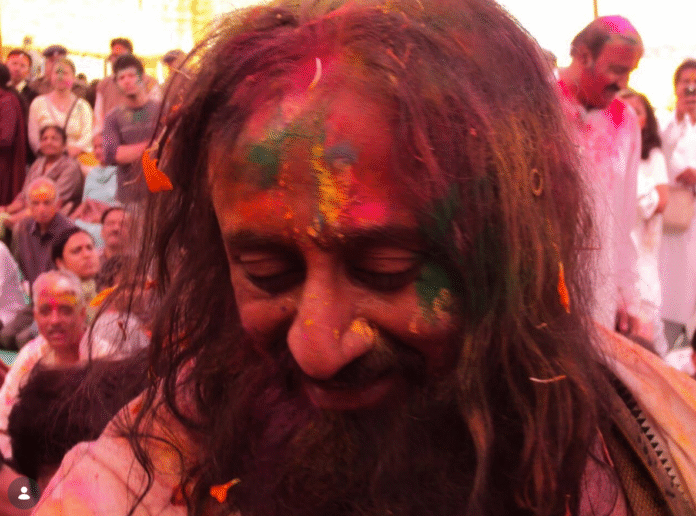
This world is filled with colors. Just as nature expresses itself through countless shades, human emotions too reflect a spectrum of colors. Red signifies anger, green hints at jealousy, yellow radiates joy and vitality, pink blossoms as love, blue expands into vastness, white rests in peace, saffron symbolizes renunciation, and purple represents wisdom. Every human being is, in essence, a fountain of colors — constantly expressing, experiencing, and evolving.

Our ancient wisdom beautifully illustrates this truth through the story of Hiranyakashipu and Prahlad. Hiranyakashipu was consumed by ego and self-glorification, immersed in material power and dominance. In contrast, his son Prahlad was a symbol of innocence, unwavering devotion, and divine love for Lord Vishnu. Despite repeated attempts to change him — even placing him in a blazing fire with Holika — Prahlad remained untouched. Holika perished, but devotion protected Prahlad.

Symbolically, Hiranyakashipu represents gross materialism and the limited perception that life is merely physical. Prahlad represents the purity of the present moment — innocence, joy, and surrender. Holika signifies the burdens of the past. When devotion is deep and pure, it burns away accumulated karmas and impressions. Consciousness cannot be confined to the physical body; it belongs to the infinite realm of Narayana.

When there is joy in life, life itself becomes a celebration. Emotions, like fire, can burn us. But the same emotions, when transformed through wisdom, become colors that enrich our existence. In ignorance, emotions cause suffering; in awareness, they beautify life. Knowledge does not suppress emotions — it refines them.

Life is meant to be colorful, not dull. We play many roles — as parents, professionals, friends, seekers. Clarity in each role is essential. If we mix roles without awareness, confusion and conflict arise. When you are at home, be fully present as a father or mother. When at work, be fully immersed in that responsibility. Awareness brings harmony; confusion breeds mistakes.

All the joy you seek is already within you. Let go of what holds you back. When you sit quietly, that silence becomes meditation. Meditation gives deeper rest than sleep because, in that state, you are free from desires and agitation. It rejuvenates the nervous system, soothes the mind, and fills you with renewed vitality.

Celebration is the very nature of consciousness. Yet true celebration arises only from silence. When celebration is combined with purity, it becomes complete. Then it is not just the body or the mind that celebrates — consciousness itself rejoices.

And when consciousness celebrates, life truly becomes a festival of colors.

(These are words of Sri Sri Ravishankar)

Israel’s Multi-Layered Air Defence Against Ballistic Threats

0

Do you know that Israel maintains one of the world’s most sophisticated multi-layered air defence networks, which has been designed primarily to counter ballistic missile and aerial threats, including those posed by Iran and its regional proxies. The system integrates long-range, mid-range and short-range interceptors, alongside emerging laser-based technology and U.S.-backed assets, creating a comprehensive defensive umbrella.

Arrow System: Long-Range Interception

The Arrow-2 and Arrow-3 systems form the upper tier of Israel’s missile defence architecture. Developed by Israel Aerospace Industries in cooperation with Boeing, these interceptors are specifically designed to counter long-range ballistic missiles.

Arrow-2 engages threats within the atmosphere, while Arrow-3 is capable of exo-atmospheric interception. This high-altitude engagement allows for safer dispersal of potential non-conventional warheads. The system is tailored to neutralise advanced ballistic missile threats before they reach Israeli airspace.

David’s Sling: Mid-Range Shield

David’s Sling addresses medium-range ballistic missiles fired from distances between 100 km and 200 km. Jointly developed by Rafael Advanced Defense Systems and U.S.-based RTX Corporation (formerly Raytheon), the system also intercepts aircraft, drones and cruise missiles.

It fills the operational gap between the Arrow system and the shorter-range Iron Dome, enhancing layered redundancy.

Iron Dome and Iron Beam: Short-Range Protection

The Iron Dome, operational since 2011, is designed to intercept short-range rockets, mortars and drones. Each mobile battery uses radar-guided interceptors to destroy threats in mid-air. The system selectively engages only rockets projected to hit populated areas, optimising cost and efficiency. A naval version was deployed in 2017 to protect maritime assets.

Complementing Iron Dome is Iron Beam, a ground-based high-power laser system declared operational in late 2025. It targets smaller aerial threats such as UAVs and mortars. By using directed energy rather than interceptor missiles, Iron Beam significantly reduces interception costs.

Important Facts

  • Arrow-3 performs exo-atmospheric ballistic missile interception.
  • David’s Sling bridges the gap between long-range and short-range defence systems.
  • Iron Dome selectively intercepts rockets heading towards populated areas.
  • THAAD intercepts ballistic missiles in the terminal phase of flight.

U.S. THAAD and Airborne Defence Support

The United States has deployed the THAAD (Terminal High Altitude Area Defense) system to Israel, enhancing high-altitude interception capability. THAAD is designed to destroy short, medium and intermediate-range ballistic missiles during their terminal phase.

Additionally, U.S. naval assets and Israeli fighter aircraft contribute to interception operations, particularly against drones and incoming ballistic threats. Together, these systems form a deeply layered defence network aimed at ensuring national security amid evolving regional tensions.