Home Blog Page 55

US–Iran–Israel Conflict: If Iran War Continues For 10 More Days, Could The US Face A Crisis? Report Makes Big Claim

0

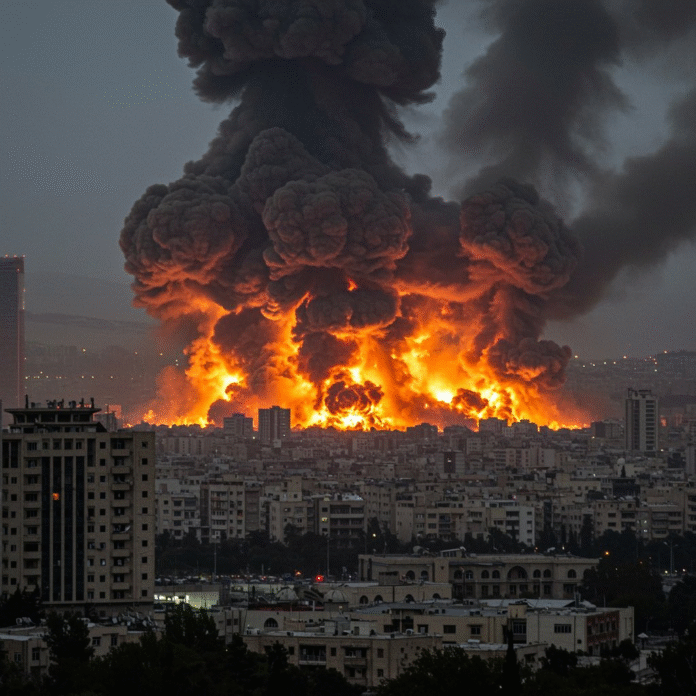
US–Iran–Israel Conflict: As tensions escalate between the United States, Israel, and Iran, a new report has raised concerns about America’s military preparedness if the conflict continues at its current intensity.

Pentagon Warning

According to a report by Al Jazeera, the Pentagon has warned US President Donald Trump that if the military campaign against Iran continues at a rapid pace for another 10 days or more, the US could begin to face shortages of key munitions and interceptor missiles.

However, Trump dismissed concerns on his social media platform Truth Social, claiming that the United States has an “almost unlimited” stockpile of medium- and high-grade weapons capable of sustaining a prolonged conflict.

Secretary of State’s Remarks

US Secretary of State Marco Rubio said that Iran is producing more than 100 missiles per month, while the US is reportedly able to manufacture only 6 to 7 interceptor missiles in the same period. Defense analysts say this imbalance could create long-term pressure if hostilities persist.

Rising Costs Of War

The financial toll is also mounting. Reports suggest that in the first 24 hours of operations alone, the US spent approximately $779 million (around ₹6,900 crore).

According to the Center for a New American Security, operating an aircraft carrier strike group such as the USS Gerald R. Ford costs roughly $6.5 million per day. Before the conflict escalated, two carrier strike groups were deployed, with total preparation costs estimated at around $630 million.

Pressure On Interceptor Missiles

Analysts say interceptor missiles are likely to face the greatest strain. During previous tensions with Iran last year, the US reportedly used nearly 25% of its THAAD interceptor missile stockpile. Additionally, Joint Direct Attack Munitions (JDAMs) — GPS-guided “smart bombs” — are being consumed rapidly.

The report also warned that advanced anti-ballistic systems such as the Standard Missile-3 (SM-3) have limited inventories, raising concerns about sustainability in a prolonged conflict.

Escalation And Retaliation

Earlier, President Trump expressed dissatisfaction with the progress of nuclear negotiations with Iran. Hours later, he approved a military operation targeting senior Iranian leadership, including Supreme Leader Ali Khamenei and top military officials.

In retaliation, Iran launched missile and drone attacks on US bases located in Bahrain, Saudi Arabia, Qatar, the UAE, and Iraq.

What Lies Ahead?

Defense experts caution that if the conflict drags on, the United States could face mounting military and economic pressure. Beyond battlefield logistics, prolonged hostilities may strain defense manufacturing capacity, federal budgets, and global energy markets.

The coming days are likely to determine whether this confrontation remains contained — or evolves into a more prolonged and costly war.

Strait of Hormuz: Why This Narrow Waterway Is Asia’s Trade Lifeline

0

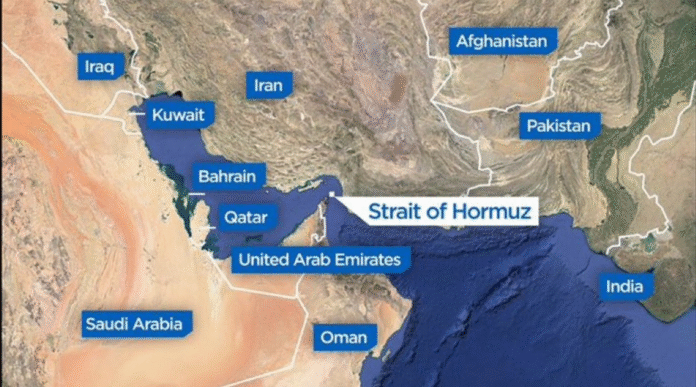
Distant maritime corridors are not abstract lines on a map; they are economic lifelines. Few passages illustrate this more clearly than the Strait of Hormuz — a narrow stretch of water between Iran and Oman that quietly dictates the economic rhythm of much of Asia.

At its narrowest point, Hormuz is barely 33 kilometres wide, with designated shipping lanes only a few kilometres across. Yet nearly one-fifth of the world’s oil supply and a significant share of global liquefied natural gas (LNG) pass through this slender maritime corridor every day. For energy-hungry Asian economies — including India, China, Japan and South Korea — this makes Hormuz less a transit route and more a strategic artery.

Energy Artery Of Asia

Asia is the world’s largest energy-consuming region, but it is heavily dependent on imported hydrocarbons, particularly from the Gulf. Crude oil and LNG exports from Saudi Arabia, Iraq, the UAE, Kuwait and Qatar must first pass through Hormuz before reaching Asian refineries and power plants.

For India specifically, over 80 per cent of crude requirements are met through imports, with a substantial portion sourced from Gulf producers. A large share of that oil transits Hormuz before heading toward refining hubs such as Jamnagar, Mumbai, Mangalore and Kochi. Any disruption — even temporary — can tighten supplies, push up global benchmark prices, and translate directly into higher fuel costs and inflation at home.

A Chokepoint With Global Consequences

What makes Hormuz uniquely powerful is not just volume but concentration. There are limited alternative routes. While Saudi Arabia has pipelines to the Red Sea, their capacity cannot fully compensate for a sustained maritime blockage. The result is that even the threat of instability in the strait can rattle global markets.

Insurance premiums for tankers surge, freight costs rise, and energy-importing nations are forced to dip into strategic reserves. In Asia, where manufacturing, transport, aviation and power generation depend on stable fuel supplies, the ripple effects can be swift and wide-ranging.

Beyond Oil: Trade And Supply Chains

The strait’s importance extends beyond crude. Petrochemicals, refined fuels and LNG cargoes vital to electricity grids across Asia move through the same corridor. When tensions escalate in the Gulf, Asian stock markets often react immediately — a reminder that geography and finance are tightly linked.

Moreover, Hormuz connects to other fragile maritime chokepoints such as the Bab el-Mandeb and the Suez Canal. A disruption at one node can cascade across supply chains, forcing ships to take longer routes and inflating global shipping costs.

Why It Dictates India’s Economic Weather

For India, the Strait of Hormuz is effectively a pressure valve for inflation and fiscal stability. A spike in crude prices widens the current account deficit, strains government subsidy budgets, and increases input costs for industries ranging from transport to fertilisers.

Strategic Petroleum Reserves and supplier diversification — including increased purchases from Russia and the United States — provide partial insulation. But the geographic reality remains unchanged: the bulk of Gulf energy exports must pass through Hormuz.

In times of geopolitical calm, the strait fades into the background of global trade. In moments of conflict, it becomes the world’s most closely watched waterway. For Asia — and particularly for India — Hormuz is not merely a maritime passage; it is the narrow gateway through which economic stability flows.

March 4 in History: When Roosevelt was Inaugurated as 32nd US President…

0

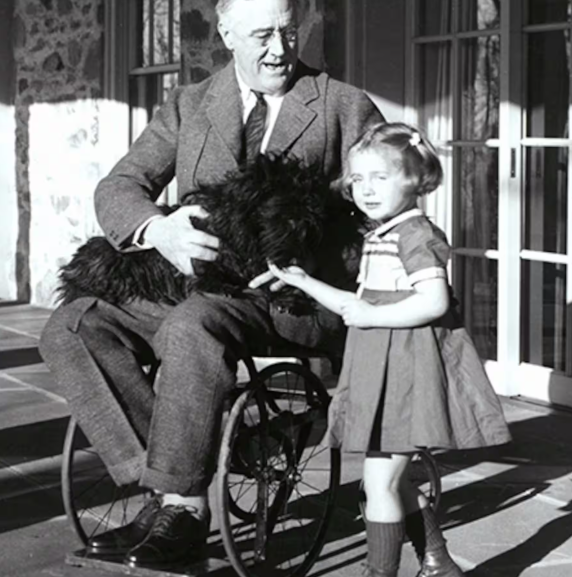
On March 4, 1933, at the height of the Great Depression, Franklin D. Roosevelt was inaugurated as the 32nd U.S. president. In his first inaugural address, he promised “prompt, vigorous action,” famously declaring, “the only thing we have to fear is fear itself,” and immediately launched the “New Deal” to guide the nation..

Key Details of FDR’s First Inauguration:

  • Context: The country was in the worst part of the Depression, with a March 4 in History: When Roosevelt was Inaugurated as 32nd US President... unemployment rate, a banking crisis, and 32 of 48 states having closed their banks by inauguration day.
  • The Address: Roosevelt focused on restoring confidence and proposed the “New Deal”—an expansion of federal power to provide relief, recovery, and reform.
  • Historical Significance: This was the last inauguration held on March 4, before the 20th Amendment moved it to January 20.
  • Legacy: FDR went on to lead the U.S. through the rest of the Depression and into victory in World War II.

Watch Out Partial View of Partial Lunar Eclipse from Puri Jagannath Mandir…

0

The “Blood Moon”, a rare astronomical phenomenon, occured today, March 3, 2026, when the Earth came between the Moon and the Sun. During this alignment, the Earth’s shadow fell on the Moon, making it appear deep red in colour. Also known as the Total Lunar Eclipse, this celestial event is visible across most parts of India. The totality phase started at 4:34 pm, while the partial eclipse started earlier at 3:20 pm.

This will be the last Total Lunar Eclipse for the next two years. The next one is scheduled for December 31, 2028.

Important Days in March 2026 in India and World

0

March is widely recognised for global awareness campaigns, national commemorations and religious festivals. Below is a date-wise explanation of the major observances. The major Important Days in March 2026 in India and World include:

1 March: Zero Discrimination Day and World Civil Defence Day
Zero Discrimination Day promotes equality and inclusion without bias based on gender, caste, race, or background. World Civil Defence Day recognises the efforts of organisations working to protect people from disasters and emergencies.

3 March: World Wildlife Day and Holika Dahan
World Wildlife Day highlights the importance of conserving wild animals and plant species. On the same day, Holika Dahan marks the symbolic victory of good over evil and begins the festival of colours in India.

4 March: National Safety Day and Dhulandi (Holi)
National Safety Day, also known as Rashtriya Suraksha Diwas, spreads awareness about workplace safety and accident prevention. Dhulandi is the main Holi celebration when people play with colours and water.

8 March: International Women’s Day
This global observance celebrates the achievements of women in social, political, economic and cultural fields. It also promotes gender equality and empowerment.

12 March: CISF Raising Day and Dandi March Anniversary
CISF Raising Day honours the Central Industrial Security Force for safeguarding vital institutions. The anniversary of the Dandi March commemorates the day Mahatma Gandhi began the Salt Satyagraha in 1930.

15 March: Pi Day, World Consumer Rights Day and International Day of Action for Rivers
Pi Day recognises the mathematical constant π (3.14). World Consumer Rights Day promotes awareness about consumer protection and fair trade practices. The International Day of Action for Rivers focuses on protecting rivers and freshwater ecosystems.

16 March: National Vaccination Day
First observed in 1995 when the Oral Polio Vaccine was administered in India, this day stresses the importance of immunisation in preventing life-threatening diseases.

20 March: Ordnance Factory Day, International Day of Happiness and World Sparrow Day
Ordnance Factory Day acknowledges India’s defence manufacturing sector. The International Day of Happiness promotes well-being. World Sparrow Day raises awareness about conserving urban bird populations. Eid-ul-Fitr may also fall around this date depending on moon sighting.

21 March: International Day of Forests and World Poetry Day
International Day of Forests emphasises the importance of forest conservation and sustainable management. World Poetry Day celebrates creative literary expression across cultures.

22 March: World Water Day
World Water Day focuses on freshwater conservation and sustainable water management practices worldwide.

23 March: World Meteorological Day and Shaheed Diwas
World Meteorological Day commemorates the establishment of the World Meteorological Organization and highlights climate and weather awareness. Shaheed Diwas honours the sacrifices of Bhagat Singh, Sukhdev Thapar and Shivaram Rajguru.

24 March: World Tuberculosis Day
This day marks the discovery of the TB bacillus and spreads awareness about prevention and treatment of tuberculosis.

27 March: World Theatre Day and Ram Navami
World Theatre Day celebrates performing arts and cultural expression. Ram Navami marks the birth anniversary of Lord Rama.

31 March: Mahavir Jayanti
Mahavir Jayanti commemorates the birth of Lord Mahavir and holds great significance for the Jain community…

National Safety Day 2026: Importance Of Workplace And Personal Safety Awareness

0

National Safety Day is observed every year on 4 March to mark the foundation of the National Safety Council of India and to promote a strong culture of safety across the country. The 2026 observance marks the 55th year of this nationwide campaign, reinforcing the importance of Safety, Health, and Environment (SHE) practices in workplaces and daily life.

The campaign focuses on reducing accidents, preventing occupational injuries, and encouraging responsible behaviour. While it highlights workplace safety through training, emergency preparedness, and compliance with safety standards, it also promotes personal safety in areas such as road safety, home safety, and overall well-being. The 2026 theme connects safety with national growth, emphasising that creating a safe and healthy environment is a shared responsibility that supports a more productive and developed India.

What Is National Safety Day?

National Safety Day is observed annually on 4 March in India to promote awareness about safety, health, and environmental practices in workplaces and public spaces. It commemorates the establishment of the National Safety Council and aims to strengthen a preventive safety culture across the nation.

The campaign typically extends into National Safety Week and continues throughout the month with awareness drives and training programmes. Its core purpose is to reduce accidents, promote safe practices, and remind individuals and organisations that safety is a shared responsibility.

National Safety Day Theme 2026

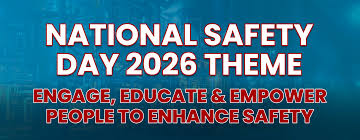
The National Safety Day 2026 theme is “Engage, Educate & Empower People to Enhance Safety.” Announced for the 55th National Safety Day and Month campaign, the theme highlights the need to build a proactive safety culture through active participation, continuous training, and widespread awareness.

It emphasises that safety goes beyond policies and regulations — it requires everyday involvement and responsible action from individuals and organisations alike. The 2026 focus aims to reduce accidents and strengthen Safety, Health, and Environment practices across both organised and unorganised sectors.

Through workshops, training sessions, and safety drills conducted throughout March, the campaign seeks to empower people to take ownership of safety and contribute to a healthier, more productive nation.

Why Is National Safety Day Important?

National Safety Day raises awareness about safety in workplaces and everyday life. It encourages individuals and organisations to move beyond basic compliance and make safety a shared priority.

Key Reasons Why National Safety Day Is Important:

  • Promotes a proactive safety culture across workplaces and communities
  • Helps prevent workplace accidents, injuries, and occupational hazards
  • Reduces work-related fatalities and property damage
  • Encourages emergency preparedness through fire safety and first aid training
  • Reinforces the shared responsibility of employers and employees
  • Supports compliance with safety standards and regulations
  • Raises awareness about road safety, environmental protection, and public safety
  • Strengthens physical and mental well-being of the workforce
  • Contributes to productivity, economic growth, and national development

By reinforcing these principles, National Safety Day helps integrate safety into everyday work culture and personal habits, creating a safer and more responsible society.

National Safety Day Date

National Safety Day is observed every year on 4 March in India to commemorate the establishment of the National Safety Council and promote a proactive approach to safety, health, and environmental practices.

In 2026, it will be observed on Wednesday, 4 March 2026, marking the 55th National Safety Day. The observance typically extends into National Safety Week from 4 to 10 March and often continues throughout the month with awareness campaigns, safety pledges, workshops, and emergency drills conducted across workplaces and communities.

National Safety Day History

The National Safety Council of India was established on 4 March 1966 with the support of the Ministry of Labour and Employment to promote workplace safety and reduce industrial accidents. The first National Safety Day campaign was launched in 1972, initially focusing on industrial safety and accident prevention.

Over the years, the observance expanded into National Safety Week and, in many organisations, month-long campaigns. Today, it has evolved into a nationwide movement promoting Safety, Health, and Environment practices across industries and public spaces.

Key Milestones In National Safety Day

Over the decades, National Safety Day has evolved from a focused industrial initiative into a broad national safety awareness movement. Key milestones include:

  • 1966: Establishment of the National Safety Council to promote a preventive and self-compliant safety culture
  • 1972: First National Safety Day observed to strengthen industrial safety awareness
  • Expansion to National Safety Week: Extended from a single day to a week-long campaign
  • Introduction of Safety Month: Many organisations adopted month-long activities to sustain awareness
  • Annual Themes: Introduction of yearly themes addressing emerging safety challenges
  • Policy Focus: Strengthened emphasis on Occupational Safety and Health standards
  • Wider Participation: Increased involvement of industries, schools, government bodies, and voluntary organisations
  • Broader Scope: Expanded focus beyond industrial safety to road safety, fire safety, public health, and environmental protection

Today, National Safety Day represents a proactive Safety, Health, and Environment movement aligned with India’s long-term development goals.

National Safety Day 2026: What To Expect

National Safety Day 2026 will mark the 55th year of this nationwide safety movement and the beginning of National Safety Week and Safety Month activities. Guided by the theme “Engage, Educate & Empower People to Enhance Safety,” the focus will be on building a proactive safety culture through awareness, training, and shared responsibility.

Across India, organisations are expected to conduct:

  • Safety workshops and awareness sessions
  • Emergency evacuation and fire drills
  • First aid and CPR training programmes
  • Workplace risk assessments and safety audits
  • Safety pledge ceremonies
  • Employee engagement and recognition programmes

Alongside physical safety measures, greater emphasis is likely to be placed on health awareness, highlighting the connection between employee well-being, mental health, and a safe, productive work environment.

How To Participate In National Safety Day Activities

National Safety Day encourages everyone to take simple yet meaningful steps to promote safety at work and in daily life.

For Individuals:

  • Take a safety pledge at your workplace, school, or community
  • Follow safety rules at work, on the road, and at home
  • Attend safety awareness programmes, seminars, or workshops
  • Participate in poster-making, slogan-writing, or essay competitions
  • Learn basic first aid and emergency response skills
  • Report unsafe conditions or hazards responsibly
  • Encourage regular health check-ups and well-being practices

For Organisations:

  • Conduct training sessions on fire safety, first aid, and use of protective equipment
  • Organise emergency evacuation drills and practical demonstrations
  • Perform workplace safety audits and risk assessments
  • Display safety posters and awareness materials
  • Launch internal campaigns promoting safe practices
  • Recognise employees who demonstrate strong safety leadership
  • Engage local communities and schools in safety awareness initiatives

Consistent participation, even through small actions, helps integrate safety into everyday work culture and community life.

FAQs

Why Is National Safety Day Celebrated?

National Safety Day is celebrated to raise awareness about safety, prevent workplace accidents, and promote a proactive safety culture across industries and communities.

What Activities Take Place On National Safety Day?

Activities include safety workshops, emergency drills, first aid and fire safety training, safety pledges, and awareness campaigns designed to promote safe practices and reduce risks.

Holi in Bharatpur: Soak the Love-Filled Divine Feel of Radha Krishna Rasleela

0

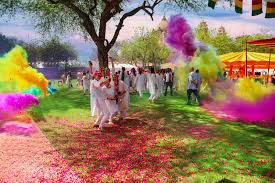
In Bharatpur, nestled in Rajasthan’s historic Braj region, Holi is not just a festival; it’s a vibrant cultural tapestry woven with devotion, dance, music and the timeless love of Radha and Krishna. Celebrated mainly a few days before the nationwide Holi, the Braj Holi Mahotsav brings the district alive with activities that beautifully blend ancient customs with contemporary festivity.

At its heart, Braj Holi honours Lord Krishna’s playful colours and pastimes in the region with Raslila performances, folk dances, traditional music and devotional gatherings dominating the scene. The festival typically spans a few days during Phalgun Shukla Paksha, and venues across Bharatpur, Deeg and Kaman resonate with rhythmic beats and joyous celebrations.

One of the unique elements here is the ‘Rasleela’, dramatic dance enactments that narrate the divine love story of Radha and Krishna, bringing myth to life through expressive costumes and passionate performances. Colour play, folk songs and communal gatherings follow, filling the streets with a sense of devotion and collective joy.

Yet, amid these spirited festivities, many local traditions have evolved over time. As Meenu, a resident of Bharatpur, shares, “Holi in Bharatpur is spectacular — the colours, the music, the togetherness — but some things have changed.” According to her, local folk music and traditional dance are gradually giving way to DJ parties and modern dance forms, reflecting broader cultural shifts. Likewise, while temple Holi gatherings and community meet-ups were once central to the celebration, today’s observances often mix the old with the new.

Food and drink preferences have shifted too: alongside classic thandai and traditional sweets, contemporary snacks and party-style refreshments are increasingly common at local Holi events. Yet even with these changes, the spirit of Braj Holi, rooted in Bhakti (devotion), culture and community, remains deeply cherished.

In Bharatpur, Holi isn’t merely about colours on the skin; it’s a vivid expression of heritage, a beautiful blend of ancient lore and evolving festivity that continues to paint hearts as much as faces.

Israel Attacks 500-Year-Old Golestan Palace in Iran: Know USPs of this Once UNESCO World Heritage Palace…

0

Israel has reportedly attacked Iran’s 500-year-old Golestan Palace, causing partial damage to parts of the historic complex. However, the valuable and historic artifacts housed at the site had already been moved to secure locations and were therefore saved.

The information was reported by the Iranian news agency Mehr News Agency.

Golestan Palace was originally built in the 16th century during the Safavid period. For centuries, it served as the residence of Iranian monarchs and the principal seat of power. Today, it is a major tourist attraction and was inscribed on the UNESCO World Heritage List in 2013. The palace complex is currently managed by Iran’s Cultural Heritage Organization.

Renowned as a masterpiece of Persian architecture, Golestan Palace is among the oldest historic structures in Tehran. Its intricate detailing is evident throughout the complex, with arches, halls, and walls decorated with elaborate patterns, mirror work, and paintings.

It is worth noting that the Great Wall of Gorgan, also known as the Red Wall, is a separate historical structure in Iran. Built during the Sassanian era to defend the empire’s northern frontiers, it is famous for its vast length and advanced engineering, but it is not part of the Golestan Palace complex.

How Retailers Quietly Predict Your Next Purchase

0

Ever wonder why that online ad feels like it read your mind or why the product you were considering yesterday shows up in your inbox this morning?

Retailers have turned prediction into an art, using a mix of advanced algorithms, consumer data, and psychological cues to anticipate what you’ll buy next.

This article pulls back the curtain on how brands analyze your clicks, purchases, and even emotions to forecast your needs—often before you realize them yourself.

We’ll break down the technology and tactics behind this quiet revolution, giving you insight into how modern retail really works in 2025.

The Odds Game: How Retailers Use Predictive Analytics to Anticipate Your Next Move

Walk into any store or browse an online shop and you’re already part of a game of probabilities.

Retailers use the same logic as seasoned bettors: looking at data, weighing risks, and making smart guesses about what you’ll do next.

Behind the scenes, predictive analytics crunch massive piles of data—from your past purchases to local weather—to forecast which products will sell and who’s likely to buy them.

This approach isn’t just about guessing. Retailers feed transaction histories, browsing habits, and even social trends into algorithms designed to spot patterns faster than any human could.

The result? Store shelves stay stocked with what’s trending. Online ads follow you with uncanny precision. Offers seem tailor-made for your life stage or even your mood that day.

If you’ve wondered how your favorite retailer always seems a step ahead, it’s because they’re using the same types of probability models found in professional betting circles.

For anyone curious about how these odds really work—and how businesses tilt them in their favor—resources like Smart Betting Guide break down the math and decision-making behind probability-driven strategies in plain language.

Understanding these systems can help you recognize when a deal is truly special—and when you’re being nudged by a very sophisticated guess.

Decoding the Data: What Retailers Know About You

Walk into a store or scroll through your favorite shopping app, and you’re leaving behind a steady stream of clues about what you want.

Retailers track every purchase, website visit, search, and even how long you linger in an aisle. These digital breadcrumbs are gathered from both online and offline activity.

The data isn’t just limited to transactions. Retailers collect information from emails opened, loyalty cards used, wish lists created, and interactions on social media. Even in-store foot traffic is mapped out using sensors or your phone’s location data.

This mosaic of information lets companies build detailed customer profiles that feel almost eerily personal. The goal? To anticipate your needs—sometimes before you realize them yourself—and use these insights to tailor product recommendations, promotions, and even inventory decisions for maximum impact.

From Loyalty Cards to Location Tracking

Loyalty programs were once simple punch cards at the checkout. Now they’re digital ecosystems designed to capture every nuance of your buying habits.

Every time you scan a card or enter your number at checkout, the system logs what you buy, when you shop, and how often you come back. Combine this with mobile app tracking—think push notifications based on nearby deals or special offers when you’re close to a store—and retailers have a live feed of shopper behavior.

According to the 2023 SML RFID State of Retail Insight Report, there’s been a surge in RFID technology adoption and real-time mobile analytics across the retail industry. These tools allow for instant updates on stock levels while also giving deeper insight into how shoppers move through stores and interact with products.

The integration of loyalty analytics with digital touchpoints means retailers can spot patterns fast—like which items tend to get paired together or what makes customers return after a discount. This ongoing feedback loop creates more personalized experiences each time you shop.

Psychographics And Emotional Triggers

It’s not just about knowing what’s in your cart; it’s about understanding why you added it in the first place. Retailers are digging deeper by building psychographic profiles—tracking attitudes, lifestyle choices, interests, and values alongside hard purchase data.

This psychological layer helps predict not only which products might appeal but also when someone is most likely to buy based on mood or motivation. For example, someone identified as a “thrill-seeker” might see flash sales timed with big sporting events or travel promotions when adventure-related content trends online.

A 2023 analysis from Advertising Week shows that brands tapping into emotional targeting—connecting offers with people’s motivations and feelings—see better engagement rates and more conversions. Personalized emails built around life moments (birthdays or holidays) or even targeting users feeling “nostalgic” during certain seasons are common tactics now seen across major brands.

The more precisely retailers map emotions to buying triggers, the more likely their marketing will hit home—and turn predictions into actual sales.

AI, Algorithms And The Personalization Revolution

Artificial intelligence has completely changed how retailers understand and influence what you buy.

Instead of treating everyone the same, today’s retail giants use powerful algorithms to study every click, search, and purchase you make. These systems look for patterns that even a seasoned shop assistant would miss.

Behind the scenes, recommendation engines quietly suggest products based on your unique behavior, while dynamic pricing tools adjust prices and deals in real time. The end result feels almost uncanny: personalized offers and shopping experiences that feel like they read your mind before you even know what you want.

Recommendation Engines: The New Salesperson

Modern recommendation engines have become more than just helpful guides—they’re now central to how we shop online.

Every time you browse a retailer’s website or app, AI is busy analyzing your choices. It looks at your past purchases, what you’ve searched for, the items you added (and removed) from your cart, and even how long you spent looking at a particular product.

This constant analysis helps brands predict which items you’re most likely to buy next. Instead of endless scrolling, shoppers are greeted with personalized picks that cut through the noise.

The Amazon vs. Walmart 2023 Benchmark shows just how critical these systems have become. Both companies rely on advanced AI recommendations to boost conversion rates well above industry averages. The data-driven approach means customers often find exactly what they need—sometimes before they realize it themselves.

Dynamic Pricing and Real-Time Offers

If you’ve ever noticed prices changing quickly online—or received a limited-time offer right after browsing—a dynamic pricing engine was likely at work.

Retailers today don’t set prices once and forget them. Instead, algorithms track real-time factors like demand spikes, competitor pricing changes, available stock, shopper location, and even external events such as sudden weather shifts or holidays.

This flexible approach lets companies react instantly to market changes while giving shoppers highly targeted deals. For bargain hunters in places like London or New York during a holiday sale rush, this can mean catching rare discounts that last only hours—or even minutes—before adjusting again.

Dynamic Pricing Case Studies 2023 found that e-commerce brands using these tools not only increased revenue but also improved inventory management and customer satisfaction through better-timed promotions tailored to individual shopping behavior.

The Ethics and Future of Predictive Retail

As retailers get sharper at forecasting what you’ll buy, the line between convenience and intrusion gets blurry fast.

Predictive retail isn’t just about guessing your next purchase. It’s about shaping the choices you see, sometimes before you even know you want something.

This level of foresight raises big questions around privacy, consent, and how much influence brands should have on personal decisions.

At the same time, it’s clear these technologies are here to stay. The challenge for retailers is to harness them responsibly—building trust while still driving results.

Privacy, Consent, and Consumer Trust

Personalization can make shopping effortless. But when it comes at the cost of privacy, shoppers get uneasy—sometimes even angry.

According to PwC’s Global Consumer Insights Survey 2023, concerns about data privacy are on the rise across every demographic.

The research points out that while people enjoy relevant offers, they expect brands to safeguard their data with real commitment—not just promises buried in fine print.

The most successful retailers I’ve seen don’t treat consent as a legal hurdle—they view it as an opportunity to build loyalty. They’re upfront about data use, offer easy opt-outs, and explain how personalization works in plain language.

If a shopper feels respected rather than watched, trust follows—and so does long-term business.

What’s Next: Predictive Retail in 2030

If you think today’s recommendations are advanced, the next decade could feel straight out of science fiction. We’re not far from AI avatars that shop on your behalf or packages showing up before you click buy.

A 2023 forecast by SymphonyAI predicts an acceleration in predictive analytics and data-driven personalization through 2030.

This isn’t limited to product suggestions. We’re talking real-time pricing shifts, dynamic store layouts based on crowds, and services that anticipate needs before you express them—a sort of digital intuition that could change everything about retail planning and logistics.

The big question for leaders is: how far do we take it? The technology will only get more precise. Making sure it stays ethical—and genuinely helpful—will be the real test for retailers aiming to stay ahead without crossing a line.

Conclusion: Reading the Signs Before You Shop

Retailers are getting better at reading your habits and predicting what you might want next. It’s not just clever ads or product placement—it’s a mix of data, psychology, and technology working behind the scenes.

Understanding these strategies can help you recognize when you’re being nudged toward a purchase. By spotting the subtle cues, you can pause and decide if it’s really something you need.

The more aware you are of these tactics, the more control you keep over your own shopping decisions. Knowledge is a real advantage in today’s predictive retail world.


Colours on the Plate: The Flavours That Make Holi Come Alive

0

In India, every festival tells its story not only through rituals and traditions but also through food. From the sweetness of Diwali to the savouries of Dushhera, celebrations are incomplete without dishes that bring families together. Holi, the festival of colours, is no different. In fact, it may be one of the most flavourful festivals of all, where every region adds its own taste to the splash of colours.

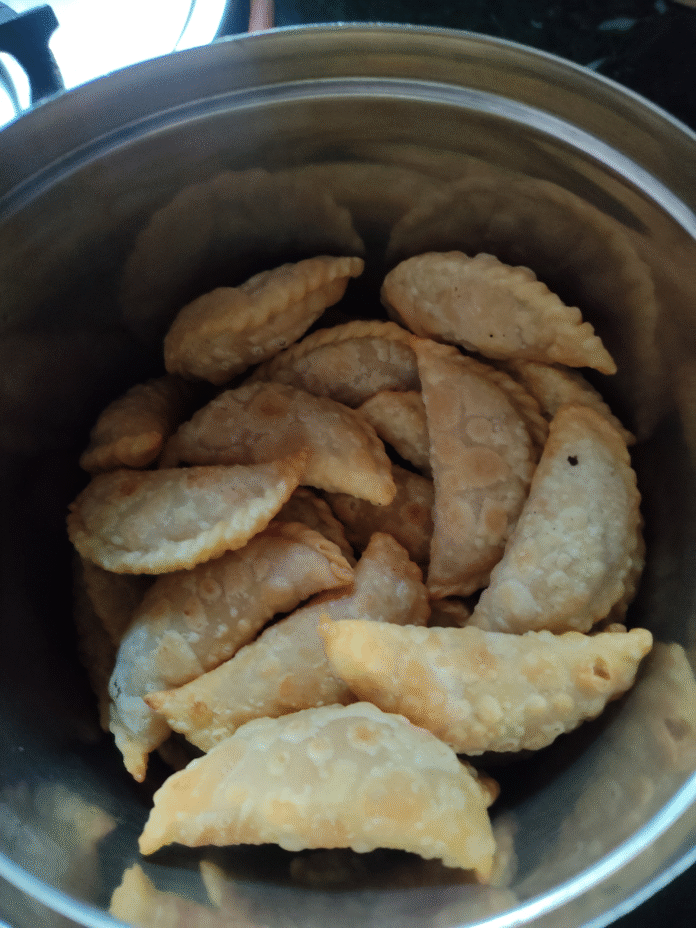
In North India, especially in Uttar Pradesh and Delhi, Holi is synonymous with gujiya , which is delicate, crescent-shaped pastries stuffed with khoya, dry fruits and coconut, deep-fried to golden perfection.

Colours on the Plate: The Flavours That Make Holi Come Alive


Alongside it is the iconic thandai , a cooling drink blended with milk, saffron, almonds, fennel seeds, rose petals and cardamom. Its refreshing nature perfectly balances the warmth of spring and the high energy of the day.

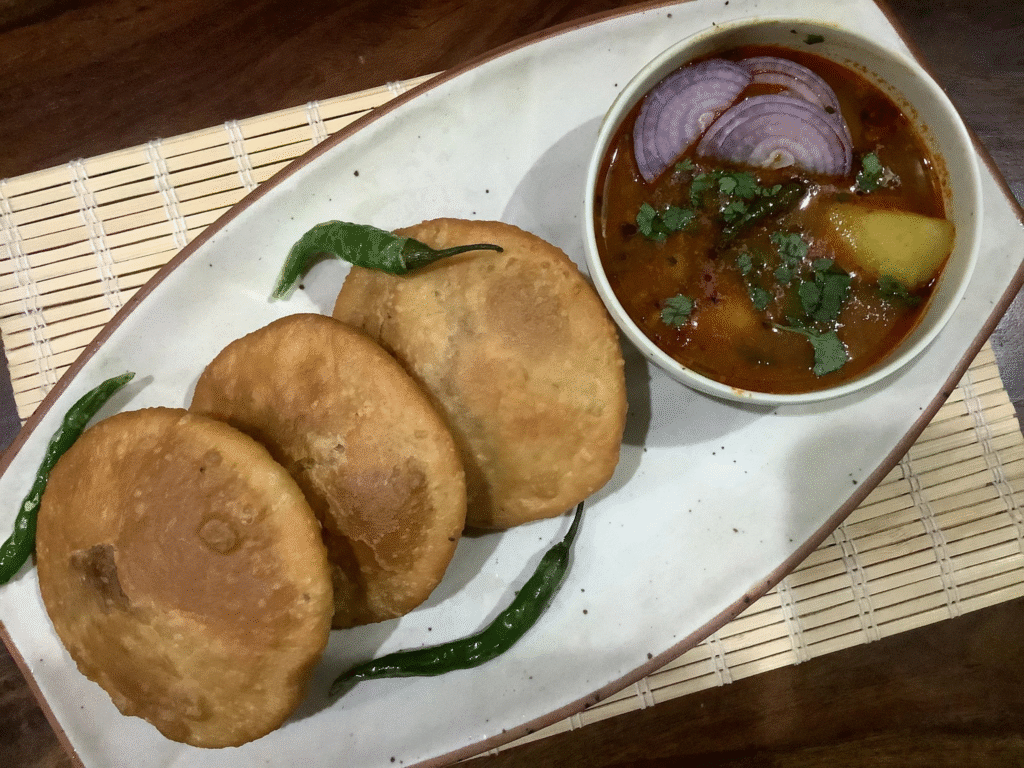
Move west to Rajasthan, and the festive table becomes richer with dal kachori , mirchi vada , and malpua , bringing a royal touch to the celebration.

Colours on the Plate: The Flavours That Make Holi Come Alive

In Maharashtra, Holi is incomplete without puran poli , a soft flatbread filled with jaggery and lentils, symbolising warmth and togetherness.

Colours on the Plate: The Flavours That Make Holi Come Alive

Travel east to West Bengal, where Holi coincides with Dol Jatra, and sweets like payesh and sandesh add elegance to the festivities.

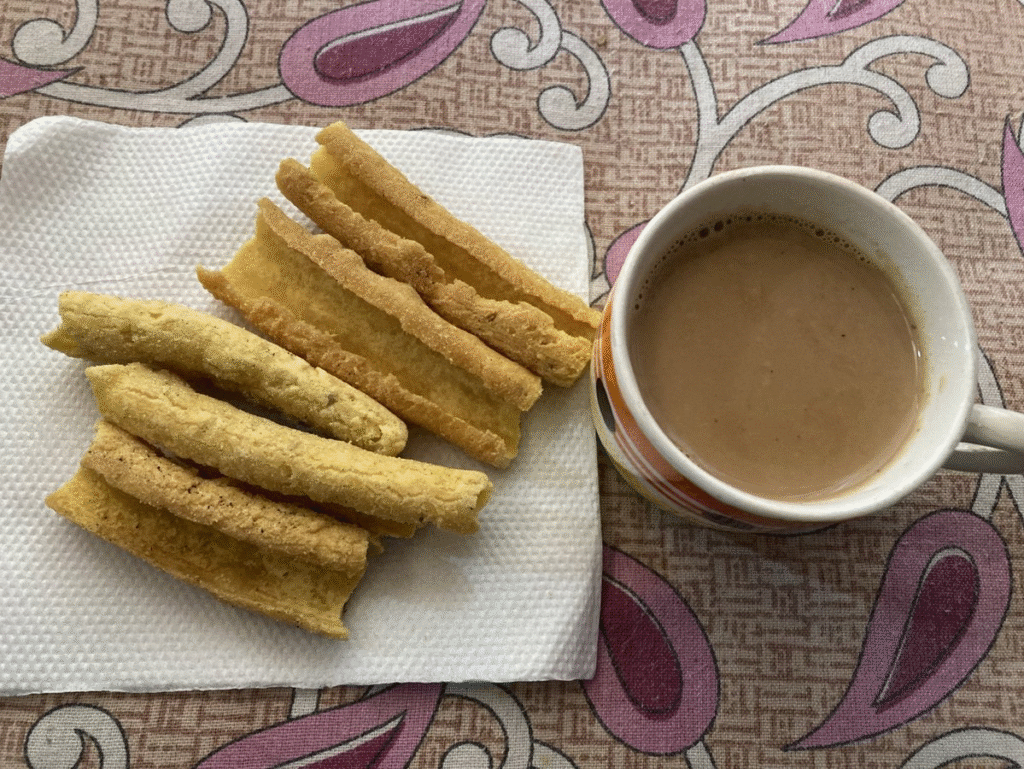
In parts of Gujarat, crispy fafda and sweet jalebi often make an appearance, blending crunch and sweetness in every bite.

Colours on the Plate: The Flavours That Make Holi Come Alive

Beyond indulgence, many Holi foods also carry gentle healing and seasonal wisdom. Ingredients like fennel, cardamom, saffron and nuts in thandai are known in traditional Indian practices for aiding digestion, boosting energy and cooling the body as summer approaches. Jaggery-based sweets help replenish energy after a long day of celebration.

Food during Holi is not just nourishment, it is memory, bonding and joy served on a plate. As colours brighten your world this year, why not let flavours inspire you too? Try preparing a regional speciality at home, experiment with a new thandai recipe, or share homemade sweets with neighbours. Because in India, festivals don’t just paint our faces, they fill our hearts, homes and kitchens with warmth.