Home Blog Page 540

Story of Capt. Gopinath, the inspiration behind the movie Sarfira..

0

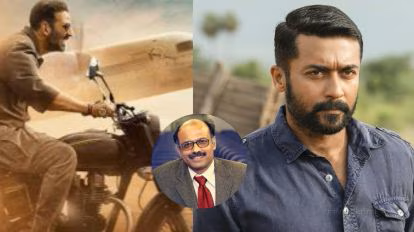
The story of Gorur Ramaswamy Iyengar Gopinath, widely known as Capt. Gopinath, is nothing short of extraordinary. As the founder of Air Deccan, India’s first low-cost airline, he revolutionized the aviation industry, making air travel accessible to millions who had never dreamed of flying. His life story described in the critically acclaimed Tamil film “Soorarai Pottru” and the upcoming Bollywood film “Sarfira,” starring Akshay Kumar.

Early Life and Education

Born in 1951 to a poor teacher in Karnataka’s Haasan district, Gopinath’s early life was marked by humble beginnings. He was home-schooled by his father until he joined a Kannada medium school in the fifth grade. At the age of 11, Gopinath cleared the admission test for Sainik School, Bijapur. This institution played a pivotal role in shaping his future, helping him clear the National Defence Academy (NDA) entrance exams. He later graduated from the Indian Military Academy, Dehradun, and spent eight years in the Indian Army, fighting in the 1971-72 Bangladesh Liberation War and earning the rank of captain.

The Path to Entrepreneurship

Despite his successful military career, Gopinath felt unfulfilled and retired at 28. As he described in his biography, “Simply Fly,” he was “forever seeking and forever striving.” This restless spirit led him to explore various ventures, from cattle rearing and poultry farming to becoming a motorcycle dealer, stock broker, and agriculture consultant. Each venture was a stepping stone, teaching him valuable lessons that he would later apply in the aviation industry.

The Birth of Air Deccan

Inspired by the story of a Vietnamese orphan girl who flew helicopters to help rebuild her country, Gopinath envisioned an airline that could make flying affordable for everyone. His motto was clear: “It is not the elite that I consider as my customers. It is the humble cleaning women of my office, the auto-rickshaw driver and other such people that we would like to cater to. We want them to dream that they too can fly, and we want to make that dream happen.”

On August 25, 2003, Air Deccan launched its first flight from Bengaluru to Hubbali. The airline’s low fares and extensive network appealed to middle-class travelers and quickly gained popularity. By 2007, Air Deccan had become India’s second-largest carrier, spurring the growth of other low-cost airlines such as SpiceJet, GoAir, IndiGo, and JetLite.

Overcoming Challenges

Gopinath’s journey was fraught with challenges. From securing funding to navigating regulatory hurdles, he faced numerous obstacles. However, his never-give-up attitude and relentless hard work ensured his dream came to fruition. The success of Air Deccan was not just a personal triumph but a transformative moment for the Indian aviation industry.

From Real Life to Reel Life

Capt. Gopinath’s inspiring story caught the attention of filmmaker Sudha Kongara, who adapted it into the Tamil film “Soorarai Pottru.” The movie received critical acclaim, bagging seven National Film Awards, including Best Actor and Actress for Suriya and Aparna Balamurali, respectively. Now, the same director is bringing the story to a wider audience with the Hindi adaptation, “Sarfira,” starring Akshay Kumar, Radhika Madan, Seema Biswas, and Paresh Rawal.

In an interview with Galatta Plus, Kongara expressed her admiration for Gopinath: “Here is this man who never gives up. For 10 years straight, the man keeps going to get his license. Everybody is telling him, ‘all you need to do is bribe,’ he said, ‘I can’t look at my face, I won’t bribe’. His wife was sponsoring him. When I heard his story, I was like ‘I love this guy, he is just fabulous’. He gets angry, he is short-tempered and because he is intelligent, he has little patience with people who are not moving at the same speed as him. All these qualities of Gopinath really intrigued and interested me.”

Legacy and Impact

Capt. Gopinath’s story is a testament to the power of perseverance and the impact of visionary thinking. His contributions to the aviation industry democratized air travel in India, enabling millions to experience the joy of flying. As his life continues to inspire films and narratives, Gopinath remains a symbol of resilience and innovation, embodying the spirit of dreaming big and achieving the impossible.

Launch of Startup Series 1 at Bhamashah Techno Hub: Empowering Entrepreneurs in Jaipur

0

Under the visionary guidance of Raghushree Poddar, Chairperson of FICCI FLO Jaipur Chapter 2024-25, the much-anticipated launch of Startup Series 1 took place at the Bhamashah Techno Hub. This pioneering initiative, in collaboration with iStart Rajasthan and powered by Innovher, aims to bolster the entrepreneurial ecosystem and empower women entrepreneurs in the region.

A Stellar Beginning

The launch event was graced by esteemed speakers, including Shweta Choudhary, Founder and Director of Innovher, and Disha Toshniwal, Advisor for the Investment and Legal team at Innovher. These accomplished women shared their wealth of experience and knowledge, delivering powerful and insightful sessions on critical aspects of startups, equity, investment, and business strategies.

Insights from the Experts

Shweta Choudhary, with her extensive background in entrepreneurship, provided invaluable insights into the journey of starting and scaling a business. She shared inspiring stories of women entrepreneurs who, through sheer dedication and hard work, have achieved remarkable success. Her narratives underscored the potential for impact that entrepreneurs can have, not only in creating successful businesses but also in providing livelihoods and improving communities.

Disha Toshniwal focused on the legal and investment facets of entrepreneurship. She provided detailed guidance on navigating the complexities of equity and investment, offering practical advice for securing funding and ensuring legal compliance. Her session was particularly beneficial for budding entrepreneurs looking to understand the intricacies of the startup ecosystem.

A Diverse and Engaged Audience

The event attracted a diverse audience, including Executive Committee members, FLO members, and representatives from iStart Rajasthan. Attendees found the sessions profoundly enlightening and motivating. The knowledge gained from the discussions has inspired many participants to invest more in their innovative ideas and pursue their entrepreneurial dreams with renewed vigor.

Networking and Community Building

Following the insightful sessions, the FLO team organized a delightful high-tea session featuring a variety of delicious delicacies. This provided a perfect opportunity for members to network and build connections in a relaxed and enjoyable setting.

A Commitment to Economic Growth

The success of this event reflects the dedication of FICCI FLO Jaipur Chapter under Raghushree Poddar’s leadership to create impactful programs that benefit the community and drive economic growth. The collaboration with iStart Rajasthan and the support from Innovher underscore a shared commitment to fostering an environment where entrepreneurs, especially women, can thrive and contribute to the region’s prosperity.

Looking Ahead

Startup Series 1 at Bhamashah Techno Hub marks the beginning of a transformative journey for many aspiring entrepreneurs. With continued support and guidance from experienced leaders and a strong network of collaborators, the future looks promising for the entrepreneurial landscape in Jaipur.

Tiger, most modest and intelligent animal, calling it violent is wrong, says ‘Tiger Man’ Daulat Singh Shekhawat

0

Further he says that calling a tiger a violent animal is the biggest mistake which humans are making.
 “It is wrong to call a tiger a violent animal. Tiger is the most modest animal in the jungle who walks with pride and discipline and gives a space to everyone to walk along in its periphery. It is just like a king who gives space to its people to walk and work along, says Singh. There can be no more intelligent man than a tiger, he says adding.

Tiger is like Hanuman who himself was unaware of the kind of energy and power he had. Same thing goes with tiger. It has so much power, but  it behaves like a simple animal. It is wrong to term him violent. Now we all know that there are 80 tigers in Ranthambore and around 2000 people visit the jungle daily but he never attacks the visitors to his home. He gives you space to walk along. Even if he sees so many vehicles passing, he makes sure these vehicles pass off peacefully.

Even for his attack he witnessed in 2010, he doesn’t blame the tiger but blames the crowd which had gathered there who he says made the tiger panicked and hence he attacked, says Singh adding that tigers never attack in a first instant. It will roar, will make noise, then will act weird and at last attacks.

In fact, tiger is king of the jungle, so he gives you freedom to roam freely in its periphery being the king. Like a powerful man who keeps showing his six abs, the tiger never over shows his power and stays humble in its approach, more like a disciplined and noble king, he adds. So it is necessary to conserve this king, he opines.

One Nation, One Rate Scheme for Gold? Jaipur Jewellers Jubilant and Apprehensive too…

0


As there are silent whispers of one nation, one rate scheme reportedly being launched in India for gold prices, jewellers say that the yellow metal will get cheaper. Sources from the jewellery industry confirmed that leading jewellers from across the nation have given their consent in this regard and an official announcement will be made in this reference somewhere in September.


Speaking to EBNW, leading jeweller Sanjay Kala, who has been ex-president of Jewellery Association of Jaipur said that the customers will definitely benefit out of this announcement and the market hence will become strong, he added.


Another leading jeweller, Ajay Jain confirmed to EBNW that the new initiative will prove good for customers as well as the industry. Customers will get confidence in buying the yellow metal from the market if there is one price across the nation, he added.

Now if this is the competition in Jaipur, imagine how it will get implemented across the nation. The officials associated with this task are talking big but have never implemented it, he added. Meanwhile, sources said that the central government has set up a scheme to launch a national bullion exchange under a one nation, one rate scheme. This exchange will set gold rates and jewellers from across the nation will have to sell gold at the same price.

What happened at the time of emergency in Rajasthan? Full Story of Treasure Hunt at Jaigarh Fort ..

0

Do you know what happened in Rajasthan at the time of emergency? Where is the treasure of Jaigarh Fort? Did Indira Gandhi was the mastermind behind all this?

This focus on treasure and symbols of wealth brings to mind a historical episode from 1976 when then Prime Minister Indira Gandhi ordered a massive treasure hunt at Jaipur’s Jaigarh Fort. In an unexpected twist, Pakistan’s Prime Minister at the time, Zulfikar Ali Bhutto, laid claim to a share of the treasure.

The Treasure Hunt Unfolds

In August 1976, a letter undersigned by Prime Minister Zulfikar Ali Bhutto of Pakistan arrived in New Delhi. Addressed to Indira Gandhi, the letter began with discussions on bilateral cooperation before quickly shifting to a bold demand. Bhutto’s letter read, “I am writing to you about the treasure which is being unearthed in Jaipur under your Government’s orders… I would urge you to remain cognisant of Pakistan’s claim to its due share of this wealth…” Bhutto’s claim was based on the treasure being unearthed in Jaipur’s Jaigarh Fort under Gandhi’s directive.

The Origins of the Jaigarh Treasure Story

The hunt, which lasted five months, had its roots in the late 16th century. In 1581, Mughal Emperor Akbar sent his commander-in-chief, Raja Man Singh I of Jaipur, to subdue rebel kingdoms in the northwest frontier, including parts of modern-day Afghanistan. During this campaign, Raja Man Singh amassed a vast treasure trove of gold, which he allegedly brought back to India and hid in the 16th-century Amber Fort.

This treasure remained hidden for centuries, becoming part of local lore and even making its way into an Arabian book, “Haft Tilismat-e-Amberi” (Seven Magical Treasuries of Amber). British colonial explorers also sought the treasure but were unsuccessful.

Indira’s Treasure Hunt Amid the Emergency

Fast forward to the Emergency imposed by Indira Gandhi in 1975. Civil liberties were suspended, the press was censored, and political opponents were imprisoned. Among those detained was Gayatri Devi, the former Maharani of Jaipur and a political adversary of Indira Gandhi. Following her arrest under the COFEPOSA Act, the treasure hunt at Jaigarh Fort commenced.

Advised by her son, Sanjay Gandhi, Indira initiated a comprehensive search involving the Income Tax Department, the Army, local police, and the Archaeological Survey of India. The fort, which had not seen such attention in centuries, became the focal point of global interest as the search for the legendary treasure unfolded.

The Claim from Pakistan

As the treasure hunt intensified, it caught the attention of Zulfikar Ali Bhutto, who saw an opportunity to claim a share of the supposed wealth. His letter to Indira Gandhi reflected the tension and curiosity surrounding the treasure. Indira’s response came only after the hunt ended in November 1976. She wrote, “I had asked our legal experts to give careful consideration to the claim you made on behalf of Pakistan. They are of the clear opinion that the claim has no legal basis.” She added, “Incidentally, the ‘treasure’ has turned out to be non-existent.”

The Outcome and Lingering Mysteries

Despite the exhaustive search, the treasure hunt yielded only 230 kg of silver, far from the gold trove envisioned. Gayatri Devi was released from Tihar Jail after the Emergency was lifted. However, questions lingered. Why was Jaigarh Fort, built in 1726, raided if the treasure was hidden in the Amber Fort? Speculations about tunnels connecting the forts and unexplained truck movements fueled rumors of a hidden treasure.

A Wild Goose Chase?

The treasure hunt during the Emergency remains a controversial chapter in India’s history. Some viewed it as a genuine search for hidden wealth, while others saw it as a political maneuver against a rival. Authors RS Khangarot and PS Nathawat, in their book “Jaigarh, The Invincible Fort of Amber,” concluded it was “a wild goose hunt.”

As the 2024 Lok Sabha elections bring the topics of gold and mangalsutra to the forefront, the echoes of Indira Gandhi’s treasure hunt remind us of the complex interplay between politics, history, and legend.

India’s Longest Urban Tunnel Between Borivali and Thane: A Leap Towards Better Connectivity

1

On July 13, 2024, Prime Minister Narendra Modi led the groundbreaking ceremony for the Thane-Borivali Twin Tunnel project in Mumbai. This ambitious Rs. 16,600 crore project is a significant component of a larger Rs. 29,000 crore initiative aimed at enhancing Mumbai’s infrastructure, facilitating smoother travel, and improving connectivity within the city.

Overview of the Thane-Borivali Twin Tunnel Project

The Thane-Borivali Twin Tunnel stands as India’s longest and largest urban tunnel project, with an estimated cost of Rs. 16,600 crore. This direct subway line will stretch 11.8 km, linking Thane with Borivali on National Highway 8. The tunnel will feature two regular lanes and one emergency lane, drastically reducing travel time from over an hour to just 12 minutes and cutting the distance by 12 km.

Strategic Implications and Benefits

The tunnel’s strategic significance extends beyond mere connectivity. It is poised to alleviate congestion on Ghodbundar Road and the Western Express Highway, creating a swift and direct route that enhances east-west suburban connectivity. This improvement will ease commuting challenges and prevent overcrowding on existing roadways.

Environmental and Technical Details

The Mumbai Metropolitan Region Development Authority (MMRDA) assures that the construction of the tunnel will be environmentally friendly, having no adverse impact on the nearby Sanjay Gandhi National Park. The project will employ India’s longest tunnel-boring machine, capable of boring a 10.25 km tunnel with cross passages every 300 meters for safety and maintenance. Additionally, it is projected to reduce carbon emissions by 150,000 metric tons annually.

About Mumbai Metropolitan Region Development Authority (MMRDA)

Established in 1975, the Mumbai Metropolitan Region Development Authority (MMRDA) is responsible for planning and overseeing development in the Mumbai Metropolitan Region. The MMRDA’s first significant project was the Bandra-Kurla Complex, which has since become a major commercial hub. In 2014, the MMRDA launched Mumbai’s first metro train and continues to oversee the construction of multiple metro lines to mitigate traffic congestion. The Mumbai Urban Infrastructure Project and the Mumbai Trans-Harbour Link, which aims to facilitate travel between Mumbai and Navi Mumbai, are also under the MMRDA’s purview.

The Thane-Borivali Twin Tunnel project marks a significant milestone in Mumbai’s journey towards improved urban infrastructure and connectivity. By drastically reducing travel time and easing traffic congestion, it promises to enhance the quality of life for commuters and contribute to the city’s sustainable development goals.

Once demolished by Aurangzeb in 1682, Vidisha’s Vijay Temple to be revived again

0

Just 65 kilometers from Bhopal lies the historic Vijay Temple of Vidisha, a monument that was dismantled by Aurangzeb’s artillery in 1682. Today, the government of Madhya Pradesh is set to breathe new life into this ancient site, transforming it into a major tourist destination.

For centuries, the Vijay Temple lay buried under debris and soil until it was revealed by the floods of 1992. Local historian Kailash Deoria narrates the temple’s origin, explaining that it was constructed in the 10th century by Vachaspati, the prime minister of the Chalukya dynasty, as a symbol of their victory over the Pratihars. Dedicated to the Chalukyas’ family deity, Bhillaswamini, the temple complex also included a Sun Temple, akin to the grandeur of Konark. The renowned scholar Al-Biruni documented that the temple once stood 105 yards (315 feet) tall, a monumental height that echoes the design of India’s new parliament building.

Dharmendra Singh, the Minister of Culture for Madhya Pradesh, revealed plans for the temple’s restoration in collaboration with the Archaeological Survey of India (ASI). “We are preparing to restore temples and famous landmarks like Vijaypur. Our collaboration with ASI aims to develop them into prominent tourist destinations,” Singh said.

The revival of the Vijay Temple not only seeks to preserve its historical and architectural significance but also aims to boost local tourism. This initiative offers visitors a chance to immerse themselves in India’s rich cultural heritage, experiencing firsthand the magnificence of a bygone era.

With careful planning and dedication, the Vijay Temple is set to reclaim its former glory, standing tall once again as a beacon of history and culture in Madhya Pradesh.

Teamwork Arts, the JLF Organisers’ are now starting Jaigarh Heritage Festival in Jaipur

0

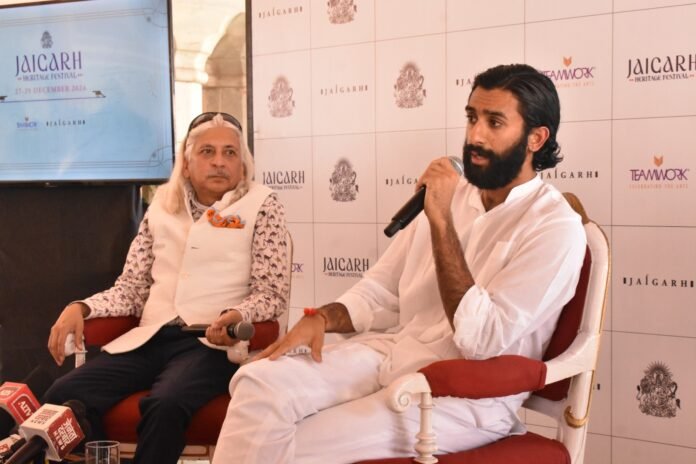
In a momentous announcement at the City Palace, His Highness Maharaja Sawai Padmanabh Singh of Jaipur, in collaboration with Teamwork Arts, unveiled the inaugural edition of ‘The Jaigarh Heritage Festival’. Scheduled to be held from 27th to 29th December 2024, this festival promises to be a significant addition to Jaipur’s rich cultural tapestry.

Sanjoy K. Roy, Managing Director of Teamwork Arts, expressed his excitement: “Teamwork Arts, the producers of the world’s largest literary gathering, the Jaipur Literature Festival, is thrilled to present the Jaigarh Heritage Festival in collaboration with H.H. Maharaja Sawai Padmanabh Singh. Our commitment to promoting Indian arts, culture, literature, and built heritage remains unwavering. This festival will further elevate Jaipur’s cultural landscape and heritage.”

His Highness Maharaja Sawai Padmanabh Singh highlighted the festival’s significance: “At the launch of the Jaigarh Heritage Festival, we celebrate the importance of Jaigarh as one of Rajasthan’s oldest and most prominent medieval bastions. This festival will highlight the rich history and traditions of the region and help boost Jaipur as India’s most prominent tourist destination. Join us in celebrating the regal splendour and vibrant heritage that make Jaipur one of the world’s leading cultural beacons.”

The majestic Jaigarh Fort, dating back to the 18th century, will serve as the backdrop for the festival. Overlooking the rugged ramparts of the Amer Fort complex, this historical fort holds immense significance as part of the heritage of the erstwhile Jaipur royal family. The festival will feature performances by a diverse line-up of artists specializing in folk, classical, and contemporary music. Additionally, it will highlight Rajasthan’s rich heritage through conversations, heritage walks, workshops, a crafts bazaar, sound and light shows, and a showcase of exotic local cuisine. Attendees will have the opportunity to experience a unique musical journey within an ancient fort while savouring its regal splendour.

The Jaigarh Heritage Festival underscores the importance of the Jaigarh Fort and the Royal Family’s dedication to preserving and promoting the art, culture, and history of Jaipur. This festival aims to highlight the rich traditions of Jaipur while contributing to the city’s development as a leading tourist destination.

Teamwork Arts has consistently striven to promote Jaipur as a vibrant cultural hub through its high-profile events and initiatives. Renowned for organizing the Jaipur Literature Festival, which has grown to become one of the largest literary festivals in the world, the group has showcased the city’s rich cultural tapestry to an international audience. Their unwavering commitment to the arts is evident in their dedication to creating platforms that celebrate literature, music, theatre, and visual arts. Over the years, significant contributions have been made to the sector by fostering artistic expression, supporting local and international artists, and engaging diverse communities. These efforts have not only enhanced Jaipur’s cultural landscape but also positioned the city prominently on the global cultural map.

With the launch of the Jaigarh Heritage Festival, the mission to highlight the unique heritage of Jaipur and promote it as a premier destination for cultural tourism continues.

Diya kumari’s initiative of promoting local products of Rajasthan praised by Folk singers in their song..

0

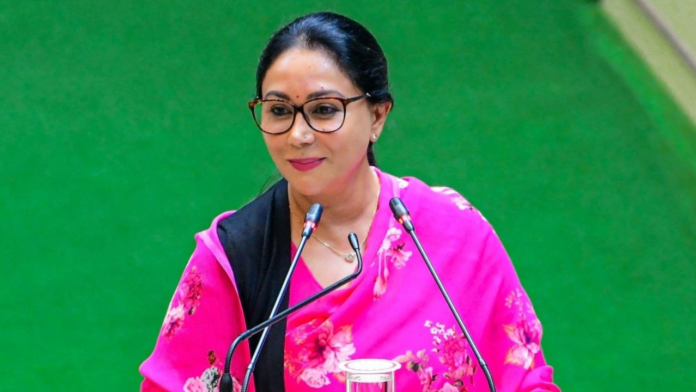
In a remarkable budget announcement, Deputy Chief Minister and Finance Minister of Rajasthan, Diya Kumari, unveiled a visionary plan aimed at promoting the state’s unique local products and transforming its districts into global export hubs. She emphasized the distinctive products that each district of Rajasthan is famous for, stating, “Every district in our state is renowned for a specific product. Rajsamand is known for terracotta, Barmer for block printing, Kota for Kota Doria sarees, Jalore for mojari footwear, Pali for henna, Pratapgarh for Thewa art, Jaipur for gems and jewelry, Dausa for rugs, and Nagaur for hand tools.”

To further bolster these local industries and align with Prime Minister Narendra Modi’s ‘Vocal for Local’ initiative, Diya Kumari announced the Rajasthan-One District, One Product Policy 2024. This policy aims to make each district an export hub, with an annual budget allocation of approximately 100 crore rupees for its implementation.

Moreover, to promote these local products, the budget includes provisions for organizing exhibitions, workshops, and seminars. A significant highlight of the announcement was the proposal to establish a PM-Unity Mall in Jaipur, at an estimated cost of around 200 crore rupees. This facility will serve as a central hub for showcasing and promoting the diverse array of local products from across the state.

During the budget announcement ceremony, Diya Kumari herself embodied the spirit of Rajasthan’s rich cultural heritage by wearing a pink-colored lehariya saree, a timeless fashion symbol of the Pink City. Her choice of attire was a nod to the enduring traditions and vibrant culture of Jaipur.

The budget announcement was met with widespread acclaim. A few days back, folk singers expressed their gratitude to Diya Kumari through a heartfelt song, praising her efforts in encouraging local artisans and industries. The song, sung by artists during the BJP’s extended executive meeting, became a topic of discussion. The lyrics highlighted how the Finance Minister’s historic budget has considered the welfare of all societal segments, potentially becoming a milestone for the future.

The song “Diya Kumari Aavegi, Nai Roshni Laavegi” (Diya Kumari will come, bringing new light) resonated with the public, who appreciated her budget. Diya Kumari received an outpouring of thanks through social media, digital platforms, phone calls, and news outlets for her dedication to Rajasthan’s growth and prosperity.

This budget announcement not only underscores the commitment of the Rajasthan government to preserve and promote its cultural heritage but also marks a significant step towards economic development and global recognition for its local products.

Lucknow Airport’ new terminal bespeaks stories of chikankari while basking under skylights

0

Imagine stepping into a world where skylights bathe the space in natural light, chikankari walls narrate stories of craftsmanship, and every corner is a celebration of cultural heritage. The newly unveiled terminal at Chaudhary Charan Singh International Airport in Lucknow offers precisely this experience. This architectural marvel, designed by Incubis Consultants and Jaipur-based AKFD Studio for the Adani Group, is a testament to Indian design and craftsmanship.

Lucknow Airport' new terminal bespeaks stories of chikankari while basking under skylights
3 Terminal of Lucknow Airport

The AKFD Studio based out of Jaipur is renowned for its expertise in working with Indian crafts at a large scale. The enterprise was chosen to transform the designs into a breathtaking reality through a collaborative and interactive process.

A Vision Brought to Life

The new terminal is a collaborative masterpiece that reflects the unique culture, iconic architecture, and rich craft heritage of Uttar Pradesh. Incubis Consultants, known for their work on T3 in New Delhi and T2 in Mumbai, conceptualized a design that harmoniously blends traditional artistry with modern functionality. Their vision was meticulously executed by the interdisciplinary team at AKFD Studio, led by Ayush Kasliwal. This UNESCO award-winning enterprise is celebrated for its large-scale craft installations and innovative designs.

A Fusion of Tradition and Innovation

As you traverse the new terminal, you are immersed in a rich cultural tapestry. The “Swagat Wall,” “Basant Bahar,” “Skylights,” “Chikankari Wall,” and “Aalap Wall” are not just artistic installations; they are experiences that seamlessly integrate age-old craftsmanship with cutting-edge technology.

Rohu-Inspired Skylights

One of the most striking features is the series of 13 skylights inspired by the Rohu fish, a symbol of Uttar Pradesh. These skylights, positioned 60 feet from the ground, diffuse sunlight artistically, creating an atmosphere reminiscent of an underwater world. Crafted from aluminum sheets, the skylights embody the elegance and cultural significance of the region, offering travelers a unique and serene visual experience.

Lucknow Airport' new terminal bespeaks stories of chikankari while basking under skylights

Chikankari Wall

At the check-in area, travelers are greeted by the Chikankari Wall, a majestic tribute to Lucknow’s enduring cultural legacy. The intricate motifs of Chikankari embroidery, recreated with meticulous care, cast mesmerizing shadows that dance in a gentle glow. This wall is a reminder of the city’s vibrant past, enveloping travelers in elegance and sophistication.

Lucknow Airport' new terminal bespeaks stories of chikankari while basking under skylights

Swagat Wall

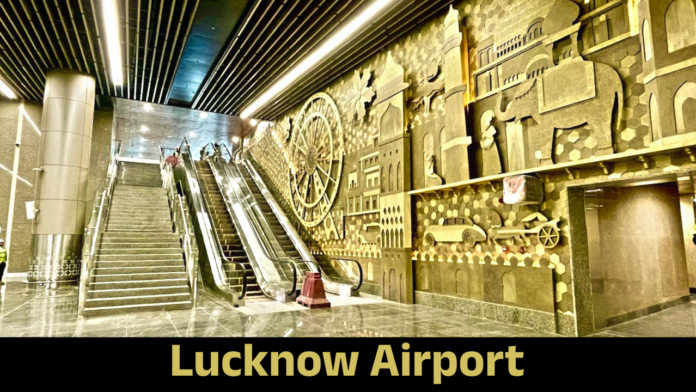
The “Swagat Wall,” located in the immigration hall, welcomes visitors with a breathtaking display of Lucknow’s skyline during festive occasions. Crafted in hexagonal-shaped tiles embossed with brass patterns, this installation reflects the city’s multifaceted cultural heritage and deep-rooted traditions. It’s a fitting metaphor for a city that leaves a lifelong impression on all who visit.

Basant Bahar

The “Basant Bahar” installation in the domestic departure corridor showcases the confluence of cultures in Uttar Pradesh. Inspired by the vibrant celebrations of Basant Panchami, this diaphanous, multi-sensory installation features blown glass flowers crafted by Firozabad’s skilled artisans. The intricate, translucent flowers, vibrantly colored, create an atmosphere of springtime cheer, offering a delightful farewell to departing passengers.

Former England captain Kevin Pietersen praised the new terminal at the Lucknow airport after being left in awe of its beauty.

Aalap Wall

In the baggage reclaim area, the “Aalap Wall” captures the essence of Lucknow on wooden panels adorned with layered prints. Each panel tells a story, depicting the city’s architectural heritage and bustling streets. From street vendors to musicians, the vibrant scenes are brought to life, enveloping travelers in the spirit of Lucknow.

Lucknow Airport' new terminal bespeaks stories of chikankari while basking under skylights

Collaboration Creates a Landmark

The new terminal stands as a testament to the power of collaboration and the beauty of integrating tradition with modern innovation. “We are confident that this project will not only elevate the travel experience for passengers but also serve as a source of pride for the Indian design community,” said Amit Krishn Gulati, Co-Founder of Incubis Consultants.

Ayush Kasliwal of AKFD Studio expressed similar sentiments: “A unique opportunity arose to collaborate with Incubis Consultants and showcase the immense potential of Indian craftsmanship on a global stage. It was a journey brimming with dedication and creative problem-solving.”

The successful completion of Lucknow Airport’s new terminal marks a significant milestone for the city and the Indian design and handicraft community. This collaborative effort stands as a symbol of innovation and the enduring beauty of Indian traditions.