Home Blog Page 532

India’s Longest Urban Tunnel Between Borivali and Thane: A Leap Towards Better Connectivity

1

On July 13, 2024, Prime Minister Narendra Modi led the groundbreaking ceremony for the Thane-Borivali Twin Tunnel project in Mumbai. This ambitious Rs. 16,600 crore project is a significant component of a larger Rs. 29,000 crore initiative aimed at enhancing Mumbai’s infrastructure, facilitating smoother travel, and improving connectivity within the city.

Overview of the Thane-Borivali Twin Tunnel Project

The Thane-Borivali Twin Tunnel stands as India’s longest and largest urban tunnel project, with an estimated cost of Rs. 16,600 crore. This direct subway line will stretch 11.8 km, linking Thane with Borivali on National Highway 8. The tunnel will feature two regular lanes and one emergency lane, drastically reducing travel time from over an hour to just 12 minutes and cutting the distance by 12 km.

Strategic Implications and Benefits

The tunnel’s strategic significance extends beyond mere connectivity. It is poised to alleviate congestion on Ghodbundar Road and the Western Express Highway, creating a swift and direct route that enhances east-west suburban connectivity. This improvement will ease commuting challenges and prevent overcrowding on existing roadways.

Environmental and Technical Details

The Mumbai Metropolitan Region Development Authority (MMRDA) assures that the construction of the tunnel will be environmentally friendly, having no adverse impact on the nearby Sanjay Gandhi National Park. The project will employ India’s longest tunnel-boring machine, capable of boring a 10.25 km tunnel with cross passages every 300 meters for safety and maintenance. Additionally, it is projected to reduce carbon emissions by 150,000 metric tons annually.

About Mumbai Metropolitan Region Development Authority (MMRDA)

Established in 1975, the Mumbai Metropolitan Region Development Authority (MMRDA) is responsible for planning and overseeing development in the Mumbai Metropolitan Region. The MMRDA’s first significant project was the Bandra-Kurla Complex, which has since become a major commercial hub. In 2014, the MMRDA launched Mumbai’s first metro train and continues to oversee the construction of multiple metro lines to mitigate traffic congestion. The Mumbai Urban Infrastructure Project and the Mumbai Trans-Harbour Link, which aims to facilitate travel between Mumbai and Navi Mumbai, are also under the MMRDA’s purview.

The Thane-Borivali Twin Tunnel project marks a significant milestone in Mumbai’s journey towards improved urban infrastructure and connectivity. By drastically reducing travel time and easing traffic congestion, it promises to enhance the quality of life for commuters and contribute to the city’s sustainable development goals.

Once demolished by Aurangzeb in 1682, Vidisha’s Vijay Temple to be revived again

0

Just 65 kilometers from Bhopal lies the historic Vijay Temple of Vidisha, a monument that was dismantled by Aurangzeb’s artillery in 1682. Today, the government of Madhya Pradesh is set to breathe new life into this ancient site, transforming it into a major tourist destination.

For centuries, the Vijay Temple lay buried under debris and soil until it was revealed by the floods of 1992. Local historian Kailash Deoria narrates the temple’s origin, explaining that it was constructed in the 10th century by Vachaspati, the prime minister of the Chalukya dynasty, as a symbol of their victory over the Pratihars. Dedicated to the Chalukyas’ family deity, Bhillaswamini, the temple complex also included a Sun Temple, akin to the grandeur of Konark. The renowned scholar Al-Biruni documented that the temple once stood 105 yards (315 feet) tall, a monumental height that echoes the design of India’s new parliament building.

Dharmendra Singh, the Minister of Culture for Madhya Pradesh, revealed plans for the temple’s restoration in collaboration with the Archaeological Survey of India (ASI). “We are preparing to restore temples and famous landmarks like Vijaypur. Our collaboration with ASI aims to develop them into prominent tourist destinations,” Singh said.

The revival of the Vijay Temple not only seeks to preserve its historical and architectural significance but also aims to boost local tourism. This initiative offers visitors a chance to immerse themselves in India’s rich cultural heritage, experiencing firsthand the magnificence of a bygone era.

With careful planning and dedication, the Vijay Temple is set to reclaim its former glory, standing tall once again as a beacon of history and culture in Madhya Pradesh.

Teamwork Arts, the JLF Organisers’ are now starting Jaigarh Heritage Festival in Jaipur

0

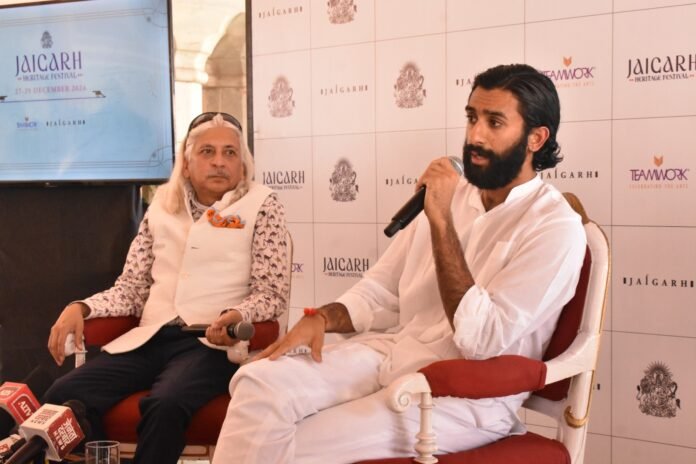
In a momentous announcement at the City Palace, His Highness Maharaja Sawai Padmanabh Singh of Jaipur, in collaboration with Teamwork Arts, unveiled the inaugural edition of ‘The Jaigarh Heritage Festival’. Scheduled to be held from 27th to 29th December 2024, this festival promises to be a significant addition to Jaipur’s rich cultural tapestry.

Sanjoy K. Roy, Managing Director of Teamwork Arts, expressed his excitement: “Teamwork Arts, the producers of the world’s largest literary gathering, the Jaipur Literature Festival, is thrilled to present the Jaigarh Heritage Festival in collaboration with H.H. Maharaja Sawai Padmanabh Singh. Our commitment to promoting Indian arts, culture, literature, and built heritage remains unwavering. This festival will further elevate Jaipur’s cultural landscape and heritage.”

His Highness Maharaja Sawai Padmanabh Singh highlighted the festival’s significance: “At the launch of the Jaigarh Heritage Festival, we celebrate the importance of Jaigarh as one of Rajasthan’s oldest and most prominent medieval bastions. This festival will highlight the rich history and traditions of the region and help boost Jaipur as India’s most prominent tourist destination. Join us in celebrating the regal splendour and vibrant heritage that make Jaipur one of the world’s leading cultural beacons.”

The majestic Jaigarh Fort, dating back to the 18th century, will serve as the backdrop for the festival. Overlooking the rugged ramparts of the Amer Fort complex, this historical fort holds immense significance as part of the heritage of the erstwhile Jaipur royal family. The festival will feature performances by a diverse line-up of artists specializing in folk, classical, and contemporary music. Additionally, it will highlight Rajasthan’s rich heritage through conversations, heritage walks, workshops, a crafts bazaar, sound and light shows, and a showcase of exotic local cuisine. Attendees will have the opportunity to experience a unique musical journey within an ancient fort while savouring its regal splendour.

The Jaigarh Heritage Festival underscores the importance of the Jaigarh Fort and the Royal Family’s dedication to preserving and promoting the art, culture, and history of Jaipur. This festival aims to highlight the rich traditions of Jaipur while contributing to the city’s development as a leading tourist destination.

Teamwork Arts has consistently striven to promote Jaipur as a vibrant cultural hub through its high-profile events and initiatives. Renowned for organizing the Jaipur Literature Festival, which has grown to become one of the largest literary festivals in the world, the group has showcased the city’s rich cultural tapestry to an international audience. Their unwavering commitment to the arts is evident in their dedication to creating platforms that celebrate literature, music, theatre, and visual arts. Over the years, significant contributions have been made to the sector by fostering artistic expression, supporting local and international artists, and engaging diverse communities. These efforts have not only enhanced Jaipur’s cultural landscape but also positioned the city prominently on the global cultural map.

With the launch of the Jaigarh Heritage Festival, the mission to highlight the unique heritage of Jaipur and promote it as a premier destination for cultural tourism continues.

Diya kumari’s initiative of promoting local products of Rajasthan praised by Folk singers in their song..

0

In a remarkable budget announcement, Deputy Chief Minister and Finance Minister of Rajasthan, Diya Kumari, unveiled a visionary plan aimed at promoting the state’s unique local products and transforming its districts into global export hubs. She emphasized the distinctive products that each district of Rajasthan is famous for, stating, “Every district in our state is renowned for a specific product. Rajsamand is known for terracotta, Barmer for block printing, Kota for Kota Doria sarees, Jalore for mojari footwear, Pali for henna, Pratapgarh for Thewa art, Jaipur for gems and jewelry, Dausa for rugs, and Nagaur for hand tools.”

To further bolster these local industries and align with Prime Minister Narendra Modi’s ‘Vocal for Local’ initiative, Diya Kumari announced the Rajasthan-One District, One Product Policy 2024. This policy aims to make each district an export hub, with an annual budget allocation of approximately 100 crore rupees for its implementation.

Moreover, to promote these local products, the budget includes provisions for organizing exhibitions, workshops, and seminars. A significant highlight of the announcement was the proposal to establish a PM-Unity Mall in Jaipur, at an estimated cost of around 200 crore rupees. This facility will serve as a central hub for showcasing and promoting the diverse array of local products from across the state.

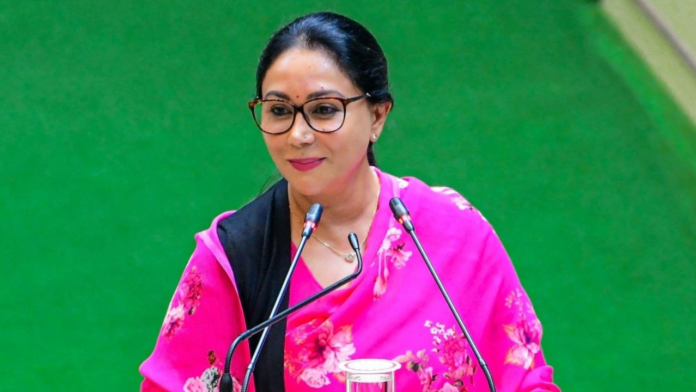
During the budget announcement ceremony, Diya Kumari herself embodied the spirit of Rajasthan’s rich cultural heritage by wearing a pink-colored lehariya saree, a timeless fashion symbol of the Pink City. Her choice of attire was a nod to the enduring traditions and vibrant culture of Jaipur.

The budget announcement was met with widespread acclaim. A few days back, folk singers expressed their gratitude to Diya Kumari through a heartfelt song, praising her efforts in encouraging local artisans and industries. The song, sung by artists during the BJP’s extended executive meeting, became a topic of discussion. The lyrics highlighted how the Finance Minister’s historic budget has considered the welfare of all societal segments, potentially becoming a milestone for the future.

The song “Diya Kumari Aavegi, Nai Roshni Laavegi” (Diya Kumari will come, bringing new light) resonated with the public, who appreciated her budget. Diya Kumari received an outpouring of thanks through social media, digital platforms, phone calls, and news outlets for her dedication to Rajasthan’s growth and prosperity.

This budget announcement not only underscores the commitment of the Rajasthan government to preserve and promote its cultural heritage but also marks a significant step towards economic development and global recognition for its local products.

Lucknow Airport’ new terminal bespeaks stories of chikankari while basking under skylights

0

Imagine stepping into a world where skylights bathe the space in natural light, chikankari walls narrate stories of craftsmanship, and every corner is a celebration of cultural heritage. The newly unveiled terminal at Chaudhary Charan Singh International Airport in Lucknow offers precisely this experience. This architectural marvel, designed by Incubis Consultants and Jaipur-based AKFD Studio for the Adani Group, is a testament to Indian design and craftsmanship.

Lucknow Airport' new terminal bespeaks stories of chikankari while basking under skylights
3 Terminal of Lucknow Airport

The AKFD Studio based out of Jaipur is renowned for its expertise in working with Indian crafts at a large scale. The enterprise was chosen to transform the designs into a breathtaking reality through a collaborative and interactive process.

A Vision Brought to Life

The new terminal is a collaborative masterpiece that reflects the unique culture, iconic architecture, and rich craft heritage of Uttar Pradesh. Incubis Consultants, known for their work on T3 in New Delhi and T2 in Mumbai, conceptualized a design that harmoniously blends traditional artistry with modern functionality. Their vision was meticulously executed by the interdisciplinary team at AKFD Studio, led by Ayush Kasliwal. This UNESCO award-winning enterprise is celebrated for its large-scale craft installations and innovative designs.

A Fusion of Tradition and Innovation

As you traverse the new terminal, you are immersed in a rich cultural tapestry. The “Swagat Wall,” “Basant Bahar,” “Skylights,” “Chikankari Wall,” and “Aalap Wall” are not just artistic installations; they are experiences that seamlessly integrate age-old craftsmanship with cutting-edge technology.

Rohu-Inspired Skylights

One of the most striking features is the series of 13 skylights inspired by the Rohu fish, a symbol of Uttar Pradesh. These skylights, positioned 60 feet from the ground, diffuse sunlight artistically, creating an atmosphere reminiscent of an underwater world. Crafted from aluminum sheets, the skylights embody the elegance and cultural significance of the region, offering travelers a unique and serene visual experience.

Lucknow Airport' new terminal bespeaks stories of chikankari while basking under skylights

Chikankari Wall

At the check-in area, travelers are greeted by the Chikankari Wall, a majestic tribute to Lucknow’s enduring cultural legacy. The intricate motifs of Chikankari embroidery, recreated with meticulous care, cast mesmerizing shadows that dance in a gentle glow. This wall is a reminder of the city’s vibrant past, enveloping travelers in elegance and sophistication.

Lucknow Airport' new terminal bespeaks stories of chikankari while basking under skylights

Swagat Wall

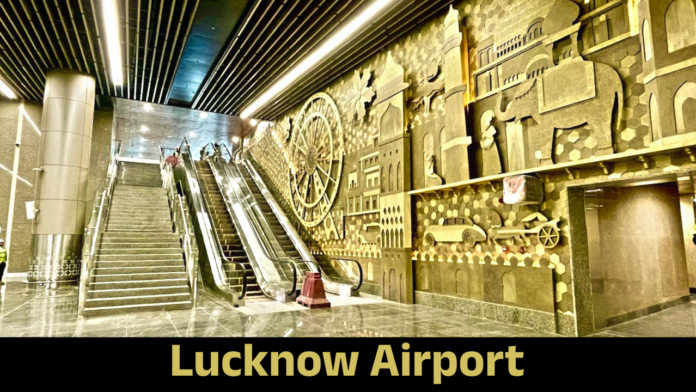
The “Swagat Wall,” located in the immigration hall, welcomes visitors with a breathtaking display of Lucknow’s skyline during festive occasions. Crafted in hexagonal-shaped tiles embossed with brass patterns, this installation reflects the city’s multifaceted cultural heritage and deep-rooted traditions. It’s a fitting metaphor for a city that leaves a lifelong impression on all who visit.

Basant Bahar

The “Basant Bahar” installation in the domestic departure corridor showcases the confluence of cultures in Uttar Pradesh. Inspired by the vibrant celebrations of Basant Panchami, this diaphanous, multi-sensory installation features blown glass flowers crafted by Firozabad’s skilled artisans. The intricate, translucent flowers, vibrantly colored, create an atmosphere of springtime cheer, offering a delightful farewell to departing passengers.

Former England captain Kevin Pietersen praised the new terminal at the Lucknow airport after being left in awe of its beauty.

Aalap Wall

In the baggage reclaim area, the “Aalap Wall” captures the essence of Lucknow on wooden panels adorned with layered prints. Each panel tells a story, depicting the city’s architectural heritage and bustling streets. From street vendors to musicians, the vibrant scenes are brought to life, enveloping travelers in the spirit of Lucknow.

Lucknow Airport' new terminal bespeaks stories of chikankari while basking under skylights

Collaboration Creates a Landmark

The new terminal stands as a testament to the power of collaboration and the beauty of integrating tradition with modern innovation. “We are confident that this project will not only elevate the travel experience for passengers but also serve as a source of pride for the Indian design community,” said Amit Krishn Gulati, Co-Founder of Incubis Consultants.

Ayush Kasliwal of AKFD Studio expressed similar sentiments: “A unique opportunity arose to collaborate with Incubis Consultants and showcase the immense potential of Indian craftsmanship on a global stage. It was a journey brimming with dedication and creative problem-solving.”

The successful completion of Lucknow Airport’s new terminal marks a significant milestone for the city and the Indian design and handicraft community. This collaborative effort stands as a symbol of innovation and the enduring beauty of Indian traditions.

Jaipur Scientist Dr. Reena Sharma Launches Shandi Global to Revolutionize Plant-Based Alternatives

0

In 2022, Dr. Reena Sharma, a clinical scientist from Jaipur, took a bold step by launching Shandi Global, a brand dedicated to providing plant-based alternatives to meat. The inception of this innovative venture stemmed from a simple yet significant family moment.

The Inspiration

Dr. Reena’s journey began when her son expressed a craving for a burger. As a vegetarian family that had never even consumed eggs, Dr. Reena sought a suitable vegetarian option. Discovering an outlet advertising a plant-based chicken burger, she eagerly bought one for her son. However, the taste was disappointing, leaving much to be desired.

This experience ignited a spark in Dr. Reena. She took the half-eaten burger home, where her husband, Dr. Gaurav Sharma, a food scientist, began investigating its composition. Together, they envisioned creating a plant-based meat product that not only mimicked the taste of real meat but also retained its nutritional value.

The Birth of Shandi Global

Despite lacking a business background, the couple was determined to make their vision a reality. “Finally, we managed to make it. It was an achievement for us,” Dr. Reena shared. Their journey began modestly, but soon they moved to Singapore, securing senior positions and earning half a million dollars annually. Dr. Reena eventually left her job to pursue the startup full-time, with Dr. Gaurav’s unwavering support.

“Gaurav supported me in creating a unique product and building this brand from the beginning. Not just with his exceptional creativity but also in managing our home and our son, allowing me to dedicate 20 hours a day to building this company. Without his support and advice, Shandi Global could not have existed,” Dr. Reena says.

Growth and Success

In just three months, Dr. Reena turned down an $8 million offer and instead raised $750,000. With this capital, she built a factory, launched a website, and started selling plant-based meat at the B2B level. Shandi Global, now based in Singapore, offers 13 products made from proteins like chickpeas, mung beans, soybeans, and yellow peas. They’ve developed methods to replicate meat’s taste and aroma without added flavors, creating versatile whole-cut plant-based meat usable in over 50 recipes.

The brand’s valuation has soared to $30 million, with an annual revenue of $3.5 million. It operates B2B in Singapore, Thailand, Malaysia, Canada, and Australia, with a presence in the Middle East, including Turkey. In the first quarter of 2025, Shandi Global plans to launch its retail operations in Australia and India, marking a significant expansion into the retail sector. The brand expects to reach a revenue of $10 million in FY-25.

Future Aspirations

“With the planned expansions in Australia, India, and North America, we anticipate crossing $100 million in revenue by FY 2026,” concludes Dr. Reena. Her vision and determination, combined with Dr. Gaurav’s expertise, have positioned Shandi Global as a leader in the plant-based food industry, poised for continued growth and innovation.

Nagaland Wins Best State in Horticulture Award 2024

0

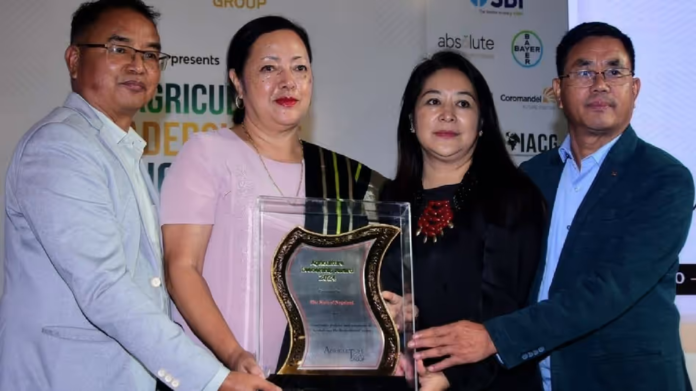
Nagaland has been honored with the prestigious “Best State in Horticulture Award 2024” at the Agriculture Leadership Awards, highlighting the state’s innovative horticulture initiatives. Minister Salhoutuonuo Kruse accepted the award in New Delhi, emphasizing the government’s commitment to promoting rural prosperity and sustainable agriculture.

Horticulture Development Initiatives

Nagaland’s success in horticulture is rooted in key policies aimed at enhancing nutrition and the economy through diverse farming and organic certification. Significant strides have been made, including the registration of Naga Mircha, Naga Tree Tomato, and Naga Sweet Cucumber as Geographical Indications (GI). This not only increased the market value of these products but also protected the region’s native heritage.

Institution of Farmer’s Producer Companies

A pivotal aspect of Nagaland’s horticulture success is the establishment of 13 Farmers’ Producer Companies (FPCs). These FPCs have been instrumental in promoting organic farming across 6,800 hectares, earning international recognition and national awards for crops such as pineapple, kiwi, and large cardamom.

About Farmers’ Producer Companies (FPCs)

Formation and Structure: Enabled by the Companies Act of 2002, FPCs allow farmers to pool resources and negotiate better deals. They require at least ten producer members or two institutions to operate, with no upper limit on membership. Each member has one vote in the democratic management system.

Government Support and Tax Benefits: FPCs benefit from schemes like the Equity Grant and Credit Guarantee Fund Scheme, offering government support. Additionally, up to INR 100 crore in income from FPC operations is tax-exempt, encouraging collective farming and sustainable practices.

Impact on Farmers: FPCs have significantly improved market access for small farms, reduced transaction costs, and facilitated the adoption of new technologies. By pooling resources and collaborating, farmers achieve better prices, more efficient operations, and higher overall productivity.

Market Integration and Expansion

To enhance market access, the Department of Horticulture has initiated air shipping services for Naga Organic Pineapple and Organic Kiwi, improving the distribution of Nagaland’s products across India. Another notable project is the creation of “100 vegetable villages,” aimed at supporting 10,000 families. This initiative not only boosts food production but also fosters self-sufficiency within communities.

Promotion of Exotic and Native Horticulture

Nagaland is advancing sustainable agriculture by cultivating exotic crops like kiwi and dragon fruit and introducing the innovative concept of a “Horticultural Model Village.” In this model, each village specializes in a single crop, optimizing resource use and increasing productivity.

Summing Up

Nagaland’s achievements in horticulture are a testament to the state’s innovative policies and commitment to sustainable development. By focusing on diverse farming, organic certification, and market integration, Nagaland has set a benchmark for other regions to follow. The “Best State in Horticulture Award 2024” is a well-deserved recognition of these efforts, paving the way for continued growth and prosperity in the state’s agricultural sector.

4o

World Youth Skills Day 2024: Date, History, Theme, and Significance

0

World Youth Skills Day is an annual event designated by the United Nations General Assembly in November 2014, with the first observance on July 15, 2015. The day aims to promote awareness and understanding of the importance of youth skills development in response to the challenges of unemployment and underemployment faced by young people globally.

History and Significance

The initiative recognizes that equipping youth with employable skills and competencies is crucial for personal development, economic empowerment, and integration into the workforce. It encourages governments, educational institutions, employers, and organizations to invest in training, education, and initiatives that enhance the skills and capabilities of young people. This investment enables youth to participate more effectively in the labor market and contribute to sustainable development goals.

World Youth Skills Day, observed annually on July 15th, holds significant importance in promoting the development and empowerment of young people worldwide. This observance underscores the need to equip youth with the skills and competencies necessary for employment, entrepreneurship, and sustainable livelihoods. By focusing on vocational training, education, and apprenticeships, World Youth Skills Day aims to bridge the gap between education and employment, addressing high youth unemployment rates and promoting economic growth. It emphasizes the role of skills development in fostering innovation, productivity, and social inclusion, thereby contributing to the achievement of global development goals.

Date and Theme for 2024

The World Youth Skills Day 2024 will be observed on Monday, July 15. This year’s event theme is “Youth Skills for Peace and Development,” which emphasizes the integral role youth play in peacebuilding and conflict resolution. The theme highlights how the development of youth skills is essential not only for personal and economic growth but also for promoting peace and stability in communities around the world.

Celebrations and Activities

World Youth Skills Day promotes vocational training, education, and apprenticeships as pathways to enhance youth employability and entrepreneurship. Organizations, educational institutions, and communities organize skill development workshops, training programs, and career fairs to provide practical learning opportunities and connect youth with employers. Skills competitions showcase talent and foster creativity in various fields, while awareness campaigns raise public understanding of the importance of equipping youth with relevant skills for sustainable development.

This observance serves as a platform for advocacy, policy discussions, and collaborative efforts to create a conducive environment where young people can thrive and contribute positively to society through their acquired skills and knowledge. By focusing on the development of youth skills, the global community aims to build a more inclusive, innovative, and sustainable future.

National Plastic Surgery Day 2024: Date, History, Significance, Facts and All You Need To Know

0

Today, on July 15th, 2024, India observes National Plastic Surgery Day! This day serves to raise awareness about the field of plastic surgery and its impact on people’s lives.

A Rich History:

The concept originated in 2011 by Dr. S. Raja Sabapathy, then President of the Association of Plastic Surgeons of India (APSI). The aim was to educate the public about the true meaning of “plastic surgery,” which often gets associated solely with aesthetics. The date, July 15th, was chosen to avoid conflicts with other medical conferences and national holidays.

Significance and Impact:

Plastic surgery encompasses both reconstructive and cosmetic procedures. Reconstructive surgery helps restore form and function after accidents, burns, birth defects, or cancer treatment. Cosmetic surgery, on the other hand, focuses on enhancing appearance.

National Plastic Surgery Day highlights the positive contributions of this field. Reconstructive surgery can significantly improve a patient’s quality of life, restoring not just physical appearance but also confidence and self-esteem.

Facts to Know:

  • India has a long history in plastic surgery, considered a pioneer in the field.
  • The APSI plays a crucial role in promoting ethical practices and ensuring high standards.
  • Today, many plastic surgeons in India offer free or subsidized surgeries on this day to raise awareness and help those in need.

Looking Forward:

National Plastic Surgery Day serves as a springboard for discussions about the advancements and future of the field. It’s a day to appreciate the dedication of plastic surgeons who help people rebuild their lives and achieve a sense of well-being.

The Man Behind the Reliance Chief: Mukesh Ambani and His Right-Hand Man

0

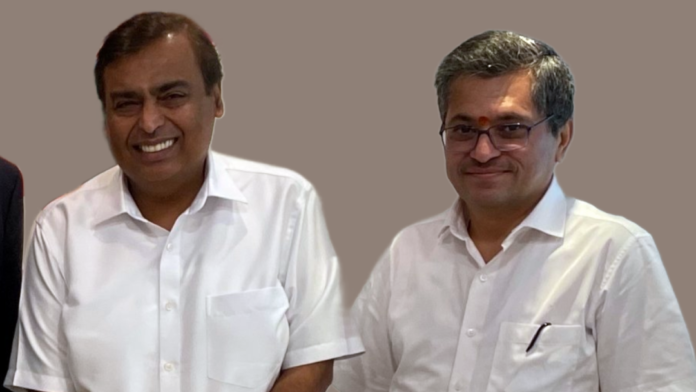
India’s business landscape is dominated by titans like Mukesh Ambani, chairman of Reliance Industries. But even titans have their secret weapons. For Ambani, that weapon is often referred to as his “right hand,” Manoj Modi.

Modi is a far cry from the flamboyant image some associate with big business. He prefers to operate away from the public eye, focusing on the intricate workings of Reliance’s vast network. Reports suggest his fingerprints are on many of Reliance’s biggest deals, and his role in ensuring the smooth functioning of the company is considered invaluable.

The specific nature of Modi’s work remains somewhat of a mystery. In a rare interview, he himself deflected attention from strategy, emphasizing his role in internal operations and employee development. However, his loyalty and effectiveness are beyond question. In 2018, news outlets buzzed with reports of a palatial 22-storey building Ambani gifted to Modi, a testament to the high regard in which he’s held.

Manoj Modi’s story exemplifies the opportunities that exist within the Reliance empire. His rise from a regular employee to Ambani’s most trusted advisor highlights the company’s focus on talent and dedication.

While Mukesh Ambani remains the face of Reliance Industries, the quiet influence of Manoj Modi serves as a reminder that even the most powerful figures rely on exceptional teams behind the scenes.