Home Blog Page 519

UNCOVERING PINK CITY’S CULTURAL RICHNESS: CITY PALACE

0

Mehak, student of Saksham Sanchar Foundation shared her journey of visiting City Palace in the joint agies of AWWA and SSF.

UNCOVERING PINK CITY’S CULTURAL RICHNESS: CITY PALACE


CUTLURAL SPECTACLE

As thinking of Jaipur in mind the first thing goes in our mind is unmatchable culture. But how this culture is still standing. Hence this is a long preserving work done by people.

Rulers of Jaipur contributed so much for this still standing heritage .one of the best  examples of this is in art preserving hall in city palace

When we visit a vintage location we often praise art .But we forget about  the persons with exceptional talent behind the art

Nevertheless, rulers of Jaipur recognize timeless work of art and made a hall for promotion of artist’s generation in city palace . which includes miniature art ,wooden art , perfumes, jewelry and other remarkable art of Rajasthan.

UNCOVERING PINK CITY’S CULTURAL RICHNESS: CITY PALACE


Polo pride of Jaipur

Jaipur and its royal family has close connection with polo .maharaja man singh had a great interest in polo and he was the one who take polo in Jaipur then came maharaja sawaimadhosingh made first polo yard and this history goes on.

Let’s talk about a military officer, not only an officer but also a maharaja but a love towards country made him on this path.a decorated military officer, is an accomplished sportsman, he also represented India in polo .

Even current maharaja of Jaipur Padmanabh singh is also a great player of polo.

Mubharak mahal of Jaipur signifies the importance of polo in history of Jaipur. One of my most fascinating from all is night polo ball which is used to play polo in night.

UNCOVERING PINK CITY’S CULTURAL RICHNESS: CITY PALACE

FIREPOWER

Arms and armour play a deceisive role in countries  defensive potential today every single country have weapons

Although this was not a modern concept our ancesters also have a vast expertise of weopons

In city palace , “SILEH KHAWA”showcase one of the finest weopons used by our rajputs of jaipur.

Blades ,swords ,hilts,helmets armour ,hunter guns ,even war accessories of battle horses are gloriflyiny our great past .

Also opposite to entry gate ,there was a great art hanging of mother’s of all war i.e MAHABHARAT.

UNCOVERING PINK CITY’S CULTURAL RICHNESS: CITY PALACE

Trip to Royal Museum of City Palace , Jaipur

0

Jyoti Nayal, student of Saksham Sanchar Foundation shared her experience of what all she visited in her recent tour to City Palace

The students of Saksham Sanchar Foundation visited to an incredible historical structure City Palace Jaipur reflecting the rich heritage of Jaipur. The trip was educational, knowledgeable , historical and showing the royal culture of the Rajasthan.

Trip to Royal Museum of City Palace , Jaipur

History : The City Palace was built by Maharaja Sawai Jai Singh II in 1972. He was also the founder of Jaipur City. He belong to the Kachwaha Rajput Clan. Within the four years major palaces in the City were constructed including the City palace ,Jaipur situated in the central Northeast part of the City.

A̲t̲ P̲a̲l̲a̲c̲e̲

When we reached and entered the palace we were welcomed by the royal Grandeur. The palace is uncovered with the large Courtyard between different structures and the palace is divided into two parts one which contain few courtyards and museum and other where royal family still resides.

Trip to Royal Museum of City Palace , Jaipur

Striking features and structures (attractions).

  1. Mubarak Mahal : It displays a vast and unique collection of Royal costumes, Pashmina shawls, Billiards , silk sarees, sanganeri block prints.
  2. Rath Khana : The transport gallery which shows themes of power, perception, pilgrimage through these transport. It include 19th century Jal Jholi boat on which the ideal of Krishna would take a ride on Talkatora lake on Jal Jhulni Ekadashi.
  3. Diwan-i-Aam : It is the Hall of private audience and were used for official function and meetings and the wall decorated with floral motifs and stunning collection of weapon and armor.
  4. Pritam Niwas Chowk : Four beautifully adorned doorways in the courtyard representing the seasons , with the peacock gate dedicated to Lord Vishnu.
  5. The Jharokhas : The palace has many jharokha which are small balconys or windows on walls. The jharokhas are decorated with carvings and provide ventilation and natural light to the rooms. And it also allow the royal ladies to observe the outside activates.
  6. Silver vessels : Two huge sterling silver vessels. They were made from 14,000 melted silver coins without soldering . Each with capacity of 4000 litres.
Trip to Royal Museum of City Palace , Jaipur

Best time to visit : November to March

Photography : It is allowed only in certain section of Palace .

Conclusion: We had an amazing and memorable trip full of enthusiasm and curiosity . An educational trip where we get to know about the historical structures and Royal culture of Rajasthan.

President Droupadi Murmu Appoints New Governors in 9 States; Haribhau Kisanrao Bagde Takes Office as Rajasthan Governor

0

In a significant development, President Droupadi Murmu has appointed new governors in nine states across the country, marking a major reshuffle in the gubernatorial positions. Among the new appointees is Haribhau Kisanrao Bagade, who took office as the Governor of Rajasthan on July 27, 2024.

The President’s office announced the appointments on Friday, stating that the new governors will take charge of their respective states with immediate effect. The appointments come as a surprise move, with several incumbent governors completing their terms or being transferred to other states. Here are the key appointments:

  1. Haribhau Kisanrao Bagde: Former Maharashtra Assembly Speaker, Haribhau Kisanrao Bagde, has been appointed as the Governor of Rajasthan.
  2. Jishnu Dev Varma: Former Tripura Deputy Chief Minister, Jishnu Dev Varma, will take office as the Governor of Telangana.
  3. Om Prakash Mathur: Former Rajya Sabha MP, Om Prakash Mathur, assumes the role of Governor in Sikkim.
  4. Santosh Kumar Gangwar: Former Union Minister, Santosh Kumar Gangwar, has been appointed as the Governor of Jharkhand.
  5. Ramen Deka: Former Lok Sabha MP from Assam, Ramen Deka, will serve as the Governor of Chhattisgarh.
  6. CH Vijayashankar: Former Karnataka Minister, CH Vijayashankar, takes charge as the Governor of Meghalaya.
  7. CP Radhakrishnan: CP Radhakrishnan, who currently holds the position of Governor in Jharkhand, will now serve as the Governor of Maharashtra.
  8. Gulab Chand Kataria: Assam Governor, Gulab Chand Kataria, has been appointed as the Governor of Punjab and Administrator of the Union Territory of Chandigarh.
  9. Lakshman Prasad Acharya: Sikkim Governor, Lakshman Prasad Acharya, will also take on the additional responsibility of being the Governor of Assam and Manipur.

Additionally, former IAS officer K Kailashnathan has been appointed as the Lieutenant Governor of Puducherry.

Agniveervayu Woman from Jaipur Shines in IAF’s Inaugural Drill Team on Rajat Jayanti Vijay Diwas

0

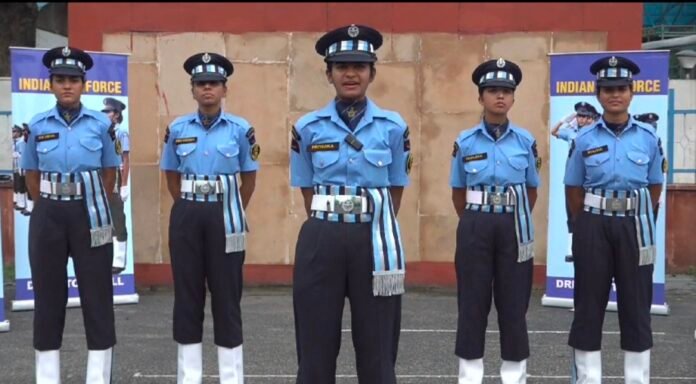
On July 26, 2024, the Indian Air Force (IAF) showcased the inaugural performance of its Agniveervayu Women’s Drill Team at India Gate, marking the Rajat Jayanti Vijay Diwas. This event honoured the brave soldiers who sacrificed their lives during the Kargil War. Among the 29 women in this prestigious team is Priyanka Bhatsara, a trailblazer from Jaipur, Rajasthan.

Priyanka’s journey to the IAF is a testament to her determination and passion. She completed her education at GR Global Academy in Jaipur, where her interest in the armed forces was sparked. An active member of the National Cadet Corps (NCC) and an A certificate holder, Priyanka became the first woman in her family to join the Air Force.

The rigorous training in the armed forces instilled in Priyanka the values of cohesion and fraternity, which she considers the hallmark of the military. Inspired by the discipline and allure of the uniform, Priyanka’s passion for the Air Force was clear. When the opportunity to join the IAF came, she took it without hesitation.

In the IAF, Priyanka was introduced to various streams and trades, ultimately focusing on accounts and supply chain management. However, her role in the Agniveervayu Women’s Drill Team is what truly stands out. This unique display team, consisting of 29 dedicated women, emphasizes physical and mental fitness through a demanding training schedule.

Participating in the drill team has been a source of immense pride for Priyanka. The training is rigorous, designed to push the limits and enhance the capabilities of each member. Priyanka’s commitment and resilience have not only made her an exemplary member of the team but also a source of inspiration for many aspiring women in the armed forces.

Priyanka Bhatsara’s story is a shining example of dedication and breaking barriers. As she continues to serve and excel in the IAF, she embodies the spirit of the Agniveervayu and sets a powerful precedent for future generations of women in the Indian Armed Forces.

20+ Quotes On Virat Kohli By Fans

0

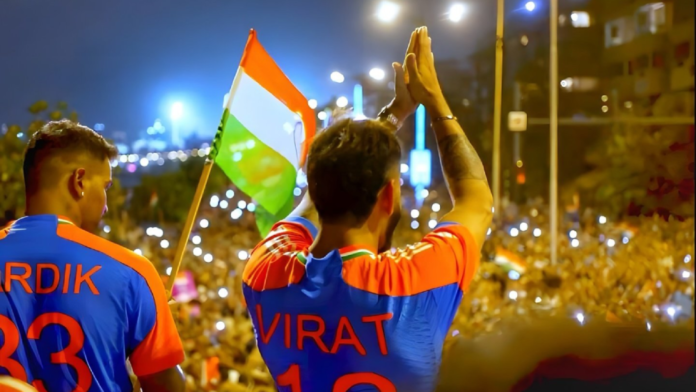
Virat Kohli, the name resonates with passion, brilliance, and unwavering determination in the world of cricket. His journey from a promising talent to a global icon is a testament to his relentless pursuit of excellence. Beyond his extraordinary cricketing feats, Kohli has captivated millions with his charismatic personality and infectious enthusiasm. Fans from across the globe have found in him a role model, a hero, and an embodiment of their dreams. Here, we present a compilation of heartfelt quotes from fans that encapsulate their admiration and reverence for the modern-day cricketing colossus.

Quotes from Fans

  1. “Virat Kohli is not just a cricketer; he’s a phenomenon. Watching him play is pure joy!”
  2. “Every time Kohli steps on the field, you know something magical is about to happen.”
  3. “His passion and dedication are unparalleled. Kohli is the heart and soul of Indian cricket.”
  4. “In Kohli, we see the perfect blend of talent, hard work, and leadership.”
  5. “Virat Kohli’s cover drive is poetry in motion. He makes cricket look so effortless!”
  6. “Kohli’s hunger for runs and his desire to win is what sets him apart from the rest.”
  7. “When Kohli bats, the entire nation watches. He’s a true icon.”
  8. “His fitness and work ethic are inspirational. Kohli sets the bar high for everyone.”
  9. “Virat Kohli is a role model for aspiring cricketers. His journey is a testament to perseverance.”
  10. “The way he handles pressure and delivers consistently is remarkable. Kohli is a true champion.”
  11. “Watching Kohli chase down targets is a masterclass in batting. He makes the impossible possible.”
  12. “Kohli’s aggressive style of play is a breath of fresh air. He brings so much energy to the game.”
  13. “His records speak for themselves, but it’s his attitude that makes him a legend.”
  14. “Kohli’s intensity on the field is unmatched. You can see the fire in his eyes.”
  15. “He’s not just a player; he’s an inspiration to millions. Kohli’s impact goes beyond cricket.”
  16. “Kohli’s leadership has transformed the Indian team into a formidable force. He’s a natural leader.”
  17. “Every innings of Kohli is a lesson in dedication, skill, and sportsmanship.”
  18. “Virat Kohli’s resilience and ability to bounce back from setbacks are what make him extraordinary.”
  19. “He’s a master of the chase. When Kohli’s at the crease, no target seems too high.”
  20. “Kohli’s love for the game is evident in every shot he plays. He’s a true cricketing genius.”
  21. “His passion for winning and his never-give-up attitude are what make Kohli stand out.”
  22. “Virat Kohli’s consistency is astounding. He’s a run machine, plain and simple.”
  23. “Kohli’s dedication to his craft is inspiring. He pushes the boundaries of excellence every time.”
  24. “Watching Virat Kohli bat is a privilege. He’s a living legend of the sport.”

Conclusion

Virat Kohli’s impact on the sport of cricket is immeasurable. His ability to inspire, entertain, and dominate has solidified his status as one of the greatest cricketers of all time. The quotes presented here are a mere glimpse into the ocean of admiration that Kohli commands. As he continues to grace the cricket field with his brilliance, fans around the world will continue to celebrate his extraordinary journey.

Leaf of faith..How India is reclaiming its forest?

0

Niharika Priyadarshani, student of Saksham Sanchar Foundation shared her report on the reclaiming of forest in India. Keep reading to know more..

India, a country with a rich forest heritage, has been witnessing a concerning decline in tree cover over the past few decades. The loss of over 1.5 million hectares of forest land between 2001 and 2019 has severe implications for the environment, wildlife, and human well-being. However, there is hope. Van Mahotsav, an annual tree-planting festival, has been instrumental in increasing tree cover and promoting forest conservation.

Importance of Trees

  • Produce oxygen and absorb carbon dioxide, supporting life on Earth
  • Support biodiversity and provide habitats for wildlife
  • Prevent soil erosion, maintain water cycles, and mitigate natural disasters
  • Provide natural resources, such as timber, fuelwood, and medicinal plants
  • Mitigate climate change by absorbing greenhouse gases

Decline of Trees

  • Deforestation and land degradation for agriculture, urbanization, and infrastructure development
  • Climate change and natural disasters, such as droughts and forest fires
  • Over-exploitation of forest resources, leading to degradation and depletion

Van Mahotsav

  • Launched in 1950 by K.M. Munshi, the then-Union Minister for Agriculture and Food
  • Encourages community involvement and ownership in tree planting and forest conservation
  • Aims to plant billions of trees across India every year, promoting afforestation and reforestation
  • Celebrated from July 1 to 7, coinciding with the monsoon season

Increase of Trees

  • Van Mahotsav has led to a significant increase in tree cover, with over 2.5 billion trees planted since its inception
  • Community-led initiatives have improved forest density and biodiversity
  • Government initiatives, such as the National Afforestation Programme, have supported afforestation and reforestation efforts

Summing Up

Van Mahotsav plays a vital role in reversing the decline of trees in India. By promoting community-led tree planting and forest conservation, we can restore our natural heritage and ensure a sustainable future. The importance of trees cannot be overstated, and it is our responsibility to protect and preserve them for future generations. Let us continue to support this noble initiative and work towards a greener India.

Have you visited Jagat Shiromani Temple in Amer? All you need to know…

0

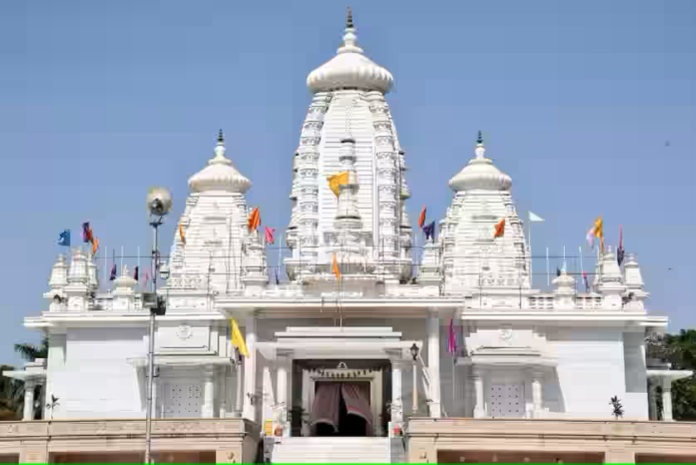
The Jagat Shiromani Temple, often referred to as the Meera Bai Temple, is one of the most beautiful and ornate temples in Amer, near Jaipur. While Amer Fort, a UNESCO World Heritage Site, is a must-visit for anyone exploring Jaipur, the Jagat Shiromani Temple is a lesser-known treasure that has been gaining popularity among tourists over the past few years.

A Brief History

The Jagat Shiromani Temple dates back to 1599 AD and took about nine years to complete. It was built in memory of Jagat Singh, the eldest son of Maharajah Man Singh I, by his mother, Rani Kanakwati. The temple stands as a testament to their devotion and architectural prowess. The temple can be accessed from the main entrance on Fort Road in Amer town or through a flight of steps leading from Amer Fort.

Architectural Marvel

One of the temple’s most striking features is its marble Torans, or pylons, which are made from a single piece of marble. These Torans are typically found in Jain temples, showcasing the unique blend of Jain, Hindu, Mughal, and South Indian architectural styles. This fusion of styles is reminiscent of the Albert Hall Museum in Jaipur, creating a visually stunning masterpiece.

The temple is constructed using three different types of stone: local sandstone, marble, and black stone, possibly granite. This combination of materials enhances the temple’s aesthetic appeal, distinguishing it from other temples in the area, which are often built from a single type of stone.

Stories and Legends

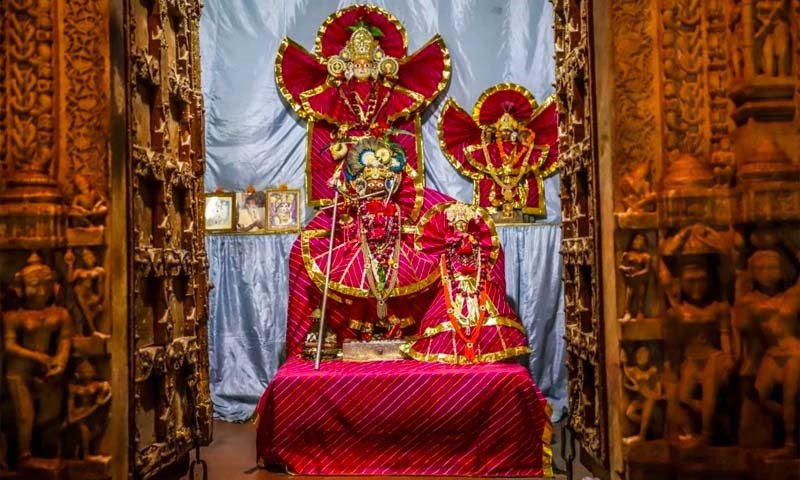
The temple is dedicated to Lord Vishnu and houses idols of Lord Krishna and Meera Bai. Meera Bai, a devout follower of Lord Krishna, considered him her husband. It is believed that the idol of Lord Krishna in this temple is the same one Meera Bai worshipped in Mewar over 600 years ago. This idol was saved from destruction during a Mughal attack on Mewar and brought to Amer by the rulers of the time.

According to popular legend, the ornate Toran at the entrance of the temple symbolizes the supposed marriage of Meera Bai to Lord Krishna. However, some historians argue that the temple might have originally been intended as a Jain temple, given the prevalence of Jain architectural elements and the significant Jain population in Amer at the time.

Have you visited Jagat Shiromani Temple in Amer? All you need to know...

Intricate Carvings and Frescoes

The temple’s ceiling features beautiful frescoes, although they have deteriorated over time due to poor maintenance. The walls, especially the pedestal section and the canopy housing Garuda, the carrier of Lord Vishnu, are adorned with intricate carvings. These carvings depict various scenes, including an army of elephants, horses, and tigers, as well as jubilant processions of people and birds, possibly peacocks. Above the pedestal are three marble plates depicting characters from Indian mythology.

Visiting Jagat Shiromani Temple

The Archaeological Survey of India (ASI) maintains the Jagat Shiromani Temple. It is located in Amer town and can be easily reached within a few minutes from Amer Fort. Visitors can take the left lane after the Amer Elephant Stand on Amer Road to reach the temple. The temple is an essential part of the heritage walking tour of Amer town, with many tour leaders starting or ending their walks at this historical site.

Temple Timings

The Jagat Shiromani Temple is open daily from 6 AM to 1 PM and from 4 PM to 8 PM.

Nearby Attractions

While visiting the Jagat Shiromani Temple, you can also explore nearby attractions such as:

  • Amer Fort: A majestic fort with stunning architecture and rich history.
  • Ambikeshwar Temple: Another beautiful temple dedicated to Lord Shiva.
  • Panna Meena Kund: An ancient stepwell with intricate designs.
  • Badrinath Temple: A serene temple dedicated to Lord Vishnu.
  • Anokhi Museum: A museum showcasing traditional block printing techniques.

The Jagat Shiromani Temple is a fascinating destination that offers a unique blend of heritage, architecture, and religious significance. Whether you are a history enthusiast, architecture aficionado, or a devout pilgrim, this temple is a must-visit on your trip to Jaipur.

Jaipur All Set to See Gold Manufacturing Unit for Luxury Watches in Jaipur, credit Jaipur Watch Company

0

Jaipur is all set to script yet another story by carving a niche in luxury segment as a gold manufacturing unit for watches will be coming up soon to bring in bespoke designs in watches.

The credit for this vision goes to Jaipur Watch Company which is India’s premier bespoke watch manufacturer.

The company recently announced a significant milestone—a ₹20 Million investment from esteemed investors Nirav Jogani of Lemon Funds and Jignesh Shah of Dev Diamonds and Lucky Jewellery.

This investment reinforces Jaipur Watch Company’s commitment to excellence in luxury watch manufacturing and aligns with its strategic vision to expand and innovate within the luxury markets. The funds will be utilized to establish a dedicated gold watch manufacturing unit and expand the product line with new, innovative designs. It will also help to enhance marketing efforts to reach a wider audience and let them invest in advanced technology and skilled artisans to improve production efficiency, said officials.

Meanwhile, Gaurav Mehta, Founder, Jaipur Watch Company proudly says ” We see this as a strategic partnership that marks a significant phase in our growth. Jignesh Shah brings with him years of invaluable experience in jewellery and watchmaking in precious metals. Nirav Jogani, a well-known face in the finance industry, will bring his sharp acumen to bolster our future plans.”

Jignesh Shah who closely watches the growth of Jaipur Watch Company comments “I have been closely following the journey of Gaurav Mehta and Jaipur Watch Company for some time, and I have always seen potential in the brand. By entering into this partnership, we are set to establish a gold watch manufacturing unit exclusively for Jaipur Watch Company, aiming to enhance its product offerings in the luxury segment.”

Nirav Jogani added “As a Chartered Accountant by profession who has worked with numerous startups, I see tremendous potential in the Indian luxury market. Jaipur Watch Company is poised to lead the way in the industry, and I am excited to be a part of this venture.”

The funding is expected to set new standards in the luxury watch industry, positioning Jaipur Watch Company and Gaurav Mehta as a global leader in bespoke timepieces.

Nirav Jogani added “As a Chartered Accountant by profession who has worked with numerous startups, I see tremendous potential in the Indian luxury market. Jaipur Watch Company is poised to lead the way in the industry, and I am excited to be a part of this venture.”

The funding is expected to set new standards in the luxury watch industry, positioning Jaipur Watch Company and Gaurav Mehta as a global leader in bespoke timepieces.

This temple can heal any disease: Avari Mata Temple of Rajasthan

0

Nestled in the serene hills and springs of Bhadesar Town in Chittorgarh, Rajasthan, the Avari Mata Temple stands as a beacon of spiritual solace and miraculous healing. This revered temple, dedicated to Goddess Avari Mata, is situated in the Aasawara village and has become a popular pilgrimage site for devotees seeking divine intervention and relief from ailments.

Architectural Elegance

The temple’s architecture, though simple, exudes an ancient charm reminiscent of traditional Hindu temples. The structure comprises two main entrances and small towers, adorned with beautiful paintings and intricate sculptures of Hindu deities. At the heart of the temple lies the main idol of Avari Mata, resplendently decorated with flowers and gold jewelry, radiating an aura of divine grace.

A Sacred Pond and Hanuman Idol

Adding to the temple’s serene ambiance is a nearby holy pond, believed to possess purifying properties. Within the temple premises, a striking idol of Lord Hanuman stands as a guardian, adding to the spiritual vibrancy of the location. The backdrop of hills and springs enhances the tranquil atmosphere, drawing large numbers of visitors seeking peace and devotion.

Historical Significance and Healing Powers

Avari Mata Temple is steeped in history and folklore. It is widely believed that the temple possesses miraculous healing powers. Devotees flock here to seek cures for chronic and incurable ailments. A unique custom involves offering oil to the temple, which is then purified through mantras and holy chants. This sanctified oil is applied to afflicted areas, and many devotees attest to experiencing miraculous recoveries.

Daily Rituals and Festivities

The temple is a hub of spiritual activities, with daily aartis (rituals) attracting large gatherings of devotees. The festivals of Navratri and Hanuman Jayanti are celebrated with immense fervor, drawing even larger crowds who come to witness the grandeur and seek blessings. The temple’s sacred rituals and vibrant celebrations create an atmosphere of collective faith and devotion.

Legend of Avari Mata

The legend of Avari Mata, also known as Asawara Rani, is a tale of divine power and dedication. According to folklore, during the reign of Maharana Hamir Singh of Mewar, two brothers, Angatji and Awaji Rathore, were granted jagirdari (land ownership) for their services. Awaji’s daughter, Kesarkunwar, became the center of a divine intervention when multiple suitors sought her hand in marriage. To avoid conflict and bloodshed, Kesarkunwar prayed to the family deity and, following divine instructions, worshipped the Sun God. On the appointed day, amidst thunder and lightning, the earth opened up, and Kesarkunwar was swallowed by the ground, leaving behind a legacy of divine power.

Legacy and Miracles

Kesarkunwar’s act of self-sacrifice and the ensuing divine manifestations led to the establishment of the Avari Mata Temple. Devotees believe that the goddess’s presence brings miraculous cures to those afflicted with physical ailments, such as paralysis and speech disorders. Many patients, who arrive bedridden, leave walking, attributing their recovery to the goddess’s divine intervention. The temple’s courtyard, where patients lie in front of the goddess’s idol at night, is believed to be a site of nightly miracles.

Management and Accessibility

The Avari Mata Temple is managed by the Avari Mata Temple Trust, ensuring the smooth functioning of its daily activities and rituals. Devotees can easily reach the temple from Udaipur, with buses operating from Champalal Dharamshala, as well as from various district headquarters, providing convenient access for pilgrims from far and wide.

In conclusion, the Avari Mata Temple stands as a testament to unwavering faith, divine miracles, and the enduring power of devotion. Whether seeking spiritual solace or miraculous healing, the temple continues to be a sanctuary for countless devotees, drawing them into its fold with promises of divine grace and eternal blessings.

Kargil Vijay Diwas – The Untold Story of Pakistan’s Failed Operation Koh-e-Paima

0

On May 17, 1999 , a secret meeting was held in a clandestine room at ISI’s Ojri Camp in Rawalpindi. Present were Pakistan’s Prime Minister Nawaz Sharif, Army Chief General Pervez Musharraf, and top defense officials and foreign ministers.

General Tauqir Zia began a presentation before the Prime Minister, displaying points on a map and detailing how the Pakistani army had captured several Indian posts, with National Highway-1 as the next target. This was Operation Koh-e-Paima, Pakistan’s plan to infiltrate Kargil and capture Kashmir. General Musharraf assured the Prime Minister that the operation was in its final phase, too late for a retreat. Before PM Nawaz could question, Chief of Staff General Aziz interjected, “Sir, don’t think further. Just give your approval. Your name will be written in golden letters in Pakistan’s history as the liberator of Kashmir.”

Foreign Minister Sartaj Aziz warned that this move would breach the promises made to Indian Prime Minister Atal Bihari Vajpayee. Nawaz responded, “How long will we try to liberate Kashmir through paperwork? Now that we have the chance, we should take advantage of it.”

Following this, PM Nawaz gave the green light to Operation Koh-e-Paima. Pakistani journalist Nasim Zehra detailed this entire incident in her book, ‘From Kargil to the Coup’.

As we commemorate the 25th anniversary of Kargil Vijay, let’s delve into the Pakistani side of the war. How did the Pakistani Army’s “Gang of Four” plan the Kargil infiltration, and how did Operation Vijay thwart it?

The Script Written in 1987: Indian Army Ascends Siachen

On April 13, 1984, under Lieutenant General Prem Nath Hoon’s leadership, an entire battalion of the Kumaon Regiment ascended Siachen. This mission, named Operation Meghdoot, irked Pakistani dictator General Zia-ul-Haq. Infuriated by the Indian Army’s success on Siachen, he ordered attacks on Siachen.

In 1986, Pakistan’s Special Service Group captured a peak west of Siachen, naming it Quaid Post after Muhammad Ali Jinnah. The next year, under Captain Bana Singh’s leadership, the Indian Army recaptured this post, renaming it Bana Post.

After these conflicts, political agreements continued between India and Pakistan, but Brigadier Pervez Musharraf couldn’t digest the defeat. In 1987, Zia-ul-Haq appointed Musharraf as the Special Service Group commander, who then presented a detailed plan to capture Kargil and Siachen. However, Zia-ul-Haq wasn’t ready at that time.

General Musharraf Becomes Army Chief in 1998: ISI Labels the Plan Strategically Unsound

In 1998, PM Nawaz Sharif appointed General Musharraf as the Army Chief, bypassing two senior generals. Musharraf, still smarting from the Siachen defeat, began working on the old plan to capture Siachen and Kargil. Nasim Zehra notes in her book ‘From Kargil to the Coup’ that even before Musharraf became the Army Chief, the Pakistani army had sent this plan to the Planning Directorate. It was then reviewed by the Director General of Military Operations and ISI.

ISI, in its report, declared the plan tactically sound but strategically flawed, as holding onto the captured territory long-term would be impossible. General Aziz Khan, however, disagreed, believing it was feasible, especially during winter when both armies vacated the peaks.

The US Meeting in 1998: Pakistan Prepares for Infiltration

On September 11, 1998, at the United Nations General Assembly in New York, Indian Prime Minister Atal Bihari Vajpayee and Pakistani PM Nawaz Sharif shared a meal, discussing shared histories and potential peace initiatives. Following this, in October, the Pakistani army began preparing for an attack on India, with Musharraf giving oral approval for Operation Koh-e-Paima.

Preparation for Infiltration: Helicopters and Hungry Soldiers

By January 1999, Pakistani soldiers, trained for mountain warfare and adept at walking and fighting in snow, began infiltrating the Indian side of the border. They transported arms and supplies using Russian MI17 helicopters, assembling heavy artillery piece by piece on the peaks.

NLI Unit 8’s Lieutenant Mohammad Majualla Khan noted in his diary, “The weather is terrible. It’s snowing. Listening to ‘Dil Se’ and ‘Kuch Kuch Hota Hai’ songs. After many days, the party brought us rations last night. We got cigarettes, dry fruits, milk powder. All is well now.” This entry reflects the dire conditions faced by the Pakistani soldiers.

Discovery and Indian Response

On May 3, 1999, shepherd Tashi Namgyal and his companions saw suspicious activities and reported them, leading to Lieutenant Saurabh Kalia and five soldiers patrolling the area. They were attacked, and Kalia was captured, revealing the scale of the Pakistani infiltration.

India launched Operation Vijay on May 10, 1999, to reclaim the occupied posts. The intense battles, including the significant Tololing peak victory, showcased the valor and strategy of the Indian Army.

Victory and the Aftermath

By July 8, 1999, Indian soldiers captured Tiger Hill, raising the tricolor flag. Over 200 Pakistani soldiers’ bodies were found, with documents identifying them. Despite their sacrifices, Pakistan denied retrieving their bodies.

Summing Up

The 25th anniversary of Kargil Vijay reminds us of the bravery and sacrifices of the Indian Army. Despite Pakistan’s strategic plans and initial successes, Operation Vijay not only thwarted their ambitions but also highlighted the resilience and tactical brilliance of the Indian armed forces.