Home Blog Page 458

Saudi Arabia’s 8 most breathtaking spots to visit..

0

Vaidehi Bhargava

Saudi Arabia has become an increasingly popular destination for travellers looking to experience a unique blend of heritage, luxury, and breathtaking desert landscapes. Here’s a closer look at some key locations that showcase the country’s natural beauty, rich history, and modern appeal.

  1. Habitas AlUla

Nestled in the ancient Ashar Valley, Habitas AlUla is more than just a place to stay; it’s an eco-conscious sanctuary. Built with sustainability in mind, this luxury retreat minimizes its environmental impact by using locally sourced materials and renewable energy.

Amenities and Experiences: Habitas AlUla offers wellness programs, including meditation and yoga sessions set against dramatic desert vistas. Art installations, inspired by the natural landscape, are found throughout the property. The on-site restaurant focuses on locally sourced ingredients, creating a dining experience that reflects the region’s flavors.

Why Visit: Habitas AlUla provides an immersive experience that connects visitors to the desert and its tranquility, while also offering luxurious comforts.

  1. Ashar Valley

Known for its stunning, rugged landscape, Ashar Valley is home to majestic sandstone cliffs, hidden canyons, and ancient rock formations.

Hot Air Balloon Rides: Taking a hot air balloon ride at sunrise allows visitors to experience the full scope of the valley’s beauty, with panoramic views of rock formations and vast desert plains. This activity offers a peaceful yet exhilarating way to explore the area.

Why Visit: The Ashar Valley embodies the serenity and raw beauty of Saudi Arabia’s desert landscapes, making it an ideal spot for nature enthusiasts.

  1. Elephant Rock (Jabal Alfil)

This striking sandstone formation has been shaped by wind and rain over thousands of years, resulting in a massive structure that resembles an elephant.

Best Time to Visit: The rock formation is most popular at sunset when it takes on a glowing, golden hue. The site is also beautifully lit at night, adding an ethereal quality.

Why Visit: Elephant Rock is an iconic symbol of AlUla’s unique natural beauty and is a favorite spot for photography.

  1. Old Town Castle, AlUla

Located in the heart of AlUla, Old Town Castle offers a window into Saudi Arabia’s past, showcasing a preserved mudbrick village that was once part of historic pilgrimage and trade routes.

Historical Significance: The castle, along with surrounding buildings, provides insight into the daily lives of those who lived there centuries ago, with traditional architecture and cultural artifacts.

Why Visit: It’s a must-see for history buffs and those interested in Saudi Arabia’s cultural heritage.

  1. Banyan Tree AlUla

This luxury resort draws inspiration from the ancient Nabatean civilization, with architecture designed to blend harmoniously into the desert landscape.

Highlights: Private villas offer desert views, while the Rock Pool—a serene, naturally-inspired pool area—allows for relaxation among stunning cliffs. Fine dining options showcase local and international cuisine.

Why Visit: Banyan Tree AlUla combines luxury and tranquility, providing guests with a private, immersive experience in the heart of the desert.

  1. Rainbow Rock

Known for its striking colors, Rainbow Rock is a multi-hued sandstone formation that showcases nature’s artistic side, with layers of red, pink, and orange.

Photography Opportunities: This natural wonder is especially appealing to photographers and nature lovers who appreciate unique geological formations.

Why Visit: Rainbow Rock offers an eye-catching display of color, bringing vibrancy to the desert landscape.

  1. Maraya Concert Hall

Maraya, meaning “mirror” in Arabic, holds the record for the world’s largest mirrored building. Its reflective surfaces blend seamlessly with the desert, creating a surreal, ever-changing view of the surroundings.

Events and Experiences: Hosting concerts and cultural events, Maraya is a cultural hub that introduces modern architecture into a historic landscape. It’s a space where art, music, and architecture merge.

Why Visit: Maraya is a symbol of Saudi Arabia’s modern artistic ambitions and offers a stunning setting for unique cultural experiences.

  1. Hegra Archaeological Site (Madain Salih)

Hegra, also known as Madain Salih, is a UNESCO World Heritage site that was part of the Nabatean civilization, which also built Petra in Jordan. Hegra is home to over 90 rock-cut tombs, each intricately carved.

Historical Significance: These tombs, some dating back to the 1st century, are remarkably preserved, offering insights into the architectural and cultural achievements of the Nabateans.

Why Visit: For history and archaeology enthusiasts, Hegra is a must-visit, providing a tangible connection to ancient civilizations and their legacy.

These destinations highlight Saudi Arabia’s commitment to preserving its heritage while embracing modernity. Whether you’re drawn to the luxury of eco-resorts, the ancient charm of archaeological sites, or the beauty of natural rock formations, each of these spots offers an unforgettable experience in the heart of the desert.


Why Italy was ranked 1st for the best food in the World?

0

Vaidehi Bhargava

Italian, Spanish, Mexican, Thai, and Greek cuisines are celebrated globally for their rich flavors and strong cultural roots, consistently topping world cuisine rankings. Italian food, often ranked the highest, is renowned for its focus on quality ingredients and timeless simplicity, with dishes like pasta and pizza at its core. Italy’s commitment to regional, seasonal ingredients—like fresh basil, tomatoes, and olives—embodies its culinary philosophy of balancing flavors and textures.

Spain’s cuisine, ranked just behind Italy, is known for its bold flavors and communal dining style. Staples like tapas and paella highlight Spain’s cultural emphasis on shared meals, showcasing ingredients such as saffron and seafood. Spanish cuisine’s appeal also lies in its adaptability, merging tradition with modern culinary techniques.

Mexican food, influenced by indigenous and Spanish culinary traditions, is beloved for its vibrant flavors and spices, from earthy moles to fresh tacos. Rich with ingredients like corn, beans, and chili, Mexican cuisine has gained popularity worldwide for its robust, layered tastes.

Thai cuisine’s appeal is rooted in its unique balance of sweet, sour, salty, and spicy elements. Known for dishes like pad Thai and green curry, Thai food is famous for its freshness, incorporating ingredients such as lemongrass, lime, and chili. The country’s street food culture adds to the vibrancy and accessibility of Thai cuisine globally.

Greek cuisine, ranked highly alongside these culinary giants, emphasizes simple, fresh ingredients like olive oil, feta, and seafood. Dishes such as moussaka and souvlaki capture Greece’s Mediterranean flavors, and its emphasis on healthy, balanced meals has earned Greek food a growing fanbase worldwide.

These cuisines not only offer delicious dishes but also reflect their cultures’ values, traditions, and agricultural heritage, securing their places among the world’s best.

Why Elon Musk is Supporting Donald Trump? Is the reason social changes?

0

As the world can see, Elon Musk, CEO of Tesla and SpaceX, has thrown his support behind former President Donald Trump in the upcoming election. Now he has won the elections and gonna be the next President of US, we all have seen the happiness of Musk on SpaceX tweets.

Despite having previously dismissed Trump, saying in 2022 that the former president should “hang up his hat and sail into the sunset,” Musk has become one of Trump’s most visible advocates. His decision has raised eyebrows, not only for its timing but also for the sizable financial backing Musk has directed toward Trump’s campaign and affiliated initiatives. Let’s take a closer look at Musk’s motivations, which extend beyond mere partisan politics and reflect his evolving stance on social issues and government efficiency.

A Change of Heart?

Since 2022, Musk has transitioned into a more active role within the Republican Party. He registered as a Republican ahead of the 2022 midterm elections, marking a departure from his previously more liberal affiliations. This political realignment became even clearer with his financial commitment of over $119 million to America PAC, a political action committee he created to boost Trump’s campaign. Additionally, Musk’s voter registration drive included a daily $1 million giveaway to swing-state voters during the final stretch of the campaign. These actions show a marked shift from a CEO known for tech innovation to one who now openly aligns with conservative causes and Trump’s platform.

Personal Motivations and Family Tensions

Musk’s shifting political alignment may be connected to personal experiences. In a public statement, Musk spoke about his daughter’s transition and ideological shift. In an interview, he described his daughter as having moved “beyond socialism to a full communist” worldview, framing her ideology as one hostile to wealth and the affluent class—a demographic Musk undeniably belongs to. He expressed his frustration with what he calls the “woke mind virus,” and his opposition to its perceived impact on society, which he sees as harmful. His use of his daughter’s birth name, an act known as “deadnaming,” has been criticized as insensitive and has added fuel to his conflict with social movements supporting LGBTQ+ rights.

Musk’s frustration has contributed to his vocal opposition against “woke” ideologies, which he associates with increasing acceptance of transgender identities, especially among younger generations. A report by the CDC indicates a sharp rise in the number of young people identifying as transgender in the U.S., a generational shift Musk seems to view with apprehension. His perception of societal changes and personal experiences appears to be a driving force behind his alliance with Trump, who similarly opposes “woke” politics.

Shared Vision for Government Reform

One practical reason behind Musk’s support for Trump lies in a shared vision for reshaping the federal government. Trump and Musk have discussed the possibility of creating a new government agency called the “Department of Government Efficiency” (DOGE). The proposed agency would aim to cut bureaucratic red tape, streamline operations, and reduce what both Musk and Trump refer to as a “suffocating federal bureaucracy.” Notably, the acronym DOGE echoes the “Doge” meme and the cryptocurrency Musk has famously promoted, underscoring Musk’s characteristic use of humor to popularize ideas.

The proposed department would give Musk, a tech mogul known for his disruptive business models, a role in shaping government policy. For a CEO who prizes efficiency and innovative approaches, a platform centered around cutting government waste resonates with Musk’s broader vision for streamlined governance. Trump’s proposed agency could offer Musk an avenue to impact U.S. governmental functions, merging his corporate philosophy with public sector reform.

Musk’s Emphasis on Social Issues

Musk’s outspoken stance on various social issues—particularly around immigration and transgender rights—has also aligned with Trump’s conservative base. Musk’s comments on issues like immigration and gender identity reveal his discomfort with what he sees as excessive political correctness. His objections to “woke” policies align with Trump’s narrative, appealing to voters who feel similarly alienated by these shifts in social norms.

Summing Up

Elon Musk’s support for Donald Trump is not merely a political endorsement but a complex alignment of personal convictions, ideological values, and visions for government reform. Musk’s journey from tech innovator to one of Trump’s prominent backers reflects a transformation influenced by personal beliefs and disagreements with what he considers “woke” cultural norms. His alliance with Trump presents a confluence of business acumen and conservative social ideology, underscoring Musk’s growing role in the political landscape.

$2 Trillion spending by 2035: Gen Z is set to become a major force in the nation’s economy

0

Vaidehi Bhargava

India’s Gen Z generation, which includes over 377 million individuals born between 1997 and 2012, is set to be a transformative force in the nation’s economy. According to a report by Snap Inc. and Boston Consulting Group (BCG), Gen Z’s influence on consumer spending is already significant, amounting to around $860 billion, or nearly half of India’s total consumption. This impact is projected to grow to an astounding $2 trillion by 2035, meaning Gen Z will drive half of all consumer spending in India.

Gen Z’s spending patterns and behaviors reveal some unique trends. Compared to previous generations, Gen Z is more likely to focus on trends over specific brands, and they highly value visual experiences. For instance, 77% of Gen Z find interactive visuals like augmented reality more engaging, which is influencing trends such as “shopcializing,” where they share shopping experiences with friends through images and videos. Moreover, their reliance on “inner circles” for advice—where 70% seek guidance from friends and family on purchasing decisions—demonstrates a collective approach to shopping and decision-making.

By 2035, Gen Z’s direct spending power alone is expected to hit $1.8 trillion. Already, one in four members of Gen Z are in the workforce, with nearly half expected to be working by 2035. This income, combined with their tech-savvy nature and preference for personalized and omnichannel shopping experiences, is prompting businesses to adapt their strategies. However, there is a disconnect: only 15% of brands are actively engaging this demographic, despite recognizing their potential impact.

For businesses, effectively reaching Gen Z will involve offering immersive and visually rich experiences, leveraging social and digital platforms, and connecting through influencers. Brands that adapt to Gen Z’s preferences and align with their values are likely to succeed in tapping into this generational shift in India’s economy.

A New Dawn for Yogasana in the Netherlands

0

The Dutch landscape has entered a new era with the establishment of the Stichting Netherlands Yogasana Sports Association (SNYSA), a pioneering organization committed to promoting Yogasana as both a competitive sport and a pathway to holistic wellness. Affiliated with World Yogasana, SNYSA aspires to transform Yogasana into a celebrated national and international sport while cultivating its ancient practices to foster physical and mental well-being.

Mission and Vision

At its core, SNYSA seeks to inspire a vibrant Yogasana community, embracing the practice’s multi-faceted benefits and building a supportive environment that merges tradition with contemporary athleticism. As Yogasana prepares for its historic inclusion in the 2026 Asian Games, the association is dedicated to enhancing the sport’s status in the Netherlands and beyond.

To accomplish these goals, SNYSA is focused on:

  • Community Building: Cultivating an engaged and supportive community of Yogasana practitioners and enthusiasts across the Netherlands.
  • Sport Recognition: Elevating Yogasana as a recognized and respected sport at national and global levels.
  • Skill Development: Hosting certified training programs led by expert trainers to ensure quality instruction.
  • Talent Promotion: Organizing national-level competitions to identify promising athletes and support their growth.
  • Educational Outreach: Collaborating with schools, universities, and community centers to introduce Yogasana into everyday life.
  • Global Partnerships: Forging relationships with international Yogasana organizations and industry experts to align Dutch efforts with global standards.

Leadership Team: Driving the Mission Forward

The association’s mission is powered by a dedicated leadership team:

  • President: Ms. Pranita Adwait Deshpande
  • Secretary General: Ms. Manasi Mohril
  • Director of Public Relations: Mr. Mayur Muley
  • Zonal Head: Ms. Harvinder Chahal
  • Members: Ms. Pinky Ratan Slager and Mr. Richard Lucien Slager

This team brings together years of expertise, passion, and commitment to ensure SNYSA’s objectives resonate at every level of Dutch society. They are actively working to build a strong network of practitioners, trainers, and Yogasana advocates dedicated to advancing the sport.

A New Dawn for Yogasana in the Netherlands

A Collective Vision for Yogasana in the Netherlands

By uniting Yogasana enthusiasts, practitioners, and professionals, the Stichting Netherlands Yogasana Sports Association aims to make a profound impact on the Dutch community. With its strategic focus on nurturing Yogasana both as a sport and a means of self-care, SNYSA is poised to contribute meaningfully to the global growth of Yogasana, marking a transformative chapter in the world of yoga and competitive sports.

A New Dawn for Yogasana in the Netherlands

3 year old kid from Kolkata becomes world’s youngest chess player with a FIDE rating, scripts history

0

Vaidehi Bhargava

Three-year-old Anish Sarkar from Kolkata has recently become the world’s youngest chess player to achieve an official FIDE rating, surpassing the previous record held by a five-year-old. Born on January 26, 2021, Anish developed a fascination with chess from a young age. His parents, from a lower-middle-class background with little knowledge of chess, initially introduced him to educational videos on YouTube. However, Anish’s natural curiosity led him to gravitate towards chess content, particularly videos from influencers like GothamChess and games by his idol, Magnus Carlsen. Recognizing his growing interest, his mother purchased a chessboard for him to play with, setting him on a remarkable journey at an age when most children are just beginning to explore toys.

Anish’s first competitive experience was in October 2024 at the West Bengal state Under-9 Open, where he impressed with 5.5 out of 8 points, even defeating two rated players. Soon after, he competed in the state Under-13 Open and met the requirement of facing five rated players, ultimately earning a rating of 1555. His accomplishments have drawn attention from chess enthusiasts, and Anish now trains for up to eight hours daily under the guidance of Grandmaster Dibyendu Barua. Barua sees immense potential in him, though he emphasizes the long journey Anish still has ahead.

Despite his rapid progress, Anish’s family is determined to keep a low profile. His mother, who holds a master’s degree, has chosen to stay home to fully support his development, stating that their primary wish is for him to enjoy the game without pressure. They hope to reveal their identities more openly if Anish achieves a grandmaster title someday. For now, they focus on encouraging his passion quietly while helping him make his mark as India’s youngest chess prodigy.

When is Uttarakhand Foundation Day?

0

Vaidehi Bhargava

Uttarakhand Foundation Day, celebrated annually on November 9, marks the creation of India’s 27th state, Uttarakhand, in the year 2000. This day holds significant importance for the people of Uttarakhand, as it commemorates their long and determined struggle for a separate state that recognized their unique culture, geographical conditions, and socio-economic needs.

The demand for Uttarakhand as a separate state was born out of the challenges faced by the people of the Garhwal and Kumaon regions. Despite being a part of Uttar Pradesh, these regions felt neglected in terms of development and governance. The challenging terrain of the Himalayas, combined with issues such as lack of infrastructure, limited access to healthcare and education, and unemployment, exacerbated the hardships faced by the local people. Furthermore, the distinct cultural and linguistic identity of the region, which is influenced by its mountainous topography, created a strong sense of belonging among the people and a desire for a state that would cater specifically to their needs.

The call for a separate state gained momentum in the 1990s when various social and political groups united under the Uttarakhand movement. Activists, intellectuals, students, and the local population came together to voice their demand for a distinct administrative entity. The movement saw several protests and demonstrations, many of which were met with resistance and, at times, violence. A tragic incident in 1994, where several protesters were killed in Muzaffarnagar during a rally, became a pivotal moment that intensified the resolve of the people to secure a separate state. This incident highlighted the sacrifices and hardships endured by the people in their quest for Uttarakhand and created national awareness about their struggle.

In response to this persistent movement and the growing demand for recognition, the Indian government took steps toward statehood. Finally, on November 9, 2000, the state of Uttarakhand was officially carved out from the Himalayan and adjoining northern districts of Uttar Pradesh. Initially named Uttaranchal, the state’s name was changed back to Uttarakhand in 2007 to reflect its cultural heritage. The name “Uttarakhand” is derived from the Sanskrit words “uttara” (north) and “khand” (land), meaning the “northern land.”

The significance of Uttarakhand Foundation Day lies not only in the achievement of statehood but also in honoring the identity and aspirations of the people. Since its formation, Uttarakhand has grown considerably in terms of infrastructure, tourism, and agriculture. Known as the “Land of Gods” due to its numerous pilgrimage sites like Kedarnath, Badrinath, and Haridwar, it has become a prominent tourist destination. Its natural beauty, rich cultural traditions, and strategic location have made it a region with immense potential.

Foundation Day celebrations across Uttarakhand are marked with cultural programs, processions, and commemorative events that showcase the state’s journey and progress. The day serves as a reminder of the resilience and dedication of those who fought for Uttarakhand’s recognition, as well as a moment to reflect on its future growth.

Villagers across Rajasthan use fallen tree leaves instead of paper cups to drink their Chai 

0

Vaidehi Bhargava

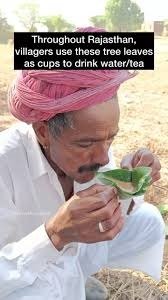
In Rajasthan, nature preservation is deeply ingrained in the daily lives of its people, and this is reflected in their unique practices to minimize environmental impact. One such inspiring example is the use of fallen leaves as eco-friendly cups for drinking chai (tea), instead of disposable paper or plastic cups. This practice not only conserves resources but also brings various medicinal benefits, making it a truly sustainable and health-conscious choice.

In villages across Rajasthan, people collect leaves from native trees like the banyan, peepal, sal, and banana trees to make cups. These leaves are chosen for their sturdy texture and are often stitched together to create a functional, biodegradable cup. Unlike single-use paper or plastic cups, which contribute to pollution and waste, leaf cups decompose naturally without harming the environment. Additionally, this practice reduces the demand for paper, thereby conserving trees and reducing deforestation. In a region with a semi-arid climate and limited water resources, such practices play a vital role in reducing waste and preserving the natural ecosystem.

Beyond their environmental benefits, leaf cups bring certain health advantages. Each type of leaf used offers unique medicinal properties. For instance, the leaves of the banyan tree are known for their anti-inflammatory properties and have been traditionally used in Ayurvedic medicine to aid in digestion and relieve stomach ailments. Peepal leaves are also considered beneficial for digestive health, believed to promote metabolism and improve gut health. Banana leaves, another common choice, contain polyphenols that act as antioxidants, which are thought to provide detoxifying effects. When hot tea is served in these leaf cups, the slight infusion of these natural compounds may offer added health benefits, making each sip a medicinal boost for digestion and overall well-being.

These trees—banyan, peepal, sal, and banana—grow in various regions of Rajasthan, especially in and around villages and forested areas. The banyan and peepal trees are considered sacred in Hindu culture and are often found near temples and community areas. They are widely revered, and their preservation aligns with traditional values of respecting nature. The banana tree, though more common in tropical areas, also grows in pockets of Rajasthan, particularly in areas with access to groundwater. The sal tree, primarily found in forest regions, has sturdy leaves that can be used for various purposes, including making plates and cups, due to their durability and thickness.

Using these fallen leaves for tea cups is more than a sustainable choice—it’s a practice that reflects the close relationship between the people of Rajasthan and their natural environment. By choosing biodegradable, medicinal leaf cups, villagers contribute to a cleaner environment while preserving their cultural heritage and promoting wellness. This practice highlights a deep-seated respect for nature and emphasizes the importance of simple, eco-conscious actions in daily life.

In a world where disposable culture has led to increasing pollution and waste, Rajasthan’s leaf cup tradition serves as a reminder of how time-honored practices can have modern relevance, offering solutions that are not only sustainable but beneficial for health and well-being.

Lal Krishna Advani Birth Anniversary today

0

Vaidehi Bhargava

Lal Krishna Advani, born on November 8, 1927, is one of India’s most prominent political figures, particularly known for his role in shaping the Bharatiya Janata Party (BJP) and the political ideology that has come to define the party. His journey from a young volunteer to a national leader and a veteran politician has been marked by significant struggles, ideological growth, and notable contributions to Indian politics.

Advani’s career began with the Rashtriya Swayamsevak Sangh (RSS), an organization dedicated to promoting Hindu nationalism, where he became an active worker in his early teens. His journey within the RSS laid a strong foundation for his lifelong dedication to the ideology of Hindutva, which later became central to his political identity. In the 1950s, he was introduced to the political wing of the RSS, the Bharatiya Jana Sangh (BJS), under the mentorship of Syama Prasad Mukherjee. Advani quickly gained a reputation for his organizational skills and discipline, which eventually led to his rise within the ranks.

However, it was not an easy climb to prominence. Following the emergency declared by Prime Minister Indira Gandhi in 1975, Advani, along with several other leaders of the opposition, was arrested. His opposition to the emergency solidified his commitment to a democratic framework and brought him significant recognition as a staunch defender of democracy. When the Janata Party, an amalgamation of various opposition groups, came to power in 1977, Advani became the Minister of Information and Broadcasting. His tenure saw the loosening of restrictions on the press, a stance he strongly advocated as a response to the censorship imposed during the Emergency.

In 1980, following the dissolution of the Janata Party, Advani co-founded the Bharatiya Janata Party (BJP) alongside Atal Bihari Vajpayee. Although the party initially struggled to gain widespread support, Advani’s leadership and strategic approach started to bring Hindutva politics to the forefront. His “Rath Yatra” in 1990, a nationwide tour to rally support for the construction of a Ram Temple in Ayodhya, marked a turning point. The tour not only energized the BJP’s base but also brought Advani national fame as a charismatic, if controversial, leader. While the movement around Ayodhya led to communal tensions, it significantly raised the BJP’s profile, eventually contributing to the party’s rise as a dominant political force in the 1990s.

Advani served as the Home Minister and later as Deputy Prime Minister in the Vajpayee-led government from 1998 to 2004, where he was influential in shaping policy on security, defense, and internal governance. Although he faced challenges and criticisms, particularly around the handling of communal issues, his contributions to policy and governance were widely acknowledged. Over the years, Advani’s image transformed from a hardline Hindutva advocate to a seasoned statesman who played a crucial role in Indian politics.

Today, L.K. Advani remains a respected figure, often seen as the architect of the BJP’s ideological framework and growth, with a legacy that reflects both his accomplishments and the controversies of his time. His journey exemplifies a commitment to his beliefs and a steady rise through perseverance and strategic political acumen.

ESA’s Rapid Apophis Mission for Space Safety (RAMSES) Takes Aim at Asteroid Research

0

The European Space Agency (ESA) has embarked on the initial planning stages of a critical mission, the Rapid Apophis Mission for Space Safety (RAMSES). This project aims to closely examine Apophis, a massive near-Earth asteroid officially designated as asteroid (99942). Scheduled to arrive at its target in February 2029, the RAMSES mission will coincide with NASA’s own mission, Osiris-Apex, which has also set its sights on Apophis. Together, these missions represent a concerted effort to deepen our understanding of asteroid behavior and, ultimately, refine planetary defense strategies.

What Is Apophis?

Discovered in 2004, Apophis spans approximately 340 meters (1,115 feet) in diameter, large enough to cause significant damage should it collide with Earth. Fortunately, Apophis will pass safely by on April 13, 2029, at a distance of about 19,794 miles (31,860 kilometers) from Earth. Though not a direct threat, this close flyby will bring Apophis within a range suitable for high-resolution observations, making it a rare and valuable opportunity for scientists to study its physical and orbital characteristics.

Why Are Asteroids a Threat?

Asteroids, remnants of the solar system’s formation, orbit the Sun in vast numbers. Although many remain in the asteroid belt, some venture closer to Earth, posing a potential threat. Earth faces constant risk from these near-Earth objects (NEOs), which total roughly 35,000. Among them, about 2,300 are deemed “potentially hazardous” due to their size and proximity. While most NEOs are small, larger asteroids like Apophis carry the potential for massive destruction in the event of a collision.

Historical Impact of Asteroids

Earth has faced catastrophic asteroid impacts before, with some events reshaping the planet’s biological landscape. A notable example is the asteroid impact 66 million years ago, widely believed to have contributed to the extinction of the dinosaurs. If a large asteroid were to collide with Earth, the resulting release of energy would be devastating, comparable to multiple nuclear explosions. This historical context underscores the importance of tracking and understanding NEOs, particularly those of Apophis’s scale.

Tracking and Mitigating Asteroid Impacts

The scientific community employs advanced surveys and telescopes to locate and monitor potentially hazardous asteroids. However, identifying these threats is only the first step. Preparing for potential future collisions also requires developing methods to redirect or deflect an asteroid’s path if it is found to be on a collision course with Earth. Both RAMSES and NASA’s Osiris-Apex missions offer a chance to gather critical data that may one day inform these protective measures.

Mission Details: RAMSES and Osiris-Apex

The RAMSES mission will investigate changes in Apophis’s orbit, rotation, and shape as it passes near Earth, which will help scientists understand how gravitational forces affect asteroids. Concurrently, NASA’s Osiris-Apex mission will examine Apophis’s surface, with plans to disturb surface dust and analyze the asteroid’s layers. Together, RAMSES and Osiris-Apex may reveal insights essential for future planetary defense tactics, particularly in how to influence an asteroid’s trajectory in the event of a predicted collision.

A Rare Opportunity to Study Asteroids

The chance to observe an asteroid of Apophis’s size and proximity occurs only once every 5,000 to 10,000 years. This unique flyby offers a pivotal opportunity to gather detailed information that could ultimately prove vital in protecting Earth from future asteroid threats. Through this mission, scientists aim to unravel the complexities of asteroid composition, behavior, and potential vulnerabilities.

The Symbolic Connection to Egyptian Mythology

The mission names, RAMSES and Osiris-Apex, draw from ancient Egyptian mythology, which lends a symbolic layer to humanity’s ongoing efforts to defend against cosmic threats. Apophis, named for a mythical force of chaos and darkness, represents a dangerous and uncontrollable power in Egyptian lore. Just as the sun god Ra fought off Apophis to protect the world, these missions metaphorically embody humanity’s struggle to “conquer” potentially hazardous space objects, ensuring Earth’s safety through knowledge and innovation.

As RAMSES and Osiris-Apex prepare to meet Apophis in 2029, scientists and engineers around the world eagerly anticipate the wealth of data these missions will provide. This coordinated effort between ESA and NASA signifies a crucial step forward in planetary defense research, underscoring the power of international collaboration and scientific inquiry in safeguarding our planet.