Home Blog Page 452

Chang’e-6: Unveiling the Moon’s Far Side Through Historic Sample Retrieval

0

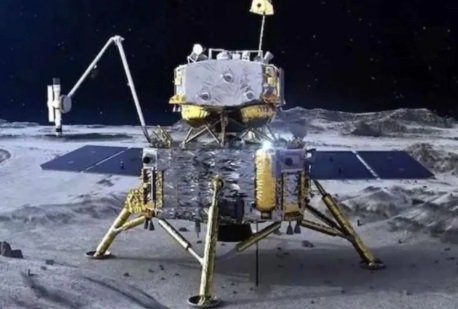
In a groundbreaking achievement, China’s Chang’e-6 spacecraft made history in June 2024 by retrieving surface samples from the far side of the moon—an unexplored and mysterious region until now. The mission is a significant step forward in lunar exploration, shedding new light on the moon’s geological history and ancient volcanic activity.

A Landmark Achievement in Lunar Research

The Chang’e-6 mission stands out as a landmark in space exploration, marking the first-ever collection of lunar samples from the moon’s far side. Unlike the near side, which has been extensively studied, this region holds critical clues about the moon’s evolution. The collected samples reveal evidence of ancient volcanic activity, challenging previous assumptions and providing deeper insights into the moon’s dynamic past.

What the Samples Reveal

The retrieved material consists of volcanic rock fragments, primarily basalt, dating back between 4.2 billion and 2.8 billion years. These findings suggest:

  • Prolonged volcanic activity: The moon experienced active volcanism for at least 1.4 billion years during its early history.
  • Diverse magma sources: The varying composition of the basalt fragments points to multiple origins for the volcanic rocks, highlighting a more complex geological history than previously understood.

South Pole-Aitken Basin: A Geologist’s Treasure Trove

The Chang’e-6 spacecraft landed in the South Pole-Aitken Basin, a massive impact crater with the thinnest crust on the moon. This unique location offered an ideal environment to uncover volcanic evidence. The crater’s geological context provided researchers with unprecedented access to ancient layers of the moon’s surface, enabling a detailed analysis of its volcanic history.

Scientific Methodology

The research team employed radioisotope dating, a technique critical for determining the age of the basalt samples. The analysis compared these new samples to those collected during earlier lunar missions, revealing key differences:

  • Near-side volcanic activity: Previously studied samples showed activity dating back 4.0 billion years.
  • Far-side volcanic activity: The Chang’e-6 samples indicate a more prolonged and varied history of volcanism on the far side.

Understanding Lunar Volcanism

Volcanism on the moon has long ceased, a stark contrast to active planetary bodies like Earth and Venus. The cessation is attributed to the depletion of the moon’s internal heat sources, which initially sustained volcanic activity through radioactive decay and residual heat.

Key differences in volcanic activity across the moon’s surface include:

  • Near-side activity: Continued until approximately 120 million years ago, as evidenced by volcanic glass beads from the Chang’e-5 mission.
  • Far-side activity: The Chang’e-6 samples suggest a distinct and older timeline.

Implications for Lunar and Planetary Studies

The Chang’e-6 mission offers invaluable data for future lunar exploration and planetary studies. These samples:

  • Enhance our understanding of the moon’s geological processes.
  • Aid in comparative analysis with other celestial bodies, such as Earth and Mars.
  • Lay the foundation for designing more targeted lunar missions.

This mission underscores the importance of studying the moon’s far side, which has been a blind spot in lunar science for decades.

Fast Facts for Enthusiasts and Students

  • Chang’e-6 Mission: The first mission to retrieve samples from the moon’s far side, offering new insights into its volcanic and geological history.
  • South Pole-Aitken Basin: The landing site of Chang’e-6, known for its thin crust and rich geological diversity.
  • Radioisotope Dating: A critical method used to date the lunar basalt samples, revealing the timeline of volcanic activity.
  • Lunar Volcanism: Unlike Earth and Venus, the moon has no active volcanism due to depleted heat sources.

A Giant Leap for Lunar Science

The Chang’e-6 mission not only advances our understanding of the moon but also highlights the untapped potential of its far side for future research. As scientists delve deeper into these samples, they may unlock secrets that redefine our knowledge of planetary formation and evolution.

Discovery of a New Freshwater Fish Genus

0

In a groundbreaking study, researchers from the Kerala University of Fisheries and Ocean Studies and Shiv Nadar Institution of Eminence have discovered a new genus of freshwater fish, Koima, endemic to the Western Ghats, a biodiversity hotspot. Published in the prestigious journal Zootaxa, this discovery underscores the ecological richness of the region and highlights the need for extensive taxonomic studies to understand its aquatic biodiversity better.

The Significance of the Western Ghats

The Western Ghats, recognized as a UNESCO World Heritage Site, is home to an astonishing array of endemic species, particularly freshwater fish. Its unique ecosystems not only support incredible biodiversity but also provide critical resources for local communities. The discovery of Koima adds to the growing list of species exclusive to this region, emphasizing the importance of ongoing conservation and scientific documentation.

Taxonomic Revision: A Growing Necessity

Researchers stress the urgent need for a comprehensive taxonomic revision of freshwater fish groups. Many species, especially small ones like nemacheilid loaches, are often overlooked due to their size and subtle morphological variations. The study highlights how misclassification can obscure our understanding of biodiversity, urging scientists to revisit existing classifications with modern methodologies.

Unique Characteristics of Koima

Koima is distinguished by several defining traits:

  • A yellowish-brown body adorned with a single row of black spots along the lateral line.
  • Hyaline fins and the absence of a uniform banding pattern on the dorsal side.

These features set Koima apart from other genera in the Nemacheilidae family, making it a significant addition to taxonomy.

Correcting Misclassifications

The study revealed that two species, previously misclassified under other genera, belong to the newly identified Koima:

  1. Mesonoemacheilus remadevii is now recognized as Koima remadevii.
  2. Nemacheilus monilis is reclassified as Koima monilis.

This reassessment underscores the importance of accurate taxonomic studies in revealing biodiversity’s true scope.

Habitat and Distribution

  • Koima remadevii: Found in the Kunthi River within Silent Valley National Park, Kerala, this species thrives in fast-flowing streams with rocky substrates, often seeking shelter in crevices.
  • Koima monilis: Inhabits various tributaries of the Cauvery River, adapting to microhabitats at elevations ranging from 350 to 800 meters.

Research Approach and Methodology

The study adopted an integrative taxonomic approach, combining morphological and genetic analyses. Specimens were collected from rivers such as Kunthi, Bhavani, Moyar, Kabini, and Pambar, ensuring a comprehensive assessment of their characteristics. This meticulous process highlights the importance of advanced methods in uncovering new species.

Cultural Connection: The Name Koima

The genus Koima derives its name from the Malayalam word for loaches, reflecting the cultural significance of the species in the region. This choice underscores the role of local knowledge in scientific discovery and strengthens the bond between science and community heritage.

Conservation Implications

The discovery of Koima serves as a reminder of the fragility of aquatic ecosystems in biodiversity hotspots like the Western Ghats. With threats such as habitat destruction and climate change looming, the study calls for intensified efforts to conserve these unique habitats and their species.

Key Takeaways

  • Koima Genus: A new freshwater fish genus endemic to the Western Ghats, characterized by unique physical traits.
  • Nemacheilidae Family: A diverse group of freshwater fish requiring further taxonomic exploration.
  • Silent Valley National Park: A vital conservation area in Kerala, home to Koima remadevii.
  • Zootaxa: The leading journal in taxonomy, highlighting the importance of accurate species classification.

The discovery of Koima not only enriches our understanding of the Western Ghats’ biodiversity but also serves as a rallying cry for continued research and conservation efforts in one of the world’s most ecologically significant regions.

Breakthrough in Quantum Magnetic Materials

0

Recent advancements in material science have brought researchers closer to achieving the elusive Kitaev quantum spin liquid state, a milestone in the field of quantum magnetism. By employing a ruthenium-based framework, scientists have made significant progress in creating quantum magnetic materials, marking a pivotal moment in material engineering.

Understanding Quantum Spin Liquids

Quantum spin liquids fundamentally differ from traditional magnets. Unlike conventional magnets, which rely on ordered interactions between electrons, quantum spin liquids exhibit disordered magnetic properties driven by quantum entanglement. This unique behavior provides a richer understanding of magnetic interactions and holds promise for revolutionary applications in quantum technology.

Role of Ruthenium-Based Frameworks

The breakthrough lies in using a ruthenium-based framework, enabling researchers to engineer materials with tailored magnetic properties. The open structure of this framework allows precise manipulation of interactions between ruthenium metal ions, crucial for exploring quantum states of matter.

Overcoming Challenges in Quantum Magnetism

Previous research in creating quantum spin liquids faced significant obstacles, particularly in overcoming the effects of densely packed crystal structures. These structures often led to conventional magnetic ordering due to direct interactions between ions. The new open framework design addresses these limitations, paving the way for stable quantum spin liquid states.

Advanced Experimental Techniques

To achieve these results, researchers utilized cutting-edge tools at the UK’s ISIS Neutron and Muon Source and the Diamond Light Source. These facilities provided the precision needed to control magnetic interactions and refine the ruthenium-based material’s properties, ensuring its suitability for quantum experiments.

Significance and Future Potential

While the material does not yet achieve a perfect Kitaev quantum spin liquid state, the findings represent a critical step forward. The research bridges the gap between theoretical models and experimental applications, unlocking new possibilities for quantum material design. The study highlights a largely untapped family of materials, encouraging further exploration.

Applications in Quantum Technologies

The implications of these findings extend to quantum computing, advanced magnetic storage devices, and other technologies reliant on novel magnetic properties. By laying the groundwork for future studies in quantum magnetism, this research sets the stage for transformative advancements in the field.

Expert Insights

Dr. Lucy Clark, the study’s lead researcher, emphasized the significance of the work, stating, “This is an important step in understanding and engineering quantum materials. The advancements we’ve achieved could lead to groundbreaking developments in quantum technologies.”

Key Takeaways

  • Kitaev Quantum Spin Liquid State: A disordered magnetic state governed by quantum entanglement, rather than classical magnetic behavior.
  • Ruthenium-Based Framework: Essential for manipulating interactions between ions, enabling the exploration of quantum states.
  • Quantum Spin Liquids: Unlike traditional magnets, these exhibit disordered magnetic properties rooted in quantum physics.

This landmark research opens new avenues in quantum magnetism and material science, bringing us closer to the next generation of quantum technologies.

PM Modi Honored with Nigeria’s Second-Highest National Award, Strengthening Strategic Ties

0

Prime Minister Narendra Modi received Nigeria’s second-highest national honor, the Grand Commander of the Order of the Niger, on Sunday, becoming the second foreign dignitary to receive this prestigious award after Queen Elizabeth in 1969. Accepting the accolade with humility, Modi dedicated it to the people of India, marking his 17th international recognition.

In a significant step towards strengthening bilateral ties, Modi announced the dispatch of 20 tonnes of relief supplies for recent flood victims in Nigeria. His visit, the first by an Indian Prime Minister to Nigeria in 17 years, underscores the importance India places on its strategic partnership with the African nation.

Focus on Security and Development

During talks with Nigerian President Bola Ahmed Tinubu, Modi emphasized addressing global challenges such as terrorism, separatism, piracy, and drug trafficking. The two leaders reaffirmed their commitment to combating these threats while enhancing cooperation in defense, energy, technology, trade, health, and education.

President Tinubu acknowledged India’s impactful development initiatives in Nigeria, including $100 million in concessional loans and capacity-building programs, which have significantly boosted local skills and professional expertise.

Milestones in India-Nigeria Relations

The partnership between India and Nigeria spans over six decades, with India emerging as one of Nigeria’s key development partners. Currently, more than 200 Indian companies have invested approximately $27 billion in Nigeria’s manufacturing sector, making them the country’s second-largest employers after the federal government.

MoUs and Key Initiatives

Modi and Tinubu signed three crucial Memorandums of Understanding (MoUs) covering a Cultural Exchange Programme, Customs Cooperation, and Survey Cooperation. These agreements aim to deepen cultural ties, streamline trade processes, and foster strategic collaboration.

Modi also highlighted the importance of the 60,000-strong Indian expatriate community in Nigeria, referring to them as a vital pillar of the bilateral relationship. He expressed gratitude to President Tinubu for ensuring their welfare and well-being.

Symbol of Trust and Friendship

Upon his arrival, Modi was welcomed with the ceremonial Key to the City of Abuja, symbolizing trust and honor from the Nigerian people. His visit follows an earlier meeting between India’s National Security Advisor (NSA) Ajit Doval and his Nigerian counterpart, Nuhu Ribadu, to discuss counter-terrorism strategies and threats posed by global security challenges.

Strengthening African Ties

Modi’s visit aligns with India’s broader outreach to Africa, following its role in advocating for the African Union’s permanent membership in the G20 during last year’s summit. Recognizing Nigeria’s influence in Africa, Modi reiterated India’s commitment to advancing close cooperation with African nations.

Concluding his visit, Modi described the discussions with President Tinubu as “highly productive,” noting that there is immense potential to elevate the India-Nigeria partnership to new heights across various sectors.

This landmark visit signifies a renewed chapter in India-Nigeria relations, laying the groundwork for a more robust, strategic, and mutually beneficial partnership.

India Ranks as 5th Largest Source of Tourists for Singapore with Visa-Free Travel 

0

India has become one of the leading sources of tourism for Singapore, ranking as the fifth largest contributor to the city-state’s tourism industry. Known for its diverse attractions, world-class shopping, and a harmonious blend of nature and urban sophistication, Singapore has always held a special allure for Indian travellers. With convenient, visa-free travel for short stays, Singapore has made it easier for Indians to visit and experience its vibrant culture and attractions. In this article, we delve into the reasons behind Singapore’s popularity among Indian tourists, discuss the requirements related to Singapore visa for Indians, including the SG Arrival Card, and provide tips for a smooth trip.

Why Singapore is a top destination for Indian travellers

Singapore has consistently been a top choice for Indian tourists. From family vacations to corporate events and short getaways, the island nation offers a wealth of attractions that cater to all kinds of visitors. Here’s why Singapore stands out as a preferred travel destination:

  1. Accessibility and Proximity: Singapore’s geographical proximity to India, coupled with frequent flights from major Indian cities like Delhi, Mumbai, Bangalore, and Chennai, makes it an easily accessible destination for Indian travellers.
  2. Visa-Free Travel for Short Stays: Indian tourists can enjoy visa-free access for up to 30 days, provided they have a valid passport and fulfil certain entry requirements. This has removed one of the key barriers to travel, enabling spontaneous short vacations and business trips.
  3. Diverse Experiences in a Compact Destination: Despite its small size, Singapore offers a diverse range of experiences. From exploring the lush Gardens by the Bay and Sentosa Island to shopping along Orchard Road and visiting the Marina Bay Sands, Singapore combines nature, culture, and modernity in a compact space.
  4. Cultural Familiarity and Inclusivity: Singapore’s multicultural environment includes a significant Indian population, making Indian tourists feel at home. With familiar cuisines, Indian temples, and festivals celebrated across the city, Indians often find Singapore a welcoming and culturally inclusive place.
  5. Family-Friendly Attractions: Singapore is known for its family-friendly attractions such as Universal Studios, the Singapore Zoo, Night Safari, and the SEA Aquarium. These attractions make it a top choice for Indian families looking for a fun-filled holiday.

Singapore visa for Indians: What you need to know

While Singapore offers visa-free travel for Indian tourists for short stays, it’s essential to understand the conditions and documents required for a hassle-free entry. Here’s a guide to the visa and entry requirements for Indian citizens:

1. Visa-free entry for up to 30 days

Indian citizens can enter Singapore without a visa for a stay of up to 30 days, provided they meet the following criteria:

  • Valid Passport: Travellers must have a passport valid for at least six months from the date of entry.
  • Return or Onward Ticket: Proof of a confirmed return or onward travel ticket is required to demonstrate that travellers do not intend to overstay.
  • Sufficient Funds: Visitors may be asked to provide evidence of funds sufficient to cover their stay.
  • Accommodation Details: It is advisable to have confirmed accommodation bookings to avoid any issues at immigration.

This visa-free entry allows Indians to explore Singapore’s numerous attractions without the added hassle of applying for a visa, making it a perfect choice for quick trips and weekend getaways.

2. SG Arrival Card

In addition to meeting the above requirements, all Indian visitors must complete the SG Arrival Card. This digital entry requirement is mandatory for foreign visitors and must be filled out online before arrival.

  • Purpose of SG Arrival Card: The SG Arrival Card is a digital declaration form that provides the Singaporean authorities with necessary visitor information, including travel history, personal details, and health declarations.
  • How to Submit: The SG Arrival Card must be submitted within three days prior to arrival in Singapore. Visitors can access the form on the Immigration & Checkpoints Authority (ICA) website or through the ICA mobile app.
  • Processing Time: The SG Arrival Card submission is generally instant, and visitors should carry a screenshot or printout of the acknowledgment as proof.

Completing the SG Arrival Card in advance ensures a smoother immigration process, reducing wait times at entry points.

Popular attractions in Singapore for Indian tourists

Singapore’s array of attractions caters to all kinds of travellers, from families and honeymooners to solo adventurers. Here are some must-see places for Indian tourists:

  • Marina Bay Sands and Gardens by the Bay: Marina Bay Sands is an iconic hotel with an infinity pool overlooking the city skyline, while Gardens by the Bay offers a futuristic park with Supertrees and the famous Cloud Forest dome.
  • Sentosa Island: A popular resort destination, Sentosa Island is home to Universal Studios Singapore, beautiful beaches, and the SEA Aquarium, making it ideal for families and thrill-seekers alike.
  • Orchard Road: Known as Singapore’s premier shopping district, Orchard Road is a paradise for shopping enthusiasts, offering a wide range of high-end stores, boutiques, and international brands.
  • Singapore Zoo and Night Safari: Known for its open and immersive habitats, Singapore Zoo is a top destination for families. The Night Safari, located nearby, allows visitors to experience nocturnal wildlife in a unique, open-air setting.
  • Little India: For a taste of home, Indian tourists can visit Little India, a vibrant neighbourhood filled with Indian restaurants, temples, and traditional markets.

Tips for a smooth trip to Singapore

For a hassle-free journey, Indian travellers should keep the following tips in mind:

  1. Complete SG Arrival Card in Advance: Submit the SG Arrival Card within three days before departure to ensure a quick and smooth entry into Singapore.
  2. Plan Accommodation and Budget: Singapore is known for its upscale offerings, but there are affordable options too. Research hotels, hostels, and guesthouses that fit your budget and are conveniently located near attractions.
  3. Prepare for a Different Climate: Singapore’s tropical climate can be warm and humid year-round, so pack lightweight, breathable clothing. Don’t forget essentials like sunscreen and comfortable footwear.
  4. Stay Informed on Local Laws and Etiquette: Singapore is known for strict laws, including rules on littering, jaywalking, and chewing gum in public. Familiarise yourself with these laws to avoid fines or penalties.
  5. Consider Public Transport Options: Singapore’s public transportation system is efficient, with extensive MRT and bus networks. Consider getting an EZ-Link card for convenient access to public transport and save on travel costs.

Impact of Indian tourism on Singapore’s economy

India’s position as the fifth largest source of tourists for Singapore highlights the growing significance of Indian travellers to the city-state’s tourism industry. The influx of Indian tourists has had several positive impacts on Singapore’s economy and tourism development:

  • Increased Revenue for Hospitality and Retail Sectors: The steady flow of Indian tourists contributes significantly to the hospitality and retail sectors, benefiting hotels, restaurants, and shopping districts.
  • Cultural Exchange: The presence of Indian tourists and expatriates in Singapore fosters greater cultural exchange, leading to the development of Indian cultural events, cuisine, and festivals that make Indian visitors feel at home.
  • Boost to Airlines and Travel Services: With more Indian tourists visiting Singapore, the demand for direct flights and travel services has surged, resulting in better connectivity and competitive airfares between the two nations.

Conclusion

India’s ranking as the fifth largest source of tourists for Singapore demonstrates the strong ties between the two countries and the growing appeal of Singapore as a travel destination for Indians. With visa-free access for short stays and the simple requirement of completing the SG Arrival Card, Indian travellers find it convenient to explore Singapore’s unique blend of cultural, natural, and modern attractions. By understanding the entry requirements and planning their trip in advance, Indian tourists can look forward to a memorable and enjoyable experience in one of Asia’s most dynamic and welcoming destinations.

Jaipur 300th Foundation Day to see Gupt Vrindavan Dham, Rajasthan’s biggest temple, opening its doors to public in 2027

0

Jaipur, also known as “Chhoti Kashi,” is set to become home to Gupt Vrindavan Dham, a new spiritual landmark which will be coming up in Jagatpura’s Hare Krishna Marg.

This Gupt Vrindavan Dham is a beautiful 17-story temple being constructed across 6 acres at an estimated cost of ₹300 crore. Slated for completion in 2027, this monumental project will coincide with the 300th Foundation Day of Jaipur, promising to be Rajasthan’s largest temple and a significant cultural complex.

A Marvel of Spirituality and Architecture

The temple is dedicated to the divine deities Krishna-Balarama, Radha-Shyamsundar, and Gaura-Nitai. Once completed, thousands of devotees will gather in its grand prayer hall for darshan, immersing themselves in the spiritual aura. The temple’s intricate design merges traditional Rajasthani architecture with modern aesthetics, featuring a Rajputana-style dome at its pinnacle and glass-embedded walls.

Architect Madhu Pandit Das, renowned for designing the Vrindavan Chandrodaya Mandir, the world’s largest temple, is spearheading the project. The temple’s design ensures that visitors experience spiritual enlightenment and cultural grandeur simultaneously.

Key Highlights of the Gupt Vrindavan Dham

Iconic Features and Exhibitions

  • Krishna Leela Expo: An immersive journey through Krishna’s life, presented through 3D art and animation.
  • Harinaam Mandap: A dedicated space for chanting and meditation.
  • Gita Exhibition: Showcasing the teachings of the Bhagavad Gita with engaging displays.
  • Prasadam Hall: A community dining space offering sattvic meals to devotees.

Architectural Marvels

  • Mayur Dwar (Peacock Gate): The main entrance, adorned with 108 intricately designed peacocks, inspired by Dwarka’s temples.
  • Four Iconic Gates: Named after animals representing strength and divinity—Simha Dwar (Lion Gate), Vyaghra Dwar (Tiger Gate), Hasti Dwar (Elephant Gate), and Ashwa Dwar (Horse Gate).
  • Parikrama Path: A circumambulatory path for devotees to immerse in meditation and devotion.

Innovative Infrastructure

  • Educational and Cultural Spaces: The temple will house an education hall, a theatre, and exhibitions narrating the story of “Gupt Vrindavan” through modern technology.
  • Underground Parking and Facilities: The first level will include a parking area, bookstore, RO plant, and maintenance store.
  • Sattvic Restaurant: A serene dining experience on the fifth floor.

A Grand Spiritual and Cultural Hub

The Gupt Vrindavan Dham is more than just a temple; it is a cultural hub that will uplift the spiritual and cultural fabric of Jaipur. With 70% of the construction completed, the temple promises to become a beacon of faith, devotion, and architectural brilliance.

As Jaipur prepares to mark its 300th Foundation Day in 2027, the Gupt Vrindavan Dham will stand as a proud symbol of the city’s deep-rooted traditions and forward-looking aspirations. This monumental project is set to place Jaipur firmly on the global spiritual map, drawing devotees and tourists from across the world.

Stay tuned as Jaipur’s newest landmark nears completion, ready to welcome the faithful and curious alike!

FICCI FLO Jaipur celebrates creativity, culture and community via Latin American theme event…

0

The FICCI FLO Jaipur Chapter, under the dynamic leadership of Chairperson Raghushree Poddar, hosted an exceptional event celebrating creativity, culture, and community. The event commenced at 4:30 PM at the scenic White Orchard in Jhotwara, graciously hosted by Shweta Saharan Singh.

FICCI FLO Jaipur celebrates creativity, culture and community via Latin American theme event...

With an enchanting Latin American theme, the gathering featured a variety of workshops that captivated participants and highlighted the artistic spirit of FICCI FLO members. Attendees delighted in music sessions, salsa dancing, mocktail mixing, painting, mask making, and crochet workshops, creating an environment filled with joy and energy.

A special highlight of the evening was Marcella, the renowned Brazilian influencer and Guest of Honor, who brought her signature flair by teaching attendees some amazing Brazilian dance moves, adding an authentic and vibrant touch to the event. In recognition of her participation and support, past Chairperson Nitasha Chordia honored Marcella and her team in a warm and gracious felicitation ceremony.

FICCI FLO Jaipur celebrates creativity, culture and community via Latin American theme event...

Enhancing the delightful experience, Mamu’s Infusion sponsored the event’s gourmet food, providing a perfect complement to the lively atmosphere. The entire FICCI FLO team and its members enjoyed an immersive, six-senses experience that was both inspiring and enjoyable.

This remarkable event showcased the commitment of FICCI FLO Jaipur to creating unique, impactful experiences for its members, blending cultural appreciation with creative expression.

FICCI FLO Jaipur celebrates creativity, culture and community via Latin American theme event...

Jaipur Foundation Day 2024: Celebrating 297 Glorious Years of the Pink City

0

Jaipur, the city of grandeur and heritage, celebrated its 297th Foundation Day on November 18, 2024. Renowned as the first planned city of India and a UNESCO World Heritage City, Jaipur stands as a testimony to architectural brilliance and cultural richness envisioned centuries ago.

A City Born from Visionary Planning

Founded by Maharaja Sawai Jai Singh II in 1727, Jaipur was meticulously planned based on Vastu Shastra and astronomical principles. The city was divided into nine squares, symbolizing the nine planets, embodying an unparalleled design that set a benchmark for urban planning. This foresight, conceptualized nearly 150 years before its establishment, showcases Jaipur’s timeless appeal.

Architectural Marvels of Jaipur

Kalki Temple: A Sacred Landmark

Jaipur Foundation Day 2024: Celebrating 297 Glorious Years of the Pink City

Did you know that the world’s first Kalki Temple is located in Jaipur? Situated in the bustling Sirh Deodhi Bazaar, this temple was built between 1732 and 1742 under the reign of Sawai Jai Singh II. Historical texts, including Vachan Praman Granth and Ishwar Vilas, reveal that the temple’s design represents Lord Kalki seated on a lotus, emphasizing the ruler’s devotion to Lord Vishnu’s tenth incarnation.

Hawa Mahal: A Tribute to Lord Krishna

Jaipur Foundation Day 2024: Celebrating 297 Glorious Years of the Pink City

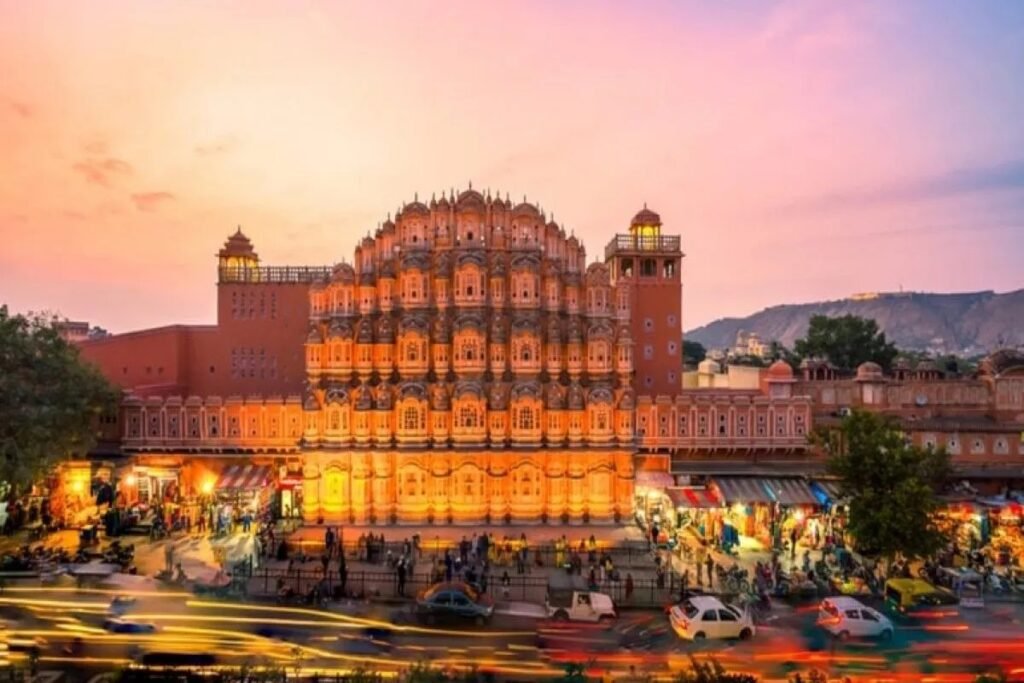
Constructed in 1799 by Sawai Pratap Singh, the iconic Hawa Mahal is a masterpiece shaped like Lord Krishna’s crown. With its 365 windows and distinct temples such as Sharad Mandir and Ratan Mandir, this structure embodies the king’s spiritual reverence for Krishna while also serving as an architectural wonder.

Nahargarh Fort: A Guarding Giant

Jaipur Foundation Day 2024: Celebrating 297 Glorious Years of the Pink City

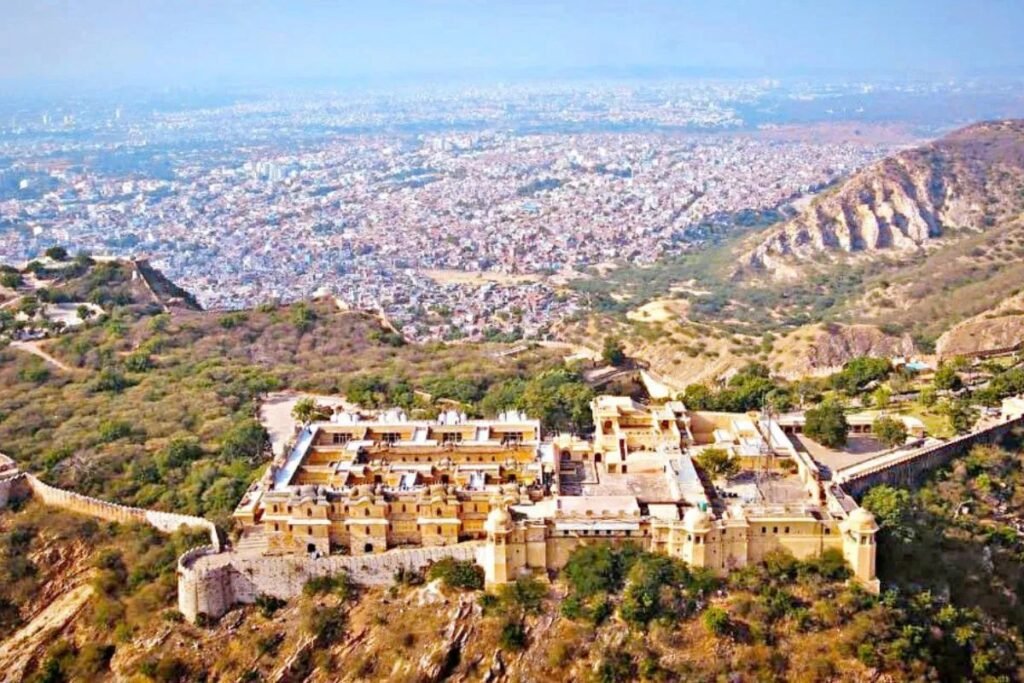
Overlooking Jaipur from a height of 700 feet, Nahargarh Fort was built in 1734 by Sawai Jai Singh. The fort features 10 palatial chambers named after celestial entities like Suraj Prakash and Chandra Prakash, showcasing Jaipur’s celestial alignment. Its advanced water storage system remains a marvel to this day.

Jaipur’s Unique Pink Identity

Jaipur Foundation Day 2024: Celebrating 297 Glorious Years of the Pink City

The epithet “Pink City” was earned in 1875 when Sawai Ram Singh II painted the city in pink hues to welcome the Prince of Wales. Before this transformation, Jaipur was adorned in white. This tradition continues to symbolize Jaipur’s hospitality and charm.

Evolution of Modern Jaipur

Modern developments began under Sawai Man Singh II and Sir Mirza Ismail in the early 20th century. Ramganj, one of the oldest areas, saw the construction of its first verandah in Mehndi Chowk. Later, tin sheds were added to other bazaars, creating a unique urban aesthetic.

The Last Handcrafted Gold Coin

Jaipur Foundation Day 2024: Celebrating 297 Glorious Years of the Pink City

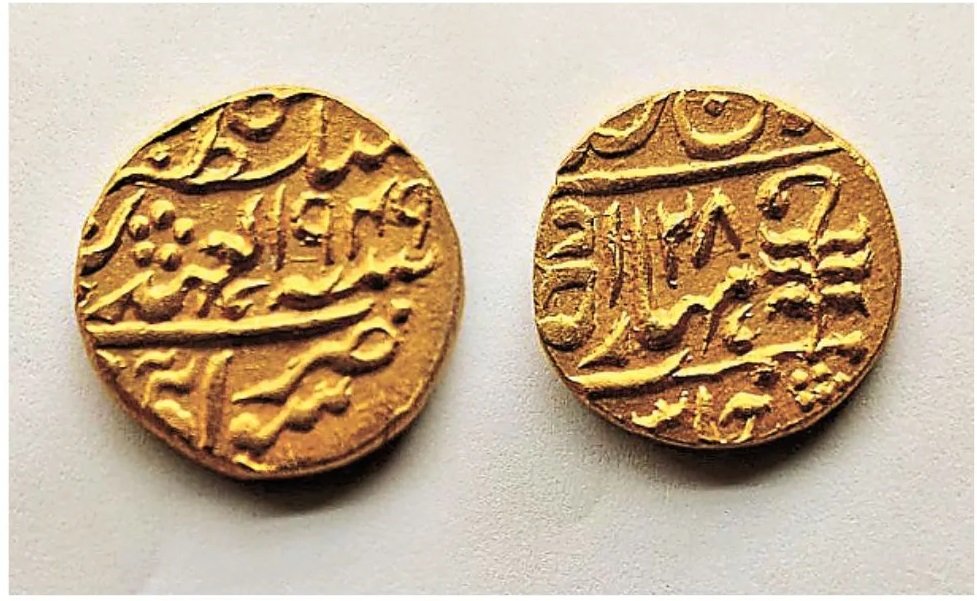
In 1949, during Sawai Man Singh II’s reign, Jaipur issued its last handcrafted gold coin, valued at ₹28. This exquisite coin featured Ayodhya’s royal emblem and the year 1949 engraved in Urdu, marking the end of a royal tradition.

A Living Heritage

Jaipur today is not just a city but an experience—a blend of ancient traditions and modern aspirations. As the city steps into its 297th year, its legacy continues to inspire millions of visitors who come to marvel at its timeless beauty and vibrant culture.

Let us celebrate Jaipur’s journey, its stories, and its unmatched contribution to India’s rich heritage. Happy Foundation Day, Jaipur!

Do you know why reverse swastiks is made in this temple of Jaipur?

0

Vaidehi Bhargava

In Jaipur, a city rich in history and culture, you may find instances where the swastik symbol, particularly in temples or specific religious contexts, is shown in its reverse (anti-clockwise) form. For example, the Ganesh idols in some temples might feature this reversed swastik, especially those dedicated to Lord Ganesha. It is seen in Jaipur’s Nahar ke Ganesh Ji Temple.

This reverse swastik, known as “suvastika,” is a form used to invoke different cosmic energies and can have specific spiritual significance depending on the context, such as protection or the removal of obstacles. In Jaipur, as in other parts of India, the reversed swastik may not carry any negative connotations but is used as part of the ritualistic practices to tap into particular energies.

For more detailed information on the use of the reversed swastik in religious settings, it’s helpful to explore local temple practices or specific rituals that include this symbol.

Allu Arjun has officially claimed the title of India’s highest-paid actor for Pushpa 2: The Rule

0

Vaidehi Bhargava

Allu Arjun has officially become India’s highest-paid actor, setting a new milestone with a monumental fee of ₹300 crore for Pushpa 2: The Rule. This incredible remuneration surpasses the previous records set by stars like Shah Rukh Khan, Vijay Thalapathy, and Prabhas. Allu Arjun’s fee marks a significant leap, as it is three times his previous asking price of ₹100 crore per film.

The actor’s career skyrocketed after the massive success of Pushpa: The Rise (2021), which grossed over ₹350 crore globally. The sequel, which is scheduled for release on December 5, 2024, has already generated immense excitement. Directed by Sukumar, Pushpa 2 will see the return of Rashmika Mandanna and Fahadh Faasil, along with the addition of new cast members like Sreeleela, who will replace Samantha Ruth Prabhu in a special dance number.

Allu Arjun’s rise to the top of the pay scale reflects not only his immense popularity but also his growing influence as a pan-Indian star. His ability to draw audiences across regional and national boundaries has made him a global sensation. With Pushpa 2 expected to break box office records, Allu Arjun’s unprecedented fee is a testament to his status as a top-tier actor in Indian cinema.