Home Blog Page 445

TeacherApp: Revolutionizing Professional Development for Teachers

0

The TeacherApp, a groundbreaking digital platform, was recently launched in New Delhi by the Bharti Airtel Foundation. Designed to empower educators in modern classrooms, the event witnessed participation from prominent education leaders, school principals, and B.Ed. students. With its focus on skill enhancement and alignment with the National Education Policy (NEP) 2020, the app promises to play a transformative role in India’s education landscape.

Purpose of the TeacherApp

The TeacherApp aims to support teachers in their professional journey, offering them continuous training and valuable resources tailored for modern teaching needs. Recognizing the pivotal role teachers play in shaping future generations, the app aligns closely with NEP 2020, emphasizing innovation, creativity, and critical thinking in education.

Key Features of the TeacherApp

The app is loaded with features to assist teachers in improving classroom experiences:

  1. Extensive Content Library
    • Over 260 hours of content, including courses, videos, podcasts, and webinars.
    • Interactive activities like quizzes and competitions to keep learning engaging.
  2. Live Expert Sessions
    • Practical strategies for classroom management shared by education experts.
    • Real-life success stories from educators to inspire and motivate.
  3. Teaching Kits and Resources
    • A dedicated section offering 900 hours of additional content, such as:
      • Lesson plans tailored for diverse topics.
      • Project-based learning activities for hands-on education.
      • Worksheets to support day-to-day teaching.
    • Focus on fostering safe and engaging learning environments.
  4. Accessibility
    • The TeacherApp is available for free on web, iOS, and Android platforms.
    • This ensures its reach to teachers from various backgrounds across the country.

Significance for India’s Education System

At the launch, Shri Rakesh Bharti Mittal emphasized the critical role of a robust education system in India’s global leadership aspirations. He highlighted the necessity for teachers to encourage creativity, analytical thinking, and innovation in their students. The TeacherApp addresses these needs by equipping educators with world-class resources and tools for delivering exceptional learning experiences.

Beyond classroom teaching, the app also supports school leaders and administrators with resources to enhance school management, contributing to the overall improvement in educational quality.

National Education Policy (NEP) 2020: A Key Driving Force

The TeacherApp closely follows the objectives of NEP 2020, which seeks to overhaul India’s education system by focusing on skill development for teachers and fostering a knowledge-based society. By providing continuous learning opportunities, the app ensures educators are well-equipped to meet these ambitious goals.

Why TeacherApp Matters

The TeacherApp is not just a tool for professional development; it’s a platform that bridges gaps in education by making resources easily accessible to teachers nationwide. Its features—ranging from interactive content to practical classroom strategies—are designed to create a positive ripple effect in India’s education ecosystem.

Key Takeaway for Exams:

  • National Education Policy 2020 emphasizes teacher training and skill development to create a transformative education system.
  • Teaching Kits on the TeacherApp include 900 hours of content, lesson plans, and project-based learning resources for enhanced classroom engagement.

Empowering Educators, Building the Future

The TeacherApp symbolizes a step forward in creating a progressive, inclusive, and high-quality education system in India. By placing world-class resources at teachers’ fingertips, it ensures that educators are not only empowered but also prepared to inspire the next generation of global leaders.

Eklingji Temple, Udaipur: Timings, History, Entry Fee, Images, Aarti, Location 

0


The Eklingji Temple in Udaipur, Rajasthan, is a renowned pilgrimage site dedicated to Lord Shiva. Known for its architectural brilliance and spiritual ambiance, the temple is a must-visit for devotees and travelers. Here’s the schedule to help you plan your visit:

Darshan Timings:

  • Morning: 4:30 AM to 7:00 AM & 10:30 AM to 1:30 PM
  • Evening: 5:00 PM to 7:30 PM

Aarti Timings:

  • Morning Aarti: 5:30 AM, 8:15 AM, 9:15 AM & 11:30 AM
  • Afternoon Aarti: 3:30 PM & 4:30 PM
  • Evening Aarti: 5:00 PM & 6:30 PM

About Eklingji Temple

The Eklingji Temple, built in the 8th century, holds deep religious significance as a shrine of Lord Shiva, who is worshiped here as “Eklingji.” The temple’s name derives from one of the 108 names of Lord Shiva, symbolizing his universal presence. The temple was constructed under the patronage of the Mewar rulers, whose devotion to Lord Eklingji was unwavering.

Architecture

The Eklingji Temple is an architectural marvel that showcases intricate craftsmanship:

  • Exterior: The temple’s double-storied structure boasts a pyramidal roof and a beautifully carved tower. The steps leading to the temple descend gracefully into nearby water tanks.
  • Entrance: A silver idol of Nandi, Lord Shiva’s vahana (mount), greets visitors at the temple entrance. Additional Nandi carvings in brass and black stone enhance the temple’s sanctity.
  • Interior: The sanctum houses a magnificent four-faced black stone idol of Lord Shiva. Each face symbolizes a different deity:
    • East: Surya (Sun God)
    • West: Brahma (Creator)
    • North: Vishnu (Preserver)
    • South: Rudra (Destroyer)
      The idol, encircled by figures of Goddess Parvati, Lord Ganesha, and Lord Kartikeya, stands as a spiritual centerpiece in the temple’s mandap (pillared hall).

History

The Eklingji Temple’s history is chronicled in the 15th-century text Ekalinga Mahatmya. Originally constructed by Bappa Rawal in 734 AD, the temple has faced invasions and destruction during the Delhi Sultanate period. Successive rulers of Mewar, including Hamir Singh, Rana Kumbha, and Rana Raimal, took great efforts to restore and preserve the temple. The final renovation in the 15th century reinstated its former glory, solidifying its importance in Rajasthan’s spiritual and cultural landscape.

Reaching Eklingji Temple

Located 22 km from Udaipur, the temple is accessible by air, rail, and road:

  • By Air: Dabok Airport (21 km away) connects Udaipur to cities like Delhi, Mumbai, Jaipur, and Jodhpur.
  • By Rail: Udaipur Railway Station is 3 km from the city center, with direct trains to major cities.
  • By Road: National Highway 8 links Udaipur to Delhi and Mumbai. Public transport, including buses and cabs, offers affordable and comfortable travel options.

Nearby Attractions

  • Sas Bahu Temple: A unique 10th-century temple dedicated to a legendary mother-in-law and daughter-in-law.
  • Adbudji Jain Temple: Featuring a black marble idol of Shantinath Bhagwan, this 17th-century temple is a masterpiece of Jain architecture.
  • Other Shrines: Rathasan Devi, Pataleshwar Mahadeo, Vindhyavasini Devi, and Arbad Mata temples surround Eklingji, each with its charm and spiritual essence.

Best Time to Visit

While the temple welcomes visitors year-round, the spring months (February–March) offer pleasant weather, making it an ideal time to explore. The temple is especially vibrant during Navratras, attracting devotees from across the globe.

No Entry Fee

The temple is free to visit, allowing everyone to experience its spiritual and architectural splendor.

Plan Your Visit

A visit to Eklingji Temple is a serene experience that offers a blend of history, devotion, and architectural wonder. With our curated Udaipur tour packages, you can effortlessly explore this divine temple and the many attractions of Udaipur.

Embark on this spiritual journey and immerse yourself in the rich legacy of Eklingji Temple.

Top 5 Picnic parks of Jaipur

0

Vaidehi Bhargava

Jaipur, known as the “Pink City,” is home to several beautifully maintained parks and gardens that provide a serene escape from the hustle and bustle of the city. Among these, Nehru Bal Udyan, Landscape Park, Biodiversity Park, Jawahar Circle, and Pondrik Park stand out for their unique charm, biodiversity, and visitor-friendly amenities. Here’s an overview of each park, highlighting their beauty and timings.

  1. Nehru Bal Udyan

Located near Tonk Road, Nehru Bal Udyan is a child-friendly park with lush greenery, play zones, and a miniature train ride that attracts families. The park boasts walking trails, flower beds, and shaded seating areas, making it perfect for picnics or evening strolls. The charming toy train is the main attraction for children.
Timings: 10:00 AM to 8:00 PM
Highlights: Family-oriented, toy train, shaded spaces.

Top 5 Picnic parks of Jaipur
  1. Landscape Park

Tucked near the Jaipur Development Authority office, Landscape Park is a modern green space designed for peace and leisure. Featuring well-maintained lawns, fountains, and walking tracks, it’s a popular destination for joggers and yoga enthusiasts. The park’s landscaped design, with water features and sculptures, adds to its beauty.
Timings: 6:00 AM to 8:00 PM
Highlights: Jogging tracks, scenic landscaping, fountains.

Top 5 Picnic parks of Jaipur
  1. Biodiversity Park

Located on Jhalana Institutional Area Road, Biodiversity Park is a hidden gem that focuses on conserving native flora and fauna. The park is rich in indigenous plants, medicinal herbs, and small wildlife like birds and butterflies, making it a haven for nature lovers. Visitors can enjoy a peaceful walk or bird-watching amidst its natural surroundings.
Timings: 7:00 AM to 7:00 PM
Highlights: Native biodiversity, bird-watching, eco-tourism.

Top 5 Picnic parks of Jaipur
  1. Jawahar Circle Garden

Known as one of the largest circular parks in Asia, Jawahar Circle is a landmark of Jaipur. The park’s musical fountain show, especially at night, is a mesmerizing sight. Surrounded by a jogging track and beautifully landscaped gardens, it also features well-designed seating areas and playgrounds. The central gate, “Patrika Gate,” is a popular spot for photography.
Timings: 6:00 AM to 9:00 PM
Highlights: Musical fountain, Patrika Gate, evening ambiance.

Top 5 Picnic parks of Jaipur
  1. Pondrik Park

Located in a quieter part of Jaipur, Pondrik Park is an ideal spot for meditation and solitude. Known for its clean and well-maintained surroundings, the park has walking trails, lush green lawns, and plenty of shaded areas. It is less crowded, making it a peaceful retreat for those seeking tranquility.
Timings: 7:00 AM to 8:00 PM
Highlights: Serenity, walking trails, shaded seating.

Top 5 Picnic parks of Jaipur

Summing Up

These parks in Jaipur offer a mix of recreation, nature, and beauty, catering to people of all ages. Whether you’re seeking an active day out or a tranquil space to connect with nature, these parks provide the perfect setting. Make sure to plan your visit based on the timings to make the most of your experience!

What is La Niña effect? Will India face coldest winters this year?

0

Vaidehi Bhargava

The La Niña effect is a climatic phenomenon characterized by the cooling of surface ocean waters in the central and eastern Pacific Ocean near the equator. It is part of the El Niño-Southern Oscillation (ENSO) cycle, which significantly influences global weather patterns. During La Niña, trade winds strengthen, pushing warm water towards Asia and allowing colder water to upwell along the equator near South America. This cooling has far-reaching impacts on weather, ecosystems, and economies worldwide.

Impact of La Niña on Global Weather

La Niña tends to cause colder winters in parts of Asia and North America and wetter conditions in Southeast Asia and Australia. In contrast, it can lead to drier weather in regions like the southern United States and South America. The phenomenon typically lasts 9–12 months but can persist for multiple years, as seen during the rare triple-dip La Niña from 2020–2023.

La Niña’s Effect on India

For India, La Niña usually brings above-average monsoon rainfall, benefiting agriculture but sometimes causing floods. However, its impact on winters is a mixed bag. La Niña is often associated with colder-than-normal winters in northern India, as the phenomenon encourages the flow of cold air masses from the Arctic and Eurasian regions into the Indian subcontinent.

Will India Face Its Coldest Winter in 2024-25?

India is currently transitioning from a prolonged La Niña phase to an El Niño-dominated year, as El Niño conditions have developed in late 2023. However, the residual effects of La Niña may still influence early winter patterns. El Niño winters in India are usually warmer, but the presence of other factors, like the Arctic Oscillation and snowfall in Siberia, could lead to sharp cold spells in northern India. Thus, while the winter may not be the coldest, parts of India could still experience intense cold waves, particularly in regions like Punjab, Haryana, and Rajasthan.

Broader Implications

The interplay of La Niña, El Niño, and other climatic drivers highlights the complexity of weather forecasting. A colder winter may increase energy demand, impacting costs, while agricultural regions could see changes in crop yields. Understanding La Niña’s effects can help policymakers, farmers, and industries prepare for these shifts.

In conclusion, while India may not face its coldest winter this year, regions could still experience colder-than-usual spells, making La Niña’s legacy significant even as it fades into the background.

13-year-old Vaibhav Suryavanshi secures ₹1.10 crore Deal with Rajasthan Royals in IPL 2025 Auction

0

Vaidehi Bhargava

Vaibhav Suryavanshi, a 13-year-old cricket prodigy from Bihar, has become the youngest player in Indian Premier League (IPL) history after being signed by the Rajasthan Royals for ₹1.10 crore during the 2025 auction. Born in Tajpur village, his cricket journey began at the age of four, supported by his father, Sanjeev, who sold land to fund Vaibhav’s training. Vaibhav quickly rose through the ranks, making his first-class debut for Bihar in the Ranji Trophy at just 12 years and 284 days, becoming one of the youngest debutants in Indian cricket history.

In September 2024, Vaibhav showcased his talent on the international stage by scoring 104 off 62 balls against Australia in a Youth Test match, becoming the youngest international centurion. Known for his fearless batting, he idolizes Brian Lara and trains under renowned coaches like Wasim Jaffer. Earlier, he made headlines for an unbeaten 332-run knock in an under-19 tournament in Bihar.

The Royals secured him after a competitive bidding war, impressed by his performance during trials, where he smashed eight sixes and four fours. Cricket enthusiasts now eagerly await his IPL debut, as he represents the next generation of Indian cricketing talent.

‘Rajasthan Royals’ here comes the names of newly auctioned players for IPL 2025

0

After an action-packed two-day IPL 2025 Player Auction, the Rajasthan Royals, owned by the Royals Sports Group, have finalized their squad for the upcoming season, securing the services of 14 players for a total of ₹40.7 crores. The auction saw the franchise reinforce its core team with a blend of experienced international stars and promising young talent.

The Royals secured the below players at the auction:

Player NameAmount (INR Cr)
Jofra Archer12.5
Tushar Deshpande6.5
Wanindu Hasaranga5.3
Maheesh Theekshana4.4
Nitish Rana4.2
Fazalhaq Farooqi2.0
Kwena Maphaka1.5
Akash Madhwal1.2
Vaibhav Raghuvanshi1.1
Shubham Dubey0.8
Yudhvir Singh Charak0.4
Kumar Kartikeya Singh0.3
Kunal Singh Rathore0.3
Ashok Sharma0.3

Lead owner Mr. Manoj Badale expressed satisfaction with the results of the auction, emphasizing the franchise’s strategic approach and the final composition of the team.

On the overall auction outcome, he remarked:
“We came into the auction with a strong Indian batting core that we believe has the ability to perform over multiple cycles. Our goal was to complement this with an experienced and talented bowling unit, and I’m happy with what we’ve been able to achieve. We’ve acquired multiple international wicket-takers and promising Indian talent while adding depth in both batting and bowling departments.

“Some of these are familiar faces who’ve developed with us over the last couple of years, and others are exciting new talents we can’t wait to work with. Overall, we’re delighted with the squad, which is a mixture of proven experience and exciting youth.”

On the strategy at the auction, he stated:
“Rahul, Kumar, and the entire team have done an incredible job preparing for these two days. By executing the vision and planning we had, I’m genuinely excited for the upcoming season. We identified our targets and secured most of them, assembling a squad that will be competitive and give our fans plenty of reasons to be proud.”

With their newly assembled squad, the Rajasthan Royals are set to take on IPL 2025 with a perfect mix of strategy, experience, and youthful energy, ensuring thrilling performances for cricket fans worldwide.

Giraffes to be officially declared ‘endangered’ due to poaching by humans

0

Khushi Sharma

Giraffe populations are declining at such an alarming rate — from habitat loss, poaching, urbanization and climate change-fueled drought — that US wildlife officials announced a proposal on Wednesday to help protect several of the species, the first time the animal would receive protection under the law.

The US Fish and Wildlife Service proposed listing many giraffe species as either endangered or threatened. It’s the first time the long-necked mammals, native to Africa, would receive federal protections under the Endangered Species Act.

Declaring a species “endangered” is the most severe level of threat under the law, indicating the species is at immediate risk of extinction. Meanwhile, a species is labeled “threatened” when it is likely to become endangered within the foreseeable future.

“Federal protections for giraffes will help protect a vulnerable species, foster biodiversity, support ecosystem health, combat wildlife trafficking, and promote sustainable economic practices,” US Fish and Wildlife Service Director Martha Williams said in a statement. “This action supports giraffe conservation while ensuring the United States does not contribute further to their decline.

The three subspecies of northern giraffe officials are proposing to be listed as endangered include the West African, Kordofan and Nubian giraffes, whose populations have plummeted by roughly 77% since 1985, from 25,653 to 5,919 individuals.

 In response to declining giraffe populations caused by poaching, habitat loss and climate change , the U.S. Fish and Wildlife Service is proposing federal protections for several giraffe species.

After reviewing the best available scientific and commercial information, the Service proposes listing all three subspecies of northern giraffe from west, central and east Africa as endangered under the Endangered Species Act. The Service also proposes listing two giraffe species from east Africa as threatened with tailored protections through a 4(d) rule.

The Service proposes the following listings: 

  • West African, Kordofan and Nubian giraffes as endangered. 
  • Reticulated giraffe as threatened with a 4(d) rule.
  • Masai giraffe as threatened with a 4(d) rule.

U.S. officials hope the move will help clamp down on the poaching of giraffes by restricting the import of their body parts and products such as rugs, jewelry and shoes made with them, which are contributing to their declines.

The proposed rule, if finalized, will benefit giraffes by:

  • Reducing illegal hunting and trade of giraffes by requiring permits for import into the U.S.
  • Increasing funding for species conservation in its range countries, research efforts to address conservation needs and U.S. and global awareness about the decline in giraffes.
  • Providing limited financial assistance to develop and manage programs to conserve giraffes.

Do you know about this Charan Temple in Jaipur?

0

Khushi Sharma

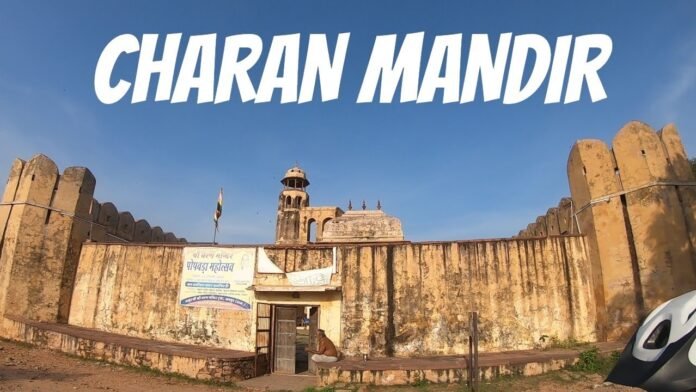
Jaipur is one of the few cities having many heritage temples. Records from the mid-1940s indicate there were more than 600 temples within the walled city area of Jaipur. Some of these temples were constructed many centuries ago with the royal patronage. This manifests in their architectural style, layout, and placement at the prominent sites in the city. Temples like Garh Ganesh and Charan Mandir are two such historic temples commissioned by Jaipur royalty; both predates Jaipur city. While Garh Ganesh overlooks the city from a hillock, Charan Mandir, on the other hand, towers over the hills of Nahargarh Fort. It provides panoramic views of the surrounding areas.

Maharajah Sawai Mansingh I who ruled from Amer Fort built this temple. He was a devout follower of Lord Krishna. As per the local legend, Lord Krishna appeared in Maharajah Sawai Mansingh’s dream and instructed him to build a temple in Ambica Van. The region surrounding Amer Fort and Nahargarh Fort was once called Ambica Van (forest). It’s being claimed that Charan Mandir has Charan Chinha (foot marks) of Lord Krishna.

Charan Mandir is just not the usual temples we that we find in the neighborhood around us in terms of architecture and layout. Its layout is unusual with a huge tower attached to the temple complex and fortified walls on its perimeter. The temple complex also has a large water storage tank.

Where is Charan Mandir located?

The temple is located on the way to Nahargarh Fort. Notably it is located in middle of Nahargarh Reserve forest. There is only one road connecting it to rest of the city.

Places to visit near Charan Mandir

Here are some places to visit (tourist spots) with their respective distances from the temple so that the mapping plan for reaching there remains easy and flexible for you

  1. Nahargarh Fort (2.2 KMs from Charan Mandir in Jaipur)
  2. Jaigarh Fort (4.2 KMs from Charan temple in Jaipur)
  3. Amer Fort (8.7 KMs from Charan Mandir in Jaipur)
  4. Gaitore ki Chhatriya (9.9 KMs from Charan temple in Jaipur)
  5. Hawamahal (12.4 KMs from Charan Mandir in Jaipur)

Charan Mandir Jaipur Timing

The temple opens for devotees with sunrise and closes by sunset. As the temple is located between the forest areas it is advised to avoid visiting temple during dark.

Reason to visit Charan Temple

Apart from the religious significance of the site the forest is natural habitat of many species of wild animals and birds. Although, during the visiting hours the chances to spot a wild animal is low but the site is promising of beautiful bird watching point. Also, Charan Mandir offers one of the best views of sunrise in Jaipur. But, during sunset the sun sets behind the huge walls of temple so it gets difficult to watch the view. But the view of Nahargarh Forest from top of the minaret of temple is certainly refreshing

How Does Math Relate to the Life Cycle of Periodical Cicadas?

0

In a rare and fascinating natural event, two broods of periodical cicadas—Brood XIX from the southeastern United States and Brood XIII from the Midwest—have emerged together for the first time in over 200 years. Adding to this marvel, Australian greengrocer cicadas, which follow a seven-year cycle, have also synchronized their appearance, an alignment that takes a staggering 1,547 years. Beneath this biological wonder lies a profound connection between math and nature, particularly the role of prime numbers in the life cycles of cicadas.

The Prime-Driven Life Cycle

Periodical cicadas spend the majority of their lives underground, emerging only every 13 or 17 years for a brief period to mate and reproduce before dying. This peculiar timing, rooted in prime numbers, serves a vital evolutionary purpose.

Prime-numbered life cycles minimize overlap with predators whose life spans typically range from 2 to 7 years. For example, a cicada emerging every 12 years would encounter a 2-year predator every six years. In contrast, a 13-year cycle only overlaps once every 26 years, greatly reducing predator encounters and enhancing survival odds.

The Role of Mathematics

The mathematical concept of the lowest common multiple (LCM) underpins this survival strategy. By adhering to prime-numbered cycles, cicadas minimize synchronization with predators and even other cicada broods. This reduces interbreeding between broods, preserving genetic diversity and ensuring the resilience of their populations.

For instance, Australian greengrocer cicadas (7-year cycle) and American cicadas (13- or 17-year cycles) rarely emerge together due to the LCM of these numbers—1,547 years. The last recorded synchronization of these species dates back to 477 AD, coinciding with the decline of the Western Roman Empire, adding historical intrigue to this phenomenon.

Mathematics in Nature

The interplay of math and biology extends beyond cicadas. Prime numbers frequently appear in other contexts, such as the design of mechanical gears, where a prime number of teeth reduces wear and ensures smoother operation. Nature’s reliance on mathematical principles highlights its intricate design and adaptability.

The Ecological Significance

Brood XIX and Brood XIII cicadas are ecological marvels, playing critical roles in nutrient cycling, aeration of soil, and providing food for predators during their emergence. Meanwhile, greengrocer cicadas exemplify how prime-numbered cycles operate on a global scale, with their synchronized appearance alongside American counterparts offering a glimpse into nature’s mathematical precision.

Key Insights

  • Brood XIX: A 13- or 17-year cicada brood from the southeastern United States, contributing to unique ecological dynamics.
  • Lowest Common Multiple (LCM): Explains rare alignments of cicadas and their predator avoidance strategies.
  • Greengrocer Cicadas: Australian species with a 7-year cycle, demonstrating the significance of prime numbers in survival and synchronization.
  • Genetic Preservation: Prime-numbered cycles reduce interbreeding among broods, ensuring genetic diversity and population resilience.

A Natural and Mathematical Marvel

The rare overlap of cicada broods across continents underscores the beauty of nature’s complex design, where biology, ecology, and mathematics intertwine. As the buzzing chorus of cicadas fills the air after centuries, it reminds us of the hidden patterns that govern the world, offering a deeper appreciation for the wonders of life and the mathematical principles that sustain it.

Netherland Special Series: Prachee Van Brandenburg Bespeaks Story of Her Sojourn of Resilience and Building Bonds Across Cultures and Continents…!

0

Life has a way of weaving the unexpected into a narrative of purpose and transformation. A young girl, facing the traumatic times brought to fore by the Gulf War in 1990, scripted a story of building foundation of an extraordinary life across continents after facing a tsunami effects coming out of war. From navigating the complexities of Dutch law and politics to building bridges between India and the Netherlands, Prachee Van Brandenburg speaks the story of resilience, adaptability, and the relentless pursuit of growth.

Her sojourn starting as a temporary stay in the Netherlands evolved into a lifelong journey filled with milestones: mastering a foreign language, excelling in international law, serving in Dutch civil service, and making history in local politics. Along the way, Prachee became a trailblazer for women of Indian origin, championing diversity, fostering collaboration, and inspiring others to embrace cultural exchange.

She speaks story of a woman who turned challenges into opportunities, by blending heritage with her adopted home to create a legacy of meaningful impact.

At the age of 16, a twist in global events changed the trajectory of this young girl’s life forever. The First Gulf War in 1990, triggered by Saddam Hussein, forced her to leave her boarding school in Bahrain, located on an American Naval Base, and return to the Netherlands. At the time, her father was working with a Dutch company in Riyadh. Reflecting on that period, she acknowledges that, had the war not occurred, her life might have followed a very different path, far from the Netherlands where she ultimately built her home.

Back in the Netherlands, she completed the final year of the International Baccalaureate (IB) program. Although she initially considered studying in the UK after graduating, she chose to remain in the Netherlands—a seemingly small decision that would profoundly shape her future.

A Journey into Law and Language

Enrolling in Leiden University to study International Law, she saw it as a temporary phase, intending to leave after graduation. However, opportunities to move in kept coming and going however she decided to stay. This decision brought new challenges, particularly mastering Dutch, which was essential for her studies. While she spoke this language fluently, her experience abroad left her unprepared for the complexities of writing, especially in the legal field.

Specialising in Air and Space Law, she began her career with a brief stint at the university before joining the Dutch Ministry of Transport and Water Management. Here, as a negotiator, legal advisor, and senior policy officer, she drafted high-level documents for Parliament and navigated international negotiations, including representing the Netherlands in ministerial delegations to India. Working in a predominantly male and hierarchical environment, she overcame cultural barriers, balanced expectations, and built a strong professional network over her 13-year tenure.

A Global Perspective

After leaving civil service, she sought to give her children a chance to experience life abroad. The family moved to India for a year and later to Rio de Janeiro, Brazil. During this period, she embraced the role of a “trailing spouse,” taking a semi-sabbatical from work while continuing to learn from new cultures and experiences.

In 2014, she returned to the Netherlands with her sons to care for her terminally ill mother. This challenging period taught her resilience and deepened her respect for single parents. Her journey took another significant turn in 2018 when she entered Dutch politics, standing for local elections in Leiderdorp. She became the first Maharashtrian woman elected to a Dutch municipal council and now serves as a party leader for D66, holding a second term. Politics brought its own linguistic challenges, requiring her to further refine her Dutch language skills.

In 2023, she ran for the Dutch Senate as the 14th candidate on the D66 nationwide ballot. Although her party lost seats, the campaign was a valuable experience, allowing her to connect with a diverse array of people and ideas.

Building Bridges Between India and the Netherlands

Beyond politics, she runs her consultancy and works tirelessly to strengthen ties between India and the Netherlands. As Vice-Chairman of the India Dutch Financial Corridor (IDFC), she has played a key role in launching initiatives like the TiE Amsterdam chapter and Women Entrepreneurs Connect (WEC). WEC focuses on connecting Indian women entrepreneurs and corporate leaders, fostering collaboration and amplifying their visibility on international platforms.

A Life of Balance and Reflection

Her professional achievements are complemented by her contributions to Diversity & Inclusion programs, personal coaching, and cross-cultural training. Despite a busy schedule, she cherishes moments of tranquility, finding pure bliss in reading a book under the sun with a cup of chai in hand.

For her, learning Dutch was not just a linguistic challenge but a gateway to understanding Dutch culture, its people, and its perspectives. Starting with children’s books and daily soaps, she discovered that a small effort in understanding a language could open doors to deeper connections.

Looking to the future, she is committed to growing her business, fostering India-Netherlands collaborations, and giving back to the communities that have shaped her remarkable journey.