Home Blog Page 439

Major Dhyan Chand: The Hockey Wizard Who Shaped India’s Sporting Legacy

0

Major Dhyan Chand, often referred to as the “Wizard of Hockey,” was an Indian field hockey legend whose extraordinary skills and achievements have made him an icon in the world of sports. Born on August 29, 1905, in Allahabad (now Prayagraj), he followed in his father’s footsteps by joining the British Indian Army at the age of 16. His passion for hockey blossomed while serving in the army, where he practiced under moonlight after duty, earning him the nickname “Chand” (moon in Hindi).

Dhyan Chand’s international career began in 1926 with a successful tour in New Zealand, where his team won 18 out of 21 matches. He played a pivotal role in India’s first Olympic hockey gold medal victory in 1928, followed by two more gold medals in 1932 and 1936, scoring over 400 goals in his illustrious career. As the captain during the 1936 Berlin Olympics, he led India to a resounding 8-1 victory against Germany in the final, cementing India’s dominance in field hockey.

Despite his unparalleled success, Dhyan Chand faced challenges, including financial hardships and limited recognition during his lifetime. After retiring from the army as a Major in 1956, he was awarded the Padma Bhushan, India’s third-highest civilian award. He later dedicated his life to coaching young hockey players, inspiring future generations.

Dhyan Chand’s legacy lives on through the National Sports Day, celebrated annually on his birthday, and through numerous honors, including the Dhyan Chand Award for Lifetime Achievement in Sports. His life story is a testament to perseverance, passion, and excellence, making him an enduring source of inspiration.

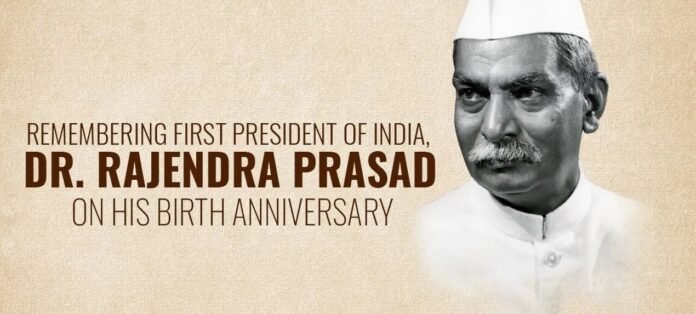
Celebrating the 140th Birth Anniversary of Dr. Rajendra Prasad with his Inspirational quotes

0

On December 3, 2024, India celebrates the 140th birth anniversary of Dr. Rajendra Prasad, the first President of independent India and one of the greatest statesmen in the country’s history. A symbol of humility, simplicity, and integrity, Dr. Prasad’s life is an enduring inspiration for generations.

Born in 1884 in Ziradei, Bihar, Dr. Prasad’s extraordinary journey from a modest village to becoming the highest constitutional authority in India reflects his dedication to the nation. His life was a testament to perseverance and selfless service. He played a pivotal role in the freedom movement, working closely with Mahatma Gandhi and other stalwarts, while also leaving an indelible mark as a scholar, lawyer, and reformer.

A Leader of the People

Dr. Prasad’s leadership was rooted in his unwavering commitment to the well-being of the people. As a freedom fighter, he was at the forefront of movements like the Champaran Satyagraha, which aimed to uplift the oppressed indigo farmers of Bihar. His deep connection to the grassroots made him a beloved leader who truly understood the pulse of the nation.

When the Constituent Assembly of India was tasked with drafting the Constitution, Dr. Prasad was elected as its President, a role he carried out with grace and vision. His contributions ensured the Constitution reflected India’s aspirations for equality, justice, and liberty.

A President Like No Other

In 1950, Dr. Prasad became the first President of India. During his tenure, he set a high standard for the office by upholding democratic values and maintaining a non-partisan approach. Known for his humility, he famously said:
“The greatest reward for public service is the satisfaction that comes from serving others.”

Dr. Prasad’s tenure as President was marked by his dedication to the ideals of self-reliance, national integration, and education. His efforts to promote these values continue to resonate today.

Timeless Wisdom: Quotes That Inspire

Dr. Rajendra Prasad’s words remain a guiding light for those striving to serve society with sincerity and purpose. Some of his most inspirational quotes include:

  • “In attaining our ideals, our means should be as pure as the end.”
    This reflects his Gandhian belief that integrity in action is as crucial as the goal itself.
  • “Success comes to those who work hard, have patience, and believe in themselves.”
    A reminder that perseverance is key to overcoming challenges.
  • “Real education makes us humble and builds a sense of service towards humanity.”
    His emphasis on education as a tool for character-building is a timeless lesson.

Legacy That Lives On

Dr. Rajendra Prasad’s life exemplified the ideals of duty, humility, and patriotism. His contributions laid the foundation for modern India’s democratic ethos, and his values continue to inspire leaders and citizens alike.

As we commemorate his 140th birth anniversary, let us draw inspiration from his life and words to work towards a more inclusive, compassionate, and progressive India.

World’s richest cricketer retired at 22, made Rs70,000 crore & never played IPL

0

Aryaman Birla, the son of billionaire industrialist Kumar Mangalam Birla, holds the distinction of being the richest cricketer in the world, surpassing legends like Sachin Tendulkar, MS Dhoni, and Virat Kohli. Unlike these icons, whose fortunes are built on their cricketing brilliance and endorsements, Aryaman’s wealth primarily stems from his position in the family-owned Aditya Birla Group, one of India’s largest conglomerates. His estimated net worth of ₹70,000 crore far exceeds the combined wealth of his cricketing peers.

Aryaman’s journey began with a genuine passion for cricket. He debuted for Madhya Pradesh in the Ranji Trophy in 2017 and soon made headlines by scoring an unbeaten century at the Eden Gardens in 2018. His performance earned him recognition as a cricketer in his own right, separate from his family name. That same year, he secured an IPL contract with the Rajasthan Royals, highlighting his potential as a young talent.

However, Aryaman’s cricketing journey was short-lived. In 2019, he announced an indefinite sabbatical, citing injuries and mental health challenges. This decision marked a pivotal shift in his career. While the sporting world lost a promising talent, Aryaman turned his focus to the corporate world, embracing the legacy of the Aditya Birla Group.

In 2023, Aryaman was inducted as a director at Aditya Birla Fashion and Retail Limited, a key player in India’s fashion industry. He also holds significant positions on the boards of Grasim Industries and Aditya Birla Management Corporation. These roles showcase his ability to navigate the complex demands of leading a multi-billion-dollar empire, balancing his personal aspirations with the weight of family expectations.

Aryaman’s wealth starkly contrasts with the fortunes of cricketing legends Tendulkar, Dhoni, and Kohli, whose net worths are $170 million, $111 million, and $92 million, respectively. While their success is rooted in their on-field achievements and marketability, Aryaman’s fortune highlights the influence of inherited wealth and business acumen.

Despite his early retirement from cricket, Aryaman Birla has carved out a unique legacy. He stands as a testament to the ability to straddle two distinct worlds — sports and business — with determination and grace, leaving an indelible mark in both. His story serves as an inspiring blend of personal passion and professional responsibility.

SIDH in Mussorie is Serving the Cause of Redefining Education For Generations to Come…

0

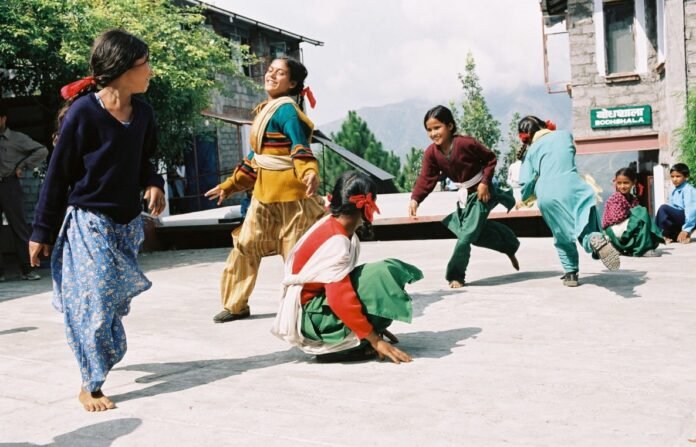
Imagine a small Himalayan village where mothers gather, their hopes resting on the promise of education to empower their children. It was here, in 1989, that SIDH was born—an initiative inspired by these women’s dreams for a better future. But three years later, those same mothers voiced an unexpected concern. They said the education system, instead of bringing harmony, had sown a divide between their children and their roots, fostering a sense of superiority that alienated them from their culture and community.

Their heartfelt observation—“Teach children how to be, not how to appear to be”—became a catalyst for transformation. What followed was a remarkable journey of introspection, innovation, and reimagination that challenged conventional ideas of education and explored its deeper purpose.

This is the story of SIDH—a story of listening, learning, and lighting the way for generations to come.

In 1989, SIDH began as a dream sparked by the voices of village women in the Himalayan foothills. They approached Pawan Gupta and Anuradha Joshi, two visionaries who shared their aspirations, with a simple yet profound request—to start a school for their children. These women believed education would open doors to a brighter future for the next generation.

Three years later, the same women returned, but their words now carried a tone of concern and disillusionment. They spoke not of pride but of pain, expressing that the school had, in their words, “ruined” their children. The mothers noticed a growing disconnect between their homes and the classroom. The children, influenced by the education system, were developing a false sense of superiority and looking down on their families and traditions.

One non-literate mother summarized their anguish with a poignant insight:
“बच्चों को होना सिखाओ, दिखना नहीं !”
(Teach them how to be, not how to appear to be.)

This simple yet profound wisdom struck a chord with Pawan and Anuradha. It was a turning point that would reshape SIDH’s mission and philosophy.

Rethinking Education

The women’s plea prompted deep introspection. What was the true purpose of education? Could learning lead not only to academic success but to a harmonious life? These questions led SIDH to explore the intrinsic links between education, lifestyle, and happiness.

This shift in perspective gave rise to a transformative journey. What began as a single school evolved into a movement—a living experiment to redefine learning. SIDH developed alternative educational models that celebrated local knowledge, fostered community connection, and nurtured children’s innate potential without alienating them from their roots.

The Journey of Growth

Over the years, SIDH expanded its reach, establishing 35 village schools and producing numerous publications that questioned the prevailing education system. These efforts sparked dialogues across communities, challenging traditional notions of progress and advocating for a more grounded, meaningful approach to learning.

SIDH’s evolution saw it transition from running schools to influencing educators and policymakers. Workshops, seminars, and courses became vehicles to disseminate its learnings and inspire a broader change. Today, SIDH stands as a research-driven organization, dedicated to uncovering the deeper implications of education on individuals and society.

A Legacy of Transformation

SIDH’s story is not just about schools or classrooms; it’s about rediscovering the essence of learning. It’s about reconnecting children with their environment, families, and themselves. It’s about honoring the wisdom of a mother’s heartfelt advice and transforming it into a philosophy that can inspire the world.

At its heart, SIDH’s journey reflects a simple truth: education is not just about what we learn but who we become.


Gharchola: Gujarat’s Iconic Wedding Drape Earns Prestigious GI Tag

0

Gujarat’s iconic Gharchola, a traditional wedding drape, has recently received the Geographical Indication (GI) tag, a recognition that ensures its authenticity and promotes its rich heritage. This textile, deeply rooted in Gujarat’s cultural identity, symbolizes blessings, prosperity, and the sacred union of marriage.

Historical Roots

The Gharchola traces its origins to the royal courts and affluent merchant families of Gujarat during the 12th century. It flourished under the patronage of the Solanki dynasty, which encouraged the development of intricate handwoven textiles. Traditionally, this saree was crafted in Jamnagar and Rajkot districts, famous for their expert weavers and dyers.

The name Gharchola translates to “home square,” a reference to the saree’s characteristic checkered patterns, each square often embellished with symbolic motifs such as peacocks, elephants, and lotus flowers, representing love, wealth, and purity.

Significance and Craftsmanship

The Gharchola is not just a piece of clothing; it is a cultural artifact. Crafted using the bandhani (tie-dye) technique and woven with zari (gold or silver threads), this saree showcases the meticulous skills of artisans. The process begins with weaving silk or cotton yarn into a grid-like design. Artisans then tie and dye the fabric multiple times to achieve its vivid red and green hues. Each saree can take weeks, sometimes months, to complete, underscoring the labor-intensive craftsmanship behind it.

Historically, the saree was gifted to brides as part of their dowry, symbolizing the merging of two families. It also carried religious significance, often worn during auspicious ceremonies and temple offerings.

Modern Revival and GI Tag Significance

Over the years, industrialization posed a threat to the Gharchola’s traditional production, with machine-made imitations flooding the market. However, the GI tag aims to protect this cultural treasure by ensuring that only sarees crafted using authentic techniques in designated regions can bear the name. This recognition not only boosts the livelihoods of artisans but also preserves an age-old heritage.

Today, Gharchola continues to be a preferred choice for brides in Gujarat and beyond, representing a blend of tradition and artistry. Its GI tag reaffirms its status as a timeless symbol of Gujarat’s textile legacy.

By honoring the Gharchola, we celebrate not just a fabric but the stories, emotions, and skilled hands that bring it to life.

Indian-British Boy Scores IQ Higher than Einstein and Hawking: Meet 10-Year-Old Prodigy Krish Arora

0

Krish Arora, a 10-year-old boy from Hounslow, West London, has taken the world by storm with an astonishing IQ of 162, surpassing the estimated IQs of intellectual giants Albert Einstein and Stephen Hawking, both around 160. This remarkable feat has earned him a place in Mensa, the prestigious society for individuals with extraordinary intelligence.

A Genius in the Making

From an early age, Krish exhibited exceptional abilities that set him apart. By the age of four, he was not only reading fluently but also solving complex mathematical problems with ease. His parents, Mauli and Nischal Arora, both from engineering backgrounds, quickly noticed their son’s extraordinary talents. “When he was just four, he was fluently reading and doing complex decimal divisions. His spellings were outstanding for his age. We saw the sparks early on,” shared his mother in an interview with My London.

Excellence Beyond Academics

Krish’s brilliance extends far beyond academics. Despite having started playing chess just four months ago, he managed to defeat his mentor, who boasts an impressive FIDE rating of 1600. His skills in music are equally remarkable; Krish has already achieved Grade 8 proficiency in piano, a milestone even seasoned musicians strive for.

A Role Model for Peers

At school, Krish’s teachers have recognized his talent by assigning him the role of a mentor to his classmates, especially in math. His friends frequently seek his help with schoolwork, a testament to his kindness and eagerness to share his knowledge.

A Place Among Geniuses

Krish’s recent acceptance into Mensa marks a significant milestone in his journey. Mensa evaluates members using the Cattell III B test, which measures reasoning and mental agility. Scores above 160 are considered genius-level, placing Krish in the top 1% of the population. Speaking to The Sun, Krish expressed his excitement about this achievement and his future aspirations.

The World Awaits

With his unmatched intellect and diverse talents, Krish Arora is poised to make a significant impact on the world. Whether through groundbreaking discoveries or artistic masterpieces, this young prodigy has already begun to rewrite what it means to be a genius.

As Krish continues to amaze with his intellect and talents, the world eagerly awaits the next chapter in his extraordinary journey.

Jaipur History Festival 2024: Celebrating Financial Literacy and Folk Arts

0

The historic City Palace in Jaipur is set to host the much-awaited Jaipur History Festival (JHF) from 3 to 6 December 2024, bringing together over 10,000 students from across the country. Organized by the Maharaja Sawai Man Singh (MSMS) II Museum Trust, this year’s festival theme is ‘Financial Literacy & Folk Arts,’ blending traditional wisdom with essential life skills.

A Four-Day Extravaganza

The festival promises an engaging lineup of activities. Each day will start with morning prayers followed by a Cultural Programme from 8:30 AM to 10:30 AM. Attendees can then immerse themselves in Exhibitions and Craft Workshops from 10:30 AM to 12:30 PM.

Building on the success of last year’s theme, ‘Education Through Monuments & International Year of Millets,’ this year’s focus takes a unique approach by weaving financial literacy into the rich tapestry of India’s folk arts.

A Unique Learning Platform

His Highness Maharaja Sawai Padmanabh Singh, Chairman of the MSMS II Museum Trust, emphasized the festival’s innovative approach:

“This year, JHF continues its legacy of impactful themes by integrating financial literacy with folk arts. Through this unique platform, students will learn essential financial skills while exploring the timeless wisdom embedded in popular folk tales and literary works.”

Participants will delve into well-loved tales such as the Panchatantra, Jataka stories, Aesop’s Fables, Vikram & Betal, Akbar-Birbal, Sheikh Chilli, Mulla Nasruddin, and Tenali Rama. These stories will be creatively depicted through India’s diverse folk arts while fostering entrepreneurial skills through business plan incubation sessions.

Aligned with the National Education Policy (NEP) 2020, the festival emphasizes core financial concepts like budgeting, saving, and distinguishing between needs and wants, empowering students to grow into financially savvy adults.

Pan-India Participation

The festival has drawn registrations from 50 schools, including 35 from Jaipur and 15 from Delhi, Gurgaon, Noida, Ghaziabad, Mumbai, and Jammu. To ensure a comprehensive experience, the Trust has organized practical training sessions led by experts from diverse fields.

Empowering Future Generations

Targeting primary and secondary students, JHF 2024 seeks to provide a meaningful and engaging approach to learning that fosters well-rounded development, in line with modern pedagogical methods. By introducing financial literacy early, the festival aims to arm students with skills that will help them navigate their futures responsibly, while also making them vigilant against potential frauds and scams.

A Legacy of Financial Literacy Festivals

The journey of integrating financial literacy into education began with the first Financial Literacy Festival held in Varanasi. Now, Jaipur takes the baton, hosting this transformative edition in the iconic City Palace, ensuring the event becomes a significant cultural and educational milestone.

JHF 2024 is more than just a festival—it’s an opportunity for students to discover the synergy between ancient folk wisdom and contemporary financial knowledge, creating a foundation for a brighter, more financially aware generation.

The Sabarmati Report: A Film Lauded by Prime Minister Modi to Be Screened at Parliament

0

The Sabarmati Report, starring Vikrant Massey, has become a focal point of national discourse. Directed by Dheeraj Sarna and produced by Ekta Kapoor, the film delves into the events surrounding the Godhra incident. Released on November 15, the film has been making waves in theatres and political circles alike.

Prime Minister Narendra Modi, who previously praised the film for its bold storytelling, is set to watch it on Monday at 7 PM in the Balayogi Auditorium of the Parliament building. He will be joined by Lok Sabha Speaker Om Birla and other dignitaries.

PM Modi’s Endorsement of the Film

Prime Minister Modi had earlier expressed his admiration for The Sabarmati Report, emphasizing the importance of truth in public discourse. In a post on social media platform X (formerly Twitter), he wrote:

“It is heartening that the truth is being presented in a way that the common people can access and understand. A fake narrative can only sustain for a short period; eventually, facts emerge.”

The PM also encouraged citizens to watch the film, following which the BJP leadership instructed its MPs and MLAs to arrange screenings in their constituencies to ensure wider reach.

Amit Shah’s Acknowledgment

Union Home Minister Amit Shah also commended the filmmakers for their courage in bringing untold truths to light. He remarked:

“I met the team of The Sabarmati Report and congratulated them for their bravery in exposing falsehoods and presenting the suppressed truths. This film unmasks deceptive narratives that were perpetuated for political gain.”

Tax-Free Status in Madhya Pradesh

In a move to encourage viewership, Madhya Pradesh Chief Minister Mohan Yadav declared the film tax-free in the state. This decision underscores the cultural and historical importance of the film’s narrative and aims to make it accessible to a larger audience.

About the Film

The Sabarmati Report is a gripping political drama that features Vikrant Massey in the lead role as a journalist. The cast includes Rashi Khanna and Ridhi Dogra, who deliver stellar performances in pivotal roles. The film explores sensitive truths surrounding the Godhra tragedy, which have often been clouded by controversy and misinformation.

Interestingly, the release of the film coincides with Vikrant Massey’s recent announcement to take a break from acting, adding further intrigue to the film’s buzz.

Why This Film Matters

Beyond its cinematic appeal, The Sabarmati Report sheds light on long-concealed truths. It challenges preconceived notions and encourages audiences to engage critically with historical events. With endorsements from the highest echelons of political leadership, the film has transcended the realm of cinema to become a significant cultural moment.

The screening at Parliament signifies its importance not only as a work of art but as a catalyst for dialogue on truth, justice, and the narratives that shape our history.

The Tale of Charan Mandir: Jaipur’s Divine Connection to Lord Krishna

0

In a recent interview with EBNW Story, Siddha Swaroop Das Prabhu shared fascinating insights into the history and significance of Charan Mandir, an ancient temple in Jaipur. The temple, steeped in mythology and history, highlights Jaipur’s spiritual bond with Lord Krishna and reflects the profound devotion of its historical rulers, especially Raja Man Singh I.

According to legend, Raja Man Singh, the celebrated Kachhwaha Rajput ruler of Amber, received a divine command from Lord Krishna in a dream to construct a temple at a sacred site. The king, accompanied by his attendants, ventured to Ambika Van the following morning to locate the site described in his vision.

At the designated spot, he discovered footprints believed to belong to Lord Krishna. The temple priests identified these sacred imprints as originating from the Dwapar Yuga, linking them to an episode described in the Srimad Bhagavatam (Tenth Canto, Chapter Four). This connection further solidified the sanctity of the location, inspiring the construction of the magnificent Charan Mandir.

The Mythological Significance of Ambika Van

Ambika Van is said to have been a pivotal location during the Pandavas’ exile. It is also associated with an iconic tale from Krishna’s life. The temple inscriptions recount that Lord Krishna, along with Nand Baba and his friends, once visited this forest.

During their visit, a giant serpent captured Nand Baba. Responding to his father’s plea for help, Krishna touched the serpent with his right foot, freeing it from its cursed form. The serpent transformed into a radiant and handsome figure, introducing himself as Sudarsana, the son of Lord Indra.

Sudarsana revealed that he had been cursed to live as a serpent due to mocking the appearance of Angira Gotra sages. With Krishna’s divine touch, he was liberated from his curse, adding another layer of spiritual significance to the site.

Raja Man Singh’s Devotion and Contributions

Raja Man Singh, a staunch devotee of Lord Krishna, commissioned the construction of the temple at this sacred site. His devotion extended beyond Charan Mandir; he is also credited with building the iconic Govind Dev Ji Temple in Vrindavan.

A patron of architecture and culture, Raja Man Singh played a significant role in preserving Hindu heritage. His projects included the construction of ghats along the Ganges in Banaras, Patna, and Haridwar.

When the Jagannath Puri Temple faced threats from invading forces, Raja Man Singh sent his army to protect it. Despite the loss of many warriors, he personally led a campaign to secure the temple, defeating the attackers and ensuring its sanctity. He also undertook the reconstruction of temples destroyed during earlier invasions, leaving a lasting legacy as a protector of India’s cultural and spiritual heritage.

Charan Mandir Today

Charan Mandir continues to attract countless devotees who come to pay homage to Lord Krishna’s footprints. The temple is especially vibrant during Krishna Janmashtami, drawing pilgrims from across the country.

The temple stands as a symbol of Raja Man Singh’s unwavering devotion and Jaipur’s historical connection to Lord Krishna, making it a spiritual beacon for generations.

Summing Up

Charan Mandir is more than just a place of worship; it is a testament to faith, mythology, and history intertwined. Through Siddha Swaroop Das Prabhu’s narration, the story of this temple serves as a reminder of Jaipur’s enduring relationship with its divine roots and its commitment to preserving its spiritual heritage.

Ritika Sajdeh Reveals Newborn Son’s Name in Heartwarming Christmas-Themed Instagram Story

0

In a heartwarming gesture on social media, Ritika Sajdeh, wife of Indian cricket captain Rohit Sharma, revealed the name of their newborn son through a Christmas-themed Instagram story. The post, shared on Sunday, featured a family cutout adorned with Christmas decorations, with each family member’s name written beside their respective figures.

The couple had welcomed their second child on November 15, 2024, marking a joyful moment for the Sharma-Sajdeh family. As a result of this joyous occasion, Rohit had to miss the opening Test match of the Border-Gavaskar Trophy series against Australia in Perth. The Indian team managed a commanding victory by a record margin of 295 runs, taking a 1-0 lead in the five-match series.

Ritika Sajdeh Reveals Newborn Son's Name in Heartwarming Christmas-Themed Instagram Story

In her adorable post, Ritika and Rohit were playfully referred to as “Ro” and “Rits”, while their daughter, Samaira, was lovingly called “Sammy”. The big reveal came with their newborn son’s name, “Ahaan”, completing the family portrait in the cutout.

Rohit Sharma to Bat at No. 5 in 2nd Australia Test?

As India gears up for the second Test match against Australia in Adelaide, Rohit Sharma’s return to the playing squad is eagerly awaited. Rohit, who rejoined the team after missing the first Test, was expected to take his usual position at the top of the order in the second Test, which will be a Pink Ball game. However, a recent statement from the India captain hints at a potential shift in his batting position.

During a team announcement for the warm-up match against Prime Minister’s XI at the Manuka Oval in Canberra, Rohit’s name appeared at No. 5 in the batting order, sparking speculation about his position for the upcoming Test. This was a significant hint, as KL Rahul, who replaced Rohit in the opening Test, had scored a crucial 77 runs in the second innings, stitching a 201-run opening partnership with Yashasvi Jaiswal.

With Rahul’s solid performance in the opening slot, it seems likely that Rohit may bat at No. 5, a position he last occupied in 2018. Over his career, he has played 16 innings at No. 5, scoring 437 runs at an average of 29.13, with three fifties. However, it’s worth noting that all of these innings were played outside of India. Rohit’s shift to No. 5 could be a strategic move to accommodate the successful opening combination of Rahul and Jaiswal.

As the second Test approaches, all eyes will be on Rohit’s batting position, and whether this change will bring a fresh dynamic to India’s lineup in the challenging Pink Ball format.